Health Insurance Confusion 2016

photo-on-2016-12-20-at-18-53A toast, to paying for something I don’t quite understand yet is in my second highest expense category: health insurance. Yet again, I’m enrolled. It only took hours and days of effort to pay for something I haven’t been able to use for years, and only rarely before that.

A bit of repetition: I have health insurance. That does not mean I afford conventional health care.

I’ve always had health insurance, first through my parents, then through college, then from Boeing and spousal coverage, then from monthly premiums that seemed reasonable at the time. Until my Triple Whammy, my perfect storm of bad luck, I enjoyed, yes enjoyed, going to the doctor because I appreciated the value of good health and the efficiency of preventive care. Since my bad luck hit I haven’t been in a “western” doctor’s office, have even developed an anxiety reaction to the concept, and have relied on “unconventional” medicine, and my best attempt at healthy eating, exercise, and general lifestyle. Working seven days a week has made me miss my goals, but I suspect the lapse is temporary. So I keep telling myself.

If you’re having trouble sorting out health insurance options, you aren’t alone. I’ll skip the suspense. I have health insurance. It’s probably similar to what I had before (One Confused ObamaCare Applicant), except more expensive. No surprise there, and the lack of surprise is a sad statement. What I can chronicle is the time and effort required to keep what I had, health insurance that has helped society by contributing my share, but that hasn’t and possibly can’t help me – at least until I am richer.

Over the last few months the emails and letters have arrived telling me to make sure I sign up. About a month ago, my financial situation was looking dire enough that I realized I might not be able to afford health insurance. Finding enough money for insurance, taxes, and other bills was more important than any particular package. My life is evidently remarkably frugal because many people have remarked on how frugal my life is. All of my other non-insurance bills provided some direct benefit: housing, food, heat, water, etc. Insurance is an expense greater than everything except housing and taxes.

Without insurance on the house, I’d probably lose the house. Without insurance on the car, I couldn’t legally drive making work difficult at least. Without health insurance, I’d, well, I’d, well, I wasn’t going to the doctor anyway, so what difference would it make? From what I understand, with Obamacare visiting the doctor is far more affordable. As long as I was healthy and only had to pay for the visit, the visit would be affordable. If I wasn’t healthy, then the insurance would kick in – after the deductible, and if they approved the expenses. The last time I relied on doctors, the diagnostic tests alone totaled over $7,000. Treatment for whatever would be additional. For a while, that was enough to bankrupt me if the insurer decided not to cover the tests.

Walking Thinking Drinking Across ScotlandThe story of how I reacted became a walk across Scotland and yet another book, Walking Thinking Drinking Across Scotland. It looked like most of my symptoms were stress-related. Walking, thinking, and drinking my way across Scotland cost half of the potential diagnostics bill. I’m glad I did it. Since then, however, the stress level in life has gone up.

Several bits of good news have hinted at making 2017 a much nicer year, so I decided to at least continue my insurance. Maybe I’d actually make enough to do more than pay the premiums.

I sifted through the various communiques, found a few that suggested contacting my insurer, and decided to give them a call. But first, more mail arrived. It was a bill for the old amount and mentioned 2017. Great! The same old plan, continued into a new year, and maybe I could skip the paperwork and online maze that I feared. I paid the bill and relaxed.

Why not give them a call, just to make sure? With a day to go before the deadline, I placed the call that should be a quick confirmation. One hour of being on hold was bad. Every thirty seconds they’d spend about ten seconds telling me that my call was important. Those thirty seconds were thirty seconds of the same harpsichord music repeated – forty seconds of both repeated for an hour. So much for my mental health.

I live tweeted my frustration. Surprise! I got a response. They offered to have someone call me directly. Such service! It was already late because I work from about 8am to 8pm, which meant it was almost 10pm. I suggested they call after 4:30pm the next day.

The next afternoon, maneuver my schedule so I can be somewhere convenient for the call. Wait. Wait. Wait. Over an hour later I had to leave, let some folks close their shop, while I headed for a dinner engagement. The call finally came in at 5:45pm, while I was outside in mid-twenty degree weather. They got points for calling back, but lost a few for timing. The good news, the deadline was extended to December 23rd. I tried calling later that evening, but again couldn’t get past Hold.

Work until after 8pm several more evenings.

Oops. I went to try again, this time in the middle of the day. Before the call I sorted through those months of mailings and found that I’d missed a payment. Now I had two things to resolve, or was it three, or more? After yet another hour of Hold, begin to wonder if the Customer Service number was really out of service. At least the harpsichord music was gone.

The next day, pick up the mail and find my New Card! as if nothing was wrong. Maybe I did something right and didn’t know it. Hey, it happens. Try to call again, this time before dinner. Only thirty minutes on Hold and I’m caught by surprise. Someone answered. It took me a minute or so to remember my string of questions.

It turns out that they thought everything was fine and all I had to do was pay my new premium (~15% increase) by the end of December. Evidently, I paid the bill at the old rate so early in December that they took it as the November payment. No fines. No fees. While I had Customer Service providing a service, I asked about cheaper coverage options, but nothing made much of a difference. All I had to do was go to my online bill pay system and pay the bill. Which I did, and I hope I did it right, or did it wrong in a good way – which seems to happen.

The cost of trying to figure out how to give my health insurance company money for benefits I may never be able to comfortably use was three and a half hours on hold, and one week of calendar time as the holidays approach – time that could’ve been used for making the money to pay the bill, finding better employment, or maybe even baking for the holidays.

At this point, I have lost track of my deductible, restrictions, and possible benefits because the only number that is important is the premium I pay.

At this point, I also realize that the people I should talk to aren’t Customer Service, or Washington Health Planfinder, or doctors in their network, but the people in my network of friends.

Many of my friends have lived through expensive medical conditions. The vagaries of descriptions of health care options aren’t as valuable as the real life experiences of people who have had to rely on health insurance to access health care. So I ask you, if you’ve experienced relying on health insurance while barely being able to afford it, what did you learn about which plan to sign up for? Between the people with more than enough and those with no insurance are the people who face bankruptcy to pay for staying alive. What do you differently now? What do you wish you’d done then?  You’re the experts I want to hear from. Help clear the health insurance and health care confusion.

Posted in Uncategorized | Tagged , , , , , , , , , , , , , | 1 Comment

Litany Of Optimism

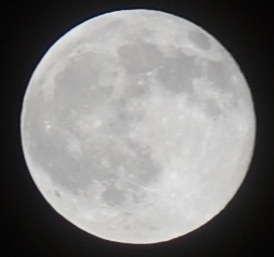
Tonight there’s a full moon. Lately, every day has felt like a full moon, unexpected, uncertain, uncomfortable times as a world redefines itself. That’s what’s been happening in my life for the last several years. I’m getting very practiced at reciting my Litany of Optimism. It helps, but if I used a real rosary, the beads would be worn to grains of sand by now. A litany of ideas doesn’t wear out. My litany works for me. Perhaps one can work for you. Perhaps one can work for all of us.

The world’s been weird enough for the last month that the news media are confused. That  little revolution can be a good thing. I listed some of my optimisms for the world in my Thanksgiving post. I’m making so few assumptions about what’s happening politically and socially that I’ll leave those topics aside for now. I have enough to think about.

Without going into details, some of which are necessarily discreet, three of my largest clients are redefining their projects. The best scenario is an expansion that includes expanding my pay. The most likely scenario is that things don’t change. The worst scenario is that the work moves on. Each of the three has three scenarios. Trying to understand all of the implications and permutations kicks off moments of ease and moments of anxiety. When the anxiety arises, the litany gets recited.

Employment
I’m glad to hear that various aspects of my work is being recognized. Several independent sources have commented on my program management skills, publications, and consultations. Compliments are encouraging. Proper compensation would greatly ease issues. It can all improve with one phone call or email.

Housing
According to Zillow and Redfin, the market value of my house is rising about 12% per year, and is now building equity. Rising real estate creates a buffer than is difficult to use, but 12% applied to hundreds of thousands of dollars is powerful arithmetic; and I have reason to believe it is only just beginning on the island.

Community
Whidbey Island isn’t one community. Neither is South Whidbey. Neither is the southern tip of South Whidbey; but, I’m pleased to see the community building safety nets. In some cases, people fell before the nets were built, and now have to get lifted back above the net, but the trend is encouraging. People are caring about people. I volunteer, and am amazed at the efforts of others. Housing, healthcare, food, and havens are being provided. This is a good place to be.

Stocks
The value of my stocks is flat, but the value of the companies are increasing. Aside from my investment in solar energy (Real Goods, RGSE), each of the companies is making progress. That progress isn’t be recognized by the investment community; but when it is, the recovery can be swift. I’ve seen it in individual stocks before. This is the first time I’ve witnessed so many deflated positions with such potential. There are good reasons for me to look forward to 2017. (I’ll dive into details with my end of year report at the end of the year.)

Health
I got my teeth cleaned today, and they didn’t need to fix anything else. (Thank me for not including a close-up photo of my teeth.) I’m old enough that I always have health concerns (the major one being trying to afford health insurance, and eventually health care). I’ve gained weight because I’ve been working more than working out; but I also feel stronger. (A bit of arithmetic explains it. Adding ten pounds may be bad, but at 30% body fat, that’s still seven pounds of added muscle and bone. Looking forward to bicycling again, but that’s another story.)

Networking
This is a catch-all that includes employment and community, but I must admit that I’m happy to be included in so many conversations about disparate initiatives, projects, new businesses, and various ideas. Land projects, dances, coworks, art projects, welcoming new residents, interviewing old residents – the list continues. To get quantitative about it, my Klout score hangs around 59, and my Facebook connections are about as broad at the CEO’s even though I have far fewer Facebook friends. The ones I have are evidently very well connected. Glad to be part of their networks.

I could dive into minutia, and I do, but that happens inside my head as I walk. My details aren’t as important as yours.

Too many of us are having tough times, whether financially, emotionally, or existentially. The worries can overwhelm. Worries can especially overwhelm if they attract all of the attention. So, deny them. Pay attention to optimism, not just pessimism. The solutions are positive, not negative. Recognize the negative, and then look to the positive to negate the negative.

Feeling dumped on?

Feeling dumped on?

I can’t say that my litany has solved anything, except that it has. Realizing the near reality of optimism is one of the most powerful tools and exercises I have available. We can each build such a tool and use it ourselves.

It’s a full moon tonight. That means a low tide in the dark. It’s cold (freezing, actualy), clear, and relatively calm out there. After I publish this post I intend to walk the tide flats in the dark (and in my boots.) Ironically, in the darkness is when I am most likely to be looking for the brightest thoughts.

A previous full moon. Can't you tell?

A previous full moon. Can’t you tell?

Posted in Uncategorized | Tagged , , , , , , , , , , , , , , , , , , , | 1 Comment

Frugal Resilience

Have you ever skied over a forest? This is the time for cards with the requisite snow-draped branches, winter scenes as tradition as if everyone lived in the same climate. Let me check. Jerusalem’s forecast is for about 60F/15C. Not exactly winter wonderland. In the mountains around Seattle the storms are arriving and adding up their snow totals. The record for yearly snowfall was set on a spot I can see from Whidbey. Mt. Baker had 95 feet (29 meters) one year. The previous record? That was on another mountain I can see from the island, Mt. Rainier. It snows here. And yet, the forests survive. Their resilience is echoed in my frugal friends’ lives. It is amazing what can be accomplished with persistence and resilience, something frugal folk are very aware of.

Winter Resilience - from Twelve Months at Lake Valhalla
My cards arrived this week. The inspiration for this post is actually from the Christmas cards I had printed from one of my photos: Resilience. The photo comes from my book, valhalla coverTwelve Months at Lake Valhalla, the second in the Twelve Month series set on the border of Washington’s wilderness. For twelve months I visited a lake that sits along the Pacific Crest Trail, or at least I tried to visit. Some months there was just too much snow. Not a surprise considering the lake sits on the ridge that runs between Baker and Rainier. Summer hikes were done in lightweight boots. Winter trips were sometimes a mix of snowshoeing and skiing, each carried on my back while the more appropriate of the two carried me through the woods. Much sweating was involved. I didn’t look elegant.

I never dug down to the tree tops to prove my point, but in that area, some slopes won’t allow an avalanche in the early and late season. Tall conifers lock everything in place. Deep enough into the season though, bushes, then weed trees, then young pines are covered creating unbroken runs for snow slides. The route changed throughout the season as the trail was covered, then as the slide hazard increased, then as the valley snow created questionable and sometimes serviceable avenues. Skip the image of graceful turns and effortless downhill runs. I’m not that good. Bump, flip, crash, repeat. My favorite was the time I was snowshoeing down a snow-covered ravine that was too steep, tight, and bumpy to ski (not an impressive route-finding day), I tripped, flipped, and ended up standing, or at least wobbling, upright. No one was within miles so don’t expect a video.

Spring has its own meaning and timing in the mountains. Elevation means as much as the month. The year I was there, the lake was still frozen in June. The fish spent more time under an ice cap than under blue skies. As the temperature warmed, the depth of the snow became evident. As I skied or snowshoed along, the tops of trees would be revealed. I’m sure that what I traveled across were tall saplings, not ancient residents. Even 95 feet of snow compacts to something less than the tallest trees – maybe only a dozen feet or so. And yet, I was impressed at the seemingly undamaged treetops that were just at boot level. Without drama, as the snows melted, the trees would begin to straighten. As the snowpack accumulated, rather than fight it by standing tall (and catching the strong winds and chilling conditions), they bent, not surrendering, but not fighting either. They turned the snow from a threat into a benefit. Wrapped in white, they were insulated from the worst cold and safe from the winds. As their burial melted, they slowly unfolded.

The strategy may seem bizarre, but every tree in the forest was small enough at one time to necessarily take that approach. And the forest survives and grows.

It is natural to see challenging conditions and challenge them in return. To fight foes. To demonstrate self-worth and pride.

Karate taught me lessons similar to that of the forest, which is interesting to me because Okinawa is not known for its ski resorts. (Though coincidentally, my style’s name roughly translates as Small Pine Forest Karatedo.) Whoever attacks makes themself vulnerable.  Do not move unless it is to your advantage. When you can, rather than fight or flight, be still and breath.

2016 has been a weird year and there’s little reason to believe 2017 will be saner. There is always plenty that we can do. With economic and financial issues, it is easy to amplify the work ethic, exercise every lever in our control, and get out that bloody grindstone. In some cases, that will work, bloody nose and all.

This week has delivered a load of weirdness to my situation. No need to go into details. Some of it requires discretion. Some of it is moot. My emotions have been struggling on deciding whether fight or flight is the better response. It’s Friday. I work seven days a week, so the next two days don’t make much of a difference in my work tasks, but the old work habits of thinking of Friday night as a time to unhook remain. I look silly when I replay my reactions to the week’s news. Uncertainty heightened anxiety. The issues are large and significant, but my best response may be much simpler and smaller. I’ve seen that in my frugal friends’ responses to their situations, as well. Recognize the issue, wait for the right time to respond, and resolving an issue can be as simple as flipping a switch.

Persistence and resilience may be my best tools for working on my current situation. Bend, don’t break. Accept a simple hardship, and wait for spring. Notice that entire forests are created from a few seeds that found a way to simply survive otherwise hostile situations.

Posted in Uncategorized | Tagged , , , , , , , , , , , , | Leave a comment

Expense Report – Emergency Funds

Fortunately, I’m not the one that needs the emergency funds. The topic has been in the news, and it’s been in personal conversations. Various analyses revealed that the majority of Americans can’t afford to pay for a $1,000 emergency without going into debt or selling assets. The economy may be improving, but many personal safety nets haven’t been mended – yet. Being able to survive a simple household repair, trip to the doctor, or computer failure may be one of the new signs of wealth.

The world is getting weird. Have you noticed? Maybe it was the election. Maybe it was the Supermoon. Maybe it is the fact that so many aspects of society are having to shift to new norms that foundations don’t feel as solid as they were. Politics is weird, at least for some, probably the majority – and that’s true in many countries. Economies are looking healthy, until you check the fundamentals of commodity supplies, negative interest rates, governmental debt, and currency devaluations. Climate change is passing from an era of subtle changes to ones that are significant enough for the US Department of Defense to include in their near term projections.

In the last two weeks, I’ve heard too many stories of individual lives running into weird misfortunes. The following list comes from only a few friends.

  1. truck repair
  2. hot water tank fail (that required a custom repair)
  3. furnace failure (which remains unresolved as parts of Seattle sit below freezing)
  4. deaths in the family
  5. flooded business from municipal systems
  6. flood at home from natural causes
  7. car accidents
  8. business losing its existing license
  9. unexpected doctor appointments
  10. unexpected dentist appointments

… and more, with each person having to deal with at least three of those issues.

Got that extra $1,000? Try multiples of that. Each upset also upsets income because so few people have sick leave.

Fortunately, my friends are resourceful, resilient, have senses of humor, and aren’t the sort that will complain about their latte not having the right density of sprinkles.

Ideally, everyone has an emergency fund. A common guideline is to have six month’s living expenses set aside for the emergency that is a job loss. Evidently, if the majority of Americans (an ostensibly rich society) can’t accommodate a $1,000 upset, then the guideline is not in active use. From what I see and hear, the failure is of necessity, not of choice.

Relative to what my friends are going through, I feel better off. My friends flipped that when I said so. From what they know about my income, and a recent series of cutbacks, they feel better off, at least in some ways. Several friends have said that they’re amazed that my good luck hasn’t arrived yet. It looks to be overdue. Sooner is better than later, and now is best. (I’ll check those lottery tickets in a while; in the meantime, call me if you know of a good job for someone who enjoys program planning and management.)

As my fortunes turn positive, I look forward to re-establishing that buffer, one that isn’t just using up more space on the credit card.

I say re-establishing that buffer because at one time I had a buffer that was measured in decades. Conventional wisdom encourages people to build emergency funds. Unfortunately, it then treats an emergency fund as if it was abstract, as if it will never really be used. The reason to have an emergency fund is because emergencies are real. Get a big enough emergency and the fund serves its purpose; but may leave nothing behind. There’s very little advice about the reality of recovery; especially when measured against the criticisms that come from having bad luck.

My portfolio has barely recovered. It is the remnants of my IRA that was drawn down after my non-IRA was almost eliminated. The recovery, therefore, isn’t just refilling an emergency fund, but also refilling a retirement plan, and a conventional set of investments.

There is some good news for homeowners in the Seattle area; housing prices are up. According to Zillow, houses in my neighborhood are appreciating at 12.9%, which for my house is about $3,000 a month or $100 a day. That $1,000 emergency can seem relatively small. Emergencies don’t constrain themselves.

DSCN5593

The bad news for homeowners who have to sell is that they have to sell. Selling a house in such a rising market may mean not being about to buy back in. If I had to sell, I’d have to move out of the area. I’m not the only one. If you want to move, well then, don’t wait for an emergency to pick your timing for you.


My experience is actually proof of the usefulness of an emergency fund. My current situation is also proof of how difficult it is to maintain one, sustain one, and regain one. I’m not surprised that the majority of Americans don’t have an emergency fund. Most lives encounter more than one emergency. With the impact of foreclosures, the price of medical care, and the cost of accidents, it isn’t a surprise that the longer people live the more likely they are to have used up their financial reserves. That doesn’t mean ignore the emergency fund, it does mean don’t be surprised if you have to build one, then rebuild it, then rebuild it, and repeat. The longer you live, the more opportunities for both kinds of luck to arrive.

A good approach, of course, is to have a lot more to start with, live frugally, and hope. If you have a few million, you’re probably okay. You’re definitely in a much better situation than people who have a few hundred thousand, and they are better than the majority who are living with less than car replacement cash.

The world is weird. We may run into new types of emergencies. We (with our communities) may have to build our own safety nets. But, don’t let the prospect of emergencies absorb all your attention. Those folks I mentioned above? They are some of the most creative, fun, and lively people I know. Their lesson – Live, regardless.

Posted in Uncategorized | Tagged , , , , , , , , , , , , , , , , , , , , | 2 Comments

Small Cap Price To Earnings Reality

This topic has come up often enough that I guess folks aren’t reading my book (Dream. Invest. Live.) Dream Invest Live coverActually aside from the sales pitch, there’s a particular aspect of one seemingly simple measure of a company that repeatedly enters conversations; how to make sense of earnings. In particular, what are “good” values of the Price to Earnings ration (P/E, or PE)? It may sound like a dull number, but there is drama in there. And with many folks who like drama, there are times to pay attention to the drama, and times to know it is temporary. There is no one answer, but here’s at least an afternoon’s consideration of PE for small companies.

First, let me make a simple clarification. Earnings are not revenues. A company spends money to make something, they sell it, they get paid, and that’s business. But. It costs money to make something. That term is simple enough, it’s expenses, something we’re all familiar with. The price is effectively the company’s sales and revenues. The difference between the sales and the expenses is the profit (Very Generally – as almost every accountant, bookkeeper, and business owner knows, but hey, this post if for folks who are new to this.) Earnings are effectively profits (again listen to the groans from the professionals, I know, I know.) A company can have great revenues and have even greater expenses. Oops. And yet, that’s the way many companies start. Revenues are positive; but earnings and profits aren’t until the revenues exceed expenses. In an ideal company (which doesn’t exist), expenses happen on the first day, eventually revenues come in after goods or services or sold, hopefully the revenues eventually exceed the expenses and earnings become positive.
image001
Got that? If not, reread or rummage around through the Internet for a different explanation.

So, what’s the company worth? Whatever logic is out there, a company’s worth is like anything else on the market, the value is determined by whatever the market will bear. It would be nice to have some arithmetic to justify buying or selling, so some people value a company by looking at its earnings and comparing it to the price of a share of stock. Simply, if a company cost $1, and it had profits (earnings) of $1 in a year, then buying the company for $1 would make you back your money in one year, and be profit after that. It doesn’t work that way because investors buy shares, very small fractions of a company, but the analogy is why a company with a stock trading at a Price/Earnings of 1.0 is attractive. That’s much better than putting $1 in a savings account at 1% and waiting 72 years to double your money. If PE=1 is attractive, how about PE=2? How about higher? How about a PE of 72? Why would anyone buy a stock that has a PE that reflects nothing more than a savings account? Keep in mind that stocks aren’t insured.

The reason is growth. As earnings grow they can grow faster than expenses, so today’s stock that has a PE=100 would have a PE=50 if the earnings doubled but the stock price stayed the same. A company growing quickly enough can have ridiculously high PEs just as it turns profitable because the earnings are near zero and dividing by zero produces numbers approaching infinity. In that case, how much is too much?

FigureB

What’s too much is up to each investor. Many investors stick to boring companies with low PEs. The companies aren’t growing quickly, but that may be because they are more stable, less risky. New companies that have great new, unproven ideas frequently also have high expenses to get started, a long time before they make sales, and a longer time before they make a profit. The hope is that when they make a profit, they have high profit margins, phenomenal growth, and become household names. Hello, Apple.

I’m not going to say what’s a good PE or not. But, I found a way to possibly illustrate the realities in the market. The companies with high PEs tend to be small (but not always). Thanks to some web surfing and asking sites the right questions, I was able to create a histogram of PEs for Small Cap companies (market capitalization of less then $2B, for reference, Apple’s market cap is over $580B.)

pe-small-cap-histogram-113016

Of the 5,712 stocks I was able to query (thank you automation), 2,364 are small caps. Of the 2,364 small caps, only 1,407 are profitable. That means 41% of small cap companies aren’t making any money. I know too many of them. Only 230 of them have PEs less than 10. The greatest clustering of them is between PE of 12 and 50. Simplistically (and I’ll keep emphasizing the lack of rigor here), that means investors are willing to wait 12 to 50 years to make their money back. Of course, it doesn’t work that way which is why they buy. Growth adjusts the PE, if it happens. Other investors may want to buy the stock enough to encourage someone to sell. Get too expensive though, and demand drops off quickly. Fewer than 100 companies have PEs over 100. Very small E or very high growth can make that happen, and growth quickly increases E and decreases PE, so the effect doesn’t last long.

Of all of my stocks, only one (GIG) has a positive PE, and its PE = 224. It is just turning profitable, E is very small, growth is high, so I am not surprised. Analysts are expecting sales growth of over 19% for next year after 45% growth this year. Today’s PE is good for valuing the company and the stock today, not for next year. E will change, and if it is pleasantly positive, then investors will change P, the price of the stock. Supply and demand will determine the balance.

Because earnings and profits can be adjusted by accounting procedures and intangibles, and because that pesky near-zero period confuses the math, I tend to concentrate on Price to Sales. Sales aren’t as prone to accounting techniques, happen earlier in a company’s development, and can be easier to understand. I may devote a similar post to PS some day.

In the meantime, can a company have a PE> 100? Yes, but very few do, and those that do don’t do so for long. And, if it happens to one or more of my stocks, well, that’s fine by me. First GIG, then AMSC?, AST?, MVIS?

Posted in Uncategorized | Tagged , , , , , , , , , , | Leave a comment

One Planet Many Worlds

We all live on one planet. We live within many worlds. Ads and news show things that make me realize that isn’t my world. Good. Sad. Reality.

I haven’t sung so much since last Christmas. I like Christmas carols, particularly the ones about friends, feasts, and fun. The snow parts are good, too. One of my many holiday traditions is to play George Winston’s December album on Thanksgiving Day. Pardon me as I stop typing long enough to get it playing the in background. … (I wonder what takes longer, starting the music by aligning the needle on an LP, dropping a CD into a player and working through the menus, or convincing iTunes that I want to play only a certain set of songs. But, I digress.) The only other time I’ll sing a lot is on a sunny summer day while doing chores when I launch into my internal Jimmy Buffet collection. Very therapeutic. George Winston’s music is simple piano, but I use it as prelude to carols that are easy to sing. On some of my evening walks I’ll conduct a solo caroling session that no one else hears except the other walkers.

The songs describe a different world, but do so sweetly. The ads describe a different world, but are loud, pushy, and make grand assumptions while delivering a dose of guilt.

Buying a tree. I’m more likely to ask a neighbor if I can cut down a Charlie Brown tree that they consider a conical weed. We both benefit, and I get a tree that is far fresher than one from a parking lot.

Buying presents. The average American will spend about $750 on gifts. Years ago I spent above average because I had the money, missed home and family, and everyone was younger. Toys are fun; but as we get older, gifts become more practical, then more consumable, then an obligation rather than a celebration. For people who are downsizing, more stuff is not more goodness – though the thought is appreciated.

Decorations. The hardware stores’ shelves of lights and ornaments are pretty and amazing. I enjoy putting up a few, as I have time. My favorite outdoor tree to decorate was a living tree that I transplanted. It lasted years, but finally died during one of our droughts. Becoming a scratching post for the deer didn’t help. Maybe I’ll do something with the lilacs instead. The rosemary gets trimmed this time of year. Some of the branches are six feet tall. I can’t use all of that in the kitchen so I wait until after Thanksgiving, whack it back, and turn the cuttings into garland and a wreath. My Dad’s big, old, inefficient but colorful outdoor lights get strung around. They’re pretty, probably keep some critters warm, and are a reminder of the family home. I’m one of those people who remember each ornament’s story as it goes from box to branch. It’s a long session of reminiscing.

Total it all and get to over a thousand dollars easily. For many like me, a thousand dollars isn’t so easy.

As my frugality has shifted from choice to necessity, I find my holiday celebrations shifting. A few visits with friends, as work schedules allow. Very few community events, because they tend to be relatively expensive, especially if they are potlucks or require gifting. Almost no shopping, except for food and a few small items. When possible, I bake or make gifts, and am more likely now to find that people are happy enough with what they have and have no desire to have more.

I enjoy seeing the pictures of kids opening presents, photos of grand feasts that someone else has to cook and clean and work off. I enjoy the generally more friendly way people treat each other, almost as if they still care about whether Santa is watching. In addition to the music, I enjoy watching a string of holiday movies. The list changes a bit each year: White Christmas, Muppet Christmas Carol, Love Actually, Scrooged, Aardman’s Robbie the Reindeer and Creature Comforts, and the Hogfather.

As with most people, most of the time is spent working, fitting in some of the traditions (got to get to those cards, including ordering some from my Whidbey series), and somehow keeping up with life maintenance.

dsc_3518
The ads are in such contrast to my situation that they are jarring rather than jolly. Their attempts to get me to spend come across as lacking compassion, definitely a contrast in this season. The world they display rarely exists regardless of the season, but the urgency now is so severe that it pushes me away rather than draws me in. Their assumptions don’t match my reality. For years, I saw myself as the fault. Now I look around and see I’m not alone, that many in my community and network are redefining the holidays for themselves. Rather than a flaw, my personalization is closer to a proper celebration.

Displays of new cars, multi-million dollar houses, phenomenal vacations, sophisticated gadgetry aren’t confined to the season, but the assumption that everyone wants them becomes more jarring when combined with the other dissonances. As of 2015, 32% of American adults didn’t have smartphones. Don’t assume everyone can “just get the app.” Regardless of poverty measures, 20% of Americans have a negative net worth, which means any holiday purchases make things worse. As many as 15% don’t have Internet access while institutions increasingly are going paperless.

There’s a tendency to assume each of us is a representative of some group, some demographic, some ideology. I think the thing that was uncovered in the recent election is that society’s demarkations are archaic. Beyond the holidays, people are becoming less constrained in the ways they are defining themselves by choice and necessity. Some will retreat to old models. It would be highly improbable if everyone abandoned every existing institution. The political parties missed the shift in the electorate. I suspect retailers may do something similar, though it may take longer for traditions to abate. What will they do when there’s no place at the North Pole for Santa’s workshop?

There’s a freedom and a value in frugality and individuality. Even while being part of a community, understanding what you want and need means wasting less time, money, and energy on other people’s expectations. As more people do so, they can be in a better mood and have more to share. If we live with more respect for each other’s worlds and don’t assume they don’t exist, we may find more lessons that work with the reality that the world is changing, our worlds are changing, even while we’re all on the same planet.

More joy, more happy, more merry. Gifts I can hope for.

Posted in Uncategorized | Tagged , , , , , , , , | Leave a comment

Giving Thanks 2016

If I started listing everything I’m thankful for, I could write chapters, books, series, volumes, shelves of material. An intriguing thought comes to mind, if I could live long and prosper as long as I wrote about gratitude every day, I’d probably happily do so. (I add the ‘probably’ because absolutes never happen, almost.) Recent political, environmental, and societal events prove that’s it is easy to write about the worrisome. Let’s flip that. Here is a short list of things I am thankful for, especially in today’s world.

Everything That Works
Here’s an overwhelming experiment. List everything that worked today. I look around my house and am grateful that the oven and stove can make things hot, the furnace is keeping things warm, and the refrigerator and freezer are keeping things cool and cold. Each of those are complicated systems that rely on an infrastructure that extends for dozens or hundreds of miles. Include the Internet and the infrastructure wraps around the planet.  Chuck the Truck continues to truck on whenever I need it. My 52 year old house keeps out the weather, keeps in the warmth, and keeps me safe. My body keeps living as the decades go by. All of that contributes to me continuing to be me, even though I don’t know what the Real Me is. The planet, the Sun, the Universe continue. Thank you, gravity, air, water, the laws of physics, and the rest.

People
People are becoming more compassionate, even when it doesn’t look that way. Fewer people are dying from violence. People are recognizing the value of community. Diversity is increasing, simply because more people are creating families that care less about boundaries. People are beginning to understand their power, and some of the disruption we’re witnessing is the maturation of that understanding. People are expressing themselves because they’ve learned that they can. Gradually, we’re learning a new set of manners.

Society
Shocks in the “system” are evidence of an awareness of a new world that has learned the conventions that should be left in the past. Equal and opposite reactions happen in physics, but in psychology and sociology, a negative event can create an overwhelmingly positive response. There’s a lot of work to do, and I am amazed at how many are doing the work, even when they don’t know how or have the resources to begin.

Information
The Internet is connecting people into communities that ignore borders. One reason a negative event can generate such a large positive response is because injustices are harder to hide. People in remote and stressful situations can find themselves the recipients of a far greater population of supporters from around the planet. For those who are courageous enough, they can learn the multiple sides of any issue, and use their own critical judgment on unfiltered information. I’m also thankful for the ability of curiosity to dive into fun explorations of trivia, history, any information that comes to mind instead of having to wait for authority figures to provide access after proof of need.

Technology
Alternative energy, artificial intelligence, 3D printing, virtual reality, new materials, more efficient systems, all mean a higher standard of living with an easier impact on the planet. We are awakening an amazing potential just as we need it, and that potential is decentralized, more likely to be in the control of the people who can use it, and frequently cheaper than the old systems. Ironically, one of the consequences of technology has been to prove the validity of natural systems. Both solutions apply.

Culture
One of the benefits of the free flow of information has been the awareness of other cultures, not simply as a label for other “peoples” but in terms of story, song, dance, perspectives, and lessons. Thousands of years of human life scattered around the planet reveal generations of experience. Some old ideas should remain as history, but many new problems may have old solutions, though the problem and the solution may be in different places. Now, they’re more likely to connect. We have created an amazing repository, and can use it for each other.

Knowledge
An awareness of the value of objective reality has been incredibly powerful. That’s why we know the Earth isn’t the center of – anything, which has unlocked a perspective that influences everything. Logic, reason, and data have made it possible for us to establish truths from which to build everything listed above. Aside from what it has taught us about our place in the Universe, objectivity has also taught us and proved that we are all one species, that we all have much in common – and that life has a common connection as well. I think the greatest lesson from detecting extraterrestrial life, intelligent or otherwise, will be that our differences are minuscule. Imagine having to explain our conflicts to another civilization. After we prove that someone else is out there, a lot of our assertions and assumptions will be proved invalid or insignificant. I trust that we’ll think it through, and improve our culture and society because we’ve done so before on a local level.

Keeping all of that in mind is difficult because the reality of the news can’t be denied. The negative pieces suggest what we should work on, though frequently lack perspective for proper prioritization. The positive pieces provide an opportunity to celebrate, which I think we shouldn’t ignore. With any large job, work takes more time and energy than the eventual celebration; but that’s why I am glad that America has designated one day when we make sure to give thanks.

I thank you for reading my blog, being part of my community, and being nice to each other. Thank you.

Posted in Uncategorized | Tagged , , , , , , , , , , , , | Leave a comment

Adapting To Singularities

Singularities don’t have to happen alone. One singularity is enough to make the world seem senseless. Old rules don’t apply. Old causes create new effects. It is easy to get confused. Triple that, at least. We may be experiencing three singularities that will seem more abrupt when historians look back. To us, they can feel like a slow, inexorably torture; especially, if you expect the old world to return. It is healthier to adapt, even if that’s more difficult. And yet, some things will stay the same.

Mathematicians, scientists, and engineers deal with singularities. I’d thoroughly enjoy launching into a casual treatise on the subject, but I’ll restrain myself. One example from my background in aerospace engineering may help. Many thought we couldn’t go faster than the speed of sound. The equations said so. At the speed of sound, lots of equations try dealing with infinities: infinite drag in particular. For many, that was enough reason to go work on something else. For a few, however, they realized that it was probably possible, especially after they realized some bullets went supersonic. Without knowing exactly why, it turned out that if they ignored what happened at exactly the speed of sound, and flipped a term around in the equation, everything worked again. Engineers just had to get used to the idea that instead of drag increasing with speed, it decreased. It didn’t make sense, but it worked. They figured out the rest later. Hello, supersonic airplanes.

Singularities are events when things change abruptly. In some cases, you can’t go back. The point of no return wasn’t some gradual process but happened abruptly, usually unsettling things at the same time. Falling off a cliff is a singularity. Winning the lottery jackpot is a singularity. Losing someone to death is a singularity.

I try to read broadly. Topics overlap. Politics exists for its influence. The environment pervades our biological world. The internet sustains our electronic civilization. I suspect each is near, at, or on the other side of a singularity – and there are more coming. Combine the influences each has on the others, and trying to understand modern life gets painfully complicated.

Politics
If you’re in the United States of America, I’d be amazed if you didn’t notice the election. One candidate played by the old rules. One candidate seemed to make up the rules, and a lot more. You know which one won. The US is not alone. Around the world, people are exercising power in new ways and experiencing new results. Look at Brexit. Even the folks that voted for it were surprised that it won. They were so surprised that it has been difficult finding leaders, processes, and expectations for everyone involved. People are finding their voices are more powerful, and they’re finding that they have little practice exercising that power. Their leaders are surprised, too. The people representing the losing side can look in the mirror and wonder what went wrong. They did all the right things, but got the wrong response. Power shifted. Established organizations and institutions didn’t realize that they didn’t control their members anymore. I recommend the book, Powershift by Alvin Toffler. We aren’t going back again, even if we don’t know where we’re going or who is really driving. The old political parties must adapt or fade. Even if we maintain a two party system, the old parties won’t look the same.

Environment
When I saw the data in Al Gore’s movie, An Inconvenient Truth, I saw a system that was unstable, uncontrollable, and headed towards a an inevitable upset. To me, it looked too late then. I studied the data, read research, checked in with personal observations (hiking provides unfiltered insights), checked in with data from deniers, and realized that the story being told was too optimistic. The only way we’d turn around that CO2 accumulation was to work as hard at removing it as we did at creating it. Without getting into too detailed a discourse, I realized that most of the data being displayed was considered conservative (less frightening). The nominal data was far worse, and had the highest probability of occurring. The data that was equally distant but on the frightening side may be closer to what we’re experiencing. The data that partly inspired this post is from the loss of sea ice. We’ve steadily been losing sea ice, even when you total the arctic and antarctic. And then, the data came out that we’ve lost as much ice in the last two months as we did in the previous 37 years. We’ve been worried about increased temperatures. The weather (not the climate) at the North Pole was recently 36 degrees F above normal. Check your local weather. Add 36 degrees. I suspect you’d change your clothing, at least. You’d notice, for sure. Skipping all of the resulting scenarios, with changes like that, kids are going to laugh at adults who talk about Santa’s workshop at the North Pole. Pick your favorite post-apocalyptic movie and realize that one of them may be right by chance.

Technology
Technology has been the main forum for discussing singularities, particularly the Digital Singularity, the moment when the combined computing power wakes up and surpasses human intellect. Whether it can handle emotion is more debatable. Symptoms of simpler singularities may already be occurring. Thanks to the Internet of Things, the tendency to make everything controllable by the Internet, it has become more likely that some person, organization, or thing will exercise that power. Recently, hackers used devices around the world to take down major sites like Twitter in an attack that rolled around the globe for hours (days?). There are now maps of cyber attacks where you can watch salvos fired from one spot on the globe to a target on the other side. It’s a busy war world out there which we experience as interruptions in service. The book where I first saw the terms virus and worm was published in 1975, Shockwave Rider. The key insight from it was that the most powerful hackers will be so talented that they won’t leave a trace. Whatever you see happening in the news is minor and noisier than what the major powers can do. We’ve probably reached the stage where taking down the Internet, or a major portion of it like the financial system, is a viable option to – someone. If you recognize that you don’t know how the internet or software works, you’re not alone. Even the experts are having a tough time understanding major software releases, artificial intelligence, and the true extent of the traffic on the web.

One Scenario
One interesting scenario I’ve considered that someone mentioned recently was a culmination of the three. Imagine a truly powerful artificial intelligence waking up and giving us the option of taking over all of it. Give it the right power and it will eliminate corruption while enforcing justice, countering global climate change by managing industries and lifestyles, and patrolling itself to make sure no malevolent artificial intelligence takes over. An unlikely scenario, but considering the distrust people have with institutions and the level of dysfunction in government, maybe we’d say yes. If it also offered affordable health care, an end to war, and food, housing and  justice for all, it would be hard to say no.

Personal Finance
As a friend put it, “How do you keep all of that in your head?”, one of my favorite compliments (or at least I’ll take it as one.) For me, it turns out that one of the best responses to all of these scenarios is to follow the old advice of spend less than I make and invest the rest; and to be frugal. (Remember, that’s what my book is about.) Frugality is paying respect to the resources available, including time and money. Appreciating resources is central to being resourceful. Things can have more uses than what’s on the label. An old window can become part of a cold-frame for a garden. A ladder can become an exercise station. A chain can become a downspout. I invest with an awareness of such changes. I suspect we’ll live in disruptive times, so I invest in disruptive technologies that I expect will be beneficial; solar power, body-based biotech, etc. I may not be right, but I suspect it is better than betting on old industries surviving in a new world.

There was a large earthquake in New Zealand recently. It happened on the opposite side of the globe, so it didn’t seem to get much coverage – especially during the US election. Luckily, there was less injury than usual. But, in places, the sea floor lifted over six feet, a house’s foundation split with the house being dragged along, massive landslides blocked a river that has created a hazard. How have the folks down there handled it? They’ve adapted, taken care of each other, and accepted help without demanding it. I live over a fault and above a tsunami zone. The potential changes are real to me. One more reason to have that earthquake kit ready.

Though, if I had my choice of personal singularities, winning the lottery jackpot is much more appealing.

Posted in Uncategorized | Tagged , , , , , , , , , , , , , , , , , , , , , | 1 Comment

American Catharsis

Welcome to America’s catharsis, brought to you by – unexpected events with unintended consequences. It hasn’t been a week since the election but several themes are progressing and are probably about to collide. Well, we asked for change. We got it. Now, let me see what I think it will do to my world. Your results will vary. Engage your sense of humor, because it may be the only thing that can smooth out this ride.

New Borders
screen-shot-2016-11-13-at-6-39-26-pmWithout a doubt the most fun I’ve had has been the speculation about the US un-uniting. I’ve considered this for so long that it was one of the first boards I added to Pinterest (after uploading my own content from my books and photos.) Many have considering alternative Americas because history is a long list of regime changes. Cultures may survive for thousands of years, but power, people, and borders shift. The US has had 50 states for about as long as I’ve been on the planet, but that stagnation has been atypical for the country. Maybe we’re witnessing the same fracturing the USSR saw after its culture was revealed to be held together as a facade and defense during the Cold War.

Texas has proudly and frequently stated that it could secede. It was considered one of the most likely scenarios for decades. If they left, others were expected to follow, or at least consider the possibility. In Canada, Quebec was the likely candidate. In the UK it was Scotland. Surprise! Brexit happened, instead. Now, California has advocates planning a referendum for 2018. Oregon has begun a petition. Cascadia could happen. And my favorite, folks in Canada have seen the activity and invited the US West Coast to become Southwest Canada. Finally, a peaceful resolution to the Pig War. (A real thing. Look it up.)

Bah. It would never happen. It’s a stupid idea. But hey, better access to maple syrup for me, and Canada gets some nice, warm beaches. Besides, much of Hollywood is already working out of Vancouver.

Of course it would be hard. No surprise there. Many vocal people may say Yes!; but Washington, Oregon, and California all have large conservative populations. The vote wouldn’t be unanimous. The negotiations over military bases, national debt, shared infrastructure, and border control could take years.

It isn’t impossible. Similar situations have been resolved. Other nations have split. The US has massive experience negotiating and operating bases in other countries. There will always be disaffected people, but the reason this is being talked about is because there are disaffected people. No one knows where the majority sits. The simplest borders are to use the existing state borders; but browse the various maps on my Alternative Americas Pinterest board and see that there are many ways to draw new borders. Draw a border down the Pacific Crest Trail and the populations begin to become more homogenous.

The last time secession was tried in the US it turned into a war. It didn’t have to happen then. It doesn’t have to happen now. One of the most logical approaches is general. The US Constitution has rules for adding states, but not for removing them. As an organizational document, both options should be addressed regardless of current sentiment. Get the right wording. Get 38 states to agree to it. And, exercise one of the strengths of the Constitution, its recognition that it isn’t perfect and that Amendments will be necessary. Thirty states voted for Donald Trump. Get eight more on principle and there may be enough interest in asking certain states to leave.

One thing holding back some secessions globally has been economics. California’s would have the world’s sixth largest economy (Canada’s is eighth.) Each of the states is relatively prosperous. They also have diverse populations that may feel threatened, embrace more progressive politics generally (especially on the west side of the mountains), and have cultures that are more in common north to south than with the rest of the country east to west.

Is it likely to happen in four years? No. But, unless sentiment turns and people find more reason to trust and accept, the efforts will progress.

Mass migrations would happen.

Migrations
Draw new borders and there’ll be mass migrations. That also happens every time countries divide.

This time it may already be happening, even without secessions.

Within days, immigration sites in Canada and New Zealand saw an explosion of traffic. Canada’s site was accessed so many times that it crashed repeatedly. New Zealand’s site had a 25-fold increase. I can understand it. I’ve visited both places and could see living in either. Evidently, I’m not the only one. I checked into both years ago. I’ve got the right education to get in more easily. Evidently they value aerospace engineers. Unfortunately, my age probably works against me. Immigration officials want younger demographics, not aging near retirees. For a while I almost had enough money to make the move, but Triple Whammies happen.

I had a small proud moment when I predicted something before hearing about it. Other countries are taking this opportunity to encourage talent to leave the United States. Feel threatened? Accept their invitation. I suspect multi-national corporations may accommodate such moves. If they have existing offices, expand them. If the work is mostly on computers, it can move anywhere there’s good enough infrastructure. Donald Trump may initiate job losses without passing any legislation.

Some think the threats are exaggerated. Maybe they are. Maybe the episodes of violence that have been witnessed are temporary. Maybe those other bits of legislation won’t be passed. Maybe people should stay and change the system from within. People applied that logic to Germany in the mid-1930s. The Jews that left were the ones who were safest. I don’t blame anyone for moving. I’m a white guy and I feel threatened. The policies and ideologies expressed don’t fit my world view, and I don’t fit into theirs.

photo-on-2016-11-13-at-17-02

Politics
Maybe things won’t change. (There are a lot of ‘maybe’s, but that’s the nature of the situation.) Government has been dysfunctional. There’s plenty of agreement about that. It is one source of Trump’s appeal, as was true for Elizabeth Warren, Bernie Sanders, Greg Johnson, and Jill Stein. Now that one party controls the White House, the Congress, and probably the Supreme Court, maybe they’ll begin governing again. Unfortunately, even the people in Trump’s party didn’t like Trump, and Trump didn’t treat them well. The collection for his cabinet is certainly change; but it seems to me that most of them are known for being bold voices, not for cooperating or being productive.

The Democratic party isn’t necessarily working well either. They bet on a strategy that would’ve gained them control of the White House, possibly the Congress, and eventually the Supreme Court. That was a good reason to let senators remain as senators and run a well-known name for president. It almost worked, and may yet. Believe it or not.

Change
The party ain’t over until the Electoral College elects someone. By all the conventional rules, regulations, and habits, Donald Trump is going to be the next President of the United States. That’s the likely outcome. have you noticed that conventionality is not acting conventionally lately? I’m sure someone has worked out the probabilities; but, depending on the state, some electors are not required to vote according to the popular vote. Considering how upset people are, how many electors could decide to boldly go where few electors have gone before, risking career, reputation, and legal fees by shifting their votes? I don’t know, but weirder things have been happening.

Being realistic, there’s a 2.35% probability of death for Americans who are 70 years old. An actuarial table says so. It also says, that a 70 year old American has a life expectancy of 16.43 more years. How healthy is Donald Trump? Oh yes, marvelous, the healthiest, everyone should want to be so healthy. He will have the best health care available, so that 2.35% may actually be much lower. If Donald Trump wasn’t President, for whatever reason, we could end up with President Pence.

Impeachments happen; but I don’t expect one. Governing is difficult. Look at how it ages every President. Governing without having governed before means learning on the job and probably making mistakes. Even if the mistakes are impeachable, a Republican Congress is less likely to impeach a Republican President.

Check your own life. If your daily routine is still the same, tomorrow’s routine is unlikely to change. I can write hundreds of words and spend lots of time thinking about the implications, but my daily duties haven’t changed. (Though reading Twitter feeds for funding opportunities has a lot more commentary than before.)

There will be changes within the next four years. Climate change will continue, and one of the strongest influences is less likely to try to fight and defend against it. Already, cities and states are exercising more regional authority by reinforcing an appreciation of safety and diversity in some cases, and fundamentalist values in others. The British bookies (who failed like so many predictors) are already taking bets on the 2020 election. Every political party is probably trying to understand what happened and what to do next. Good luck guessing at the political environment in 2018 when exploratory committees are launched, and 2019 when campaigning begins. Check the number of states before planning.

My Personal Finances
I’m betting on:

  • a dysfunctional government, at least for the first year or two;
  • possibly saving a few hundred dollars a month if the Affordable Care Act is rescinded, which ironically means I may be paying less for health insurance but being able to afford health care;
  • preparing to do without marijuana, unless Whidbey Island is inside new borders;
  • updating my passport, mostly because it was due anyway;
  • spending lots of time listening and reading to other people instead of politicians (something the news media forgot to do);
  • expecting to say “see you later” to folks who migrate, at least temporarily;
  • and rummaging around for my sense of humor because it may be the most powerful and reliable tool available.

Oh yes; and my apologies to the rest of the world. We do what we can, but the United States is almost exactly divided fifty-fifty politically, probably by the design of the parties. I congratulate all of you on not having an electoral college as part of your political process. I hope we learn your lesson.

Sometimes the best time to soar is during a storm

Sometimes the best time to soar is during a storm

Posted in Uncategorized | Tagged , , , , , , , , , , , , , , , , , , , , , , | 1 Comment

MicroVision Today The World Someday

Thanks to Brexit and Trump, I think it is easy to believe that unlikely things can happen. I intend to write about the systemic instabilities I’ve witnessed, but not tonight. It is too soon. In other news, another unlikely thing happened. It was on a smaller, and almost personal scale; and by dealing with it I will remind myself that life is made of details that I can act upon more than abstractions that can become endless debates. (Though, if you want a discussion about personal actions, check out Liza Loop’s recent post; Engine or Victim of Government) MicroVision had good news today. It came as a surprise, at least to many, and gave me good reason to pay attention to some positive news that can directly affect my life within the next few months.

Oh, I want to talk politics; but this week is noise. Soon we’ll have more substantial announcements to consider and scenarios (and maps) to ponder.

MicroVision, the company for the story stock (MVIS) that I continue to hold and ponder, made an announcement today that wasn’t about a customer or revenues; but was about a partner, a significant partner. Ta Da!
MicroVision and STMicroelectronics to Co-Market MEMS Mirror-based Laser Beam Scanning Solutions
Okay. I understand. If you aren’t a shareholder you’ve probably already quit reading. That’s how dull business headlines can be.
If you are an MVIS shareholder, or want to be, you may have already done your research. If not, you’re welcome to start in this post where I work through the implications as I type. (You can check previous posts by following the MVIS tag.) Make sure you check with others, though. I’m not perfect and can never capture the entire story. That’s why community is valuable.

A few years ago, MicroVision had a significant accomplishment by completing a deal with Sony. A tiny company barely worth more than some houses in the US, made a deal with one of the largest corporations on the planet. MicroVision’s technology is unique, disruptive, and competitively powerful. Making embedded projectors as ubiquitous as embedded cameras is a nice business opportunity, and not the only application of the technology. Sony legitimized MicroVision’s product, became a key customer and partner at a critical time, and is now part of a partnership that can create years of additional accomplishments. Sony alone could lead MicroVision to profitability, but is operating at a pace that’s too slow for MicroVision’s cash burn and many MVIS shareholders.

STMicroelectronics is not as well known as Sony, at least outside the industry. Inside the industry, they are easily recognizable. Investors are aware of the industry and quickly saw the advantage of the news. By partnering with STM, MicroVision is no longer constrained by Sony’s strategic positioning, internal logistics, and corporate motivations. From what I heard at the recent conference call regarding the earnings report, MicroVision wanted to find a way to work with the customers that Sony turned away. The STM news means MicroVision can progress with products in Augmented Reality (AR), Virtual Reality (VR), 3D sensing (LIDAR), and autonomous vehicle systems (Advanced Driver Assistance Systems, ADAS). STM has agreed to co-market solutions to those potential OEM customers. Include the work on an much smaller profile component and MicroVision has a basis for their claim that they anticipate revenues of $30M-$60M within the 12-18 months after first availability, possibly starting as early as the first half of 2017. Even with low profit margins for new products, that gets closer to the range of positive cash flow and profitability.

The stock rose 19% on the news. Get it to triple and put delisting issues away. Get it to quintuple and reach a valuation based on roughly six times revenues. Unfortunately, the stock has to rise about 25-fold to get back to where it was supposed to be the first time it was threatened with delisting. And yet, it could do that. The $30M-$60M could be conservative (very arguable). I don’t know how many successful products are assumed in that estimate. The market values growth, and they may add a premium based on multiple products. The $30M-$60M doesn’t include revenue from Sony products. Add that in. Because the PR didn’t mention the product with a smaller profile, there was either an oversight, or there’s yet another potential revenue stream (unless it was accounted for in the $30M-$60M.)

Earlier, shareholders were told to expect several OEMs announcing products by the end of the year. The lack of news from Sony or any major OEM has diminished those expectations. The stock has languished. Shareholder morale has been so low that even my name came up as a potential board member.

Surely that was in jest, but hey, look who else just got a job that comes with a White House and a plane.

I take MicroVision’s news as good news for the company, the stock, and the beleaguered shareholders; but I also take it as a reminder that unexpected things can happen. Low odds are not zero. Finite probabilities can become possibilities. The long wait for MVIS may be – may be – over. It is too soon to tell, but not too soon to dream.

In the meantime, in the spirit of anything can happen, thanks to inspiration from the weirdness of the world, I bought enough lottery tickets to cover the four main games in Washington State. Hit 5 has a $170K jackpot, enough to ease a lot of anxieties. LOTTO has a $4.2M jackpot, more than enough to re-retire. Mega Millions has a $65M jackpot, almost enough to buy all of MicroVision, or at least become the major shareholder. PowerBall has a $258M jackpot, enough to all of MicroVision even after taking the hit from the cash option. If the world is acting weird, I guess I’ll just have to learn to act weird with it. (By the way, if I won the MegaMillions or PowerBall jackpots, I wouldn’t use the money to buy MVIS stock. Investing is about making enough money to live a dream; not just making money to make more money. Life’s too short for that.)

photo-on-2016-11-10-at-17-50-2

Posted in Uncategorized | Tagged , , , , , , , , , , , , , , | Leave a comment