Eight Years Ago

Eight years ago, I started this blog. It was the night after Barack Hussein Obama was elected President of the United States of America. The Great Recession (or as I call it, the Second Depression) had already begun. That wasn’t why I blogged. It just happened to be when my book on personal finance, Dream. Invest. Live.Dream. Invest. Live., was published. Predicting 2016 correctly from 2008 would’ve only succeeded through luck or time machines. Guessing about 2024 isn’t any easier. Guessing about November 9th from November 7th isn’t even a sure thing. And yet, I think it is a good time to compare where we were to where we are to where we might be.

Allow me to make that more personal because there are over seven billion ‘me’s on this planet and none of us are going to experience exactly the same future. It is a good time to compare where I was to where I am to where I might be.

Uncertainty reigns. It did then. It does now. It will later.

Then, the markets, the economy, and financial institutions were failing. Maybe it wasn’t the best time to publish a book on personal finance. That timing was set by many other factors, just the way our lives are driven by internal motivations and affected by external influences. My portfolio was hit, but not as hard as others thanks to some diversification. For a while, my recovery was stronger than most and looked to surge ahead – a great situation for a frugal person to be in. Sailboats were free, because people couldn’t afford maintenance and insurance. Stocks were cheap. Housing was cheap. Unfortunately, my finances were hit by a perfect storm of bad luck, my Triple Whammy. I lost about 98%, almost lost my house, couldn’t find a job, and ramped up my consulting business to seven days a week. Thank you, friendly clients. I’ve never known so many people who were homeless, unemployed, and all that goes with that.

Now, the markets, economy, and financial institutions look better. Jobs are back, though not fully recovered. Wages are up, though barely ahead of inflation – and falling relative to housing, health care, and education costs. My business has improved to the point that I can pay almost all of my bills; except for either health insurance or income tax. Health care is not an option; but the insurance is mandated, so I pay for it. Income tax is required, but I used the credit card for that. My small inheritance basically balanced out what I owed from 2015; otherwise, things would be tougher. My balancing act is not a solo performance. Others are worried, too. Financial anxieties are up to 36% from 20% in the last year, even while personal finances are improving. Investments are experiencing a weird swing of reduced commodity prices and negative interest rates, both of which could look like deflation; while necessities besides food are experiencing dramatic inflation. It is hard to know at the personal or global level if the uncertainties are temporary and improving, or signs of inherent instabilities.

Later, eight years from now, we’ll have a political history that upset some and was celebrated by others, usually about a 50/50 mix; though this time is more like 47/47/etal mix. I believe that secret ballots are important, so I’m not going to tell you which way I voted. My basic hope is that our political system is working more compassionately and effectively by then. Within eight years, every aspect of my Backup Plan can change. I’ll concentrate on the positives. My portfolio could recover enough to allow me to re-retire. Small, disruptive companies pursuing innovative technologies can make that happen. AMSC doing for power what fiber optics did for data. AST & GERN treating previously intractable ailments like paralysis and cancer. GIG & MVIS enabling ultra-high bandwidth internet and a radical advancement in computer interactivity. Real Goods – well, I have my doubts about them. Others are already telling me that my skills and talents are underappreciated and undercompensated, and that I should be paid four times more than I’m making now. Okay, fine by me, happy to help, that’ll clear a lot of anxieties. My house’s value is rising, which suggests a greater net worth – though, whether I decide to sell by then will hopefully be determined by personal rather than financial reasons. If all goes well enough, the sequel to Dream. Invest. Live. will be published (as well as another book or three.) Oh yeah, and I could win a lottery jackpot. And, I could still have thirty years left on my mortgage.

Of course, eight years from now it is likely that: the environment could be more dismal even while clean technologies are enthusiastically embraced (hello, electric vehicles), some financial instability will cull some anachronism (hi, Bitcoin), new technologies will make existing technologies obsolete (looking forward to graphene), some artificial intelligence may surprise us with its unexpected arise and redefinition of intelligence (singularities happen), and we may detect intelligences that aren’t on this planet (yeah, SETI!). So many things in our world are in great flux that at least statistically some will occur, and their coupled influences won’t be imaginable until that time.

Here, on the day before the election, we can’t know who will be elected. Polls and predictions provide fodder for conversations; but it is also possible that dysfunctional elements within our political system will interrupt a peaceful transition of power. That should, should, be resolved within eight years.

It would be interesting (at least to me) to see how many lives will be directly affected by the election. Much of what I’ve experienced would’ve happened regardless of who won eight years ago. The solutions would’ve been different, but there probably would’ve been solutions. Listen to the news, even when they aren’t talking about elections, and realize how little of what they report is going to change what you do for the rest of the day. That’s one reason meteorologists are part of most broadcasts; even if they’re wrong or uninteresting, their news is frequently the most useful. The two biggest governmental influences on my life in the last eight years were good and bad: the mortgage program that helped me renegotiate my mortgage to something affordable, and the health insurance that is so expensive that I can’t afford health care.

While we focus on the presidency, the greater influence in our lives is the bureaucracy. If the SEC was policing the investment community, the world may have a cancer vaccine and my portfolio would be very healthy. If foreign companies couldn’t steal intellectual properties, again, my portfolio would be healthy. Many of the machinations in our lives are dealing with policies that were established decades ago. Our next government will make necessary changes, but will take months or years to enact them.

Writing is an excellent exercise for sorting through thoughts. After several hundred words and reflecting on eight years of personal and global history, my plan will continue to be flexible, expect to be surprised, persevere, and hope.

Probably just for fun, or out of a bit of desperation, I managed to get a vote. I’m not even running for office, but a friend couldn’t decide which candidate to vote for in a local race – so, they wrote my name in. Who knows what can grow from such a small and powerful seed? No need to wait eight years. Check back here often.

I Like people who vote.

I Like people who vote.

Posted in Uncategorized | Tagged , , , , , , , , , , , , , , , , , , , , , , , , , , , , , | Leave a comment

MicroVision Before And After

Welcome to a single post written in two parts, a Before and After perspective on MicroVision and MVIS. MicroVision, the company that’s about to have success any time now, sooner or later, it must be getting closer – for years, has reached a crux point. Good news and bad news and no news is being delivered nearly simultaneously. As I write this post, one of their customers (Celluon) announced a significant product (PicoBit), while the stock hit a new low at under one dollar. That creates a mixed mindset that’s worth chronicling because it is a common situation for individual investors. Alone, that would be worth a post. In about twelve hours from when I begin typing this, MicroVision will announce quarterly earnings. Whether that is good news or bad news or no news, it will be too easy for that announcement to erase tonight’s Before mindset. So, here we go. A post in two parts: Before earnings and After. The next twenty four hours will be an interesting ride.

If you want more background on MicroVision, cruise through my blog. I’ve written about the company, the technology, and the stock dozens of times. The short version is that MicroVision can enable projectors to be as ubiquitous as embedded cameras – or not.
Before

Thanks to a contributor to Reddit, the investment community now has a list of MicroVision products beginning with NOMAD, the Augmented Reality headset from 2004. I look forward to creating a graphical representation of the information, but that may take a while, and I am deciding to wait until the earnings report.

In the history of MicroVision’s products, there has been a trend to more autonomy, utility, and brightness. NOMAD was mono-color and required a computer worn on a belt. The SHOWWXMicroVision ShowWX was a projector the size of a smartphone, but it required stiff cables, a computer, and dim rooms. Within the last few days, Celluon made the PicoBit available for sale. The PicoBit is slightly larger than a smartphone, but can be a self-contained unit and is at least four times brighter than the SHOWWX. As I understand it, with the PicoBit you can load up a bunch of movies, find a place to set the projector, and watch unencumbered by power cables or data connections. You may want to plug in bigger speakers, but that’s your choice. Besides, headphones work, too. Just in time for the shopping season (though actually months late from some perspectives).
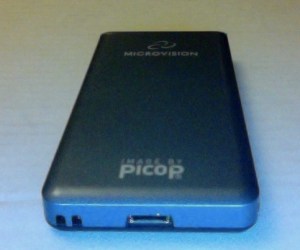
With such good news the stock should go up! Which it didn’t. MVIS closed at $0.94, down about 8%. Guessing market moves is guessing – though pundits can be paid very well for proclaiming their guesses with confidence. The market is down (or up) because – no readily apparent reason, usually. MVIS may have been down because:
1) Neither Celluon nor MicroVision made a major announcement about PicoBit. The only way I found out about it was by a lucky visit to Celluon’s web site. Since then there’s been A (one) official tweet.
2) Investors were listening for an announcement prior to the earnings report, but didn’t hear anything about the names that are associated with high volume products: Apple, Sony, Microsoft, etc.
3) Market manipulations happen, oh wait, no they don’t because the SEC prevents them and has sufficient resources to enforce the law.
4) Someone knows or suspects the earnings announcement will be bad news in any of a long list of dismal events: product delays, recalls, reverse splits, delisting, dilution, etc.

There is great potential for good news.
1) Revenues are small relative to expenses, so higher revenues could dramatically reduce the time to profitability.
2) Sales reports for existing products could be good.
3) New customers, or customers previously operating under NDAs, could be made public.
4) Any of the “several OEMs” that were supposed to “launch by the end of the year” could announce product launches. Listen for Apple, Sony, Microsoft, etc.
5) For some investors, a change in management would be an encouraging sign.
6) An embedded cellphone could be announced for sale in the US, which fits in a previous category; but the reaction could be greater because it is the market that includes most investors, and years ago the CEO said the company would be profitable six to nine months after the launch of such a product.

The stock is at $0.94. Ninety-four cents. To me, the only way that valuation makes sense is if the company never becomes profitable and revenues decline to zero. The present value of future revenues discounted for risk (read my book, Dream. Invest. Live.Dream. Invest. Live. for details on my methodology) only get to such a low number if the discount is over 90%, in my estimation. With revenue growth of 40%-70%, much greater recognition, several products available, and several more about to available (supposedly) this would look like a good time to buy. And yet, the stock is down 68% in the last year, 86% in the last five years, and 94% in the last decade. Getting the stock back up to its 2007 high of over $40 would pop lots of champagne corks in the discussion boards, make the next stockholders meeting more fun, and help me sleep better. It seemed undervalued then.
In October, 2010, I wrote When’s It Going Up?;

“I’ve held the stock for over a decade. Its high was back in the internet bubble days at about $60. I bought a few shares above $30. Today the shares have been diluted ten-fold and the stock is trading at about $2. My patience for them has been dwindling for years. And yet, I’ve bought more.”

That was before an eight for one reverse split. Allow me to correct the text.

“I’ve held the stock for over a decade. Its high was back in the internet bubble days at about $480. I bought a few shares above $240. Today the shares have been diluted ten-fold and the stock is trading at about $16. My patience for them has been dwindling for years. And yet, I’ve bought more.”

The stock looked cheap then. Dilution alone does not explain the price drop. A drop in market confidence is important, too. Market confidence is psychology, qualitative, subjective. As pessimistic as it has been, it could be equally optimistic. As I finish this Before section, both perspectives persist. Tomorrow morning, November 2nd, the company will announce earnings, have a conference call, and the market will respond and react – and I’ll write the After section.
After

The stock closed up 14.8% to $1.08; barely above where it closed last week. There are enough details in the earnings report for analysts to keep busy. The possible scenarios have expanded. But, the market basically said that the mix of bad news and good news balances out to not much different. That is one advantage of the market. People can make lots of noise but they vote with their money.

To me, the story is more of the same; great potential and no guarantees.

What I heard was that the long list of catalysts that haven’t showed up in 2016, won’t show up in 2016. They may show up in 2017, but the delays are out of MicroVision’s control. Sony has dominated MicroVision’s operations, and Sony motivations and incentives are Sony’s, not MicroVision’s. The existing products are selling, there’s interest in the technology, there’s commitment to developing and selling products; but other issues like feature creep are delaying product introductions – which means delays in MicroVision’s revenues. The current interest is significant enough for MicroVision to celebrate 67% increase in revenue, but the delay may create a divot for a quarter or two. So much for steady, rapid growth quickly leading to profitability.

MicroVision watched potential customers be dissuaded by the need to address Sony’s needs. Now that MicroVision has helped establish Sony’s customer and product pipeline, MicroVision can independently work with the neglected customers. To do that, MicroVision is developing products and components that emphasize three distinct (and possibly mutually exclusive) features: gesture recognition, so users can control or interact with the images; smaller engines, for more compact application, at least; and LIDAR, a version of radar based on light, for industry and robotics. They are also excited about working with autonomous vehicles (auto autos?) and augmented reality. In an uncommon moment, they provided guidance of the potential revenues. The first unit could be available for sale in 2Q17, and they anticipate revenues of $30M-$60M within the 12-18 months after first availability. That would be double to quadruple current revenues.

The Sony news wasn’t bad, just a delay in the good news. But an investor can wonder about when, when.

The non-Sony news is impressive. But, and investor can hear the unspoken ‘if’s.

So, the bad news includes possible good news and the good news includes possible bad news. And the stock sits just above $1.

In the midst of today’s news I heard an echo of history. Several years ago, MicroVision was proud of a great relationship with some major companies: NEC, Honda, Ericsson. The bar code scanner, Flic, never seemed to gain attention when part of NEC’s product line. The augmented reality headset, Nomad, that was launched with Honda, a car company, faded. Ericsson was involved in early attempts at using MicroVision technology in cell phones, but it seems that Ericsson has faded.

Ironically, the company may have forgotten the downsides of being a very junior partner to a major corporation, but is learning; augmented reality is back, and MicroVision could’ve been a leader, and may be again; and smartphones with embedded projectors are still seen as the major product to pursue. To continue with the irony, the LIDAR application for autonomous vehicles is similar to the steerable antenna with no moving parts that was being developed by Lumera – the group that was a division of MicroVision, then became a spinoff, and is now part of GigPeak.

It’s almost as if they would be doing better if they’d stuck with improving the products they developed years ago rather than abandoning those projects and coming back to them now. Green lasers are a key enabler in today’s environment, but the bar was set a lot lower back then.

Within that echo I hear yet another shift in strategy, but when strategy shifts that often it isn’t strategy. Ah, but this time will be different; because it is. Red, green, and blue lasers are available. Manufacturing processes have been established and improved. A variety of demonstration products are available, some basic commercial products are available, and the breadth of applications is becoming more apparent within the industry – an industry which is helping create the demand for themselves, too. This time, the company is making millions from products, not just development contracts; and the revenues are growing significantly.

Does it seem like this explanation has been going on long enough? Good. That’s partly the point of the post. Understanding a company, investing in a stock, doesn’t require daily diligence; but occasionally a concentrated effort is warranted. Years of following MicroVision, mostly from earnings reports and stockholders meetings – and the friendlier folks on the discussion boards, provide the perspective that is available to people who are Long Term Buy and Hold investors. Dropping in to glance at an earnings report or a five day stock motion may suffice for some, but my version of research can build on itself. That doesn’t mean I can control what happens with the company or the stock, but it does mean I have a better idea of whether to Buy, Hold, or Sell.

From what I’ve heard, I will Hold. The potential remains as great as ever, so I won’t Sell. The stock is cheap, so Buying would be easier than usual; but I have enough shares to re-retire if the company and stock succeed soon enough. I’ll also Hold because one scenario hasn’t changed; the company has financial difficulties now and a great potential that could be realized as soon as within the next year or so – for more than a decade.

Posted in Uncategorized | Tagged , , , , , , , , , , | 2 Comments

Fickle Net Worth

Go figure. Really, go ahead and try to figure out your net worth. It is something surprisingly few people do. Go ahead and figure out your living expenses. More folks have done so, or are at least aware of whether they have a growing or shrinking bank account. Add up your assets. Subtract your liabilities. Total your income. Take away your expenses. Few do all four. Welcome to personal finance. Lately, I’ve been watching my net worth improve; though in a very illiquid, intangible way. My house sits on the periphery of one of the busiest real estate markets in the US, and a couple of hours from one of the busiest markets in the world. Having Seattle and Vancouver as neighbors is causing confusion in my calculations. Luckily, I know something about the numbers, and have a sense of humor.
DSCN5593
“We’re glad you got to keep your house.” That’s one of the most common comments I hear. For the longer story, start with My Mortgage Modification Chronology. The short version is that I was hit by a financial Triple Whammy, a series of events that some finance professionals have called a perfect storm of bad luck. So much for early retirement. It is sweet that so many cared, and are eager to celebrate my situation. There is a bit of an illusion in play. The main bit of good news was a renegotiated mortgage that basically halved my payments. Thank you government programs and an altruistic non-profit (Parkview Services) that steered me through the process.

A mortgage is not everything. Housing is one of the vitals, but there’s more to living, or even just surviving, today’s society. Thanks to a temporarily accelerated pension, I’m able to make the mortgage payment. Thanks to two reasonably steady clients, I can cover all of my expenses except for health insurance and income tax. Thanks to a lot of scrambling, some months I’m able to pay for both. For the rest of the time, there’s a well-worn credit card. And yet, I celebrate my situation. As I type this, the Seattle area probably just set a record for the wettest October – and I’m aware of people with leaky houses, or no shelter except a plastic tarp. I’m not making enough, but at least I am warm, dry, and eating well (thanks to some frugal cooking that I enjoy.)

Of all the assets, liabilities, income, and expenses, the biggest number in most people’s life is the value of their house. If you own a house (with or without a mortgage), you control an asset that can appreciate and depreciate. The return on investment is usually much smaller than stocks or bonds. But, the good news is that number is so large that small percentage gains can generate large increases in wealth. The bad news is that, unless you can take out a loan against the house, the main way to access that wealth is to sell – and you usually have to sell the whole thing – and then go buy or rent another.

I was pleased with my timing when I bought my house. The price had dropped from $334,000 to $295,000. I got it for $291,000. That’s a nice $43,000 savings. And then the Great Recession hit. And then my Triple Whammy hit. I put the house back on the market at $291,000 and then lower and lower and lower, but never lower than what I owed plus the selling expenses. If I sold that low, I could walk away debt-free, but I’d be homeless. Business was tough, then.

Tracking a house’s market value is art and science. Houses aren’t identical. Even if they are built from the same blueprint, they sit on different properties. The history of sales in the neighborhood helps, but comps are confused by the details of negotiations, and the motivations of buyers and sellers. Divorces and estate sales can drop prices. Buyers with little price sensitivity can raise them. While it would be handy to get monthly updates from a few realtors who understand the numbers and the psychology of the market, that’s an unrealistic use of their time. (But I understand it’s okay to call occasionally, especially if you want to sell.) It is now possible, however, to get estimates from computers at any time – just without much artistry.

Zillow and Redfin produce estimates for house prices in my area. It is entertaining to watch the numbers bounce, as long as they are going up. It was painful to watch them drop. Their estimates are estimates, attempts to find the right number; but only the market will define the right number, and the market for any house is defined by the seller and whatever buyers show up.

I’ve mentioned Zillow’s Zestimate before (Upscaling Whidbey & Will Zillow Make Me Move.) During the Great Recession (which is arguably continuing for many Americans), my house’s value dropped to $216,000, which dropped my net worth to negative even with the remains of my portfolio.

And then came Seattle’s boom. For years, Seattle’s housing market has been rising faster than most parts of the country. Well-paying jobs in Amazon and several annexes of Silicon Valley firms have meant house price increases that are making Seattle unaffordable for its artists and people with creative lifestyles. And yet, it wasn’t until early in 2016 that housing prices began to rise in my neighborhood. From $216,000 the price rose to $231,000. Then, within the last two months, it began to rise $1,500 to $2,000 per week. When it hit $242,000 I was pleased because that would allow a debt-free sale again, but not enough to convince me to put it on the market. For the fun of it, I tracked it every day. My house was making more money than my business, much more money. If I could hold long enough, and if I had to sell, I finally had something of value that would allow hope – at the expense of having to relocate from the area.

You see, Seattle’s unaffordability is spreading. Whidbey Island is a tourist destination, which is why it is nice to live here, but increasing house prices also means increasing living expenses. Many of the residents who operate the tourism industry can’t afford to live where they work. Wealth is accumulating for homeowners, but if I access mine, I’d have to leave (assuming my business stayed the same.) I’d rather stay, which is one reason I work to improve my consulting and creative pursuits.

To add to the pressure, Vancouver’s unaffordability is also spreading. They did something about it by passing a Foreign Buyers Tax a few months ago. It is too soon to tell if that will make their market more affordable, but there are indications that some of those foreign buyers are now looking and buying in Seattle instead. More demand. No change in supply. Increased prices.

Whidbey sits between them. Maybe that’s why my Zestimate was rising $200-$300 per day.

Ah, but real estate professionals scoff at the lack of artistry in Zillow’s estimates. I didn’t want to subject an agent to a market analysis that wouldn’t result in a listing; so, I checked another algorithm. The person with two watches doesn’t know what time it is, unless they agree. Redfin’s estimate was even higher, $260,000. Artistry or no, something in the data suggested an increase. I like Zillow’s chart; so a few days later I went to check on it. I thought I was dyslexic. Instead of $242,000 it looked more like $422,000. My eyes are tired from working on the computer so much (which they’re reminding me as I type); but I looked away and looked back and there it was, an estimate of over $420,000. As I type, it is now over $430,000. Redfin’s hasn’t changed much. Which is closer to the truth?

Algorithms live in computers. Bits get flipped. Programmers try new code. Bad data happens. Relying on automated analyses can be fun at such times; but some caution critical thinking is necessary.

I’m not a real estate professional. I’ve bought, owned, and sold several houses in the area. I get to write about real estate for Curbed Seattle. I’m even helping agents write their marketing remarks in their listings (give me a call if you want some help.) I’m not a professional, but I do have opinions based on experience and a basic understanding of the type of algorithms in use (thanks to lots of math for my engineering degree.) I’m not going to trust an almost overnight doubling of my house’s value, but I also know that within the artistry and subjective nature of real estate markets there’s always a slim chance that someone with that much money would want a tiny house with a nice view in a neighborhood with a marina within a short drive or sail of Seattle. I also buy lottery tickets.

Such an estimate may be unreasonable today, but consider that I bought this house for $291,000 in 2007. If it appreciated at ~7% for ten years, the price would be $582,000. (A 3% appreciation would be $391,000.) Looking at the recent sales in the neighborhood, that 7% appreciation hasn’t happened. But, it does prompt the thought that, if real estate does continue to increase, if there are additional buying pressures as the region is experiencing, and if my financial situation does not improve sufficiently, then some day I may be faced with that choice. There’s nothing fickle about that.

Posted in Uncategorized | Tagged , , , , , , , , , , , , , , , , , , | 1 Comment

GIG Downs Despite Ups

It is too easy to make fun of Internet discussion boards. Either they’re as empty as vacant warehouses, or filled with ridiculous noise like a frat party. There are a few in the middle with good conversations, but even there a purposely discordant voice can derail most of the value. Just as powerful though, can be a single voice that asks a simple question that inspires a cascade of thoughts. One of the members of InvestorVillage.com sent me a back-channel message that produced a response of too many words with too little information. This blog post may just amplify that, but chronicling the thought process is valuable. The paraphrased question; “What do you see GIG’s upside is from here?“. The essence of my answer; “Up. But, I don’t know how far.” I should know.

GIG is the trading symbol for GigPeak. According to the company in techno-speak that is an improvement over previous descriptions;

GigPeak, Inc. is a leading innovator of semiconductor ICs and software solutions for high-speed connectivity and high-quality video compression over the network and the cloud. The focus of the company is to develop and deliver products that enable lower power consumption and faster data connectivity, more efficient use of network infrastructure, broader connectivity to the cloud, and reduce the total cost of ownership of existing network pipes from the core to the end user. GigPeak addresses both the speed of data transmission and the amount of bandwidth the data consumes within the network, and provides solutions that increase the efficiency of the Internet of Things, leveraging its strength in high-speed connectivity and high-quality video compression. The extended product portfolio provides more flexibility to support changing market requirements from ICs and MMICs through full software programmability and cost-efficient custom ASICs.

My simpler answer from my Semi-Annual Stock Synopsis;

GigPeak is a producer of high-end electro-optic communications switches. Through a variety of technologies, some of which have few moving parts, they are able to produce and sell the switches that allow the very high speed Internet connections that are considered necessities (that only a few years ago would have been considered luxuries).

Add software to the hardware and see that they provide a package that lets us stream videos, download massive software updates, and complain if we encounter buffering or have to wait three seconds.

If you think the Internet is growing, they’re in a good business. If you think people expect ever increasing speed and bandwidth, they’re in a good business. If you think they have few competitors because what they do is so boring and esoteric, then you understand why so few people want to understand them. Why research a tiny and volatile company with a product that’s difficult to understand when you can buy into a bigger company that’s easier to understand and less likely to do something unexpected?

That last piece of logic drives much of the investment world. They want big companies that are easy to understand where they can invest a lot of money. That’s why I invest in small companies that others may not understand. Buy them low when they’re overlooked. Sell them when they’re making so much money that they can’t be ignored by the larger investors.

Let’s get back to the question; “What do you see GIG’s upside is from here?“. Rather than simply say, “I don’t know.”, I’ll point out specifically what I don’t know that I hope to know.

My preferred method of estimating small companies doesn’t have a catchy acronym: the Present Value of Future Revenues Discounted for Risk. If you want more details, check out Dream Invest Live coveror buy my book, Dream. Invest. Live. – oh yeah, and read it, too.

The key variable is the Future Revenue. How much will the company make in the future? There’s a different answer for every quarter of their future, so to simplify the analysis I concentrate on the Future Revenue when they reach maturity. How much money will they be making when they become a recognized competitor in the industry and a desirable investment in the market? Those are subjective measures, but to simplify the analysis I look at their current competitors, or the size of the industry, or both. For a first guess, I look at the list of Related Companies in Google Finance. Most of them are in the $1.5B to $7.5B market cap range. GigPeak is currently at $0.17B; which suggests a range of about ten to fifty times their current valuation. Not bad for an investment, but without any timing. According to their earnings report, their revenues grew at 52%, and are expected to grow by at least 45%. I’ll assume a growth rate of about 41% because that doubles the revenues every two years, a bit less than what they are doing now. At a double every two years, the company and hopefully the stock will reach eight-fold growth in six years, and 16 in 8, 32 in 10, 64 in 12. Somewhere in there they’ll probably plateau – unless something changes.

GigPeak is known for changing.

GigPeak’s history is convoluted enough that it would make a book. Its changes to come will probably make another one. That tendency could raise the estimates, but there’s little reliability in such projections.

There’s also little reliability in any projections. GigPeak may gain a premium if they outcompete their competitors. GigPeak may implode if a competitor, especially one with more resources, creates a superior product and technology. It’s harder to imagine Internet growth slowing, but this is a strange world.

I’m not in a hurry to improve my estimates. Even if I found better projections for the company, its competitors, and the industry, technology and the markets are changing quickly enough that the added details may be moot. If I estimated a twenty-fold increase and was off by half, then I’d have either a ten-fold increase (yay!) or a forty-fold increase (YAY!). Both are good returns on investment. Neither returns me to retirement without help. Any further analysis would simply be enabling the more anal side of my psyche.

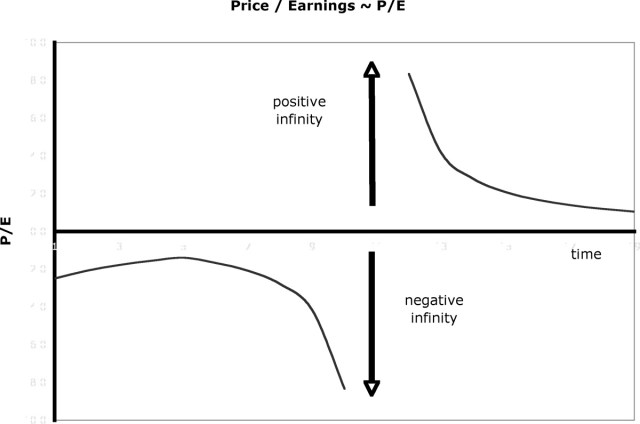
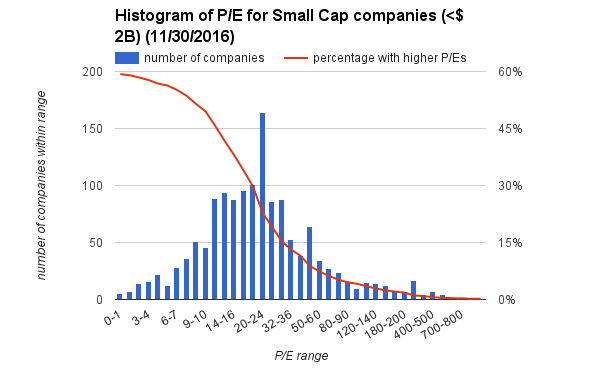
Today, GIG closed at $2.53. According to Google, that gives them a remarkable Price/Earnings ratio of 148, about ten times higher than most investors think is reasonable. That’s what happens when a company turns from unprofitable to profitable; E ~ 0 and math gets a headache. The Price/Sales ratio is 4.28, a little high compared to its competitors, a little low (I think) for growing companies with disruptive technologies. I’ll feel more comfortable with my estimate after I find a better value for Future Revenues and the size of the industry. Until then, I’ll continue to Hold.

Until then, I’ll also continue to appreciate fellow investors who ask pertinent questions without getting impertinent.

Posted in Uncategorized | Tagged , , , , , , | Leave a comment

Frugal Voting

Vote; especially, if you’re an American citizen. I wanted to get that in there first.

If you don’t vote, quit complaining (unless someone is keeping you from voting, but that’s a different issue.)

  • Step one: Notice yet another patch of clouds coming in, so postpone my walk.
  • Step two: Decide to vote, instead.
  • Step three: Pour a mug of tea, grab the voters pamphlet and ballot, and open myvote.wa.gov. (Your situation may be different.)
  • Step four: Sip, read, research, vote for a position; and repeat until done.
  • Step five: That comes later.

Let’s see how long this takes a frugal person like myself. To put this in perspective, the Voter’s Pamphlet is 135 pages long. There’s a lot going on.

photo-on-2016-10-13-at-12-52

16:37
Initiatives
Oops. Need a pen, not a #2 pencil.
Research only one initiative.
16:45
Advisories that are non-binding? Really? Ok.
16:45
Ah, Elections.
Interesting. Just based on the list, the Third Party Candidate would be from the Socialist Workers Party. The Libertarians are the seventh party, at least on this ballot.
Easy. I didn’t slow down until I hit the State positions below Governor.
16:54 A real life interruption: a phone call.
16:56
The mid-tier slowdown.
Everything filled in and signed.
17:04
And, into the mailbox. There’s even plenty of tea left in my mug.

As usual, I’m more interested in making every moment count than in understanding every nuance in political positions. Years and months of debates, platforms, conventions, ads, and social media declarations come down to picking from a very limited set of candidates. Usually, A or B; or at most, A vs B vs C vs D vs E vs F vs G vs write-in. In a republic or a democracy, voting is important. The importance of voting, however, does not mean the decision has to take a lot of time. After all of that time, I frequently find that the few hundred words in the Voters Pamphlet reveal the distinctions between the candidates. When their positions are reduced to one page, they have to emphasize what they consider most important. If the distinction isn’t there, then I research, not before. Just in time research saves lots of personal time, and I’m busy enough to appreciate getting some of my other tasks and chores done.

I do track the odds in the presidential race more because I am fascinated with data than the sport of politics.

us-presidential-election-odds-2016
The federal positions are the easiest. Even without research, there’s enough unavoidable chatter that enough news gets through. The local positions are very easy, too. I don’t hear as much about them; but I am also more likely to know someone who knows the person, know someone who is affected by the issue, and know whether it will directly affect me. Local elections are far less abstract. It is the middle of the hierarchy where more time is required. The candidates are less well-known. The positions tend to be more restrictive, so the candidates have a tougher time emphasizing a meaningful distinction.

Disclosure: I feel voting is vital to society, and I feel that secret ballots are equally vital. So, no, I’m not going to tell you who I voted for. But, I will tell you that, thanks to Washington State’s diversity, I was able to pick from at least seven parties and a wide range of cultures. I like that. It’s one of the main reasons I enjoy living in Washington State. Normal ain’t normal around here.

Frugality is personal. Frugality is a person valuing their resources based on their values. What’s important to you may not be the same thing that’s important to me. That’s great, and that’s also why democracies and republics are messy. Every individual vote counts because we each represent ourself. Parties and candidates rely on ideology to generalize positions and hopefully gather sufficient support and votes to get elected. If their generalized ideology fits your values, congratulations! That’s how the party got started, like-minded people gathering around a common cause and goal. If their generalized ideology doesn’t fit your values, don’t be surprised. Congratulate yourself on being you.

If you don’t vote; don’t complain.
If you do vote; Great! even if I don’t agree with you.
If you supported a candidate or party; thanks for putting that much more energy behind your values.
If you are a candidate; you have my respect because you’ve done more than most.
If you got elected; congratulations. You’re devoting part of your life to running our country; and losing part of your privacy.
If you’re one of the candidates I voted for; thank you. But, don’t be surprised if I forgot whether I checked your name on the ballot. Hanging onto the logic behind my vote is moot. The vote is cast. Whether my logic was logical doesn’t matter until the next election.

I watch this process played out in the media, and across social media. I look forward to February because the Electoral College should be finished by then, the Inauguration should be over, and friends who’ve unfriended friends may remember they truly are friends.

For the last few years, a thought recurs when I am voting. I come across position statements that make me wonder why no one more qualified is running. I come across unopposed positions. I vote. I’m not a member of a party because none mesh with my eclectic perspectives. And yet, maybe I’ll take that next step and see what it takes to do a bit more than vote. Considering my current financial position though, I wonder if I can afford the time.

Step 5: Remember Step 5 from above? Finish my tea, and pour myself something stronger. As simple as my voting process was, we’re in the midst of a maelstrom that may continue after Election Day.

If only I could vote for the United Federation of Planets.

photo-on-2016-10-16-at-17-08

Posted in Uncategorized | Tagged , , , , , , , , | 1 Comment

Storms Blowing Through

There’s a storm blowing into the area tonight. It looks like it could be historic, or at least feel that way. In the meantime, the power is on, and I can write. Locals reading this just after I post can appreciate the wind storm coming up the Sound. It may set records. My Voters’ Pamphlet arrived today, and those waters certainly aren’t calm. Within my business and personal finance world, one significant cutback and a hint at another are making my mind turbulent enough, even without the other turmoils. My Litany of Optimism includes a powerful concept; storms blow through.

A confession. I’m a weather geek. With a bit more encouragement in Junior High School I probably would’ve apprenticed myself to the local airport’s meteorologist. It was about a one mile walk to the tower from my house. Some friends and I would head over there and ask for the old weather maps, the ones that were out of date. Thanks to a weatherman who had a sense of humor, and an inspirational science teacher, we learned about highs, lows, and occluded fronts. For a while we took daily weather readings for the school. I wonder what happened to those records. Despite the support from adults, no one took us seriously; though I do wonder if that created the foundation for my eventual career in aerospace. Now, it means that I read the Weather Services forecast discussions, the chatter behind the forecasts where they reveal their level of confidence and the unpublicized scenarios. I post them on Facebook where they’re reasonably well received. That also means I’ve been watching this storm approach for days.

//platform.twitter.com/widgets.js

People in hurricane zones scoff at Seattle’s storms. Ours don’t even get names. And yet, any region that gets storms that can knock out power for five days for some is wise to respect nature’s expressions. The coast has already seen hurricane level gusts, though not sustained. Of course, the 20 to 40 foot waves have an impact, too; but that’s there, not here. Here, the gusts are expected to hit 50 mph starting about now. It’s just past 10PM and the winds have already blown open a window, one of those that go up and down. Not sure how it did that. The house has already felt a couple of bumps that felt like small earthquakes.

Watching a storm approach for days means having plenty of time to prepare. I already have an earthquake kitDSC_5840 (doesn’t everyone in the neighborhood?), but wind storms and power outages usually don’t require that level of preparation. I had to cancel some meetings but I was able to check on a roof patch, brace the fence, clear the deck, harvest before the wind did it, and stock the freezer and refrigerator with ice, and stock a cooler with food and ice so the big box can stay shut while I eat from the smaller one. It’s a good thing wine stores well. So do potato chips.

I suspect I’ll have to clean up the yard a bit, and maybe wait a while until the power comes back on (assuming it is going to go off at some point); and that the storm will pass.

photo-on-2016-10-13-at-12-52

The electoral storm is certainly historic. I’m planning a separate post on my frugal approach to voting (Vote!), but I mostly steer clear of political debates. I have opinions, and I like the fact that in the US we have secret ballots. One interesting consequence is that most folks think I’m voting for the other party whenever I don’t automatically agree that I’ll vote the way they will. Maybe I will, but secret balloting is one of the keys to free representation. One thing I do enjoy, however, is posting the British Bookie report. After the conventions I start tracking the candidates via Ladbrokes, the British betting site. As I posted earlier today on Facebook;

I figure bookies have to get it right, otherwise they lose money. American pollsters make money by conducting polls, and the tighter the race the more polls are conducted. Pollsters, therefore, like to report about close races. And yet, bookies may have other incentives. I don’t know. I don’t use them.

As tight as some make the US election sound, the gamblers think the race is nearly certain. Wait a month and we’re likely to know. Another storm will have passed, probably.

us-presidential-election-odds-2016

While I was getting ready for the storm, I picked up my mail. Nice. A check from a long-term client. Usually, the check is wrapped in a thank you note. This time it was wrapped in a cutback notice. It’s only 25%, but that’s also the amount of my health care premium. I’ll be able to adjust, and I’m glad I stocked the pantry. Within my Litany of Optimism is also a fascinating part-time temporary job that was going to restart soon; and I received an email hinting that the project may be cancelled. A couple of other opportunities have been suggested, but bills aren’t paid by suggestions. And yet, the right good news can make an enormous difference. My brain’s been swirling with the upsets and possibilities, but the main thing I can do is relax and let networking and budgets sort themselves out.

Those aren’t the only storms in my neighborhood, but they’re enough. If stubbing your toe makes you forget about the cramp in your thigh which made you forget about hitting your not-so-funny funny bone, then great. They’ll all get better, but in the meantime, ouch, ouch, and ouch.

I have the equivalent of the stubbed toe, et al. It is too easy to imagine someone who doesn’t have a home, is worried about deportation, and has even more uncertain employment. I’m impressed with how some people get through a day.

Frugality encourages being prepared. It doesn’t take much to put together an emergency kit. Some electoral decisions are easy. Appreciating the value of various skills and talents creates optimism based on awareness, not just hopes.

These storms will pass. Things will calm down. I tell myself that, and know it’s mostly true. And then, there’s the next storm, which is really the candidate for history. A dying typhoon is about one day behind this wind storm. They do that, dissipating their energy on the first coast they find. That storm, too, will pass. Let’s hope the electoral and financial storms don’t have similar second shifts.

Posted in Uncategorized | Tagged , , , , , , , , , , , , , , , | 1 Comment

Chaos And Continuity

Nothing extreme is likely to happen. Read that two ways: 1) in general, extreme things typically have low probabilities, and 2) specifically, civilization, society, and culture have great inertia and tend to continue with only slight shifts. As I write this, there is great political upheaval in the US because of old tapes and old emails. Shifts are happening and yet convention will probably persist. And yet, it’s a good idea to consider possibilities because change does happen. Better prepared lessens the surprise.

Pick your political candidate and someone probably thinks they belong in jail. That’s nothing new. Most of the attention is directed to the Republican and Democratic candidates because they are the predominant political parties. As I’ve said before, I am an extreme independent moderate. I’m convinced that neither party has all the answers, and that the answers that will produce the most progress are probably in the middle. That’s a generalization, but it must suffice because I’m not going to write a political platform paper – yet. (Hey, who knows? I might run for office some day, or be the focus of a viral write-in campaign.)

Because I am unaligned, I’ve also been able to spend more time investigating the other parties. (More parties are good, right?) I don’t consider them third parties because, as I recall, the US Constitution doesn’t restrict the number of parties or require that there are only two prominent ones. Why not have three, four, or seven parties? It might be a mess, but it is legal and allowed. But, we’ve always only had two parties, right? Nope.

One of my favorite comics included the most extensive history of US political parties and how their power has shifted over the centuries. Democrats and Republicans? Sure. And, Federalists, Whigs, Free Soil, American (such an obvious name that I’m surprised no one has revived it), Unionist, Populist, and Progressive have all succeeded at electing members of Congress. That doesn’t include the Tea, Coffee, Libertarian (though maybe I missed it), Communist, Socialist, Green parties and others that might be found in the back pages of the election guide. All of the parties existed in turmoil. All saw their powers grow and fade. Assuming there are only two parties in the US and that they will always be in power means ignoring the history that created them.

congress

Our current economy and political environment affects the way we live, work, and plan. The best assumption is to assume that next year will be like this year; but it is equally important to be aware that assumptions based on human nature can be invalidated with a singular event or revelation. What would happen to the population of US politicians if an American version of the Panama Papers revealed too many elected officials privately using the tax havens some of them publicly oppose?

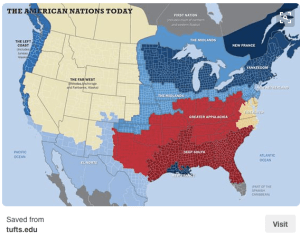
Recently, a friend and I spent an hour or two playing with my Pinterest board that is a collection of Alternative Americas. The US has had fifty states for more than fifty years. Some see that as stability. I see it as stagnation. Stagnation is rarely healthy. Regional differences can create new boundaries if the differences become extreme. Just like with Congress’ history, it was interesting to compare the history of the states and their boundaries with boundaries from possible scenarios.

screenshot-2016-10-08-at-16-21-53

While the US expansion may seem like an inexorable and inevitable westward progression, the process was chaotic, sometimes unseemly, and involved redrawing lots of lines as squiggles and some squiggles as lines. Slow, methodical pioneering makes for stately stories; but it was the surprise discovery of gold that added California which stressed the slave state versus non-slave state debate. A pig (yes, a real pig) caused the Pig War (yes, a real war) that had no casualties except for the pig, and that was resolved by having a German official define the national border between the US and the UK (at least British Columbia) by drawing a line around some islands that were initially explored by the Spanish. One fateful turn of a shovel and one escaped farm animal each helped redefine the nation.

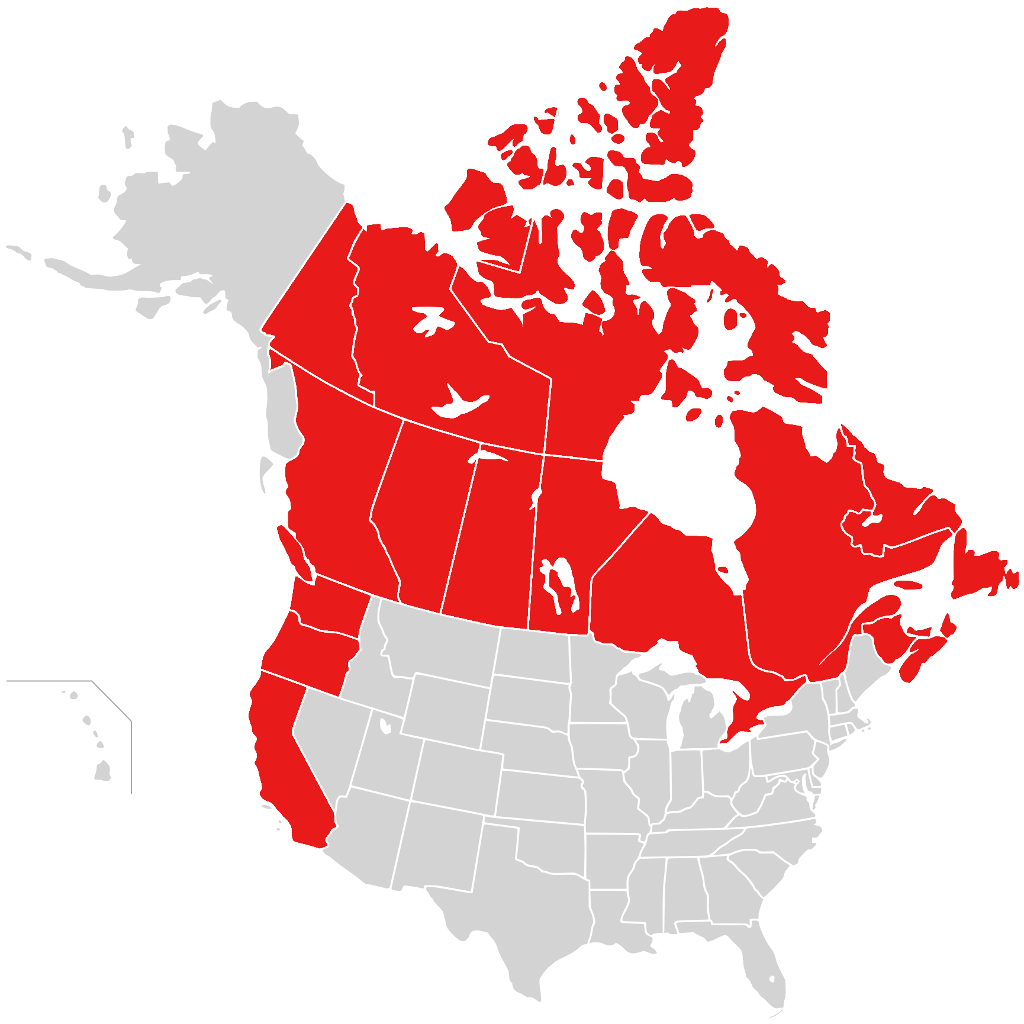
Good luck guessing at what else could add or subtract a state to the United States. If you want some inspiration though, check out a few of the maps on my board. Of particular interest to me is the one that draws the 124 States that could be created if all of the secession and reincorporation plans succeeded. (Have fun trying to say successful secession several times.) I live in what would and could be Cascadia or Columbia (depending on the mapmaker), a region defined by temperate rainforests, the Pacific Rim, and left coast politics. I was born in what could be Westylvania, that region that includes the mountainous coal mining country, a region that where Pittsburgh no longer has to pretend that it has anything in common with Philadelphia.

article-2531986-1a5cb58700000578-62_964x662

Britain’s exit from the European Union isn’t as dramatic as a possible Texas exit from the rest of the US; and yet Britain’s economy is definitely affected. Imagine what would happen to the US dollar if the US no longer included Texas’ oil fields. Just for fun (because it probably would never happen) imagine how much it would cost to build a wall around Texas, or at least relocate military bases and install border crossings.

Let me pause to check the news.

Okay. Great fervor continues. Write in candidates are being discussed. The British bookies have elevated Mike Pence’s odds of winning the election to 33 to 1, and Paul Ryan’s to 50 to 1. Low, but rising quickly.

screenshot-2016-10-08-at-16-01-57

I’m fortunate enough that I was able to keep my house thanks to a non-profit agency that helped renegotiate my ~6% thirty year mortgage to a 2% forty year mortgage. (For the long version of the story start with one of my posts.) I’m grateful, and plan to continue paying the mortgage (you can help by hiring me to help you pursue your projects – self-promoting plugs are allowed in America). Assuming that I live in the house for the next few decades, I place a low probability of paying off the loan in US dollars. The economy, technology, society, and the planet are changing quickly enough that it will be a surprise if something dramatic doesn’t change the currency or the country.

A shovel can create a migration. A pig can redraw national borders. A political party can fall from one of the two favorites, creating an opening for change.

Change. That’s the constant. Assuming nothing every changes is the mistake. Assuming nothing will change is the easiest way to plan. It’s easy to make mistakes.

Posted in Uncategorized | Tagged , , , , , , , , | Leave a comment

Costly Commuting

It’s a fine, old truck. It’s generic white, has a good cap on the back, only has a few dings and dents, and could use a few thousand dollars if I decided to make it like new again. That’s not happening. It isn’t the vehicle I would choose if I had to shop for a replacement, but when my Dad offered me his truck I said yes. Of course. It’s a fine, old truck, and I’m very aware of what it costs to use it. Filling it up today made me wonder about how much it costs people to get to work, not just the money, but the time, too. Time to break out the spreadsheet.

I am a fan of walking and bicycling. If you have any doubts, read my books (Just Keep Pedaling and Walking Thinking Drinking Across Scotland). My house, the only place I’ve ever truly felt at home, isn’t close to anything – on purpose. When I moved to the southern tip of Whidbey Island I thought I’d be retired; so, being remote was not an issue. So much for retirement. The only business within walking distance is a much-improved convenience store 1.6 miles from my house. (They’ve expanded into offering food, microbrews, and music.) The nearest strip malls are about 6 miles away. The distance isn’t bad for bicycling but the routes are hilly. The elevation gain is about 500 feet. Doable, but not if I want to be presentable.

Most of my local business trips are at least twenty mile round trips. The truck gets about 16 miles per gallon; so, take the price of gas, multiply by 1.25 and get the direct cost of my commute – about $3.50 to $4.00. For me, that’s noticeable and acceptable, but a couple of years ago it wasn’t.

That flashback hit as I was filling the 26 gallon tank today. What about the people making minimum wage?

People making minimum wage frequently have few choices. They use the transportation they have to get to the job they can get. More fuel efficient vehicles are great, if you can afford them. If, however, you’re stuck with what you’ve got, you may not be getting great mileage. Getting a better job is great, which is something almost every worker is working on. Of course, if they could get a better job they wouldn’t be making minimum wage. For those who are working for minimum wage, commutes tend to be long because good jobs centers tend to raise housing costs. Affordable housing means a longer drive, possibly from where there isn’t mass transit.

A car or truck that gets 18 miles per gallon using gas that costs $2.75 per gallon costs about $0.15 in gas per mile to drive. That doesn’t sound so bad, but for a typical American commute of 30 miles that’s $4.58 each way. For someone making the federal minimum wage of $7.25 per hour, that’s 1.26 hours of work just to pay to get to work. With taxes it gets worse. Dive into taxes and see that the IRS accepts the total mileage cost is more like $0.54 per mile, 3.6 times higher. That means working 4.5 hours to pay for getting to a job that hopefully is much more than an 8 hour shift.

Fortunately, the shift to a $15 per hour minimum wage is making progress. Even in places that have established it, they’re phasing it in, but it is progress. The time cost for commuting to a Seattle minimum wage job is approximately half the time cost of commuting to a federal minimum wage job. Of course, one reason Seattle raised the minimum wage is because Seattle is so expensive to live in that many of the people working essential services can’t live in Seattle, or even King County.

A friend and I had a conversation the other evening about the pace of life. We both have memories of having the time to read the paper either before or after work. Home time was chore time, but most evenings that was followed by reading a book, watching tv, or calling friends. It isn’t just a fantasy or a delusion; those times did exist. What happened?

There’s no one cause to our loss of time. But, filling my truck’s gas tank made me think about where my time and money go, and where my friends’ time and money go. People who aren’t making enough have any extra money probably also have less extra time. Losing an extra hour or two or more just to keep a job means less life in their life.

Whidbey’s economy relies on tourists. I work from the tourist town of Langley, sitting in coffeeshops or the library at least a few days per week. It’s good to get out of the house. Stay home too long and start to lose social skills. Pardon me while I sniffle and scratch. It’s also good to work in public for networking, collaborating, and the sociological exercise called people watching. The locals taking care of the tourists usually aren’t making much money. I’m impressed with how relaxed some of them are considering what I know about their situation (homelessness is probably more prevalent than the government and non-profits know.) The tourists are the ones who’ve found the good jobs, make enough to pay for vacations – and are frequently incredibly stressed. I can hear it in the way they order their drinks. Two or three days is not enough to unwind months of corporate crises. I can see it in the way some collapse into library chairs.

Today was a rare day. I got ahead of a few items, partly from some auspicious synchronicity. For an hour or two I sat, actually sat with a cup of tea and watched a storm go by. It’s a luxury.

What about everyone else? When getting the right job is tough means high emotional and physical costs; when taking whatever job you can get means using all your time and money to work the job – it’s no wonder to me that people are stressed, want a change; and yet, can’t see an appealing alternative. Even though the odds of winning the lottery are low, the odds of the appealing alternatives seem equally low.

Unless a client arranges a meeting, I’ll work from home for the next couple of days. I’ll save time and money. The meals will be better, too. Then, inevitably, I’ll jump in the truck, drive to some public workspace, arrive more presentable than I would by walking or bicycling, and have to work an extra hour to pay for the opportunity. I’m glad I have that option and wonder what will change to make that available to the baristas and librarians who tend those spaces.

Posted in Uncategorized | Tagged , , , , , , , , , , , , , , , , | Leave a comment

Lifeboats For Our Species

Unless you’re lucky or asleep, dreams take work. Elon Musk has announced plans to accomplish one of my dreams, colonizing space. First they ignore you. Then they laugh at you. Then they fight you. Then you win. I expect a lot of laughter over the next few years. I’m smiling, but as I laugh, it is in celebration. Something I tried to further made an enormous step forward with his announcement. I had nothing to do with it; but one of my greatest existential anxieties finally has a hope of relief. It didn’t come from a government. It came from an individual. Already, it has put my life in perspective. It probably will for others, too.

In case you hadn’t heard, the mega-billionaire, Elon Musk, has decided to do what no government has seriously considered, try to preserve the species by giving us at least a second home, and maybe more. His plan is to launch a series of enormous rockets to Mars, each carrying a hundred people for the eventual purpose of colonizing another planet, and possibly the rest of the Solar System. Go ahead and laugh, but for me, this is like finding myself on a passenger liner, seeing icebergs in the vicinity, and realizing there aren’t any lifeboats – and then finding one guy who decided to start building lifeboats, not just for himself, but for as many people as possible. In decades, it will be less amazing that someone did something and more amazing that the governments of the world, and the other ultra-rich didn’t. Even though I doubt I’ll get a seat on the lifeboat, I’m glad someone is building it.

Let’s take this back about forty years. I was an undergrad at Virginia Tech (actually Virginia Polytechnic Institute & State University, aka, VPISU, which shouldn’t be pronounced.) My selected major was Aerospace (and Ocean) Engineering. I didn’t care about fighters, bombers, or jet liners. I wanted to work on anything that would help us, Us, colonize space. Our planet is tiny and our internal and external threats have grown too large to have everyone crammed onto one over-stressed shell. One big crack from an asteroid, or one stupidly quick and massive war, and our species would become a has-been. I didn’t expect anyone to start working on space colonies that year, but hoped I was learning the right information at the right time in the right country to help make it happen. The Space Shuttle was new, and I was already hoping to work on the successor, because it was obvious that we’d need a successor. We’d never been stupid enough to throw away that much work. Forty years later, I’ve seen a lot of stupid choices. Short-sightedness is incredibly common.

Space colonization was becoming viable. I joined an advocacy group, the L-5 Society, where fellow dreamers considered the possibilities. I also joined the professional society, the American Institute of Aeronautics and Astronautics, which considered itself innovative thanks to the Apollo Program and various advances since World War II. The L-5 Society continues, but couldn’t sustain the energy to keep me engaged. AIAA became entrenched with the mainstream. I realized my best effort would be to learn how a commercial company like Boeing could make vehicles that fly reliably. I didn’t get to work on space shuttles at the start. They offered me a job working on 747s, then R&D, then 737s, then a supersonic transport – finally something that would start to touch on what I needed to learn about high speed flight. Then it happened. Despite a downgrade, I took a series of jobs that let me work on second generation space shuttles, innovative rockets, and satellites. Decades after I started college, I’d get to work on the very things I considered necessary. In the middle of that came the call.

Boeing had merged with (or been taken over by) McDonnell Douglas. Our remote and new manager called us into a conference room. Over the phone and as a group, his disembodied voice told us to throw away our notions of building something. There wasn’t enough profit in it. If we built something and succeeded, the profit margins would be small. If we built something and there was an accident, the company would lose money. Oh yes, and someone might die. If, however, we designed a vehicle and wrote about the design, the company would make a relatively predictable profit. After that design, we’d design again, again with a predictable profit. Repeat. Low risk, high probability of profit, completely legal, of course that’s what the company would pursue. There was no transcript. The person wasn’t in the room. I never met him. And, I watched the dream die. Instead of growing, the group stagnated. I stayed at the company for a few years, trying to find something satisfying, but began making more money from investments than from engineering, and retired before I was forty.

That was almost twenty years ago.

And along comes Elon Musk, Richard Branson, Jeff Bezos, and Paul Allen, people how made a lot more money than me, all of who are now launching space-based businesses with their billions. Elon has the grandest vision, but I cheer on all of them (and apply for jobs with them, unsuccessfully.) Governments spend trillions on war and almost completely stall space exploration and development. NASA’s annual budget is less than what the US Department of Defense spends in two weeks. Meanwhile, Elon, Richard, Jeff, and Paul have all launched businesses with their (incredibly large) spare cash.

Governments are driven by politics and election cycles. Space projects take too long to benefit politicians. Businesses are driven by profits. There are no profits to be made by preserving the species. At least one benefit of our economic system and our amazing wealth inequality is that someone with a grand passion can exercise it. Few do, but I’m glad they are.

If you want details, call me and you’ll have a tough time getting me to shut up. Or, check out SpaceX’s various sites. The video is easy to watch, but four minutes isn’t enough to describe the challenge.


A pair of details that have already been chastised convinced me that public perception has a long way to go to understand the draw for many who are interested. Sign up for the trip and you may die. Sign up for the trip and you won’t be on a vacation. Sign up for the trip and it will cost you about $200,000. Who would do such a thing? Me. And, I’m not alone. And, I probably won’t go.

I’m frugal. I look at the numbers. Forget about the fact that it is possibly a one-way ticket to Mars. If I was offered an job that cost $200,000, required a relocation, separated me from our complex of dysfunctional systems, and helped me preserve the species against most existential threats, that’s an offer I’d consider. If I had the money. If $200,000 sounds like a lot, consider how much people are already risking with mortgages, student loans, and medical expenses. For some, that’s barely enough to maintain, maybe not sustain, and doubtfully expand their current lifestyle. Within seven billion people, even one tenth of one percent would be enough to fill the dozens or hundreds of ships Elon is proposing.

That $200,000 appeal is a measure of our species’ pioneering nature, but it is also a measure of the state of our current society.

I know I won’t go. If they’re doing this right, those hundred people on each flight will have to meet certain standards: health, skills, talents, fertility, psychology, and ideology. The other 99 people would probably prefer a young, fit, fun, intelligent, wise, and productive person. I may meet many of those criteria, but they’ll have many more to choose from – just like the companies have been able to find other (younger?) engineers.

The horizon is rising. The Sun has set behind it as I type. For many, the idea of colonizing anything off this planet is ludicrous. But for some, colonizing planets, moons, asteroids, or empty space is as natural as realizing that our planet is spinning relative to the Sun, the rest of the Solar System, and the Universe.

If Elon succeeds, great! If Elon fails, our species, society, and civilization have progressed at least a bit. And maybe, when we realize how much sense it makes to move to Mars, we’ll realize we must be able to fix the problems we have here on our first of hopefully many homes.

Elon, congratulations, and thanks for what’ve you’ve inspired.

Posted in Uncategorized | Tagged , , , , , , , , , | Leave a comment

Frugal Harvest 2016

It was possible because of friends – throwing away old stuff. The equinox is past. Harvest time is passing, too. The garden that I apologized to has been producing produce and stories. It is time to ask the frugal question; “Was it worth it?”

dsc_6742I apologize to anything I plant. Life’s been busy enough that I typically pull some weeds, plant some seeds, and hope nature will grow something for me. I usually don’t get much. But, the deer, bunnies, and slugs seem to be happy. This year was different. Thanks to some of last year’s seed sales and friends who were throwing away some cracked pots, I was able to plant tomatoes, peppers, and gourds. Thanks to a bit of playing with old fencing, I was able to prop the pots on stands that kept them out of critters’ reach. Previous gifts of raspberry plants, an apple tree, onion and garlic starts, grew this year; especially, the perennials. Potatoes were planted after they sprouted in the pantry. My squash bed (which sounds like a mattress that wasn’t sturdy enough) came from last year’s seeds from the edible gardens of Langley. While all of these things were growing, my mushroom crop has patiently continued colonizing about a half dozen logs. Ginger, grown from pieces bought at the supermarket, sprouted, too.

That sounds like an incredible harvest. Yep. Parts of it were hard to believe.

Apples
dsc_6733Finally, a harvest that overwhelmed me. After years of caterpillars and deer, my trees finally produced a crop. The two small trees that I planted over five years ago have been trying to grow in terrible weather, despite pests, and while being nibbled to bark by deer that walked through a downed fence. Finally, with the fence fixed and record spring rain, they grew and produced an apple – combined. Incredible. Right beside them, however, is the transplanted tree from my neighbor. It and two others were uprooted during a six inch property line dispute. I was too late for the first two, but the last one was planted about five years ago. This year it produced so much fruit that my refrigerator bins are full, and I’ve had ingredients that went into oatmeal, onto pork chops, as part of roasted veggies, and eaten raw. I would’ve had more but the tree has grown too tall to harvest completely. It also turns out that the deer decided to help with the harvest. I thought the harvest was done because there were no more apples hitting the ground. After a bit of investigation I noticed that the lower leaves were being nibbled. The rabbits aren’t that tall. Evidently, the deer no longer fear jumping over the fence. At least they helped with the cleanup. If I want the smaller trees to survive, though, I’ll have to deploy more defenses next year.

Figs
The fig harvest almost overwhelmed me, but they’re much smaller. So far I’ve only used them as snacks, but I’m considering adding them and the apples into my typical fruitcake. I’ll probably have to dry them first. The figs were gratifying. Bite-sized, easy to harvest, easy to freeze, and not prone to blemishes or bugs. I’ve got about a gallon of them in the freezer.

Raspberries
Sticking with the perennials, the raspberries came back. A friend was thinning their garden and gave me about a dozen canes last year. Somehow they survived me and came back. I only picked about a dozen. When they were ripening, I wasn’t watering. They were dried on the vine. The birds appreciated them, though. More defenses.

Garlic
Last year, a very successful gardener game me some extra garlic. Extra garlic is possible? They suggested I plant it this year, which I did. If it’s out there, it’s hiding. I suspect they ended in the bellies of the slugs.

Onions
dsc_6745This spring, a new neighbor was surprised to find free onion starts at one of the local garden centers. Buy something, get a handful of baby onions. They are new neighbors, which meant buying lots of things, and getting lots of onions. Thanks, folks. Mine grew to about the size of golf balls, not bad, but not tremendous.

Squash
dsc_6744Langley is a tourist town with a wide mix of ideas, one of which was to encourage business owners to plant edibles instead of ornamentals. The idea is so simple and so unexpected that most people hesitate to eat any of it. It’s a sad statement to realize that people think they need written permission before doing something as simple as eating a beans and peas from a sidewalk patch. I enjoy seeing plants I wouldn’t see otherwise. The tall artichokes look alien. Last year, one patch had squash. I harvested a few at the end of the season, ate some, and noticed that one was rotting before I got to it. I saved the seeds, planted them, and had the biggest bed of squash ever, for me. The mystery was that I couldn’t remember what kind it was. Evidently, they are big and yellow, so I’m guessing zucchini. I only have two, so will eat one and save the seeds from the other; but I’ll also celebrate a garden bed that was so covered with leaves that the weeds stayed low, and grew so many plants that the slugs couldn’t keep up.

Tomatoes and Peppers and Gourds
The cracked plastic pots and the wire stands were enough of an excuse to actually buy dirt. Money has been tight enough that I haven’t bought dirt until recently. Maybe when people ask me how things are I should tell them I can finally afford dirt. The good news was the the wire stands worked, as long as I made them wide enough (to keep from blowing over), but not too wide (which put the bottom of the pot within reach of a stretched slug). The plants grew! I even got fancy and bought some chicken manure mix to help them along – and helped them too much. The plants basically burned because the soil was too nutritious. I’ll probably get a half dozen tomatoes, about the size of a handball. The peppers are doing better, at least for the stems and branches, but the peppers are small and may not mature before the end of the season. The gourds weren’t for eating, but hey, why not try growing a mug? I might get a thimble.

Potatoes
Somewhere down there are potatoes. In the various places I planted them, the potato plants did fine – for a while. Then, everyone seemed to eat them. This has happened before. What’s also happened is that I found a small harvest under each. East some. Plant some.

Ginger
Last year I grew ginger indoors, and it did better than I expected. When the summer got hot, I put them outside to soak up the warmth, and they seemed to wither. But, just like with potatoes, it is hard to know what’s going on underground. So, I brought them inside. From one shoot came two, and now there are three. They’re tiny, but I’ll encourage them.

Mushrooms
Mushrooms grow when mushrooms want to. I planted, er, inoculated some logs over a year ago. The mottling makes it look like something good is happening; but the logs got so dry that the bark peeled. No reason to give up hope. I just watered one and set it in the ground to see if some contact with dirt will inspire some fruiting.

Aloe Vera
dsc_6748No, I am not planning to eat aloe vera (but pass along a recipe if such a thing exists.) From one donated plant, I’ve given away eight, and have at least fifteen more sitting in my living room window. The original is so happy that it sprouted a flower spike, something I didn’t expect. The flower stalk is over three feet long. I’m surprised some hummingbird hasn’t tried to break in to say hello.

Frugality
Here is where the question comes around; “Was the garden worth my time and money?” I know plenty of gardeners whose gardens produce as much as 80% of their food. For them, it is definitely worth it. Growing things is not an obviously profitable venture, though. If it was, farmers wouldn’t have such a tough time. My garden mostly produced apples and figs, which are tasty. The rest of the crops were encouraging, but not very productive. The most produce came from the plants that required the least tending. The plants that used the dirt, pots, stands, and watering produced a few things; but it would’ve cost less to buy them from the grocery. On a strictly objective analysis, I should spend more time working and less time gardening.

And yet, I’ll continue to plant things. I want to grow things. Convenience, emergency supplies, knowing what goes into my food, an appreciation for farmers, a nice greening of the property, and an easy opportunity to learn are all reasons why I’ll continue. As I learn more, it is easier to produce more productively. I do best with perennials. Good. I like fruit. I’ve gone from not growing fruit, to growing fruit but not vegetables, to maybe growing both and more. That’s personal growth, and that’s valuable.

I like to plant things. Usually, I plant ideas. They don’t always grow, either. They take a lot of tending, and sometimes find fertile places to grow – like in a similarly minded person. Ideas are perennial. That’s my strength. The results aren’t as quick and obvious as bed of zucchini (picture that), but they can be sweeter and last longer. This harvest is mostly over, and yet, I know that there are an unknown number of potatoes in my yard, ginger that may appreciate its change in location, and mushrooms that may mushroom. Part of my litany of optimism comes from similar plantings, ideas that I tend, that are coming along, that may yet send up a impressive spire or mushroom unexpectedly. In the meantime, I think I’ll get some better fencing.

Posted in Uncategorized | Tagged , , , , , , , , , | 1 Comment