Fear Is Expensive

 Fear is expensive. So is distrust. Hatred costs even more. Assuming nothing will ever break or go wrong isn’t cheap either; but at least you can feel better until it does. I produce a blog called Pretending Not To Panic, which is “news for people who are eager and anxious about the future.” As some say, prepare for the worst and hope for the best. Within the last few months though, I’ve heard too much of the fear, distrust, and even some hate. It is sad to witness so many resources being diverted to destruction instead of construction. This blog’s goal is to help people with dreaming, investing, and living. That’s a lot more fun than nightmares, hoarding, and only considering surviving – and can be cheaper, too.

Back in the midst of ancient times, or at least in the 80s and 90s when I worked at Boeing, I had a tendency to tell management what I thought. As one co-worker put it, I “managed upwards.” He walked by one of my annual performance reviews. Rather than hear what I should do differently, he overheard me suggesting things the supervisor could do that would improve our performance, or at least mine.

During one phase of process improvement exercises, we were taught and told to document every office process. The groans were audible. But hey, the sooner we got it done, the quicker we could get back to engineering. As I wrote up outlines and drew up flowcharts, I noticed some trends:

1) The silly exercise taught me why so many tasks take longer and cost more than the original estimates (there are always more steps than you imagine.)
2) The silly exercise was ridiculous and a waste of time, until invariably finding one task that could be dramatically improved that would pay for all of the other wasted efforts (but it required practice and persistence to get that far.)
3) The silliest thing about the exercise was noticing how many of the steps in a task were there because the people ‘above’ didn’t trust the people ‘below’ (or flip the phrasing to the people who weren’t doing the work didn’t trust the people who were doing the work.)

Every level of management was another level of No. Trying to get a new idea approved meant getting a string of Yes without a single No. One No, one person who didn’t trust the people who were trying to improve things, was enough to stop progress. Doing things ‘the way we’ve always done them’ simply meant reusing a process that had managed to slip through years before, possibly only by luck. In the meantime, distrust added levels of approvals, dammed plans, and many missed opportunities.

It is easy to say no, to be against this or that, to keep doing things the same old way and to keep things from changing. If the world didn’t change, that attitude can succeed. The world is changing. Trying to make things the way they were before is futile.

The opposite approach has its issues, too. Assuming everything will always succeed is like driving around without paying attention to the gas gauge, the battery charge, or the energy left in the driver. Grand, passionate initiatives sometimes do succeed; but too many people expect to have their ideas adopted as pervasively as Steve Jobs’, Bill Gates’, and Jeff Bezos’. For every one of those successes, there are too many failed attempts to count.

Of course, part of the inspiration for this post is the political discourse that is impossible to ignore. Politicians employ hyperbole, at least in public. Things are either devastating or marvelous. The threats are going to be catastrophic, but the solutions are going to be infallible. They aim to elevate emotions, even though executing the responsibilities of office are ideally logical, rational, and realistic.

Part of the inspiration for this post is also from people talking about their personal finances. The economy is going to fall apart, and there’s nothing to do about it except hide the cash. The economy is going to reinvent itself, and the thing to do is abandon every connection with convention.

Whatever happens with the election, it is most likely to be a chaotic mix and mess. Americans have a history of accidentally dividing up the power so one party may rule one branch while the other party rules the other branch – and hopefully the Supreme Court doesn’t get too politicized. (Oops. So much for convention and nothing changing.)

Whatever happens to the economy, it is rarely a case that everyone suffers. Sadly, in our economic system suffering is too common. I’ve experienced some of that. At the same time, some people have succeeded spectacularly. (Go check the guest blog from Alan Beckley.)

DSC_5840There are topics that require consideration, reflection, and preparation. Fear, distrust, and hate are signs that emotions have overwhelmed reason. Earthquakes happen, so make an earthquake kit (or a tornado kit, or whatever kit) and then get back to living. Euphoria, elation, and exuberance are fun, but they too can be signs that emotions have overwhelmed reason.

For me, one of the most appealing aspects of our society is a very old convention that I hope doesn’t change: innocent until proven guilty. A more recent one: trust and verify. They share a common concept: assume the positive but be prepared for the negative. The data show that most people are good, and that assuming the best is worth more than the few times when the worst happens. Flipped around and money and time are spent defending against threats that are usually smaller than expected, resources that could be used for construction rather then destruction. It is true for our society, a country, and even for how people manage their time and money.

Posted in Uncategorized | Tagged , , , , , | Leave a comment

Guest Post: Invention Success – What Happened Six Months Later – In 3 Easy Steps – Part 3

The following is a guest post from the inventor I mentioned in my Friendly Good News post: Alan Beckley. We happened to hire into Boeing within six months of each other in 1980 and had almost identical jobs (as seen from the outside, at least). We both left Boeing eventually, though at different times and for different reasons. We, like so many other people, are redefining our work selves, which is why I am posting his story here. Regular readers have witnessed my story. Here’s part III of III of his. (For more of his story, check out his blog for inventors; Ideaworth.


Invention Success: What Happened Six Months Later

In my second post, How I struck it Rich as an Inventor of a Sell On TV Product I described how my strong conviction – that my product should be a successful sell on TV product – paid off.

During a four-year period, I contacted all of the biggest players in the DRTV (Direct Response TV) business not once, but several times.

No one seemed particularly interested and I received countless rejections. With each new no, I felt a sinking feeling in the pit of my stomach: perhaps my conviction that this product was perfect for DRTV was wrong and all of my nay-sayers were right.

Finally, in what I considered my last attempt, I found a champion for my cause, Bob Greenstone. Bob did what it took to put together a deal with Allstar Products, a large DRTV company. Allstar got behind Wonder Wallet in a big way: with tons of TV commercials and a huge push into retail stores across the US and Canada. Wonder Wallet has been a phenomenal success for Allstar Products and for me.


Six Months Later

Now, I want to discuss what has happened since I began collecting large royalty checks; what I have done during the last six months, how my life has been transformed by this financial windfall.

Often such tales of “sudden” success end badly with wasted potential, poor choices, and terrible consequences. Fortunately, that has not been my experience.

I have had many long car trips over the last five years and lots of time to think about what I would do if I ever achieved meaningful success. A very clear vision emerged for me: I would pay off all my debts – personal and business. I would once again set aside money for investments for the future.

Last but not least, I would do what I had longed to do but never could seem to manage: I would devote a significant portion of every royalty check directly to charity. I wanted to do what I could do to help those less fortunate than me. I had always managed to do what had to be done for me and for my children over the years, but, at the end of every month, there never seemed to be anything “left over” to help the neediest in our society. The needy certainly deserve a lot more than what is left over.

So, let’s look at the bottom line: how have I done during the last 6 months on my three key goals:

  • Pay off all my debts: business and personal:
    • Personal debts were paid off in December, business debts will be paid off in April
  • Set aside money for investments for the future:
    • Investments will begin in April
  • Devote a significant amount of every royalty check directly to charity, those in need:
    • Last month, I gave more to charity than my gross income when I was a project manager in telecom, it feels good to help those most in need.

Six months later, my life is transformed.

I no longer work 7 days per week, 16 hours per day. Often, what I do during a day – working out, running errands, dreaming up new products – looks nothing like what most people define as work. I now have the independence to use my time as I choose.

I do now what I only dreamed about for the last 15 years: I use my time and my resources in pursuit of what really matters to me. Naturally I am working on new products to keep my business on track and moving forward.

But now my success directly translates every day into also helping those who are less fortunate than I. That just seems right to me; and, after all these years, it feels very good.

It feels that I am doing something that truly matters.

Life is good.

Posted in guest post | Tagged , , , , , , , , , , , , , , , | Leave a comment

HitRecord And Illustrating Wealth Inequality

Last night’s class ended with my common refrain; “The most powerful tool we have is each other.” The class was part of a series I am teaching about Social Media for Writers. Rather than stand up there and pretend that I am some exalted expert, I try to show folks that the best way to learn about social media is to be social. We can do much more together, including learning – but also, creating. This morning, a friend passed along a link for an organization built around that idea of crowd collaboration. I’ve decided to listen to my own advice and dive in. Welcome to Day 1 of my involvement with HitRecord.

We’re a new kind of online community working together as a production company” – HitRecord.org

The intro video that my friend shared on Facebook talked about something I’ve frequently experienced. Creative people can have great ideas that almost, but not quite succeed. So many ideas require more skills than one person can embody. Even Michelangelo and Leonardo had help. (I’m talking about the people from the Renaissance, not the Ninja Turtles – but they had each other, too. Those graphics are probably locked down by copyright, though.) The idea for the site is to collect ideas, talent, skills, energy, resources, and enthusiasm to create and complete projects that might not be possible within one person’s community. Reach out and mix, and watch what happens. No guarantees.

The frugal part of me appreciates the possibilities. An author can have a marvelous story and beautiful writing, but have no idea about how to design a book cover. A videographer may capture phenomenal footage, but is stymied by the sound track. How many ideas have you had that were one person shy of something wonderful? (Helping such people catalyze their creations is one of my joys as a consultant.)

About a month ago, several of us tried to find a way to illustrate the amazing wealth disparity revealed by Oxfamwealth inequality. Half of the world’s wealth resides with only 62 people. To some people, that’s an abstract statement best addressed by ideology. To me, it is a quantifiable warning sign of an unstable economic system. We tried for days and came across a revelation; “The very fact that this is beyond some of our technological limits is a message –“ Displaying the wealth inequality would require wealth. We came up with a idea for one print that would represent the imbalance between one of the ultra-rich and the millions of people that would be required to match that one person’s wealth. Printing the image would cost millions of dollars. Only the rich can demonstrate how rich they are.

Maybe there’s another way.

1) 17:20 Go to HitRecord.org
2) 17:20 Join
3) 17:21 Fill in username and password and read the shortest terms and conditions I’ve ever seen and prove I’m not a robot.
4) 17:23 Waiting for the confirmation email.
5) 17:23 Realizing I’ve set up yet another online account.
6) 17:24 I’m in! And they don’t like my browser, but I can go ahead anyway while experiencing a “degraded” experience. I’m betting that they’ll upgrade eventually. If not, I’ll do the rest on my Chromebook.
7) 17:25 Time to explore.
8) 17:27 Out of 16 interests, I’ve picked 6 to emphasize: Writing, Photography, Voice Acting (which I hope is like voice-overs), plus the 3 that they selected somehow: Video Q&As, Interviews, and Curation. I suspect I can change these later.
9) 17:29 Get Started! which is slightly delayed because I am documenting the process.
10) 17:30 The first thing they direct me to is the page of featured challenges, opportunities to collaborate.
11) 17:31 Some interesting possibilities that I can already contribute to; but first, follow them on Twitter: @hitRECord.
12) 17:33 Cool. Great. Nice stuff, but I want to create. How do I do that?
13) 17:34 Can’t figure out all the icons; so, when in doubt, fill out my profile.
14) 17:39 Enough frivolity. Back to work.
15) 17:39 Hit the big red circle and see what happens. Ta da! That’s where I can issue a challenge; i.e. suggest a project.
16) 17:40 Evidently, the button for creating a project makes me a producer. A new resume line?
17) 17:42
Displays of Extreme Wealth Inequality
Accurately displaying the world’s extreme weath inequality requires extremes only the rich can afford. Let’s show the world the reality. (Has to be under 140 characters, Twitter’s influence pervades.)
18) 17:46 Benefit from my previous blog post and copy&paste to create a description;
Wealth inequality is so staggering that the nearest analogy are astronomical numbers, and astronomical numbers are so hard to grasp that most folks don’t worry about them.  Oxfam released their annual wealth inequality report. As of the end of 2015, 62 people own as much wealth as half the population of the planet. The trend has (oops, typo) is a worry for people’s lives and the global economy. There are several representations of the previous years’ situations, but they are already out of date, and the extreme nature of the situation has become literally unimaginable. Our brains don’t deal well with vastly different numbers and tend to slip from reality into abstraction. Unfortunately, there are real world implications and they are manifesting faster than many of the other global issues.
The longer version of the discussion is over on my blog: https://trimbathcreative.wordpress.com/2016/01/26/extreme-displays-of-wealth-inequality/
19) 17:51 Issue a challenge.
20) 17:53 Or not. Evidently, I have to “Add at least 1 Challenge to take Live”; which sounds like an appropriate reciprocal effort – and may also create a significant delay.
21) 17:55 Or not. How do I add a challenge?
22) 17:56 Hello, Help.
23) 17:58 Help makes it sound like I did everything I was supposed to do. Evidently, not. Random poking around will commence.
24) 18:00 Okay, let’s try issuing a Challenge from scratch via a new window I found. Glad I copied and pasted.
25) 18:03 Add tags: infographic, infographics, meme, printable, print, graphic art
26) 18:05 No deadline, though within the next few months would be good because a year from now the numbers will have changed again.
27) 18:06 Not sure what else to add; so, Issue Challenge! & Challenge Created!
28) 18:07 I have no idea what to expect from here; so, I’ll leave the window up, take a short break, and then get back to finishing the blog post if nothing has happened.

It’s Friday evening, almost dinnertime. In less than an hour, I was able to take a stalled concept and move it onto a new playing board. Maybe it goes nowhere. Maybe this is the way to find a solution. I’ll post updates if there’s any progress. There’s an appropriateness to using crowdsourcing to illustrate wealth inequality. Can a crowd create a pervasive illustration that would cost millions otherwise? Do they even care? Am I using an awesome tool for the wrong purpose? It wouldn’t be the first time a screwdriver was used as a hammer.

Amongst the worrying nature of the world, I am encouraged by the reality that one of the growing trends is based on collaboration, cooperation, sharing, and equality. If this project was to somehow also make money, the participants have a chance of getting paid. So far, the site has paid out about $1.6M to individuals. That’s not the goal of my project or challenge; but as time allows, I hope to help others for the fun of it and possibly for some financial benefit. If a site like this produces the next hit indie movie, bestselling book, viral video, or something unimaginable yet profitable, then it was probably worth the effort.

Power and money are seen as synonymous. We may be in an era when that notion has been amplified and is being challenged. Can crowds successfully compete against conventional organizations? Some say yes. Some simply scoff. I suspect there will be a mix of the two because the old ways are looking unstable, but the new ways haven’t proved themselves to be sustainable. It may take years to prove if the instabilities were temporary or catastrophic. It will take years, and maybe generations, to prove if a new system is sustainable. The good news is that we can try now, find out for ourselves, and maybe challenge old ideas with new.

Posted in Uncategorized | Tagged , , , , , , , , , , , , , , , | Leave a comment

Shifting Silly Plans

Ignore the calendar. Spring is here. My potatoes and garlic told me so. So did the skunk cabbage. I don’t know who or what to thank or blame, but in my pantry and outside potatoes and garlic are sending out shoots. On a run the other day I saw my first skunk cabbage of the year. Plans are necessary, but when opportunity shows up action is required. Otherwise, good things go to waste.

Do not come to me for great gardening advice. Anything I plant or am given to water gets an apology from me first. Others produce amazing produce with very little time and effort. I tried. The slugs, bunnies, and deer enjoyed my projects. And yet, some things grow despite my efforts. I won’t get in their way, and even give them a bit of encouragement – followed by yet another apology.

The frugal side of me wants to produce produce. Food grown at home has a lot of advantages: as organic as I can make it, readily available, supposedly sustainable, good emergency preparedness, and an excuse and reason to get away from the computer. After a few decades of trying, all I’ve managed to somewhat reliably produce are potatoes and surprises. I can’t even get zucchini to grow faster than the critters can eat it; but, somehow I’ve grown figs, apples, a few berries, tomatoes, peppers, ginger, and lots of herbs. Considering the price per pound for some of those, that’s a good deal.

DSC_6306It is February 16th, more than a month from the first day of Spring. I’ve been busy with my clients, my classes, and my talks. Carving out a bit more time to take on another project, an outdoor project, seemed silly. Then, I opened the pantry. The garlic was growing. The potato bin had a few spikes popping up. They wanted to grow, and weren’t waiting for me; but were seeking sunshine, water, and soil. In a bit of a frantic dash, I pulled them together, collected some paper tubes I’d saved as starter pots, and planted them before the sun went down. I have no idea if any of them will grow, but they’ll have a better chance outside with Nature tending them.

The idea didn’t seem so silly after I realized that the places I wanted to plant them already had volunteers breaking through.

Seattle has been warm and wet after being warm and cold. According to a tweet from the National Weather Service, “All-time wettest Dec-Feb for Seattle was 1998/99 with 22.77 inches. This winter so far 22.19 in.” Maybe El Nino made it happen. Something was different, and my plans of pruning during a cold snap, enriching the compost with egg shells, building up weed barriers, and establishing protective netting were superseded by Nature and reality.

I help people make plansDSC_6141. As a friend and fellow consultant put it, I catalyze their passions into actions. Step one: learn about the explicit goal. Step two: uncover the implicit goal. Step three: build a plan that gets from here to there, wherever there is. Step four: begin executing the plan. Step five: watch reality change everything. Step six: change, shift, adapt, and continue with a new plan. It is a process that can seem silly; but unless you find a reason and a method for taking that first step you’ll have a tough time making any progress. Without developing a plan and failing, it is difficult to succeed. That’s true in projects, investing, almost any human endeavour.

Ask most artists. They have a vision and an intent, but the characters in a story rewrite the story, the lighting or the subject’s attitude shifts a photograph, imperfections in raw materials redirect a sculpture, an audience redirects a performance.

When I started writing Just Keep PedalingJust Keep Pedaling, I intended to write a simple travelogue. After the World Trade Center tragedy, my book became a comparison of pre- and post-9/11 America. Now, I realize that a rewrite could focus on issues of personal body image or American self-esteem.

The world is in accelerating change. Election cycles, political responsibilities, climate change, inequalities, technological advancements, and financial upsets are all active and increasingly intertwined. Several governments are frantically trying to adapt to plunging oil prices, and therefore plunging revenues, which are causing backlashes against austerity, while renewable energy redefines industries and jobs, as coastal communities are having to evacuate their towns. The issues can’t stand still because their neighbors will jostle them as well.

I’ve considered holding a salon of sorts in my house; just a gathering of friends who are aware of more than three issues at a time. This year is already overwhelming and we’re barely a tenth of the way through it. From the time I planned it until now, a US Supreme Court Justice had died and a replacement must be selected, Japan’s central bank has joined European central banks in charging negative interest rates, we’ve detected gravity waves, a country’s electrical grid was hacked, and an armed insurrection arise and fell within the United States. (Those and more are collected on PretendingNotToPanic.com

#PNTP

#PNTP

.)

And yet, it is good to have a plan. Otherwise, it is too easy to stand still forever, letting uncertainty create inaction, and never making progress.

In less than an hour at dusk, I planted about a dozen potatoes, found a few more, set some garlic in the ground, and was surprised that mushrooms planted a year or so ago may be fruiting. I didn’t expect that, but if that’s what’s happening I have plans for steak and mushrooms, omelets, salads, soups, pizzas – unless something changes my plans.

An unexpected mushroom?

An unexpected mushroom?

Posted in Uncategorized | Tagged , , , , , , , , , , , , , , , , , , , , , , , , | Leave a comment

Fickle GIG Market

It happens. Good news for a company is followed by bad news for its stock. Welcome to the wild and weird world of investing in small companies. GigOptix announced profits and record revenues on impressive growth and the stock, GIG, went down. Investing in small companies is a fickle thing; which is why many investors are chased away, and why there are many opportunities for investors and speculators that have a high risk tolerance. It certainly isn’t fun and easy, though.

If you want more background on GigOptix, dive into some of my previous posts. GigOptix is the geekiest of my investments, so don’t be surprised if the jargon gets to be too much. The short version is that GigOptix makes the switches that make high-speed Internet very high speed, and as speeds increase, their competitive advantage increases, too. For a business in a growing market, shedding competitors while gaining customers is a good and profitable thing. What could go wrong?

For years, GigOptix has grown its product line by acquiring other small companies doing similar work. Until recently, the company was so small that some American houses cost more. But then, some houses are ridiculously priced. I ended up with GIG stock because MicroVision spun off Lumera, and Lumera was bought by GigOptix. As GigOptix has progressed, I’ve bought more stock. The stock has been cheap, the potential has been increasing, and lately the company and the stock have been realizing some of their potential.

Within the last year, GIG has been as low as $1.12, back when it was slightly unprofitable but growing. Within the last few months it hit a high of $3.42; a nice triple. Then, the earnings report came out. Even at $3.42, I thought the stock was undervalued. A good report should send it higher; especially as the market cap crested $100M, a key criterion for some investors. I didn’t agonize over it, or wake up early or stay up later to read the report. The market would do what the market would do.

Screen shot 2016-02-12 at 6.49.04 PM

After the report was released, the stock fell. Currently it is down over 25%. With that kind of bad news I avoided reading the details of the earnings report because there were other things to do in my life, and I had control over them. The stock continued to fall until it hit a low of about $1.95, before recovering a little.

It’s Friday evening. I’ve got my vodka tonic. I finally opened the earnings report.

  • Company revenues were up 23%.
  • Net income rose from a loss of $0.18 per share to a profit of $0.03 per share.
  • Gross margins increased by 5% points.
  • The company has $30M in cash.
  • The company expects to grow about 14% this year.

They tend to underpredict and overperform, so GigOptix has become a viable, profitable, growth company in a growth industry.

So, where’s the bad news that sent the stock down?

It doesn’t take much to shift the stock price of a small company. There are far fewer shares and far fewer investors. At a glance, it looks like one major investor decided to sell their shares. Without an equally large investor trying to buy at the same time, supply and demand make the price drop. The next question to ask is, “why did they sell?” It might have nothing to do with the absolute value of the company or the stock, and more to do with the relative value of some other company or stock that they needed the funds for. A big sell could also be because the investor’s investors wanted to get out of the stock market and into cash. Considering the global markets, that is a likely scenario. Someone with more time to spend on the markets may be able to dive deeper. I simplify my life by focusing on the company’s fundamentals.

GigOptix just proved to me that my previous analyses were accurate enough. Even with the drop, the stock is up 85% from a year ago. It is down an embarrassing amount from my 2005 purchases of LMRA, but has returned to breakeven for my purchases of GIG. If I thought it was a good buy then, logic suggests that it is a better buy now.

I will not, however, be buying. Any spare cash I have now is directed towards home maintenance, car repair, taxes, and – well – years of Dammed Plans. Maybe, maybe I could set aside enough for a hundred shares or so, but that wouldn’t dramatically improve my position. The smallest of their competitors are four times their size. Most of their competitors are twenty times their size. That’s sufficient upside potential for optimism.

Maybe there’s some industry news that undermines GigOptix’s competitive advantage. That’s the nature of business and technology. Even in such a situation, however, the markets are frequently large enough to have room for the new and the old. GigOptix is probably disrupting some competitors, and the same can happen to them. If, however, the price drop was merely the shifting of some institution’s portfolio, then the good news can be bought at a lower price.

In any case, GIG is an example of why investing in small companies is not for everyone. I’ve seen this happen often enough that I am not surprised, even though I was disappointed. (For more about my investing history, read my book, Dream. Invest. Live.) Dream. Invest. Live.Except in a few situations (DNDN), the good news is eventually reflected in the stock price. For stockholders, that means the best move can be to be patient. The fickle actions of others shouldn’t be a reason to mimic them – unless, the real reason turns out not to be fickle. Every investor should have access to the same information, at least according to the law, so if you’re curious, dive into the SEC filings and company announcements, and make up your mind. You’re welcomed and encouraged to share your thoughts here, or even better on discussion boards like Investor Village. Maybe I’ll see you there.

In the meantime, time to put investing aside and get back to living.

Posted in Uncategorized | Tagged , , , , , , , , , , | Leave a comment

Super Bowl Ads Sigh In 2016

Oh, advertisers. For one day each of the last fifty years you’ve publicly exercised your power during the Super Bowl, the event that seems to be the ultimate in sports competitions but that really only makes sense within 5% of the world’s population: Americans. It wasn’t always that way, but thank Apple in 1984 for shattering the image of PCs and shattering the image of ads as predictable. As I mentioned in my previous post, about thirty years ago I quit watching professional sports. I realized that hiking, skiing, bicycling, or reading were better uses of my time. It wasn’t until I began writing this post that I noticed the coincidence of my distancing from sports happening as advertisers became much more prominent. Evidently, sometimes writing teaches the writer regardless of what others get from the effort.

Once a year, however, I step back into the world of ads and watch the ultimate ads that are affixed and that help pay for the supposedly ultimate game. (Soccer, rugby, cricket, and Olympics fans can argue their cases on their blogs.) While it is highly unlikely that I’ll buy anything that the ads are offering, I watch them to see what corporations are hoping everyone else will buy. Thank you YouTube, for making it easier to skip the game and just watch what happens between the plays. After the game, and after millions had seen the ads, I watched the ads I could readily find on AdBlitz, made a few notes, and waited a day to let thoughts and feelings percolate. Besides, if I couldn’t remember the ad 24 hours later, and if notes didn’t help, that tells me they missed me. Conversely, I can remember the ad about the car with the singing sheep – ah, it was a truck, a Honda Ridgeline – so, evidently that one worked. Well, it worked as well as any, which is to say that none of them convinced to me buy anything; though a few convinced me I didn’t want to do anything associated with their companies.

Where would America and capitalism be without ads?

So it doesn’t get lost in the list.
NFL
The Baby Boom ads were a nice touch. I particularly liked the choir. I was a bit surprised by the reference to NFL is family, as if making babies was part of being a fan; but then, I was raised Catholic and have heard it before.

Food

  • Butterfinger
    Be bold, and use an bold ad, because sneaking a candy bar into your day is a radical concept for some people. How dull are peoples’ lives, or how dull do the executives think everyone else’s life is?
  • Bud Light
    Beer will bring us together. Free beer might bring us together, at least until the keg runs dry. Even free Bud Light wouldn’t work for me. My simplest criterion for a beer is, if I can’t see through it, there must be flavor in there, somewhere. Oh wait, they dissed those beers.
  • Coke
    About the only way I drink Coke-Cola is with rum, and I haven’t had one of those in years. At least the ad was entertaining, well done, and true enough to character. Bubbly sugar-water pays for a lot of video production. It reminds me flying over Las Vegas and realizing the city grew because so many people gambled away so much money.
  • Budweiser
    Excess is the only way. Not really, but go enjoy that.
  • Pepsi
    Hey, I like to dance. Seeing a bit of dancing from the 50s, the 80s, and the 10s was fun. What does that have to do with colored and bubbly sugar water? At least Coke has rum as a (rare) personal enticement.
  • Mountain Dew
    While I don’t drink bubbly sugar drinks anymore, I must admit to enjoying Mountain Dew for a long time. That ad creeped me out, though. Are hallucinations part of the experience, now?
  • Doritos
    Having a baby birth itself to chase a Dorito was certainly entertaining and creative. I felt sorry for the mother. Ouch. Of course, maybe raising the kid on chips and soda will make a lot of their life easier – except for the dentist bills.
  • Doritos
    Creative again.
  • Skittles
    Art! It doesn’t convince me to buy Skittles, but I’m glad they made art about art starring an artist.
  • Taco Bell
    All I can remember is that George Takei got a gig. Good.
  • Avocados
    Wow. An ad that talked about the product, had fun with the sales pitch, and may have nudged me to buying their product, er, produce. How about ads for oranges, tomatoes, carrots – you know, more real food.
  • Michelob
    Exercise equals heavy breathing – and beer. That’s more appealing than the other beer ads. Got Guinness?
  • Heinz
    Wiener dogs! People in costume. Sure, why not? It was fun. I think the dogs should’ve jumped into big pools of ketchup and mustard instead.
  • Jack in the Box
    Jack in the Box is giving away burgers I can’t eat. Free food is a good idea.
  • KFC
    I’m old enough to remember the real colonel. The fake colonel distracted me enough that I missed the message.
  • Snickers
    What would Marilyn think? I can appreciate mood crashes, though. Whatever gets you through them. Of course, some would rather be Denis Leary instead of Marilyn Monroe.
  • Shock Top
    There was something about beer.

Finances

  • M&T Bank
    A bank that is selling its contribution to community is noble, possibly correct, but has to work through almost a decade of negative press to swing sentiment. Therefore, a Super Bowl ad makes sense. It seemed to be missing a smile on some of the too serious faces. Good luck folks.
  • PayPal
    Wow! Someone actually talking about a real and positive change in the world? Digital currency is the new money, is happening regardless of convention, and was nice to see amidst the rest of the messages for consumption and selfishness.
  • SoFi
    They make loans to great people. Great. The message was necessarily judgmental, and unfavorably so for the necessarily more than 50% who aren’t even average. Well, they’re targeting a specific audience. The rest of us get to watch them celebrate what the rest don’t have.
  • Quicken Loans
    Let’s reinvigorate the economy with things bought on credit because that’s worked so well in the past! Oops.
  • Intuit Quickbooks
    I liked the celebration of one of their clients: Death Wish Coffee. That would be an interesting trend to see expand. Who buys Kias? Who eats KFC? Who drinks Bud Light?
  • TurboTax
    Oh, Anthony Hopkins, I’ve seen you in so many better venues. It is a gig, but did you realize that the reason anything is free is because they can make money from the teaser? I use TurboTax every year, and always know that it will cost me about $100.
  • Apartments.com
    A grey haired guy (yeah, I recognized him) trying to sell renters (who tend to be young) on the idea that the right apartment will change the world. Well, true within a self-centered view – I guess.

Technology & Digital Entertainment

  • LG
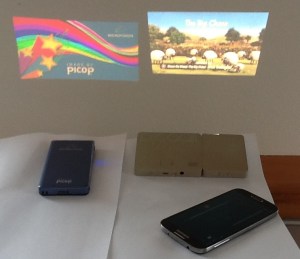
    The future is TVs that are bigger, flatter, brighter, and fancier. That’s a good message for folks that would appreciate helmet cameras. I wonder how many people watched the game on their mobile phones and computers. The future may be the small screen (or pico-projectors – but that’s another story.)
  • Xfinity
    In an attack on frugality, less is dull and more is amazing. It isn’t a surprise that they’re advocating consumption, they’re certainly willing to alienate minimalists, and they’re appealing to people who want more, more, more because that’s where the profit is. Have so few watched Bogart movies like Key Largo or Treasure of the Sierra Madre?
  • FitBit
    Get fit. Good. I want to get back in shape, too. If a watch helps you do, that; great! Of course, if you did all those things without a watch you’d save money and not stress out over the data, updates, and protecting the watch.
  • WIX.com
    Creating web sites could be dull. They made it more entertaining with Pandas. I’ll stick with WordPress and html.
  • SquareSpace
    Creating web sites are necessary for success, and for dreams to come true. Sure. Those are things I help people with: web sites, dreams, hopefully success. Let’s keep it in perspective.
  • Amazon Echo
    Alexis, I need you. Hey, there’s an ad. Nah, only history buffs would like Alexander Graham Bell calling out for help. At least they showed the product in (staged) action.
  • T-Mobile
    Another cryptic one word note, “apologize.” Who is apologizing to whom?
  • GoPro
    GoPro actually delivers what they show. One of the most entertaining and honest ads.
  • Showtime
    Showtime showed a quick montage of their attractions, which made me concentrate on what I wasn’t getting from Netflix. Looks like neither of them is streaming Babylon 5.
  • Mobile Strike
    Arnie with dark hair, and a game. Whatever.
  • Pokemon
    At least I like the message; “I can do that.”

Movies

  • Disney Jungle Book
    Rudyard Kipling’s Jungle Book probably never imagined getting such a thrilling treatment. I don’t expect to watch the movie because I’ve read the book. Some of the original concepts from Imperial England will be left aside, I guess. I might, however be interested in seeing the comparison with the first Disney version, the animated version. Technology, social sensibilities, and the movie industry have changed so much that the movie is more appealing as a cultural study – though they seemed to emphasize the fancy computer graphics.
  • 10 Cloverfield Lane
    Ick! I don’t watch horror movies. The news is bad enough. Skip.
  • TMNT2
    Spoilers about a sequel where I missed the first movie = skip.
  • Jason Bourne
    Spoilers about a sequel/prequel that I want to see = skip as quickly as possible.

Cars

  • Hyundai
    The idea of an overly protective celebrity father watching over his daughter’s first date must resonate, but the reality of what the technology allows is creepy. If we found out that the NSA, FBI, or local police were doing the same thing we’d ask for Congressional hearings – unless we’ve realized that’s happened and feel helpless to do anything about it, which is probably mirrored in his daughter’s reaction.
  • Jeep
    Be in nature. Be yourself. But, it’s okay to turf the dunes in the process. As a Jeep owner from 1987 until 2014, I’ll celebrate the slow and steady climb up rutted logging roads, crossing flooded stream crossings, and driving through snow deep enough to stop a Subaru – none of which makes good television, but which made me a fan. That is, until they quit making the basic Cherokee in favor of the bigger, more luxurious models.
  • Honda
    Without a doubt, the most memorable and favorable ad for me. The majority of the time they showed singing sheep (and made me wish Gary Larson was asked to help). They even included some shots of practical features that I’d like to know more about. I won’t be buying a Ridgeline unless I win the lottery jackpot or am handed a lot of cash; but their ad worked far better than most because they showed a sense of humor and pointed out something useful.
  • Kia
    I’m glad to see Christopher Walken get a gig. My personal style is to purposely dress in beige, and to applaud my friends who play with the entire color spectrum. Even after the ad, though, I continue to think of sedans as the automobile version of beige.
  • Mini
    Defy labels. Cool. Interesting that they did that by working from stereotypes. Neat car. It’s somewhat of an icon, a visual label; isn’t it? Maybe folks should buy that Kia, then.
  • Hyundai
    Let our car drive you because you have to pay more attention to your distractions. Perhaps I’ll give Hyundais more room on the road.
  • Audi
    I think more highly of astronauts, especially those that walked on the Moon, to think that a car on a road can thrill them as much as they’ve experienced.
  • Toyota
    So, crime is good as long as you’re in a Prius?
  • Jeep
    I liked the history, the personal touch, the B&W graphics. It seems out of joint with their current products, and accidentally seemed to emphasize that.
  • Buick
    I missed something in there. Maybe I am too old for a Buick.
  • Acura
    Burn fuel. Make noise. That’s what a car is for. Huh?
  • Hyundai
    Bears are armed, and clawed, and hungry. Congratulations on a car that starts by talking at it. Does it work when your voice is squeaky with adrenaline?
  • Weathertech
    They make floor mats in America. Thanks. Don’t overplay it, but do celebrate it.

Health & Beauty

  • Pantene
    Dads may not be the target audience for hair products (though that is changing) but at least they found a way to braid macho with girlie stuff and emotions. It is just shampoo, though. Right?
  • Schick
    How far can we go in selling slivers of steel? A shave must be dramatic, confrontational, victorious! So much for soothing and comforting.
  • OIC is Different
    Constipation = mute = skip. Interesting juxtapositioning with all the food and drink ads.
  • Advil
    Ignore pain. Because hurting yourself is good for you. Personally, I use Advil, but as a therapeutic, not as something that helps me go out there and damage myself so more. So, they’re in the health industry…
  • AXE
    AXE confuses me; but then, I’m past puberty.
  • Dollar shave
    How oddly practical. Thank you. That left a much more favorable impression than the Schick ad.
  • Marmot
    Love the outside. Hey! I use the company’s stuff, and I’ve seen marmots (sometimes while they tried to eat my food.) Favorite factoid: marmots sleep or hibernate more than any other mammal. Nice lifestyle.
  • Persil
    Detergent. Go retro. No impression other than that.

No More

  • No More
    The only note I have is “assault”. Today, I can’t remember a thing about the ad or the product. Oops.

Was it really that bad? Previous years have had powerful, uplifting statements; grander entertainments; more creativity. At least this year didn’t try to sell sex as much, was usually dealing with real products and services instead of vaporware, and was more diverse. And yet, I’m an aging white man and was surprised to see how many aging white men were the figureheads for things directed at younger people.

Except for the nod to digital currency, GoPro, and maybe Amazon Echo most of the ads were for echoes pitched to the people who are in a select group, who are focused on themselves instead of others. Did we just miss an opportunity for an ad where someone just says, “Let them eat cake”?

I watch these ads to notice trends. Some years those powerful, uplifting statements define the set and excuse the majority. This year seemed to back off from those strong statements. Maybe it was to avoid any overlap with the various political rhetoric. I wonder if the ads from four years ago had the same tone. The ads reinforced my understanding that I am not in the mainstream, and reinforced my decision to follow a path I choose and define. In the past, I’ve also used the ads to influence my investing. The ads that are old echoes encourage me to invest in the positively disruptive companies that aren’t just about consumption, that are about improving life while using fewer resources. We won’t move ahead by reprising the past. That may work for movies, but it won’t work for moving society – and it won’t work for improving my portfolio. One thing I just realized; the ad that made the Super Bowl ads special was Apple’s 1984 ad in 1984. This year, I didn’t see a single ad from Apple. Maybe the ads aren’t as important as they were. That may be worth celebrating.

Posted in Uncategorized | Tagged , , , , , , , , , , , , , , , , , , | Leave a comment

Pop Goes The Power

Here comes the wind again. Rushing in, flying branches, popping power lines, simultaneously encouraging quick writing and a post about frugality. Let’s see if I can get this done before the lights flicker again. One of the advantages of frugality and minimalism, it takes a lot less to keep me happy – or at least I have less to complain about when I’m resorting to candles and paperbacks.

One of the great exercises within personal finance is to be aware of how you spend money. What is the benefit that comes along with the cost? When there’s very little money, the benefits are direct and apparent because expenses are reduced to necessities. Those necessities make themselves very apparent when income is equal to or less than expenses. Luxuries are abandoned. When there’s a bit of excess, that extra money becomes such a great relief that it is easy to fall into spending it on those remembered luxuries. The relief feels so good and the luxuries are much more appreciated; that’s also the time to remember to invest in yourself, your portfolio, and your skills. When the excess is great enough, some will feel the abundance, but others redefine the luxuries as necessities and ratchet up their feeling of lack. Someone who is upset that their mobile phone is the wrong shade of purple probably has ratcheted up their expectations and desires.

I live on an island. The power goes out often enough that most people have a supply of candles, paperback books, playing cards, warm blankets – and maybe a generator. If you can afford the generator and the fuel you can become quite popular. Many houses are equipped with emergency generators that seamlessly take over when necessary. For some, that’s a necessity for health or business reasons. The ones I find amazing are the automatic power systems that keep vacant vacation homes lit and warm while the neighbors are rummaging around for matches and there are homeless people struggling with the storm. When the power goes out, the sound of generators kicks in. I get by with a big backup battery that powers the internet router for a few minutes every few hours. The rest of the time is a reason to enjoy an imposed peacefulness – as long as I ignore the noises outdoors.

Frugality, voluntary simplicity, and minimalism were variations on a lifestyle I have enjoyed by choice. For the last few years, I’ve continued the practice by necessity. As circumstances shift, I expect to continue living simply (though, if I won a few million there might be a very nice vacation added to my calendar.)

Various vacations I’ve enjoyed have been in cabins and cottages in the mountains and on the shore. A tiny place with a bit of a kitchen, a bed at least big enough for me, and sanitary facilities covers most of what I’d actually use in some fancy suite. The nicest hotels I’ve stayed in had more in the room than I could use in a week. Let me ski into a cabin with firewood, an outhouse, and maybe a bit of propane and I might just sleep better than in a five star hotel.

I was surprised to find that this weekend is the Super Bowl. Stadium sports aren’t something I spend much time or money considering. If a city wants to encourage sports, I think spending a billion on Parks and Recreation makes much more sense than funding a stadium for millionaires. I’m glad I didn’t miss it, though. I won’t watch the game, but I will watch the ads.

Most years, I wait until after the game, then visit YouTube. YouTube usually has a compilation of the ads. It never seems to be complete, but it does have dozens of ads collected, and provides the opportunity to vote them up or down. My life is unconventional, so I watch to re-engage with mainstream trends. One message always comes through. “People lives aren’t good enough, so they should spend more money on – whatever.” The ads won’t be about necessities. If they are about food, shelter, clothing, or health, the goods and services are probably luxurious versions that add little value relative to their added costs. There will be a few public service announcements, but the main attraction will be how advertisers can attract consumers’ incomes.

The advertisers are smart. Professional sports is about extravagance. Rather than applauding your neighbor for sinking a basket, sit at home and watch a person who has devoted their life and health to amazing feats in dangerously short careers – and then, go buy paraphernalia with their name or the team’s logo, buy whatever they endorse, and buy into the things that were advertised while you watched them whether the goods or services have anything to do with the team, the sport, or your own desires. The people who can afford the time to watch, who can afford the tickets, and who can afford the trinkets represent an enormous market; if they didn’t, the teams, players, corporations, and advertisers wouldn’t be making billions of dollars.

The wind is subsiding and the power is on, for me at least. A few places on the island are out. I don’t wish a massive outage for people to be forced to retreat from consumption. Living is more than just surviving. Living should include thriving, celebrating, feasting, and enjoying more than just the bare necessities (without going to extremes that deny others the same.) Ideally, everyone gets to define their needs, wants, and desires. Ideally, everyone gets their needs met, and has at least a reasonable chance at attaining their wants and desires. I do wish that more people would make that consumption match their needs, to spend on what they want and desire rather than on what they’re told to want and desire.

I know for me, understanding my needs, wants, and desires has resulted in a life where I am easier to please, where a little extra money makes an enormous difference, and where the truest treasure is something that can’t be bought but can be spent: time. Which is one reason I won’t be spending hours watching the game. After my work is done and I’ve watched the ads (and maybe blogged about them), I expect I’ll be reading a book, something I can do with or without electricity. I have the power to do that.

Photo on 2016-02-05 at 20.16 #3

Posted in Uncategorized | Tagged , , , , , , , , | Leave a comment

Grind Grind Grind

Hey! How’d that happen? The first month of 2016 is almost over, already. One-twelfth of the year has gone by. Less than eleven months until Christmas. Only two and a half months until Tax Day (for those of us in the US). So much has been going on that it is easy to get head down and not looking up, especially in a Seattle winter. Yes, there are gloriously sunny days; but, bills are insistent, opportunities must be pursued, and patience and persistence are only exercised by letting time pass. Good news doesn’t like being rushed. In the meantime, I am glad I can dive into a grind that does good work, pays those bills, and opens doors for those opportunities – and yet, grinding away for the sake of grinding away leaves nothing but grounds.

This new year, 2016, has become a fascinating mix of optimism and pessimism that is prime fodder for my news feed of PretendingNotToPanic.com.

#PNTP

#PNTP

The issue isn’t trying to find something to post every day. The issue is finding a way to pick just a few items to spread out and post about. Within the first month of 2016 there have been optimistic updates on the sentience of trees, the possible redefinition of cities because of autonomous autos, US coal usage dropping to new lows, decreases in cancer, good jobs reports, and other items that didn’t make the daily list. The daily posts also included pessimistic updates on the economy, sea level rise, the apocalypse, over-fishing, homelessness, cyber attacks, and forest fires. The topic that attracted the most attention was the worsening wealth inequality (which inspired some impassioned responses that I have yet to respond to. Apologies, but I’ve been grinding away at work.)

We’re probably entering one of the most dynamic times in human civilization. It isn’t a surprise that the rhetoric is getting louder, especially during a US Presidential election cycle. Change is accelerating, possibly reaching rates that human discourse can’t match. Climate change is relatively slow, but understanding what’s happening requires research that is slower. Economic changes are made by humans, so we should be able to keep up; but much of finance is automated and operating at nearly the speed of light. Social changes are also made by humans, are far less predictable, and can be inspired by the simplest of events. Centuries ago, such issues were limited to a region and rarely interacted. Now, they all play with and against each other. Trying to understand it all may only be possible for a computer, which leads to the technological acceleration that may lead to the Digital Singularity.

As one friend commented; “How do you keep all of that in your head at the same time?” My first thought was, doesn’t everybody? But, no. Many people either implicitly or explicitly decide to limit their attention to their daily grind, leaving time for sitcoms, sports, and shopping. There is wisdom there. They aren’t grinding their brains about things they can’t change (supposedly.)

Personal finance (the main theme of this blog, believe it or not) benefits from an understanding of economics, finance, society, and personal values. Understanding any one of those four items is an admirable accomplishment. Understanding all four would probably warrant some sort of prize, though it is less likely to be a Nobel and more likely to be a shoulder stretching pat on the back.Photo on 2016-01-29 at 18.52

I try to understand as much as I can; and dive deep when something verifiable, quantifiable, and important catches my attention. I’ve spent a lot of time these last two weeks understanding the implications of Oxfam’s report on wealth inequality. A few of us have been trying to find ways to display the math of the inequality, no judgment involved, and have learned how extreme it is. Even finding a way to print a graphic about it requires more money than any of us have available. One version of the print would be 500 feet x 500 feet. Multiple that out times a nominal $18 per square foot and get a printing bill of $4.5M. That may be unbelievable, but that’s also the point, and also why I’ve spent hours trying to prove myself wrong. (See my post for the background about the issue and Joe’s post about the technical difficulties in making such a print.)

The style of karate I practice has a concept that other styles have, too. Tight; no tight. There are times to commit everything to a task, to tighten the muscles and spirit to accomplish the goal. That level of effort can’t be maintained by humans forever, and no tight actually is the response that enables recovery, preparation for the next task, and long term sustainability.

If you find that trying to make your finances work sustainably is tightening your brow, your muscles, your attitude, and your actions; keep in mind that, to sustain life humans also must relax, rest, and recuperate after enough effort has been expended.

Grind, grind, grind, is admirable persistence. But, getting your nose too close to the grindstone gives you a bloody nose. Grinding a piece of glass properly creates new ways to see the world, but can also create a blurry mess.

If you find that today’s world has you grinding your teeth, remember that, while it make take the world’s population to fix the problems created by the world’s population, you don’t have to and can’t do it all yourself, that it’s okay to take a break; and that if it seems like it is too much to keep in one brain, that you have demonstrated a proper perception of the modern world. When the world gets to be too much, step back, catch your breath, trust in the billions of other people on the planet, and then step back in. The trick is to grind away at the problems and the issues, not at our selves and our souls. With seven billion of us grinding away, the issues could be done in a day – which at least rhymes, but would seemingly be the case for future generations looking back at our accomplishments. That’s a grind we could be proud of.

Posted in Uncategorized | Tagged , , , , , , | 1 Comment

Extreme Displays Of Wealth Inequality

(Updated January 27, 2016 after having enough time to fix some math errors and typos.)

“The very fact that this is beyond some of our technological limits is a message -“

Wealth inequality is so staggering that the nearest analogy are astronomical numbers, and astronomical numbers are so hard to grasp that most folks don’t worry about them. Besides, look at all those stars streaming by on Star Trek and Star Wars. About a week ago, Oxfam released their annual wealth inequality report. As of the end of 2015, 62 people own as much wealth as half the population of the planet. I’ve been tracking it over the years, and the trend has me worried for the global economy. There are several representations of the previous years’ situations, but the extreme nature of the situation has become literally unimaginable. Our brains don’t deal well with vastly different numbers and tend to slip from reality into abstraction. Unfortunately, there are real world implications and they are manifesting faster than many of the other global issues. The above quote came from a Facebook discussion as a few creative people tried to find a way to use graphics instead of math or words to communicate the extreme disparity. What we didn’t expect was to find that wealth inequality has reached the limits of the human eye, the limits of computer software, and the limits of physically creating a visual tool – at least reasonably. We’re continuing with some of the less reasonable approaches because working on the problem has revealed to us how massive the problem is, and how difficult it will be to resolve.

Screenshot 2016-01-18 at 08.31.28

Here’s an edited version of the conversation that steps through our increasing awareness. The individuals involve creative people who are educated in handling large numbers (engineering, marketing, image processing, and manifesting large projects) and people who have experience communicating (photographers, painters, writers, film producers). Wish us luck.


Tom

Hello, fellow digital artists. I’m interested in creating a graphic to demonstrate wealth inequality. I think the debate can benefit from someone creating a graphic that shows 62 pixels (representing the number of people that own half the wealth of the planet) and also shows 3.5B pixels (representing half of the people of the planet.) I’ve got a way involving copy and paste (which is tough to keep track of), which I might do, but I suspect that at least one of you has a better way to display it. Any ideas?

Joe

I could come up with something…

However, showing 3.5B pixels will take an enormous image. Have you considered showing with a single pixel equaling some larger unit than 1?

Tom

We’re thinking along similar lines. Another option is to show 1 pixel surrounded by 56,451,612.

(That’s 3,500,000/62, or how many people the average member of the 62 matches in wealth.)

Brian

You won’t be able to see that pixel.

Tom

Is that 7,513 pixels by 7,513 pixels? Check my math.

Brian

Yep. Still won’t be able to see that single pixel.

Kinda the point though, isn’t it?

(A limitation of the human eye)

Linne

Pyramid?

A long/wide rectangle, center point (needle, like in a haystack) line with a callout?

Joe

Yeah, the only way to really do it is to create an image of the full number of units. But that you would have a number of them equal “1”; otherwise as Brian said, you wouldn’t be able to see individual pixels.

So you’d need like maybe four pixels per unit of 1 to see them, perhaps even more, to distinguish them as units with a stroke around each unit.

Since the smallest a stroke can be is 1 pixel, you’d actually need a few more inside to be visible; so, it’s those plus the surrounding pixels per strike just to equal one unit. And then multiply that by your 3.5B – so – yeah, an enormous image size. No Web browser could easily display that.

Now – thinking this through – it’d be a tedious task, but if you did it in vector, it could be scaled on the Web as an svg file.

You’d have to use single point dots with some separation between them…otherwise they’d look like a halftone pattern or just a field of noise.

I can run some experiments.

(A limitation of computer software)

Tom

I’m thinking of a real world print that we could then use as a prop in photos shared on social media – staged with a magnifying glass.

Joe

So herein lies a problem:

The largest photo ever taken, a 411 image composite by the Hubble, comes in at pixel dimensions of 26,004px X 9,289px.

And yet that is, while ginormous, “only” 214 Million pixels.

You want billions.

For some perspective, at print size of 300 pixels per inch, that would be about 7.2 feet long.

However, you can’t see pixels at 300 per inch (which is kinda that point with intentionally good prints).

To be able to barely discern individual pixels, you’d have to print at about 50 pixels per inch. So that would make this relatively small (compared to your requested image size) image (of the largest photo ever) a whopping 43 feet long.

Your image would need to be literally 16 times this size. To “see” the pixels.

(A limitation that illustrates the quality of fine art prints)

(A limitation that illustrates practical considerations of printing, displaying, and sharing such a representation.)

Joe (hours later)

I tried it out this morning with the 7,513 pixel per side image; with basically a checkerboard pattern black/white pixel per pixel. As expected, zoomed out it’s just gray. Zoomed in a little more it’s a moire pattern that makes my eyes all wonky. And, zoomed to print size at 50 pixels per inch – well – it’s still a wonky pattern.

This is a good way to show it; starting around the 1:15 mark.

https://www.youtube.com/watch?v=uWSxzjyMNpU

Tom

Yep. Saw that video. It is now three years old. It serves its purpose, but I think there is a need for a static image, or an image like Chris Jordan’s images.

(A limitation based on time, because any representation that takes time to create is therefore obsolete, like that video from 2013 when the wealth inequality was five times fairer than now, in 2016.)

Joe

Well, that’s a good point: Chris is able to show it BECAUSE he zooms in and out in the animated versions on his website.

The static images, however, if printed, can work too; but each object has to represent a higher number, which is how he’s done it with all of his Running the Numbers series. It’s always an enormous number of objects, but only a fraction of the larger number he’s representing by breaking it down into understandable chunks.

It would take 35,000,000 $100 bills; but if broken into chunks that could be replicated a thousand times – then – oh god – it would still take 35,000 replications. Which, if you had only one minute per replication/movement/placement of each cluster would still take 583 hours to produce. Also would probably crash Photoshop.

Back to the drawing board……….

(So the only way to make the problem visible is to scale it down by factors or ten or a hundred.)

(A new limitation based on computing hardware and software)

Tom

The very fact that this is beyond some of our technological limits is a message.

Thinking 3D. If one person is represented as a cube, the others are represented by a cube 383.6 longer, taller, and wider. So, if one person is represented by 1 cm3 (a sugar cube), then the rest are represented by a cube 383.6 cm X 383.6 cm X 383.6 cm, or 3.836 m x 3.836 m x 3.836 m. (12.85 feet per side) That almost sounds like the interior volume of the Store foyer. Build a cube of 12 long sticks draped with fabric and one little cube beneath or on top or beside – suspend from the ceiling.

Also could be a sphere with a radius of 288 cm. How big is that globe they hang in the foyer?


At this point the conversation shifted to Joe and I playing with ideas in his workspace, Fine Balance Imaging, where we could experiment, and reach new limits.

We could find various ways to represent the inequality, but then they were difficult to photograph. How do you make and where do you put a 12.85 foot (383.6cm) cube that represents the wealth of 56,451,612 people which equals each the wealth of one of those average billionaires? How about a sphere with a radius of 238 cm, which is a diameter of 476 cm beside a marble? A tetrahedron would be 782 cm tall. Maybe use something more familiar and work backwards, like a standard shipping container that we see on ships and trucks which has a volume of 1,360 cubic feet that would be empty except for a tiny box 1/56,451,612th as small: a 0.347 inch cube? Or how about making the billionaire one grain of sand (.25mm radius) and a cube of sand 4.16 inches per side (10.5cm)? That may go too far the other way.

Brian then passed along a different approach. Instead of going 2D or 3D, go 1D. Here’s where metric make so much more sense. If one billionaire was one cm, then a line representing their equivalent poor population would be 56,451,611 cm long, or 5,645,161.1 meters, or 5,645.1611 kilometers. Think English (but not British because most of them are smart enough to use metric, but not us Yankees) and get 3507.7405 miles. Start with one centimeter on the west coast of North America and you can end up in the Atlantic. Wealth inequality that doesn’t even fit on a continent. At least NASA or the NSA should be able to photograph it, but not well enough to show that first centimeter.

Check my math. When the numbers become so overwhelming it is easy to lose perspective. And, that’s the point. Wealth inequality has reached such a point that it is hard to imagine, tends to become and abstraction, gets discussed in ideological terms. My approach is from an understand of math and systems. When great key resources become vastly concentrated, systems destabilize. If that instability is left uncontrolled, the effects on the rest of the system can be dramatic, traumatic, and catastrophic.

As one private message reinforced from my previous post;

“When half the world’s wealth is stagnant, the world’s economy loses half of its chief resource.”

The wealth is accumulating. Economies are stagnating. If only we could find a way to show that.


PS To help my friends’ wealth, here are links to some of their work.

Joe Menth

Brian Kern

Linne Pullar

Posted in Uncategorized | Tagged , , , , , , , , , , , , , , | Leave a comment

Wealth Inequality Worsens

I admit it. I am worried. I’m familiar with the ways that big systems work. When a system is big enough, it makes more sense to trust the data more than the rhetoric. When key measures depart from the norm and show no sign of changing direction, there’s a good chance the system is unstable. Oxfam released their annual update on wealth inequality. Since 2010, the number of people who own half the world’s wealth has dropped from 388 to 62. A key resource to the world’s economy, wealth, is accumulating and concentrating, and showing no signs of stopping. If wealth inequality isn’t destabilizing the economy, it is a visible symptom of an economy that is unstable for other reasons. Both possibilities are probably true.

The super rich have always existed, but for most of human history their influence was limited to a few miles. The poor have always existed, but for most of human history they’ve also had the means to sustain themselves – though not without a struggle. Any instabilities were limited to those few miles, and the consequences were limited because most of the people had at least some opportunity to farm or hunt.

Within the last hundred years, the super rich have been able to extend their reach around the planet. As civilization has monetized and urbanized, the poor are increasingly under the control of landowners and employers. People complained, and fortunes rose and fell, but the impact remained limited by country borders. Much of the wealth was sovereign wealth, wealth held by royalty and partly represented by the wealth of their realms.

Within the last few decades, wealth has extended its reach through globalization, and globalization has been amplified by technological advancements in transportation and information. Now, non-governmental institutions have accumulated enough wealth and influence that lenders can dictate government policy, forcing austerity and diminishing nations’ support of their citizens. Much of the wealth now effectively exists outside the reach of realms, countries, and governments.

Those trends are largely rhetoric, which means they can be argued and debated without resolution. (Though, if someone has the data, please share it.)

Within the last few years, the number of super rich has decreased to the point that they can be counted. In 2010, 388 held half the world’s wealth. In 2011, 177. In 2012, 159. In 2013, 92. In 2014, 80. In 2015, 62. At this rate, by 2022 half of the world’s wealth could be concentrated in one person’s net worth. Ridiculous, eh? Is it ridiculous if it is only two people, three, four? It can be more ridiculous because is one person’s net worth is more than half the world’s wealth, then effectively the number of half the wealth becomes less than one. We could be there in six years.

wealth inequality

Source: Oxfam

When a system is exhibiting such a trend, the only thing that limits it is a change in the system or a failure in the system which creates a change uncontrollably. Either people decide to make improvements, or the system fails and people have to respond to a messy situation.

At this point, I am hearing rhetoric about change, but finance reform remains rhetoric, not action. That leaves me with the expectation that the system will fail, and possibly soon.

The trouble with our understanding of our economy is that we may not have calculated the critical number at which wealth concentration creates the instability that fails the system. Some think we’re already past it, and that the failure is in progress. Others think that wealth inequality is a natural consequence of the system, is not inherently worrisome, and will self-correct if necessary. I think that the critical point of failure is passed when some percentage (x%) of the population holds half the wealth (though it could also be something like 25% or 75%). We don’t know the number, and may only know the number in retrospect. In the meantime, we’ve passed from a time when the number of people holding half the wealth could easily be expressed as a percentage and now can be expressed as an integer, and that the integer is a number smaller than the capacity of many restaurants. Within six years, half the world’s wealth may fit on one motorcycle.

Screenshot 2016-01-18 at 08.31.28
When half the world’s wealth is stagnant, the world’s economy loses half of its chief resource. Fill your car’s engine or battery only halfway, and it doesn’t make it doubly efficient; it only goes half as far. Give a billion people a thousand dollars each, and nearly a trillion dollars will flow through the economy by necessity. Give a thousand people a billion dollars each, and less money flows. Give a hundred people ten billion dollars each, and less flows. Give ten people a hundred billion each, and less flows. Give one person a trillion dollars and there’s little or no reason for it to flow.

I’ve been tracking wealth inequality for years. (It is common thread on my other blog; PretendingNotToPanic.com) Last year I posted to this blog as a result of Oxfam’s report. This year, wealth inequality, commodity crashes, private wealth bubbles, cash being stored as uncommon assets, and negative interest rates convinced me to convene a salon of interested individuals – and I was going to get to that right after my birthday. If you read the previous post, you know I’ve been busy. In the meantime, the stock markets are ailing and joining other asset classes in a global retreat. Holding a salon to consider actions in 2016 is becoming moot.

I may convene the salon, anyway. Whether we prepare for the choices society will make, or whether we prepare for the consequences our society will encounter, maybe that bit of rhetoric with a bit of data can at least lead to personal action regardless of our monetary wealth.

Posted in Uncategorized | Tagged , , , , , , , | 1 Comment