Friends Grow My Garden

I thank my friends for my garden. I’ve tried gardening for decades, never growing enough to make it worthwhile, but being persistent because I want to know how to grow. This year is a culmination of efforts and gifts, and lots of sun and rain, and a lot fewer pests. I  might even get more than one apple this year. Even that would’ve been tough without my friends. Thanks.
DSC_6474
Some of my friends grow the majority of their food. I don’t. The weeds and pests have a tendency to win because they have the advantage of uninterrupted diligence. I have a series of jobs, which I appreciate; but which also leave little time for life maintenance. Gardening only gets a slice of that time. This year, it may be enough.

One advantage of having friends who garden is getting what they can’t use. They get more seedlings to sprout than they can plant, and I get some starts. They trim some of their healthier bushes, and I get cuttings. They decide some of their seeds are getting too old, and I give them a new home and a chance. As I receive each gift, I apologize to the plants. They aren’t totally on their own, but sometimes their best defense against pests and dry spells is luck. Surprisingly, many survive.
DSC_6471
A garden is an act of home-based frugality, as well. One of the best donors to my garden is my kitchen. Scraps grow. Potatoes and onions and garlic sprout in the pantry, which means the best place to store them is in the ground where they have a chance to make more. I also buy a few seeds because seeds and dirt are cheap – or, at least they are cheap now that I am making a bit more money. For a few years, even dirt was expensive. The news reports are right; it is expensive to be poor. Get poor enough and you may have to buy food rather than grow it because the scramble to live takes up all the time and leaves no money.

Welcome to a tour of my garden, and a demonstration of the generosity of others (at little or no cost to them.)

Apples
Long time readers and Whidbey residents know about the caterpillar onslaught of a few years ago. My trees were finally maturing, then the bugs ate everything. Just to make it worse, the fence fell down and the deer came in to dine. Two of the trees have yet to produce fruit. I started them from bare root stock, but they were beside the fence that fell. The best tree is the gift tree. Two of my neighbors had a borderline conflict. One forced the other to move a fence six inches, which meant taking out three reasonably mature trees. I found out about it just in time to save the third tree; the other two were cut down. Now, the one tree has the biggest crop I’ve seen it produce. I should probably thin it, but I don’t want to get in the way of its exuberance.

FigsDSC_6473
Another bare root planting that I bought back before my Triple Whammy, the fig tree is sprouting dozens of figs. I can see the appeal for fruit trees; they are perennial, and potential produce more each year. Amortize that cost out over years and the ROI is impressive.

Raspberries
Raspberries, especially on Whidbey, like to throw up new canes and can crowd themselves out. A friend has an impressive raspberry patch that is meticulously maintained, defended, and supported. Just as a matter of thinning the row, I ended up with a dozen plants or so that are somehow surviving my neglect.

DSC_6468Tomatoes and Peppers
Last year, a friend gave me their leftover tomato starts. This year, I bought a pack of cheap seeds. The more generous contribution was from another friend who was tossing out some cracked pots. The pots may not last many more seasons, but pots are expensive. They gave me seven, and cages to go with them. Finally, I have enough to buy dirt and compost, and I have a line of containers sprouting seedlings on my deck.

Herbs
More pruning means more cuttings for me. As others gardens expand, they’ve trimmed mint, oregano, and maybe marjoram (I’ll know better after it’s grown so more.) Another friend gave me fresh herbs for cooking. I used most of them, but they were so fresh that cutting took root. Add basil to the pantry.

Onions and Garlic
The world must want me to grow more garlic and onions because I had a variety of sources. Between my pantry, their gardens, and one person’s lucky garden run, I have a variety of onions and garlic sprouting. They particularly need luck because, with my weeding skills, I’m likely to mistake their stalks for the grass that’s invaded the garden.
DSC_6475
Potatoes, Squash, and Ginger
Kitchen scraps grow. We eat plants. Plants like to grow. I plant potatoes that sprout because I took too long to cook them (but they were on sale for $1.50 for 5 pounds!). Squash and pumpkin seeds are saved from last year’s harvest – which included a squash from Langley’s edible landscaping. Langley is a tourist tour maintained to attract people with lots of money; but rather than emphasize the ornamental, the town’s public spaces are growing edibles. Free food. Free food is so uncommon that most people walk by without realizing they can pick strawberries, peas, artichokes, and pumpkins. I tend to nibble a bit, but didn’t really harvest until after the tourist season last year. Now, I have a line of pumpkins and squash that grow faster than the slugs can eat them. The ginger is similarly easy. Buy a bit of ginger in the store, plant it, water it, wait because it grows slowly, and then harvest a bit and replant the rest. Another good bit ROI.

By the way, one defense against slugs seems to be working. Most of the pots are on crowns of wire. I took a bit of fence material, turned it into a ring, and placed the pots on top. Slugs can slime and slide up things, but the wires are much narrower than the slugs. There’s less for them to grab onto, and much of their bottom is exposed and drying out if they try to climb the wire. They seem to be hunting elsewhere. Stay tuned.

Some grow gardens for fun. Others for necessity. I know several who do it as an emergency resource. One way to store three days (or three months) of food is to grow it. Whether from a natural or societal disaster, there’s something comforting about knowing there is a pile of potatoes already delivered and stored.

There are enough dystopic scenarios to raise worries. The Earth quakes. Volcanoes erupt. Winds blow. Governments become dysfunctional. Finances fail. Societies revolt. I’d be amazed if there wasn’t a major upset, because there always is. And yet, we continue.

My optimism comes from the simple acts that have helped produce my garden. While some will hoard during a crisis, a healthy community tends to tend to itself. There will be tough times, and bad timing can be terrible, but the intent and generosity convinces me that seeds may be shared, cuttings distributed, and lessons taught. My garden can only provide a small portion of my needs; but, it can provide a sense of accomplishment, lessons in sustainability, and the opportunity to pay it forward by sharing.

In the meantime, I might just have a few special additions to my recipes: homegrown tomatoes, jalapenos, ginger, plenty of herbs – and don’t forget the mushrooms. I had to pay for them, but knowing I am growing a source of tasty protein is a harvest I look forward to. If there was only a way to know when they’d fruit. Oh well, there are always more lessons to learn – and more thanks to give. Thanks, everyone.

Posted in Uncategorized | Tagged , , , , , , , , , , , , , , | 1 Comment

Corporations Meet Owners MVIS 2016

Typically, I post these notes on Investor Village, The Motley Fool, and Silicon Investor; and post an additional commentary here. This year I am going to try something different. I’ll post the notes here, and add commentary in response to comments. Besides, after this particular meeting, I want to let thoughts and emotions settle before approaching the topic again.

MicroVision Annual Meeting of Stockholders June 1, 2016

CAVEAT
I am human. Mistakes will be made. The SEC and Investor Relations are the bastions of truth. So, feel free to correct me, ask them, or better yet, do all of that and then ask the other attendees what they think. Multiple points of view, a diversity of opinion. Good stuff. (Yada. Yada. I’ve done this often enough that the CAVEAT has become mostly a copy & paste, partly because I am lazy, mostly because I hope it’s good enough.)

INTRODUCTION
This was the year when, between ASMs, there were anticipations of numerous product launches and significant revenue increases. As we walked in I could only recall two products that went on sale in the interval: Sony’s projector, and Sharp’s robot. As I mentioned earlier, my expectations were lowered. I’m glad I did that.

Without any surprising news, the demos and the other shareholders are always the best parts of the meeting, for me. There were basically two tables: one table for products or near products, Sony’s projector, Celluon’s projector, the ViewSmart projector, the Qualper smartphone, and a photo of RoBoHoN; the other table was effectively for research and development with a dual mode demonstration (which to me looked like auto-keystone control, but the presenter emphatically described it differently), yet another auto HUD (though this one had a 10 degree field of view – an improvement), and a 3-D scanning capability that is early enough in development that they didn’t have resolution specifications (which seemed to be lower resolution than existing systems I’ve encountered as a museum project manager.) My response to the demos were muted because previous prototypes showed greater innovations, like the Intel game controller. The best part was meeting other shareholders, hearing how many have flown in, how many have held the stock for over two decades, and generally sharing insights.

I unexpectedly identified two camps of shareholders: one camp was focused on the future and dismissed short term stock performance, the other camp was focused on the future but was disappointed that the short term stock performance has been going on for a long time even while executive compensation has increased. I know there was a third camp that wouldn’t attend because they’ve either sold the stock, or given up on the stock but are holding just in case, or don’t consider the meetings useful. I’m not surprised. MVIS has been in the “We’ve never been in a better position” position for several years.

About four dozen people attended in a room that could hold about twice that.

OFFICIAL MEETING
Everything passed. Usually, that’s about all there is to say about the official meeting; but, this time there were some interesting trends in the numbers. Usually (as I recall and I may check my notes to confirm) they announce the total number of shares represented in the room. This time they only announced that a quorum was present, and that only 33.3% was required for a quorum, according to the by-laws. (Has that always been the quorum requirement?) All of the directors were voted in, but this time they announced that all got more than 70% (rather than the typical 80% to 90%.) Were there that many dissenting votes? Were they evenly spread or were particular board members particularly lacking typical support? The incentive package was passed, but only by 55%, one of the smallest percentages I’ve seen for a motion that passed. For some reason, 45% didn’t want it to pass.

BUSINESS PRESENTATION – described as “near term results & aspirations”
The CEO spent more time than usual introducing the management team, including short work histories for each. He considers it the best team MicroVision has ever had.
Evidently, there are “More products in the pipeline to be introduced this year.” (A similar comment from previous years.) Also note: the products will be introduced, which in some cases has meant revealed but not yet for sale, but in other cases has meant for sale immediately.
As of 2015, MicroVision made the transition to a product revenue company rather than a development contract company.
A display of the rank on Amazon of various MicroVision enabled products showed high sales ranks. (Note: Amazon sales ranks are a measure of recent sales frequency, not a measure of total units sold.)
The “market is still evolving.”

For the first time I can recall, they provided revenue guidance at an ASM of 40% revenue growth with a target range of $12.9M to $15.6M. Gross margins are up to 30% and are expected to continue improving. (Another milestone was their discussion of the finances, something they haven’t included some years.)

MicroVision’s strategy is to sell OEMs on end products and then show how MicroVision can enable those products. Sony’s and Sharp’s arrangements demonstrate some of the differences MicroVision will encounter; Sony sells MEMS and send MicroVision royalties, Sharp wanted more involvement with the MEMS and the ASICs.

The intellectual property remains impressive, but is not considered bullet-proof.

The possible product panoply includes: AR/VR eyewear, PicoP, embedded phones and tablets, wearables, interactives, HUD, touchless, ADAS(?), robotics, and 3-D measurement.

The PicoP industry market grew 50% in 2015, with most of the growth in China.

The general populace remains unaware (97%) of the possibilities of pico projection.

RoBoHoN is now on sale for ~$2,000 in Japan.

QUESTIONS & ANSWERS (heavily paraphrased, including the quotes, because I spent more time listening than writing, as usual)
Q: What are the compensation metrics relative to ROI, especially considering that with a declining stock price the CEO received a raise some consider egregious? A: Management compensation is based on market conditions, the operational plan, and advice from an outside consultant.
Q: (A similar question asked from a different perspective.) A: The disappointing stock performance hit them, too; “No one every felt more pain than us.”
Q: Why are no OEMs beside Sony signing up for orders of millions and millions? A: Leaders aren’t taking chances. We don’t know who will be the one that breaks it free. We are hoping and betting that someone will pony up. For reference: in 2009, MicroVision had five OEMs ready and waiting for the green laser to come in under $100: Motorola, Nokia, Kodak, plus two others. By the time the price dropped from $300, those customers weren’t available. Advertising is key and only large firms can advertise sufficiently (~$50M marketing budget). Celluon was selling ~300units/month until Office Depot advertised them, and the rate went to 5,000 per week, and then dropped back down after the advertising campaign was over.
Q: Qualper A: They think Qualper is a high-quality smartphone, and hope it is an example that will convince other OEMs to sign up, but keep in mind that Qualper is a small company and may not be able to advertise it properly.
Q: MicroVision’s relationship with the University of Washington (which originated the particular MEMS technology) A: MicroVision continues to test in UW labs. (Nothing was mentioned about the previous equity relationship. Didn’t they have one originally?)
Q: Patent expirations A: They are confident in their patent portfolio and their legal team, and repeated the fact that nothing is bulletproof. (The answer didn’t address expirations.)
Q: Is there a poison pill? A: No.
Q: Ramping up production. A: Technically, ramping up production is possible. Financially, they are cash limited.
Q: Wall Street sentiment A: The ATM is the cheapest way to make cash because the IPO market, especially for tech, is doing poorly. Currently, MVIS shareholders are 80% retail.
Q: Is there a way to limit balance sheet risk by collaborating? A: “We just have to be there.” (which I took as meaning being in the right place at the right time when the market for pico projectors improves.)
S: A statement – one attendee thanked them for the most open and honest meeting he’s attended.
S: A request was made for more communication clarity about progress.
Q: How many different STKs exist? A: Testing kits are provided as OEMs approach the company, many times with no specific product in mind.
Q: Can we expect a re-order from Sony? A: “Sony will introduce a much brighter engine shortly.”
Q: Engine ecosystem A: The package has shrunk and will continue to shrink.

CLOSING COMMENT
The COB closed the meeting with an intent to “shepherd our trust”.

MY SUMMARY & CONCLUSIONS (opinion, not fact)
These are the best of times and the worst of times.
Finally, revenue and growth. Unfortunately, not enough to appease the general investment community as evidenced by the stock price. ($1.89)Photo on 2016-06-01 at 16.05
Products are available, but fewer than expected. Sony hasn’t announced any new products as was expected. Celluon’s ad versus no ad performance suggests that small company wins are nice, but may not be significant. They suggested Qualper may be similar.
“More products in the pipeline to be introduced this year.” A common refrain, which some day will come true. That suggests good news within the next seven months, though the ambiguity about introduced vs launched vs for sale could mean news without sales.
While they have everything technical they need for ramping up production, they are possibly limited by available cash, thereby limiting growth.

One continual surprise is the lack of personal use of the products. The only projector in a manager’s hand was during a demo. If they are going to convince others that the products are useful, use them. I made a light-hearted comment to one board member about looking forward to all of them being given cellphones with MicroVision projectors embedded. The response was, “We don’t make those.” and then walked away. I know that. But, if we’re supposed to look forward to using the products, shouldn’t the management team be enthused, too?

The presentations followed a too familiar theme. They’ve convinced me that the market is there, and enormous. They’ve convinced me that MicroVision has some of the best technology available. They haven’t convinced me that the current management team is the best for the job. Their strategy too frequently referred to “hope”, “waiting”, “we don’t know who will show up”, “we just have to be there.” If no actions are required other than patience, then shouldn’t compensation reflect that?

It felt as if “the management team, doth protest too much” – or was overly repetitious in their defense of themselves and the compensation. One direct question in the Q&A inspired a long defense that did more to undermine my confidence. The votes for the compensation package suggest I am not alone. The COB talked about shepherding trust, but at least for me they accomplished the opposite. The CEO startled me with the insensitive comment that “No one every felt more pain than us.” The man making over $900,000 per year may have lost more in total value, but he has a significant income and raises while at least one person in the audience (me) almost lost a house, hasn’t visited a doctor in years, all while being patient and investing in the long term. His comment made me shake and I had to drop into breathing exercises to calm back down. I know investing is risky (read my book, Dream. Invest. Live.)Dream Invest Live cover but to suggest that executives feel more pain than shareholders demonstrates an lack of awareness of what life is like outside the corporate suite. Do they have a similar misunderstanding about what people can and will buy?

Having said all of that, in investing, money rules. MicroVision can be, and probably will be, a 23 year old overnight success. The potential increases every day. The market is growing. The potential pipeline is expanding. If the management team remains in place when such success arrives, they will probably end up on the covers of Fortune, Forbes, the WSJ, and a variety of media outlets. They will be heroes. I suspect the company will succeed; otherwise, I wouldn’t care as much about the meetings, the people, and the issues. I am now aware, however, that my MVIS holding is hope based on hope. It was bad enough when MVIS went from investment to speculation, but now management has compounded that feeling by emphasizing that they are relying on hope as well. We may have just crossed the border into gambling. Well, I buy lottery tickets. Let’s see what happens.

Hey, at least I got a hat! This year’s MVIS dividend (that cost me ~$40 in commuting costs to acquire.)

Photo on 2016-06-01 at 16.08

DISCLOSURE: LTBH since 2000, rarely mentioning the company to friends and shareholders because friends have already heard enough and many shareholders consider MVIS a touchy topic.

Posted in Uncategorized | Tagged , , , , , , , , , , , , , , , , | 2 Comments

Lowered Expectations For MVIS

Next week is MicroVision’s annual stockholders meeting. The amateur grammarian in me would like to tweak it to read the annual stockholders’ meeting, as if the stockholders owned the meeting the way they’re supposed to own the stock and the company; but I realize it will be a meeting of a small percentage of the stockholders and that the meeting will be owned by the corporate officers and board members. Of course, the corporate officers and board members are also stockholders, and probably own or control more shares than any collection of individuals invested in the stock. Maybe that explains the way such events are run, despite the spirit of the SEC regulations. After years of optimistic expectations followed by disappointment, this year I am preparing myself with lowered expectations that I hope will be positively refuted. Why, not? It’s worth a try.

For several years, MicroVision has seemingly been on the cusp of dramatic success. Being able to embed projectors into devices the way cameras are now part of so many devices suggests that the owner of the technology and the patents should be in a very good position. MicroVision has been in that position for years, and hasn’t moved from it. Any minute they could announce a significant deal that finally realizes their potential, but that hasn’t happened, yet.

From the perspective of conventional investing, MicroVision has been growing. The growth has been uneven, which means it doesn’t fit well into analyses and spreadsheets, which also means investors are more likely to look elsewhere; but, it has been growth. In 2015 they booked over $9M in revenue, a significant improvement over the nearly $6M from 2013, and ever closer to the number necessary to reach positive cash flow, and then profitability. That progression is impressive, especially considering their hurdles, limited resources, and competition.

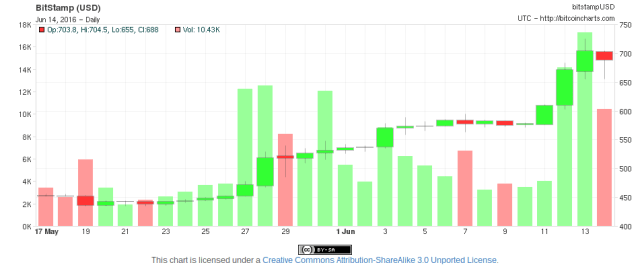
The stock (MVIS), however, has followed a different path. Since last years stockholders meeting, the stock is down over 36%. Over the last five years it is down over 80%. Over the last ten years it is down over 90%. Ten years ago I thought it was a buy, which with even a moderate rate of return should put the stock up 100% instead. I expected much higher by now because MicroVision is not a conventional company with a conventional product.

When you can disrupt a major portion of the electronic display industry and enable applications that are as inventive as the smartphone (in my opinion, emphasis on ‘my’ and ‘opinion’) then valuations and growth can be dramatically higher. Evidently, that hasn’t happened.

One measure of the success of a company is whether they can continue operations. They’ve crossed that hurdle for decades. Dozens or hundreds of employees have been paid, received benefits, and grown their careers through that period. Corporate officers and board members have received similar compensation though with the special characteristics associated with executive compensation like stock.

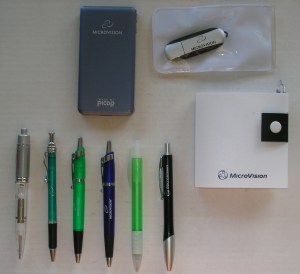
I expect that everyone working in the company even more strongly feels the difference between the future potential and the current reality. The difference with the stockholders is that the only compensation has been free coffee, tea, donuts, and pens once a year.DSCN5160 We also get to deal with the emotional stress of trusting analyses while witnessing painful portfolio performance. And then there’s the emotional stress that happens within relationships – but the anecdotes I’ve heard will remain private because discretion isn’t just polite, it’s vital between friends.

Since last year’s stockholders meeting, only one product has become available for sale, a portable projector from Sony. It is about the size of a smartphone, is far more capable than previous products, and may be the first of a line of Sony products. The walking, talking, robot smartphone called RoBoHoN should be available for sale about the time I publish this post. It will probably attract a lot of attention, but its high price and gimmicky design will limit it to a few, and probably won’t reach mass adoption that will lead to mass profits. Supposedly, another projector, the Viewsmart should be available by now, but I haven’t heard much about it. The Qualper smartphone is also supposedly available – somewhere. The smartphone with an embedded MicroVision projector was supposed to be a key milestone because years ago the CEO estimated that MicroVision would reach profitability about nine months after such an introduction. (Forward looking statement caveats apply.) Even Celluon used Twitter to tease that the PicoBit would be released by the end of April, with a surprise; and here is nearly the end of May without the news. (A pause while I check Twitter for an update. Nope. Not yet.)

MVIS_Catalysts_042916

If half of those products were readily available and selling reasonably well, this stockholders meeting might finally be the celebration many shareholders have been waiting for. We have one, and its reviews are more impressive than its sales.

Investing in companies, ideas, and people requires a variety of perspectives. As a stockholder, I have several reasons for owning the stock: investment returns, championing positive disruptive technologies, supporting local companies. Employees have a different set of incentives and motivations. Those of the officers and board are from yet another perspective. Success and failure are measured many different ways. It is nice when everyone smiles, but frequently at least one faction has a frown.

A week remains before the stockholders meeting. I try to attend every year even though each trip has cost the equivalent of several shares of stock. Between now and then are 160 hours, each an opportunity for good news to arrive; a wait that has been going on for 16 years. If you are a shareholder, I encourage you to attend because the story of the company and the stock is not being told in the numbers. I encourage any investor in any company to at least consider attending such meetings because the numbers aren’t the only story. The variety of perspectives in the room reveals the incentives, motivations, optimisms, and pessimisms that influence the company, the stock, and your portfolio.

If no new news arrives, I’ll arrive at the meeting expecting to take notes, as usual; to meet fellow shareholders, as usual; to politely and lightly meet with the officers and board members; and maybe to see a demo of a product or prototype that will entertain me. The lesson I’ve learned from MicroVision has been to lower those expectations, which is a sad lesson. But, all of the other times I’ve been wrong. Maybe this time I’ll be wrong, too – and that would be a good thing.

Posted in Uncategorized | Tagged , , , , , , , , , , , , | 2 Comments

One Of Those Days

Some days inspire long expositions of events and implications. Today inspired a need to sit on the deck and be patient. The septic system, which I just spent $1,800 on just had another failure which may be as simple as a fuse, and may be as much as $1,500 for a new pump. I’d like to tell you more about it and several other news items of various bits of optimism and pessimism, but those will all wait while I manage to manage the more important part of this household – me.

Thanks for staying tuned.

Posted in Uncategorized | 1 Comment

Another Coworks Closes

Another coworks closed today; and, just like last time, it wasn’t about the coworks. The previous coworks closed as part of a strategic decision that involved several ventures. The Coworks for Writers closed because the writers association is being disbanded. Each coworks has been different. New incarnations are being considered, all different as well; but the energy and demand continue while the benefits are becoming more apparent to more people. Something good will happen, but we don’t know exactly what – yet.

For those who are unfamiliar with coworking, I suggest you review my previous posts. The simple example is to visit any coffeeshop and look for the people bowing to their laptops while essentially renting a table for the cost of a cup of coffee that they may nurse for hours. I tend to order tea. It’s cheaper, the bags can be reused, and I like it. Despite having been an early investor in Starbucks (for details see my book, Dream. Invest. Live.),Dream Invest Live cover I don’t drink coffee; but am glad for everyone who does. Many of those laptop warriors are nomadic workers who’d prefer a more professional environment, but can’t afford to pay for an office. Coworks provide that environment, usually for under a couple of hundred dollars a month.

Workers in the 1099 Economy (who get 1099 forms instead of W-2s for their US taxes), and workers in the Gig Economy (people who are entrepreneurs by necessity and possibly by choice as a means to meet their needs) are increasingly mobile, only require a place to plug in, connect to the internet, and stay out of the weather. Don’t be surprised if you see someone staring at a screen while they sit on a park bench outside a library after hours. That’s a sign that they’re hard workers and the necessary facilities aren’t in place. They’re probably pulling in free wi-fi to run their business.

The coworks that closed today may merely be relocating. Enough people who’ve tried it liked it and they’ve decided it’s going to happen regardless of official organizations. Coworks become communities where individuals begin to connect with other individuals into a support network that is more effective than any social media. I’m relatively active on Facebook, LinkedIn, Google+, and Twitter (search on Tom Trimbath or tetrimbath); yet none of my main clients came from the internet, even though that’s where the work happens. All of them have come from personal contacts and casual conversations. Two of my three biggest clients were directly related to coworks. Someone working on a project realizes that they need to either find help or a replacement. Maybe they already knew me, but being in the same room is a definite advantage. Years of submitting resumes haven’t been as effective as sitting in a room with a bunch of similar souls and subtly making that connection.

Coworks are not flukes. They aren’t anomalies. In major cities they are so successful that they are filling entire buildings or city blocks, and are even extending their services to include co-housing. Rents are going up faster than wages, and one coping strategy is to share as many opportunities and essentials as possible. Call it active entrepreneurship or accidental socialism, but people are finding value in working together – again, by choice or necessity.

As Whidbey’s writers experience their transition, a variety of the services are transitioning, too. The coworks for writers is most likely going to transform to coworks that are open to all, coworks that are open to writers but that have more of a social element, and coworks that are based on the outside inspirations whose specifics I’ve only heard hints of. Personally, I may have uncovered yet another variant that ironically is quite conventional.

When the writers association closes it also frees up space. One organization moves out, another moves in. That means they’ve freed up yet another space, which someone else moves into; which frees up yet another space. Eventually, a space could be free that is affordable if shared by a few.

Small towns have smaller populations by definition. The highly successful coworks model in metropolitan downtowns works because it draws from a population of millions (including the greater metropolitan region). Despite months or years of efforts, South Whidbey has yet to demonstrate a critical mass of coworkers; except when the power goes out. I continue to believe a viable model exists, but resources and opportunities have yet to align despite Surprising Coworks Support. Maybe, instead of creating a coworks from a cadre of a half dozen it makes more sense to start one step farther back and create a shared office space with three or four. Fewer is easier to find. The synergies and networking aren’t as large, but they may suffice – especially, considering the talent on the island.

Small towns lack anonymity, which makes trying to keep secrets somewhat entertaining. In a major city, someone can peek into a room and quietly assess the possibilities. Do that in a small town and it’s easy to know who they are, who they work for and with, their typical motivations and incentives, their resources, and whether they are serious or simply curious. That means that when a transition like the writers association happens, it’s possible to make educated guesses about what might happen next; but because logistics get involved, there are no guarantees. That means I think there will actually be more opportunities for coworking, but I don’t know for sure, or when, or where, or for how much.

In the meantime, people in a collection of small towns (and one reasonably large city) on a big island are taking the opportunity to redefine the way they practice their art, conduct their work, and develop a variety of communities based on writing, entrepreneurship, and mutual support. It is simultaneously unsettling and encouraging; but I don’t know what it will be exactly – yet.

Stay tuned.

WIWAcoworks

It was nice knowing you.

Posted in Uncategorized | Tagged , , , , , , , , , , , , , | 2 Comments

Monopoly Versus The Farming Game

It’s Saturday night. I should be diving into a couple more hours of work (which I’m glad to have), but I’ve learned to listen to the messages my body sends. It’s time to recuperate, and then dive back in tomorrow. I watch economic news the way some folks watch sports. Saturday night also makes me think of relaxing with friends, but there’s not enough energy for that tonight. And yet, thinking of playing makes me think about games, and a recent conversation inspired me to consider two games: Monopoly and The Farming Game. Most have heard of Monopoly. Fewer have heard of The Farming Game, but it is the Farming Game that I’d rather play on a misty weekend night (unless I could make it to a dance, but I digress.) Those two games reflect two perspectives on money, work, and our economy. If I can’t play them, I might as well think about them, and write about them.

Monopoly is certainly familiar. Buy up real estate. Charge rent. Try to stay out of jail. Work hard at accumulating all the money on the board and bankrupting your opponents. It’s a simple description, yet the game can take hours with great uncertainty in the beginning and a long, dreary end in some cases.

The Farming Game has a similar board, but it is based on seasons instead of streets. There are things to buy and sell, and even rent; but the players work hard at trying to create the best farm while avoiding bankruptcy, natural disasters, and inconvenient tax bills. Along the way, decide what to plant, whether to own livestock, and whether to go into debt. It too, can take hours, but as the game progresses almost all players’ fortunes improve (it is a game, not a simulation).

In Monopoly, the goal is to beat and bankrupt your opponents. In the Farming Game, the goal is to become the first farmer to become solvent and self-sufficient by creating sufficient net worth. Each farmer is in a race, but you can actually cheer on the other players. You can try to undermine them, but that’s usually more trouble than its worth. If I’m going to play a game with friends I’d rather be cheering them than jeering them.

The difference is built in.

Monopoly was designed to demonstrate the negative aspects of concentrating wealth. Players were expected to find losing unpleasant.

The Farming Game was designed a bit differently. It was designed by a rancher, who wanted to demonstrate some of the realities of farming while also making it fun to play.

Evidently, games are serious business; and at least these two were designed primarily for education – and yet, they are games.

Screen shot 2016-05-14 at 8.23.32 PMIt is too simplistic to say that they represent current capitalism versus the sharing economy. Income and wealth inequality is returning to the levels seen just before The Great Depression and the introduction of Monopoly; but the present is an echo of history, not a repeat. Farmers may share, but that is not a feature in The Farming Game; though the game does represent the battle and balance between needing money to make money while avoiding bad luck – something that has become so difficult that the middle class is disappearing and the median wage is falling. To represent the Sharing Economy as a game might be going too far because ideally there’s no great tension between the players and either everyone would win or everyone would lose. In that case, skip the game and just go out there and do some communal activity that would be gratifying.

I worry about the US economy and political situation because they are run more like Monopoly. Whoever grabs the most wins. The most money or the most power is granted the most prestige. The rest of the players get to practice being graceful in defeat. Fortunately, there is a continuum from wealthiest to poorest; but the number of winners is decreasing while the amount they’ve won is increasing – leaving less for the rest. In the Farming Game, wealth creation creates individual wealth creation without detracting from anyone else – until the farms run out of board space. Coming in last could still represent a nice accomplishment.

I rarely have hours to devote to any game (except for the siren call of Civilization III). I can’t keep up with my friends’ binge watching of various series. (But please, no spoilers because I plan to catch up someday.)

The real lives of the monopolists have become extreme to the extent that they can’t comprehend a middle class life. The real lives of farmers and ranchers have split into those who’ve gone corporate and industrial versus those who’ve purposely stayed small and are therefore vulnerable. Neither game truly reflects reality, but both echo it.

I’d be interested in a game that embodies both and maybe adds other options. Players decide whether to compete, collaborate, or continue on their own. What lessons would we learn if a variety of perspectives could play simultaneously?

Posted in Uncategorized | Tagged , , , , , , , , , | 4 Comments

A Good Disclosure

Whew. Finally, papers and pens and people met at the same time and the same place to reach an agreement about a fun and new project. Add writing for TV to my list of skills, talents, and experiences. As of this afternoon I get to work (part-time and temporary) on a documentary series for the island’s local TV studio, WhidbeyTV. To those who’ve listened to my story through such tough times, I’m glad I get to share yet another piece of good news. All things remaining equal, I’ll finally go from making enough to pay my bills except for my taxes, to being about to pay my taxes and make quicker progress on reducing my debt. Artistically, this is fun. Financially, this is a great relief. And, getting to learn a lot more about my neighborhood, my community, its history, and the people is marvelous. Good news comes from unexpected directions, and this isn’t the only opportunity. (There were more than one possibilities alluded to in that previous post.)

Unexpected opportunities for one friend created an unexpected opportunity for me. I’m not the first writer for this project. A friend had that honor, but had to bow out because another lucrative project demanded more time. One of the consequences of the Gig Economy is that each gig is dynamic, growing or shrinking, speeding up or slowing down as demand and resources shift. When you hear about someone creating a career from a web of gigs, be impressed by their management skills. Handle six projects within a corporation, and get a headache and a good performance review, and maybe a raise. But it is simpler because the pay’s the same, the benefits are the same, and conflicts are negotiated within a relatively common culture. Handle six projects as an entrepreneur, and the juggling shifts from handling six knives to handling a knife, a chain saw, a fish, a pumpkin, a torch, and whatever flies by. Pay, benefits, time, location, dress code, and urgency vary throughout the day. No wonder liquor sales are rising and marijuana is becoming legal.

I’d like to tell you more about the project, but as any artist will tell you, things change. That’s true within corporate America, but especially true when trying to compile a compelling story based on the inputs and constraints of several people and disciplines. It would be great to interview someone who was forty years old in 1890, but few people live to be 126 years old. Some audio or video or story may be compelling, but if it doesn’t fit in with the rest of the episodes it gets cut. Develop an idea, outline a narrative, create a draft, add or subtract based on available media and people, and repeat and repeat. So, I can’t tell you what exactly we’re going to produce, but I can tell you that it is nice to work in a talented group on a common goal (but also with limits on time and money, of course.)

While I can finally talk a bit about my new creative assignment, I’ll continue to remain more private about shifts that are happening within the writing community (as it sorts out its new direction), the coworks community (as various coworkers and possible hosts decide upon their needs and wants), and more than one other project that is considering me as a manager or major contributor (hence more NDAs whether implicit or explicit.)

Put everything together and after a thirteen hour day yesterday, what will effectively be a twelve hour day today, and two more schedule intense days for the rest of the workweek, I’ll be tired and ready to work shorter days on the weekend.

As grueling and unbelievable as that may sound to some, the shift is significant. When you aren’t making enough money to pay all your bills, any free time can be spent on worry. There’s more than enough unsolicited advice, peer pressure, societal shame, and financial necessity to fill free time with worry. Time is valuable. Is there something I’m overlooking that may be the key to paying my bills? Now, my free time is more likely to be spent juggling a variety of projects, some as contributor, some as manager, some as entrepreneur (which means simultaneously originator, contributor, manager, and evaluator.)

I am one of the fortunate ones. By many measures, despite having to pay my income taxes with a credit card, statistically I am middle class, barely. My clients have interesting work. There’s more than enough diversity in shifting from a museum about computing in the classroom, to writing light and hopefully entertaining articles about Seattle’s currently bizarre real estate market, to diving into and documenting Whidbey Island’s culture, community, and history. That kind of juggling means no day is dull. And, the other opportunities can be equally diverse. My resume and LinkedIn page are expanding – and I like it.

WhidbeyTV is a local initiative, a unmet demand that was recognized by the people who run the local telephone company. Living on an island means living within a culture that can be significantly different from mainland communities three miles away. The waters around any island create a cultural moat that may not mesh with the mainland’s media offerings. There may be a smaller audience, but it is a more dedicated audience. People who live in isolated places, are more likely to do so consciously. They know why they live where they live. They pick where they want to live, and then decide how to live there; rather than finding a job and then settling on housing based on commuting. Each choice is a story, and I get to help tell those stories. So, yeah, am I happier? Yeah. Am I glad I could disclose that much? Yeah. Do I know what’s going to happen next? Not exactly, but it will certainly be a story. Thanks for staying tuned. There’s more to come.

Langley Second Street Market 060713

Posted in Uncategorized | Tagged , , , , , , , | 4 Comments

Non Disclosure Agreement

I’d like reo tell you, but I can’t. With some formal and informal, commercial and non-profit, but almost all local to Whidbey projects, I have plenty of potential news. If you’ve read this blog for more than a few months, you’ve heard similar before. But, two of the projects have me shifting my mind-set and making it clear how tough it is to not have enough to pay the bills, and how much of a relief a little bit extra can create. To those who think I smile alot now, you might see a lot more of that soon – assuming things work out.

Unfortunately, I have to leave you in suspense. My novel writing friends strive for such tension; but I look forward to telling you the news. About the only bounds I’ll describe are that the commercial initiative is not, repeat not, a full time job with benefits. That seems as elusive as a jackpot winning lottery ticket. But it is very good. The other initiatives mean more work, possibly less time – and yet are very relaxing. Yes, I do lead an odd life.

“Anything for a weird life!” – Hitchhiker’s Guide to the Galaxy

Be careful what you wish for. I didn’t even wish for it, but I remember saying that phrase with feeling about thirty years ago. Let’s take a look at my Bio page, “Consultant, Writer, Speaker, Teacher, Photographer, Engineer, Entrepreneur, etc.”. I’m starting to think there’s a heavy emphasis on the ‘etc.’ I’ve bicycled across America, walked across Scotland, got a black belt in karate, wrote a series of books about hiking year-round in Washington State’s Cascades mountains, have a patent and a string of inventions (aka Fresh Ideas), retired at 38 and was unretired in 2010, and I think that’s enough for now.

Like most people, my ups and downs can be made to sound epic. I continue to enjoy the fact that a friend in the industry pitched the story of my life to a Hollywood VP. I think they’re waiting to see how it comes out before they do anything.

Life most people, it is possible and likely to carry stress, habits, and perspectives through episodes even after situations change. I know too many people reacting to possible futures based on terrible pasts that are unlikely considering their present. I don’t want the same to happen to me.

As good news is filtering in, though not committing, I’ve watched my reactions. I smile more; but not too much more. I pay my bills as before, and am eager to pay earlier and pay down debt sooner; but hold back because I can’t spend what isn’t in the bank account. I fear less; because having a few hundred too little every month means any upset can be disastrous, while have a few hundred extra every month means it is possible to repair things before they break and to replace things that broke and were abandoned. I might even buy a bed instead of relying on one piece of furniture that is primarily a couch.

My shoulders are more likely to shudder as I realize they don’t always have to carry tension. Sometimes, they shake when I remind myself to relax. They don’t have to carry tension, but an awareness of the frailty of things, people, and life is amplified when there’s less you can do about it. When I was a millionaire, a torn pair of pants was an excuse to go shopping. When I couldn’t pay my mortgage, I wore overalls because they were less likely to rip or tear. It wasn’t until this year that I finally bought a pair of jeans, my first since before my Triple Whammy.

As more than one friend and financial professional commented, I was hit by a perfect storm of bad luck. It is inevitable, I’m not alone, but it did happen to me. I understand why the suicide rate is so high, why some voters are angry, and why the American Dream has measurably shifted from getting ahead to not falling behind.

The US economy is improving, though haltingly and unevenly. Millions of people have experienced unexpected trauma. Just like the Great Depression, we possibly have retrained a generation or two to act more cautiously and for them to expect less security.

Whether my good news arrives or not, I’m experiencing yet another lesson in my self and our money based economy. Money is an abstraction, but when it is the determinant of housing, healing, eating, and the basics of survival, it is easy for a body to physically react. We evolved to be sensitive to threats, so it is no surprise that our bodies react. Several of my friends teach stress reduction methodologies that are known by their acronyms: TRE, EFT, ICE. Others teach older versions of meditation, massage, and spirituality. For some, prayer suffices.

For me, I rely on and feel I should return to the tight/no-tight training within my karate practice. Karate embodies a pragmatism. There are times to be tight; but the best way to conserve energy and to flow is to spend more time as no-tight. I’ve certainly been tight enough long enough that now is the time to return to no-tight, a place from which work, life and particularly play flow.

I’m devoting more time to my garden this year. So far I’m tending apples, figs, raspberries, potatoes, onions, garlic, ginger, tomatoes, peppers, spinach, and mushrooms. The most colorful harvest so far, however, has been the untended and very vigorous rose bush. Beauty delivered for no effort. That makes me smile.

DSC_6441

Stay tuned. News to follow.

Posted in Uncategorized | Tagged , , , , , , , , , , , , , , , | 3 Comments

Transitions For Writers And Beyond

It shouldn’t come as a surprise that a writer has a nice way with words; yet, it is a pleasure to hear a difficult situation described succinctly and finish positively. Transitions are inevitable. Last week’s meeting about our local writers group transition is a reminder that twenty years of success can be upset by a few bits of bad luck. It’s true of artists organizations, corporations, governments, and people. The trick is taking on the right attitude.

“Our organization is now penniless, homeless, and leaderless. The only way we can go is up.” – Dorothy Read, leader and facilitator of today’s meeting

“Life is a wave. Your attitude is your surfboard.
Stay stoked & aim for the light!” – Drew Kampion, surfer and hard-working, casual community organizer

One meeting is not enough for a transition, unless royalty is involved. Communicating the bad news throughout a community, helping them grieve, and then listening well enough and long enough to find a new direction takes a lot of time. Time is the most valuable resource, and transitions are defined by how it is spent.

Last week’s meeting was the closest thing to an official announcement the writers have received. It was held and managed by the authority figures from the previous organization.

Today’s meeting was the first public opportunity for those interested in defining what comes next. There have been enough private conversations about the possibilities, some of which will probably inspire private or commercial initiatives, but there will always be a core that sees the value in public, non-profit, and collaborative organizations. The most powerful resource a writer has is another writer. Well, a reliable source of income is important, too.

The list of ideas, notes, and comments are available for members of the group through a variety of avenues. I posted my collected notes to the Facebook group, Whidbey Authors. My live tweets from the meeting can be found under #afterWIWA, or scroll through my Twitter feed under @tetrimbath. I’d like to include the list here because it is impressive what passionate people can produce in under an hour; but those specifics are best kept to the group.

In general, though, people want to work with people. What’s more fundamental than that? The rest are details. Events like classes, conference, workshops, writers groups, socials based around caffeine or alcohol and definitely around laughter, all are up for consideration. The resources of Whidbey’s writing community are extensive enough that people have moved here specifically for the writing community. That’s not a box on a real estate listing, but artists will find artists. My writing improved considerably after moving here thanks to a Whidbey Island Writers Association writers group. A lot of practice helps; but supportive critiques are always helpful. There is no end to improving an art. That’s why art can easily be a lifetime pursuit. It’s a pity it doesn’t pay better; but then, educators and healers aren’t paid well enough either. Money and value aren’t well connected.

Amongst the entertaining talk of possibilities and potential, there was an undercurrent of the necessary. Will there be a new organization(s)? How will it or they be structured? Who will lead? How much will it cost? Where will the money come from? When and where will it happen? What will be prioritized? Not surprisingly, those were the questions least likely to be asked and even less likely to be answered.

Leadership matters. So does listening to as many people as possible. Whidbey’s writers are dancing with that balancing act. Pick a direction and lead too soon, and possibly leave too many people behind. Take enough time to listen to everyone, and then to everyone’s responses to everyone else, and less patient people will launch initiatives.

By the end of the meeting I could readily envision 1, 2, 3, at least 4 individuals, make that 5, who could take one aspect and pursue it regardless of, or in service to, the community. I know I’ve already sketched out a possible way to rebuild a writers conference, which would invariably be counter to someone’s desires and expectations. (I think there’s a demand for a writers conference that concentrates on writing instead of publishing. I digress, but it does serve as an example.)

The transition I describe is happening with a writers organization, but we’re experiencing many transitions. Industries are shifting as fossil fuels are usurped by renewable energy. Politics continues to amaze within the US, the EU, and China. Climate and culture are replacing old norms with unknowns. The three-fold balancing act between ideas, resources, and leadership are happening in greater profusion and confusion than our species has ever witnessed.

I use the local situation to highlight similarities with the larger situation. Outside this blog, I’ll probably spend more time talking about the local situation because I have more connections, resources, ideas, and opportunities to act. With this blog and with my other blog, PretendingNotToPanic.com, I’ll focus more on the global because the audiences are global; and the blogs are resources where I can take simple actions to relay ideas and connections. One source of my optimism is that each of the more than seven billion people on this planet can do something similar. As the now old phrase reminds us, Think Globally, Act Locally. And, remember to listen.

“The only way we can go is up.” – Dorothy Read

“Stay stoked & aim for the light!” – Drew Kampion

DSC_5323

Posted in Uncategorized | Tagged , , , , , , , , , , , , , | 1 Comment

Tedious MicroVision Catalysts

Tedious and studious are not the words that usually come to mind with potentially disruptive technologies and possibly profitable speculations. And yet, I return to report on MVIS. If I only hit the highlights, the great or terrible news, I’d be delivering an incomplete view of the world of individual investing. I’m also not going to chronicle every nuance in every stock because that would go beyond tedious to dive into dull. MicroVision’s technology is finally entering the marketplace, but it hasn’t hit that fabled key application that makes everyone aware that the world is changing. The catalysts have yet to catalyze.

As I said to a friend and fellow shareholder, the short version is that we are both still working. The long version is full of intriguing details, but the only folks I know who’ve profited enough from MVIS to dial back their jobs are traders and short sellers. Those of us who are Long Term Buy and Hold folks feel the weight of the Long Term, and are getting tired of holding for so long. But, that’s about to change. Right?

The good news: The company is making enough money and has a large enough backlog that I no longer worry about them going bankrupt – at least not any more than any other company that can run into bad luck.
The other good news: According to the conference call, orders are coming in, and several products are expected to be released by the end of the year. Have fun parsing the exact wording. Products can be announced, but not for sale. They can be launched, for short terms in test markets. And, they can become instant sensations that make headlines.

MVIS_Catalysts_042916
I’ve updated the catalysts chart that I’ve taken to maintaining. If I’d known I’d be using it so much I would’ve designed it differently. Maybe some other day. It’s getting busy. (And could use some updates. Does anyone have the real dates on some of these launches? Particularly the Pioneer HUD?) Celluon teased that there’d be news by the end of April, but so far it looks like the news is the announcement that there will be news about PicoBit and a surprise.

//platform.twitter.com/widgets.jsSony’s competitor to Amazon’s Echo possibly has MVIS inside, but no launch date that I can find. The Qualper smartphone has been announced, but depending on who I listen to it is either already for sale in China or yet to be officially for sale. The ViewSmart projector was like the others, mentioned at CES; but not hitting headlines since then. The only product with a relatively firm date is RoBoHoN, the robotic smartphone that follows you around (slowly); but few expect many sales because it is expensive, gimmicky, and not practical.

That specific list of unspecific events expands dramatically with the announcement from the CEO that there will be several new products introduced/announced/released/whatever by several OEMs by the end of the year. We’re told to expect the unexpected. That sounds like hype, but the technology is disruptive and will inspire creativity and innovation. Maybe it will inspire profits, too. A few years ago the CEO postulated that profitability would occur about 6-9 months after the release of a smartphone with an embedded MicroVision projector. That would make a difference in MVIS. (Forward looking statement disclaimer in full force, I’m sure.)

Overnight successes usually take more than one night to succeed. To long term shareholders, any success will come with great patience. To the general public, it may seem sudden. At this point, though, there is no guarantee of success; just an improved chance of not going out of business suddenly.

Investing can be tedious. The studious aspects involve arithmetic, which discourages a large portion of the population. Timing when a stock is going to rise is gambling. Speculative stocks are close enough that some seem no difference; but buying early and being patient reduces the risk of missing the big positive event, while also exposing the shareholder to many negative events. So far with MVIS, I’ve witnessed lots of negative events. In my thirty years of investing before The Great Recession (or as I think of it, the Second Great Depression), I frequently bought small companies and held the stock through doldrums and then fast rises. Buy into Pixar when people are laughing at the idea of using computers to make movies. Buy into Starbucks when people are laughing at buying expensive coffee. Buy into America Online when few saw a need for communicating by computer. I also held some that never succeed. A few case studies are in my book that is the basis of this blog, Dream. Invest. Live. Dream Invest Live cover

Ideas come and go and can come back again. The idea that there will be innovative applications is not new. Shareholders have been brainstorming for years about possible applications; especially, when inspired by demos from meetings or crowdfunding campaigns. Interactive 3-D, sure. Saw that at an ASM a few years ago. Machine vision? Sounds like the UPS application. One device that scans and projects? I thought of that about a decade ago. Imagine eyewear that is easier to use than Google Glass, not as obvious, that also does an iris or retinal scan for privacy or security verification. Spy agencies and defense contractors would love it. For Your Eyes Only finally lives up to its name.

The CEO closed the call with the invitation that we’ll all meet again in three months. Evidently he forgot to mention the stockholders meeting at the beginning of June. Every year I think that the next year’s meeting will be a major celebration. Since last year’s meeting, MVIS is down over 30%. The company is doing better. Management’s been paid hundreds of thousands of dollars again. And, MVIS shareholders who expected to be retired have gone off to find work. I hope to be retired again, but by my

Posted in Uncategorized | Tagged , , , , , , , , , , , , | 2 Comments