Sustaining Small Town Charity

They are among us, and that is good. The things that are closest to us are easiest to overlook. Where I live the economy continues along uncertainly. Some businesses are thriving. Others are shuttering. Many live on a knife edge. The same is true of the people, with one particular twist. Young people tend to leave this rural community, just like in every small town. They hunt for opportunities or even just work, and realize it is easier to find it in town, in the city, away from home. In the meantime, the very character of small towns is defined by the very people who must find successors if the character will be maintained. But who will help with that? You’ve probably already realized where I’m going. Let’s go there.

The economy is growing, oops, except for last quarter’s hiccup. Corporate profits are up. The total wealth of the US continues to grow. Yet wages aren’t growing. Long term unemployment continues, and encourages people to relocate to job centers or to jump into entrepreneurship; both of which are risky options.

Small towns, or isolated communities like Whidbey, have a tough time holding onto young people. The jobs tend to be in the cities. With every young person that leaves, a small town’s social scene becomes noticeably less appealing. I bought my house from a young woman who realized that as long as she was on Whidbey she’d have to stay single. Commuting to an urban social life becomes even less appealing when it costs $30 which is added to higher urban prices while being paid from a rural wage. It works for me, but then, I am older, somewhat gregarious, enjoy throwing parties, and have a social network that is similarly ensconced.

Small towns can quickly trend to an aging population. In Whidbey’s case that is very nicely balanced by substantial discretionary income, impressive artistic talent, a sense of style, and a long list of good local food and wine.Callahan's Firehouse A lot of the people are also actively advocating for their causes, sometimes even in conflict, but definitely equally passionate. That may be a characteristic of the Boomers because, at least on Whidbey, they’ve created a long list of charities.

Click. If the young people are hunting for jobs, but not finding them; and if the community needs young people to continue; and if there is a lot of passionate work to be done; and if the non-profits want to continue beyond another decade; and if the resources are here to fund the non-profits; then maybe the young people and the Boomers can get together as a model of what may be necessary across the continent – a succession plan that spans generations.

The local folklore has claimed that South Whidbey has the highest concentration of non-profits per person in the US. If so, then maybe this is a great place to start such a societal succession.

Folklore is not enough. I wanted data.
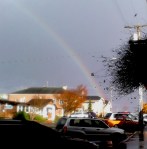
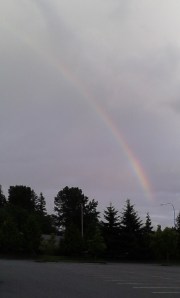
Look for the library under the rainbow

Look for the library under the rainbow

Trust your local librarian. Do you realize that librarians look forward to people coming in and asking them to help with research? Librarians went to school for that very reason. Watch them light up with the right question. I asked around at my local branch, where most of us know each other because it is a small town and because I give talks there frequently. Within a couple of days I had a list of every non-profit on the island. They knew just which database to query.

For the entire island, there is about one non-profit for every 280 people. Ah, but the northern end is dominated by the Naval Air Station, which has an impressive supply of non-profit services delivered by the non-profit service that is the Navy. The rest of the island has about one non-profit for every 150 people. Drop into the trendiest and most stylish center of Langley and that drops to one for every 102. If, on average, a non-profit could sustain two people (and yes, many can’t sustain one; but many can sustain several) that’s two more people living on the island and helping to maintain its character. In real numbers, that is 156 non-profits from a population of 23,957 (221 from 61,780 if we include the northern end). Two people per non-profit is 312 jobs, which therefore employs more than one percent of the population.

Of course some of those young people already have those jobs. Many of the non-profits can’t sustain their web sites, so a staff person won’t fit in the budget. But many of the remaining jobs are handled by volunteers, frequently by founders, and usually by people who prefer having someone else do the work within the next decade.

If it remains even remotely true that the Boomer generation will pass along $41,000,000,000,000 in wealth within the next decade or so, then there is a remarkable opportunity to also pass along passions for causes, transfer hope to youth, and continue or even accelerate good works that remain undone.

On Whidbey the numbers may be small, but the percentages are large and will be noticeable. I know that I’d like to see my community maintain its style, and continue doing good work. But I also worry. Saturday night I went to my favorite concert of the year: The Rural Characters playing at Mayfest, a fundraiser for the local community hall. The music was fun and excellent as ever, especially if you like ferry jokes. (It’s an island thing.) Sitting in the back it was also apparent that I wasn’t the youngest, but I was far younger than the average. The thought of generational succession was already in mind, but the event placed it in front of my eyes too.

Will it work? I don’t know. I’m not a millennial. I’m so close to the edge of the Boomer generation that I’ve never felt a part of it. I admit that one motivation is that I want to stay on the island too, and if I have a thirty year mortgage I have to think thirty years ahead, not just three. If nothing else though, I realized I could provide the list (thanks again to Sno-Isle Libraries), make the suggestion, and see what happens. Besides, do you realize how much fun a party would be if an extra 312 happy people showed up? Gotta get a bigger dance floor.

For those who want the details, here’s the list, and a few factoids.
Which ones do you want to help maintain and sustain?
Total (non-profits = 221) population = 61780

Clinton (18) 5635
Animal People Inc.              
Tune in to Nature Org              
Chinook Learning Community              
Kids First – Island County              
Washington Assistance Dog Education Center              
Whidbey Institute              
Whidbey Island Youth Soccer Association              
Coming Alongside              
Citizens in Support of Useless Bay Community              
Lakeside Bible Camp Association              
Whidbey Island Waldorf School              
South Whidbey Youth Soccer Club              
Friends of the Clinton Library              
La Bella Coro              
Adoption Network A Charitable Trust              
Shoes for Kids Foundation              
Progressive Association              
North American Motor Officers Association              

Langley (52) 5278
Heartbeat Serving Wounded Warriors              
Giraffe Project Inc.              
Whidbey Childrens Theater              
Sister Island Project              
Langley Community Club              
South Whidbey Good Cheer Inc.              
Oasis for Animals              
Saratoga Chamber Orchestra              
Island Christian Academy              
Experience Food Project Cascadia              
Ryans House              
Outcast Productions              
Langley Main Street Association              
Whidbey Island Nourishes              
Elizabeth George Foundation              
South Whidbey Commons              
Mother Mentors of Whidbey Island              
Power of Hope              
Hub – Youth Central              
Matanho Project              
Hedgebrook              
Young Skandia Dansers              
Wild Works Conservation Foundation Inc.              
Northwest Language Academy              
Pye Global              
Hope- Horsemanship Opportunities for Potential Equestrians              
Parent Child Cooperative of South Whidbey              
Context Institute              
South Whidbey Childrens Center              
Island Arts Council              
South Whidbey Historical Society              
Baby Island-Saratoga Club              
Helping Hand of South Whidbey              
Whidby Community Hall Association              
South Whidbey Elementary PTA Island Co 7 7 15              
South Whidbey High School Performing Arts Boosters              
Hearts & Hammers              
Whidbey Island Center for the Arts              
Whidbey Environmental Action Network              
Whidbey Watershed Stewards              
Whidbey Dance Theatre              
Langley Middle School Ptsa              
Readiness to Learn Whidbey Foundation              
Keepers of the Game              
Goosefoot Community Fund A Not for Profit Corporation              
Fetch              
Friends of Friends              
Island County Fair Association Inc.              
Friends of the Langley Library              
New Road Map Foundation              
Micah              
Morris Family Foundation              

Freeland (41) 4561
Zoe Foundation              
Island Affordable Housing Tr              
Association for Veterinary Family Practice              
Brothers of Saint John the Evangelist Osb              
Whidbey Orchestras              
Living Success Center              
Fund for Personal Liberty              
South Whidbey Parks and Aquatics Foundation              
Veterans Resource Center              
Mellison Family Foundation              
Calling the Circle Foundation              
Island Rowing Association              
Friends of Holmes Harbor              
Rotary Foundation of Whidbey Westside              
South Whidbey Bible Chapel              
Senior Services of Island County              
Christian Life Ctr of Whidbey Island              
Meerkerk Rhododendron Gardens              
Enso House              
Service Education & Adventure              
Otherworld Media Inc.              
Foundation of Senior Services of Island County              
Friends of the Freeland Library              
The Arise Charitable Trust              
One Drop Zendo Association              
South Whidbey Church of Christ              
South Whidbey Rotary Club Foundation              
South Whidbey Schools Foundation              
Mano Con Mano Health Beach              
Whidbey Island Garden Tour Inc.              
Cru Institute              
Northwest Institute of Literary Arts              
Genealogical Society of South Whidbey Island              
Northwest Venture Drum and Bugle Corps Inc.              
New Stories              
Victor B Sheffer Foundation              
Whidbey Island Land & Shore Trust              
Friends of Freeland              
Orca Network              
Destination Paradise              
Impact Teams International              

Greenbank (9) 1837
International Association of Home Staging Professionals              
Native Plant Stewards              
Dg Foundation              
Washington Association of Land Trusts              
Romainia League in Defense of Animals              
Whidbey-Camano Land Trust              
Greenbank Farm Management Group              
Ulmschneider Educational Foundation              
Tinyblue Foundation              

Coupeville (36) 6646
Capt Dans Farmstead              
Gifts From the Heart Food Bank              
Globan Ent Outreach              
Small Miracles Coupeville Medical Support Fund              
Auxiliary of Whidbey General Hospital              
Coupeville Booster Club              
Pacific Rim Institute for Environmental Stewardship              
Central Whidbey Hearts & Hammers              
Coupeville Historic Waterfront Association              
Magic Macintosh Appreciation Group of Island County              
Kwpa Whidbey Public Radio              
Penn Cove Water Festival Association              
Citizen Corps Council of Island County              
Alcohol 24-Hour Help Line              
Island Ministries              
Whidbey Island Hospital Foundation              
Central Whidbey Cooperative Preschool              
Friends of the Coupeville Library              
Quilters on the Rock C/O Joanne Van Patten              
Coupeville Lions Foundation              
Concerts on the Cove              
Island County Amateur Radio Club              
Coupeville Arts Center              
Island County Master Gardeners              
Whidbey Animals Improvement Foundation              
Coupeville Elementary PTA 777 C/O Washington State PTA         
Lighthouse Environmental Programs              
Washington Imagination Network              
Community Foundation for Coupeville Public Schools              
Whidbey Weavers Guild              
Western Education & Stewardship Trust              
Broken Arrow Memorial Fund              
Stellar Arts Foundation              
The Wildlands Restoration Society              
Island County Historical Society              
Coupeville Community Bible Church              

Oak Harbor (65) 37823
Medical Safety Net of North Whidbey              
Animals in Need              
Anglican Fellowship of Whidbey Island              
Oak Harbor Youth Sailing Inc.              
Deception Pass Park Foundation              
North Puget Sound Dragon Boat Club              
North Whidbey Christian High School              
Whidbey Playhouse Association              
Whidbey Community Chorus              
Oak Harbor Musical Youth Boosters              
Beeksma Family Foundation              
North Whidbey Caregivers Cove              
Molly Bears              
The Valley Calvary Chapel              
Swan Lake Watershed Preservation Group              
Caleb-Joshua Education and Humanitarian Project              
Mighty to Save Ministries              
Pit Stops Here              
Ballet Slipper Conservatory of Oak Harbor              
Oak Harbor Music Festival              
Word of Everlasting Life and Faith Ministries              
Discipleship Ministries              
Keelworks Foundation              
Rural American Scholarship Fund              
Periwinkle Press              
Interfaith Coalition of Whidbey Island              
Oak Harbor Christian School Society              
New Leaf Inc.              
United Way of Island County              
Bible Baptist Church of Oak Harbor              
Lutheran Outdoor Ministry Assn Inc.              
Family Bible Church of Oak Harbor              
Island Thrift               
North Whidbey Help              
Grace by the Sea              
Citizens Against Domestic and Sexual Abuse              
Oak Harbor Church of Christ              
Oak Harbor Firemens Association    
Toddler Learning Center Association              
Pregnancy Care Clinic              
Suzuki Association of Washington State              
The Lords Garden Association              
Friends of the Oakj Harbor Library              
Calvary Chapel of Oak Harbor              
Oak Harbor Wildcat Booster Club              
Development Companions International              
Oak Harbor Educational Foundation              
Impart Ministries              
Olympic View Orca Parent-Teacher Organization              
Whidbey Island Genealogical Searchers              
Oak Harbor Rotary Foundation              
Oak Harbor Senior Center Foundation              
Heritage Valley Foundation              
Prowler Memorial Park Association              
Big Brothers-Big Sisters of Island County              
Hillcrest Elementary PTA              
Pby Memorial Foundation              
Cascade Warbird Eaa Chapter              
Oak Harbor Elementary PTA              
Soroptimist International of Oak Harbor Foundation              
Impaired Driving Impact Panel of Island County              
North Whidbey Middle School PTA              
International Association of Lions Clubs              
Friends of Home Health Care of Whidbey General Hospital              
Oak Harbor Christian School Foundation              

Posted in Uncategorized | Tagged , , , , , , , , , , , , , , , , , , | 3 Comments

Society Accidentally Diversifies

Us versus Them. That’s a familiar theme; yet we know there are grey areas between the two. Finance is the same. There are “The Big Institutions” and “the rest of Us.” Alternative economies try to make clear distinctions, but if there’s a financial advantage The Big Institutions will try to use it – just like people are glad to step back into a conventional mortgage if they can get a low enough rate. Both sides are affecting both sides. Society is diversifying, just as we should.

The Big Institutions are easy to stereotype as the massive stock brokerages and mega-banks that are physically and culturally removed from mainstream life. Either housed behind anachronistic granite colonnades or modern steel and glass, they are the entities that were too big to fail. They’re so easy to stereotype that they’re personified as characters in movies like Wall Street and Trading Places.

Alternative economies are less easy to stereotype because their recent incarnations are new, and most people don’t recognize the heritage behind barter economies and alternative currencies. When in doubt, people apply the familiar labels of hippie or socialist, ideas as individuals that can be treated as nuisances and fads.

Ideas within the alternative economies are growing enough to affect businesses, communities, and investments. Communities are developing their own currencies, like BerkShares (the Berkshires in Massachusetts), or cryptocurrencies like MazaCoin (for the Lakota Nation), as a way to encourage community development. Individuals are switching some transactions to cryptocurrencies, like BitCoin, as a way to do business without involving banks or central authorities. Microlending organizations like Kiva.org, or LendingClub.com mean people can invest in each other; effectively taking the place of local banks (if there are any.)

Alternative economies are growing because they are more community-focussed, are more likely to deal on a personal level, can paradoxically generate better rates for both borrowers and lenders, and because they aren’t The Big Institutions.

The Big Institutions read that last line and ignore everything except the better rates. If they can get better rates of return and reach new markets, then they can make more money. They got that big by not ignoring such opportunities. The grey area gets greyer.

It is now possible to participate in the alternative economy by dealing with conventional businesses and institutions. Hedge fund managers are creating portfolios that invest in peer-to-peer loans, somewhat ignoring the definition of peer. BitCoin, the cryptocurrency developed to be a “Currency of the people, by the people, for the people” can be bought and sold anonymously, which means it could also be traded by traditional currency arbitrage professionals without anyone knowing about it. Just the way travel was changed when Priceline challenged Expedia which challenged online travel agencies which challenged travel agents, taxis and hotels will see new business models because of the disruption championed by Lyft (“taxis”) and AirBnB (“hotels”).

Lyft – photo by Matt Earnest

Growth in the alternative economy has spawned a backlash. Sharing services like Lyft or airBnB are running into municipalities that are imposing new restrictions at the urging of existing taxi and hotel companies. The IRS is definitely taking notice, and issuing notices about how to pay taxes on any exchange of value, whether that is a cryptocurrency or a bit of bartering at the farmers maket.

Reality becomes more entwined.

Some people will only invest and manage income and expenses only via conventional banks and brokerages. Some people will avoid them entirely and attempt to operate solely within alternative economies, with the major caveat that the tax authorities continue to expect taxes to be paid regardless of the currency.

Most people though, are increasingly using both the old and the new. Paychecks come in via regular currency, probably to a conventional bank. A lot of bills, including taxes, will be paid right back out with that same currency. Without exchanging currency, some will go off to microloans, shared services which are really alternative pay-for-hire, or even directly helping the community by buying local. Farmers markets are grateful. Inevitably, though, people are turning to time banks, closed community currencies, and traditional barter.

At the one end, conventional finance continues to be The Big Institutions. At the other end, alternatives continue to distance themselves as much as possible from centralized authorities.

The fact that most people live in the middle is a good thing. Diversification is one of the most powerful personal finance tools, and collectively without design, we are witnessing the development of a supportive web that extends from The Big Institutions to the farmers at the markets. A person may invest via direct deposit with a match from their employer, while also investing peer-to-peer, and contributing time in the community, whether for charity or trade. The better the diversification, the less severely we will be impacted by the next, inevitable upset.

Our diversification isn’t happening by design. Our diversification may be happening by accident. In any case, our diversification can be strengthening us and redefining conventional, alternative, and stereotypes.

Posted in Uncategorized | Tagged , , , , , , , , , , , , , , , , , , , | 1 Comment

Chromebook Disruption

Chromebooks are the answer, but don’t ask too many questions. Four months ago I bought a Chromebook (Unwrapping My Chromebook). Despite the inevitable complaints I’m about to list, I’m convinced that Chromebooks are going to usurp the laptop the way the laptop usurped the PC the way the PC usurped the mainframe. Continue that regression if you wish, but the main trend is that a new technology that is dismissed may yet again dismiss its predecessors.

For those of you unaware of Chromebooks, don’t be surprised. They are largely being overlooked, and look so similar to laptops that they blend.

They are being overlooked for more than enough reasons.

  • They do less.
  • They’re dumber at what they do.
  • They have less memory.
  • The earliest ones aren’t even useful without wi-fi.

Why would a dumb, hampered, limited, and shackled computer be not only useful but actually disruptive?

  • They are cheap.
  • They are reliable.
  • They are fast.
  • Memory is as simple as adding a card or a disk.
  • They’ve evolved to work even when they aren’t hooked up to the Internet.

Yet, I’ve yet to describe what a Chromebook is. A Chromebook is nothing more than the barest bones laptop, not much more than a keyboard, screen, and a few components that let the user type into and read from the Internet. They are such a simple idea that there’s no reason to make a fuss.

And here’s the fuss.

My Chromebook was an experiment enabled by a gift certificate at Christmas. My venerable MacBook

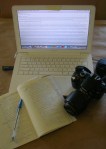
MacBook and friends

MacBook and friends

has been showing its age. A hinge is cracked. Some fasteners fell out; and stayed out because, as Apple certified products, they cost too much to put back in. The system is slowing as Apple’s operating systems upgrade and advance. Occasionally the logic board forgets a device or loses touch with a signal. My business is my computer, and I work almost every day so it works almost every day. We’re both tired.

With sufficient funds I might be tempted to buy another Apple, though I’ve think that fruit’s beginning to show some spots. Despite the defense of Mac-aholics, some of whom were probably born after I’d already bought my first, recent changes in Apple’s file management and reliance on iTunes and iStore and iProfits encouraged me to consider options. A computer is a tool, not a sacrosanct temple.

Without sufficient funds, the Apples were out of reach. The low-end PC laptops have always been cheaper, but even there I’d have to pay hundreds of dollars for software. IPads don’t do enough. And I don’t want to dive into the possibly steep learning curve and incompatibilities of a Linux boxes. Because Chromebooks do so little, they cost much less. The cheapest run for under $200. I bought a slightly nicer one for under $300. The high end ones cost as much as “normal” laptops, which must be an overlap, but I’ll leave that review to someone with more money.

My Chromebook before I removed the labels.

My Chromebook before I removed the labels.

Four months into using my Chromebook I must admit that it must be good enough. It doesn’t do everything, but there are days when my Mac sits with its lid shut.

Having a cheap laptop that has little memory, little software, few moving parts, and yet has all the basic elements of keyboard, screen, and battery means I am much more relaxed. There’s less of a reason for anyone to steal it. If they steal it, they don’t steal much and it will be easy to replace. Because it does so little, the battery lasts almost an entire workday. Fewer moving parts means it is quieter, cooler, and less likely to get damaged during a commute.

The reason a Chromebook works is because the Internet works, usually. As software, storage, and services move onto the Internet (aka as moving into “The Cloud”) there’s less for a local hard drive and software suite to do. Apple and Microsoft and every competent company are aware of the power of the cloud. Apple is trying to shove every user through iCloud the way they do with iTunes and iStore. I think Microsoft is doing the same, but evidently their marketing machine plows different fields than where I’m standing because I can’t recall the name of their initiative. Google is doing the same, but where Apple and Microsoft rely on expensive hardware and software, which also help protect high profit margins, Google has the incentive to do so with cheap hardware and minimal software which lure people to their services (and ad revenue or extra paid services).

This change may be no bigger than the change from mainframe to PC to laptop. Hey, wait. Those changes were fundamental to entire industries. I’ve yet to find a pure-play stock investment based on Chromebooks. GOOG has far too high of a market cap for my style.Dream. Invest. Live. The majority of the Chromebooks are coming out of other large companies like HP (mine), ACER, Samsung, etc. There may be a career trend in coding for simple machines, harkening back to the original and necessarily minimalist programming mindset, relatively. The bigger change may be the simple opening of closed markets: buyers who couldn’t afford the expensive machines or were intimidated by the complexity of software keys and admin protocols.

Chromebooks proved themselves to me by working every day for four months with very few of the issues of conventional laptops.

Chromebooks are not without faults or flaws.

  • Much of my work stretches back to old-line Microsoft and Apple programs (Word, Excel, iPhoto) that aren’t readily replicated on the Chromebook (regardless of claims of compatibility.)
  • The Internet is not always available.
  • Large tasks carried out via the web can have I/O traffic slowdowns.
  • This Chromebook’s monitor is dull and insufficient for final photographic work.
  • The off-line abilities of the Chromebook either fall short of my expectations or I haven’t learned how to properly use them even after four months of opportunities.
  • Printing and scanning from my own equipment have required signing up for Terms and Conditions that are unnecessary.
  • The apps are not mature, and are evolving, which is good eventually but bad in the midst of a project.

. . . and the list goes on as with any machine.

One problem that doesn’t fit into a nice bullet list is why I’ll write this draft on the Chromebook, finish it on the Mac, and then upload it from the Mac. Pulling in files, photos, and links from other sources sometimes brings up menus that don’t show what I know is there. In some cases on the Chromebook I have to find the file online, download it to an SD card in my Chromebook, and then upload it back to a Google directory – even when it started in a Google directory (oh, pardon me, a Google Drive because Google doesn’t use a strict directory format, or was I supposed to use Files, or was it Docs which all sound like the same thing.)

Many of Chromebooks’ flaws vanish for folks that use nothing else. Kids are starting out with Chromebooks, partly because they are something schools can afford. I’d recommend one to my Dad if he needed a new computer. There’s less need for Tech Support, and there’s a lot less cost.

Google started with a simple idea. Keep it simple. They’ve continued to do that with their search engine. They strayed when they launched Google+. They’ve returned to it with Chromebooks.

Each disruption has been dismissed for the very reason they were successful, they proved yet again that less is more. That’s something we need more of.

Keeping it simple - photo courtesy of Pam?

Keeping it simple – photo courtesy of Pam?

(And then, there’s something even simpler and more disruptive than Chromebooks, but it is so radical that it can sound like sci-fi. I’ll wait until it is closer before mentioning more.)

Posted in Uncategorized | Tagged , , , , , , , , , , , | Leave a comment

Adaptation And AAM2014

Have you ever spent four full days thinking about museums? Most people think about museums for a few hours every year, yet museum folks necessarily think about them every day. Me, I think about them about three or four hours a day because I am Project Manager for a virtual museum for about two hours a day (and then my brain can’t just let go.) Museums are excellent at preserving the past. Many people live their lives based on habits developed in the past. The past is something to understand so we can learn and only repeat the good parts of history. Moving onto a better future means actively not repeating the bad parts. Money’s future is changing and so shall I.

Prepare for a long string of words and acronyms. For the last four days I attended the IMG_03632014 Annual Meeting of the American Alliance of Museums conference as the Project Manager for the History of Computing in Learning and Education Virtual Museum project, also known as AAM2014 and HCLE. If you want to read what it was like head out to twitter and check our twitter handle, @HCLEmuseum, and the hashtag #AAM2014. Four days of hanging out with thousands of museum professionals who know the difference between curating and archiving – and are willing to debate the nuances that they may see as enormous. I learned a lot by hanging out with the crowd.

Museums are repositories for history, whether that history is from nature millions of years ago, civilizations millennia old, social issues from the last few decades, or art from last week. Or in HCLE’s case, how education changed as computers came into our classrooms and lives.

The balancing act is between properly preserving the past while making the collections relevant to people in the present so they can enjoy a better future. Vaults are great for preservation, but lousy for access. Hands-on exhibits are great for relevance, but can ruin irreplaceable artifacts.

I witnessed a different type of preservation that is reluctant to change, that also persists in personal finance. Cultures, plans, expectations can be extrapolations or continuations of history and experiences. Museums are continuing to adjust to the dramatic decrease in direct government funding that began twenty or thirty years ago. Instead of tax dollars directly being funneled to well-established institutions, almost everyone is required to spend large percentages of their resources applying for grant money with a minority chance of success. Long term plans have shifted from decades to years because funding is less certain and is delivered in smaller chunks for shorter periods; even while the process of acquiring it has lengthened. Adaptation is happening by necessity, but the remembrance of easier days is hard to ignore. I suspect the change will continue to change.

Personal finance is going through similar changes. Once upon a time, though really for only a short period in our history, the norm was stable employment, steadily rising home prices, reasonably steady investment returns, a promise of comfortable retirement, and an expectation of a better life for the next generation, ad infinitum. Committing to a career made sense. Buying a big house made sense. Locking money away in tax-deferred portfolios made sense. Becoming expert in one skill rather than knowing a lot about a little made sense. To those of you who have had all of those assumptions remain valid, congratulations. To the rest, well, adaption is the only viable option, eh? (You Are Not Your Job)

The scary bit is that, even when you recognize the need for change, there is no guarantee which adaptation is best. One lesson from history is that the future has never been readily predicted, except in hindsight. Another lesson from history is that the more things change the more they stay the same, but standing still is usually the worst option.

One lesson from HCLE is that change is becoming more dramatic, is happening more quickly, and at least in education requires continual adaption.

We are having to learn new ways to live with each new technology, crisis, and insight into our interconnectivity.

This blog would become phenomenally successful if I had all the answers and was infallible. Know of any blogs that fit that description? I am, however, fortunate enough to work with two organizations that unexpectedly intersect: HCLE and my next largest client New Road Map Foundation,

New Road Map Foundation

New Road Map Foundation

an organization advocating personal values-based personal finance. New Road Map’s arena covers the current economy, economic changes, and how individuals can take personal responsibility for their finances. The confluence of ideas convinces me that the changes we’re about to experience have no precedence, only allusions and metaphors.

The things that probably won’t change will be “Spend less than you make.” “Invest the rest.”

The things that may change will be the definitions of Spend, Make, Invest, and even You. Spending may be more related to time than money. Have you heard about time banks? Making may be more related to time and talent rather than income. Investing may be more related to networking (hello social media) than buying stocks or land. You may be the plural instead of the singular. If so, personal finance plans will be more about the person or the community than the finance. If so, institutions like museums may find bigger challenges that shifting from direct funds to grant proposals.

All I know for sure is that, as I pass through my financial turmoil, the greatest lesson I’ve learned has been to study the past, adapt to change, and be flexible about my future.

Catching rainbows when I can, usually just after a storm.

Catching rainbows when I can, usually just after a storm.

Posted in Uncategorized | Tagged , , , , , , , , , , , , , , , , , , , | Leave a comment

Hope From Potatoes

Garden commandoes shopping for a getaway kayak

The second most asked question in my life recently has been, “How do you manage to stay so upbeat?” An interesting balance to the most asked question which is, “So, how are you doing – really?” Financial turmoil publicly played out via this blog inspires both queries. The answers are public too, but are easy to overlook because they are simple. Why make hope hard to find? I’ve learned to find it even in a potato.

I am not much of a gardener. Actually, I think I could do reasonably well with plants, but deer, birds, bunnies, slugs, snails, and caterpillars work hard at enjoying every bit of hope I plant.  Every year I feed them seeds, hoping they’ll miss enough to let me harvest a crop. Last year’s harvest? One apple – out of three trees. No figs on the fig tree. None of the pea seeds, bean seeds, corn seeds, or squash seeds produced a meal for me; but something obviously had a feast. And yet I continue to try.

I’m not totally without skill. Evidently I am reasonably good at growing herbs.

The recipe called for a sprig. Wow.

The recipe called for a sprig. Wow.

Bay, sage, and rosemary are doing so well that I have to harvest them just to keep the plants from occupying the driveway.

If any of the vegetables ever produce a crop they’ll be well-herbed.

Of course, one of the reasons my garden suffers is because I am so busy working on six different projects. Each project contributes to my monthly revenue, possibly producing a total that is enough to maintain a mortgage. (I still haven’t heard back from the mortgage company about their choice between offering a modification or deciding to proceed with foreclosure.) The garden may be neglected but the lawn must be mowed. Today’s yardwork made me laugh and gave me another dose of hope.

Thanks to a dear friend who lent me an electric lawnmower I am able to keep up with the growth spurt that is a Western Washington lawn after a wet spring and unseasonably warm days. My person-powered reel mower would be overwhelmed, or at least its energy source would be. While I was mowing the perimeter to provide me with maneuvering room I saw something else in a pile of wooden slats that I keep around for my poor attempts at fencing out the bunnies. A potato plant was growing from under where the slats were stored.

Persistent Potatoes

Persistent Potatoes

I planted those potatoes last year, watched the slugs devour the leaves, and accepted the probable death of the plants. Evidently I was wrong. Good.

Something similar happened last year. Potatoes planted the year before sprouted where I hadn’t expected. (Recognizing Unexpected Positives) I considered it a fluke, and celebrated anyway. The slugs got them too, so I was thankful for the dose of hope, and resigned myself to buying potatoes.

As I mowed past that previous stretch of garden I slowed long enough to see potatoes growing amidst the weeds.

Potatoes? In there?

Potatoes? In there?

I think they do better when I don’t try to help them.

Silly things like volunteered potatoes are easy to overlook, but their success and perseverance are reminders of what is happening in other parts of my life.

Those six projects I mentioned above are doing much better than some potatoes, but there are some similarities. The best ones are building from something that was already there but needed some help; just like the potatoes that weren’t grown from seed but from grocery-bought potatoes that sprouted after being in the pantry too long. Most of those projects can trace back their beginnings to events that may have seemed inconsequential at the time. As with any project, and particularly with root vegetables, it can be hard to see the true progress being made; especially the progress that may persist even when the more visible parts are in distress.

Stacking my bills against my bank balance is scary; especially since income taxes eliminated most of my financial cushion. That’s one time when hope fades. But then I think about the work and casual overtures I’ve made throughout my adult life. There are far more than enough possibilities for more unexpected positives. One very nice possibility is at the decision-maker stage, and is the result of following a friend’s advice about creating an account on a web site years ago that I subsequently forgot about. Another intriguing possibility is in my larger neighborhood and is based on demonstrating trust, discretion, and soft counseling even further back.

Hope is necessary because the need remains. But I’m not expecting hope to do all the work. I’m doing a few things to welcome the opportunities it produces, and I’m learning the value of planting things even if they may not have the best chance of succeeding. Allow me to plant the idea that you may find value in me as a consultant or program manager, or find that you’ll enjoy my books and photos.

DSC_4293

July’s Floating – Twelve Months at Deception Pass

If potatoes with eyes can see themselves through for years and a bit of help from me, maybe they’ll do better when I give them a better place to grow.

Welcome to my kitchen garden. Scraps that others would throw out, or that I would usually compost, are now planted in big pots outside my kitchen. If there’s any hint of green on a potato eye, or a sprouting onion, or a resurgent carrot, I plant enough to give it hope and eat the rest (of course.) The slugs and snails continue their assaults, but with a bit more protection the plants seem to be doing much better than usual. Everything in the kitchen garden is a root vegetable which means I don’t know what’s really growing down there, but maybe, just maybe, I’ll be harvesting something that is sustaining, satisfying, and really quite simple. All it takes is a bit of work and a bit of hope.

DSCN5167

Happy (protected) plants

Posted in Uncategorized | Tagged , , , , , , , , , , , , , , , , , | Leave a comment

Telling Retirement Tales

Tomorrow night I tell a tale. The tale I’ll tell will be of a year of life in nature in near-wilderness. The fact that I was able to triple the task and turn it into a series is also a tale of what happens to someone who retires, whether because they can or because they must. Ignore the common definition of retirement. Leaving one job or career rarely results in the remainder of life spent on the beach. The new definition of retirement is the redefinition of a life.

It may be hard to believe, but I retired almost 16 years ago. As current events have proved, that retirement was temporary. Want the entire story? Read my book Dream. Invest. Live.Dream. Invest. Live. and this blog reaching all the way back to its first incarnation just after to Barack Obama’s first Presidential election. The short version, an economic crisis, a divorce, a poorly timed house purchase, a second economic crisis, and a Triple Whammy, and I am into an energetic recovery mode that mobilized all my Backup Plans.

Retirement at 38 years old was possible because of a frugal yet comfortable lifestyle, a diverse stock portfolio, the willingness to take on some risk, and some good fortune.

I hadn’t produced a detailed plan for my post-career life. The main theme I’d heard across friends’ anecdotes was to keep busy until you figured out how to also relax. As they’d told me, it took a year or two to simply catch up with the majority of the household chores that accrue around a household. I knew that wouldn’t be enough, so I opened the first door I found, which was to teach karate. Stay in shape, build a business. It sounded like a nice break from corporate politics and stress. Of course things changed. I let them.

I’m old enough that many of my friends are finding their exits, sometimes without a choice. Some have called for advice and guidance about the transition. (Something I do professionally as well.) The answer is simple yet not easy. The good news and bad news about leaving a career is that the best way to adjust is to listen to yourself; not the voices, advice, or role models inserted by culture, media, or peer pressure. Listening to yourself, your Self, is seen as selfish; but it is also necessary. Without the guidance and incentives of a career, guidance and incentives have to be found within. External isn’t nearly as powerful or sustainable as internal.

My karate business faded – and I appreciate my students who trained with me. Shortly after that I bicycled across America and eventually wrote about itJust Keep Pedaling. Writing a book taught me that I liked to write and that I could write a second book better than the first.

In those first few years of retirement I learned that my penchant for persistence and perseverance wasn’t external. It was internal, and a strength. With that in mind, why write one book when I can write a series; especially when it is for an appropriate topic like the varying climates across Washington State’s Cascade mountains. merritt cover I picked three lakes at the border of wilderness along one highway (US2), visited each for a year, and wrote a book about each. Barclay Lake is basically in temperate rain forest and nearest suburbia. Lake Valhalla is at the crest and spends more time under ice than under blue sky. Merritt Lake is as far to the east as Barclay is to the west, so Merritt is hot, dry, open forest prone to fires and Libertarians. I like them all.

I hadn’t planned on becoming a writer. I had to be talked into it. My writing prompted myRock Garden In Green Water art photography, inspired by comments from the audiences and readers who heard or read my tales. With my move to Whidbey Island I became more known for art than anything, except maybe dance. For my first few years here, while I was still apparently financially secure, I worked profit-free plus non-profit workweeks of more than 30 hours a week. At least there was time for drinks on the deck. It was a good thing I kept busy because that work provided a foundation for my subsequent and unfortunately necessary business. It became apparent to me that the artists and entrepreneurs that I knew had great passions and ideas, but sometimes could use someone who enjoyed strategizing and program planning, who was also aware of risk and reward.

My story continues, as this blog demonstrates. Great good news rarely happens suddenly, which is why I am glad for my persistence and perseverance. Though I do admit to wishing the good news would come sooner rather than later. Later can be too late.

A generation in an abstract concept, and yet we group people into Generations. I’m at the tail end of the Baby Boomer Generation. People a few years older than me managed that traditional retirement plan, which really only existed for a few decades. Many seem to be confused about why it isn’t working for everyone who simply works hard. People a few years younger than me have little or no expectation from Social Security, and the corporations behind the few remaining pension plans. Luck seems more powerful than work. Many wouldn’t be surprised to find that the United States of America followed the track of the Soviet Union and splits up. My contemporaries lacked the definition that would make us a generation, until now. I think the people born between the Korean Armistice and the landing on the Moon are getting the opportunity to redefine retirement. Some of us started earlier. The bulk of the crowd is just arriving.

As we redefine the term we will also be rewriting the Conventional Wisdom behind legions of retirement calculators. Business models will be re-arranged. Even unemployment is being shifted as older people decide to stay in their jobs longer for money, benefits, or lack of a better option; which also means that fewer jobs for younger people. My experience may become more common. As we grow older, retirement may be a series of episodes interspersed with a series of careers. The idea isn’t new, but the details can only be found by being lived.

Tomorrow I’ll tell tales about Nature’s cycles within a year. (Thursday, May 15, 6:30 Langley LibraryTwelve Months at Barclay Lake, free) Nothing is static, not even the rocks. Change is inevitable, and it either comes slowly and quietly, or suddenly and loudly. Accept change. Take it at its pace. And tell the tales for they are the source of wisdom.

Posted in Uncategorized | Tagged , , , , , , , , , , , , , , , , , , , , , , , , , , , | Leave a comment

Encouraging Work And Play

Sunday night, my weekend begins. Oops. No, this isn’t a whine, a rant, or a lament. It simply is. It is not, however, news to most entrepreneurs or small business owners. Balancing work and play, money and time, means challenging conventional notions of workdays versus weekends. Old ways of working and living are changing. New definitions are necessary, and much more useful.

So far in 2014 I’ve taken two, maybe three days off. One of those was a sick day. That’s as much time off as most people get in a week. I look forward to my business doing so well that I can take that much time away from it. We’re not there – yet.

The US government tracks the unemployed (as we hear about so frequently), the employed (which is easy to assume is everyone else), and the “not in the labor force” (which is not talked about much.) As of the May 2014 report, there are about 730,000 discouraged workers, people who aren’t counted as unemployed because they couldn’t find employment. That’s the type of definition that I hope wouldn’t make it into the Oxford English Dictionary. They aren’t counted as unemployed because they’ve been unemployed for too long. If they are not being counted does that mean, as far as the US government is concerned, that they don’t count? Does a population larger than Seattle not count?

From what I can gather, at least some time in the last few years the US government considered me discouraged and not in the labor force even while I’ve been applying for jobs and working seven days a week. Maybe I should be more discouraged; but, I’m not.

I’d be more discouraged if I expected to live the same old life by working the same old job that is part of the fading American Dream.

I know a brave man. To slightly alter Horace Greeley, my friend said to himself, “Go East young man”, and he did – with some prompted and encouragement from his friends. “East” wasn’t as important as “urban”. He took a trip away from this rural rock (or pile of gravel) that is Whidbey Island to see what life, and work, might be like in New York City, though any city may have sufficed. He came back, which surprised me; but he came back with different ideas of work and his worth. See what a bit of bravery gets you?

Thirty years ago if a person wanted a change they retyped their resume (with a fresh typewriter ribbon on very nice paper) and started using real knuckles to knock on real doors. The resume era is behind us, mostly. Now it is LinkedIn profiles with purpose-produced videos, and considerable electronic and social networking. He and I passed each other in the grocery store (not even a supermarket) and quickly passed a few business-related possibilities. He smiles a lot anyway. He’s smiling more now. He has an idea that doesn’t fit into conventional models, but it gives him more options in his life – including building up one job while he keeps and possibly improves another.

It is necessary to keep life and play within a day. Work should not take over every moment. I knew he wouldn’t be trapped in just thinking about work. Impressive that he balanced both.

The conventional American Dream rigidly drew limits and boundaries: 5 eight hour days per week, Saturday and Sunday off (to cover two of the common Sabbaths), and a few sick and vacation days sprinkled around. Don’t forget your lunch hour even if it is only forty minutes long. Everyone works the same way, so no explanations required and scheduling parties is much easier.

A new variation is coalescing that differs for everyone, which means it confuses many others. Work as much as you have to, when you need to, but not necessarily all at once. A work day may stretch from some other time zone’s morning into your own evening, but as ease allows there is also time to visit with a friend, tend a garden, watch a sunset,

a short walk from my house

a short walk from my house

and maybe even dance for a song or two.

The transition from the old to the new isn’t instantaneous. Personal values must be pulled out from societal conventions and habits. What matters to the person becomes more important than a possibly anachronistic routine. I continue to make the transition. During my two years of applying for jobs I envisioned getting a job and conforming to their schedule. I’d do that today, for the right situation. But in the meantime I am changing. Change was driven by necessity and because: 1) I was possibly labeled a “discouraged worker” because I possibly fit into “Employers think they are too young or too old, or they face some other type of discrimination.“, 2) my simultaneous efforts to build a business were beginning to produce results, and 3) even when I had a conventional job I was willing to challenge convention.

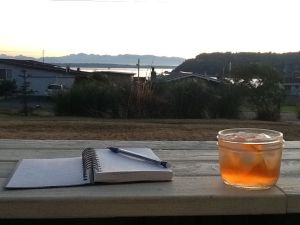
My quiet Sunday evening is quiet, and I still have about two more hours of work to do as the sun sets. Of course, I’d like to have every evening off; and while we’re dreaming, how about every morning, afternoon, and night off too. While I am typing this post I’ve been sipping a fine beverage that involves ice but no soft drinks, I can hear the birds outside, and I can smell a roast that is in its second hour of slowly cooking.

Roasting while I type. Done by the time you read this.

Roasting while I type. Done by the time you read this.

I actually had to commute today, but I was able to do so in a comfortable work shirt which I’d worn while helping a dear friend restock a wood pile for next winter. Here at the end I am looking forward to comfortable clean clothes, comfort food, and getting comfortable – even with the classic comforts seen in the ads.

I work seven days a week, mostly; as per my Rule of 7. As my net worth increases I’ll take more time off; but like so many other middle-aged people I’m having to quickly recover from a major financial setback while mortality make me simultaneously much more aware of the preciousness of every moment. I work. And I definitely appreciate play, or even the satisfaction of finding some time to help a friend.

With that in mind, don’t be surprised if I don’t wordsmith this post to a high polish. I rarely even pass through a second draft. Life is too precious to spend too much time trying to conform to old habits, others’ expectations, or society’s conventions. Living my life the way I want to live it is the most encouraging way to live I can imagine. As the unemployed become the discouraged, then become entrepreneurs and sole-proprietors by necessity, we may also become one of the most encouraging examples of a new American Dream, of living a new definition of a life.

Posted in Uncategorized | Tagged , , , , , , , , , | Leave a comment

MVIS Before The 2014 ASM

Welcome to the world of investing in small companies. MicroVision’s Annual Meeting of Shareholders approaches yet again. That’s a good sign. That means they hadn’t gone out of business in the meantime. Seriously, the way I describe MicroVision is that the company has great potential and is usually on the verge of collapse (a synopsis). Investing in their stock, MVIS, has not been easy; yet seems to make sense based on the technology, the market, the business model, and their network. Tiny companies inspire enthusiasm, rely on high risk tolerances, and could dramatically benefit from actionable good news. Or they can go broke. Welcome to the world of investing in small companies.

Investing in small companies is properly called speculating, unless the company has years of solid and steady financial growth. Startups don’t have that. They have story. Story is a way to build without a foundation, or to at least draw the plans in the air. Interestingly, MicroVision’s technology may allow such images to be created; but not in something we can buy, yet. (What a holograhic iPhone might look like.) While owning MVIS is speculation, I’ll call it investing. The English language has enough trouble with the word speculating and its variants: spectacle, spectacular, speculation, and spectacles. There’s too much opportunity for mis-communication, especially with my non-English-speaking audience.

I’ve held MVIS stock for over a decade, and for over a decade the promise of success has been interpreted as being within a year or two, to the more recent six to nine months. I say interpreted because MicroVision has rarely communicated in a way where the communiques matched the shareholders’ inferences and the eventual reality. The company may have never violated any SEC rule, and has probably always worked within the Forward-Looking Statements disclaimer yet a quick read of any of the discussion boards suggests that more than enough shareholders feel that the promises were under-delivered.

Last year’s ASM seemed to be the turn-around year (check my notes) because certainly before the 2014 meeting there would be marvelous news. Technology and supply issues were resolved. The prime OEMs were lined up. Announcements were due. Finally, MicroVision’s life that’s been concealed by competitive pressures and restrictive NDAs would begin to be revealed.

A part of me felt that the 2014 ASM (of the 2013 year) must be far away because the only news had been of corporate collaborations instead of product launches, of press releases that mentioned MicroVision in the footnotes instead of the headlines. And then the Annual Report and proxy arrived in the mail. In about a month, MicroVision will host yet another Annual Meeting of Stockholders (which most shareholders replace with a previous acronym of ASM). This is the first year in many that won’t be held at a regional convention center, but at a hotel near the company. I suspect that this year will also dispense with the early opening for the demonstration room where shareholders could spend an hour with the technology, technical staff, and management to better understand the company they partly own.

Before this annual report joined my bulging box of previous annual reports, DSCN5162 I read through it hunting for quantifiable and actionable information. Aside from the SEC required financial reports and the industry expectations I found little from which to evaluate the company. There are plenty of qualitative descriptives of the company, its technology, its partners, and its progress; but little of use in quantitative analyses. There was, however, a disappointment that was effectively a zero; which is quantifiable in a sense. “We also see potential for PicoP display technology in other areas, although we are not currently working with customers. PicoP display technology could be combined with other components and systems to be incorporated into a pair of glasses …” So ends any speculation on whether MicroVision was being considered for Google Glass, or any of the competitors to Google Glass, which is sad considering the large lead MicroVision had years ago in wearable displays.

While rummaging around with my stockpile of annual reports, I also pulled out the tangible results from previous ASMs. Pens, mostly. DSCN5160 A USB drive that’s probably never been out of its sleeve. A notepad or two. One of the pens is actually one of my favorites. I wish I could buy more. It has a red LED near the tip for writing in the dark. Very handy for jotting notes that come to mind during movies or plays. (It’s a writer thing.) That’s the only pen that has more than MicroVision stamped on it. It was the commemorative pen for MicroVision’s first see-through wearable display, NOMAD. At least the pen still works. NOMAD, well, I wouldn’t be surprised to find that many don’t know about it, or Flic, or ROV; and that think MicroVision has yet to announce a product. Except maybe they know about the ShowWX (the grey rectangle), of which I have two. Maybe they’ll be collectables some day.

With the ASM less than a month away there is less than a month for the company to release news that not only satisfies management’s idea of impressive news but also the shareholders’ evidently higher standards. Within the last year there has been good news, but announcements that help the company succeed another year are a lower bar than announcements that the company has arrived technically, financially, and publicly.

A few friends owned shares of MVIS before I became a shareholder. They impress me with their foresight and patience. Too many friends bought MVIS after me and have seen their investments drastically diminish. There is a strong desire amongst a large portion of the US populace to find a way out of their financial situation. Working seven days a week isn’t creating enough income. Living frugally to the point of foregoing healthcare isn’t lowering expenses enough. Lottery tickets have odds of millions to one, and yet they are bought because they are a possibility of more than enough income at a very small expense. Investing in small disruptive companies like MicroVision provide the possibility of less than a jackpot for less of a risk for an intermediate price – and are especially attractive when the disruption if positive.

Optimists know that every day is a new opportunity. MicroVision’s management has described a production capability of hundreds of thousands of units in the second half of 2014. That’s probably millions of dollars of revenue, which is short of the tens of millions that are necessary for profitability. Sony’s products commonly are produced at the tens of millions of units level, and they’ve included MicroVision as a footnote; so maybe a successful Sony product will produce success for MicroVision and MVIS. There are other customers, and maybe MicroVision’s capacity can ramp up to support them all. One success can cascade nicely, especially with MicroVision’s business model. In 2015.

I’ll put the documents aside for a few weeks. Then I’ll try to find a bus route that takes me to the meeting. The gas and other commute fees are bad enough. At least the previous meetings were held by a transit center. Every morning I’ll check the news because despite the company’s reticence, and because of their temporary NDAs, I might wake up to news that exceeds management’s and shareholders’ expectations; and then the ASM will be more party than meeting. Just as I hoped for last year.

Posted in Uncategorized | Tagged , , , , , , , , , , , , | Leave a comment

We Listen To Stories

Let me tell you a story. What else do writers do? Actually quite a bit within non-fiction. But stories are what we listen to in the news, to inspire change, and even in how we handle money. Objectively we know that data may be more important, but as humans we want to hear what is happening to other humans.

On March 22nd a part of a mountain fell on a neighborhood in Oso, WA. At least 41 people were buried. On May 2nd a part of a mountain in Afghanistan fell on Aab Bareek possibly killing 500 to 2,700 people. These are important stories, and I must remain unapologetic for pointing out the dangerous realities of living on this planet. Over 371,000 people are born every day. I am happily unapologetic for pointing out that many celebrations. (And yes, some of them aren’t happy about it; but come on, most of those parents were smiling.)

Statistics can use data to paint whatever picture we want to present. It is difficult to completely encompass every aspect and perspective of any issue. Individual realities reside within the details.

To the vast majority of the population of the planet news stories are statistics flavored with human interest stories, at best. To those involved they were life changing events. Some media outlets skip the statistics and amplify the stories until the anecdotes define the issue. Something that affects 300 Americans every year only affects less than one in a million people. Is that a big effect or a small effect?

Sharks are dangerous, right? Elephants kill ten times for often. Crocodiles ten times for often than elephants. Tsetse flies ten times more often than elephants. Humans kill humans almost fifty times more often than elephants kill humans. And mosquitoes beat them all because they infect people with malaria. But, a shark story is much more interesting than mosquito story, even though the mosquito story is more important.

On the positive side, a royal gives birth, or even just a daughter of a possible US Presidential candidate announces a pregnancy, and the news outlets create employment for hundreds of writers and photographers. Pardon me as I copy and paste with an addition. “Over 371,000 people are born every day.” + “We hold these truths to be self-evident, that all men are created equal,” Wolfram Alpha meets the US Declaration of Independence. Evidently the reporters missed out on at least 371,000 news stories.

We seek brighter futures. We create stories of better lives based on our ideologies. Dystopic visions persist, but despite any diminishment of the old American Dream, in general the majority of the world’s population looks forward to a higher standard of living. Even some dystopic visionaries look forward to outwitting their version of our anticipated collapse by properly preparing according to their prognostications.

Whenever I am overwhelmed with story I search for the foundation beneath the story that is the data. Currently, there are some of the strongest yet most diverse forces at work within the data that describes our world. On the pessimistic side there is enough data out there to bolster stories about environmental, financial, and societal collapses. On the optimistic side there are encouraging numbers behind the technological (so many to list that it may be its own post), spiritual, and reformatory advances. A lot is going to happen within the next seven years or so, and the outcome is not obvious.

It should be obvious that I enjoy Big Picture topics, but I always try to bring them back to the influence on a personal level.

The two main resources I have for managing my life are my time and my money. Time isn’t money if you have nothing but time. Money means nothing if you have no time. Despite my recent difficulties, I continue to work towards the balance of money and time, or as I put it into the title of my book (and the basis of this blog) Dream. Invest. Live. Dream. Invest. Live. Investing is only a tool for getting from your dreams to the way you want to live.

Investing continues to be one of my possible avenues that can bridge my dreams to a simple, financially independent, sustainable lifestyle based on my values – one of which is to have fun. As such, I listen to story by buying story stocks, stocks that at least temporarily define themselves by stories of possible futures. I only do so though, when I think the data supports them. AMSC building into the massive infrastructure that is the world’s power grid. Geron with its possible effective treatments for many of mankind’s ills. MicroVision with its possibility for disrupting the electronics industry in ways we can’t imagine except that we’ve already witnessed as PCs, iPhones, and the Internet have changed our lives. (That may be a reach, but if it succeeds that well I would be silly to have avoided the potential.)

We listen to story, and we should also listen to more than just the anecdotes, promises, and worries. Data alone may be truth, but it can be so dry that no one tastes it. We know that asteroids orbit past the Earth at, by definition, astronomical speeds; but, as a populace we don’t pay attention until one blows up over a city. Why were so many people injured? They saw a flash of light, went to the window to see what was happening, then as the much slower than light shock wave hit the glass they were cut. They wanted to see what was going on. They didn’t want to miss the story. Now we know that an asteroid or meteorite hits the Earth with the force of a nuclear bomb about every six months. We probably won’t do anything about it until the next story.

I do the same thing when I feel a building shake. Was it a truck going by or did we just have an earthquake? Silly me. Get away from the window.

A story without the data may not have much of a foundation. Data without a story is so grounded that only those who can trip over it will notice it. Whether we seek change in the world around us, our society, or even just our own lives and money it is good to keep the story and the data in mind.

Posted in Uncategorized | Tagged , , , , , , , , , , , , , | 1 Comment

You Make Me Feel So Young

I sat down to lunch at a local restaurant, felt a bit annoyed, and then realized it was a symptom of youth. I was reminded that you’re only as old as your thoughts, regardless of what my joints are telling me as I type.

The world changed dramatically in the last thirty years. Russia was part of the Soviet Republic. Anyone talking about the environment was considered a hippy. Gas cost $1.21 per gallon. Computers were something that had to be explained. HCLE We knew we were going back to the Moon any year now. Financial crises revolved around double digit interest and inflation rates, but almost every transaction was still handled by certified professional humans.

Now, some are surprised that Russia is trying to rebuild the Republic. Almost all scientists are worried about not just environmental crisis but actual calamity. Gas costs over $4 at my local station. Computers are so ubiquitous that they are doing the explaining. We’re still going back the Moon, any decade now. Financial crises are taken as a norm, even though interest and inflation rates are near historic lows, and every crisis intimately includes computers. Individuals have more information than ever; but low cost services sometimes reflect getting what we pay for.

Two men sat at the next table. It was early, so no one else was in the place. They saw no reason to be quiet, so the volume went up on their rants about the conspiracy behind climate change, the poor work ethic of today’s employees, and a stream of commentary that I was happy to edit out as my business lunch partner arrived. I am very glad I know people with manners.

As easy as it would be to make even more fun of the two at the next table, I am also a fan of Freedom of Speech. They have a right to their opinions. And Comedy Central would’ve had a wonderful time exercising the Freedom of Speech and The Press by interviewing them.

What I kept in mind is something that I keep in mind with any conventional wisdom. Maybe what is said or claimed is valid if measured against its assumptions and era.

My favorite meteorologist is Prof. Cliff Mass from the University of Washington. He has a very popular blog that extends beyond the local weather. A while back he made the point that Western Civilization was much more sustainable, not because of technology but because of population. Back when there were only 2,000,000,000 people on the planet we had a much smaller effect. The year? 1930. As much as it is a Duh moment for many to realize that fewer people on the planet makes their civilization more sustainable, it also points out that for many people born in that era it is natural to assume that today’s claims of unsustainability are hyperbole. The system worked when they were young. If it doesn’t work now, it must be because the new generation isn’t as smart, resourceful, or hardworking.

A lot of financial advice is handed out based on conventional wisdom developed before 1980, in some cases before we dropped the Gold Standard. Get a degree whatever it takes. Work hard and you’ll get ahead. Devote yourself to a job and it will become a dependable career. Fit in. Buy the biggest house you can afford and grow into it, and then move up every few years. Look forward to a retirement with good benefits and no worries.

A millennial reading that last paragraph might think it is a parody. Student loan debt exceeds mortgage debt, frequently costs more than the career can repay, and can’t even be forgiven by bankruptcy. Working hard is a given, but getting ahead seems to be more about luck. Devoting yourself to a job implies the company won’t get bought out, you won’t get laid off, or some new technology won’t invalidate your schooling. Fit in? Fit into what? Nothing is static. Buying the biggest house you can afford may mean 128 square feet and on wheels (which, if you do it right is actually quite nice.) Cabin by Angela Move every few years? That’s what the wheels are for. As for retirement and benefits, what are they? Worries, well, they’re eternal.

I won’t say that I feel young. My back, hips, knees, eyes, et al cast their votes every day. But I was heartened to hear that I have some of the symptoms of youth, not that I am living a young person’s lifestyle; but I am glad that I am not as trapped by wisdom that only made sense when we, as a species, could be more foolish. Foolish is fun, but when it comes to the essentials of life it is wiser to be aware of current reality. And current reality is considerably different than 1984’s reality.

I offer my point of view and opinion as a point of departure for others who are redefining conventional wisdom.

  • The climate is changing. I’ve seen more than enough of the data and witnessed too many of the effects to deny it. The systems analyses are scarier still which is why I’m not surprised when I hear that the change is accelerating faster than predicted.
  • Energy is changing. I know more people with electric vehicles or hybrids than people with pickup trucks. The list of bicyclists is too long to write down.  Solar, wind, and efficiency are becoming the norm.
  • I don’t know anyone under the age of 60 who wants a bigger house. Tiny houses are appealing for many reasons, and I even have friends who not only live in them, but also help others build them.
  • Space is commercializing, yeah. But too late for my career or me, evidently.
  • A resume is an anachronism. Lists of job experiences on LinkedIn replace the carefully typeset prose on perfect paper presented professionally. Resume bots have blanks that must be filled in. Remember your username and password. We’ll get back to you. Oh yeah, and word-of-mouth still works best. (Some things don’t change.)
  • Investing is so driven by financial institutions and large cap stocks that individual investors like me have withdrawn to what were considered penny stocks. And in many cases, I understand why people are investing peer-to-peer despite the risks.
  • Even currency is coming into question. The last time it was questioned was when we gave up the Gold Standard, but now alternative currencies are arising because the dollar and Euro are no longer considered as standard as they were as recently as 2007. Even paper and coins are being replaced by cryptography.

Put all those effects together and personal finance plans require new analyses and options.

A sign of youth is the willingness to challenge authority and assumptions. It was heartening to hear the contrast between what those men said and what I know. Whether they were right or wrong, their conversation seemed more of a desire to reinforce an image that existed when they were younger and “righter”. I may do the same thing eventually, if I haven’t already started.

So, celebrate any dissonance you have with conventional wisdom. Conventional wisdom is being redefined by those that challenge authority and assumptions, and if that’s you too, then celebrate your symptoms of youth. And don’t be surprised if that retirement calculator asks questions that are laughably inappropriate.

Posted in Uncategorized | Tagged , , , , , , , , , , , , , , , , | 2 Comments