Indulging In Volunteering

Celebrate! My first week of taking one day off each week. That’s why I spent so much time this weekend working without getting paid. That may not sound right, but it was a good idea. Give me some free time and I spend some of it working for free, volunteering. Yesterday there were a few hundred of us doing the same thing, and I helped a bit. They inspired me to do some solo volunteering today, and that felt good, too. There’s an infinity of ways to practice self-indulgence. Sometimes that includes helping others.

Small towns are known for barn-raisings. That’s a nice image, though barns are more likely to be made from metal and built by work crews, now. Locally, there’s an organization that does something similar, but in ways that make more sense in today’s world. Hearts and Hammers pulls together a few hundred volunteers to help a few dozen homeowners for free. It is a smart organization. If someone wants to volunteer, their answer is usually, yes. I don’t know the details of their selection process, logistics, and organization; but I do know that they found work for people whose greatest strength was enthusiasm, plenty of work for professional contractors, and even work for cooks. They served breakfast and dinner for those hundreds, and then someone organized entertainment, too. It is an all-day, sweaty party that leaves dozens of households better off for the price of a lot of sore muscles – and smiles.

I was lucky. They only asked me to take photos at five of the sites. The only time I had to sweat was when I hopped into my sun-warmed truck. I was also lucky because I got a mini-tour of the work they did. One crew helped someone resurrect a natural and native garden that was getting out of control now that a spouse had passed. Another site had a dozen trees felled for safety, rails, and probably some sunshine and firewood. Want to attack blackberries? One group easily filled a truck. I saw two kitchens getting rebuilt, plus a bathroom, a porch, and a wheelchair ramp.

It was fascinating watching the energy and activity. Professionals’ trucks were open displays of amazing tools and equipment. Parked beside them were econo-cars and luxury sedans. Carhartts, jeans, sweats, and whatever happened to be handy made for a fashion show that will never see the bright lights, but should.

It was also a display of humility and courage. It isn’t easy to ask for help. The most common cause was simple bad luck. One, two, then three upsets overlapping can drain most people’s rainy day funds. If a medical condition is involved, it may also mean that the work can’t get done by DIY. That’s when a community impresses.

I enjoy photography. Most of my photos are of nature or abstracts, or both. I didn’t expect the photo coordinator to contact me, but I’ve always been impressed by Hearts and Hammers, so it was a good introduction. Besides, there are some long-delayed projects around my house that I can’t afford to fix. Friends have suggested I nominate some of my chores. Maybe next year, but no, because by next year I’ll be able to afford to get the work done – a rationalization I’ve used for several years.

I enjoyed taking photos of people at work. There’s no time for posturing and posing. People are less likely to complain about a hair being out of place, or having a smudge on their face. Taking pictures of people volunteering is also fun because there are lots of smiles.

It felt odd staying behind the camera. There were a few times when I lent a hand, but I wanted to be more active. So, on my first regularly scheduled day off, I indulged myself by getting sweaty, muddy, dirty, and scratched. It wasn’t an official work party, but as Site Steward for a Land Trust property (Hammon’s Preserve, Whidbey Camano Land Trust), I knew where there was lots of work waiting for me, and tasks that were literally growing in the meantime. I decided to tackle a tangle of thorns and barbs, a blackberry patch that was overgrowing a barbed wire fence.

Until about a decade ago, the property was a nine acre farm. Some livestock lived there, too; so their pastures are fertile. The herbivores are gone. The weeds are happy.

Thanks to dozens of work parties, we’ve made progress against Scotch broom, holly, English ivy, thistles – and blackberries always blackberries.

Whacking blackberries is gratifying. Sure, there are scratches; but cutting back dozens of feet of thorny branches from new and old barbed wire leaves an open corridor of accomplishments.

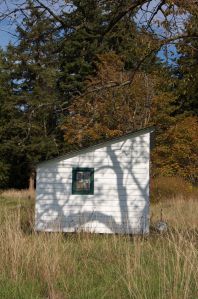
About halfway through, I had a welcome break. The neighbor came out to thank me. They’ve lived there for forty years, so he had stories to tell about the farm, the farmer, and the history of the farm buildings. Evidently, the one we consider a tool shed was originally a tiny schoolhouse. I wondered why it had a spot for a woodstove and a lot of empty space. We put a new roof on it without realizing it was historic.


Whether it was Hearts and Hammers, or Whidbey Camano Land Trust, or any other organization that hopes to help, it is hard to know how far the effort reaches. We put a roof on a tool shed, and saved a bit of history. A few dozen people have better homes now, which may free them up to accomplish something greater or at least live with less worry.

I admit that some of my volunteering is indulgent. I do it because it makes me feel good. I’m probably not the only one. But, when I think about the ways I could’ve spent these days, that sounds like a pretty good trade. I hope it helped. I know it helped me.

Now, after I post this, I have some laundry to do.

Posted in Uncategorized | Tagged , , , , , , , , , , , , , , | 3 Comments

My Real Goods Is Gone

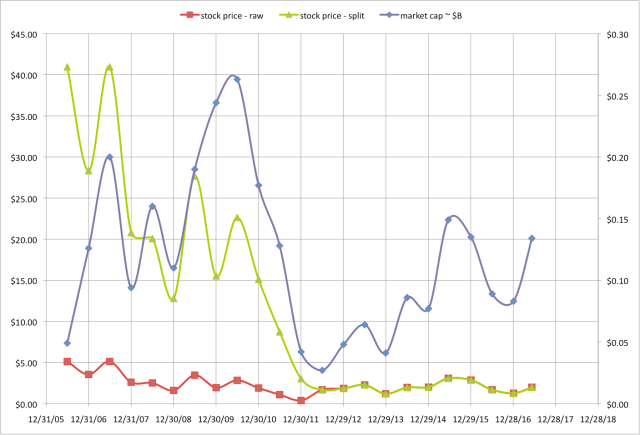
Solar power is becoming so popular that it is helping send coal into a downward financial spiral. An industry that disruptive and successful sounds like a good investment. That’s what I thought. Today, I sold my shares, oops, share, of RGSE, aka Real Goods Solar, a firm and an advocacy that I’ve been following since they started in 1978. Just shy of 40 years later, the total value of the company has dropped to under $10,000,000. There are houses selling for more. Somehow in less than three years, in a phenomenal growth market and industry, they managed to fall rather than rise from a reasonable market cap of $134,000,000. Having the right idea at the right time doesn’t guarantee success. Another reason for diversification.

Through the early years it was privately held, then it went public and the stock has traded as RGTC, RSOL, and RGSE. For a while it was part of GAIA, but was spun off again, which encouraged me to buy again. At the start, the company sold the things that helped people move off-the-grid. The customers were willing to pay a premium to be able to disconnect from mainstream society and the fossil fuel economy. For a while, Real Goods branched into more suburban products: solar powered lawn lights, sustainable materials, niceties that helped people demonstrate their preference for more natural products without having to leave the world of asphalt and cul-de-sacs. I was one of them. As solar technology progressed, the map of where it was viable grew. The economics worked best for large installations, so they provided installation services for companies and municipalities. Within the last few years, the technology has become so common and affordable that the regions that can go off-the-grid are overlapping the main grid. The solar enthusiast in me has been celebrating the progress.

The investor in me watched RGSE attempt to grow, stumble, and falter; but I saw optimism in the growth of its competitors. Today, First Solar (FSLR) has a market cap of $3,630,000,000. Solar City (SCTY) has a market cap of $2,014,000,000. They prove the market potential exists. I saw RGSE as the economy priced investment that could grow to those levels. That didn’t happen.

I’ve made the same mistake before. When Amazon.com went public, they mostly sold books. I thought online sales had good potential (and way underestimated that one) and already had shares in a bookstore, Barnes & Noble. Rather than buy into the purely online company, I bought stock in barnesandnoble.com. B&N had the benefit of people being able to have it either way, delivered at home or at the store, online plus personal customer service, and a chance to hold the book in hand before buying it. That didn’t work.

First mover advantage is a term used to explain Amazon’s success. The same’s true for Starbucks and other trendsetters. But, Real Goods existed before the World Wide Web. Barnes & Noble had decades of history. Coffee shops existed before Starbucks decided to redefine the model. Simple strategies are rarely simple in reality.

Years of supposedly diligently following the company didn’t help me catch the two year slide from $3.10 to $1.20. Ah, but let’s adjust for a 20/1 reverse split and a 30/1 reverse split. The $1.20 is post-splits, so it stays the same. The $3.10 is effectively $1860. Because of the splits, my hundreds of shares were reduced to one share.

While the company was imploding (and I was possibly working too hard to devote the appropriate attention to it), the solar and wind industries are imploding the coal industry. As solar and wind technologies have become more efficient, more people and institutions have been using them. As more units are built and sold, the economies of scale reduce the cost to produce the units. The effective price per kilo-watt drops. At the same time, that’s power that isn’t being fueled by coal. The reverse economy of scale kicks in. Coal mines, transportation systems, and power plants have large fixed costs. Those costs have to be covered by fewer customers, so the effective price per kilo-watt rises. As coal’s price rises, solar and wind become more appealing amplifying the difference. Solar and wind technologies are continuing to mature. That cycle should raise their market share and lower coal’s. Throw in some large side effects like pollution, remediation, and infrastructure, and the days of coal mining dim. (See PretendingNotToPanic.com for a story about the UK getting by without coal for a day.)

With a story like that, Real Goods should do well; but that’s been the story for years, and they haven’t done well. I’m a bit embarrassed to relay this story because it’s yet another blow to my portfolio; but, one of my personal challenges is to progress past the money taboos so common in our culture. My embarrassment proves I have some progress to make.

As much as this is a cautionary tale about investing in individual stocks, this is also an example of why IRAs are not panaceas. If the stock was outside my IRA, I could’ve claimed the losses on my taxes. That would’ve come in handy these last few years. Some day I may run the numbers and quantify the costs and benefits of using an IRA rather than a traditional account. An IRA makes sense when it never gets touched. But, emergencies happen, rainy day funds dry up, and in those cases using an IRA triggers penalties while also being denied some benefits.

Years of Annual Reports heading to be recycled, naturally

Silly as it may be, the reason I sold today was because it was convenient. I’ve finally found some space in my work schedule (a good and a bad thing for an entrepreneur.) In the midst of finally getting lots of tiny delayed tasks accomplished, I decided to clean up my portfolio by getting rid of the last lonely share of Real Goods. The total position was worth $1.20. The cost of the commission was higher. My net benefit is freeing up some storage space, simplifying my research tasks, and removing yet another reminder of this largely unprofitable investing era. Let’s hope this doesn’t happen to the other stocks in my portfolio: AMSC, AST, GERN, MVIS, NPTN.

Posted in Uncategorized | Tagged , , , , , , , , , , , , , , , , , , , , , , , | 2 Comments

My Rule Of 7 – One Day Off

Good news sneaks up and tests me against one of my rules. For the last six years I’ve been working according to My Rule Of 7. When my net worth was over $700,000, I knew I didn’t have to work very hard. When my net worth was under $100,000, I knew it was time to work every day of the week. My Rule Of 7 is incredibly simplistic; so, maybe I should call it more of a guideline. I’ve finally realized that if I was going to respect the Rule, then I should, er, get to, start taking one day off each week. My net worth may have finally risen above $100,000. The weird part is watching myself push and pull the idea of not working every day. Oh, what ruts we build for ourselves.

As an entrepreneur it would be great to celebrate reaching this milestone from all of that work. As an investor it would be great to cheer a sudden rise in my portfolio. (The opposite of that happened thanks to AMSC, MVIS, and NPTN.) It wasn’t hard work or insightful investing that is going to give me a day off; it is simply staying in my house while the real estate market recovered. (Which I was able to do because of all that hard work, so it wasn’t for nothing.)

Figuring out net worth is easy if it is all in cash or in liquid assets like stocks. Check the statement. Subtract the debt. There’s the number. Reality is more complicated because what people own and owe changes every day. It is an imperfect exercise, but it is worth doing. Most folks have more assets than they realize.

I hesitated adding in my house’s value because I don’t plan to sell, it would take a long time to sell if I decided to do so, and the value is always a guessing game until someone actually buys it. But, like I just said, it is an imperfect exercise, but it is worth doing. Again, an overly simplistic check convinced me to go ahead. Assume I could clear $700,000 by selling my house. If I ignored that and kept working, I’d be inside a life that hurt my health, and left me with very little time for family, friends, and fun. If I sold and cleared $700,000, taking 5% to spend a year recuperating would be one of the healthiest and fun things I could do. In the meantime, I’d put $665,000 to work on getting back up to $700,000.

Ah, but what is the market value of my house?

I’m fortunate enough to have a variety of perspectives from which to estimate my house’s value. I wrote a (ill-timed) book about personal finance. (Dream. Invest. Live.) I’ve bought and sold several houses. I write about real estate for Curbed and 360Modern. Put it all together and I feel confident that the value of the house has at least returned to its pre-Recession price. Seattle’s ridiculously hot market is starting to warm the island. Some neighboring counties are rising at about 10%, with a few flukes that are much higher. If not now, then reasonably soon, my house could be worth about 10% to 20% more than it was when I bought it. (~$290,000 x 1.15 = ~ $335,000) Take that purchase price, assume 1.5% per year growth and get something similar, $338,000.


Two other estimates are available for free. Both Redfin and Zillow provide market estimates. Redfin’s estimate ~ $275,000; which is probably based on recent sales without projections. There have been so few houses like mine on the market that the estimate is probably hampered by a lack of data. Zillow also has to deal with the lack of data, but I suspect Zillow is applying an algorithm that includes the regional market growth. Zillow’s Zestimate is a very sweet ~$463,000. One thing I like about Zillow’s estimate is that it comes with a range. In my house’s case, from a low of $361,000 to a high of $560,000. Ah, for that high number, but I have my doubts about it. Just for fun I found the average of Redfin’s estimate and Zillow’s low estimate. Voila, ~$318,000.

There are people who do this sort of thing for a living, real estate professionals. One has heard me talking about this sort of thing long enough to at least help bracket my estimate. Yes, Redfin is probably too low. Yes, Zillow is probably too high. Yes, somewhere in the between $300,000 and $350,000 is a good enough estimate for what I’m trying to do. (Getting real about putting it on the market would require an in-depth analysis, and I’m not going to ask someone to do that for free and fun.)

So, without revealing my mortgage balance (hey, some privacy, eh) it is reasonable to assume that my net worth has finally risen about $100,000. Throw in my portfolio and a few other assets as a buffer on conservatism and – whew.

And yet I hesitate; and yet I know I shouldn’t. Life is meant to be lived. Wealth, or at least the money to fund a lifestyle, can come from unexpected directions. That doesn’t mean it should be discounted. Recognizing values in our lives grants them the respect they, and we, deserve. Too many people dismiss the money they have in an IRA, or the value of their collectibles, or even the value of their home. If they already have sufficient funds, then that’s fine. But too many work as if the products of their labors and their life have no value. If I think they should value what they have, then I should value what I have.

Next week I’ll start taking one day off each week. Fellow entrepreneurs can know how radical that act can be. For a day I won’t be making any money. It won’t be a paid vacation. But, it is something that I’ve worked towards and that has arrived, even if it happened in  a way I didn’t expect.

Now, the trick will be remembering what to do with a regular day off. It may sound silly, but I’ve forgotten what I did when I wasn’t working every day. Sounds like a task to add to my To-Do list. Hmm, something about that sounds like a rut I should get out of.

Posted in Uncategorized | Tagged , , , , , , , , , , , , , , , | Leave a comment

It Has Been A Quiet Week

It’s been a quiet week, here beside Cultus Bay. That’s a rare thing to hear from me lately, but it’s true. And it was welcome. In the world of ironies, though, the less I worked, the more good news happened to arrive.

Life has been crazy enough since my Triple Whammy. Many people have patiently listened to my descriptions of working seven days a week, frequently from 8 to 8. The last four months were a climax of overlapping (mostly temporary) assignments that were the first time in years when I made more than my bills (just in time for taxes); but at the cost of my health (oops, diabetes).

Without any great planning, several deadlines were accomplished and passed. A few major but temporary projects were completed. And then, a great gap in my schedule. There were a few items to work on, but my work life looked like a downhill roll after a long bicycle ride uphill. One of the messages from my health scare was that self-care had been neglected. I knew I’d neglected it. But, times and taxes demanded taking the risk of the added stress and strain. Now, health demanded taking time for taking care.

I quietly settled into a week with only one scheduled meeting. Shh. Don’t tell anyone.

It is easy to fall out of good habits. It took me several evenings to remember what I would do when I had free time. A very spooky feeling. I’m not surprised when I hear about people who fear retirement because they won’t know how to spend their time. Relax. There’ll always be something to do, and it’s also good to learn when to do nothing – and learning to relax can take effort.

It was weird enough to realize I forgot how I spent evenings. It was even weirder to feel my body adjust. For a day or two, everything seemed the same. Then, aches began for seemingly no reason; my muscles were so tight for so long that relaxing them hurt. Time for a massage. I got a tour of the extent of the tensed muscles thanks to a quick massage by Faith Bushby (she does in-store massages at Star Store Basics in Langley on Wednesdays). My body was so tight that it was as if eye strain was the new normal. A bit of relaxation and I could see more clearly. How many hints does a guy need to relax?

There was weirdness at work, too, and in a good way. Instead of sending out a swarm of emails asking for my next assignments, the assignments started showing up unsolicited. By the end of the week (and it isn’t over yet), I had three or four new assignments with existing clients, plus leads on two more. Evidently (and happily), I’m now some unofficial Welcome to Whidbey person. Someone connected via Twitter and we connected at a local coffee shop. Synchronicity happens and the meeting revealed some nice networking opportunities, plus I may have inadvertently connected a household with a house for sale (that I happened to have written the listing’s marketing remarks for). (Maybe I should try this realty thing, after all.) The flourish on top was a raise, a >75% raise from a client who finally realized that I’d “been working for peanuts.” Granted, this is after an 80% cut in the budget (the math: (1-0.8)*(1+0.75) = 0.35 ), but that means “only” a 65% cut for less time; and I can use the extra time for that personal care I mentioned.

A friend and ace consultant, Steve Smolinsky, has an entertaining and insightful blog about life and corporate culture. For years he has advocated for the kind of time I just spent. His calls them Clarity Breaks. Of course, his application of the idea is clearer and not interrupted with even the low level of chores and tasks I took on; but the effect is similar. Sometimes the best way to move ahead is to stand still.

I’ve been pushing hard because I’ve had to, but as I’ve shown, it is possible to push too much. Clarity Breaks aren’t new to me. Most people have ways to take some time for themselves. I do, or at least did, too. Look back on some of these posts when evening found me sitting on the deck with a cocktail beside me.

Ah, those were the days. Some day, again.

The cocktail wasn’t necessary except as an anchor that kept me in my seat for long enough to drink it, and relax. Whether it is a cocktail (which I can’t have now, rats) or a cup of tea, I found that sitting still for an hour usually ended with quickly and efficiently completing a series of tasks. Relaxing isn’t just about making a person more efficient, but it is one of the easier successes to describe and celebrate.

I suspect that given enough discretionary cash, I’d take a week to clear my mind, probably a month to reinvigorate my body, and months to regain my health. I’m not there, yet.

Two other things happened that put the rest in perspective, even that garnish. MVIS had a good week. Two impressive days saw the stock rise over 10%. By the end of the week, MVIS was up over 27%. I’ll save the analysis until after next week’s conference call, but that activity increased my net worth by almost a month’s living expenses. My portfolio and my house are probably both undervalued and both have reasons that their values may rise faster than my typical monthly revenues – without me having to push hard (except when I mow the lawn.) Maybe that’s the secret. Do less. Relax. Let things take care of themselves.

It has been a quiet week, and the quiet times can be the best times – in many ways.

Posted in Uncategorized | Tagged , , , , , , , , , , , , , , , , , , | Leave a comment

Small Town Working Spaces

Random acts of kindness are greatly appreciated. For a week or so this month I had the luxury of using an empty desk in the heart of Langley, our small tourist town. Two people have been watching the development of coworks on the south half of Whidbey Island, know that I’m an advocate for working spaces for Gig Economy workers, and knew that I have yet to find a place that meets my requirements. They offered, I accepted, it was good; and it isn’t the only option in town. Coworks have hit a series of quiet milestones in the Village by the Sea, so I wanted to celebrate their accomplishments and help chronicle the new way of working as it works its way into a historic place.

Ross Chapin is an architect known around the world for designing Pocket Neighborhoods, intentional communities that emphasize shared spaces, fine detail, and consequentially more sustainable living. Ann Medlock’s work extends around the world as her position as Founder and Executive Director of Giraffe Project, an organization that supports “compassionate risk-takers who are largely unknown, people who have the courage to stick their necks out for the common good“. Quaint little Langley, home to two of many similarly impactful people. It shouldn’t be a surprise that Ross has nice offices. He also has a few empty desks. Ann works from one, and they’re hunting for a couple of other people to work from the other two (the sweet window seats.) Thanks to their generosity and a cooperative schedule, I was treated to trying out one of the window desks for a while. (Great people watching in a tourist town.)


Workers in the Gig Economy frequently try to fit themselves and their laptops into coffeeshop and library furnishings and schedules. Quiet and privacy are traded for access to food, drink, Internet access, with a bit of accidental social networking. These aren’t casual workers, though. Their schedules can spread across time zones, coordinating with clients and colleagues can require quiet backgrounds, and a cafe table or the arm of a chair can be a bit limiting when the work requires spreading out papers and other devices.

To me, what Ross is offering is the higher-end of a coworking environment. A few desks with a lot of room and a professional environment. One of the biggest benefits for me was being able to have a key. 24/7 access better reflects the Gig Economy’s schedule. It was also nice to be able to run errands without having to shut everything down and cart it around.

Not all solutions are the same. Three other coworks have passed major hurdles.

Fine Balance Imaging and Printing created a two section coworks. The outer section is more open, has several desks, access to the kitchen amenities, and a professional and fine art printing and supply business. Need a copy or something scanned? Do you want one or 10,000 copies? Need a pen NOW? They got that. The other section is behind a door, creating a combination conference room, web conference site, and room for spreading out those papers. It has been a handy place for private client calls.

South Whidbey Commons is relocating their coworks (I believe) from the attic (which I reported from earlier) to the much more accessible and roomier backroom. There’s enough of a separation that the pesky espresso machine sounds can’t make it around the corner and down the hall; but food and drink are still available. Some of my clients prefer meeting there for the coffee, sometimes because it is familiar, and sometimes because it is a non-profit that teaches teenagers how to run a business.

The third place is the showcase of what is making this surge of coworks more possible (besides the tantalizing profit margins of running a coworks), The Big GiG. The Big Gig Center is one of Whidbey Telecom’s demonstration sites for one of their initiatives that should be making national news. They’ve brought 10G Internet access to the island. Like with any such infrastructure project, it starts from a hub and works its way out. (My house is probably years away, but that’s okay.) The download speeds are impressive, but the upload speeds are incredible. Uploads that take an hour at home take minutes or seconds at the Big GiG. Sometimes they go by so quickly that I miss the notification, think it didn’t do anything, and then find that it was done about the time my finger lifted from the keyboard. One of their demonstration areas holds three desks, each with large monitors, power stands, task lighting, ergonomic chairs, and (temporary) storage. There’s also a conference table, massive whiteboard, and maybe VR some day. My clients who want the quietest environment ask to meet there.

So, why aren’t these all considered to be open for business and spreading the word? Thank small town politeness and considerations. Rather than try to outcompete each other, the various principals are trying to find a way to work as a consortium. Very impressive. Pay the consortium and work wherever works best. That’s an effort I encourage. In the meantime, it also means that some of the spaces are available for free, or at least for the price of a cup of coffee. (Good thing that I drink tea, which is even cheaper.)

I have no favorite, and that isn’t just me being diplomatic. I seem to be attracting a different set of clients recently, but I don’t know if this is temporary or the entrance to a new phase of my business. At this point, no one solution meets all of my requirements, though as a consortium they get very close.

For me, coworks emphasize the co-. The more people the better. 24/7 is important to me because, even though Langley works on tourist time, I frequently work from 8 to 8. Being able to leave my computer at the site would mean better health (a recent issue) because it makes it easier to commute by bicycle. Being able to bring my own food and drink keeps the cost of working out of the house down. There are hints of these various things happening, but not yet.

Coworks in small towns aren’t limited to Langley, of course. Even on the island I enjoyed using a space at Whidbey Tel’s Freeland office, and I hear there may be a coworks in my even smaller town of Clinton (though the commute’s about the same distance.)

The old economy of paychecks and W-2s is being replaced by the Gig Economy and its 1099s. In ten years, the number of Americans working as contractors rose by 60% with no signs of stopping. The economy is changing. My business is changing. And, I’m glad to see that the towns on South Whidbey are changing, too. Now, what do I have to pay to join the consortium, please?

(Check the “coworks” tag for more of the history including previous coworks.)

Posted in Uncategorized | Tagged , , , , , , , , , , , , , , | 3 Comments

Diabetes Begins

I look forward to writing the post that will be titled Diabetes Ends. I was delivered the shock of news last week. I am diabetic. Any doubt I had about the Gig Economy being unhealthy was proved correct, at least for me. The bad news was delivered by someone who created a safe place for me to hear it; and yet, the impact was severe. The good news is that I have a lot of tools available for fixing this fractured lifestyle. Let’s get to work.

Thank you, Molly Fox, a naturopath who began practicing in Langley, within walking distance of several coworks and offices I use. We’ll get back to her in a paragraph or two.

I thought I’d written a post about my return to dealing with doctors. Here’s a synopsis because I can’t find the right link.

Life’s been so busy with working seven days a week and having seven bosses that the story may have rattled around in my brain without finding its way into the blog. Go back about eight years and find that I had a series of bad events with conventional medicine. (That lead to Walking Thinking Drinking Across Scotland.) The highlight was trying to pass a stress test the day the hospital held a terrorism drill. Evidently, my blood pressure spiked that day. Several other episodes had a similar theme; “We’re going to measure this to see if you’re going to die of that.” After enough repetitions, just hearing the blood pressure cuff inflate would kick off a three-day anxiety attack. Silly? Maybe. But true. Then my Triple Whammy hit. Losing almost everything meant any visit to the doctor was a opening to a bankruptcy, or so I imagined and no doctor dissuaded me. Friends called me for rides to the hospital for emergencies that I knew I couldn’t afford, even with insurance.

But, I knew I had to get back to regular health care. So, I scheduled a meet & greet with the last clinic I’d used, explained the situation, and nervously showed up early. Instead of a simple, informal conversation just to get used to the place again, they launched into the conventional routine stressing the “need” to get their data. I’ll skip the details, but they kicked off the very anxiety attack I was trying to avoid. I was trying to become one of their patients, told them how that could happen, and watched the system (not the people) work exactly against that.

To their practitioners, most medical systems are conventional. I’ve tried a few others and have noticed that the non-mainstream or non-Western ones tend to take a different approach; less bureaucracy, a greater emphasis on health, less expensive, and much more personal. I decided to give Molly a try. Within the first few minutes I felt at ease. She listened to my concerns, filled out a few forms but with a casual manner, and did something I thought was brilliant. Rather than try to find ways to get the vital signs that would ironically make me feel less healthy, she worked with simple things that would be familiar to the old-style family doctor. Evidently, she learned a lot from a stethoscope, the weird little hammer to the knee, and generally examining me without making me uncomfortable or feeling threatened. The conversation was a long list of things that were healthy. Imagine that, a health care professional emphasizing health – with of course the suggestion that I could lose some weight. But I already knew that.

I agreed to return for another test, this time a blood test, which brings us to last week’s news. The good news was that almost everything was fine. As gentle as she was, the one bit of bad news was worse than I thought, though not as bad as it could be. I may be diabetic, but it isn’t to the extent of pricking my finger or giving myself injections. It also can’t be ignored, and I’m not ignoring it. Hence, this post; because such things influence personal finance on both the income and expense side.

Work is probably the main cause of the condition, and is necessary to pay for the cure. Actually, that is incorrect. Working too hard wasn’t as bad as working so hard that I didn’t exercise, meditate, or relax enough. My fitness dropped. My weight climbed. Simple things like bad ergonomics allowed various aches and pains to accumulate. Work is not, however, necessary to pay for the cure; money is. Right now, unless I’ve won the lottery, money comes from work. Until there’s an excess of money, I must maintain about this level of work.

That’s life in the Gig Economy. As I said on Marketplace, working in the Gig Economy is expensive. Here’s a case where I pay for hundreds of dollars per month for insurance, but for far less than that I can find good health care. Those hundreds of dollars going to health insurance come from days of working. If I could swap that money for time to exercise, meditate, and relax, I might not be in this condition. That is an option I am considering, not carrying health insurance so I can be healthy. Then the biggest penalty may be whatever the government imposes.

I took a day to reflect on work, life, health, and anything else that came to mind. (My apologies to those clients whose work was delayed by a day. I think I may have lost one or two because of it.) The news was better than I thought. In general, my work schedule has been full; but the last three months had a perfect storm of rush jobs, reworks from redefined tasks, and the real storm of terrible weather for working out. That was temporary. Spring has returned. Already my work calendar is returning to normal, I’ve identified some adjustments, and found at least three full time island jobs that would be a great improvement. I’ve already applied for the position of Executive Director for the Port of Coupeville, and Communications and Outreach Specialist at Whidbey Camano Land Trust; both are jobs that fit personal passions: sustainable economics and environment.

Regardless of my place in 1099 and W-2 economies, I have to add one more task to my list: me. Exercise; hey, I rode across America, hiked the Cascades, and walked across Scotland. I can do this. Diet: I enjoy cooking, now I get to invent new recipes that avoid gluten, milk, cream, and grains. As one person said, “Sounds like bacon and eggs three times a day.” Intriguing. There may be pills involved. There will definitely be more tests involved. One of my sources of optimism is that there is always change involved. I couldn’t have predicted I’d be in this situation, so I don’t know what comes next. But, as another friend said, “What?! Diabetes!? Haven’t you had enough bad luck? It’s time for something good to happen to you.” I agree.

Posted in Uncategorized | Tagged , , , , , , , , , , , , , , | 8 Comments

Lower Income Higher Taxes

Whew. I paid my taxes, again, of course. I’m glad that’s over, though the costs will linger. My income taxes continue their inverse relationship with logic. The less I make, the more I pay. I suspect I’m not the only one. At least this year I was almost able to pay them.

This year held an improvement.

Last year’s filing ended with;
$4,000. That’s more than my bank account. Maybe I can scrounge enough to pay it, but then there won’t be enough for things like the mortgage and my healthcare premium.
Out comes the credit card, which I recognized was an option. (Cue the groans, lamentations, critiques, and offers of help from many friends. I hear you…)

This year’s filing ended with about a 5% drop in revenue and a 25% increase in what I owe; $5,000. The good news is that this year I had that much in my bank account. The bad news is that I need that cushion because of an expected dip in revenues. I could pay the IRS in full, but if my business doesn’t fill in the gap I’d be living too risky of a life. In this situation, I would’ve preferred to pay the majority with cash and make up the rest with the credit card; but that wasn’t an option. It all goes on the card, and next month I’ll make a very large payment – or even pay it all off if the right job/gig(s) come by.

The total time to collect all of the records, shuffle them into a spreadsheet, and run through TurboTax was one calendar week and about five hours. That doesn’t sound like much now that I’m done, but it was grueling while I was in the middle of it.

When I was semi-retired and living from money I made investing in stocks, my tax rate was effectively zero. That was possible because I lived a frugal life (so I didn’t have to sell much), invested for the long term (which has about the lowest tax rate), and tended to have a few losses to balance the gains. While that can sound like I was losing as much as I was making, that wasn’t the case. Watch a stock rise from $3 to $45, and peel off a slice big enough for one year’s living expenses while leaving the rest to grow. The sell produces cash, not just profits; but it is only the profits that are taxed. Watch a stock fall from $3 to $0 and notice a limit to the losses. Play the game right (and it is effectively a game to many) and don’t worry about paying much in taxes until the portfolio is so large that any taxes become relatively small – as long as the sales fund a frugal not a flagrant lifestyle.

The other thing about living off a portfolio is simplicity. Live a simple life. Fill out simple forms.

Tax laws change. Rates change. Keeping track is tough enough that people devote their careers to keeping up, and that’s not easy. They’re worth their money.

Now, my life is complicated. My portfolio is a collection of seeds in ground that I think is fertile, yet the shoots aren’t sprouting – yet. Maybe they’re more like mushrooms that take years to mature and pop out seemingly overnight. My business is primarily consulting and communications. I help people plan their projects or provide a fresh perspective on seemingly intractable issues; but I also make money from writing, photography, speaking, and teaching. Business revenues are a mix of retail, wholesale, royalties, commissions, and contracts. The numbers for many of the categories are small, but the IRS requires that they all be accounted for. Fortunately, TurboTax handles that complexity readily. I don’t know if TurboTax is best, but it is convenient, relatively inexpensive, and familiar.

I’m an optimist. Every year since I’ve been relying on my business instead of my portfolio, I remind myself that next year can be completely different and better. Maybe I can simplify and do them myself. Maybe I can afford to have someone else do them. A portfolio that recovers, word-of-mouth leading to increased consulting business, a good job, or maybe even one of my books becoming rediscovered and becoming a best-seller. Hey, I can dream.

Whether next year is different or not isn’t the issue. Conventional wisdom holds that the more you make the more you pay. I know that’s not true. As my fortunes have dipped my taxes have risen. I suspect I’m not the only one. Tune in again next year and see what changes – to me and all of us.

Posted in Uncategorized | Tagged , , , , , , , , , , , , , , , , , , , , , , , , , | 1 Comment

Purposely Vague And Private

Listen to three friends and one news story and hear a thread that’s permeating society with cautions and clues about our future.

Good luck trying to be the first in line with new news in a small town. Everyone knows everyone, or so it seems. A friend and I were talking about the nature of small towns. The stereotype is slightly flawed. Unless the town is only a few hundred people, there are inevitable fractures and factions, or at least groups with different interests. It is easy to sit within one group with common interests and see them as normal and the rest as the eccentrics. My friend and I were commenting on what’s it’s like to be the bridge between the groups, seeing more diversity than most suspect. In a small enough town, it doesn’t take many bridges to connect the community. That can be a blessing in a crisis, and a cause for caution when seeking privacy. For me, I’ve lived within the anonymity of the big city and suburban life. There’s greater diversity, but it is also easier to be disconnected. Sit inside a big enough group and you can’t see the edge of it. That also means strangers are more impersonal, people can be treated without regard to whether they’ll ever be met again. Honk your horn in a small town and you better mean it because you’re doing it in a places with echoes.

Another friend made a comment today about my style of writing. I listen because they’re a writer, too. You can see it in this post. I frequently use pronouns, and am less likely than most to mention names unless it is as a compliment. Ironically, the style is vague, ambiguous, and somewhat impersonal. That contrasts with the way I talk in person, but words on the Internet are relatively permanent and can be taken out of context. For someone who wants to do a bit of sleuthing, they can reveal connections, or think they have. The fewer hints, the safer. Unfortunately, that also means that in a business like mine, news is muffled within a fog. I try to treat my consulting clients with discretion and leave it to them to talk about their use of my services. Some people, especially in small communities, would rather not let it known that they needed or paid for advice. I hear very nice compliments, but muffled news is also muffled word-of-mouth advertising. I apologize, but don’t expect to change because those basic values haven’t changed.

New legislation means that what each of us does on the Internet is no longer as private as it was. Most people won’t notice. The details can be confusing, so many won’t worry about it. (That’s also a measure of blithely we accept yet another loss of liberty.) The idea of a person’s browser history being for sale sounds silly, except that there is great value in such data. Marketers get a better idea of who will buy what and when and where. Various agencies are already using such data to predict things the government may be more interested in: who is doing what, when, and where. One measure I have of the importance of the issue is that, the more a person understands the issue, the more likely they are to be careful and cautious online; and that my friends and clients who’ve worked in such agencies are more likely to have computers that purposely don’t have the hardware to connect to the Internet. I can think of two (arguably both geniuses) that would resort to only transferring information from their “air-gapped” computer to a “normal” computer by paper and typing. Personally, I’ve seen slices of Facebook’s data of my activity and know that I can discern patterns. As I displayed one set of a data in one of my “Getting Started With Facebook” classes, a friend in the audience was able to figure out when I visited yet another friend. For a while I was helping someone recover from an ailment, and their house didn’t have cell phone coverage or wi-fi. A gap was born.

These anecdotes all reveal different aspects of anonymity and privacy; but they can sound abstract. That was until two versions of one question came up today: what do I think it will be like in 5-10 years, and what do you tell a 13 year old about how to act now to be ready for then? Abstractions and adults make for interesting conversations. The future of a thirteen year old child felt more real.

Let’s go back to the basis for this blog, personal finance. Even without Internet privacy concerns, broad databases are already being connected to affect our lives in ways not possible before. Applying for a job thirty years ago involved a nicely typed and printed resume on good paper, showing up on time and nicely dressed for the interview, and having good eye contact and a firm handshake. Now, some companies are asking for access to social media accounts, and are using credit scores as a hiring criterion. Taking it a step further, correlations are being drawn between the timing of online activities and credit risk. People who post late tend to have higher credit risks, regardless of why they’re online. Income, jobs, and the ability to get a loan are less in a person’s control; which is why it is more important to exercise proper control whenever possible.

One of my clients had two names. Don’t be surprised. That happens with writers frequently. One name was their real name, which was associated with their business, job, and resume. The other was a pen name, which was necessary because they were writing an expose about real people. We worked hard at creating the appropriate social media accounts and pages. Everything looked fine and distinct. Something, probably only one thing, went wrong. LinkedIn proudly stated that the two identities were connected and LinkedIn was happy to solidify the connection by cross-posting information between the profiles. My client had to abandon the expose. Sadly, probably just coincidentally, they were laid off within a few weeks.

The Internet connects computers. There are now more computers than people. As people use computers, and especially as people carry mobile, communicating computers, privacy is reduced, anonymity fades. Life in the modern world becomes more like life in a small town where what you say and do (including how you make and spend your money) and how you treat others becomes much more important. Within a small town, that creates community and intimacy. The person who buys and hires local has a stronger network than the person who heads for the big box stores. Within the wider population, that may be too much of a shock, especially when some of the neighbors are massive organizations. It might just mean that, when that thirteen year old turns twenty-three, they’ll have to assume to entire world is a small town, but without the face-to-face connection and the hugs and handshakes – and they should start acting that way, now.

As for anyone that want’s to sleuth through my social media accounts, well, I’ve published over a million words in books and blogs. You might be at it for a very long time.

Posted in Uncategorized | Tagged , , , , , , , , , , , | Leave a comment

A Silly Little Slide

We had a silly little slide outside the neighborhood a few days ago. I say silly because it is small relative to the slides I geek out on at @DavePetley‘s blog. He chronicles the massive slides that sometimes make the news, and also the ones that are equally massive but ignored because they happen far from “civilization”. The locals probably think differently about that civilization thing. Our slide wasn’t a surprise. For a long time I wondered when it would go. Now that it has, it has inspired quick reviews of the various emergency preparedness actions I’ve taken over the years, including simple frugality. A small thing can uncover big issues to those involved.

I live in a nice neighborhood with great views, a small marina, and only one road for access. That road, like several on the island is above an earthquake fault, passes through a tsunami zone, and is built on the rubble pile of sand and gravel left by the glaciers. Slides are common, but they usually happen off to the side where they are curiosities. Occasionally, big ones hit the news when they move houses or parts of neighborhoods. Luckily, this one isn’t threatening to move a house. It did, however move much of the land that holds the bluff that holds the road above the shore. I trust the local authorities to find a solution. I won’t be surprised if it means moving the road over a lane or two. I also won’t be surprised if it means some interesting disruptions while they work. We all hope that we aren’t treated to yet another surprise which is the slope sliding more and cutting off the road, or the power, or the phones, or the various cables that provide civilized services to the hundreds of homes in the various neighborhoods.

Well, thinking about those earthquakes and tsunamis mean I have an earthquake kit. In this situation, I’m comforted more by all the preparations in place for our power outages. A full pantry, various ways to cook food, and local water and septic services mean interruptions don’t interrupt as much as they might. If all goes well, I won’t have to worry about anything more than dealing with a one lane road for a while. If something goes amiss, well, that’s a broad range of possibilities.

I won’t make claims about cause and effect, but here’s the sequence as I saw it. The road runs from just above the high tide line, roughly follows the shore of Cultus Bay as it climbs over a hundred feet atop a forested bluff, then heads south with roads splintering off into a patch of suburbia poised beside Puget Sound. On my various walks, I noticed a skinny section of the shoulder near the top of the bluff. It was a spot to avoid when cars came by, but it wasn’t dangerous, just a risk not worth taking. Wait a bit then walk on. Looking out from the shoulder it was hard to tell how steep the bluff was because of the heavy undergrowth. There was also a tree not very far out that was very far down. Look straight out and seemingly see more than half way up the tree. We grow trees tall here, so that was possibly a very large drop to the ground. No evidence of slides or subsidences. No cracks in the asphalt. No particularly tilted trees, that I can recall. Maybe the signs were there but I missed them. I am not a professional geologist. I’m just someone fascinated by nature and the fluidity of the seemingly solid earth. A short while ago we got a treat. Finally, a road crew installed a long guardrail along the bluff. A very prudent idea, and surprising in retrospect that it took so long. The guardrail starts in the tsunami zone and finishes just a few dozen feet past the skinny section. Yeah! More civilization! The next time I drove by the work crews were gone, a shiny strip of steel wound along the bluff, and one of the lanes was blocked by traffic cones near the top end of the rail. I can’t recall if I noticed the extra sunshine. Last week I was fortunate enough to have a client within walking distance. Walking made it much easier to get around the traffic cones and look down a ravine that was naked of foliage. From the road side of the guardrail posts, possibly to the asphalt, the ground was gone. The trees and the shrubs were piled up most of the way to the shore. I didn’t want to be late, so I didn’t dally. On the way back there was much more time. A pair of neighbors were there when I walked back. The damage became more apparent. They pointed out that one of the guardrail posts was completely exposed. The only thing holding up the post was the guardrail. There was dirt on the post, so it apparently was installed in dirt, but the dirt left the scene. Now, the traffic cones are accompanied by two stop signs that use the honor system to make sure people look before driving in the one lane. Straw has been spread on the slide. And we wait and wonder.


The Seattle area has had one of the wettest winters on record. The weather year around here goes from October to September. We’ve already had a year’s worth of rain. If it didn’t rain until next October, the total would look normal (but the months of drought would look abnormal.) The landslide hazard throughout the region is elevated, particularly after rains. It rains here. This will be interesting.

It has already been interesting watching people’s reactions. Events like this challenge assumptions. What would you do if your car or truck was stuck on this side of the slide? There are some inventive routes through backyards and over the ridge, but I suspect the neighbors may protest and the saturated yards may not cooperate. If it is only the road that is out, but the utilities work, then what can be done about temporary parking lots and changes to bus schedules? I’m comfortable walking and bicycling, so frugality has its benefits, again. If the utilities are out, I’d have some interesting commutes because almost all of my work is online. No Internet equals a big dip in my revenues. One neighbor is considering getting their RV out of the neighborhood before there are any width or weight restrictions. Others are wondering what it would be like to commute and shop by boat, a return to island life of a hundred years ago. Check your tide tables.

It may be a silly little side, but it is a valuable one. The repair will be valuable, and pricey. But one of the benefits may be an increased awareness of the riches we unconsciously enjoy, the value of properly maintaining them, and the security inherent in at least some level of self-sufficiency. Understanding basic resources is one of the key characteristics of frugality. Resourcefulness is best exercised by choice, rather than necessity. Our silly little slide may be an interruption, but if it is going to happen, it is better to happen when there are few other distractions. If it happened because of an earthquake, work crews would be busy working in central locations, first. Maybe this way, the road and the utilities will be better prepared to survive another event; as will the residents.

Of course if a tsunami took out the road at the other end, well, that’s another issue.

Stay tuned for updates. I know my neighbors will be.

Posted in Uncategorized | Tagged , , , , , | 1 Comment

Seven Bosses

What’s it like to work in the Gig Economy? There are infinite answers, but I’ll pass along something I’m experiencing. I have seven bosses, and that can be a good thing. And, it can also not be enough.

To corporate types who have experience with convoluted organizational charts, allow me to point out that this isn’t that. I’ve been in the mix of multiple contracts, conflicting lines of authority, and political battle and mine fields. This ain’t that.

To get a feel for life in the Gig Economy think about what it is like to celebrate getting a new gig: new opportunities, new people, new ideas, new skills. It also means, a new contract, a new way to invoice, new culture, new software, new business strategies, and new motivations. For several years, I’ve gotten by with about two or three, depending on the season. Now, as my two main long-term clients have dropped their budgets and third is suggesting something similar, four new clients have arrived. Only one is close to quarter time. The rest are good gigs but are limited to a few hours a week or a month. I don’t know if they all equal full-time employment because the pay scales are shifting so much, but I do know that they fill a seven day, 10-12 hour per day schedule.

The Gig Economy makes sense to businesses. They pay according to an invoice, but don’t have to pay for and manage benefits like health care. Scaling up or down doesn’t involve union negotiations. The workers take care of the facilities and equipment. While it helps big businesses increase profits by lowering expenses, it also means smaller firms have a better chance to get started because their cash flow is simpler. The Gig Economy is to the old model of corporate careers as online dating is to traditional marriage, a suggestion of a long term relationship but with no commitment and simplified breakups.

I enjoy my work, especially lately. For three separate assignments I’ve been able to interview architects. Architects are easy to interview. The nature of their business is to have a perspective, understand why they have it, know how to act on it, and know how to articulate it to others. Three articles overlapped with topics, people, images, and ideas. I was happy to exercise some economy of scale. Three other assignments involved whales and a bit of history. I was lucky enough to schedule two interviews on the same morning at the same place with different subjects, and all I had to do was shift my perspective from asking about whale parade (yes, Langley has a whale parade for people) to asking about what happens to the whales after they parade on by. One trip, two conversations, some hooks into the third assignment for later, and more economical use of my time, again.

Eight interviews in two days and I might just spend an evening listening to nothing in particular. The fascinating stories in my head have to quit swirling, settle down, and arrange themselves so I can pull them apart into separate articles over the next few days.

As stock investors know, diversification lowers risk. As some stocks rise, others may fall, and hopefully the balance is positive. As anyone who’s read this blog and tracked my portfolio’s recent performance knows, perfect storms of bad luck can happen. Perfect storms of good luck can happen as well.

As I mentioned in my previous post, I am happy to help as a consultant. Most of my longer-term jobs are in program or information management, or as a content producer. This last week or so has been a special joy because I’ve helped four consulting clients with personal projects and business plans. That’s in addition to my seven bosses mentioned above. More diversification. More conversations with passionate people. And more contracts, agendas, and deliverables to manage.

That’s why I said in my interview on Marketplace,
“What I’ve found is, this is actually an expensive way to work. I can pay for almost all my bills with all this work, but not quite. I can either pay for everything except income tax or pay for everything except health insurance.”

There may be an economy of scale within some of the articles, but such diversification has some of the very costs that corporations try to avoid. Simplification can save time and money, and lower stress. Participants in the Gig Economy can’t afford the luxury of simplified businesses because their revenues require diversification and self-management.

I write this partly to chronicle my financial path so others can see they aren’t alone, partly to document it for myself and the possible sequel to Dream. Invest. Live., and partly so others can be disabused of the perception that the Gig Economy is a relaxing and freeing way of working. I also mention it because I’ve found one perspective that has caused shortfalls for me and others. I’ve found that when I add another boss, some of the other bosses assume that’s a good opportunity to cut back. They think someone else will add what they subtract. Add an hour from one boss and possibly lose several hours from the others. I can see why many members of the Gig Economy are secretive about their situation. Revealing any insights into their situation can become a disadvantage in negotiations. The loss of commitment creates a loss of openness.

I have plenty of work to do this evening, but I decided to take the time to write this post. While I am glad to have seven bosses and multiple clients, I also have to demonstrate a commitment to myself. It is good to be in service to others, but it is necessary to also be in service to one’s self. That’s the one boss that must be respected and obeyed. Pity that boss doesn’t generate any revenue, but at least there are other benefits.

Posted in Uncategorized | Tagged , , , , , , | 1 Comment