BYND – One Company One Story

Beyond Meat (BYND) – One Company One Story

Welcome to another story and another video in my One Company One Story series.
This time, Beyond Meat (BYND).


Here comes the amateur legalese.

I began investing in companies and their stocks in the late 70s, but am not a certified investment professional.

My style and history of investing is described in Dream. Invest. Live., a book I wrote by request – which came out as the Great Recession (the Second Great Depression) began. Bad timing, eh? https://www.amazon.com/-/e/B0035XVXAA

My personal finance blog (a blog about my finances) is: https://trimbathcreative.net/

I am not investment professional. This is not financial advice. 


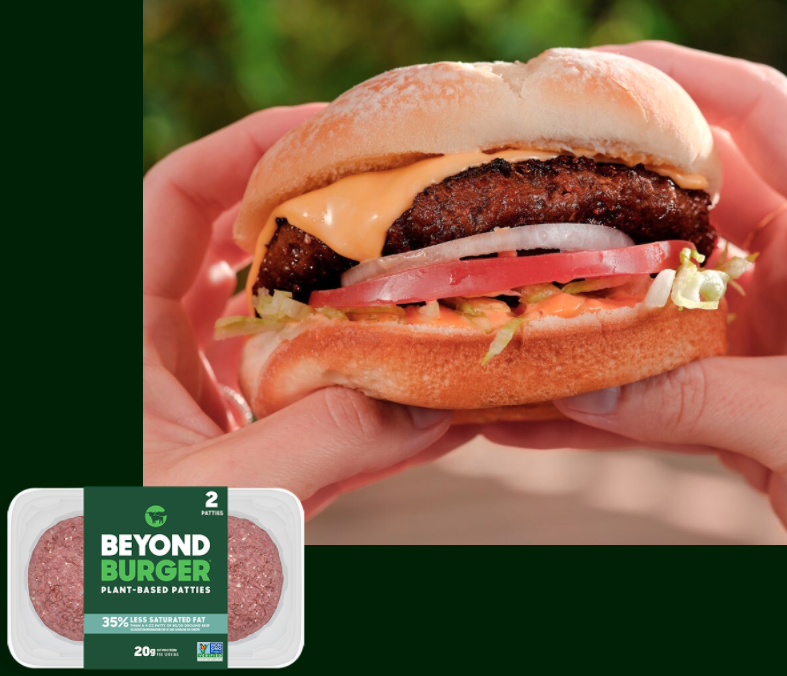
Beyond Meat seems like a natural response to a natural issue. We like meat. Unfortunately, raising animals for meat has ethical issues (for some), climate issues (for some), and issues around land and water and runoff issues (for some). Solution: make food that tastes the same (or close enough) without using animals. Beyond Meat has created food that is an analogue to meat. Make it tasty enough, affordable enough, and available enough and the market may be bigger than ‘for some’ and ‘for others’. We, er, they have the technology!

For a while I noticed talk about replicating steaks and recognizable pieces of animal muscle, but many meals are ground meats, as in burgers and sausages. That’s a large market.

Companies start small. The meat industry is enough and entrenched in thousands of years of culture. David taking on Goliath doesn’t compare.

Another way of looking at it takes advantage of that. If we need alternatives to such an enormous industry, starting a business in an alternative can have enormous rewards.

The company was founded in 2009, in the Great Recession (the Second Great Depression, for some). Without much surprise, the early potential met some un-tasty realities; but, they continue to learn and improve. They have several manufacturing facilities and joint ventures with companies like McDonald’s.

What could go wrong? A pandemic. 

The details of their hoped-for recovery deal with a hoped-for temporary situation. In the long term, the situation doesn’t just remain the same but becomes more pronounced. There is the potential that the recovery will happen as they’ve gained experience and the brand has developed name recognition.

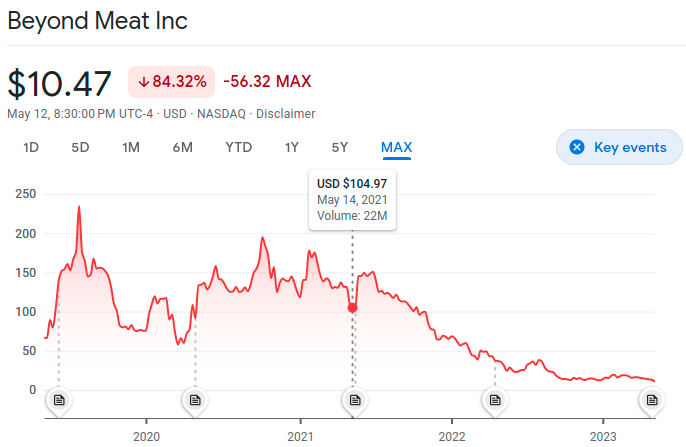
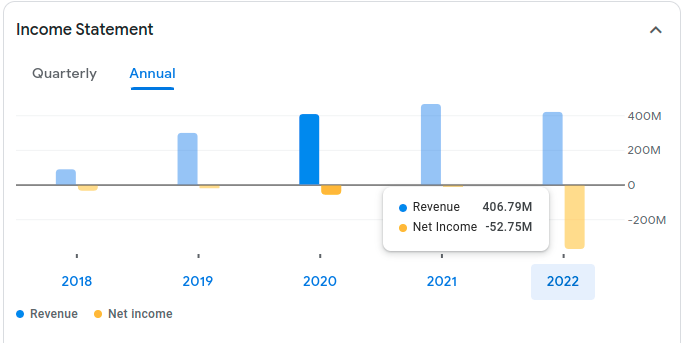
Hoped-for recoveries are optimisms. The investment community hasn’t shared that optimism. The stock is just above $10 after a post-IPO stock price of over $200. Layoffs have happened and sales are down. An optimist could see an opportunity to buy. A pessimist could see an example of expectations of bad news. Everyone is always guessing. If investing was rigorously logical and mathematical there would be no risk and less chance of a reward (pending some phenomenal economic restructuring.)

I intend to buy some of their products, eventually, but I am in the fortunate position of having a local rancher who raises cattle, pigs, lamb, and chicken, and sells their meat in their store and in the local markets. I like what they do, and I like supporting local agriculture. But then I think of the hundreds of millions of meat-eaters who have no such connection, who are already buying highly-processed food. Processing plants instead of processing animals can make a lot of profitable sense.

I hope they survive and thrive. I’ll be watching.

The video:

Posted in Uncategorized | Tagged , , , , , , | Leave a comment

Loneliness Costs

How to write this without sounding like a lonely old guy? But, it is news and personal finance plays a part. I guess I’ll just begin.

From one of my other blogs, Pretending Not To Panic;

A new report from the Surgeon General says that social isolation’s effects on mortality are equivalent to smoking 15 cigarettes every day.” – Vox

Cough. Cough. Hack. Hack.

As a society we fought against that mightily. Sure, it was personal choice, but it was also an enormous health care cost.

Check social media. Read between the lines and the posts and see how many people are alone. The trend was increasing for years. People could be more independent; so there was less need to live with someone. Churches and temples may exist for spiritual pursuits; but as my mother implored me, “Please go to church so you can at least find someone to get married to.” I suspect she wanted more grandkids. A mental health counselor confided in me that most of his patients didn’t need professional help, but they did need someone to listen to them. Pubs and bars did that in stereotypical Baby Boom America as men would commiserate about women and work; but drinking and driving don’t mix, anymore. Social clubs and bridge clubs did that for women in his stereotypical Baby Boom America; but they were finally able to get jobs. Less drinking and driving, more opportunities for everyone, both good things; but at a loss of social connections. 

We connect through texts and tweets, posts and pictures. Pets gain prominence. They’re more convenient and are less likely to disagree – at least in English. They do, however, gain Likes and Shares as cute pictures of them populate our news feeds. They rarely have to be photo-shopped out of pictures.

My doctor even considered prescribing me to get a puppy because it would probably be good for me.

As a female friend commented about my dating life; “Money is the ultimate aphrodisiac.” She said that just before I lost 98% of my net worth. So much for “For richer or poorer…” 

(See, I told you this would get around to personal finance. That is what this blog is supposed to be about – mostly.) Soon after that I tried eHarmony. At least at that time, annual salary was one of the fields to fill in. I cancelled as I became poorer.

Even within the conventional social structure, socializing (not just dating) costs time and money. The news shows stories about people working 7 days a week, frequently at more than two jobs. Time? What time? Unless they socialize at work they don’t socialize. If they do work, and socialize, they have to find time for getting to, spent time at, and get back from socializing. Money may be involved at events. There’s gas, and food, and – ideally fun; but getting to the fun requires enough time and money to make that journey.

I’m glad I am no longer part of that situation. (Tom Got A Job) Finally, I have the time and money to go to art shows, farmers’ markets, and generally visit friends, or potential friends-to-be. I might even start hosting parties again – after I clear out some debt and pay off an extraordinary homeowners association bill (>$1,400, mostly for amenities I can’t or don’t want to use, but must pay for. But I digress.)

Lonely people know loneliness can hurt. Loneliness can be a dull ache that nags 24 hours a day. The advice I frequently heard was to outwardly ignore being alone. Keep that pain inside. It might be real, but it is not attractive. Nah. Been there. Hid that. Eventually it hurts.

Browse social media on a Friday or Saturday night. How many single folks are posting?

It isn’t all about being single. Being single is easy to describe, but loneliness happens for many reasons: partners separated by work or military service, people who recently lost a partner, people feeling ostracized because they feel they don’t fit in politically or culturally.

By the way, being alone is not that same as being lonely. Introverts have perfectly valid lives and may not need or want anyone. Being in a crowd can be a very lonely place. Does this need to be said? No. It is not new; but it is worth remembering.

The pandemic tested many people about loneliness. What’s your balance of introvert versus extrovert? I know a new recluse or two. I also know folks who were more than eager to see a smile and feel a hug, again – regardless of the risk. I found I have a bit of both. I need a bit of both. I can do the cabin-in-the-woods thing; but I’d benefit from going into town for a meal or two a week, and maybe volunteer with a group for something like tending land. And, of course, if there’s a dance or a party…

As I type that I look back and realize that I think in terms of breakfast because it is satisfying and less expensive, and working on the land because it is gratifying and a cheap way to socialize. I’m not the sort for suit-and-tie fundraisers – unless I’m paid to be there. I do have my price.

Rambings, no, not ramblings. That report from the Surgeon General has inspired a lot of thoughts and introspection. Smoking’s impact was obvious. It almost killed my Dad. Smoking is visible. Loneliness may pass unnoticed, even in crowds. Yet, loneliness is as bad as smoking 15! cigarettes a day!? Look past the obvious aspects of loneliness. How great are the costs to mental health, community, compassion, work, joy? I don’t know, but loneliness is something that shouldn’t require grandiose studies, initiatives, marches, and vigils. 

Believe it or not, it was safe to knock on your neighbor’s door simply to say hello. People could have different political opinions without requiring a change of wardrobe. Having to work every available hour to survive wasn’t a necessity, which meant there was time for Self and Others.

I like to think of myself as living reasonably green. I have friends who are stellar examples who should be awarded for their personal lifestyles. 

I was disappointed when I took one of those carbon footprint quizzes to estimate my ecological impact. It was atrocious. It turned out that my score was bad because it was at a time when I traveled internationally (to Canada, about three hours from my place), I use propane for heat and hot water (radiant floor), and hadn’t upgraded my house to solar or new windows or a heat pump (because they cost money). I played around with the algorithm to get my score more in line with theirs. For the fun of it (and it really shouldn’t have been a joke) I pretended I was not living alone. Boom. Divide the number by two and suddenly I was living with a score like my married friends. 

There’s more to a relationship than a good carbon footprint; but there’s also more to loneliness than simply being alone.

Posted in Uncategorized | Tagged , , , , | Leave a comment

Twelve Months at Fort Ebey

Twelve Months at Fort Ebey is done, completed, ready to be shown to the world. Of course, Fort Ebey is part of the world, so the world already knows about it. For me, Twelve Months at Fort Ebey is the tenth book in a five book photo essay of some of Whidbey Island’s nature, and it only took about fifteen years to complete it.

As I said in the books;
My few visits spread across twelve months are one small slice of a very long story, yet more than a single Saturday visit and therefore tell more of a tale.

The photos tell the tale. Forty-eight photos, four per month, two horizontal and two vertical, of Fort Ebey’s shoreline. The best way to see Nature is to get out into it, sit with it quietly, and notice what it delivers. Each of these books (including my three narrative versions in the Cascades) emphasize Nature as nature tends it. There are always a few photos of our impact, because we’re part of the story. 

The photos tell the tale, but are not all sunrises and sunsets; which confuses some people. Think back 15 years. Social media was new. Instagram probably wasn’t even operational. Every photo wasn’t going to be a blast of color or hyper-enhanced. Snapshots are good, and they sell well; but my intent was to produce my version of art, and to chronicle various perspectives of Whidbey Island. The island’s downtown waterfronts are attractive, but there are enough photos of them. I am impressed by the Whidbey Island that existed before us. Some of that nature remains.

The shoreline shifts. The whales and salmon swim by. Herons and eagles feast. And yet, I’ve been surprised by people who say there is nothing to do here, nothing’s going on. Look up! An osprey and an eagle may be dueling over territory or food. Look down and see Dungeness Crabs commuting with the tide for their prime dining. See madronas, rhododendrons, and skunk cabbage coloring the landscape in different seasons.

Nothing going on?

Technologically, the era was different. I was able to buy a digital SLR camera. Yeah! Film has its features, but I never liked the chemicals. (But Kodachrome gives nice bright colors. And yes, I bought a Nikon.) With digital, take photos, and don’t have to load more film every 36 shots. Lots more photos. Lots less mess. Much easier to share and print. I bought mine on sale at Amazon for about $600. That came with two lenses, and a sensor that could capture 6 meg images. Six!

Let me do some quick research. Let’s see: Galaxy A10e, circa 2018, 8 meg – and comes with a phone and a computer that fits in my pocket. Buy an SLR today and get an old one for about the same price, 20 meg, superior processing and filters, and more.

Fellow photographers have argued for me to buy a better camera, but I decided to use the same camera so the series maintained continuity. I also decided to maintain the same style: no cropping, no fancy photoshopping (though I made Joe Menth at Feather and Fox grimace as he cleaned up dust and such, straightened horizons, and balanced some obviously unbalanced colors), hardly ever a tripod, natural lighting. Minimalism in action, or non-action.

That philosophy made sense for the first five years. But Great Recessions and Triple Whammies happened, so I couldn’t pursue producing more than the books. A hiatus happened while I began to financially recover. Just over five years ago I decided I liked producing such a photo series. The island has many more sites than the first five:
Cultus Bay
Deception Pass
Admiralty Head
Penn Cove
Double Bluff
I decided to fill in with five more:
Maxwelton Beach
Possession Beach
Possession Preserve
Dugualla Bay
Fort Ebey

I may be done. Fifteen years for that camera has meant scratched lenses, a scratched sensor, and enough sand in the gears that the autofocus is slow and grinding. Fifteen years for me has meant older eyes, stronger prescriptions, and somewhat shakier hands.

I may be done, but I hope the idea isn’t. I’d be happy to hear that some island photographer was going to continue the idea with other areas: Ebey’s Landing, South Whidbey State Park, Baby Island, Ala Spit, Hidden Beach? There are limits. I tried to only visit places that were open to the public, were natural, and allowed photography. My main outlier was Cultus Bay. I started there because I live there. Baby Island is worth checking with the Tulalip Tribe.

The photos are available online (Fine Art America). The online site will print them, but if you want a custom job, or simply want to keep the business local, contact Joe at Feather and Fox.

The photos are also available as small, hardback books using high-quality paper (Blurb). I sized them for easy gifting and shipping.

I hope to exhibit them, either individual series, greatest hits, or as a comprehensive show. That last one would take a lot of space. Ten years of four photos a month is 480 photos. That’s a lot of wall space.

I will continue to take photos, but you’re more likely to find me in that crowd of folks trying to look past the glare of a smartphone screen – at least until my finances improve sufficiently. I might also go back to the inspiration for the first three Twelve Months series (Barclay Lake, Lake Valhalla, Merritt Lake), which were more narrative than photographic. Hmm. First the Cascades, then Whidbey Island, – maybe the Olympics? An excuse to visit Hurricane Ridge, Kalaloch, Lake Cushman…

And, as for my fiction and non-fiction books, there’s a story there – or here (Tom’s Farewell To WOWI – Writing On Whidbey Island podcast).

Posted in Uncategorized | Tagged , , , , , , | 2 Comments

New AI Insights So Soon 042223

Writing about AI again? I wrote about it a few weeks ago. (Chat GPT And Change) Why write about it again so soon? Things are developing that quickly.

I follow lots of topics. AI is one of them. 

AI, now, feels like the internet in 1995. I’d been aware of Arpanet/Internet since 1983, then watched it boom and bust with everyone else around 2000. Yet, it didn’t really bust. Many companies were broken and bankrupted, but our usage of it grew from a curiosity to part of our lives to where some people spend most of their days for work, school, news, and socializing.

The adoption of the internet looks obvious in retrospect. But there was time when we had to Capitalize Internet because it was that novel. Now, the internet is lower case ‘i’.

Computers went through a military and industrial phase, but for most people they were a curiosity. PCs? Who needs one? They’re only good at home for managing recipes. Now, computers are so ubiquitous that they’re in our pockets. So much for those tower stations built into special rooms in upscale suburban houses.

AI is something that’s intrigued me for decades. I’m not an expert, but I know some. 

That previous post, Chat GPT And Change, chronicled much of that history. Since then I’ve been respecting the possibility of even more rapid changes by more reading and researching. That work continues because 1) the technology continues to evolve, and 2) users are becoming aware of real rather than speculated realizations. I realized it made sense for me to update my thoughts because, as I read the work of others I realized I ignore source material that is more than three weeks old.

Three weeks, and that news from a month ago is already out of date.

Once upon a time there was a PBS show called Wall Street Week with Louis Rukeyser. Watching it after the market closed on Fridays was a regular event. After years of the familiar pace of topics and discussions, things started to change. Topics made no sense to some of the commentators. Guests were exasperated as they tried to explain the internet, which had been around for years, to financial experts. Guests talked about eyeballs, a measure of internet traffic and a land rush as people bought up domain names. It was obvious that some commentators thought the guests sounded silly. Selling books online? Why?

AI? Who needs it? Chat GPT? It’s only mimicry. Right? Sure, it is artificial; but is it intelligent?

Companies are already ‘hiring’ AIs to do simple things like write short articles (something I did six times a day for a national real estate news site, some of which could be handled automated), or generate stock images for ads, or…? The legal profession is realizing it can use AIs to sift through far more documents – and possibly summarize the results. These are a few of the real actions I’ve seen mentioned. There are undoubtedly far more.

PCs do more than sort recipes. The internet does more than deliver email. AI does more than play chess.

A random note I wrote to myself a week ago;

“Tonight’s ongoing thought exercise:
AI prior to 2022, a maturing curiosity
AI in 2022, surprisingly capable
AI in 2023, already being hired and used for real
AI in 2024,…?

Will we even recognize 2025’s AI?”

This week I finished the tenth book in my five-year photo essay of Whidbey Island’s natural shorelines, Twelve Months at Fort Ebey.

That seemingly disconnected accomplishment made me ask myself whether that kind of art would be usurped. Stock photos, particularly for generic topics, can be produced more readily, quickly, and cheaply with image-related AIs. My books are site-specific, and chronicle particular seasons; so they might be defended against such pressures. Fort Ebey is Fort Ebey. Faking it can be done, but fakes can’t honestly chronicle a literal snapshot of reality. Locals can appreciate that. But many of my favorite photos are abstracts. A landscape is a landmark, but a photo of the undulating colors of a sunset or a closeup of a flower aren’t as tied to a place; and could be indistinguishable from something artificially generated.

The larger effect is that AI has allowed recent hardware to out-perform my already limited camera from 15 years ago. Smartphone photos can be so much better because that phone really is much smarter than most folks realize. I pay a professional to polish my photos by removing dust spots, adjusting horizons so they are level, and color balancing and enhancing to compensate for sensor (and photographer) limitations. My old camera is now obsolete, at least compared to my phone’s camera.

Sitting beside me, waiting for me to finish writing this (after having lunch) is the first draft of the sequel to my sci-fi novel, Firewatcher. Ironically, the precipitating event in the book is humanity’s response to an accelerated growth in AI, and I started writing it several yeas ago. I guessed that the Digital Singularity might happen as early as 2040. Surprise! I’m confident that novel writing will remain humanly creative; but, friends are already using AI to generate characters, backstories, and to suggest things like plot lines. Of course, maybe AI won’t make great incursions into novels because novel writing is usually not profitable enough.

Writing short articles, or business correspondence, or ads – Sure, why not try AI? It doesn’t cost much for that first draft, and that first draft may be good enough. That first draft can also be ready in seconds, rather than an hour or longer. 

I’m re-evaluating my career and business options and finding that my expectations are already changing. Fortunately, I enjoy meeting and being with people rather than paperwork and bureaucracy; but I’m not going to take any of it for granted. People like dealing with nice people; but AI robots are being designed for emotional responses, too.

A thought just came to mind. I’ve avoided talking about some topics because I don’t want to be seen as sensationalizing certain topics; but…
(saved to a separate file because the various social media AIs may pass judgment on the implications for a rather…personal industry that has been known for being an early adopter of new technologies.)
…”Honey, there’s a robot in a bikini here to see you. Did you order something extra with your pizza?”

And then there’s Chat-GPT 5, due soon. Ah, but there’s talk of a pause in AI development by CEOs and policy makers. And there’s scoffing because the people actually working in AI know that decisions made by people in offices mean nothing to curious developers. Ban it in one place? Don’t be surprised that some new business or mistake is unleashed in some basement or garage.

One of the fundamentals of the Digital Singularity is a increase in the increase in the speed of change. 

“Tonight’s ongoing thought exercise:
AI prior to 2022, a maturing curiosity
AI in 2022, surprisingly capable
AI in 2023, already being hired and used for real
AI in 2024,…?
Will we even recognize 2025’s AI?”

Will we? Will we even recognize anything else in 2025? The only constant is change.

PS A flash: As I finished typing this, LinkedIn flashed an ad and a news item, “Recruiters are joining the AI race.” They’re already reading an estimated 75% of resumes from job applicants. How else are they going to use these AIs?

Posted in Uncategorized | Tagged , , , , , , | 1 Comment

LFLY – One Company One Story

Welcome to another story and another video in my One Company One Story series.
This time, Leafly (LFLY).

Here comes the amateur legalese.

I began investing in companies and their stocks in the late 70s, but am not a certified investment professional.

My style and history of investing is described in Dream. Invest. Live., a book I wrote by request – which came out as the Great Recession (the Second Great Depression) began. Bad timing, eh?

My personal finance blog (a blog about my finances) is: https://trimbathcreative.net/

I am not investment professional. This is not financial advice. 


Leafly is essentially a simple company. For years they’ve provided information about marijuana, even before it was legal for recreational use in most states. They’ve been handy. The Food Network may have more cooking shows than I can watch, but it seems as if there haven’t been as many general sources of information about different strains, different effects, smoking versus consumables, and eventually information about dispensaries.

The company has been around since 2010. Marijuana wasn’t legalized for recreational use in Washington State until 2012. I didn’t buy any until the first day in 2014, and have a copy of the South Whidbey Record with my picture on the front page. I wasn’t first, but I was the first willing to have my photo taken. The times were different.

The times are still different. I can’t keep track of the strains, am continuing to learn about how to cook with it, and always have more questions. I’m not alone. Evidently, the company gets over 100,000,000 visitors annually, which would suggest robust financials. 

google finance

And yet, the stock is down over 95%, and they’re laying off employees. I don’t know why, and I’ll leave the investment side to someone else. I know I may buy because I like local companies, but my personal finances aren’t healthy, either. (But the news about my job has been fun to share. After I retire some debt I might invest some more money.)

In the meantime, I’ll cheer them on, and keep them on one of my watchlists. 

And later tonight I’ll use some legally purchased product to help me sleep. Partying? Some day. In the meantime, let me settle into some dreams.

The video:

Posted in Uncategorized | Tagged , , , , , , | Leave a comment

My Economic Development

I haven’t felt so relieved in years. The check cleared the bank. A steady income? Nice to see you, again. Life isn’t all about money, but when you’re frugal by necessity rather than choice, it does matter. My first paycheck from my new job as Project Manager at the Economic Development Council for Island County has been deposited. Debt is already decreasing and my mood is already lifting. Those aren’t the only changes.

Gig work has its advantages, but it is frequently unsteady. That unreliability is manageable as long as there are enough gigs that pay well enough on a consistent enough basis that there are no gaps in revenue. A day off means a day not making money. I congratulate the gig workers, the people whose pay is reported on 1099s, who can comfortably manage their bills and afford those gaps. It can be good as long as you can pay your bills. #ALAYCPYB

It has now happened several times that, while I was in the gig world, I’d talk to gig workers who first thought I was joking about reliably getting not one but two days off – every week! Workers who, if sick, get paid to stay home! Workers who, regularly and for no reason that has to be explained, get to take other days off for something called a vacation! Most catch on quickly enough because most gig people I know have had regular paycheck jobs; but they can become so habituated to working every day that reminder takes effort. 

My stress is already reducing. Ah. The type of job and the people involved are important. So is a dependable paycheck. (Thanks, folks; especially, as I learn a new set of priorities and processes.)

A new source of revenue can it is easy to fall into the trap of ‘I can buy this and that, and one of those, and…’. Frugal friends know I am not likely to do that. I did splurge and buy new things like new thumb drives, hardware hooks, and a box of wine. But I intend to maintain my provided title of Mr. Frugal.  

Debt, paying it down. The cost of that new used car that replaced my old truck is hidden in there. So are the home loan funds (HELOC) that paid at least some bills in the last two years. Put it all together and it equals about two years’ gross salary to get back to only having mortgage debt. The mortgage remains at ~4.5% thanks to a renegotiation about a decade ago. (Yes, loyal longtime readers, it has been that long. And this blog is older than that.) At the time I was interviewed for someone’s article about such a high interest rate. They thought I hadn’t thought it through. I think I’ll keep it, for now.

Stress is down and optimism is up. My core thoughts are switching to positive. Welcome back! That’s probably the most important and fundamental benefit, but it is so subjective that only poets could express it properly. I am not a poet. I’ll return to writing about more objective observations.

My doctor might appreciate it from a different perspective. Even my trip across Scotland and the subsequent book, Walking Thinking Drinking Across Scotland, was inspired by my need to relax. Many of my health issues are related to stress, so I am looking forward to the change. 


Pardon my real time break as I put a chuck roast in the oven. One of today’s splurges: chuck roast (from the bargain bin), with veggies, homemade cornbread, and probably a glass of wine from that box I mentioned. 

OK. Oven warming. Back to writing.


So, I’ll see my doctor next week. This is a good time to benchmark my situation. We’ll see whether the data reflects the shift over the next few months.

And then I plan to get the car in for maintenance, my head in for a haircut, I’ll visit my dentist, find an eye doctor after mine retired during the pandemic, … You get the idea? Splurging? Yeah! But not as much on things as on things that matter.

Ironically, making money will also make changes in who gets some of it. A change in income will mean a change in health insurance, which is nicely and partly covered by the new job, but will also mean the change in my subsidies may actually increase my insurance costs by a couple of hundred dollars per month. A change in income will mean a bigger change in my social security, but that calculation is so complex that I’ll let Social Security calculate it.

Those changes will change again because both will change as I hit seniorhood, 65 years old, which happens in less than a year. I expect bureaucratic confusion.

Bureaucratic confusion is difficult when in the Gig Economy, but is much more manageable with a steady income. More stress reduction.

There are other changes that I won’t describe because they are part of my more entrepreneurial projects. Maybe that can be a separate post.

What won’t change are things like my writing. I thought I was done and going to announce the completion of the tenth book in my ten book series of nature photos of Whidbey Island, but I found one key typo of two words – minutes after I uploaded the book to the publisher/printer. Doh! Expect a delay. I am also writing the sequel to my first sci-fi novel, Firewatcher. The first draft is done, with probably nine more to go. I still plan to write the screenplay to a bit of family history/folklore that local professional screenwriters have encouraged me to ‘drop everything and write that!’ And this new job/career can be the capstone in the sequel to my book about personal finance, Dream. Invest. Live., called From Middle Class to Millionaire to Muddling By (working title) – which looks to be better than just muddling by.

As several friends have mentioned, this job seems well-suited for me. I get to help others develop Island County’s economy by developing many things, including their businesses. Sure, I’m trading hours for money, but most of what I’ve worked on for the last decade has been trading hours for – hope, exposure, compliments? I’ve already had fascinating conversations with a broader community, and expect to connect with more. My passion is for people and ideas, and that’s part of what I get to do in this role. How cool is that?

It is spring, and very welcome as blossoms work their way up past the remains of autumn and winter.

Posted in Uncategorized | Tagged , , , , , , , , , , , , , , , , , , , , | 1 Comment

Chat GPT And Change

OK. Where did I put my notes? I rarely write from them, but an idea came to mind. Maybe if an AI was organizing my life I wouldn’t have to scramble to find those notes. – Found them. A yellow post-it note with some penciled scratches that are probably handwriting. I’ve been thinking about AI (Artificial Intelligence) for decades, and wondering whether it would ever reach the level it appears to be reaching. Things are already getting interesting. 

Is there anything to do about it? Duh. The answer is always ‘yes’. Whether anything will be effective is less certain.

This is an interesting blog post to write because many people do not care about Artificial Intelligence, and can be forgiven for thinking Chat GPT is just another chatbot that resides in some little box on a web page. They may have already tuned out because a conversation about chatbots sounds dull. Besides, isn’t it just cheaper to buy a software package that can answer a narrow set of questions? 

This is also an interesting blog post to write because I know several people who are professional experts with decades of experience in early AI, knowledge systems, and more recent developments. There’s nothing new for them here. They may comment anyway. I hope they have blogs. Read them.

Whew. That takes the pressure off. It might just be me talking to me. 

Last week a friend and I were making fun of my Apple Newton. Think back to circa 1993 to a computer that fit in a (big suit) pocket, was handy for taking notes (terribly), and could connect up to other computers (slowly.) It failed, which is why it is easy to make fun of.

Insert requisite comparison to warehouse-sized mainframes from the 60s and mobile phones from today. I’m sure you’ve seen such elsewhere.

I’ve watched the progress because ‘What’s Next’ is no longer talking about next year or next decade. Change is happening faster than that. 

Chat GPT is the proxy for a wide range of very sophisticated tools that do more than chat. These tools are doing more than chatting.

…GPT-3.5 was getting ‘B’s at best (generally). GPT-4 is regularly getting scores high enough to get into college.AI Gets Smarter Faster, PNTP

That change happened in only a few months. There’s reason to believe that the change is about to accelerate. Chat GPT-5 is rumored to be availability by the end of 2023.

That rate of change is the issue. 

There’s a video I referenced before called “Humans Need Not Apply” from 8 years ago. The message I got from it was that the change in technology we are about to experience is similar to the change society experienced with the Industrial Revolution, but in less time. Lots of jobs will be lost. Lots of jobs may be generated, but different people may be involved. Pittsburgh went from a steel town to one for high-tech, but the steel workers I knew weren’t the ones getting the new jobs. Their stories are tough enough that I am going to not write about there here.

Another futurist that affects my thinking about this is Ray Kurweil. Check out his books and institution. A central aspect of the message I got from reading some of his conclusions is that, given his assumptions, the Digital Singularity is likely. A singularity can be a change that is so abrupt that the technology or society that came before can become useless afterwards. Many think he assumes too much.

For airplanes, the speed of sound is a singularity. The closer the airplane gets to the speed of sound the more drag there is. For a while, the speed of sound was considered a wall that couldn’t be breached. It was, of course, but to understand it required a new set of equations. It also required new designs for airplanes if they were going to survive flying faster. It also required courageous pilots.

wikipedia

Our society and our technology is flying faster.

Historically, society and technology rarely changed. We started with tribes, then tribes with fires. We grew to villages and farming. Then countries and armies. Now, we’re global – and I think we’re confused.

Change happened with regimes. When families could migrate, change happened with generations. Lifetime careers have changed to gigs, and uncertainty. How much faster can we change? #NotRhetorical

Computation was slow until the discovery (or invention) of math and writing. Scribes mattered. When machines could calculate computation accelerated. And they led to computers, which were enabled by chips, which have been abled by networking.

Computer software updates went from decades as they invented the technology, to years as humans adapted to new computer hardware, which sped up as tubes were replaced by chips. But, software was still slowed by humans. We can only type so fast.

Ah, but now, software can write software. Change has gone from something controlled by humans limited by biology to computers limited by technology. Human change is measured by physical things like calendars and clocks. Technological change can be measured in technical terms, including chip speeds. Instead of change happening in months, it might happen in minutes.

A critical achievement was for software to begin writing software. I recall attending a Microsoft stockholders meeting about 25 years ago. Bill Gates mentioned that maybe they should look at the code because they weren’t writing code line by line, but in blocks they connected up.

It has been a long time since humans fully understand the software we use. 

Few, if any, understand specifically how Chat GPT, et al operate.

Now, there is data supporting the idea that ChatGPT is the fastest adoption of any technology.

Instagram took 2.5 years to reach 100,000,000 users.
Tik Tok took nine months.
ChatGPT took two months.
” – AI Adoption Accelerates, PNTP

Two years to nine months to two months to… It seems that Chat GPT-5’s unveiling by the end of the year could be the end of next week. Probably not, but how many would be surprised?

And here is where some of the public confusion come from. Chat GPT is not an Artificial Intelligence. It is incredibly sophisticated, but it is still a language tool. Others are only working with images. They aren’t AGI, where the G stands for General, as in being able to do it all.

Even then, it may not be conscious. But it might not matter. If it quacks like a duck,… If it can manage a transaction or a company better than humans, then it might be more than good enough. 

Add Artificial Emotions and it may be easier to have an intelligent and engaging conversation with an AIM than with a human.

This is over a thousand words to get to what I am really thinking about.

If something like a Digital Singularity happened within the next twelve months, how would our world change? A year from now, how many early 2023 plans will seem silly in retrospect? Or, is this another Y2K moment when we adapt thanks for many un-named people working hard without much reward?

Many news items have been making analogies to The Matrix if something like a Digital Singularity happens. I enjoy the movie, but my preferred reference is the Hyperion series (remember books?). He took a few steps beyond the Singularity.

In the Matrix, the ‘robots’ reached a certain level then stayed there. In Dan Simmons’ books the technology continued to evolve. Early ones remained somewhat in contact with humans, but later ones didn’t even stay in contact with the early AIs. Society fragmented (in my terms): luddites (stay low-tech), normals (folks who just try to keep up), augmented humans (people who welcome tech into their bodies), and ultras (who succeed at becoming more machine than human.) And, AIs that: were the kind we are familiar with, semi-autonomous, fully-autonomous, ‘conscious’, and then beyond. 

It isn’t us versus them or vice versa. It’s a mess with all the players at the same time.

I put quotes around conscious because we don’t know what it is, and the AIs might not either.

So, how’s that 30-year mortgage looking? Or my 40-year mortgage? What should I plan for?

Maybe it is not this year, or ever. But change isn’t going to stop, and it isn’t going to wait. 

So, what do I do about that? You see, this blog is about my personal finances. Thank the SEC for various rules and regulations (as I understand them.) I am not a certified professional financial planner or advisor or whatever. I can, however, comment on me. That’s one reason this blog is self-centered. It is by design.

For the people in my science fiction novel, Firewatcher, they were further along the curve, and decided to fly away from Earth. Not an option, for me. (BTW The first draft of the sequel is complete.)

For those of us staying on the planet, the simplest thing to do may be to be ready for change. Knowing personal values, skills, and resources makes that easier to do because it is part of living a conscious life. Living by habit may be easier to disrupt. “I’ve always done it that way” doesn’t work well when ‘that way’ is no longer an available way. 

Ironically, I might already be doing some of the right things, or at least working on them. Frugality, minimalism, community, self-reliance are things that are valuable in most of those scenarios. As one meme put it, someone with a woodstove and a flock of chickens might be the most attractive person around. Hmm. I don’t have either.

Ideally, I’d have a good small house on a nice plot of land with a nice garden. Simple. 

Realistically, I plan to stay connected to people, help my community, live frugally, and not worry about it too much. Remember Y2K. Be calm and carry on because, while I think it is helpful to be aware and prepare, predicting the future has rarely been a reliable gamble. 

Maybe I should put more effort into that greenhouse.

PS It is a long post, but you missed watching me having to undo several things that the software wanted to help me with. Kind of like an eager child. Is that where we are, for now?

Posted in Uncategorized | Tagged , , , , , , , , , , | Leave a comment

Tom Got A Job

A rare event: real news about my personal finances. I got a job. A real, W-2, full time(-ish), benefits package, signed contract, legit job. Whew. W-H-E-W! Expect to see changes in what, when, how, and why I post. As I type I can’t announce it yet, but I’m so pleased to share the news that I’ll write as much as I can, then insert the details in a paragraph after the news embargo is lifted.


(news embargo lifted)

And after a delay, here is some of what I know about the organization and the job, so far. (I expect a steep learning curve.) “The Economic Development Council for Island County (EDC) is pleased to extend an offer to you for the position of Project Manager.

And for those unfamiliar with the area and the organization;

The EDC works to create a thriving economic environment where business can grow and create jobs while preserving our unique quality of life.

An independent nonprofit, the EDC is the County’s designated partner with the Washington State Department of Commerce. We are the voice of economic development for the diverse communities of Whidbey and Camano Island, and we collaborate with elected officials, government, business and other community organizations on advocacy and programs.

Me? Economics? Cool!


Here’s why this is such a big deal for me.


The rest of this blog post is my personal backstory, and may also be part of a book with the working title of, From Middle Class To Millionaire To Muddling By, the sequel to Dream. Invest. Live. I’ve experienced and learned a lot since then.

I retired in 1998 at 38. I haven’t been bored since. Even at the beginning of retirement I found things to do. Believe it or not, I actually followed someone else’s advice. Don’t do nothing, or at least, not yet. But, also, don’t do the same thing; because, at that age, it was possible to find out more about who I am/was beyond the job title that was tied to my degree. That advice had merit, but it also was too simplistic. Anyway,…

My black belt was a few years old, so I felt confident starting a business teaching traditional, old-school karate. Alas, as my first business, I made mistakes in marketing and such. Then, there was an upheaval in that style’s upper management that made it difficult to promote any of my students. Oh well, I had sufficient funds for comfortable survival. (#MassiveUnderstatement)

A couple of years later I wanted to give my wife a skinnier husband for Christmas and I wanted it to be me. The story is more involved than that (duh) but it resulted in me bicycling from coast to coast across the US. I didn’t lose any weight, body fat, or waist size, but I did send out so many emails that writer friends encouraged me to write a book. (Just Keep Pedaling) I guessed I’d become a writer.

Hmm. I bet I can be a better writer than that. Lots of logic and some serendipity later I decided to write a three book series of nature essays about three lakes along a local mountain highway. (Twelve Months at Barclay Lake, Twelve Months at Lake Valhalla, Twelve Months at Merritt Lake) An Editors Award for the first one encouraged me to continue.

As I finished the fourth book I also began a new chapter in my life. I asked for a divorce. I also moved to Whidbey Island, leaving the mainland to the mainland’s way of life. Let’s see what an islander’s life can be like. With my net worth divided by two, but still with more than enough, I decided to help others with their businesses and their writing. A new gig! 

You may have noticed that since 1998 none of these businesses had been W-2 jobs. They’d been 1099 gigs. 

A year or so later, I decide to buy a house on Whidbey because I was that comfortable, but I got a mortgage because I wanted to leave most of my funds in my stock portfolio.

Friends on the island convinced me that I could describe personal finance well enough that I should write a book about it. Nice. Thanks for the compliments. Then a New York Times best seller made that emphatic. I stopped dithering, and Dream. Invest. Live. was born (and so was this blog).

Coincident with the publication of the book, the Great Recession (the Second Great Depression) began. Still, my desire for work was optional because my portfolio rebounded as many justifiably worried because theirs fell. 

So much for that. Two felonious corporate assaults later my portfolio crashed 80% in four months. (The felons eventually were found guilty years later, but my money was gone. Investing does involve risk.) 

I didn’t feel good; so I checked with doctors about my worsening condition, Their tests, not their treatments even, would cost $8,000. I wasn’t convinced that insurance would pay for the tests. The issue was stress. I don’t need to spend $8,000 to tell me that. Instead, it was cheaper to take a vacation that might de-stress myself, and my self. Surprise, I had a life-changing revelation, and felt compelled to write about the trip. Walking Thinking Drinking Across Scotland.

Maybe I should get a real job. Unemployment hits new highs. Ah, but I could sell my house. Except that I couldn’t because many others couldn’t either. No income. No way to tap into my assets. And my IRA dwindled as I hit the emergency button and made early withdraws from my IRA. I was penalized with penalties. Soon, my net worth was down 98%.

Eep. Ah, about that job. 

The next six years were a chaos of part-time jobs that added up to seven days a week of typically 10-14 hour days, but with only four days off per year. Per year. And the income didn’t cover all of my bills. I almost lost my house, but the government saved me and it. Thanks.

A dear friend shepherded me through becoming a real estate broker, which looked promising. An early accelerated pension helped. Early Social Security made it all almost viable.

Still missed that steady paycheck.

Then a pandemic. Oy. 

Over a decade of struggling and rarely getting ahead, and I had more than enough of at least one thing; stress. My health had been deteriorating, but got worse and become non-negotiable. Not enough money. Not enough security. Not enough time to recuperate.

Years of the stress of real estate was too great and the income insufficient; so, I quit four months ago. That didn’t improve the money or security, but I had to, as a necessity, buy that time on debt to hopefully begin to recuperate. And recuperation truly begins.

But, a paycheck? Nope.

Until March 2023, when I actually got a job. I got a job in something I care about for paycheck and benefits that are ridiculously welcome. More than twenty years since a regular paycheck. What a transition at 64 years old.

It was my first job interview in years, despite many applications. Somehow, I survived it – and got the job.


Now, to adjust to the needs of the job, the people, the organizations, and understanding how it all fits. The good news is that it is about something I’ve tried to do for years informally with various entrepreneurs.

For regular readers, expect some changes. My blogs will have to elbow their way into the remaining bits of my schedule – which has always been full. Some blogs may shift to new owners. Some projects will be postponed. A few will advance, though more slowly. There’s the sequel to my science fiction novel, a screenplay based on family folklore, my photography, and tending my mental and physical health throughout. Oh yeah, and the sequel to Dream. Invest. Live. This is why my recent blogs posts were interrupted a bit. (possible #MassiveUnderstatement)

Stay tuned. Thanks to all who follow along; and congratulations to anyone who read this entire synopsis of my life since 1998. 

Posted in Uncategorized | Tagged , , , , , , , , , , , , , , , , , | 6 Comments

What Happened To WNDW

FAQ: How do you decided what to write about? (See the graph below.)

Google Finance

That was not a good morning, but it woke me up! How could I not write about that?

Down more than 98% in minutes. How the…? What the…? So goes life investing in tiny companies, regardless of how big their ideas are.

I have a small holding (and tiny by the end of the day); so, I checked the news, social media, stock discussion groups, and even my emails. Hey, I know that companies rarely ever tell their owners what is happening with the company, and even more rarely with the stock; but maybe this time… No.

You may notice that a lot of this story involves ‘…’ because sometimes there are no words.

Scenarios filtered through my thoughts. I’ve investing since circa 1978. I’ve seen stuff.

  • Was the company revealed to be a scam?
  • Did they found a critical and fatal flaw in the product?
  • Did someone embezzle everything?
  • Did a bank-crash crash the company?
  • Was it a glitch in the trading system?
  • Was it stock manipulation?
  • Was it a flash-crash on purpose?
  • Was it…

No news. At $0.02 per share there wasn’t much more to lose, so, keep it, just in case of …(?).

Life happens. I’ve been busy enough. I spent yesterday waiting on two phone calls, neither of which had anything to do with stocks. No calls. Today, the weather is gorgeous. Blue skies and the mountains still have white snow. I’ll go skiing, instead. (Cross-country skiing has been the best therapy for my balky balky knee.)

Get home after market close. See this chart.

Google Finance

Up over 730%! That’s a new record, for me!

Of course, down 98% then up 737% kind of just confuses things. Looked at in the longer term…

Google Finance

WNDW closed at $0.67, down from five days ago at over $1.20. Down 47% in a week isn’t good, but after witnessing 98%, let’s just say that is negotiable.

Go back a year.

Google Finance

Look at the last year. The stock is down 75%. But the stock hasn’t had a slow, smooth decline. Small stocks get bouncy. The average volume is only 39K shares. Smooth out the price to $1.00 and the daily volume is less than the price of a new car. If the company succeeds that volume (and market cap) will probably be higher.

Finally, news. SolarWindow Update on Market Transaction Restrictions in the Company’s Stock Pending Filing of Forms 10-K and 10-Q

…the management of the Korean Subsidiary, have failed to deliver the requested documentation and information, including, but not limited to such basic information as the Korean Subsidiary’s monthly banking statements.

This isn’t new, though it is news to me.

…these repeated requests beginning in May 2022…

The company has been trying to contact the company (one side not helping the other) for months.

Troubling? Yes, but it is not about the technology or the product. One small group of individuals are avoiding an audit of the “Korean Subsidiary” for unspecified reasons, from what I can tell.

Maybe this collapses the company. Maybe not. They have a plan in place with government representatives to switch management back to the responsible and responsive people, from what I can tell.

If someone wants a measure of my risk tolerance, or naivete, here it is. Fundamentally, they still have an idea that I think has great potential. If they eventually succeed, great. If they get bought out and my shares transfer to the other company, fine. But they can also go under.

Look back at the list of possible causes. Someone deciding to not file the right paperwork at the right time was not on the list. Maybe this is knowable for an investor who is dedicated to one stock, and who can notice every filing in every country, and also notice what wasn’t filed. For an independent investor like me, I know I can’t know everything. This is why WNDW is one of my two smallest holdings.

So, I hold. The rest of life is also important, too. I’m still waiting on those two phone calls. I got some skiing in. And it is time to make dinner before writing some more of my next sci-fi novel. There are things to do.

But for the price of the commute to and from skiing, I could’ve picked up sooo many shares.

Woulda. Coulda. Shoulda. Nah. I’m glad I went skiing.

Posted in Uncategorized | Tagged , , , , , | 1 Comment

LUNR – One Company One Story

Intuitive Machines (LUNR) – One Company One Story

Welcome to another story and another video in my One Company One Story series.
This time, Intuitive Machines (aka LUNR).

Here comes the amateur legalese.

I began investing in companies and their stocks in the late 70s, but am not a certified investment professional.

My style and history of investing is described in Dream. Invest. Live., a book I wrote by request – which came out as the Great Recession (the Second Great Depression) began. Bad timing, eh?

I am not investment professional. This is not financial advice. 

This time it is about Intuitive Machines which sounds more an AI or robotics company, but may be hinted at better by its trading symbol, LUNR (LUNaR, get it?) They’re doing moon stuff, and more. They are offering many of the services necessary for lunar exploration: transportation (after launch), Earth-based space communications, Moon-centered communications, a hopping rover, and more.

Without getting all geeky (and producing animations I’d botch), the process is something like: get launched (Space-X), then LUNR’s vehicle gets the lunar vehicle into lunar orbit, their lander lands and can contain a rover that hops around as a way to deliver sensors and such to the landing site. (I still like the idea of an orbital transfer vehicle, especially one that could be refueled and reused. Cool.) 

Fifty years ago, this idea would seem like a natural, building the infrastructure to get to and work on the Moon, and in space. (Personal note: About forty-five years ago, I started my career with a degree in Aerospace and Ocean Engineering. Space was going to be the future! Public opinion, however, was swayed by near-term appeals. Budgets shrunk. Long-term ideas were shelved. A few years in Boeing Commercial Space led nowhere. So much for that career.) Twenty years ago-ish, Space X announced audacious plans. They weren’t the only ones, but commercial space became a possibility. Now, at least according to NASA, 

The Intuitive Machines 1 (IM-1, TO2-IM) mission objective is to place a lander, called Nova-C, on the crater rim of Malapert A near the south pole of the Moon. The commercially built lander will carry five NASA payloads and commercial cargo. Launch is currently scheduled for June 2023.” – NASA

That’s only months away (as I type.) Rather than deadlines measured in years (or decades), they are a public company with NASA as a partner/customer.

This is a good example of the early commercialization of space. It is starting with NASA contracts; which is more civil than commercial. That’s frequently the way such things begin. It can be possible to be profitable and sustainable to work on civil contracts; but I will be hoping for true commercialization which will be business-to-business. 

They are attempting something complex and impressive. But then, Space-X’s idea of recovering and reusing rocket stages seemed audacious. Now, it is taken for granted. Practice brings public complacency, which is a sign of public acceptance. I don’t know if they’ll succeed, but this is the nature of early (ignoring fifty years of waiting) technology. In the realm of investing, it is also an example of risk and reward.

They are also attempting the parts that are simplified (relatively) but not having to deal with Earth’s gravity or an atmosphere. Space is still difficult, but simple design choices can simplify their tasks.

The stock’s ride has been wild. With barely any history of trading it has already had a >250% day. Since then, the stock has come back down. Rocket analogies are allowed.

Google Finance

I cheer on those who are making the company happen. I’ll enjoy staying tuned to this story.

The video:

Posted in Uncategorized | Tagged , , , , , | 1 Comment