Finding Time

A friend told me a tale today. He’s losing track of the days. He’s worked until midnight every night for the last week. Working until midnight isn’t new, but there are marathon sprints that are epic. He’s not alone. Maybe it is a sign that business is increasing and eventually the business will provide enough profit to take a vacation to recuperate, and then another vacation to enjoy. Maybe it is a sign of the new normal where the main way to make more money is to spend more of your life working. Check back in about five years to see which way it went. In the meantime, as I apologize to my friends for not socializing as much I usually receive the same apology. Somehow, sometime, we’ll find the time.

I am not an absolutist. Yes, there are plenty of people lounging in Langley’s sidewalk coffeeshops and cafes (a couple of nouns that should be redundant, but aren’t – which explains the problem of learning English). There are millions of people with regular jobs, discretionary income, and paid time off. Paid time off is a concept so foreign to some entrepreneurs that it’s received with laughter by small business owners and freelancers. Cruise ships cruise by in my view of the Sound. Sometimes their traffic is thick enough to look like three massive dragsters vying to somehow pass in the shipping lanes. How much horsepower is devoted to getting to the destination one hour earlier? They’re filled with people with leisure time. Good. I’m a fan of leisure. Someday I hope to have some, too.

The folks I’m talking about are the ones that were struggling when The Great Recession hit. Costs were cut back. Employees let go. Product lines and service options were restricted, but highly negotiable to anyone interested in helping pay the bills. Now, businesses are busier than ever, but profits have yet to arrive. They built momentum over the last few years, and they’re going to keep pushing until business rolls a bit freer.

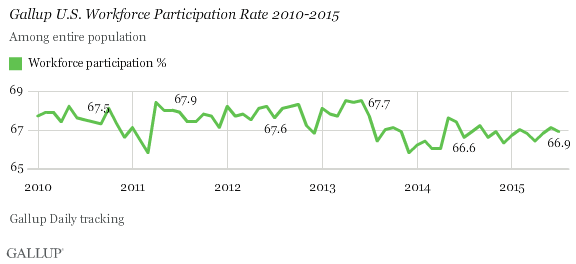
Unemployment is down to about 6%. That’s a good move considering a few years ago. Millions more have jobs now than then. Wages, however, aren’t moving. Total wages earned is improving, but the wage rate is nearly constant. It turns out that much of the population is making more money, but only by working more hours. Good news for paying the bills is also less time left for living. While unemployment is down, employment participation is not. Employment participation is at about 67%. The way the numbers begin to add up requires an insight into the people who aren’t employed, but who aren’t counted as unemployed. So many of them either lost their part-time jobs or gave up trying that they weren’t counted against unemployment.

So, unless you’re a major corporation, profits and wages aren’t rising, and the best way to make progress is to trade more of your life for the same wages. This might be temporary.

Discussions about wealth and income inequality can quickly quote ideological extremes of libertarian self-reliance versus socialist common support. A warning sign that ideologies are ruling the discourse is when words crowd out data, when positions are defended or attacked rather than solutions being sought. Maybe this bit of freneticism is temporary, like the last chaotic winds of winter just as seedlings are finding the sun and rain.

Personal finance is personal because every person has to make choices based on their situation, resources, and constraints. When millions of people are making the same choices because they are in similar situations with similar resources and similar constraints, the problem isn’t personal and is systemic.

With this many people working longer hours, and some running up until midnight, there is a limit to their growth. Aside from the health issues of working too hard for too long, advice from pundits and politicians to simply work harder and longer ignores the fact that many people are already working as long and as hard as they possibly can. If a person works until midnight, then works past it, they didn’t extend the day. The day is still only 24 hours. They’re working the next day and losing sleep. Working that long and hard isn’t sustainable for the person, and people working that long and hard isn’t sustainable for the society.

Billionaires are tending to agree. The millions of struggling people have enough votes to change the situation, but don’t have the power to change the ballots. A person working until midnight has a tough time collecting signatures for ballot measures after they get off shift. A person outside a political party has higher hurdles. Billionaires have very few votes, but they have the power. Billionaires are not clones. Some will think that more is never enough; but many are watching the growing inequalities in wealth and income, the stagnation of economies, and general civic unrest. They are becoming advocates for changing the system. Stereotypes fail and fall: many people in poverty work hard, don’t abuse the system, and can’t get past financial hurdles like debt; many people with wealth realize they have more than enough, are accumulating it passively and in some cases almost accidentally, and realize that every time great disparities are allowed to grow societies fall. Yes, there are abusers at both ends of the spectrum, but they are anecdotal aberrations, not constructive examples.

Personal finance is personal, and most of the discussions about changes may work generally, eventually. I am a short term realist and a long term idealist, a short term pessimist and a long term optimist. Whether the economy, government policy, social attitudes, or some common consciousness enact solutions, all of us have to deal with the short term problems of paying bills and finding time for each other.

I’m almost paying all of my bills. That’s a great improvement. I’m hardly visiting friends at all. That’s a great cost. I make time for dancing, and may make time for hiking (really, honestly, I’ll get back into the mountains)Rock Garden In Green Water, but I’ve spent enough nights working until 9pm or later, and starting over with less than eight hours of sleep. Four years of this and I know I have to find another way because I can’t do this for four more years (and, really, if you got political with “four more years” you’re missing the reality). Governmental policies are important, but personal choices are more important. Money is precious when you don’t have enough, but time is more precious. I’ll continue to try to find more money, but after four years, it’s time I spent more time finding more time.

Posted in Uncategorized | Tagged , , , , , , , , , , | Leave a comment

Celebrating Projects Progressing

Celebrate progress. Some friends have launched a new phase of their business. I’m launching into a new phase for mine, too. Slow, steady effort creates progress. Sometimes it is hard to see it from inside, but it happens. It should be celebrated.

Two stories are intertwined: my smaller story, my friends’ bigger story. Both take place on Whidbey. Both started in Langley. Both deal with art and unexpected directions. Neither is over. Both are just beginning a new phase.

I moved to Langley, Whidbey, a town that is willing to be part of Washington but sometimes has issues with ‘Merika. The liberals can be excused for thinking everyone’s a liberal, because there are enough of them. The conservatives can be excused for thinking everyone’s conservative, because there are enough of them. The same thing can be said for many communities of people on the island because most people move here to live specific lifestyles. I think the most impressive thing they all have in common is that they are leading intentional lives. Except for the folks who were born here, most people made a conscious decision to live here because they found a community of like-minded souls. It certainly isn’t on the way to anything, except a terrible commute.

I moved to Whidbey because I’d visited it for decades and liked the fact that it was a bit less conventional than Seattle. I liked Seattle because it was a bit less conventional than the rest of the US. I like the West Coast because it is young enough that convention has uncertain roots and is willing to grow in new directions. I miss Pittsburgh, too, because I was born and raised there, but going to college got me a degree in Aerospace Engineering and gave me a new set of perspectives to explore. Now, Whidbey feels like, actually is, home.

About the time I moved to the island I was finishing writing my fourth book, Twelve Months at Merritt Lake merritt cover, the third in the series of nature essays about Washington’s Cascades. (The other two are Twelve Months at Barclay Lake and Twelve Months at Lake Valhalla.) Progress on the books led to compliments on the photos which led to requests that I sell the photos as well as the books. Okay, I can take a hint.

I was a recently semi-retired engineer. I didn’t know anything about the art world, so I visited the local printer in Langley, a small shop run by Joe and Nancy (his mom). I was so naive that I didn’t know the questions to ask, didn’t understand the technical answers, and went home to take my best guess at printing, mounting, and selling the photos. That worked well enough that I sold a few, maybe covered my costs, and learned a lot. By the end of that experience I convinced myself to get a digital SLR instead of a digital point-and-shoot, and embark upon a much more serious photographic endeavour, a five year photo essay of my new home, Whidbey.

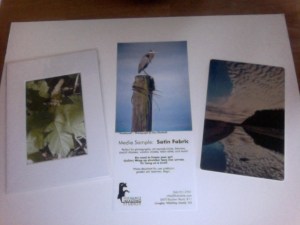
While I was progressing, they were progressing. Fine Balance Imaging moved from Langley to a better space a few miles away in the Bayview Cash Store. They shifted their focus to fine art. I had a better understanding of what to ask and what to expect. Over the next five years they coached me from home prints on paper to professional prints on exotic materials like bamboo (because it is renewable), and satin (because it is translucent.) Feel sorry for them because they also had to teach me about file formats (RAW rather than JPG), resolution limits (especially for my low end camera), and how simple things like dust spots became too noticeable and too expensive to fix when working to the levels of fine art. But hey, I was using my camera on beaches with lots of salt spray. Water spots happen, okay? Nature photography has so many natural nuisances. (They were also nice enough to provide an online gallery for the photos.)

DSC_4293

In those years, they grew because they found their niche and served it well. Printing fine art isn’t just hitting Print from a file on someone’s camera. There are color corrections for inks and materials. There are various hanging and display options. And there is being the voice of reason when an artist (me) wants to print larger than they should. With their coaching, I found my preferred medium, printing minimally corrected nature photos on satin that can be hung in windows where the light enlivens the colors. By the end of the five years, they’d moved into a bigger space, brought in better equipment, expanded their clients’ options, and performed one of the exemplary feats of American business, staying in business through the worst financial crisis since the Great Depression.

From paper to sating to metal

From paper to sating to metal

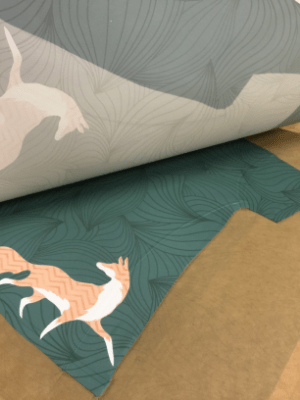
Now, they’re expanding. Yes, they print on paper; and yes, they print on satin and silk. They’ve had ways to print on wood and metal, but the process was cumbersome – until now. Now they can print on metal, and slate, and wood, and fabric. They can print on t-shirts, but in a way that far exceeds simple silk screens. They can print photos, or any graphics, all around a shirt, or a scarf, or a bandana covering seams leaving no white space except as designed. They just printed a softball team’s outfits with an innovative, total coverage graphic in hours instead of days or weeks. Now, I can see my next show (as soon as I finish another series) including wearables instead of just wall art. A photo of water cascading to the sea seems appropriate for a scarf draped across shoulders.

From Feather & Fox – another branch of the story

Fine Balance Imaging has progressed to the point that they needed a more national presence, so they are making their abilities available to as broad an audience as possible by launching YourPrintStudio.com. They’ve always been online and not limited to Whidbey, but this is a major step as they recognize that they can serve many more people, many more artists.

It can be tough making such a move. It takes a bit of vulnerability, but that’s necessary for anything that grows. Grow.

I’m happy because they’ve also asked me to help. They know about my consulting business, and how I am enthusiastic about people with passions and projects. At least until they get past getting familiar with the new strategy, I’ll be helping them with their message. (Though I’m doing this post for free because it is fun.) Progress like theirs is invigorating (from the outside) while tiring (from the inside).

As they’re making progress, I’m making progress, too. Consulting and writing keep me busy, but I continue my photography. There have been a few joint ventures that were sadly postponed or cancelled, but something new is happening. In September, I’ll begin teaching a weekend workshop in Nature Photography at the local community college (Skagit Valley College). I taught the class before, in a more informal setting, but my progress has proved to me an others two things: 1) I understand nature photography well enough to teach it, and 2) I have a teaching style that emphasizes demystifying processes.

The unanswerable question I have for Joe, Nancy, myself, and everyone else I know who is making progress is; “What will this lead to next?” How about a celebration?

And, because this just happened as I was about to post…

available upon request

available upon request

Posted in Uncategorized | Tagged , , , , , , , | Leave a comment

Triple Whammy Fourth Anniversary

Has it really been four years? Four years ago my life changed from semi-retirement to scrambling to survive. Survival may sound like hyperbole to some, but to anyone who realizes they may lose their house, may lose a way to feed themself, and may lose health, survival is reality. Millions of people had similar situations during the Great Recession, but my situation was different. The Great Recession started in 2008. My Triple Whammy hit in 2011. I’m recovering, but there’s a lot of recovery to go before I can relax and enjoy. This is less a lament and more of a reminder that bad luck can trump diversification, frugality, and optimism. And a reminder that good luck can happen, too.

If you’ve been reading this blog that long, then you may remember a brighter time when following conventional wisdom allowed me to retire at 38 as long as I led a frugal life. The Universe had fun with its brand of irony by having The Great Recession hit just as my book on personal finance was published (Dream. Invest. Live.Dream Invest Live cover published November 2008). That certainly didn’t help sales, and the recession made life tough for almost everyone. I lost a lot, but gained that and more back again thanks to diversification. AMSC and DNDN stood out and carried me almost all the way back to real retirement. Then, the summer of 2011 hit. AMSC lost a customer worth hundreds of millions in annual revenue – and then discovered that the customer had stolen AMSC’s intellectual property, cancelled their orders, and began competing against AMSC. Dendreon was successful in getting a radical cancer vaccine approved by the FDA, getting it to market, making hundreds of millions on the treatments, saving lives and money – and then being horrendously slammed for missing earnings. MicroVision was due to come to market with an innovative and disruptive display device – and then had their major supplier back off, throwing the company into financial machinations at the very time when money was tight. I called it my Triple Whammy.

Three stocks out of a portfolio of about a dozen positions, all impacted by influences out of their control, at a time when the rest of the economy was sicker than it had been in seventy years.

Ah, but I’m an engineer. I have backup plans.

  • I had optimism in my portfolio because surely a patent theft would be resolved, a shortfall in earnings would be temporary, and a logistical hurdle would be navigated.
  • I had a business that I could grow, or at least try to grow; and had encouraging words about my revenue potential as a consultant. Evidently, my blend of technical, managerial, entrepreneurial, and communication skills is in high demand and short supply. Besides, I also had books and art to sell.
  • I could get a job for the same reasons that my business had great potential.
  • I could sell my house, because I built in equity by making a large downpayment.
  • I also believe in serendipity and the fact that good luck can happen, too.

Four years later, after almost losing my house, my finances are recovering but not to the extent that I can pay all of my bills.

  • My portfolio hasn’t recovered. It doesn’t look like AMSC is going to win a patent fight in China’s courts. DNDN went bankrupt for reasons so bizarre that someone should make a movie about it as commentary on the dysfunctional influences in American finance. MVIS looks like it is finally recovering, and could do something incredibly positive any day, or I could be as wrong about that enthusiasm as I’ve been for the last four years. AMSC is down 93%. DNDN is down and out, a rare occurrence. MVIS is down 64%, the best of the three. As for the rest of my portfolio, the only rising star is GigOptix (GIG), that just had its first profitable quarter, but the market is uncertain about what its new valuation should be.
  • My business has grown! Thank you clients and patrons. Please pass along the testimonials to people who can appreciate and benefit from what I can do for them. Another large project or a few long term small projects are all it would take to make it easier to pay the biggest remaining bill, taxes.
  • Years of trying to get a job have resulted in only one interview for a full-time job. When I showed up, they told me that only wanted to meet someone with such an impressive and unbelievable resume. I was just there for their grins. But, at least they gave me an interview. I continue to try, but maybe there’s just something about being a mid-fifties guy that isn’t appealing.
  • I tried selling my house, but over a year on the market didn’t produce an offer. Thanks to some excellent help, I was able to keep it and refinance at about half the original payment. Now, Zillow tells me the market value is back above what I paid.
  • I continue to believe in serendipity and good luck, and know that they don’t work to schedule.

Four years later, I have a much better appreciation for the lives of many Americans. We have a culture that equates wealth with wisdom, even as we make fun of it. We have a culture that equates poverty with stupidity, even as the judgement is wrapped in advice or abstract compassion. The dysfunctions in our society are most visible when seen from inside the systems that are failed or flawed; and disillusioning to see the consequence of ideologies purposely undermining the systems at the expense of people.

In the last four years, I’ve studied numerous biographies to understand what helps some succeed. Education helps, and doesn’t require college. Perseverance helps, and is free for the cost of time and maybe health. A willingness to take risks is almost a necessity, because rewards usually require some vulnerability. Risk does not guarantee reward. Reward can happen without any risk. Risk relies at least somewhat on luck. People can break themselves free of bad situations by taking on some risk; but the success rate is less than 100%, and those who took on risk and failed are usually in a worse situation than before because they’ve spent scant resources and may have no more.

Key to almost every biography and success story has been at least one element of luck. Listen to the successful person talk, and usually there’s an event or two when they were in the right place, or acted at the right time, or knew the right people. They may not use the word luck, but there are always elements that we can’t control. It is within that lack of control that I find optimism. There is bad luck in the world, but there is good luck in the world, too. There are no guarantees, but what I can do, in addition to everything else I do, is to visit more than one place, be ready to act at almost any time, and be glad for the people I know.

The world is an uncertain place, and even more uncertain as change accelerates. My best response is to work hard, learn a lot, persevere, take some risks, and accept the fact that I am not in complete control of my world. That’s true for all of us, and with the right perspective, that’s powerful.

Posted in Uncategorized | Tagged , , , , , , , , , , , , , , , , , , , , , , , , | Leave a comment

Small Companies With Big Events – GIG And MVIS

Oh no. Not more about MicroVision. Yep. But not because it is MicroVision. This blog is an extension of my book, Dream. Invest. Live.Dream Invest Live cover, which I knew could only represent what happened up until it was published. The world continues to change, and that’s why I write this blog. MicroVision and GigOptix, however, are doing a fine job of illustrating the vagaries of the investing world. Rather than write about abstractions, I write about these very real case studies that directly affect my life because it is the best way to illustrate what it is like to invest for the long term. This week, the investing world raised a small cheer for GIG, and couldn’t decide what to do with MVIS. So goes the world of Long Term Buy and Hold investing. Good news doesn’t always receive a DNDN kind of response, even when investors think it should.

Long term buy and hold (LTBH) is an investment strategy that some consider anachronistic. Buy a stock that is undervalued. Wait a few years while the company grows and matures. Sell the stock at a higher price to investors who want a growth company or a mature company. Repeat as necessary. It is a style that worked well enough for me that I retired at 38. It was a style that worked well enough that friends encouraged me to write the book. It was a style that stopped working about the time of The Great Recession (and the end of my early retirement). One current question is, “Has the world changed enough to invalidate a strategy that relies on patience measured in years instead of quarters, months, weeks, days, hours, minutes, or seconds?” When computers can control trades with buy and sell cycles measured in micro-seconds, does it make sense to trade on the scale of years?

Of course, I think LTBH is still valid, just like knowing that gusts of winds can upset a sailboat, but it still makes sense to pay attention to the prevailing winds for long voyages.

A critical event for any small company with a new idea is the transition from hope and plans to reality and confirmation. Find a good idea. Develop it well enough to make it marketable. Market it. Hope enough customers buy enough of the product. That first bit of marketing and those first sales represent the key event. After that key event, successful companies expect to have steadily increasing sales, increasing profits, and increasing demand for their products and stock. That critical transition time isn’t one event; it is a series of events. GigOptix and MicroVision are in their own versions of that transition. This week saw good news from both.

GigOptix announced their first profitable quarter that would please accountants. MicroVision announced their best earnings report, which some investors considered impressive enough to suggest profitability within the next year or two. Profitability is a big thing. In previous posts I’ve documented my estimates for GIG and MVIS. For both stocks, a tripling of the stock price wouldn’t surpass my conservative estimate. For the week, GIG was up 39% and MVIS was down 3%. GIG’s action was appreciated, but leaves a lot of potential before it reaches my expectations. MVIS’s action has become too familiar; investors buying the rumor, selling the news, and waiting for the really big announcement, whatever that may be. It could happen. Any tangible mention of Apple and MVIS spikes the stock, or at least the blog traffic.

Conservative estimates of the market suggest planning for a return of about 7%. The daily reality is different. Any day the markets are open, there are usually a few stocks that have gained more than 20%. The highest I’ve witnessed was 640%. The highest that’s happened in my portfolio was 240%. More commonly for small stocks hitting big news is a rise of 140%. With that perspective, +39% and -3% aren’t big news.

I was fortunate. After the beginning of The Great Recession, my portfolio recovered much more quickly than the market because of small stocks reaching critical events. American Superconductor (AMSC) made a smart acquisition that created a half billion dollar revenue stream. Dendreon (DNDN) received FDA approval for a transformative cancer vaccine. Within three months DNDN went from $2.60 to $25.74. The day with the biggest news, DNDN went up 130%. About a year later it hit $54. (Then it went bankrupt, but that’s another long, and yet to be resolved drama.) If you want to vicariously experience such an event, go back to my original, orphaned blog.

Those closest to the news frequently don’t understand why the rest of the crowd isn’t cheering. Familiarity has a value.

GigOptix expects to continue growing, probably at about 20% annual, given their recent performance (which is not a guarantee of future results.) If GIG increases by 39% every week, it will reach my conservative estimate in less than a month. My nominal estimate is based on Present Value of Future Revenues Discounted for Risk (read the book for details), but I haven’t calculated that lately. (Got a value for the 100Ghz eletro-optical switch market with projections?)

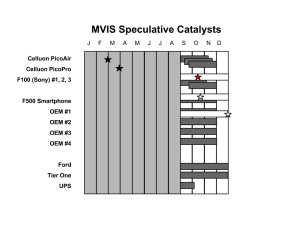
MicroVision expects to continue growing, and expects to finally tell us more about what they’ve been working on in secret with at least three, and maybe a half dozen, major customers. From barely avoiding bankruptcy in the last few years, to surviving on development contracts, to finally transitioning to multiple revenue streams based on licensing, royalties, and component sales, MicroVision may have finally cleared the major hurdles and can begin running at full speed. Sony has announced that a MicroVision enabled pico-projector will be released this October. There’s good reason to expect an innovative smartphone from another customer this year. And there are various hints about several other customers who showed prototypes back at the Consumer Electronics Show in January, plenty of time for companies like Celluon to bring a product to market.

MVIS_Catalysts_072915

MicroVision’s, MVIS’ problem probably comes from the lack of quantifiable evidence of the potential new business. The company did announce one of its best earnings reports, but the revenues only suggested eventual cash-flow positive, and pointed to eventual profitability. Without substantive evidence, risk-averse investors will walk away and watch from a distance. The best earnings report ever, wasn’t sufficient for them.

Since The Great Recession, investors are more risk-averse, wealthy investors are more likely to hedge their investments, and computers are more likely to take advantage of sporadic trading patterns. That may be why small stocks that were dominated by individual investors no longer act the way they did. Or, it could just be that I need yet more patience as good news from small companies arrives under the fog created by major news items from Greece and China.

My best response as an individual investor is to follow logic and math, and to trust myself, and to question myself. The situation is improving. My portfolio only reflects a small portion of the potential, which may only be a temporary delay. Yes, I’ll continue to write about GIG, MVIS, AMSC, and others, because the reality of investing is best told in long form, not in pithy catch-phrases. If you want to witness a bit of investing reality, continue staying tuned, and I’ll endeavour to continue chronicling the journey. (And, if you want the back story, go buy my book. It has data and details, and hopefully humor.)

Posted in Uncategorized | Tagged , , , , , , , , , , , , , , | Leave a comment

This Investors Dilemma MVIS V GIG

Decisions, decisions – personal finance is about decisions. I see a couple of appealing possibilities (based on conservative estimates) but can’t decide what to do; which, by taking too long, became a decision. The expected good news for one stock arrived today. Congratulations, GigOptix. There’s a possibility of good news tomorrow. Come on, MicroVision! I have very little to invest, but I’ve lost so much (Triple Whammy) that a little is a lot, relatively. Fortunately, all the choices are possibly good. That’s a switch.

I don’t own many stocks. I may own thousands of shares, but that’s only in about a half dozen companies, and none of them are trading at higher than $10. Two have an entwined history. Both have been working for years to reach critical milestones. Today (July 28, 2015) GigOptix achieved theirs. They became profitable. Tomorrow (July 29, 2015) MicroVision announces their earnings, and while profitability isn’t likely, it or something like positive cash flow is possible. As today’s market closed, one share of GIG cost $1.82 and one share of MVIS cost $3.26. For less than the price of a cocktail, it’s possible own a very tiny fraction of either very impressive company.

Profitability is a big event, even if no one notices. In an ideal world, companies have two phases: the startup company, during which they spend money to make money; and the mature company, during which they make more money than they spend. In the real world, there are thousands of variations because every company is different. They can bounce in and out of profitability, some never get there, some start there, and most eventually either merge, are acquired, are shut down, or go bankrupt.  MicroVision, and the slice of it that lives within GigOptix, have been steering towards profitability for over a decade. GigOptix got there first.

The longer story of MicroVision and GigOptix is long enough that it has its own post. Go back to it for the nuances of the interactions. I bought shares of the one, MVIS; bought more shares of the spinoff, LMRA; and then watched them become shares of a merger/acquisition, now GIG. Throughout, the companies have worked from technologies that are ingenious, disruptive, and problematic.

Today’s announcement was that GigOptix achieved GAAP profitability. GAAP is Generally Accepted Accounting Principles, a financial standard that is hard to reach. GigOptix got there with strong growth, strong profit margins, strong cash balance, and an expectation of continued strength. This is a big deal. The news was announced before the market opened. I considered buying a few extra shares, but I held off because I didn’t want to be impulsive and wanted to see how the stock would react. It bounced around, actually went down, then bounced back up to close up ~9%. If I bought yesterday and sold this afternoon, my return would exceed the conservative annual total market return. So it goes.

In part, I wanted to look at the numbers, and like so many of us, I was busy with my clients throughout the morning. It’s all good. By the time I got around to doing my analysis, the markets had closed.

One of the advantages of regularly exercising the same analyses is that each time is simpler. For GIG, I took the simple analysis I did back in February, and updated it. A bit of cutting and pasting may illustrate today’s process.

From February 10, 2015 – A Quiet Graduation Day For GigOptix
That’s why I look at Price to Sales for small companies. If you want the details, go buy my book. In the meantime, I use a Price to Sales of about 6. Revenues ($32.9M) times 6 equals $197.4M That’s my estimate of GigOptix’s worth. Even after the good news, the market thinks GigOptix is worth $32.8M (based on market capitalization). Divide my estimate by the market cap and get about 6. If the market drove GIG from today’s $1.19 up to $7.16, I’d think it was finally recognizing GigOptix’s current conservative value.

From today’s announcement (7/28/15) – Increase revenues by 20% (The numbers varied, but I decided to keep things simple and conservative.) Copied from above and updated:
Revenues ($32.9M x 1.2 = $39.5M) times 6 equals $197.4M (x 1.2 = $236.9M) That’s my estimate of GigOptix’s worth. Even after the good news, the market thinks GigOptix is worth $32.8M (based on market capitalization – and $59.4M as of 7/28/2015). Divide my estimate by the market cap and get about 6 (and now about 4). If the market drove GIG from today’s $1.82 up to $7.26, I’d think it was finally recognizing GigOptix’s current conservative value.

So, the market is heading the right way, and is only off by a factor of four instead of a factor of six, in my opinion – and that’s after an 81% increase in less than six months.

So, duh, buy GIG. Right? Not yet.

Before the market opens tomorrow, MicroVision will announce their earnings. This is the first year I’ve felt that the company has negated the threat of bankruptcy. MVIS costs more. The market cap is higher. The probability of near-term profitability is lower. But, the potential is much higher. Where GigOptix may become an industry leader, it may happen within a smaller industry. MicroVision is poised to disrupt, or at least significantly participate in, the consumer electronics market, plus the near-field image capture market, plus applications that are innovative enough to surprise almost everyone. Even if they don’t have impressive revenues to announce, they have plenty of catalysts (check out my earlier post as a way to deep dive into the potential) that could propel the stock. And, of course, if they do have impressive revenues, that’s even better.

So, duh, buy MVIS. Right? Not yet.

I only have enough cash in my IRA to buy about a hundred shares of either. While maximizing the return of every single dollar makes mathematical sense, more, more, more opposes my tenet of enough, enough, enough. I’m quite conscious of the time I spend on any activity, including ones that may make me money. I’m quite conscious of the time I spend writing these posts. The disposition of a hundred shares of a tiny stock may be like a butterfly’s wings affecting something grander; but I think the most important message goes back to the title of my book, Dream. Invest. Live.Dream Invest Live cover Investing isn’t everything. Passing along that word is as important to me as what I do with a few hundred dollars in stocks. Of course I want, and actually need, my stocks to recover and grow; but, obsessing about money means missing out on life, and life is far more valuable. Dilemma solved.

Posted in Uncategorized | Tagged , , , , , , , , , , , | 1 Comment

Conservative Estimates

Warning. I’m about to use a dangerous word: Conservative. Oops. Let me dial that down by taking off the capitalization: conservative. No, this isn’t about politics or conservation, though there are ironies there for volumes. I’m writing about conservative estimates and their attendant companions, assumptions. The topic comes up frequently, but the adjective is disregarded while the second word is taken as an absolute. Life and the world aren’t that certain. Conservative versus non-conservative estimates are probably about to become more important, and I’d rather make the distinction now than in the middle of an event. Besides, paying attention to conservative estimates in the news changes the news.

I’ll dive straight into stocks, and I’ll use that storied, lingering drama that is MVIS, MicroVision, to hopefully make a point or two.

One of the most commonly quoted estimates within stock investing is that, in the long term, stocks can return about 7% per year. That’s a conservative estimate. There will be big swings up and down daily and over a year, maybe not in your investments, but in someone’s. Pull together a ‘representative portfolio’ and it can be up 51% or down 37% in a year. The 7% number comes about from a communal acceptance that over decades the highs and lows balance out to about 7%. Even for the ‘representative portfolio’ though, twenty years of investing can produce a range of 6% to 18%. So, if you are investing for the long term, 7% is a relatively conservative number. People use that for planning so they don’t get overly enthusiastic and start spending beyond their means. It is a good, easy number to work from.

(from Proactive Investors)

Look at that chart again. It is wise enough to show a range of data for every period. I don’t have the database to run the statistical analysis, but it is reasonable to assume that while 6% or 7% are conservative, and 18% is aggressive, that somewhere in the middle is a nominal value. I wouldn’t be surprised to learn that a financial advisor or analyst is gritting their teeth, throwing things at the screen, or deciding not to read any more of this post. I can’t blame them. Generalizations based on statistics are only generally right, which also means they are too frequently wrong.

The conservative number is rarely correct. The nominal number is most likely to be near the eventual result. If the data fits a nice, theoretical normal distribution (a bell curve), then the aggressive answer is as likely as the conservative answer. The difference makes a difference. Invest $10,000 at 6% and end up with about $32,000 after twenty years. Invest $10,000 at 18% and end up with about $274,000 after twenty years. Great! But wait. While it looks like investing can at least triple your money in two decades, or maybe even let it grow 27-fold, reality is that the downside is a possible 100% loss and the upside is the stuff that gets people on the covers of magazines.

With that range of uncertainty, people become comfortably retired, destitute, or wealthy beyond dreams. Each of those possibilities becomes real for someone. I’ve witnessed a lot of that range. I know.

MicroVision is attracting a lot of attention. There’s a crowd of investors who’ve followed and owned the company for over a decade, but it is a very tiny crowd considering the size of the investing community. Recent product launches by CelluonIMG_0417, and mentions in patents and products by Sony, Microsoft, Apple, and others means there is a lot of possible potential; but the news is so new that there’s very little data to work from. The next conference call, or a customer’s product launch could put some solid numbers to the estimates of future revenues and profits, but some investors don’t want to wait until after the news hits. They want to profit by buying early and low, and selling high later, hopefully. I know that myself and other investors are beginning to field calls from people wanting estimates of the timing, share price, revenues, and profits. Estimates are out there, but there’s more assumption that certainty behind the analyses.

Conservatively, how conservative do you want to be? What assumptions do you want to make? If you assume that a small startup with a troubled history and an unproven technology is unlikely to produce a profit, then your conservative estimate is that the company will go bankrupt. If you assume a small startup with a disruptive technology that has cleared almost all of the apparent hurdles can succeed as well as cellphone cameras or tablet computers, then it becomes reasonable to make guesses (but call them estimates) about profit per piece, market capture, technology expansion and find yourself looking at numbers that are incredibly large. Between the worst case and the best case is a more moderate set of assumptions. Take one aspect of the technology, assume one product introduction, pick a moderate number for profit and market capture, and see what results. The only thing you can know for sure is that the real answer will probably be something else; but, is your level of conservatism sufficient to convince you to buy or sell?

At the 2014 Annual Stockholders Meeting, the Chairman of the Board alluded to an expected similarity between MicroVision’s products and embedded cellphone cameras. Based on what he said and adding data from other sources, it was reasonable to estimate (guess with math) that MVIS could be worth $33 in 2015, $178 in 2017, $667 in 2020, and $3,333 in 2023. If the technology is accepted similarly. If the Price to Sale ratio for such a disruptive technology would be about 10 (my guess). If, if, if. Head over to PetersMVIS blog for a collection of valuations. Some use completely different assumptions and analyses and get surprisingly similar results. Dive into the discussion boards, however, and find different interpretations of conservative.  For a stock that is trading around $3, some consider it unconservative to assume anything more than $6 by the end of the year, getting closer to the numbers from the general chart above.

Would I cheer MVIS at $3,333? Of course. Note that my estimate made that a 2023 number. Do I suspect it will happen? Probably not. At that price and for the current number of shares, that would give MVIS a market cap of about $161B. Out of the thousands of publicly traded companies, only 56 are larger. It is possible, but that scarcity suggests it isn’t conservative. So, if it only goes to $333 is that conservative? We will only know in retrospect.

Investors can collect horrific and glorious stories. Before the dramatic moments hit there were years of doubt. After the event it seems obvious why Enron evaporated and Apple dominated. There were many that guessed right, and may have had analyses to support their assertion; but there were probably just as many that were  just as certain that guessed wrong.

Within stock investing there are many words for conservative, nominal, and aggressive. I can’t know what matters to you. What matters to me is balancing the realization of the range of possibilities. Is this where I want to, or need to, place my money? Am I being too risky, or too conservative, or just about right? We won’t know until the end – though I also know I’ll hear lots of opinions in the meantime. Hey, that’s investing.

The news applies the term conservative to many things outside politics: estimates of federal budgets, climate change, markets, the economy, population growth, and energy usage. When I hear the word conservative, I want to hear the whole story; best case, worst case, and something in the middle. I know that none of them will be right, but knowing all of them is far better than assuming only one of them is real.

Posted in Uncategorized | Tagged , , , , , , , , | 1 Comment

The Value of a Free Concert

Thank you, South Whidbey Parks & Recreation and Goosefoot. Every Wednesday night, for about two months in the summer, those two local organizations put on free concerts in the park (SW Parks & Rec) and in the parking lot (Goosefoot). Tonight’s concert was Joy Mills, an excellent band that probably sounds best in a tiny bar with a tiny dance floor. All that applause was spread out over the outfield of a baseball field. It probably sounded diluted to them. To me, at least, a free outdoor concert was better than some high priced arena event. When you have little to spend, you find things that were always free but overlooked. There are treasures out there.

Someone asked for a synopsis of this blog. Evidently, they think I should be writing for another of the national web sites. Fine by me! The blog is the continuing story behind Dream. Invest. Live.Dream Invest Live cover; but it is also ‘personal finance for frugal folk’. Frugal folk aren’t cheap. Frugal folk appreciate the value of resources, including time and money. What they frequently discover are things like the free concerts, not only because they are free, but because so many things are valued based on their price tag instead of their true value. Spend $50 on tickets to a show, and you have personal image reasons to prove that it was money well spent. Get the same music for free, and suddenly people think it isn’t worth their time.

Time to visit, or revisit, the video of Joshua Bell playing violin in DC. Instead of playing in a grand concert hall, he played in a public building, just like too many other street musicians. A master artist, playing for free, is ignored by almost everyone. Several, though a minority, looked to have dropped some money in his case. A few, very few, stopped and the let crowds flow around them, anchored to concentrate on a beautiful performance. The video has been played over five million times, and I wonder if five million people now look at street musicians differently.

The Joy Mill Band played tonight, and I suspect they were paid, though probably not paid what they are worth. They played from the hill that acts as the outfield fence. The nearest member of the audience was yards away. There was enough room between the band and the audience that a crowd of kids were playing a completely unorganized and energetic game that involved a football then a frisbee and a lot of running around. In September, the band heads off on their European tour. I don’t know how much of their fee was paid by taxes, donations from Whidbey Telecom, or patrons of art and community. It probably came to less than ten dollars a person. Their performance was worth far more than that.

For an hour and a half, a bunch of grownups sat on their lawn chairs or blankets, had picnics, and applauded at the right times, usually. For about an hour and a half, everyone got to watch dozens of kids being kids. The game of football frisbee keep-away. Rolling down grassy slopes without regard for stained pants. Squeals of laughter and surprise because they were outside and could use their outside voices as they played. It is amazing to hear an eight year old get louder than an amplified band. And, of course, cuteness throughout as kids with pacifiers try to get more than a few dozen steps in a row, only to fall down, stay there as if nothing happened, and then get up and keep going – probably in some completely new direction. Thanks to a couple of slower songs (and a willing dance partner) we were able to get in a waltz, and nice bit of two-step. (Dancing fast on turf with bicycle shoes is a bad idea – though probably a good video.)

There isn’t as much to brag about as having attended The Opera. There aren’t any ticket stubs to frame. There probably won’t be an article in the Big City Newspaper. There was, however, a fine night with good music, good people, and no stress about parking or traffic or passing through security checkpoints. My main concern was getting home on the bicycle before sunset – and even that turned into a nice sunset ride as the tide reached its peak.

There are many grand events and great considerations in the world. They are impressive and noble. There is much work to be done. There is also a value to setting aside the grand to take in the simple because there lives the value that – with a bit more support – can be far more sustainable, and which can sustain us when we go back to work.

Posted in Uncategorized | Tagged , , , , , , , , | Leave a comment

Coiled Springs

I see so many coiled springs around me. On a sunny, hot, summer afternoon I met with one of my friends and clients. Their business has all the right stuff: talent, tools, experience, and a dedicated base of clients. They took the big step to get farther up the ladder, and maybe to the point where they can take vacations and replace old cars. The potential is all there, but making it real requires making unfamiliar moves. They’re not the only ones. I’m witnessing a collection of energies behind many businesses and projects. Some already have news to share, but can’t. Others need a bit of patience, a slight shift in habits, and a bit of encouragement and good luck. It isn’t just a business thing. The world is changing.

It’s 85F indoors today. That’s the weather for sitting and sipping, not pursuing potentials. My original agenda for this Saturday evening was to build out my merchandise site for Pretending Not To Panic. This week, the prospects of earthquakes, tsunamis, and volcanoes were added to the list of droughts, rising oceans, and political and economic upheavals. It seems like a fine time to wear that popular attitude of pretending not to panic. There’s enough reason to panic, but our society has found many mechanisms for submersing those emotions while maintaining an attitude of positivity and hope. Optimism is required, but I’ve been surprised by how many are also significantly worried – and need an outlet for that expression. I’ve already designed the t-shirt and hip flask, but it’s too hot to do anything else except type.

Pretending Not To Panic is a project that has potential. Energy is being added. Engagement is growing. Every day I try to post at least two items that are “news for people who are eager and anxious about the future”. Collecting it daily has become an ongoing research project into the constructive and destructive influences in our world. There’s more than enough good news and bad news being reported. One aspect that is fascinating is how little of the debate includes data, and how much of the discourse is extremist. There is a small supply of objective news, and (from what I can tell) a great demand for it. Low supply. High demand. Sounds like an opportunity to me.

As with any venture though, patience is required. There was a bit of virality to the first set of posts; but after that faded, the traffic has returned to more common social media trend of slow and steady growth as long as I consistently post. Still, it would be nice to get the polo shirts and coffee mugs designed.

My appreciation for slow and steady growth partly originates in my stock investing career. To some it looked like an overnight success – followed by a catastrophic fall, but the success built over decades and the fall may be temporary. (It better be temporary; but just in case I’ll continue working to my Rule of 7 and buying lottery tickets.)

A few years into investing I had doubts. I had successes, and failures; and it seemed to be fruitless – or at least insufficiently profitable. Then I reviewed my history. I’d gone from successes sufficient to buy a six-pack of beer, to successes sufficient to eat in a good restaurant, to paying for a weekend at a B&B, to paying for a short vacation, to – a few years later, enough to buy a nice car for cash (if I wanted), to buying a house, to eventually buying an early retirement at 38. In two decades, consistent investing and frugal living produced something seemingly unreachable at the start. Compound interest is powerful.

Hey! I just gave myself a bit of encouragement I can do it again – and hopefully better.

I find encouragement in many of my clients’ projects. Where they may see the bare budge of motion, I see movement to build upon and accelerate. An airplane taking off started with a speed of zero. Even the ones that use catapults are stuck in place at the start. The trick is to recognize motion. Respect progress, and build upon it.

Take a look at the adoption of solar energy. For a long time it looked like it was only a curiosity. The same was true of the large wind turbines. Within the last ten years, entire states and countries have installed enough capacity to power their regions with renewable energy, regardless of subsidies. Social movements that seemed stuck, make sudden progress. Choices about basic things like housing, transportation, food, and health have all shifted recently. In the US, acupuncture was considered a joke despite its proven efficacy, until it inspired enough advocates to get insurance to pay for it. Eating local has always been a good idea, but it took too many cases of unfortunate corporate crop concerns that convinced people to know how and where their food was grown. Cars now seem silly to those who can walk, bike, or bus to work; especially as prices of vehicles and fuel rise. Housing had a major crisis, and out of it, affected people found a slowly growing movement to smaller homes and less reliance on lawns.

My pessimisms come from the big concerns I see: climate change, unstable economies and governments, too many people consuming more than a planet can provide. My optimisms come from the movements that seem too small for the news to notice – those very same innovators in housing, transportation, food, and health. There’s even good progress in understanding the nature of reality and consciousness, which could dramatically alter every debate.

After I post this I’ll step out onto the deck and water my container garden. Earlier this week, I harvested my first tomato. For years, I’ve tried growing a garden in the backyard; and was unsuccessful. That seemed like the right place to plant vegetables. For years, I’ve enjoyed and battled the sunny deck that has great views but can become far too hot in summer. Finally, success. I realized that shifting a habit by moving the garden in the backyard’s ground into plants in pots on the front deck might give the plants of a bit of a hot house environment, give me a reminder to water them, and even give the house more curb appeal. But, it’s only one tomato – with dozens more ripening on the vine. Sproing!

Photo on 2015-07-15 at 10.44

Posted in Uncategorized | Tagged , , , , , , , , , , , , | Leave a comment

Thinking About Quakes And Tsunamis

The outside expert gets the most attention. Within the last few days, an article was published in the New Yorker that described the possible impacts of a major earthquake in the Pacific Northwest. Suddenly, the earthquake possibility is a topic of conversation. There are plenty of local experts, but the only reports I think that have generated more commentary were the reports right after the earthquake and tsunami in Indonesia, and again in Fukushima. Good. I’d rather hear we’re talking about it because someone was talking about it, rather than because a similar disaster had hit some other group of people. The big question is, what do you do about it? The answers are highly individual. I have mine, I think.

As I’ve written before;

I live over an earthquake fault, have to drive through a tsunami zone to get home, am within about a hundred miles of three large volcanoes, and live on an island that is only tied to the mainland by one bridge and two ferries. Do I worry much? No, at least not about that. – What Me Worry

Sounds like a long list of potential threats, and it doesn’t even mention The Big One described in the article. Each of the local threats is big enough to make the news, but a major earthquake along the Cascadia Subduction Zone and the Juan de Fuca Plate hits much more than my piece of my island, and can be more damaging that an eruption on Mt. Rainier or Mt. Baker, even with the mud flows included. The local faults kicking off a 6.0-7.0 are only 1% as powerful as a Cascadia quake that could be 8.0-9.0. As we saw in Indonesia and Fukushima, the quake is devastating, and so is the tsunami. I wouldn’t be surprised if such a large quake kicked off other quakes, upset at least one of the volcanoes, and triggered a series of landslides. One estimate showed Seattle getting abut 30,000 landslides. The area would be a mess, and the area would be enormous.

As one of the local officials was quoted in the New Yorker article,

“Our operating assumption is that everything west of Interstate 5 will be toast.” – Kenneth Murphy, FEMA

Scared? Not a surprise.

With threats like that it is understandable if people decide to move somewhere safer. It is easy to point fingers at people who live in flood zones, try to farm in deserts, or expect to get around during blizzards; but every area has its dangers and potential disasters. This one is just a bit spookier because it is so extensive and will probably happen without warning. It could happen as I type. Nope. Not yet.

Let’s walk it back a bit. Cascadia + quake does not equal 9.0 and tsunami. There could be a series of quakes that release the energy in smaller packets. They’d still be bad, but they may not be disasters. We know the fault kicks off such quakes, but they’ve also learned that there are some slow, soft, long-period quakes and slides that move the earth in ways they don’t understand, yet. The Cascadia tsunami will hit the western shore within about 15 minutes after the quake, but not every quake produces a tsunami. That fault line is tens of miles out to sea, and Seattle is tens of miles in from the coast. Every mile is a bit more protection. Puget Sound and the Salish Sea could see a tsunami, but it may not make it around the corner and down to the major population centers of Olympia, Tacoma, Seattle, and Everett. Bellingham and Vancouver will have an issue. I haven’t checked Portland.

You can learn a lot by listening to the local experts that have been studying this for years. The University of Washington, USGS, NOAA/PMEL, and others have released their studies, given lectures, and talked to local officials. Many residents may not have heard the tales; but, their findings are one of the reasons Seattle is taking down the harborfront highway called the Alaskan Way Viaduct (and then for some bizarre reason replacing it with a tunnel – but that’s a fiasco to post about later.)

  • The Washington State Department of Transportation produced a video that shows what would happen to Seattle’s waterfront. WSDOT Alaskan Way Viaduct
  • NOAA PMEL produced one that shows the regional coastline effects. Simulated Cascadia Tsunami
  • NOAA PMEL also produced one that shows what happens to Whidbey Island, at least the north half. RawTsunami grabbed it and reposted it. Anacortes Whidbey Inundation

In every case, bad things happen; but not everywhere. The advantage we have is the ability to look ahead and prepare now.

One of my more entertaining writing jobs is with Curbed Seattle. Mostly, the assignments are light-hearted articles about real estate; but, occasionally my accommodating editor lets me write about other things. So, I wrote a series about quakes and tsunamis and Seattle.

One of the ironies is that some of the most stable ground is in the most affordable neighborhoods. The tsunamis, however, are purely a function of elevation. Waterfront properties have problems, but so do low-lying neighborhoods that have no view, no grand infrastructure, and no great say in governance.

Seattle’s issues and Whidbey’s issues are linked in ways that ignore the Cascadia fault. Seattle sits on a fault. South Whidbey sits on a fault. Quakes on either are felt by both. Each throws tsunamis at the other. I live beside Cultus Bay, (and did a twelve month photo essay of it)November Sunset which is pointed like a funnel for any tsunami coming up the Sound. It’s even a region for a field study in paleo-tsunami. A similar field report convinced me to buy high, as in 100 feet above sea level. The tsunamis haven’t been that big, and at this elevation the details don’t matter as much.

There is a lot of debate about climate change and sea level rise. That’s another reason I don’t want to own no-bank waterfront (beside not being able to afford it.) Quakes change the debate, or give the local debate a different perspective. Some estimates suggest that global sea levels will rise a few feet in a century or so. A subduction quake, like Cascadia, does more than shake the land. The land on one side of the fault bounces up. The land on the other side of the fault drops down. Similar quakes have dropped land six feet in less than ninety seconds. Waterfront becomes underwater, regardless of the equity and the mortgage. Harbors become deeper. Coastal forests drown. The shift is also lateral. In Chile, one quake moved the land fifty feet to the side. The shift causes damage, of course, and then it kicks off great debates about who owns what. People who are meticulous about surveying their property boundaries might just collapse with the prospect of not knowing whether they can tell the kids, or anyone, to get off their property.

As I said, luckily, we can look around and look ahead, and act now. FEMA and the Red Cross have suggestions about preparedness. Simply enough, I have earthquake kits in the truck, and outside the house.DSC_5740 Living on the south end of a 58 mile long island that has its power come in from the north, I’m practiced at dealing with minor power outages. The Big One, even if it is local, may mean a major outage of weeks. I may not be totally prepared for that, but if I keep a full pantry, keep the rain barrel full, and make sure I have shelter, I can probably get by. Good thing I have backpacking gear.

The response to the New Yorker article surprised me. I’ve studied the situation, considered the possibilities, arranged for some contingencies, and then move on to other things. The knowledge, the history, my earthquake kits, and the choices I’ve made mean I know I’ve reduced my risk as much as I think is reasonable. One of the benefits of a frugal lifestyle is realizing how little is necessary. (Frugal Disaster Preparedness) If I had more money, I’d buy a solar station, and a solar oven. Maybe later.

The greater surprise is how vulnerable many people are. I hear that in their reactions to the article. A 9.0 would be a major disaster. I expect to be affected. But, I don’t worry about it. Frequently though, and especially after such an article or event, I look across the bay at a group of houses that have awesome views. They sit on or below the bluffs of the other southern point of the island. They have views due south down the Sound. Some can probably see Seattle. I’m sure they can see Mt. Rainier. I take photos of it occasionally because I get the feeling I’m looking at a “Before” picture, and hope the “After” picture looks the same, but suspect not.

DSC_5742PS – For those who want to really get confused, check out what’s happening with the Axial Seamount. It is an underwater volcano near one corner of the Cascadia fault line. It’s erupting.

Posted in Uncategorized | Tagged , , , , , , , , , , , , , , , , | 1 Comment

Brown Lawns And Purple Poop

Welcome to the Pacific Northwet. Shut up, spellcheck. I left the s out on purpose. The Seattle area only gets an average amount of rain compared to the rest of the US, but we get a little, constantly. Except this year. I don’t care if it is officially a drought, or not; getting less than an inch of rain since the beginning of May is not normal. Ab-normal is becoming the norm in weather and finances. The planet is shifting, and so are we  – because we must. Fortunately, humans excel at adaptation, eventually.

Californians have dealt with drought before; but this time is different. There’s an awareness that the combination of a larger population and a longer drought could be a good reason to shop for housing outside the state. Some farmers are already moving. It is easier to relocate farmers to better climates, than to ship enough water to California to maintain green deserts. The majority of people are staying, even as the wells run dry; because until enough of them run dry, most people won’t move. A shift in California becomes a shift in America because California grows much of America’s food, and houses over 12% of America’s population.

My lawn is brown. California’s drought is worthy of its headlines, but much of the west coast of America and the east coast of the Pacific is in drought. There’s a blob out there, and an El Nino brewing, but the details don’t matter to homeowners. They simply have to adapt. My adaptation is easy. The only way my lawn gets watered is from underneath, as the water flows in the septic system. The grass really is greener over the septic field.

There are rumors that the situation is temporary. Maybe, we’ll get a few drops of moisture this weekend. We need it just like the rest of drought areas. The Fourth of July kicked off several brushfires. A downed power line became a repair executed in charcoal because sparks sparked a fire around the pole. We’ve been lucky enough to not have lightning, but cigarette butts and irresponsible campfires have an excess of fuel to amplify their effect. (Thanks to the local firefighters who kept the damage to a minimum.)

One worry is that, if everything returns to normal, normal for this time of year is a lack of rain from mid-July to mid-September that climatologically makes the Seattle area one of the driest parts of the country. I guess I’ll be watering the tomatoes and peppers for a while. That, and letting the lawn stay brown, and easy adaptations. A bonus is that I won’t have to mow the lawn as much.

The financial world isn’t normal lately, either. China has a bubble in its stock market that is bursting, but maybe not affecting the economy – depending on how well individuals adjust to a market and investing economy. Greece is busted, which is the first time a developed country has become so broke. The key, and yet subjective, word is ‘developed’. In America, there are a series of paradoxes. Unemployment is down, but employment remains the same. (Because they are measured differently.) Housing is recovering, but people are finding it more difficult to buy or rent. (Because lending is tight and many houses have become rentals, some by corporations.) Wages are growing, except for the fact that they aren’t. (Because the average may be up, but many people aren’t getting raises.) (Check various posts within Pretending Not To Panic.)

Just like with cutting back on water, people are cutting back on spending – unless they have more than enough. The tiny house movement, a retreat from one car per person, a greater likelihood that people are growing their own food, the rise of alternative medicines are evidence of people seeking abnormal approaches to conventional lifestyles.

The political shifts are abnormal, too. Gerrymandering is finding opposition, marriage liberation is growing, marijuana legalization is gaining momentum, and people are finally realizing that something appropriate in 1860 may not make sense in 2015. Step back ten years and the world looked completely different. If you’re reading this before August 2015, Comedy Central has been conducting an epic retrospective by playing every Daily Show episode. Tune in and see what was news and humor. (I managed to watch the episode from just before 9/11. The tone of America has changed.)

The world changes. We adapt. We continue. It has become the norm that we expect constant change. I haven’t seen the numbers, but I suspect there are fewer people expecting everything to return to some idealized 1985 or 1955. Too much has been set in motion to allow everything to return to that version of normal.

I don’t know what normal looks like, anymore. I look forward to getting back to paying all of my bills. I look forward to having free time to relax and enjoy. I look forward to the rains returning. I also suspect that, if all of that happens, it will happen in a way that isn’t normal. I’ll adapt.
DSC_5724
Amidst the brown lawn I saw an encouraging sign. There was a bit of purple poop in the grass. Despite the lack of rain, the neighboring vacant lot is evidently producing an early crop of blackberries. Some critter ate more than its fill and pooped out a bit of the excess on my lawn. Amidst a near total lack of rain, the berries of an invasive plant are ripening and feeding the local wildlife. The forecasts aren’t encouraging, and certainly aren’t normal, but somehow something good will be produced – and produced in enough excess to color my lawn.

Here’s to abnormal, adaptation, and acceptance. What other choice do we have?

Posted in Uncategorized | Tagged , , , , | 1 Comment