Expense Report – Heating Update

My, what a big padlock you have. My quest to control my heating costs continues with a bizarre twist. The good news is that the bad news is leading me to good news.

For those who are tuning in late, two months ago I got a propane bill for almost four dollars a gallon, $3.989, about double what the competitors are charging. Calls to the local Amerigas office resulted in a partial reduction, something I’ve done before. I shouldn’t have to do that, said so, and they connected me to the person who controls many of the offices in the region. There was little he could do, but he did offer a $50 credit. Fifty dollars is appreciated, but the prospect of thousand dollar or more fuel bills meant I had to investigate other solutions. That’s the short version. The long version is in the prior blog post, Expense Report – Heating.

I thank all of the contractors, suppliers, and folks in general who helped me work through the options. There can only be one supplier that benefits, but they all treated me with respect and enthusiasm.

Finding a new supplier or system would seem to be a simple thing, but simple things have to weave around complex work lives and schedules to the extent that it took two months to do the research, have the conversations, and meet some folks.

The simple answer was to keep the same kind of heating system and change suppliers. My house is heated by a radiant floor hot water system. The water does’t care which propane provider I use.

DSC_3192

The more complicated answer is in the details. If I’m going to switch suppliers, how does the old tank and its fuel get replaced with a new tank and fuel, and get hooked up to the existing system? Who gets told what and when, and when does the work get done and in which order? The various suppliers handle this regularly, but I don’t. It probably took me more time to ask them about it than it does for them to do the work.

DSCN0971

At the same time those conversations were happening, I was also talking to various contractors referred by Puget Sound Energy about the prospect of going all-electric. Why use propane for anything? In my simplistic vision, replace the propane furnace with an electric furnace and only worry about electricity making it down the line rather than fuel being pumped from the ground, refined, shipped, and delivered?

That was too simplistic, and an example of people not listening. A new furnace and hot water tank would cost thousands of dollars, a nice possibility if I won the lottery jackpot. Instead, every contractor focused on one thing: replacing the propane furnace with a heat pump. Modern heat pumps are much more efficient, cheaper to operate, and relatively quiet. Several of my friends have enjoyed switching to them. They have a one-time cost between $2,000 and $5,000, which is expensive until compared to the recurring roulette cost of my existing propane situation. An interesting possibility.

Unfortunately, replacing the furnace with a heat pump wouldn’t remove the propane system. Something has to heat my hot water and at least two contractors dissuaded me from considering it. So much for all-electric.

Early in the process, I called my original propane supplier (Amerigas) and asked them about delivery options. They suggested I consider switching from automatic delivery (where they guess at when I’ll need it, which they did well) to Will Call (where I call when the tank is empty enough.) All of their competitors suggested I do the same thing, switch to Will Call. So I did.

Switching to Will Call seems like the sort of thing that would be a simple phone call. Nope. Amerigas told me to fill out a form and get it to them by the end of the week to avoid getting another refill sooner than I wanted. I dutifully thanked them on Monday, got the form, filled it out, expedited its delivery on Tuesday, waited a day on Wednesday, and called them on Thursday to make sure they got it by Friday. Otherwise, I’d drive it to them before the deadline. They got it. That was good. Whew.

Within an hour or two, I saw their delivery truck heading into my neighborhood as I was driving out for a long day of work. If I was more paranoid I would’ve turned around to see if they were going to top it off at some high rate, anyway; but, I had appointments scheduled through 9pm.

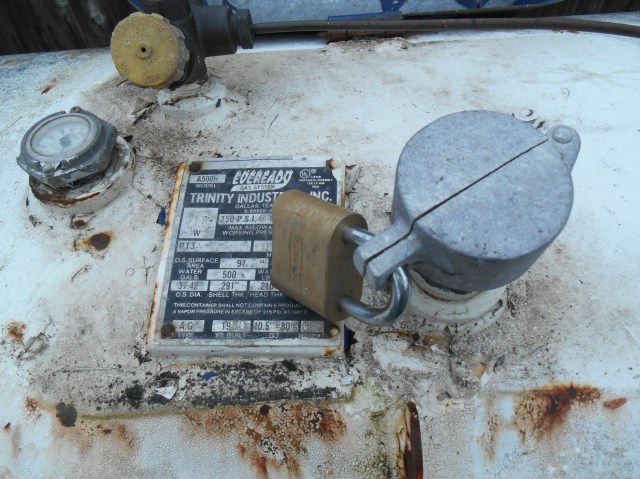
Getting home after dark I checked my door to see if they’d dropped off an invoice the way they typically did. Nope. Get in. Unpack from the day. Turn up the little electric heater. And then, satisfy my curiosity with a trip to the tank. Good. They didn’t fill it. Weird. There was now a padlock on the tank. No note. No explanation. No warning. Just a padlock on the tank. What’s that all about?
DSCN0970

It was too late to call, and the next work day was busy, so I had to wait before hearing their explanation.

I called and asked if the padlock was theirs. Why padlock it? They wanted to prevent me from filling the tank from another supplier. This is standard procedure, evidently, for people who switch to Will Call. Think about it quick and it kind of makes sense. There must be someone who’d do such a thing. Think about it longer and realize that Will Call shouldn’t make any difference. It would be possible to fill from another source even if it was on automatic delivery. Maybe they only do that with Will Calls because Will Calls are more likely to switch suppliers. In which case, how many of their customers are going through the same process? I don’t know. I do know that their logic wasn’t consistent – the kind of consistency I recommend to my clients, but they aren’t one of my clients, so there was no need for me to correct them.

I’m glad for competition. Amerigas’ high prices inspired me to look for alternatives. Too many times, their policies seemed to be company-centric instead of customer-centric. They take care of themselves. I get to take care of myself. Fortunately for me, their competitors convinced me they were customer-centric, too.

The tank is about 50% full. After about 20% to 40% of the tank’s fuel is spent I’ll switch suppliers. VanderYacht Propane managed to convince me on price and experience swapping tanks, and their customers convinced me of their good service. The race was close, but I could only select one, and they got the one and only vote. No vetoes.

It is spring. I use about 10% of the tank every month in winter. I use less in spring. It will take months, and possibly a season or two to use up enough of the fuel to make the tank light enough to move. Consumer decisions sound like one day decision making events. Reality takes longer. The next move may not happen for months, but I’m at least relieved that I shouldn’t receive any more Amerigas fuel bills. If I do, I look forward to finally applying that $50 credit the upper level manager offered. I can’t find it on the fuel bill, the tank bill, or in any reference to my account when I called. A switch to a better competitor may make that a small price to pay.
Posted in Uncategorized | Tagged , , , , , , , | 1 Comment

GERN Spikes I Buy AST

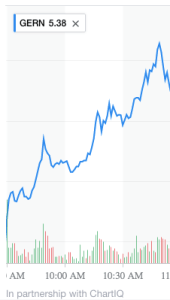
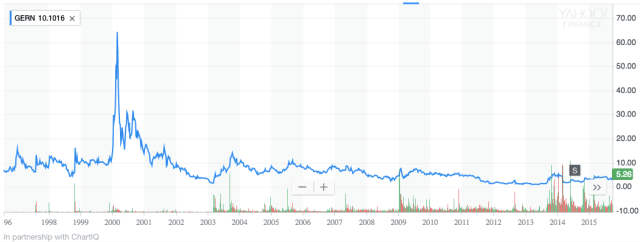
Here’s a happy chart for a long term investor. In less than an hour and a half, stock in one of my oldest positions rose from ~$5 to over $6.60. Over 30% rise in under 90 minutes. Extrapolate that out for an entire year and re-retirement is obvious. Pull back for the broader view and notice that it was under $2.50 within the last month. This is the way biotechs work, and don’t. Geron had good news (that someone may have gotten early, but that wouldn’t happen because that wouldn’t be right) so the stock climbed, and then climbed more as the data was made public, and then the investors kicked up up when the price went over $5. In the meantime, I bought another biotech instead, AST. It promptly went down, which was fine with me.
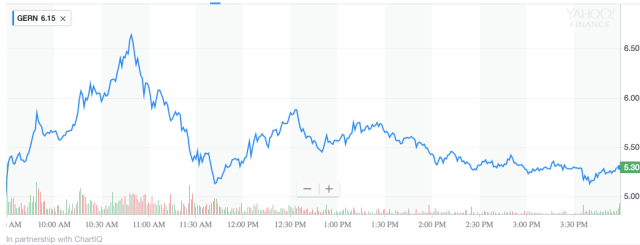
Buying biotech stocks is one of the riskier investment strategies. Biotechs are like startups, but amplified. They have to be because they involve humans and health. An electronics startup can invent an idea, fund it, build it, and sell it in a year or so. (Someone tell MicroVision that.) A biotech has to step carefully, openly, and slowly to make sure the public, the patients, the doctors, and the federal regulators can keep up. Theory, then research, then lab tests, animal tests, and watch years of cash burn and consternation go by. Then, human trials. First comes safety, then efficacy, then dosage (not exactly, but that gives an idea of the process.) Each phase takes years to plan, conduct, and understand. If all goes well enough, then the treatment gets reviewed for months or years by the FDA. Sometimes the FDA approves the treatment. Sometimes they tell the company to go back for more data. Sometimes they say stop. Those are years of expenses with little income, lots of risk to the company and the patients, and too many opportunities for chaos or competitors to challenge the company. But if they succeed, if they succeed…

Geron is working on Imetelstat, a name so convoluted that I always have to check the spelling and never feel that I got it right. The data is specifically for a blood disorder but the implications are far grander. Geron has sold off almost all of their technologies to keep the company alive. Their remaining prominent treatment is based on managing telomeres, the molecules that tell cells to die or not. If cells don’t die properly, they can threaten the patient with cancer. If cells die too easily, it is more like autoimmune diseases. (All of this is my amateur understanding. Want the real data? Check with the company, the SEC, and the FDA.) If the treatment works, then the technology may be extended. If the technology can be extended beyond blood disorders and into other cancers, then the company may finally live up to its potential. Hence, the spike after a long wait.

My wait has been long. GERN is the only stock I bought as a tip from a friend. That was in 1999. Within three months the stock went from $14 to over $71. I felt brilliant for what little I knew about biotechnology, and grateful for my friend. Then, the Internet Bubble burst and so did irrational exuberance. Years of delays and trials have now stretched into decades. Phase 2 trials are good, but in the normal process, Geron still has to conduct Phase 3 trials and hope for a quick FDA approval. Those who follow this blog are aware that I’ve sold almost all of my portfolio as I continue to work at recovering from my Triple Whammy. Only a few stocks remain, most of which are disruptive companies that I think are under-appreciated. Each has the potential to rise as GERN did. And then it didn’t.

By the end of the day, that $1.60 rise dropped back to a $0.14 rise. The activity of the last two weeks could be a case study in the various factions within the investment community: long term shareholders, shorts, day traders, institutions, insiders, and possibly nefarious individuals and organizations. I buy stocks for the long term precisely because fundamentals and patience free me from the noise of fluctuations. $0.14 sounds small after watching $1.60 go away, but doubling in less than a month is very welcome.

I bought AST instead.

My consulting and real estate businesses haven’t suddenly exploded, but a gift of a monetary buffer from a friend freed up a much smaller pocket buffer I was holding in emergency reserve. At that point, GERN had begun its early rise, but without public data. Investing in biotechs is risky enough; buying stocks on rumors is even riskier. I looked at both of my biotech holdings and realized I preferred to have a better balance between the two. I bought some AST to even up the number of shares.

Welcome to irony. AST is the stock for Asterias, a company I am invested in because they are developing a treatment for severe nerve damage. There are few successful treatments for damaged nerves. Accident victims have few options. By applying stem cells to the affected area, Asterias has managed to help patients regain some use of their limbs. They, too, are in Phase 2 trials; but the size of the unmet need, the cost of living with damaged limbs, and the possible outcry for solutions may convince the FDA to speed the approval process. The irony is that Asterias bought the technology from Geron, and that transaction is one of the sources that has kept Geron alive.

I admit to an experience that has also cautioned me about innovative cancer treatments. Few work. Very few receive FDA approval. FDA approval would seem to be enough, yet Dendreon received FDA approval for a cancer vaccine and then went bankrupt. To me, Dendreon seemed aimed to reach profitability within a year or so, and could easily treat the prostate cancer patient population for about a billion dollars. That’s a lot, and that expense was one of the reasons claimed for its failure. If they succeeded, they would’ve out-competed companies that weren’t as effective but were making many billions more. Dendreon was actually cheap in comparison. The industry’s immune response could afford to challenge a sub-billion dollar startup with the industry’s phenomenal resources. Geron may encounter the same resistance. Asterias probably won’t. While they are both in clinical trials, however, everything is speculation – including the investments.

GERN’s spike was fun to watch. I set up my iPad just so I could see the chart action as I worked. It’s daily bubble popped, but I wasn’t dismayed. This is normal for biotechs with good news. A 30% rise in 90 minutes is small compared to what I’ve seen GERN and DNDN do. They and several of my stocks have risen 130% in a day. I recall one rising 230% in a day. Those were good days, and those days were inspired by good news.

My expectations are high. For those initial shares of GERN to be a good investment the stock would have to double every five years (~ 15% ROI, a high ROI to compensate for the risk.) In that case, 1999 = $14, 2004 = $28, 2009 = $56, 2014 = $112, 2019 = $224. Okay, allow me to revise that. I don’t expect GERN to reach $224 in 2019. It would be nice. It might even be possible, but it is improbable. I’ll accept what happens. I’ve held these last shares for this long. I’ll hold until the end of the story; but if it hits $448, well, let’s keep in mind that, as the title of my book says, Dream. Invest. Live. Investing is the tool that connects dreams to living.

Posted in Uncategorized | Tagged , , , , , , , , , , | Leave a comment

Motivation In The Gig Economy

Original thoughts are valuable. That’s why patents exist. Many new ideas are new to the person who thought them, but a bit of research shows that someone else thought the same thing some other time and place. (Got an idea? I know a guy who’d like to help.) The same is true about advice, insights, and wisdom. Like legitimate, original patents, original lessons (like revelations) are valuable. Patents are valuable to the inventor (ideally), and maybe to those who benefit from their use. Advice, insights, and wisdom can be valuable to anyone who cares to listen – even if the thoughts aren’t new. The Gig Economy is teaching lessons to its growing population. The ideas may seem new, but they are familiar to those who’ve always relied on sporadic businesses: e.g. doctors, brokers, consultants. Soon, most workers will be studying those lessons by choice or by necessity. The best lesson may be what it takes to get out of bed in the morning.

The talk about the Gig Economy can be tiresome to those doctors, brokers, and consultants who’ve worked for decades in environments where income isn’t guaranteed, benefits are paid for personally, and time off from work means a vacation from income but not a vacation from expenses. It was easy to ignore their situation when they were a small slice of the workforce. Now, their lessons will be applicable to a much larger chunk of the populace.

The Gig Economy started with the tendency to outsource work. Full-time employees were encouraged to work from outside the office, saving on facility expenses. Some saw their jobs turn into part-time or contract work, saving the companies money for health benefits, vacations, and retirement plans. By 1995, 9% of the workforce had the new working conditions. Welcome the broad acceptance of the Internet and watch the number grow to today’s 15%. Smartphones and corporate policies are accelerating the change. Instead of taking twenty years to gain 6%, the next ten years could turn the majority of workers into members of the Gig Economy. Those doctors, brokers, and consultants have already learned the lessons that half the workforce must learn, and quickly.

It can be tough getting up Monday through Friday, making breakfast and lunch, getting the kids off to school, taking care of the pets, and then commuting to a job. It can be such a drudge that there are posters and cartoons helping people vicariously vent frustrations. Scott Adams’ Dilbert succeeds because that repetitive life is too common. Underlying the routine, and its evening mirror is a relatively predictable structure. Days are well-defined. Paychecks arrive on a regular basis. Long term goals can be aimed at. Paying bills, saving for retirement, and squeezing in vacations can be planned. There will be drudgery, but it is a familiar drudgery that can be planned for, coped with, and negotiated around.

Step into the Gig Economy.

Whether you see it as new or old, the only familiarity is the structure you define. Without a structure, schedules can become so fluid that computerized calendars become a necessity. The brochure for the Gig Economy may tout freedom, but building a business from a series of gigs also means negotiating the jigsaw puzzle of a scattering of client schedules that have little incentive for working nicely with others. The worker becomes a business. The business’ revenues are more unpredictable than the schedules. Each contract is a new opportunity for different payment plans, different tendencies to pay on-time or in-full or randomly, and different ways to pay. Check, credit card, PayPal, cash, Bitcoin, or…?

Like I said above, that may seem like a familiar situation for 15% of the population, but there’s another 30% that’s about to have to learn those lessons. Tens of millions will be looking for answers.

Waking up is hard to do. Amidst the various gripes I hear, getting motivated every day is one of the persistent problems. With a regular job, alarm clocks can be set at one time for every work day. With erratic schedules and assignments, every day, even the weekends, can start with an early morning flash of urgency; “Did I sleep in?”, “Do I have to get somewhere now, or later?”, “Is there a deadline in the next few hours or days?” Every morning can start with heightened uncertainty. Then the business sided of the conversation kicks in; “How many different jobs and clients do I have to keep in mind?”, “How much am I expecting to make today?”, “Is that more than I’m going to spend?”. Whatever the answer, the follow-on is; “How long can this feast or famine last?”, and “Have I set aside enough from the feasts for the next famine?” In the midst of dry spells, it is easy to want to hide under the covers. That’s not just an expression. I know folks who regularly retreat to time under the blanket, not because they are lazy, but because their situation is so precarious and uncertain that they actually fear taking on the day. It can be a scary world, out there.

Getting out of bed can become a special skill.

I know those kinds of mornings. It has been years since I’ve seen a steady revenue surplus. (Massive understatement.) If an alarm goes off, I know I have something to do. I rarely wake up to an alarm. If I have something to do, I tend to wake up before the alarm rings. If I don’t have anything immediately scheduled, there’s no alarm; but I wake up anyway. As I lay there, my mind frequently flips into the worries about having enough, how to get it, and what will happen if I don’t get enough. That’s where worries can rule the day. I found a way around that.

I play the lottery. Of course I want to win the jackpot, get healthier, and re-retire. The lottery is a ticket for hope. One morning several years ago I woke up with the worries and stopped myself. Wouldn’t it be nice to win the lottery? Sure. I asked myself what would be different. As I lay there, I realized I was warm, my muscles were more relaxed than they would be the rest of the day, the world was quiet, and I was comfortable. A hundred million dollars wouldn’t change the essence of that feeling. (Though I might own a bed, again.) I was already experiencing that feeling. There was no need to buy it. I might as well enjoy it – at least for a little while.

Now, I know my mind will start down that very logical, responsible, and possibly depressing work-related path; and I’ll pull myself back. Any regrets are in the past. Leave them there. The worries are about the future. I’ll get to that. The present is precious, and not just first thing in the morning. As I type this, the sun is setting on a warm, late winter day. Dogs and birds are making as much noise as someone’s far-off suburban background hum. I know what I’m having for dinner. I should have time for a walk, maybe a karate workout, and almost definitely Netflix and popcorn. The more I notice the present, the less I worry about the future – at least for a while.

My motivation that gets me out of bed is an appreciation of the present, plus an awareness that futures can change by chance. Contacts made years ago can deliver opportunities in unexpected emails and phone calls. Good luck plays a large enough role in successes that few biographies and histories exist without it. That’s what works for me. If it works for you, great! If not, and if you find yourself in a similar situation, check around with folks that have been dealing with it for decades, those experienced doctors, brokers, and consultants.

As for luck. I bought my lottery tickets. I wonder, did you, too? (Really, the Powerball plus MegaMillions jackpots combined are worth ~$800,000,000. Would winning them make you sleep better or worse? Stay tuned.)

Posted in Uncategorized | Tagged , , , , , , , , , , , | Leave a comment

A Coworks Arrives On Whidbey

Yes! The newest incarnation in Whidbey coworks has opened in Clinton. It is the latest in a series of people supporting people, people finding ways to live on and work from the island. (Here’s a bit of the backstory. https://trimbathcreative.wordpress.com/?s=coworks)

Tom Trimbath's avatarAbout Whidbey

A new coworks has opened on the island. Whidbey may be known as a vacation spot with tourist towns, but people work here, too. Coworks aren’t new to the island. There’s a history of various incarnations of them (including one dedicated to writers). As of March 1st, WicoWorks (capitalization subject to change: WIcoworks, WICoworks, WICoWorks, WICOWORKS, whatever), a new coworks opened in Clinton at the top of the hill from the ferry with light bouncing into the room from the sun shining on the Sound – weather permitting. There’s more than one way to work on the island.

Screenshot 2018-03-06 at 12.00.28

Yes, Whidbey is a vacation spot, but thousands of full-time residents are full-time employees. The luckiest get to work on the island. Many commute to Seattle, Everett, and around the region. Many jobs no longer require a commute. The growing Gig Economy is powered by people who can work wherever there’s a…

View original post 442 more words

Posted in Uncategorized | Leave a comment

I Found My Sign

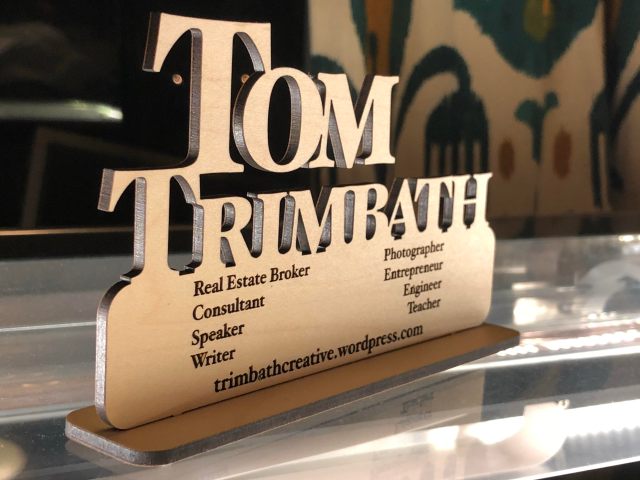
Live around creative people and never be bored – and be ready for surprises. I was surprised by a friend’s creativity that produced something fun and useful, and that is going to change. He gave me a sign, one with my name on it that I can use as a roving member of the Gig Economy. Some people imagine living in a community of conventional thinking, conventional activities, and conventional expectations. Bah! Shudder. For me, life is more fun and feels more valuable when people play.

Joe is not a member of the Gig Economy. He’s been in management of a tech firm, which means he knows the ways of the corporate world. Now his family runs a collection of businesses selling art, crafts, art supplies, office supplies, art printing services, design services, business printing services, and more – while every member of the family is an accomplished artist. It’s easier to simply use their business name of Fine Balance Imaging + Printing. (Maybe not exactly that, but close enough.) Visiting their business is like dropping into a playground for creatives and entrepreneurs. I drop by because they’ve sold and printed my photos, helped me with my books, and generally helped me with my various businesses. That last part is why they know I’m busy in the Gig Economy. They’re so aware of the new nature of business that they created a workspace for folks like me. Brainstorming there is fun, and they get some of the neatest and newest toys, er, tools.

A couple of years ago, a new kind of laser cutter was created thanks to a crowdfunding campaign. Joe raised the money, ordered one, and then waiting over a year for delivery. Some of the things people are making with the machine are marvelous. I felt humbled because I saw the potential, saw what others were creating, and found my ideas didn’t quite fit. That was until this week. Earlier this week I created a design that won’t be revealed yet because it needs tweaking, lots of tweaking. It has the potential to be fun, and accidentally possibly profitable. Surprise!

Yesterday, after talking with Joe, I got an email. In less than a half an hour, he’d thought of an idea, designed it, developed it, and had the machine create it. Thirty minutes and there it is, a simple yet useful sign for my times. It is a sign that I can set on a coffeehouse table that tells me people who I am and what I do. That may sound bold, but it solves a simple and embarrassing aspect of life in the Gig Economy, meeting with new people. Surprise, my sign is a sign.

Working clients in the Gig Economy can be like going on a blind date. They may be able to guess who they are trying to meet, but people don’t always look like their tiny icon from emails and Facebook posts. A sign that says “Tom Trimbath” removes the awkward moment. That is useful enough, and then Joe added a few other bits that made the sign even more useful. In addition to my name there’s also a list of my skills and talents, as well as a way to contact me. (He got the info from my bio, another good reason to have an online presence.)

We’ve already come up with improvements for both of our designs, but hey, I got one of the first prototypes. Very cool.

Watching mainstream ads and the news can seem surreal from the perspective of the island. Islands are not in the main stream of anything, sometimes on purpose. It is one reason why every island creates a unique identity. On the mainland, neighborhoods overlap and blend. Islands have distinct and non-negotiable borders. Pick your lifestyle, pick the island to match.

The unique nature of living on Whidbey Island is obvious whenever I take real estate classes. Classes are created for the typical student, not for the outliers. I’ve heard strategies for making houses stand out and making agents stand out. It makes sense in massive developments. Every home is unique, but in a development of houses built from similar plans, it takes extra effort to differentiate each house. That may be hard, but at least each sale is more likely to be familiar and similar to another. In one class, most of the students didn’t believe the stories we told about how individual artists’ homes can be. Every sale is a custom sale, which also means more work, more research, and more double-checking. Most houses don’t come equipped with foundries, outhouses, or innovative unregulated architecture. Wealthier homes (usually not the artists, but sometimes…) are custom designed for people who don’t expect to compromise. Every home is a surprise. For many buyers that may be a negative, but for the right buyer that can be an immense positive.

We’ve entered an era when old rules are quickly being eclipsed and replaced. Some may hold onto old notions but the trends seem to be unstoppable in: auto autos, AI assistants, new fuel versus old fuel, new power distribution versus old power centers, diversification, and social action. It is also true in personal finance. On balance, the number of jobs created in the recovery from the Great Recession equals the number of jobs created in the Gig Economy. Old workers are surprised by new rules, and finding ways to stand out becomes more important. Old rules about careers, long-term mortgages, technology upgrades, and institutional stability are fading fast. A thirty year mortgage made sense when a job meant quietly arriving at work for thirty years and returning to an address that didn’t change while only having to learn a few new skills along the way. Surprises are now the norm, whether they are welcome or not.

Now, a business can be built with funds from crowds. Glowforge raised almost a million dollars a day for a month during its campaign. Now that the machines are being delivered, hundreds or thousands of new small businesses can be created. Joe and I came up with designs for the fun of it; and looking at the results we realize they could be businesses, too. (And he did his in fifteen minutes. How long would it take to create a working prototype twenty years ago?) Creative ideas aren’t as reliable as conventional ideas, normally; but these aren’t normal times. I don’t know if Joe’s sign design will catch on, though the three people I showed it to all smiled and came up with yet more ideas. I don’t know if my design for playfully improving laptop security will do more than make me smile, but it’s worth playing with – even if all it does is make smiles happen.

We can mourn the passing of the past or cheer the arrival of the future. The arrival of the future is inevitable. I hope to cheer its surprises and maybe add a few of mine. In the meantime, I think I’ll be glad I found a sign.

Posted in Uncategorized | Tagged , , , , , , , , , , , , , | Leave a comment

Gifts And Upgrades

Well, that certainly didn’t go as planned. Thanks to a monetary buffer, it turned out well. My main computer died today, or at least went catatonic. It may yet live again, but its status will be diminished. In the last two weeks, some generous people made it much easier to upgrade a few key things just as those things slipped from well-used to almost useless. Thanks, folks. Now, my bicycle and my business are in much better shape. Maybe I will be too, soon.

This morning started with a fascinating conversation with some people with amazing histories and resumes. That may sound hyperbolic, but hey, impressive people happen. We got together to work on affordable housing on Whidbey. A planner, a homeless advocate, a financier, and a real estate broker (me) got together to talk about some possibilities and how we could make at least one of them happen. Typical for Whidbey, those four titles cover about a fourth of the skills represented at the table (monk, rocket scientist, English major, talk show host, …); but I’ll save that story for later.

We met at the South Whidbey Commons, a coffee shop and book store that is run by and for students, that also lives up to its name of Commons. Sit there long enough to drink a cup or two of coffee or tea (my preference) and probably be in the vicinity of some discussion about charitable activities for the island, or even for the world. I regularly use it as a typical Gig Economy workspace. I even have a my favorite table, chair, and most importantly, electrical outlet. (The Chromebook I had with me has to be plugged in.) After about an hour and a half most of us were looking at our watches as our work, advocacy, or school schedules reminded us of our other obligations. We all packed up and strode off to whatever was next. I did the same thing, then remembered that my next meeting was in the same place at the same table in a couple of hours. About face! March back in. Reclaim the table. Order another cup of tea, and get to work.

That’s when things froze up.

Yes, the snow is fallen; but the freeze happened inside my Chromebook. As it powered up the screen lit up with the splash page that advertised the companies involved (as if we needed to be reminded of what we buy) – and stayed there. My tea steeped as I dialed customer support. After about ten to fifteen minutes the customer service rep declared my computer broken. It was far past warranty; so it would take a few days and about $250 to fix. If that was my Mac, I’d get it fixed; though I’d use my local service folks. It’s a Chromebook. New ones can cost under $200. No brainer. Also, no reason to wait and plenty of reasons to act quickly.

I have yet to make any money as a real estate broker, but we’re past the holidays and people are ready to move on. A quick check came up with a list of about a half dozen possible clients that I’m having conversations with, and about another dozen who might do something later this year. Add in my regular clients for my consulting business and it made sense to get operational as soon as possible. I hopped in the truck (took a detour to help a friend get home on a wintry day) and drove an hour north to the land of chain stores. There was one stop along the way, just in case an electronics business on the south end of the island sold computers, but nope.

Buying computers can be a chore with complicated options, competing companies, and array of incompatibilities. The store had three Chromebooks. Two were demo models. One was in a box in the back. It seemed too impulsive to just pick the one available, so I dithered for no other reason than to slow myself down a bit. The universe has a sense of humor. The only computer in a box was the new version of my old computer. Add in a microSD card (because the new computer can’t use old “clunky” full-sized SD cards) and a sweet deal on a USB drive (32Gig for $11); add in the gas and a deli lunch; and the total came to the same total from four years ago (~$300).

Three hours from start to finish and I was back in business. All of that was enabled because a friend decided to give me a monetary buffer. My situation is well-enough known, and they knew something researchers are only now discovering. The best way to help people who don’t have enough money is to give them more money. It’s almost too simple. In a capitalistic society, you need money to make money. Businesses fail if they are under-capitalized. That’s well understood. The fundamental problem with the poor is that they are under-capitalized. Skip the fancy non-profits, initiatives, and government programs and simply give people money. They’ll know what to do because only they know what’s happening in their lives. Worries about mis-use aren’t backed up by data. Because of that buffer, my business was only shut down for three hours. I was back to billable time by the afternoon. (As to whether that buffer is a gift, grant, or loan I’m not sure; but it’s moot until I have recovered enough to pay it back or pay it forward.)

A similar thing happened with my bicycle. Most of my cycling gear is from before my ride across America in 2000. Water bottles had fallen apart and were replaced with whatever fit in the rack (and probably rattled.) Gloves had holes in them (and not the stylish ones people pay extra for.) Safety features like lights were re-purposed hiking gear strapped to my helmet that made people stifle their laughs when I rode up. Even socks were wearing thin and out.

A gift card made a big difference. So did patience. It’s February. REI’s holiday clearance sale reached great discounts, and if I bought enough I also got an extra $20 credit. Thanks to sales and a willingness to dress somewhat tackily (tacky is safety in the bicycling world), I was able to replace my water bottles, winter gloves, summer gloves, get real helmet lights and taillights, and some very nice wool socks.

Sounds like a small thing? Consider the price of gas and health care. My truck gets about 13 mpg (which made that hour long drive up and back expensive.) My doctor did a great job of convincing me to get back into shape (a diabetic scare will do that.) Two major issues taken care of because someone gave me a gift card that helped me leverage discounts and sales into something that saves me money and helps me get healthy. Total cost to me, ~$6.

I sit here sipping some box wine, typing on my ten year-old MacBook, not intending to go for a ride for days, maybe weeks. A rare sea-level snow is falling. A pot roast with cauliflower is roasting. (They were both on sale.) The new computer has already been used. One advantage of Chromebooks is the fast setup time, minutes instead of days. Tomorrow, I’ll explore it some more, just to see what has changed in four years. I’ll swap some of the removable memory, personalize more of the settings, and exercise several clients’ accounts, just to make sure.

And I look forward to paying generosity forward, to help others as I’ve been helped – hopefully, even more so. And, I’ll probably find some day to take apart the old Chromebook for curiosity, and maybe to fix it. (Which, by the way, was also the result of  a gift from a friend.) It would be nice to have a backup. It would also be nice to pass it along to someone who needs and can use it. Little gifts (…/grants, loans, and buffers) can make a big difference.

Posted in Uncategorized | Tagged , , , , , , , , , , , , , , , , , , | Leave a comment

Thirty Year Wisdom

Mentor yourself, but with help. My birthday went by a little while ago. It wasn’t one of the ones with a big zero at the end, but it meant a lot to me because it was the same age that triggered a major shift in my father’s career. I decided to take a bit of conventional wisdom and flip it. Rather than mentor myself, I decided to ask someone how they would mentor their younger self. I asked someone who is about thirty years older than me, what they wish they’d known thirty years earlier. It wasn’t something from an ad or a consultant.

For much of human history, cultures respected elders. Experience is valuable and experience is only gained by living. Even as recently as a hundred years ago, seniors were seen as resources. Got a question or a quandary? Ask someone who may have experienced a similar situation. Got doubts about a choice? Ask someone who probably had to make the same one. Pick the right person and the response is real, not ideal; realistic, not idealistic.

Now, questions, quandaries, and doubts are raised and presented to Google’s search engine. How many answers have you received by the end of any normal workday? The answers may include experience, but they probably don’t include nuance.

I wanted nuance, insight, and a realistic response from a friend who is reflecting on their life while also understanding how my life is similar and different. I invited a friend who is about thirty years older than me to hear from him what he wished he could tell his younger self. The total cost was an hour of my time and the price of one cup of coffee for him and one cup of tea for me.

My worries are about how to make life sustainable and enjoyable for the next thirty years. I expected to hear the kind of advice we hear in ads and from professionals: save for the future, live frugally, eat healthily, exercise, stay active, get ready for inevitable health issues.

I heard something different and unexpected. He wished he’d spent more time learning how to express himself through his violin. Thirty years earlier, he knew how to play, or rather, perform with the instrument. Technically, he was proficient enough to be in several ensembles. He did enjoy the music and the performances, but now he realizes how close and yet how far he was from so much more. Playing the music well was an accomplishment. Expressing his emotions, well, that’s something he now knows is possible, but that he missed by not pursuing the deeper side of the very instrument he was already proficient at.

Other things have happened in those thirty years. Entire generations can be born and birth the next generation. Careers can be started, developed, and retired from. Especially now, entire technological advances can be invented, integrated, and discarded. Thirty years ago the Internet was novel, dot matrix printers and dial-up modems were normal, cable TV was challenging broadcast television, the Soviet Union was collapsing and everyone knew Japan was going to dominate the world economy.

I worry about how I’m going to provide for myself for the next thirty years. Real estate is promising, as is consulting with creative people, teaching, speaking, writing, and several of the initiatives others have presented to me. I’m old enough and have had enough fun that my body has developed a list of annoyances that could develop into nuisances into …? Thirty years is a lot of time. Am I working on the right opportunities or ‘should’ I take the time to learn yet another new career or revitalize my interests in math, physics, and engineering?

Switch the topic to the world and thirty years means a lot of changes. Digital Singularities, sea level rise, agricultural concerns, national instabilities, societal changes, and a long list of natural disasters make my personal changes and choices almost insignificant. Change has never been so rapid. Do plans even make any sense?

And, he wishes he’d spent more time doing more than playing the violin. He wishes he’d spent more time expressing himself through solo and probably solitary performances.

So, put aside the money, medical, physical, and global concerns. How can I apply his lesson to my life? What do I wish I’d known thirty years ago?

The first thing that comes to mind is trusting myself, trusting my intuition. I can replay several key occasions that turned out poorly when I did what others thought was right instead of what I felt was right. That’s true in relationships, career, and finances. My choices weren’t perfect. My intuition probably wouldn’t be perfect either, but my life and my current situation would probably be much better.

One point perspective creates a limited version of a multi-dimensional life. I’m glad for his insights and advice. I’ll be glad for others, too.

He had his violin. Maybe I should sign up for voice lessons, again.

Oh, but to have bought more AOL, to have sold CSCO sooner, to have held onto FFIV, well, let’s see what can happen in the next thirty years.

Posted in Uncategorized | Tagged , , , , , | Leave a comment

Super Bowl Ads 2018

The game is over. Finally, I can sit down and watch one of the two most interesting events from Super Bowl Weekend; the ads. (The second most interesting event to watch is the Puppy Bowl, but I’ll enjoy that some evening when I need a grin. Every year I try to watch the ads. Originally, I did it because I heard about some great stories. Now, I watch the ads for two reasons: 1) to see which goods and products are being pushed and whether they’d influence my investments, and 2) to see the general attitude in the country. Polls and politics may appeal to some who want insights into America, but the billions spent on advertising are equally strong influences. So, I’ve got my cup of tea, a candle is lit, and let’s see what notes and tones are revealed within this year’s ads.

Note: For me, the bar is set high. I remember the Apple Macintosh ad. Is anyone challenging major anachronistic authority figures with disruptive ideas? Or, is this all for fun and profit?

Go to Adblitz on YouTube. Start the countdown of 126 ads.

An hour and a half later. Let’s see what we got.

Advertising is more about feelings than logic, subjective rather than objective. After watching over a hundred ads, I get the feeling that companies are emphasizing diversity, people helping people, a bit more self-reliance, and a great willingness to poke fun at old conventions. There were a few America First! kinds of ads, but a lot less than in previous years. The luxury ads were gone. So much for Maserati. Sex wasn’t used to sell as much as before. There were probably more kids than babes. Indulgences didn’t get as much exposure as healthy eating, healthy activities, and hanging out with family at home rather than with folks at a bar.

The Olympics
They were only one sponsor, but they had lots of ads. Athletes are super heroes, which, if anyone is going to get the label of hero without being a parent or a member of emergency services (which sounds like parenting), then it might as well be “amateur” athletes. There’s an irony that Olympians may represent the country, but their ads are being played during a game only played in America and played by multi-millionaires for teams owned by billionaires. One non-Olympic ad for Hyundai accidentally highlighted the difference for me. A referee becomes the parents’ hero because he ruins a kids’ soccer match so the parents can go home to watch the professionals play.

Helping Others
Budweiser donates water, as does another beer company, Stella Artois. Ram Trucks help deliver the goods. Artistically done, though I understand (and am not surprised) that there’s a controversy using a true hero like Martin Luther King Jr. to sell trucks. Making it less about beer and drinking, or roaring around and driving through puddles. Sometimes, fundamentals are more important than fun.

Do It Yourself With A Bit Of Help
Whether it was building web sites, asking Alexa for help, cooking at home for family and friends, or even getting a loan, take control of your own life. Does that suggest you can’t count on others? Ironically, the Wix ad is about a web site that helps people build web sites easily – that people hire me to do for them on Wix because it isn’t always as easy as they say. Happy to help. Bertolli, PAM, Hunts, Avocados from Mexico, and Sun Basket (which should win for the most and the best and the worst puns) actually mentioned home cooking. Imagine that. Want some indulgence? Try MegaBowls, a name that doesn’t even try to hint at health. And, when all else fails, Reddi-wip everything; which would take a on a different connotation if not careful.

Doing It Yourself (Almost)
Cook, but cook something that’s already prepared and present it as something special. Hey, it can work. Frozen pizzas can be appreciated, as can TV dinners even if they’re called Healthy Choice, Marie Callenders, P. F. Chang, or Kid Cuisine.

Let Someone Else Do It
There were restaurant ads, but not many. Wendy’s trolled McDonald’s. Applebee’s, a sit-down restaurant where the customers do little, emphasized “Wild.” And then, for the least effort, try the ever-present chips brigade. At least Tostitos and Pringles had fun with the ads. Doritos and Mountain Dew did an amazing job combining fire and ice, but nothing that would convince me to consume either. Slim Jims creeped me out, even though I like beef jerky. At least Mucinex was smart enough to schedule their ad for after the over-indulgence, though maybe Pepto-Bismal merely missed an opportunity.

Movies And TV
Sorry folks, I skipped almost all of the ads for entertainment. If I want to watch the show, I don’t want to watch the spoilers. If I don’t want to watch the show, I don’t want to watch the ads. In the glimpses that snuck through, it looks like the world is a terrible place with nasty forces at work, except for Mama Mia.

Ads Making Fun Of Ads
Ads that make fun of ads were fun, but they’re also a sign of the consumers’ awareness of marketing. People know the tricks that are played, the endorsements that are paid for, the implicit message behind the explicit facade. Tide did a good job, maybe even a better one than showing fake stains in a fake laundry room with an actress (usually) faking wonder at Tide’s power.

Ads That Made Too Little Sense
Evidently, to understand many of the ads, I’d have to spend less time living my life and more time watching others on TV. My friends may not believe that I don’t know Steven Tyler and why he should be driving a Kia. Skittle’s series of ads only seemed that they would make sense if I paid attention to the entire ad campaign. The talking sandwich was just weird. H-E-B – Huh? Beats – Sounds like I need more of the back story. Is that the headphone folks? Michelob’s mix of beer and exercise didn’t click. My healthy athletic friends are drinking micro-brews, that have flavor and maybe even some vitamins. (Hey, Guinness isn’t a micro-brew, but the posters say it’s good for you, or at least they did.) Is Optimum a ROKU competitor?

Fear Mongering
Want fear? They got that. TurboTax used ghosts and monsters. E*Trade made fun of people who hadn’t saved enough for retirement, as if that wasn’t real pain for millions. Credit Karma made fun of epic fails.

Simple Messages
Some ads seemed to be made purposely short, as if they know that having an ad, any ad, is more important than its length. M&Ms and Hillshire Farms went for short ads that showed either chocolate, sausage, or bacon. I think they missed an opportunity to mix all three, but that’s just me dreaming of chocolate covered bacon wrapped around a sausage. I don’t want to eat it. I just want to know it exists. Jeeps drive through puddles. Enough said, or shown.

New World
Several ads recognized a new world and new lifestyles. YouTube acknowledged YouTube stars. Jack-in-the-Box wants to start a Twitter war. Wendy’s trolling of McDonalds couldn’t happen with their respective web sites. Metromile recognized drivers who are less likely to have standard Monday through Friday morning and evening commutes. They even used real data. Three decades ago, there were barely computers. Two decades ago, the Internet was getting busy, and kicking off some awesome dotcom ads that many didn’t understand. One decade ago, web sites were prominently displayed. Now, all of that is assumed and only the hashtags are being emphasized. TD Ameritrade recognized the fact that the world doesn’t just invest on east coast time, but only goes to 24/5 instead of 24/7. How long will it take to add the other two days? Sprint’s AI ad was spooky for those who ponder the Digital Singularity, but that’s a longer topic.

Diversity And Individuality
There was some nationalist rah rah in the usual places like truck ads; but the stronger message had two paradoxical components: embrace diversity and be yourself. Squarespace; there’s no one just like you. Coca-Cola is for diversity and a Coke for me. (No thanks. I’ll have water or tea, please.) Pepsi emphasized the appreciation of generations, the fact that no one of got here alone and that others will follow. Toyota is about celebrating diversity, and movement for everyone by overcoming disabilities.

It is that last category that was implicit in so many ads. The choice of characters, settings, situations, and vocabulary left behind the previous mono-culture. Stereotypes are archaic. Enough of them are used to provide a common cultural reference, but even if the diversity was orchestrated and fictional, it reflects the kind of attitude that is becoming prevalent enough to influence almost all of the advertisers. It is witnessing such pervasive influences that encourage me to watch so many ads, but only once a year. Get real. That’s a lot of 30-90 second messages that necessarily over-simplify issues. Advertisers are professionals. Their work is art more than science, and I appreciate the creativity displayed, but they are also effective. This year’s collection impressed me with its optimism that is flavored with a realism of the work that must be done. As the T-Mobile ad said; Change starts now. Are you with us?

(As for who “us” is, well, that just muddies the message.)


PS For fans of MVIS, not only weren’t there ads for anything with MicroVision inside, there were hardly any ads for electronics. Pondering that one.

Posted in Uncategorized | Tagged , , , , , , , | 1 Comment

Expense Report – Heating

Gulp. Gasp. $3.989 per gallon for propane. Multiply that by 243.4 gallons and be glad the tank wasn’t emptier. My propane dealer (AmeriGas) filled up my tank earlier than I expected and wanted, and did so at more than twice the previous bill’s total. Having that happen during a cash crunch in winter is not a nice way to start the new year. Well, new years are good times for changing bad habits. Time for some personal finance reflections that will probably result in personal finance actions.

It is a good thing that I live in the Salish Sea’s temperate maritime climate. It may be windy and cool, but winters are much more amenable than Midwest blizzards. My house is small, only 864 square feet, which means there’s less to heat. It has a radiant floor system, which is quiet, relatively efficient, and a little slow. I’m frugal, so the thermostat is set to 65F during the day and 61F at night. The non-frugal influences are single pane windows and a fireplace with a damper that’s stuck open. (Ventilation all year round!) The package combines to mean deliveries to my 500 gallon tank about twice a year. Total heating costs (including hot water) for about 12 months ~ $1,280, roughly $100 per month – but it could’ve been much more, and could be much more next time.

Getting the price down to that took effort. They delivered late in the day and left the ticket on my door step. The next business day I called and asked how my bill could more than double in only a few months. They told me it was just the price of propane, that they little control over it, and were willing to lop off $1/gallon. Without that relief, the bill would’ve been over $1,000. Just a few years ago, the bill was more like $200-$400. So much for that budget.

I knew to call because I’d called the last time or two. My house’s efficient heating system was no longer economically efficient. That previous bill that was about half of this bill was also after they dropped the rate as a result of a phone call. Then, they told me it was because a neighborhood plan expired. Pop and pop again. Without my phone calls, the total for those two deliveries would’ve been more like $1,600. They were nice enough to drop the rate each time, but I’m now worried about the next time. Fuel bills that double without notice and without constraints are non-trivial because heat is a vital necessity.

We humans adapt to small changes. Something gets a little worse, and we adapt. It gets a little worse again, and we adapt, again. Continue long enough and eventually something happens that highlights all of those adaptations. Wasn’t this better, before?

The prices are high, but the capricious nature of the pricing is the worrisome part. Then I reflected on the service. Most of the drivers are polite (and doing a job my Dad did with heating oil), but I’ve also had unsettling encounters. One laughed at my energy saving techniques. He said, the more I burn, the richer he gets. Another time I didn’t realize they’d turned my hot water tank to maximum until I was surprised by a far-too-hot shower. Worrisome encounters + worrisome pricing = time to stop worrying and time to start considering options.

A couple of reasons for hesitating. I’m a loyal kind of guy, so I don’t like changing unless it is necessary. I also know that working with a corporate supplier like AmeriGas means that problems with the local office have a chance of being resolved by, as the Customer Service representative said, “bubbling it up.” There were two calls: one before it bubbled up, and one where the bubble stopped.

Call a Help Desk and you know the response. There’s the script, or at least the practiced reply to a familiar set of questions and complaints they receive every day. She walked me through their pricing model and reassured me nothing was wrong. I patiently listened and then returned to what I said earlier. The pricing seems to be capricious. I also had uncomfortable experiences with some of their delivery personnel. The competitors were charging less than half, and their customers didn’t have similar complaints. I rephrased the issue. Would a national corporation want if there was pricing irregularities at the local level? Would a national corporation want to know about potentially unsafe operations? Maybe it was all a fluke. Maybe it all was because of one customer, or one or two employees. Whether I appealed to her defense of the corporation, the thought of a scalding shower, or the fact that the issue generated a very busy Facebook thread – for some reason she bubbled it up.

The bubble call came early. She told me to expect a call back within 72 hours. I got it the next morning. Again, the first part of any such call seems to be navigating the practiced responses and the corporate immune response. But, we both hung in there and politely worked through my issues, concerns, and his possible responses. By the end of the call, I was convinced the company had little or no control over pricing. Evidently, algorithms do more than decide when to deliver; they also decide the prices. Whether there was anything for him to do with personnel was immaterial. The trust is gone.

As I said above, the previous delivery was similarly alarming. I hoped it was a fluke, but evidently not. Back then, I called around and found all of the competitors were charging about 30%-50% less. Time to switch! But not yet. The most promising competitor suggested I wait until the tank was about 70% empty. That would make the transfer of the service much easier. Pumping out the old tank and removing it and replacing it is non-trivial. I figured I had about two or three more months before I checked the competitors again, and time to halt any deliveries if I decided to switch. Instead of AmeriGas’ algorithm scheduling a delivery at 80% empty, it did it at 50% – in winter when propane prices are higher. I’ll probably never know if price predictions influence delivery schedules. Whether they do or don’t, that’s yet another unsettling aspect.

The propane is here. The AmeriGas calls are done. The bill sits unpaid because I haven’t been able to pay myself lately (Gig Economy’s winter slow-down). At least AmeriGas offered scheduled payments, and the bubbled up call resulted in a $50 credit, though that may be against my next bill, not this one. I don’t know.

I set that aside and started calling the competitors. One was bought out by Amerigas. So much for them. The others quoted rates from $1.67 to $1.99 per gallon. Friends suggested other package deals, all of which sound attractive. No one else is charging over $3, and yet AmeriGas almost cracked through the $4 level. Loyalty begins to sound more like a trap than a benefit.

Losing trust is expensive for companies, and industries. I broadened my search.

Why propane? It’s what came with the house, but for this house’s systems, propane may not be the best choice. Propane heats fast, faster than electricity, from what I hear. But, radiant floor heat heats slowly. Why turbocharge heating the water when the heat is going to slowly sink up through the floor? Propane works even if the power goes out; except in the case of radiant floor heat because without the electric pump, the heat doesn’t flow through the house. The house is in an earthquake zone and the neighbors enjoy fireworks. I’d feel safer without a few hundred gallons of flammable liquid in the backyard.

Why not electric? Their prices are regulated, and therefore more predictable. Going all-electric simplifies the systems, frees up space in the backyard, removes worries about leaks, and gets rid of at least two fire hazards. That sounds simple and obvious, and thanks to hydropower, relatively cheap – but. The furnace. I’ve heard informal estimates of $3,000-$20,000 for replacing the furnace. Ouch. Of course, $3,000 was a major hurdle, and still is, but the one-time cost is shrinking in comparison to escalating $1,000 propane bills. Better answers are coming thanks to a call to Puget Sound Energy’s Energy Center. Expect to hear about things like mini-splits, heat pumps, and on-demand hot water.

Ironically, if I decide to switch to another propane customer or to electricity, it might make sense to turn off the portable electric heaters I have by the laptop. The propane is a sunk cost. I can’t sell it back to so I might as well be comfortable. I probably have enough to last until summer.

This blog chronicles the personal finances of one self-professed frugal person. Writers may want me to wait until the story hits a climax, anti-climax, resolution, and conclusion. I’d rather tell the story as it happens. It is messier, but details are clearer. Stay tuned for tradeoffs, choices, and machinations of financing.

As I type this with fingers slightly chilled, I look over at my fireplace. Fireplaces are inefficient. This one has that damper that’s blocked open. But, it is a nice fireplace. It has passive air flow that improves its efficiency – after a few hundred pounds of steel have been heated for hours. Maybe I should just go old school. A cord of wood costs $250. Four cords of wood could fill this house with warmth and ambience. Maybe I could just make this load of propane last a lot longer than their algorithm expects.

Posted in Uncategorized | Tagged , , , , , , , , , , , , | Leave a comment

Waiting For The Gig

That title should be plural; Waiting for the gigs. Saying “The Big GiG” on Whidbey can be misleading because that’s the name the local telecom (Whidbey Telecom) is using for their new service that delivers the Internet at 1 Gig, or as high as 10 Gig. That sounds good; but the main things on my mind today are two gigs that I’m being considered for. They would be welcome ways to fill in a gap that appeared in my work schedule last year. Such is life in the Gig Economy.

Getting fast Internet sounds like a fine luxury. I’ve used it. Upload tasks that take an hour at home take a minute or a few seconds in the businesses where I’ve been able to test drive the service. It is a great feeling to have work flow so well. Ironically, it’s personally counterproductive for tasks where I’m paid by the hour. I do it anyway because life (and client’s funds) are best spent doing something beside looking at progress bars.

I’ll get to the luxuries after I’ve taken care of the necessities, and right now, taking care of the necessities is in a bit of doubt. That’s the nature of the Gig Economy, uncertainty.

The Gig Economy sounds like a new thing, but it isn’t. Anyone dealing with an uneven flow of clients and tasks is familiar with the situation. Uneven work means uneven income as well as uneven expenses, with the uncomfortable fact that income can go to zero but expenses are always there. Doctors, lawyers, consultants, and real estate brokers (of which I am now one) have dealt with this for a long time.

The size of the Gig Economy is the real news. The general economy has recovered nicely from the Great Recession. Millions of jobs have been created. The stock market is setting records. Consumer confidence is up. But as I documented on one of my other blogs, PretendingNotToPanic.com, “Since 1995, Gig-style jobs have grown from 9.1% of the workforce to 15.8%, and are projected to account for about 50% of the jobs by 2027.” Rising from 9% to 15% may not sound like much, but “All of the net job growth has been in the Gig Economy.” Full-time jobs have been created, but just as many have been lost.

As employees are replaced by contractors or robots, corporate profits rise because the companies don’t have to pay as much for benefits like healthcare and retirement plans. Corporate tax revenues decrease because income taxes follow income. Meanwhile, the contractors must pay for those same necessities while also navigating a shifting mix of gigs.

My bills for those necessities have been paid, but there’s far less left in the checking account as I head into a new month. It is a scary feeling, and one that many share. No wonder workplace stress is increasing. It’s now happening outside the workplace.

Conventional wisdom about personal finance is based on careers, forty-hour workweeks, benefits, vacations, and stability. If the Gig Economy grows to 50% of the workforce by 2027, then entire bookshelves of advice will become obsolete. This is an environment that is being redefined quickly.

Coffeeshops, coworks, and home offices aren’t the same as cubicles. That can be a good thing, but it also means frequent changes in work ergonomics, exposure to insecure networks, and the need to carry an office in a briefcase. I’m glad the local thrift store usually has a good replacement for less than $10 because I wear out briefcases quickly. At least coffeeshops and coworks are more social, and home offices provide opportunities to eat cheaply and get the laundry done.

Benefit packages aren’t packaged. Pieces must be gathered to provide the necessary coverage. That allows customization, but it also requires hours of non-billable research, opportunities for mistakes, and increased costs from the lack of collective bargaining.

One of the advantages of Gig Economy for clients is the ability for them to customize what they consume. Workers are hired for specific tasks that frequently have specific timelines. Instead of the company employing them between tasks, the company lets them go until they’re needed again. That’s a relief for the company, but the cause of anxiety for the workers.

The turning of the year is a natural interruption. The end of the year closes many budgets, sometimes with a pre-holiday surge. Spend it or lose it remains a fact in business. The start of the year starts the new budgets and the negotiations for the new tasks. Week one, tell stories about the holidays. Week two, review budgets, missions, and goals. Week three, identify short and long term tasks. Week four, request submissions for the work. Week five, aka February, get to work. The process doesn’t have to follow those steps, but it illustrates how easily members of the Gig Economy can approach January with caution.

Personally, my situation is compounded by a similar slowdown in real estate. Far fewer folks are shopping for houses during the season they are shopping for gifts. After the holidays, there’s a delay as sellers are deciding to sell, and taking the requisite time to prepare the house for the market. Buyers have less to look at, and the weather reinforces their desire to stay home rather than try to imagine the views that are obscured by clouds.

Here, at the end of January, I, like many, sit wondering what the remaining eleven months will hold. I feel like a farmer wondering if the crops will sprout. Will at least some grow fast enough to pay the self-employment tax hidden in the 1040? Can I get far enough ahead this year to harvest a stockpile and seeds carries me into next year? Paycheck growth is easy to track by watching raises. Revenue growth is harder to witness because of the sporadic nature of the work and payments. Imagine pumpkin vines lying desiccated in the field, then suddenly producing big, round squashes with the ding of an email or the ring of a phone call.

I take data. Looking back over the last few years there is a general growth trend that is encouraging, but nothing grand enough to celebrate. If it was, I wouldn’t be sitting here wondering and typing about the gaps in my gigs.

As I look ahead a few months, I see plenty of reasons for optimism. Whidbey may catch Seattle’s real estate fever, and even if it doesn’t, just climbing back to “normal” should help lead me to helping other with houses and myself with commissions. (Want to buy a house, or at least learn more about living on Whidbey? Check out, AboutWhidbey.com.) Some of my favorite clients are talking about getting busier, or reaching critical phases of long-term projects. I’m hearing good word-of-mouth about my services. Thanks to everyone who is spreading the word.

For tonight though, I think I’ll publish this post, enjoy some leftovers, take myself out for a walk, and generally distract myself for an evening. This lull could be just the break I need before launching into very busy, gratifying, and profitable times.

Stay tuned.

Posted in Uncategorized | Tagged , , , , , , , , , , , , , , | Leave a comment