Semi Annual Exercise EOY 2017

Can you explain why you own what you own? That’s the basis behind my semi-annual portfolio review. Can I describe why I own my stocks and what I intend to do with them? After a few years, it also helps chronicle whether my rationale and expectations have changed, and whether the performance is worth the effort. For traders and speculators, reviewing stocks every six months is far too infrequent. My goal and practice has been to invest for the long term, be patient, and minimize the time spent investing to better maximize the time living. (For details, read – and maybe even buy – my book, Dream. Invest. Live.) The strategy succeeded well enough for decades that I was able to retire at 38 and stay at least semi-retired until about six years ago. Perfect storms of bad luck happen (as has been confirmed by independent and informed observers) which is why I’ve had to energize my consulting business and now extend it to as a real estate broker.

In the last few years, my diversified portfolio has become less diversified. Stocks like Real Goods Solar were in good markets, but mis-managed and delisted. Stocks like GigPeak were in good markets and succeeded, but were bought out before the benefits could pass through to the shareholders like me. The remaining stocks are either in growing markets, or have disruptive technologies, or both; but the last six months have not risen their stock prices. Each has made advances, but most have fallen short of expectations. Small companies falling short of expectations are easily overlooked by financial institutions when the mega-cap stocks are setting new records. Without headline news, small companies can languish and portfolios can stall or fall, hopefully only temporarily.

I closed the mid-year report with the hope;
So stands the portfolio at the end of June 2017, the end of the first half of a year that I thought was going to be far more profitable when I looked at it five years ago. Six months remain. It may yet please and surprise me.
Alas, the surprises were losing Real Goods, watching GigPeak be bought out, and then watching its replacement Neophotonics drop 50%.

The potentials for each company remain high, but dilution decreases the benefit to stockholders, delays provide advantages to competitors, while my personal finances remain less than enough. Money holds too great of a taboo in modern society, even while its power grows. Challenging that taboo is why I am open about my finances. The best way to get people talking about a taboo is to start talking about it. It may be embarrassing, but the conversation can be valuable – especially, when it includes the ups and the downs that are the realities of individual investing.

For the details of my investments, I post the semi-annual review of each of my stocks on various discussion boards. I could post the entire collection here, but 1) it would be very long, 2) the more public the conversation the more valuable it becomes, and 3) reading my posts on those boards introduces you to individuals who have different perspectives, strategies, and experiences. Collectively, those communities are more powerful than large financial institutions because the motivations and incentives are those of similar individual investors rather than that of profit-minded corporations.

For those who prefer skimming through the stories, here are the synopses of the synopses/reviews.

AMSC
AMSC is a electricity infrastructure company that has its origins in superconductors. They are now also known for designing wind turbines and systems, power system regulators, high-efficiency motors, connecting the US power grids, and superconducting cables. While the potential is high, the current reality is far more subdued. Part of AMSC’s potential has been supporting the distributed renewable energy systems of solar and wind power where maintaining high efficiency in the transmission lines is important. An opportunity to significantly upgrade electricity power grids seems to be overlooked in Miami, Houston, and Puerto Rico. Tres Amigas, the project to connect the US power grids, doesn’t even show up in a search of AMSC’s site. If AMSC had continued its revenue growth from 2015 and 2016 into 2017, AMSC might be reporting a profit. Instead, losses continue.

AST
Asterias is a leading edge biotechnology company pursuing treatments for nerve injuries and for multiple cancer treatments. While all of the treatments are in early clinical trials, the lack of successful competing treatments, and the public awareness of the significance of the maladies means successes are celebrated more than with other firms. The leading news-worthy candidate is regrowing damaged spinal cords. In particular, one patient has shown such improved upper body motor function that he is able to throw a baseball. While the potential is great, the complexity of achieving FDA approval is also great. From a conventional perspective, many years are involved in completing phase 2 trials, phase 3 trials, completing the application process, commercializing the treatment, getting paid for the treatment, and reporting on the revenues in a quarterly report.

GERN
Geron is a leading edge biotechnology company specializing in the technology of managing telomeres: the molecules at the end of chromosomes. Telomerase is used to manage the telomeres to manage the cell’s ability to die. Cancer is related to cells that don’t die. Autoimmune diseases can be caused by early cell death. Managing telomeres, therefore, has a broad and significant set of applications. The current focus is on hematological disorders, blood diseases. Geron has treatments in phase 2 and phase 3 clinical trials. Geron has been developing biotechnologies for decades and has yet to produce a commercially viable treatment. Most of the company’s technologies have been sold off to raise operating funds. This may be a classic dwindling of potential, or it may be the low point from which a strong recovery is begun.

MVIS
MicroVision is a company based on a simple idea: an oscillating mirror tiny enough to fit on a chip. Reflecting incoming light can create a camera or a sensor. Reflecting beams of light can project an image. Being able to do so from a chip means sensors, cameras, and projectors can be made small, with small power requirements. Manufacturing a mirror on a chip has the fundamental advantage of not having to manufacture hundreds or thousands of miniature circuits for each pixel, as is true of most camera sensors and most projectors. The technology has progressed to commercialization, though not to the scale many anticipate – yet. The main products are projectors embedded in smartphones, and LiDAR sensors that may help auto autos see.

The potential is enormous and incredible (as in “in-” “credible” = “not” “believable”). Such is the nature of potentially disruptive technologies. For a glimpse at the upside, consider the cameras embedded in smartphones, tablets, laptops, and other devices. Add in sensors for the Internet of Things and autonomous vehicles, and the potential grows.

The potential may be enormous, but the execution has not met expectations. While revenues are increasing, they have yet to reach cash-flow positive and the company has been reluctant to provide estimates for profitability. A revenue estimate of $30M-$60M by the end of 2018 has not manifested and may be delayed.

NPTN
Neophotonics builds and sells the kinds of optoelectric devices that make is easier to convert optical signals (like those in optical fibers) into electrical signals. The increasing demand for more bandwidth, faster upload and download rates, and greater connectivity suggest a growing market and industry. Until recently, Neophotonics was experiencing increasing revenue growth. A reversal led to the stock has dropping by almost 50%.

The good news is that my portfolio had more than enough potential. Even with dilution, it may yet help me re-retire; but it’s just going to have to work harder at it and benefit from overdue good luck.

Here are the links to the discussion boards I use. Feel free to comment here or there, and to pass along links to others. The bigger the discussion, the better the chance of valuable insights (as long as the trolls and flamers are moderated appropriately.)

Investor Village
AMSC
AST
GERN
MVIS
NPTN

The Motley Fool
AMSC
GERN
MVIS
NPTN

Silicon Investor
AMSC
GERN
MVIS

Reddit
MVIS

Posted in Uncategorized | Tagged , , , , , , , , , , , , , , , , , , , , , , , | 2 Comments

Thanks For Little Things

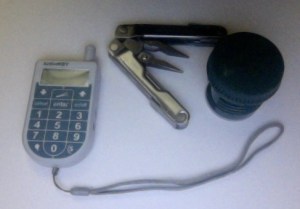
Christmas is over. The snow from a rare white Christmas has slowly turned to slush, except for patches preserved by shade. Wrapping paper and gift bags are put away. Time to collect the cards and take the time to read them, slowly. Of all the gifts I received, there are a few small items that I got me. I got them because no one else reasonably would. Who else would buy be a Thermos stopper, a replacement multi-tool, and a real estate key? The gifts I received from others are definitely appreciated. But, part of self-care can be a bit of self-gifting, and it doesn’t have to cost much.

A real estate key? How did they manage keys to houses for sale before cell phones? Today, keys are kept in lock boxes that are opened by a signal from either an app on a smartphone, or from a device called an ActiveKEY. Turn it on. Point it at the box. Pop out the key, and open the house. Except that the ActiveKEY I started with was a bit confused. Instead of wirelesslessly and automatically updating the frequently changing encryption codes, mine had to be manually updated by calling Tech Support and entering a 27 digit code every time I wanted to look at houses. That’s a serious crimp in a real estate broker’s day, especially if the code updates between the office and the house. It took some time and was inefficient, but it worked. Despite a busy holiday season, I took an hour and dropped by the local listing office for a new ActiveKEY. A simple and work-related gift? Yes. But also something appreciated that only cost a little time, and a bit of procrastinating of a few other tasks. Now, seeing and showing houses is something to look forward to. (It turns out I like houses. Good thing, considering the commitment involved in getting my license and diving into the work.)

A Leatherman is what I consider an American version of a Swiss Army knife. It may not have a corkscrew, but it is much more likely to have things that are helpful in a more modern world. Having a pair of pliers, scissors, and a few screwdrivers in one device is handy. Handy, until the blade broke. That was years ago, so I set that one aside as a backup. I knew Leatherman had a great return policy, but for some reason I remember the policy from before the internet got popular. Yep. Mine was that old. It was possibly one of the original ones. It would be nice to have it replaced, but they’re relatively expensive for my budget. Duh. Check the internet. Sure enough, fill out the form, drop it and the tool in an envelope. Wait about six weeks and Ta Da! a repaired knife – maybe. Companies with good return policies seem to be in minority. Leatherman’s is impressive, not just because they’ll fix it for free, but because they’re actually sensitive about it. Old knives may be impossible to fix because they stopped making the parts. Instead of limiting the options to repair or replace, they included a box to check to indicate whether it had sentimental value. I’m willing to celebrate the fact that they replaced my original with a nice upgrade (though the original was more simplistic and smaller, which the minimalist in me appreciated), but few companies add a bit of empathy to the process. Nicely done.

A Thermos stopper? At least it fits in a stocking. It may not seem like much of a gift until you compare the value of a dry briefcase compared to a wet one. Plastic may last almost forever, but that doesn’t mean the parts don’t fall apart first. Shards of green plastic were being poured into my tea, and any tip of the Thermos was a chance to dribble hot water into my briefcase, tote bag, or onto my truck seat. The first two gifts were free. This one cost less than $10, but removing yet another worry from my day is worth far more, especially compared to the cost of shorted electronics, wet papers, or an embarrassing seat stain.

I’ve been lucky enough to meet several people who’ve just moved to the island. It is fun to see that all of them (and I hesitate to use absolutes, but it applies in this case) all of them are living lives based on simple things they value regardless of what others think. Whidbey Island attracts people who move here on purpose. That’s the case for islands and small towns, in general. In cities, neighborhoods blend into each other. They maintain identities, but the borders shift with gentrification and changes in commuting patterns. Work defines a geographical center that constrains where a home must be found. Islands and small towns flip that. People are draw to islands and small towns for particular lifestyles, values, and culture; and then try to find a way to make enough money to pay the bills. An intentional community is born by the shared interest in living individualistic lives that revolve around life instead of work. The folks I’ve met seem to be enjoying a writing community, a peaceful and relaxed setting, and an opportunity to ignore much of what’s sold via massive marketing campaigns. There are a lot of frugal folk around here.

I enjoy living among people who have a great diversity of opinions, yet celebrate or at least tolerate an implicit recognition of intentional living. I may enjoy my key, knife, and stopper. They may enjoy a good notepad, some local mushrooms, or listening to freely given personal stories. It is hard to imagine when compared to Christmases of long long ago with piles of wrapping paper, big bows, scattered gift tags, and lots of cardboard. Returns aren’t as necessary. More time is spent with each other than with things (though my current work schedule limited that, drats.) And then we were delivered one of the nicest Christmas presents of all, a White Christmas. An infinity of little, free things fell from the sky, blanketed the ground, and created an excuse to not drive but wasn’t really that bad to drive in – so I am told. There was that slide I had during one of my walks, though…

My Charlie Brown tree is still up. Most of the lights outside are lit each evening. The duck has been turned into stock that will become soup and maybe a chili base. In a week or so, much of the evidence of the season will be gone, but I’ll have daily reminders of little things that I did for my self, and continue to do for myself. That’s something to be thankful for.

Posted in Uncategorized | Tagged , , , , , , , , , , , , | Leave a comment

Big Brown Box

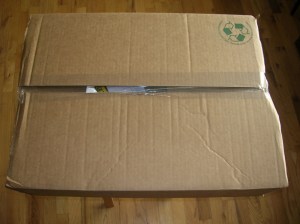
What better gift is there than the big brown box? Sure, the advertisers will tell you that what’s inside is what matters. And, there’s always that fond memory of that gifts that surprised and delighted as if they were the epitome of gift giving; but measure them all against the fun found in playing with the boxes and there’s really no competition. Even cats know this – and cats are experts at indulgence. What’s on your wish list that will be as much fun as a big brown box? Who would have the courage to give one as a gift?

I’d like to include a picture of a Transmorgifier from Calvin & Hobbes. Oops. Spell and fact check time. Make that a Transmogrifier. (There’s actually a Calvin and Hobbes wiki. Imagine that.) Flip the box upside down, stick a dial on the side, climb in as a small kid, come back out as – something only a kid could imagine. It’s also a multi-tasker. Flip it back, right side up, and it’s a time machine. Face one way to go forward in time. Face another way to go backwards in time. Or, ignore all that and use it to fly to an alien planet. Remember to pack the tuna fish sandwiches.

I’d like to include a picture from one of my copies of the books, but I just realized I gave them away for Christmas. A few weeks ago I cleared out some space in my spare bedroom, aka the rarely used office, aka rarely visited storage for my official papers and such. I was making room for my new career as a real estate broker and dropped into my minimalist mode. What was sitting around gathering dust that could live a more active life somewhere else? Cartoon books, DVDs, and a few other things looked like they’d make nice Christmas presents for someone shopping at Good Cheer, one of the local thrift stores. In addition to Calvin cartoons, someone gets a chance at the boxed set of Lord of the Rings movies. They may not come in a big brown box, but they may be appreciated even more.

I used big brown boxes as a kid. We put on shows, made a backyard fair, flattened them into stupidly fast ways to slide down wet grass in the spring, and generally used them as canvases on which we drew our childhoods.

I use big brown boxes as a grown-up, or at least as someone who has a few decades between now and childhood. A Transmogrifier, time machine, or space ship sounds awesome, but I restrict my playing with cardboard to more practical uses like drip cloths, a cleaner way to slide under the truck, or as a cover for my fireplace doors on cold, windy nights. (My fireplace is nice to have, but the damper is rusted open. Ventilation in every season! – whether I want it or not.)

Occasionally I challenge myself to take a big piece of cardboard, or even a big piece of butcher paper, and play. Just play. Draw, scribble, doodle, fold, spindle, and whatever else comes to mind. I admit it isn’t the same. Too many “shoulds” get in the way. I shouldn’t waste the cardboard or the paper. I should spend the time getting more work done. I should, …

There are regular reminders that adults forget how to play. Play is valuable. It relieves stress. It generates ideas. And most importantly, it’s fun.

One Christmas I went home with a slightly different set of gifts. Most of them were the usual things from the mall, but one was for my Dad. It was a Nerf ball. Not one of the fancy ones shaped like a football, not a gun, not a sword – just a ball. It was one of those Christmases after my parents had become empty-nesters but before they had many grandkids to play with. My Dad unwrapped his gift, smiled, and chuckled. My Mom (who could out-Martha Stewart Martha Stewart) wasn’t happy at all. “Why would you give your father a gift like that?” At which point my Dad bopped me in the head with the ball, and I tossed it back at him. We laughed. She shook her head. I can’t remember anything else from that Christmas, but I remember that Nerf ball and my parents’ reactions.

I’m due for another round of play. I look forward to more hiking, skiing, bicycling, and maybe even sailing; but those are all expensive. The toys I have sitting on my living room shelf are a bottle of Mr. Bubbles (for blowing bubbles), a yo-yo, water balloons (which are fun to fill and freeze as cheap and temporary outdoor ornaments), and a box of sidewalk chalk (definitely something for drier days.) Boots, skis, bicycles, and boats can be fun, can be practical, and are definitely expensive. Shop right, and twenty dollars can buy a lot of toys.

Christmas is only a few days away. The recycle station will be busy as soon as it reopens, and that dumpster for the cardboard will fill fast. Maybe hang onto some of those boxes just a little longer. Even if you don’t have kids and can’t remember how to act like one, leave one out for the pets, see what the local deer and bunnies do with one, try folding one into an enormous paper airplane. Need ideas? Isn’t that what egg nog is for?

Christmas is only a few days away. If the must-have gift is already gone from the stores, if you can’t think of what to get the person who has everything, maybe just find a big box. Throw in some crayons, magic markets, tape, and maybe some stickers. Whether it is a big brown box or something similarly silly, make something that helps them make something they can’t even imagine because it’s been so long since someone gave them a reason, an excuse, and an inspiration to simply play. It takes a bit of courage to do something different, but what are those memories worth?

I hope you all enjoy the season.

PS The forecast is for snow. Calvin and Hobbes fans know what that means: Deranged Mutant Killer Monster Snow Goons!

Posted in Uncategorized | Tagged , , , , , , , , | 3 Comments

Littler To Do Lists

What day is it? How’d we get so close to Christmas so quickly? Looks like a lot of things are going to get done a little later than usual, but then, a faster pace of life has become the usual. Maybe it’s time to get a littler list of things to do. I can do that, I think.

Here I sit, just about ten days from Christmas, and I haven’t started my main Christmas baking. Once upon a time I did so much baking that I’d go through about $200 of raw materials: eggs, sugar, flour, nuts, dried fruits, and chocolate. The most time consuming baking was dozens of individual, tiny nut rolls. One session would take about five hours. They were my faves. A dozen of those and a tall glass of milk would kick off flashbacks of playing Battleship with my brothers. The easiest, cheapest, and sweetest were what one friend called Igneous Brownies. Chocolate, butter, sugar, and just enough eggs and flour to make the batter flow across a sheet pan into a form that looked like Hawaiian lava. My ironic favorite was fruitcake, the much maligned, rarely appreciated fruitcake. I don’t see what the jokes are about, but then, baking a fruitcake from scratch with organic ingredients and months of patience is not common, evidently. For a while I listened to the jokes and I quit making them – and found out they were missed and the number of requests doubled the number I usually made.

That $200 shopping trip doesn’t happen anymore. The $200 is harder to find; and various doctors have steered me away from sugar and wheat. Take away those ingredients and try to make something from eggs, butter, dried fruits, and nuts. Sounds like a weird omelet.

A (one) spring of rosemary

Decorations have changed, too. Instead of driving to the store and buying a wreath of pine boughs, I walk out into the yard, harvest some epic rosemary, and make a fragrant wreath in less time than it takes to drive to the store. As a flourish, I added a late autumn rose from the rose bush. A rose in the rosemary seems appropriate – and makes me wonder how rosemary got the word rose in its name. The outdoor tree that would normally be draped in lights didn’t survive another season. In its place is a sprig, a six foot tall sprig, of holly from a friend’s vacant lot. Wrap it in some lights bought at discount last year, and in the dark most folks may not notice the difference. I hope to get a Charlie Brown tree the same way this weekend. (Anyone in the neighborhood trying to clear a weed pine or fir from their yard? Send me a note.)

Gifts are changing, regardless of my financial condition. Friends and family are getting older and downsizing. People are shedding rather than accumulating. Consumables are gaining popularity. Food, wines, candles, and books (you know I write books, right?) turn into great combinations for winter evenings. Instead of about three gifts per person, there may only be three or four gifts under the tree, and that’s fine. I enjoyed a tweet I saw go by that echoed what I’ve said before. Want to give an author a gift without spending money? Review their book and post it online. Get a local library or book club to talk about it. Help them arrange a reading or a signing and it might actually make them money. An author making money? That’s a rare treat!

My holiday To Do list is getting shorter because my work To Do list got longer. Some of you know that I recently became a real estate broker. (Thanks for the support and encouragement.) Being a broker didn’t replace my other jobs, it added to them. That may be the main reason I got to the middle of December without realizing there was less than half the month remained before a very definite day off. Baking, packing, and shipping in time for the 25th is only going to happen if the 25th happens to be in January. (That’s another fine day worth celebrating, but that’s another story.)

Americans live at too fast a pace, in general. That seems to be especially true for those working in the Gig Economy. Days off = lost income. Considering the price of housing and health insurance, days off can put some very basic needs at risk. Ideally, we’d be able to slow down, at least tap the brakes, and find a balance in life. For about 20%-40% of Americans (depending on how financial health is measured), slowing down isn’t an option. There is overwhelming evidence that working less is healthy, that relaxing is healthy, that exercise, meditation, and even socializing are healthy; but there’s an unspoken assumption that is invalid for that 20%-40%. Advice is great – as long as you can pay your bills (ALAYCPYB). It may not be a handy acronym, and it can’t be easily pronounced, but it is a reality for tens of millions of Americans.

That daily time crunch is a reality that is heightened during the holidays. The anxieties are easily amplified with the emphasis on buying gifts, dressing up, and decorating homes.

I miss the big piles of presents under the tree, but I also enjoy my small house and don’t want to fill it with stuff for the sake of stuff. There will be some good sales after the holidays when I can pick up an item or two. I miss feasting with friends, but navigating around my dietary restrictions and wanting to lose weight make too many feasts too much of a good thing. I’ll save my feasting for one or two days when I can concentrate on cooking, baking, aromas, flavors, and sharing with friends. Decorating is fun, but I enjoy a subtler touch that doesn’t pump out so much light that the inside looks like the outside is surrounded by spotlights.

That may change if I win the lottery jackpot; but then I’ll have enough money to pay my bills, have extra time to fill, and can indulge in generosity again. (And, no, I didn’t win the $229M Powerball lottery. Maybe next time.)

In the meantime, I’ll make a few apologies (sorry about not getting the nut rolls baked), I’ll be thankful for a reason and an excuse to honor my most cherished traditions, and I’ll enjoy the necessity of a littler To Do list. And maybe, maybe, I’ll get around to making the Igneous Brownies. There should always be enough room for at least one easy indulgence.

PS

If you want a list of charities on the island, check out my post on AboutWhidbey.com.

If you want some choices for Christmas cards, I’ve got a site for those, too.

Posted in Uncategorized | Tagged , , , , , , | 1 Comment

Breaking My Way To A Better Life

Guess what broke the other morning as I got into the shower. So much for water coming out of the little holes in the shower head. The water decided to spray out from a crack in the hose behind it. Not optimal. Things break, and sometimes that the only way I upgrade an appliance. If it isn’t broke, why fix it? If it is broke, its replacement will probably be better than what I was using. At times it seems as if the world is retreating, but progress continues. Whether that’s through inertia, stubbornness, or ignorance, things have been getting better, regardless of what I do. That’s a source of optimism, and optimism is worth a lot, lately.

They probably did make them better in the old days, whenever that was. But, they also made them differently. The shower head that broke was a replacement for a shower head that clogged from minerals in the water. About half the water came through the nozzles. The other half sprung from every crack in the plastic. It wasn’t totally useless, so I stored in on a shelf when I replaced it with a low-flow shower head that was made more affordable through energy conservation subsidies. That was an upgrade from the previous one that was a simple nozzle without a hose. The new one has the hose, several settings, looks nice, and comes with a metal hose. A nice upgrade for only $20. Amortize that over the number of showers it provides and it becomes even more affordable.

This is the time of year to reflect. How were things last year? What did I expect would happen this year? Are things better or worse? There’s more than one answer because lives are complicated.

As with every year, I expected this one would be dramatically better. Even with the turmoil of politics and disasters, I expected my workload, my portfolio, and some good luck would make this December much more comfortable than last December.

Last year’s promise was partly a series of job applications that looked promising. They fell through for reasons like: not having the word “Seattle” in my street address, and being overqualified for another job. Disappointing, and yet, this year my work load is just as high but is mostly directed towards a job that benefits from living on the island and having many qualifications: my gig as a real estate broker.

mailing in the official paperwork

That’s promising, especially as Seattle’s market continues to be hot, and people priced out of that market may jump the moat to land on the island.

Last year’s promise was partly based on my portfolio. There will be a more detailed report later, but that fell short – even though I was right about a few things. GigOptix finally reached profitability – which led to the management accepting a great buyout that benefited them more than it benefited the rest of the shareholders. MicroVision made great progress, but not great enough to reach expectations. Hence, it languishes. The promise of AST, GERN, and MVIS remain high, or even higher because the companies have made progress.

Last year’s promise included the same amount of luck most of us get, which means I haven’t won the lottery jackpot, either – yet.

Despite unmet promises, I look around and celebrate unexpected benefits. The truck broke down, but now it has a new belt, new battery, and a repaired axle seal. Driving around is more relaxing, something appreciated as I tour homes for sale.

The old, broken dishwasher was replaced with a free (plus installation charges) dishwasher. Labor saving devices are easier to appreciate when they’ve been unavailable for years. Now, the dishes can get washed while I type.

A friend was downsizing, and I got a new-to-me camera.

Someone bought the wrong boots at the thrift store for $15, and I got essentially new $150 boots for free.

Gardeners discarding old pots turned into a bonus for my garden, me, and my health.

A neighbor’s unused downspout gets repurposed as a way to fill yet another rain barrel.

Bicycle brakes squeal so much that I get them replaced, cheap, and find care free cycling again.

Overwork and under-care led to a bout of diabetes, which led to a better diet, more exercise, weight loss – and a retreat from diabetes. (Gotta watch that though. This time of year and this workload is a bad combination for exercise and weight gain.)

Speaking out on a couple of issues on Twitter turned into being interviewed about health insurance and the gig economy by Marketplace.

The year appears to be ending with money being a bit tight as I spend to build yet another new career. I’m told it takes about $2,000 to properly equip a new real estate broker. Don’t be surprised if the frugal part of me finds ways to reduce and delay those expenses in innovative ways. Those upgrades will come later, probably after a sale or two.

Little annoyances, which sometimes are accompanied by big grimaces, can lead to a ratcheting of improvements. What will my life be like next year at this time? It promises to be better, and I expect to have a few more improvements (particularly now that smartphones with embedded projectors are finally coming to America.) One thing that would be even better would be upgrading before replacing is necessary. It could happen. You see, there’s this leaky kitchen faucet, a window I’d like to replace, and …

Posted in Uncategorized | Tagged , , , , , , , , , , , , , , , , , , , , , , , , , , , | 1 Comment

Health Insurance Confusion 2017

I’m happy to thank Jasmine, Joe, Adrienne, Christine, Glenn, Kathleen, and Bill. Oops. Sorry. That Bill should be a bill, but we’ll get to that. Thanks to their efforts, the efforts of folks in the industry, and an orphaned bill I have a plan that looks better, my health insurance costs dropped ~40% while my premiums went up ~ 33%. Look strange? That isn’t the strangest part, but at least I’ve navigated the system to something that looks like an improvement – which I doubt is sustainable. I’ll take it.

If you missed the news, here’s an update: Open Enrollment began on November 1st, the deadline for January 1st coverage is December 15th, and Open Enrollment ends on January 15th. You have a great excuse for not hearing about it this year. The budget for announcing it was cut 90%.

I knew about it, but didn’t do anything about it until November 26th. With the chaos in DC, I wouldn’t have been surprised to find the system changing within the open period. The thing that prompted my action was receiving a bill from a health insurance company I’d never dealt with, Kaiser Permanente.

For weeks there were emails and letters from my current insurance company, Premera. A glance told me what I’d heard from friends. Our county was only going to have one provider. The letters and emails were details about the cessation of coverage. I set them aside to see if anything would change in the political landscape.

Then, there was a letter from Kaiser Permanente; but it wasn’t a letter. It was a bill. It was a bill with a premium that had risen to within 1% of my mortgage payment. Health care has become so expensive that I see health insurance as a cost without a benefit, as long as I stay healthy. At least with a mortgage I get a house and am building equity while decreasing my debt. With the plan I had in 2017, a major medical issue could bankrupt me, even with insurance. High deductibles are like that. Increasing expenses at the time of decreasing income meant I would probably cancel my health insurance. I’d be living at risk, but I was doing that anyway. The benefit would be appreciated by my credit card company because I’d accelerate the paydown of my credit card balance. Waiting until the December 15th deadline left no room for options, so I gathered my courage (by calling a friend and venting, first), and scheduled some time to dive into the morass.

First stop, wahealthplanfinder.org, the health insurance marketplace for Washington State. Every year I contact them, sometimes online, sometimes on the phone, sometimes both. After the usual username password guessing game, I got in and hit the first bit of confusion. The bill from Kaiser was for about the same amount as the low-income assistance I’d been receiving. Were they billing me for that? Even more reason to cancel. But, no. That was the total bill due, and it wasn’t due until January. Cautiously, optimism crept in. Sure enough. If I kept my old plan with the new provider, my monthly bill would drop 40% while the total premium went up 33% which meant the assistance more than doubled. I appreciate the assistance and won’t turn it down, but the math left me confused. How is it sustainable? That’s far more than the government collects from me for taxes, and while I am considered low income (at least temporarily) I’m doing better than 20%-40% of American households. The world is weird. I shrugged and said thank you.

While I was there I used the site for what it was designed for, to compare plans. To simplify, there are three levels of plans: bronze, silver, and gold – as if they were Olympic medals. For the last few years, silver has been the balancing act between premiums and deductibles. Cheaper premiums had deductibles that were so high that they’d bankrupt me. Higher premiums had lower deductibles, but it would be too onerous to spend that much per month. How is it this year? The cheaper option, bronze, cost less than $7 per month because the assistance almost completely covers the cost. That was astonishing. The deductible was high enough for caution. I resigned myself to keeping the silver plan until I noticed that the gold plan dropped the deductible to less than one month’s premium, the total out-of-pocket to only a few month’s premiums, and only cost $5 more per month. Why stay with sliver? I went for the gold.

Such low premiums were unbelievable, so I waited until Monday morning, 8AM, to call the folks at Washington Healthplanfinder to verify my conclusion. Within ten minutes they confirmed my perception and executed the change. Cool. And surprising.

Good news can evaporate quickly, so I hung up and dialed Kaiser Permanente to confirm the confirmation. Uh. Oops. They couldn’t find any record of the transaction. They couldn’t find any record of me. Subscriber IDs, social security number, phone number, birthday, – they even checked my name (astonishing in a world of ID numbers). Nothing. And yet, I had a bill from them with most of those IDs, as well as an invoice number from their system and a file name from their computer. We bumped it up a level, they called in experts – nothing. We agreed that I should read every line of the bill to them over the phone, from the header to the footer, including trademark marks, icons, everything. Nothing. If nothing else, I thought they’d like to know that their accounting system was sending out invoices that called for payments, but were invoices they couldn’t track. If they can’t track their invoices, why would I expect them to track me, my health care, or my payments? Maybe it was a temporary glitch.

Two days later I called again. Again, they couldn’t find me. And then one of them decided to kick it to the side instead of up. From what I understand, they have a unit called the Health Benefit Exchange. Someone over there broke through the fog. I existed, I had a new plan, and I owed them money. They couldn’t figure out which plan I’d signed up for, but the number owed matched the gold plan I picked. A bill was on its way. That was good enough for me.

Rather than wait until the bill arrived, I decided to write and publish this post now for others who may be in a similar situation. If something goes amiss, I’ll try to post it here.

In the meantime, I’m looking forward to scheduling a few doctor appointments in 2018 (Molly, that’s a heads-up.) 2018 has the potential to be a much healthier year, and thanks to so shifts in my business (including passing my real estate exam) I might get to deal with the mixed reaction to making enough money to pay for health insurance, health care, and a healthy life style without any assistance. If that happens, maybe there won’t be a sequel called Health Insurance Confusion 2018.

Posted in Uncategorized | Tagged , , , , , , , , , | Leave a comment

CEOs Not In Charge

(Editorial note from an astute reader who caught the mistake made by a writer writing too late on a Friday night. “I think you mean Lasers where you have mentioned LED’s. LED’s are light emitting diodes and are not used in Microvision technology.”

I was looking forward to writing about good news for MicroVision. Good news for MicroVision should be good news for the stock, MVIS, which should be good news for my portfolio, which should be good news for me. The company’s press releases sound positive, but the stock price suggests the investors are less interested in investing as a result. Chief Executive Officers are the chief officers in charge of making sure the corporation executes their plan to reach their goal, generally. They are paid well, and they do carry the responsibility, but nobody and no company is in complete control. The rest of the world has an influence whether it knows the company exists or not. The lack of control is part of investing, and something individual investors get to deal with. Here’s one example from MicroVision, a company that seems to be nothing but anecdotes and examples.

Good news! Revenues are up 50%! A new CEO is taking command! They’ve raised millions of dollars! Those were three of the most recent press releases.

Good news? In the last month, MVIS is down ~39% and after hours is down another ~9%.

My interpretation of the market’s response

Revenues are up 50%, but expenses were up and long-anticipated deals weren’t announced during the conference call for the earnings report. Patience evidently wore out for investors who expected a positive report before the end of the year. There were hints of deals about to be signed, but unfulfilled hints are too common for MicroVision. It looks like many investors finally gave up, gave in, and sold out.

A new CEO is taking command, which some have been hoping for. The announcement came days after the earnings report and the stock price drop. Regardless of the skills of the new CEO, many read the transition as a sign that the good news hinted at during the conference call may not be happening. That’s only speculation, but without better information, speculation is all most investors have to make decisions from.

They’ve raised millions of dollars, which also suggests yet more dilution (A Study In Dilution MVIS). The more positive news would’ve been a long-awaited surge in sales that carries the company to cash flow positive and profitability. Maybe they need the cash for expansion. Maybe they need it for survival. As I just wrote above; “That’s only speculation, but without better information, speculation is all most investors have to make decisions from.”

The stock drop associated with the earnings report wasn’t under the control of the CEO. A drop in stock price can lead to disrupted deals, degraded financial terms, and a decrease in confidence about the company. Big companies are cautious about dealing with little companies, and little companies that look shaky can look like bad business partners. Maybe that encouraged the shift in CEOs. Who knows? Someone, but not the investors.

The departing CEO didn’t live up to expectations, arguably expectations that he raised; but he is still recognized as one of the most positive developments in the company’s history. He replaced a CEO that made great bombastic promises, that only later were shown to be more talk than substance. The departing CEO did a great job at providing solidity to the design process, initiated a crucial technical development and invention program that resulted in real rather than virtual products, and may have almost succeeded. If there were critical flaws in the product or the business, they haven’t been revealed to the investors. The lack of significant sales suggests that something was amiss, but that’s speculation, again. The new CEO benefits from expectations that are at their lowest in years. At this point, survival may be seen as an accomplishment.

Raising millions of dollars may simply be a smart move by the new CEO. Create a cash cushion during an apparent crisis that could be attributed to the previous management. If the deals come through, then the financing is just that, a cushion. If the deals fall through, there’s enough money to provide hope for other deals to succeed. Raising the money is under their control, but the stock price associated with it is not.

There’s a story of the lack of control from an unexpected source. Thank your iPhone and its Gorilla Glass.
MicroVision’s technology uses a series of laser LEDs to paint the image. Red, green, and blue lasers rapidly turn on and off to create all of the necessary colors, just like most monitors. The difference is that the lasers shine (or don’t) onto a tiny oscillating mirror. Do it right, and an image is projected. A device the size of a thin mint can create images measured in feet. They dim with size, just like a flashlight, but images the sizes of standard monitors can be very bright. They can also be very crisp because they don’t have to fake black.

Red LEDs have been around for decades. Blue LEDs are newer, but BluRay devices is a sign that their quantity was up and their cost was down. Unfortunately, the first CEO didn’t make much mention of the green LEDs. The second CEO pointed that out soon after taking office. He launched an impressive campaign to invent, truly invent, the technology necessary commercially viable green LEDs, and got big corporations like Corning to participate. That was good news. There was great anticipation. And then people realized that Corning backed out. There was no explanation, just a disappointment. Fortunately, enough advances were made that green LEDs were feasible, though not as economically viable as needed.

Here’s where the benefit of reading broadly comes in. I enjoyed having a subscription to Wired Magazine. They catch trends early and relay the news in an entertaining style.
In September 2012, a Wired Magazine article described another possibility for Corning’s decision. The CEO was being interviewed about the origins of Gorilla Glass. Evidently, The CEO was giving a tour to Steve Jobs. The CEO mentioned the possibility of embedded projectors and the need for direct green lasers. Jobs’ response was that he was committed to what would become the iPhone. He needed a strong glass that hadn’t been developed. Corning’s CEO decided to switch development funding from lasers to Gorilla Glass.

MicroVision has risen to the point of being the topic of discussion between the CEO of Apple and the CEO of Corning. That’s impressive for a tiny company. Unfortunately, MicroVision wasn’t there to defend the technology and their concept. The key conversation was out of their control. Hence, disruptions, delays, and a chance for competitors to catch up.

As much as I’m writing this about MicroVision’s CEOs, I suspect even the CEOs of Apple and Corning find that they don’t have as much control as they’d like.

And yet, CEOs are responsible, as is appropriate. To be responsible is to be able to respond. Another connotation is to take the credit and the blame for the company’s successes or failures. The shift in CEOs may simply be a reflection of that response, or it truly is only that the departing CEO wants to spend more time with his family. It happens.

Investors are responsible, too. I am the only person who has to respond to my investment decisions. I’ve held MVIS since about 2000. If it didn’t seem like a good idea, I would’ve sold. As usual, though, I’m holding because those deals may come through. The cash flow may finally turn positive. The new CEO may have just the right negotiating and management skills. Maybe they’ll succeed quickly enough that any further dilution will be minimal. But, there are too many maybes in there for me to buy, and I think that lack of control may be a larger lack than expected.

Individual investing can be a powerful wealth creation tool. Passive asset growth is very nice. I’ve experienced it for decades. It can happen again, but it requires a high tolerance for risk (understatement) and a realization that no one is truly in control. Not even the CEO.

Posted in Uncategorized | Tagged , , , , , , , , , , | 2 Comments

Welcome to About Whidbey

Welcome to a spinoff of this blog:
AboutWhidbey.com, Island living from an islander’s perspective.
Thanks to some recent writing assignments and my new gig as a real estate broker means I wanted a venue for island stories, resources, news, and maybe even some real estate stuff. Stay tuned.

Tom Trimbath's avatarAbout Whidbey

Welcome to AboutWhidbey, a blog about a very welcoming island. I was welcomed here in 1980 by some very neighborly people who befriended a young aerospace engineer who’d moved from Pittsburgh, PA to Everett, WA. It only took me 25 years to actually move to the island, the first place that’s truly felt like home. Until then, I’d mostly lived in apartments, condos, and houses; not in a home or a community.

Whidbey_B

For a variety of reasons and in a variety of venues, I’ve written about life on Whidbey, always in some unofficial or informal capacity. Unofficial and informal, yep, that describes island life. Don’t be surprised to find “-ish” appended to a lot of scheduled events. Things happen noon-ish, or 4pm-ish, or whatever-ish, but probably not too early (except for fishing and exercise) or too late (“Closed” is a popular sign after 10pm-ish.) Now that I’ve passed my real…

View original post 323 more words

Posted in Uncategorized | Leave a comment

Tom Trimbath Real Estate Broker

And now for something completely different – that really isn’t. On Wednesday, November 8th, I passed the exam for becoming a real estate broker in the state of Washington. I also breathed a great sigh of relief. Taking tests is hard, just ask the anxiety attack that threatened to derail the attempt. But, success! Listening to hints from the universe isn’t easy, either, but several of them (as well as many of my friends) convinced me to add yet another skill to my career set. As if I wasn’t already dealing with being “overqualified.” At least now I get to use my qualifications as a fan of Whidbey, helping people achieve their goals, and a wide variety of communications skills. One concession: I won’t be wearing shorts as often.

mailing in the official paperwork

Astute readers noticed that I have been posting less frequently here, on Facebook, or on stock discussion boards, lately. For the last few months I’ve been fitting in 90 hours of required class work, dozens of hours of highly-recommended class work, and the logistics involved in taking the 3.5 hour test. All of that was happening while maintaining all of my regular gigs. The training sounded easy because I’ve bought and sold several houses since I moved to the Seattle area. Then, I learned that the exam delved into the issues that brokers see that I ignored as a buyer or a seller. The tall stack of forms got that tall because some issue created the need for yet another legal clarification. Add in the fact that most real estate deals involve fractions of a million dollars, and it is easy to see why people care about clauses, contingencies, and reducing confusion.

Big life changes are rarely made for only one reason.

Seattle has already become unaffordable for many. That’s true because so many are making so much that it’s affordable for them, even as prices and rents rise. That’s good for Seattle’s economy, but causes cautions about sustainability. Whidbey Island, where I live, is beginning to be affected by Seattle, though dampened by distance. I look forward to living on the island, but must admit that I’m concerned about my long term sustainability. A recovered stock portfolio could alleviate those concerns, but that hasn’t happened, yet. Winning the lottery jackpot would also take care of the issue, but that’s hard to realistically plan for. Being turned down for yet another job (overqualified, again) inspired me to consider the possibilities.

So, in true and proper consultant fashion, I conducted an economic analysis of my situation. I won’t repeat the entire analysis here, but the summary is simple. Three ways to keep up with rising costs is to either increase income, increase net worth, or both. My portfolio, house, and lottery tickets were working on the increased net worth. Increasing income is something almost every entrepreneur is doing (except for some frugal folks, and religious types like a Buddhist monk I know). Jobs on the island that have a chance of growing income as expenses grow are things like professions (doctors, lawyers, and such), full-time gigs with the few large companies on the island (where my applications seem to vanish), and jobs related to the largest collections of assets on the island (stocks and real estate.) Becoming a doctor or lawyer takes too long and costs too much. I’ve tried the companies, alas. I enjoy stocks, but there are more positions in real estate than in financial planning. Process of elimination = real estate.

Real estate isn’t just about buying and selling homes. Besides brokers there are appraisers, inspectors, mortgage brokers, and people working in title and escrow companies. There’s a lot to choose from. Becoming a broker had its appeal, but so many friends are brokers that I didn’t want to compete with them. Unfortunately, none of the other options worked out because of logistics, bizarre regulations, and no demand for new employees. I mentioned that to several brokers and was surprised at the response. Competition? Sure. But there’s also a lot of cooperation. A lot of encouragement came my way. At some point, I decided to listen.

That was the analytical path. The emotional path clinched the deal.

Instead of thinking about buying and selling I realized I could look at a broker’s job as helping. As I learned as a consultant, one of my life joys is helping people pursue their projects, helping them get things done. For me, buying or selling houses wasn’t about investing, it was about moving from one phase of life to another. Life changes, goals change, and a house that made sense ten years ago may not make as much sense after those changes. Jobs change. Families grow and shrink. Hobbies can shift from a basement workbench to the acreage required to hold a horse or three. Someone needs to find a quiet place to retire, recover, or play? Sure, I’m happy to help them meet that goal. Thinking about real estate that way is actually inspiring.

This blog is about personal finance. While real estate is part of personal finance, I don’t intend to turn this blog into a long series of stories about houses. I’ll continue to comment occasionally, but I’ll be starting a separate blog that talks about island life, various aspects of Whidbey Island, and possibly what it’s like to be a fresh real estate broker at my age.

At my age, there’s an interesting coincidence. I’m almost 60, but not yet. My Dad found himself in a job that he had to leave for moral, ethical, and legal reasons. They were doing things he didn’t want to be a part of. At 58 years old he quit his job, recreated himself, and grew his way into retirement. His choice and actions were impressive and inspiring. I’ll be happy if I can do well enough to live comfortably sustainably, while staying on the island.

I’ll launch the other blog soon. First, there’s an amazing amount of paperwork behind becoming a broker. Any new job comes with a sweep of forms for new accounts, passwords, rules, procedures, and generally being a newbie. Amongst that, I’ll find time for my regular gigs because they all share my life joy in helping people. My title isn’t changing, just another one to add to my long list; “Real Estate Broker, Consultant, Writer, Speaker, Teacher, Photographer, Engineer, Entrepreneur, etc.” I suspect a much shorter title will end up on the For Sale signs, something like, “Tom Trimbath, Real Estate Broker – Coldwell Banker”.

Give me a call. You know I enjoy talking – and helping.

Hey! They already loaded up my agent’s profile.

Posted in Uncategorized | Tagged , , , , , , , , , , , , , , | 3 Comments

Commons And Whidbey Authors

How many writers are there on Whidbey Island? The bookstores probably know because they’ve probably met most of the authors when they come in to try selling their books. Authors may not know. Authors like to meet authors. That’s odd considering most authors are introverts, and a club of introverts wanting to meet other introverts might have a small roster. Readers like to meet authors, too, which is why it was nice for one of the local bookstores to host a panel discussion of four local novelists. I’m glad I went. Novelists are good at telling stories, one of them is coordinating a workshop that I’ll be a part of on November 11th, and I enjoy listening to passionate people who’ve done more than talk about their passion. Authors actually get something into print. Besides, serendipity encouraged me to attend by cutting off power to my house for the day.

Langley may be a small town on the quiet southern half of a rural island, but it has an abundance of book stores. The South Whidbey Commons is unique. They have books, of course; encourage local authors, as do others; serve food and drink, a dangerous combination in the vicinity of books; and operate the business so students can learn how to operate a business. I’ve given several talks there, but on Saturday I got to sit in the audience as they welcomed a panel of Dave Anderson, Jo Meador, Dan Pedersen, and Michael Seraphinoff. Four novelists, one hour, and not enough time to hear all they have to tell. Want to know more? Read (and maybe even buy) their books.

It was a standing-room only crowd, a handy feature on a day when a snow storm was approaching. All of those warm bodies kept the room cozy. I took my typical seat in the back and tried to keep my mouth shut. I’ve been on similar panels, and enjoyed them. It was entertaining to hear others’ motivations, processes, and experiences. Story telling is part of being human. Writing is more recent, but most people write at least something thanks to email and the internet. Becoming an author, though, is obviously a lot more work, takes a bit of courage, and makes every author reveal vulnerabilities – especially in the age of the internet.

The unspoken messages are sometimes the loudest. At least three, and maybe all four, of the authors came from non-writing careers. Writing was involved, but the careers were in anthropology, politics, and database management. Not exactly the stereotypical path of first pursuing Master of Fine Arts degrees. I’ve seen it before. People who were forced to document their work were effectively forced to write – and write concisely to a deadline. The same thing happened to me. Frequently, I’d spend five days dealing with technical and engineering issues at NASA, and then reduce the experience to a few hundred words translated into management-speak within a couple of hours after getting back to my desk. Fear the blank page? There’s no time. Make the blank page fear you!

There was a pleasant surprise near the end. One of the members of the audience knew about Jo’s workshop, realized no one had mentioned it, and asked a leading question that she and I could answer. Thanks for the plug, Talia. On November 11th, Jo will spend the morning conducting a workshop about writing and editing (for details, check with Jo), and I’ll spend the afternoon describing how write for the internet and how to self-publish. Another way to look at it: Jo will handle the fundamentals that never change, and I’ll handle the environment that’s so fluid that every time I teach it I have to change it.

Writing for the Internet starts with the same goals of most writers and authors: gain exposure, read an audience and a community or a market, spread a message, and if the writer is lucky, maybe even make some money. That last one is tough, but that’s always been the case. Style has changed. Being concise is much more valuable thanks to shorter attention spans and the visual limitations of screen sizes. Adhering to various manuals of style isn’t as appreciated as producing something that can be searched, found, and shared. Book authors get to create tomes that are hundreds of thousands of pages long, but on the internet they can expect to find tl;dr (too long; didn’t read.) Get a slice of that message across in 2,000 words, or 500 words, or even 140 characters and more people will read it. Give up on the idea of controlling formatting. Elegant fonts, page layouts, and professional headers and footers are lost on devices where the reader can grow, shrink, and change the color of the text. What are you reading this on: a monitor, a laptop, a tablet, or a smartphone? I don’t care because I don’t try to optimize for any platform. The formats that matter are headlines, images, links, and hashtags; all things that lead to searching and sharing. Be too common, and the words get lost in the crowd. Be too uncommon, and never be found. Write about something others care about, make it easy to share, and reach farther than most authors did thirty years ago. Then, pull up the analytics and truly learn what resonated with readers, and what was there mostly for self-satisfaction.

Modern Self-Publishing has become so common that there’s less of a reason to make the distinction since I first used it in 2002. Print-on-demand is such a common way to print a book that it’s hard to distinguish from traditional printing. E-books are so ubiquitous that they’ve standardizing on prices, file formats, and delivery mechanisms. In the early years of the movement, I wrote a book about the technique, but the technology and the industry changed so quickly that the book had to be edited and re-released every six months. I gave up and simply reinvented the message every time I taught the class.

The title of one of my books (and the basis for this blog) is Dream. Invest. Live. It is a self-published and due for a second edition. That first word, Dream, is something that many people put off until retirement. Authors are writers who finally gave up and quit waiting. They dreamed, or at least strongly considered, of something that should be told; invested amazing amounts of time, mental anguish, and sometimes money writing the story; and then get to live the life of an author – which usually means having some other source of income. As one of the authors mentioned, most books only sell a couple of hundred copies. I’ve seen the data. Very few succeed financially, though the few that do have basically written themselves a lottery ticket.

To fellow Whidbey authors, my curiosity encouraged me to start counting how many books have been written by authors who live on the island. Go to the Whidbey Authors Facebook group if you want your books to be counted. I suspect the total is in the hundreds. That’s a lot of gifting opportunities, and a lot of opportunities for authors to meet with authors. We can compare notes on how well our notes have sold.

To fellow Whidbey writers who haven’t published yet, well, by now you know about the workshop, and you probably suspect that plenty of us are happy to help outside of such structured environments. People everywhere have fascinating stories to tell, and people everywhere want to hear new stories. Welcome to a fundamental part of being human.

For now, the power is back on, the snow is getting closer, the house is up to 65F, and I’m probably done writing for the day. It’s time to sit back, share this post, stoke the fire just in case the power goes out again, and watch a movie I picked up from the library. Books are great, but I’ve been writing so much I need to take a break from reading for the evening. Of course, if the power goes out, then out come the books and even more stories.

Posted in Uncategorized | Tagged , , , , , , , , , | 2 Comments