Switching To ATT

The first bill arrived. The suspense is only partly over. At the end of July I made many people happy by switching from Sprint and my flip phone to AT&T and a smartphone (Flipping To A Smartphone). Finally, they can text me!, they cheered. After horror stories about charges, coverage, and customer service I made the change; and have waited a month and the first bill before making a judgment. As with most of life and personal finance, there’s a bit of good, a bit of bad, and a bit of something different.

My biggest worry was the bill. AT&T has some sort of automated system that estimates the first bill. The folks in the store told me to ignore it, but they had to provide it. The folks I called in Customer Service said the same. That estimate was for over $300 for the first month and over $200 for every month after that. Ouch! With estimates like that I kept my phone usage to a bare minimum. No new apps. No streaming video. Mostly phone calls, and only a bit of web browsing when real estate required it. The real answer: ~$168. Kind of high, but not bad considering it included one month plus the pro-rated part of the first month.

20190905_094325

If I read this four page bill correctly, it looks like next month’s bill will be under $100. That’s almost double my Sprint bill, but cruise back through the prior post to find how poor the service had become. AT&T is said to have dropped calls, but Sprint wouldn’t even connect sometimes.

Without the rumors and stories, I would have little evidence of any problem with AT&T service. There’s only been one place where I couldn’t place a call. I’m sure there are others, but that’s not bad. Without friends and coworkers, I would probably still be trying to figure out how to answer the thing. Thanks to everyone who didn’t produce a video of me punching fingers at the screen. Swipe, dude. Swipe. At least now I can answer the phone, receive texts, and sometimes get into voicemail. (Still working on that one.)

Eventually, I’ll learn how to take and move photos without having to remove the microSD card. Eventually, I’ll add apps (particularly the real estate ones.) Twitter will follow, and I’ll set up an Instagram account. But, I’m a minimalist. The fewer apps the better, as long as it isn’t too few apps.

But back to that bill.

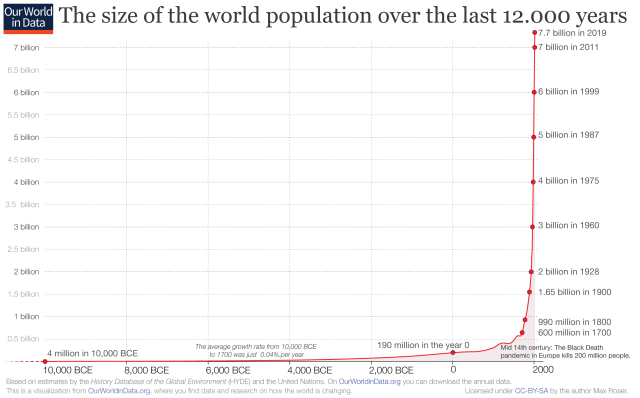
The bill arrived within about ten days of its due date. I haven’t set up bill pay for AT&T yet, so I called the contact number on the bill. Pay by phone? Sure. That sounds quick and efficient. Step one, call. Result one, they sent me a web link. Nope. I want to talk to a person. Stay on the line with an estimated wait time of seven minutes – which turned out to the just about right. Verify ID, and he tries to send me to the web site, too. It’s simple; all I need is my PIN which should be 5 or 6 or 7 digits. I recall making one in the store. It was 8 digits. How about I just pay my bill? Not yet. Dive into Settings, read off numbers, pass along financial info, and get back a 15 character confirmation code. Fifteen characters? That’s over 10^24 possible combinations. How many unique confirmation codes do they need for a planet with a population of fewer than 10^10? Is AT&T getting ready to take over the galaxy, the universe, the rest of the universes? At least the bill got paid. It only took about ten minutes.

20190905_094400

The bill is longer than usual, possibly because it is the first, but also because the AT&T Help Desk people had to undo things the people at the AT&T outlet signed me up for that weren’t necessary. Add this, then subtract it, then add in the right thing. Then try to understand it.

Still it looks better than I thought it would.

And then I noticed the equipment costs. As I mentioned in the prior post, I had a specific phone in mind when I arrived. Its main feature was that it was cheap. But.

The $179 phone from earlier was gone, but there was a special deal for a $1/month phone for people switching service. Nice! Within the next two hours, that offer somehow vanished, and I left with a phone that may only cost me $104. OK, $179-$104 is still $75 less than I expected.

According to the bill, the equipment price is more than $200, and I have 29 more installments to make. Granted the monthly installment is only about $5, something I wouldn’t even notice, but there’s that principle of the thing. How’d that happen?

This is why personal finance advice frequently over-simplifies personal finance decisions. Actions usually create other actions. A decision isn’t confined to the moment it happened. Each step is a commitment to many more steps to make sure the steps are heading in the right direction.

The switch has been a good thing. I would’ve made it earlier, but the delay touches a much longer and older story involving MicroVision. If you don’t know, there’s no need to ask (or you can dive into the rabbit hole of my posts about MVIS.) Real estate on Whidbey Island has been hectic enough that a reliable phone service is a necessity, and an unreliable phone service can mean someone doesn’t get to sell and someone else doesn’t get to buy.

The switch has been a good thing, but I miss my flip phone. It was small, rugged, and simple. The smartphone is bulky, feels fragile, and complicated. I’m sure it will become familiar with practice. For some reason, that form factor works for billions. Go figure. I’ve seen the possibilities of the marriage of a small phone with a big display, but that’s that MicroVision topic again.

For now, my smartphone sits beside me, usually at a distance because I don’t want something that powerful beside me. Glad I bought a headset. Let’s see how long smartphones stay this shape. I hear someone’s working on implanting them inside our skulls. That’s a transition I may never make. So, pardon me when you call. As complicated as the phone may be, the biggest delay tends to be me trying to untangle the headphone cords. There’s a technology that could be improved, or a user that can be educated.

Posted in Uncategorized | Tagged , , , , , | 1 Comment

Have Paint Will Play

Well. (I started that way just to tick off a writer friend of mine.) I did it again. I played with paint. So many of my friends are painters that if I tried to list them all I’d accidentally skip dozens. They paint with purpose and perfection. I paint to use up old paint. At least that’s how it started.

Buy a house and frequently find shelves of paint cans filled with tones, shades, and colors that already cover some of the walls. Paint can be considered hazardous waste, so many folks just leave partial pails in garages and utility rooms. One option is to open the cans and let the paint dry out, ‘naturally.’ Being a bit frugal, it is hard for me to purposely waste anything, especially something that was useful once and could be useful again. So, instead of taking the paint and its can miles away to dispose of officially, I find something to paint. The price is right, which is a wonderfully freeing feeling.

The deck #WOST2012I did this before. About seven years ago I did something similar. The west side of my house gets a great view of Puget Sound and the Olympic Mountains (I continue to have to remind myself that I’m looking at a National Park, weather and lighting permitting.) That also means it gets blasted with photons when the weather is clear, and rain and wind and a bit of salt the rest of the time. Without protection, the wood would need replacing far more frequently than if the house was inland and shaded by forest. So, those seven years ago, when I’d owned the house for about five years, I painted the deck with whatever was in the utility room. Some blue, some beige, and then because I could, I splattered and scattered dots and lines of paint from the dregs of other leftovers. It was a bit Jackson Pollock-y. A nice departure from normality, a nice touch during my stint on the artist’s tour (for my photos, not my deck), all while appreciating a real estate broker who put up with my play time while the house was on the market.

Those who follow my story know the good news. I managed to keep the house.

A while later, the deck needed repainting, which I did; but working seven days a week, typically ten-twelve hour days, meant the deck got a bland but protective coat. But hey, at least it used up more paint and protected the wood, again.

DSC_0292 - Edited

Leap to the present day, or at least the summer of 2019. The deck was peeling. The artwork was gone. There was less paint left, but remnants remained. I’d just finished my required real estate continuing education classes, completed a transaction on a very nice house for some very nice people, watched some deals get outbid (a common occurrence currently), so had some time. Oh yes, and we were in the usual drought the area sees every August.

Eight different paint colors later, the deck is painted, and along the way the house got painted, as well as most of the trim, the deck benches, and the various outdoor stairs.

DSC_0291 - Edited

Evidently, one thing led to another and another and repeat.

Take a look. I had white paint. That was the first two stripes. I also had black paint (for some reason.) That would be too much contrast so that became two boards on the opposite side of the deck. Between them I tried to decide how to blend in a pale sage green, and a bit of blue. OK. Maybe a bit of mix and match.

Here’s where the play gets to come in. Why not put a few boards of green beside the white and a few boards of blue beside the black? Maybe a bit of a blend in the middle. It may look like mud, but that’s part of the play.

DSC_0290 - Edited

Here’s where the serendipity comes in. After painting a few boards of green I noticed a particularly faded wall. Old boards, possibly old-growth, were barely tinted by eroding paint. I felt sorry for them, so I painted them with the green. Step back, wonder how I’m going to have enough for the deck, but realize that’s a nice shade for the rest of the house. So much for only painting the deck. Order up some paint for the walls!

Back on the deck, time to use some of that blue. A sea of blue is appealing for the ocean, but too much of a good thing for my deck was too much. So, several boards of blue; but then a board with mostly black and a bit of blue; then a board with more blue; then repeat until they began to blend back into the main. Well, not quite, but close enough. At least the deck was protected, and a few cans of paint were depleted.

Order up that sage green for the house and get to it. My exercise schedule was replaced with painting from just after work until dark. Truly dark. Some of those sections are a bit sketchy. Three pails of paint, and several days later, I finished the last bit of ladder gymnastics with less than a half inch of paint left in the last can. Yes! No waste, here.

Homeowners are familiar with what happens next. So, with the deck painted and the wall painted, the rest looked weak. Hmm. What colors are left for the screen frames, the door trim, and the stairs and door sills? A bit of grey here, some beige donated by neighbors for the deck benches, and then a mix of the grey and the beige for the bench supports. How crazy is that?

It may be a designer’s nightmare, or a guilty pleasure being able to play with paint; but it was also one of the more environmentally conscious ways to use rather than discard, protect rather than waste.

There are limits though. Upon the advice of various friends, I’ve curtailed my exuberance. You see, there are these cans of primary colors: red, blue, yellow. It would be so much fun to squirt squiggles of color across the banded fields of refined colors, at least on the deck. But, sometimes good enough is best. Though I am trying to find some colors for those doors. Hmm. A blue door, a red door, a yellow door? Let me play with that idea.

DSC_0286 - Edited

It’s possible that my clothing became the real work of art.

Posted in Uncategorized | Tagged , , , , , , | 1 Comment

Contemplating Negative Interest Rates

Sounds weird, but it is true, and has been for a while. Bonds and mortgages are being sold that have negative interest rates. Ready for that on your credit card? Probably won’t happen, but I’ve been squinting at articles and scratching my head about this twist in personal finance possibilities. One consequence, a reminder to not physically scratch my head while wearing a dark shirt. Pesky dandruff. As if politics and the planet weren’t going through weird enough phases, welcome to yet another bit of weirdness in finance.

Jyske Bank, Denmark’s third largest, has begun offering borrowers a 10-year deal at -0.5%,…” – The Guardian

So, let’s see. Many mortgage rates in the US are about 3% to 4%, far higher than Denmark, but even lower than the double digit rates the US saw in the early 80s. I wonder how many online mortgage calculators will break because they assume mortgage rates must be positive. I think about negative rates now so my brain doesn’t break if they show up.

Basically, a negative mortgage rate means your remaining debt decreases by more than the principal you pay. For details check out the Guardian’s article or Investopedia or your favorite financial professional. I’m not a financial professional, but I can at least tell you what I think about how it might affect me.

For right now, it won’t affect me directly. I don’t live in Denmark (though I would like to bicycle through the countryside.) It might indicate, however, that mortgage rates have downward pressure as well as upwards pressure. They’ve risen into double digits in the past. Can they fall by double digits in the future? Can they? Academically, possibly, I guess. But we at least have proof that in some countries they’ve already gone negative.

screenshot-2016-07-07-at-08-43-41

Mortgage rates aren’t the only interest rates that have gone negative. About three years ago I posted a series of instances where national central banks were already imposing negative rates on major lenders and depositors. The negative mortgage rates are possibly tapping into those financial instruments, allowing this mind-twisting scenario.

While some argue about wealth inequality and the rights for some to optimize tax havens, some governments have been noticing a tendency for assets to accumulate rather than circulate. As money piles up, there’s less money to move around. The economy relies on money moving between people. That’s how people earn and spend to make their lives livable, not just in luxuries, but in necessities as well. The current economy encourages accumulation. The more you have, the more you can get, which means you can have more. Those who play the game the best end up with the most, leaving less for everyone else. Wealth taxes can be difficult for politicians to pass, but interest rates can be set by bankers who may have some autonomy. Impose a negative savings interest rate and putting money in the bank comes at a cost. Better to move it than lose it, so goes the thought.

Evidently, that hasn’t been a strong enough incentive. Wealth inequality continues to grow, and negative interest rates are reaching further, not retreating. We in the US don’t hear about it much, but negative interest rates have existed in several countries.

Weirdly enough, negative interest rates hit corporate bonds, too.

screenshot from Twitter

There’s so much concern about where to buy into fixed income financing that over 90% of such debt is being managed in America, where rates have yet to go negative.

A second response can be fear. Despite a reputation for finances to be run by mathematics and logic, fear and greed continue to rule. Where do you want to put your money for the long term? Cash under the mattress, or the equivalent, holds its value if inflation doesn’t exist – but mattresses, or their equivalent, can burn. Various assets can hopefully appreciate, but investing is based on some risk, which means there are no guarantees. Layer enough negative options and some investors and depositors are willing to make sure they only lose a little rather than a lot.

Corporations historically spent discretionary case on research and development, but megalithic companies seem more secure buying back stock than inventing new products that will compete against their existing money makers. As they become monopolies, there’s less pressure to compete; so, why spend when your money can make money?

Other assets aren’t as attractive. Despite political posturing, investing in oil and gas and coal is being challenged by those who want to invest in solar and wind. Oil prices are back down below $60/barrel. As solar and wind become more popular, the economy of scale drives down their prices making them more competitive; while the fixed costs of oil, gas, and coal are spread over fewer customers raising their prices and making them less competitive. It was easy to invest in physical commodities like a tanker of any of those things, but there is no tanker of solar or wind. (Except batteries, but that’s a digression too intriguing to follow, now.)

This may be one reason for the flight to real estate. Certain hot markets are attracting buyers of ghost houses, houses that are bought to appreciate. Renting them can generate income, but that income comes at a risk. Renters might damage a property, even accidentally. Also, selling the property is quicker if it’s vacant. Hence, housing shortages for those who actually want to live in a house.

It may also be why gold is reaching new highs.

Screenshot 2019-08-19 at 15.10.16

There are two long term worries that seem unlikely, but then so did the Great Recession and now negative interest rates: currency (in)stability and deflation.

Currency (in)stability may be why Bitcoin refuses to collapse. Bitcoin and other cryptocurrencies are gaining acceptance. To some they are appealing precisely because they aren’t tied to a country, its politicians, or its banks. If currencies were to lose credibility and hence some value, it can be a reason to be satisfied with a small definable loss. This takes some more pondering, but currency collapses are common throughout history. When people fundamentally lose trust in government, currencies lose their value. (Though then, wouldn’t a negative interest rate be paid in a shrinking currency? More dandruff material.)

Deflation is a big worry. If it was tough to get people to spend money in today’s economy, imagine how much more difficult it would be in a deflationary economy. Why buy today when you can get it cheaper tomorrow? I see this almost daily as people try to guess about the real estate trends, holding off on a purchase because they’re hoping for a fall like we saw in the Great Recession. Maybe they’re right. Maybe while waiting for a 25% drop there will be a 40% rise. Take that to a global scale and imposing negative interest and savings rates on accumulated wealth seems like a relatively benign method.

Professionally, negative interest rates will make my job as a real estate broker very educational. I’ve frequently held jobs in dramatically shifting environments. At least I know how I deal with change. Learn. Learn. Learn. Adapt. Adapt. Adapt. Of course, people who buy or sell because they know what they want to do with their lives can get on with those lives sooner than those who are waiting for the right market moment.

Personally, I don’t expect any immediate change. I doubt my mortgage servicer is going to give up a forty-year commitment, even at a relatively low cap of 4%. Of course, I’d be more likely to refinance, but that will be a while. That will be a while partly because I need to pay down a credit card that is charging over 15%. That’s temporary. Pay that down, get back to a good credit score (oh, 824, I knew you so well – until my mortgage issues), and then see what’s happened to credit card companies that have to deal with dramatically lower long-term rates from the competition (not just sweet introductory offers.)

Negative interest and savings rates aren’t aimed at me. I’m not rich enough. I’m not hoarding cash. Definitely am not hoarding cash. If negative rates gain greater acceptance, the fundamental shifts may be in the corporations and coffers and havens that have been out of reach of courts. If that releases money to flow back into the real economy, that may be a very welcome and pervasive consequence that’s more important than my mortgage or credit card rates. Negative rates may not be aimed at me, but I may benefit from them – even if they don’t change my bills.

(Disclosure: I am a licensed real estate broker (with Coldwell Banker Tara Properties on Whidbey Island.)

Posted in Uncategorized | Tagged , , , , , , , , , , | Leave a comment

Buying A Lottery Ticket

Thoughts that came to mind while putting a lottery ticket in my wallet and walking across a parking lot .

“Buying A Lottery Ticket”, notice the emphasis on ‘A’. Conventional wisdom says don’t spend money on the lottery. Every day experience proves millions of people don’t listen to conventional wisdom. Buying ‘A’ lottery ticket has incredibly small odds. Buying too many lottery tickets can be an unwise idea, and may be the sign of an addiction. (Need to check for that? Here’s the Washington State link.) As usual, reality is in the middle, and there’s real value, there.

Let’s hammer the extreme, first; kind of as a public service announcement. Any addiction is something to manage, and usually not manage alone. Got doubts? Good. Personal awareness is a positive sign. Go check that out.

Screenshot 2019-08-12 at 14.38.49

But, if everyone avoided everyone else’s addictions, the majority would miss out on a lot of living. Use does not equal abuse. Knowing the difference is a sign of maturity. Remember all of those notices about “Use Responsibly”? They mean it.

Let’s get the other downer out of the way. The odds stink. Even the best odds of the lotteries I play, Hit5, are 1 in ~576,000. Even the worst stocks probably have better odds. The smallest odds are 1 in ~303,000,000 for MegaMillions. But then, Hit5’s payout starts at $100,000; not enough to buy a house or even pay off my mortgage. While MegaMillions has almost lived up to its name with jackpots that have reached hundreds of millions. (Seems that a megamillion would be 1,000 kilomillions which would be one million millions which would be a trillion. Finally enough to almost buy out some mega-corporations.) Terrible odds. Why would anyone spend money on such bad odds?

Because, eventually, someone wins. If the odds of a million dollar lottery are one in seven million, and you heard someone won, and you think fewer than seven million tickets or numbers were picked, then your odds are better than one in seven million. The tricky part is that there isn’t always a winner; but when they do, they get that much more. As they say; “It could be you.” Said another way, “If the rest of your hard work isn’t working, then you can at least try this.”

An engineer friend pointed out a long time ago, that the odds of winning are ridiculously small; but the odds of winning go to zero if you don’t buy a ticket. So, buy a ticket and divide a teeny number by zero and get an infinite improvement; but buy two tickets and your odds barely change at all. So, Buy A Lottery Ticket.

If the lottery was all about mathematics, far fewer people would play, and the lottery wouldn’t pay. Lotteries do well, so they must be doing something well.

Buying Hope

“If the rest of your hard work isn’t working, then you can at least try this.” For the large portion of the population that doesn’t have a few hundred dollars to handle even a small emergency, life can be long list of anxiety-filled episodes. A scratch, a leak in the roof or under the car, a computer or phone that’s acting quirky, a long list of getting by every day hoping everything makes it another day and another day. Such levels of anxiety are reasons to talk to a counselor, something they’d probably do if they had more money. The Chinese general and philosopher Sun Tzu cautioned about feeling trapped. People who feel trapped can become desperate. Give people a possibility of escape and they find a reason and a way to live. Whether that’s society’s intent or not, I know that a lottery ticket in my pocket is a piece of paper that buys hope. That piece of paper costs a lot less than an hour with a health care professional. Ironically, if I won the lottery jackpot, I’d probably make that appointment. One friend’s approach is to buy a lottery ticket, check its expiration date, and hang onto it for months; then, just before its time is up, he checks it. For months, $1 provided him a possibility of relief.

Buying Entertainment

How much entertainment does $1 buy? There’s plenty of ‘free’ entertainment online; but it’s truly only free if you’re accessing it on someone else’s computer and internet connection without having to spend time or money getting to it. Time with friends can be free, but scheduling free time usually takes time. Have a ticket in your pocket and even a 30 second break while the computer crunches on some task, or some manager is delivering some boilerplate presentation to your group, your mind can wander off to as many ‘What Ifs?’ as you can fit in that time.

Buying Perspective

While the odds are small, the results are real. One measure of today’s world is a promo catch-phrase displayed on a lottery kiosk months ago. (paraphrased) “When did one million dollars become not enough?” Winning a million dollar jackpot thirty years ago would buy a house, even in the Seattle area. Even after giving up half to take the lump sum and paying the taxes, probably being left with ‘only’ $300,000, it was possible to buy a house, a nice house, or seed a nice retirement. Imagine buying some particular Seattle-area stocks in 1989. Now, today’s Hit5 jackpot of $120,000 is less than some starting salaries, Lotto’s jackpot of $1,600,000 pays out enough to buy a median-priced home in some of Seattle’s neighborhoods, leaving the significant payouts of PowerBall at $138,000,000 and MegaMillions at $65,000,000 with their odds that are similar to randomly picking one person out of the 300,000,000-some people in the US.

Buying Possibility

And, any ticket can be a winner. So, I buy a ticket. I look forward to writing that story.

Buying A Gift

A few years ago, when money was very tight, I bought tickets (Lottery Dreams). A bit of hope, a bit of entertainment, a relief valve from desperation, and a possibility. And then I realized I was buying something else. I’d watch to see when someone won, and eventually check my ticket. I wouldn’t wait months, like my friend; but waiting weeks was common. One time when I found that I didn’t win I thought about the fact that someone did. I felt good about that. Someone else who thought it was a good idea to buy a ticket, won. Maybe they needed the money, and maybe not. They probably had a really good day. I didn’t win, but I realized I helped someone else win. The winners can’t do it without the contributions of the rest. How much would you spend to know you helped someone else feel happy for at least a day? That’s worth much more than $1, to me. It may be sad that they need it in this society, but at least I can help provide it.

My Approach

Washington State’s lottery has a handy feature for a lazy way to play. I don’t buy a ticket a day. I don’t even spend $1 a day. The drawings for Lotto and Hit5 are a couple of times a week. WA State allows players to play the same numbers for up to 25 drawings in advance. I give the ticket clerk $20, and get a ticket that’s good for weeks, twenty drawings. It’s somewhat like dollar cost averaging in investing. Instead of trying to pick the right time to buy, I keep myself covered by visiting the booth or kiosk about once a month or two. I might buy another ticket for overlap, or if I’m having a tough day, or if I think it would be a great story to win hundreds of millions and then give almost (not certainly not all) of it away.

By the end of the year, I’ve spent less than some people spend on one pair of shoes. For that, I get hope, entertainment, perspective, possibility, and most assuredly welcome gifts for several strangers. Those lottery tickets provide a lot of value for a few pieces of paper, and the value far exceeds the costs cautioned against by conventional wisdom.

Posted in Uncategorized | Tagged , | 1 Comment

Triple Whammy Eighth Anniversary

My ride through America’s wealth classes continues. Thirty-one years ago, I retired. (See my book, Dream. Invest. Live. for details.)Dream Invest Live cover Ten years ago, my portfolio was about to dramatically recover from the Internet Bubble, a divorce I asked for, and taking money out of the market to buy a house, my first true home. Eight years ago, my finances were hit by a Triple Whammy, or what I described as “two whammies and a flounder.” That began an unraveling my finances that has provided ample material for this blog and a planned sequel to Dream. Invest. Live. The journey isn’t over, but the path has improved from a rutted ditch to something smoother and straighter.

Statistics are hard to imagine as reality. Statistically, someone will somehow manage to always come out on top. Check the lives of many celebrities and public figures. Most include the word luck at some point in their biography, though it is glossed over as a minor details. Americans like to think success is a measure of merit. Statistically, for everyone who can flip heads up ten times in a row, there will be someone who gets the opposite. For thirty years, my investing strategy (Long Term Buy and Hold) was either lucky, skillful, or random; hence the repeated requests for me to write the book. Then the Triple Whammy.

Within a few months, my portfolio fell by 80%. Savings vanished. My portfolio was drained. I began early withdrawals from my IRA, incurring penalties at the very time I needed every dollar. I almost lost my house. (See Mortgage Modification Chronology for details.) All of this happened despite a diversified portfolio, several Lines In The Water, and detailed Backup Plans. Rainy day funds are essential, but there’s little advice available for what to do after they dry up, too. Fortunately, I’m fairly frugal. First that was by choice. Subsequently that was by necessity. Frugality became a skill honed several times a day. Oh yes, and it happened to happen as The Great Recession made it harder to sell a house, get a job, build a business, or move to a more affordable area.

DSCN5128

As I wrote above, the journey filled this blog with a chronology I never expected.

The journey continues. Here are how some of my lines in the water and backup plans have produced, or not.

Applying for a job only succeeded at two interviews for full-time employment. One of those was because they simply wanted to see if someone with a resume like mine was real. (After they turned me down they admitted that my resume was legit and my skills were impressive, but I met 22 of their 24 criteria, and the two I missed were considered non-negotiable.) I’ve been told I’m over-qualified, know the wrong people (at least from one group’s perspective), and probably wouldn’t be considered because I was male. (They were open enough to tell me that they weren’t comfortable hiring males, and smart enough not to put that into writing.) If it was tough to get a job at 52, it would surprising to get one at 60.

My portfolio has yet to recover. Companies that became profitable and that would’ve commanded premium stock prices were sold or merged before my portfolio saw the benefit. Of the remaining stocks, AMSC was supposed to rebound from a theft of intellectual property, DNDN was supposed to recover from a missed earnings report, MVIS was supposed to succeed with a product within the next six to nine months – any day now. In August 2011, AMSC was trading at ~$54 down from peak of over $400; now it’s at ~$7. DNDN is harder to track because it was driven into bankruptcy after climbing from ~$3 to over $44. MVIS is now ~$0.60, but back then it was feeling tortured at ~$8 because several investors expected something more like $320. What felt bad then became worse with the years.

Screenshot 2019-08-05 at 15.00.25

My business, Trimbath Creative Enterprises, pulled me through:

  • as program manager for an online museum (hcle.org),
  • information and social media manager for a now-defunct frugality non-profit (tons of irony there),
  • as a photographer (FineArtAmerica.com),
  • as a writer (including my books, as well as Seattle.Curbed.com and 360Modern.com),
  • and even as a business consultant to inventors, artists, and entrepreneurs (something that is very fulfilling).

My business continues to aid my income; but the biggest boost has been my transition to helping people buy and sell properties on Whidbey Island. (Disclosure: broker at Coldwell Banker Tara Properties) Finally, a job that doesn’t discriminate on gender or age, and then encourages skills and talents and hard work.

Real estate has also benefited my net worth, simply by living in my house. As the market has recovered, there have been months when my house’s appreciation has been much greater than any income I’ve earned. It’s hard money to spend, but it demonstrates the value of letting assets build assets. It’s hard to re-retire based on income alone. Money has to work at making more money.

RdCQ-pfU

Riding the roller coaster through America’s wealth classes reveals the view behind our many facades. What it’s like to be independently wealthy, and having to balance compassion and personal preservation. What it’s like to be zero net worth and be treated as if I had negative self-worth. (Poverty is always the person’s fault. Right? Not from what I’ve seen and witnessed.) What it’s like to have a job, work hard, and watch much of the money go to debt, insurance, and maintaining a house and a vehicle and various kinds of health. Vacations and those other things in the ads? Ha! That’s someone else’s world. And to see those with much much more with perspectives and situations otherwise unimaginable. And to see those with much much less with perspectives and situations otherwise unimaginable. When we lost our class-less society, or at least an attempt at a class-less society, we lost our few shared perspectives. Us versus them became much easier.

My path is getting smoother, but I’m not doing all of the work alone. The greatest help has been people who literally invested in my career(s). Thoughts and prayers are appreciated, but loans help until leads lead to income. Being able to appreciate beauty and nature, being able to meditate or exercise, being a good listener or story-teller are valuable for humanity; but the economy requires money for food, water, heat, clothes, transportation, housing, and the rest.

From where I stand, the future looks encouraging. That horizon is only weeks away, not years as before. With a bit of good fortune, the ten year anniversary of My Triple Whammy will be a wake and a remembrance, and maybe an opportunity to celebrate the publication and launch of the sequel to Dream. Invest. Live. Until then, there are clients to talk with, properties to research, and classes to attend – as well as books to write, photos to take, and clients to listen to and work with.

Thanks to everyone who has stayed tuned during this very trippy journey.

Posted in Uncategorized | Tagged , , , , , , , , , | Leave a comment

Flipping To A Smartphone

My real estate colleagues are relieved. My fellow MVIS shareholders acknowledge a capitulation. I’m waiting for the first two bills to see how big a change it really is to go from a flip phone on Sprint’s network to a smartphone on AT&T’s network. Oh for the simplicity of a phone wired to the wall and the world via a network managed by a monopoly.

51fqu8xbkxl.sr160240_bg243243243I buy tools, not gadgets. I bought my first cell phone in about 1999 or 2000 because I was about to attempt a solo bicycle ride across America. It was a little pricey, but I was a millionaire at the time. Besides, a phone that combined the hardware and software to communicate via three kinds of analog and digital networks was necessary to work in every state. It would be handy for calling home, but its primary purpose was to call 911. The roads aren’t always friendly, or so goes the worry. It was an era when email existed, but public access was uncommon. Wi-fi and texting were even less common. The calls were expensive, but being able to connect was comforting. In eleven weeks of riding I never needed to phone in an emergency. It served its purpose.

A few years later, I continued to carry it around, but didn’t use it much. Most calls could wait until I was home. Few things needed immediate attention. Having a cell phone in my pocket was convenient. I knew cell phones were becoming ubiquitous when AAA assumed I was calling from one. The real test came on a hike near the Canadian border. That story is a long one. A full telling takes about 45 minutes, and I’ve been asked to repeat it because it involved sleeping with a dead body during a night so cold that my backpack stove froze on an arid summit with no water or protection. Maybe I’ll tell it some other time. I was the only person alive and on the mountain to guard the body, and to call in the recovery helicopter. Nothing gory, but there’s intrigue, mystery, and international implications. Depending on which side of the mountain I stood on, the phone would switch from power-hungry analog mode to a sketchy digital mode. At dawn, the battery only had enough power to pull in one erroneous text message, possibly the first I ever received. The best communication device that day was me waving my big orange guide jacket as I tried and succeeded at getting the helicopter’s attention. After that, dialing 911 anywhere became one of my key criteria for any cell phone.

Move forward a few years, and I moved from the mainland to Whidbey Island, a place notorious for coverage holes caused by folds in the Earth as well as remoteness of towers. I switched from Verizon to Nextel, which meant switching phones. At least Nextel’s phones had an energy-saving call-to-talk function. I never had to use it, and also had no reason to replace it. That was true until years later when Nextel sent me a letter telling me that they were removing the hardware from the towers that would talk to my phone. I could keep the phone, but it wouldn’t work. Evidently, I hold onto equipment longer than most. Why throw away something that works?

Somewhere in there I started watching my early-adopter friends proudly playing with their iPhones. Cool, but I didn’t have a need, so I didn’t make a change.

Kyocera cell phoneNextel was bought or merged with Sprint, which meant yet another change not required by me. The company had other plans, evidently. As years progressed, the service degraded. I could hold the phone in my hand, waiting for a call, then getting a note that I had a new voicemail. A call would come in, but not ring; even though the voicemail notification would arrive. It was embarrassing. Recently, the service was so poor that sometimes I gave up after trying ten times to connect a call. It was a common occurrence. As a consultant, writer, museum manager, and general member of the Gig Economy, it wasn’t an issue. Email ruled.

Two years ago, the pressure to change multiplied. I started on the path to becoming a real estate broker. Carrying a flip phone that could barely make a call or receive a text was a hindrance and a source of jokes. Some brokers solely survive on text messages, it seems. At least I got some good stories out of my old phone. And yet, I didn’t get a smartphone because I knew something better was coming.

There are Early-Adopters, the people who buy gadgets as soon as possible, almost as a sport. The general population comes later, and is responsible for the majority of sales. There’s a third wave of consumers that only change when they must, but then they do so from obvious benefit, not just from peer pressure or ad campaigns.

Screen shot 2018-01-06 at 7.20.35 PMFrom about the time I bought that first cell phone, I’ve been invested in a company mentioned frequently in this blog: MicroVision (NASDAQ: MVIS). For twenty years they’ve been teasing their version of The Next Big Thing: a cell phone with an embedded projector. Why stare at a tiny screen when you can create whatever display size you want? Why limit yourself? First, the idea was direct retinal display. Beam the image directly onto the retina and the image is daylight readable, completely private, and uses hardly any power. That idea evolved into an embedded projector that beamed the display on any surface in a way that couldn’t be out of focus. No need to hand the phone around to show a photo. Point it at the wall, the floor, or someone’s shirt and everyone can see it at the same time. As a bonus, it became possible to interact with the display as if it was an enormous tablet. With a potential like that, and investment like that, I delayed and delayed and delayed as I waited for a cell phone, now called a mobile phone, now called a smartphone with that capability.

Finally, just after getting my real estate license, it happened a variety of smartphones became available with always-in-focus, HD displays, that at close range were very bright and in darker rooms could be very large.  I almost bought one. They weren’t readily available in the US because the US market is no longer the main target. China, India, Brazil, Europe were leading the way. Can’t blame the companies. Go to where the money is. There’s money in the US, but there are larger middle classes elsewhere. When my preferred one dropped support for the US, and when MicroVision managed yet another delay and shift in strategy, I gave in.

A week ago I visited an AT&T store in Oak Harbor, at the other end of the island. Because of my business it was important that I kept my phone number, so I wanted to make sure we transferred things right. It took two hours. It actually began with a visit months ago when I investigated getting first one of those projector phones and then one of the regular smartphones. There was so much to learn that it took me months to return with my decision.

The $179 phone from earlier was gone, but there was a special deal for a $1/month phone for people switching service. Nice! Within the next two hours, that offer somehow vanished, and I left with a phone that may only cost me $104. OK, $179-$104 is still $75 less than I expected. The service was quoted at $80/month. That’s higher than my Sprint flip phone, but I recognized the upgrade, as well as the value of reliable service. All acceptable, with the bonus that I walked out of the store with a new phone and the transfer complete.

Then I got home. Instead of $80/month, the paperwork estimated next month’s bill to be over $300, and every subsequent bill to be over $200. What?! It was too late to call them back, so I waited a day.

The next morning, before I called the store, I decided to call AT&T’s Customer Service.  I’ve heard horror stories, but decided to talk to ‘corporate’. Whew. They said the next month’s bill was more like $200, and the subsequent bills would be $104. Then, the representative suggested I talk to someone else, usually not a good sign. I was wrong again. The next person listened to how I wanted to use it – as a phone that happened to have some other functions. Their next remark was something like; “Oh, they signed you up for way more stuff than you’ll ever need. I’m sure we can knock that down by $20. Let me put you on hold.” Going on hold to save $240 a year? Sure. Back on the line, the reduction was more like $35. $104-$35=$69. There will be taxes and such, but that’s a great relief from hundreds of dollars per month and thousands per year.

The story continues. I’m getting to ask my friends sheepish questions about how to make a call, answer the phone, track down voicemail, and find those pesky text messages. I’ll dive into emails and apps after I’ve figured out dial tones. The more important part of the story will wait a month or two. Until I receive the next two bills I won’t know for sure what I’m paying. At one extreme, I might have to do an emergency switch to some simpler service if the high-end bills happen. At the other extreme, the improved service may connect me with clients as we successfully complete transactions – all while barely increasing my monthly bills.

I don’t know which way it will go. That’s life. But going to an AT&T store conjured the contrast with the simplicity I recall against the complexity I’m witnessing. Stay tuned.

image

A Galaxy A10e? resting on my Chromebook photographed by an iPad – including a couple reflections of me

Posted in Uncategorized | Tagged , , , , , , , , , , , , , | 1 Comment

Who Are You Wearing

This isn’t about wearing fur. Most clothes are made from plants (may they rest in peace for the sacrifice they made for our clothing), or oil (yucky, but useful), and occasionally wool or silk (close to fur because animals are involved, but much saner.) But are you wearing what you would wear if you choose the clothes that best fit your life, or like almost everyone, are you wearing what was on the rack or online and that fits, somewhat? A visit to South Whidbey’s local department (Webb’s in Freeland) and some time spent at the Whidbey Island Fair made me think about brands, messages, and freedoms. And then, there was a news item.

dsc_0025

Webb’s is so local and well-established that I can’t find a web site for it. (Looking for Webb’s on the web pleases the writer and programmer in me.) No need for a web site, if you’re on the south part of Whidbey Island you’ll be able to find directions by asking another local. They have something there I greatly appreciate and plan to buy: baseball hats without logos, sports teams, brand names, or messages. It’s nice to have a hat that isn’t trying to detour a conversation. They probably have the other hats, too; but I’m not looking for those.

I already have many hats. Like most folks who’ve worked in the Gig Economy, it’s easy to accumulate resume hats and resume shirts. The hats are preferred because they’re easier to switch if you playfully want to wear the right hat for the right gig. Photo on 2017-05-07 at 10.52Changing shirts that often gets cumbersome. As I type, the hat beside me is “Photo-Press” from a volunteer photo gig I did with Hearts & Hammers (like Habitat for Humanity, but for repair instead of construction.) Behind me is my Coldwell Banker hat, for when I want to emphasize that I’m a real estate broker. (It helps in redirect otherwise distracting discussions so contractors, neighbors, and others can easily identify who is the broker and who is the buyer.) The pile of hats deserves its own rack. The same thing is true with T-shirts and polo shirts. As I type, I’m wearing a polo shirt from Jimmy Buffett’s Margaritaville bar, a souvenir from my bicycle ride across America (Just Keep Pedaling.) Instead of a resume, it’s a conversation starter.

The idea of wearing clothes with someone else’s name on them is new. Thank mass production and marketing. Now, it’s common to wear your favorite sports team, or political message; but it’s also common to wear brand names. We pay to advertise companies, declaring some allegiance, even if it was really just a case of finding something that fit, or at least fit the wallet. Go back a hundred years and athletes needed some of that display, which was better than shirts versus skins. Armies have needed such displays for thousands of years. Friendly fire and the fog of war aren’t new.

Over the weekend, Land’s End delivered a few T-shirts that I ordered. No logo. No pockets. Nothing extraneous. Even the little tag inside was minimized to being printed on the fabric, not some scratchy sewn-on label. (The history of those labels is surprisingly intense with labor unions and desperate messages, but that’s another story.) Even with such simple clothes, I’m wearing someone else’s idea of fit and function.

This weekend’s country fair was a reminder that it wasn’t that way hundreds of years ago. At the Fair there were handmade clothes, fabric arts from scarves to gowns. Not my style, but impressive work. One period piece from a seamstress known for creating new vintage clothing (Patrician Designs) was notable for the expertise involved, (the lack of good lighting for me to get a good photo), and the custom nature of the clothing. Then, there was more functionality incorporated into the fashion. Now, it is a fashion statement (or an art piece for some museum or gallery.) At the Fair there were also a range of choices. There were plenty of logos and such, but there were also handmade outfits, or clothes heavily personally tie-dyed or embellished. The clothes weren’t just being worn, they were displaying individuality.

Now, most of us wear what’s available. If we can’t find it, we aren’t likely to design it, sew it, or custom hire it. (I’m sure clothiers will be happy to do so.) It’s a luxury to wear something that fits and that doesn’t intrude on the wearer’s personality.

As I sit here in my real estate office, I realize that people are probably more likely to hire an architect to custom design a house than to hire a tailor or dress designer. Why not work with someone to make pants with the right pockets, shirts with the right collars, a kilt or a dress that’s gender neutral yet functional?

Cost, of course; and familiarity. Few folks can afford architects, yet there are several on the island. Fewer are familiar with the idea of buying clothing that isn’t as convenient as possible – even though clothes cost less than houses. Those T-shirts I bought were all on sale. Not quite the colors I wanted, but they weren’t black or white, either. That’s about as expressive as I’m willing to afford.

And then there is other consequence of wearing someone else’s name. I like New Balance’s shoes. Sorry, Nike; but New Balance has helped me complete a few marathons, walking tours, and hikes. I don’t know why, but their shoes fit my feet better than any brand I’ve tried. But, wearing their shoes means wearing their logo, and wearing their logo reminds me of their CEO’s political positions. It’s possible to find dress shoes that don’t have logos on display, but running and hiking shoes don’t provide those options. Shoes, in particular, must fit well. They may be the most functional clothing we wear, at least when the weather behaves. But their fit and function can be far secondary to their corporate owner’s opinions. My opinions don’t get such a display.

Except within nudist communities or for recluses, we silly humans must cover up to not distract each other with our natural humanity. Clothes are a necessity. Individuality has become a luxury. I’m glad I know people who can enable theirs and others individualities. As for me, I’ve got some ideas, but for a while it will continue to be mass-produced sales and simplicity – maybe with a bit of Sharpie work to cover up a logo or two. Nah. That wouldn’t be stylish.

Posted in Uncategorized | Tagged , , , , , , , , | Leave a comment

We Are Comfortable

If you are reading this, there’s a good chance you’re comfortable. There’s also a chance that you’re reading this on your phone or in a library or at work because that’s your only choice. Those may be two answers to one question I’ve heard recently; “Why aren’t more people marching in the streets?” Climate change, politics, social injustice, labor issues seem to inspire parades and marches more regularly in other countries, but less so in the US. A core reason for fewer marches may be poorer personal finances and whether people feel the need or the want to spend the time.

18076461_10212705772578380_4801498289591519566_o

Time is money, but time is more than that. Money isn’t time, but depending on how much you have determines how you spend your time. If you don’t have enough money, you may not have enough ‘free’ time to spend advocating for wages or benefits for yourself, or on community or global issues. For some with enough money to have plenty of free time, marching may seem disingenuous. It’s hard to advocate for a higher minimum wage when you can’t answer the question about what it’s like to not have enough in the modern age. Recollections from three decades ago no longer apply as social mobility has stalled. There can be an element of guilt if the comforts came from careers spent at corporations that funded a retirement while also causing the issue that inspired the march. Fortunately, many march regardless.

Marches are rarely convenient. They only catch the news when the numbers reach high enough, and that necessitates siting them in cities. There are enough million-people marches to show up on the evening news, but they show up because they are also rare. Large cities can have large marches, especially if they also have cheap mass transit. (Hello, rest of the world.) Parking a few hundred thousand cars isn’t feasible in most places. Just imagine the porta-potties. For smaller cities, imagine the commutes many must undertake to arrive at the scene. Imagine the traffic before and after, then interruptions in the middle. Very inconvenient.

There’s a personal cost, too. Take a million-person march as a simple example. Without cheap transportation or free food or paid time off, each person can easily spend $100 for the event in real costs or lost wages. That’s potentially $100,000,000 dedicated to a cause that may only result in at most a couple of minutes in the news. 

And then, there’s questioning the effectiveness. In some countries, governments listen – whether through duty or fear. 

Within the last few years there was an article about the D.C. police force’s shifting priorities. They continue to control parades, but except for a few major events, the parades are getting smaller and there’s less call to quiet them. According to the police officers interviewed, the politicians know how to avoid and ignore the protesters. The police now know how to relax – most of the time.

Unfortunately, the need for conversations may be even greater than before. Issues are now global, even if they seem local. We are affected by the price of tea in China (or at least I am. #TomTea)

With enough time and other resources it would be interesting to compare the amount of time and resources spent in a million-person march from a decade ago against the social media traffic about the same topic now. 

Activism online takes less time and money; and some would argue, takes so little effort to make many of the comments trivial. A new weird element in the modern world is that a tweet or a video made by one person can be the catalyst that necessitates change. Hundreds or thousands of similar posts can go by with only a few Likes and Shares, and then one stands out that brings criminals to justice, compels governments to act, educates populations of the necessity to change lifestyles and choices. The weirdest part is that researches have uncovered the unpredictable and chaotic nature of whether a post will go viral or not. A good reason to post, even if you think it will be ignored.

I have mixed emotions about what I see on social media. Too little of it is truly social. So much of it is about advocacy across an overwhelming diversity of opinions. (And yet, I know of none that perfectly match my perspective.) At the same time, the social posts connect me with friends, and I’m impressed with how many people actually critically judge and develop their positions. 

I rarely participate in a parade or a march for a cause. Too much of is seems like preaching to, or maybe just walking, with a choir. Solidarity is confirming, but if no one else is listening, that’s all it may be.

Mass marches, protests, and parades caused change. My hometown and its region are known for union activities that revolutionized industries: iron, steel, coal, trucking, teaching, et al. My house was within a few miles of the Homestead Massacre, where 10 people died. My Dad’s hometown was a coal company town, a concept that was eradicated because it was so unjust. Trucking strikes, teachers’ strikes, strikes from a time when strikes were effective, which I now recognize happened because of people who lived there, people who were far from comfortable and actually in deadly danger. 

People today are also in deadly danger. Some jobs remain that risky. Many lives are seeing increasing risk. The planet is in turmoil. There are occasional marches and parades; but about the only place we gather regularly is online. Maybe that’s OK. People today are also more comfortable or may not be unable to spend the time or money to gather anywhere else, two more reasons why people aren’t in the streets. But just because they’re sitting somewhere comfortable does not mean they feel comfortable. They’re parading, but individually, online, in ways they couldn’t before, possibly with results that were unimaginable. 

Posted in Uncategorized | Tagged , , , , , , | Leave a comment

Minimum Wage Housing

This isn’t about me and my personal finances directly, but it makes me think. Finally, the minimum wage is rising. Local governments are realizing that the people who run their cities and towns need to make enough to live in the cities and towns. The new norm is $15/hour. That’s more than twice the federal minimum wage. At least for where I live, that’s still not enough. I’m wondering about that. Welcome to a journey as my thoughts stroll through some arithmetic and realities.

Disclosure: There are experts in this field and I’m not one of them. I wrote a book about personal finance from my perspective (Dream. Invest. Live.)Dream Invest Live cover, and am a licensed real estate broker (with Coldwell Banker Tara Properties on Whidbey Island); but I am not a financial advisor. I’m just someone witnessing a social disconnect.

Let’s play with that $15/hour. Yay! Every hour make almost enough to pay for a movie and popcorn, or maybe a non-fast-food meal, or – well – not much really. That $15/hour is the total. Knock it down by taxes and life and watch it shrink. It’s easy for the first hour of the day paying for getting to work and the last hour of the day paying for getting home. Divide that income by two and four hours can be spent paying to get to and from work. Life is more than work, but with so little left, it becomes obvious why those with little see little benefit. They might just be getting from one job to another.

Let’s multiple that $15/hour by 2000 hours, roughly a full-time work year. The result is $30,000/year. That at least sounds better. Surely, that’s sustainable, especially from the perspective of someone in 1990. But not really. Median income in 1990 was $54,621. In 2017 it was $61,372. That isn’t much of a change considering that’s only 12% in 27 years.

Make that a monthly instead of a yearly number by dividing by 12 and get $2,510. At least that’s more than rent or mortgage in many places.

Ah, but there’s more to life than housing. The rule of thumb is that other bills eat up about 70% of non-housing expenses meaning people shouldn’t have to spend more than 30% of their gross income on rent or mortgage. That means $753/month spent on housing. In my work as a real estate broker I concentrate on people owning rather than renting, so I’ll concentrate on mortgages.

Pull up an online mortgage calculator (I just typed in “google home mortgage calculator”), type in $753 for a monthly payment, accept the 3.92% they auto-filled for a fixed 30-year mortgage, and find that results in a mortgage loan amount of $159,259. With 20% down on a ~$160,000 mortgage a person can shop for a ~$190,000 house.

Oops.

Out of ~300 houses in my area, none are available at that price. Out of just under 190 houses sold in 2019, only 4 were in that price range.

Pausing and pondering – though your eyes will proceed much more quickly to the next paragraph.

I’m not the only one pausing and pondering. I’m thinking about many of my friends, friends who usually have more than one job, and who have more than the minimum level of expenses. Families must be raised. Some health issues can’t be ignored. Insurance increases every year as each of us ages. Education is expensive in time and money. Short term setbacks can take years to recover from. Making enough takes more than simply having a job.

I hear from people who have more than enough, who hear the economy is doing well, that unemployment is down, and that insurance is subsidized. Some of them don’t understand how anyone could be homeless or struggling.

A job is not enough.

Minimum wage is not enough.

Or maybe we should rename or redefine minimum wage. What would be the minimum wage to minimally sustain a reasonable life, a minimum livable wage?

Instead of looking at a $190,000 house, how much would it take to afford a $300,000 house? Go back to that same calculator, plug in $240,000 (assuming an extra $60,000 for the downpayment – and how they’re going to save that up is a mystery considering that it is more than one year’s gross income), and get a monthly payment of $1,135. Add in the other 70% of living expenses and get to $3,783 gross monthly income. Multiply by 12 for an annual salary of $45,400. And be looking at a number that probably exceeds the expectations of most people with service or low-skilled-labor jobs – frequently the people who see who are serving us food or mowing our lawns.

Of course, one answer is to rent, and possibly rent forever. That can work. But, again, that’s assuming they’re making minimum wage or better. For folks trying to only pay $753 per month, there are fewer than a half dozen apartments on the island. Even RV spaces in backyards are charging $1,000 per month.

Ponder.

Much of the housing debate discusses ways to provide additional housing. Perhaps the affordable housing issue has less to do with housing and more to do with what’s affordable. What’s affordable can be changed by making housing that is cheaper, or finding ways to help people make more money. There are places with housing shortages, but income shortages can be alleviated without infrastructure, environmental impact, or permit processes.

Personal finance issues usually have more than one side: assets versus liabilities, income versus expenses. If it seems like there’s a lack of progress on one issue, consider addressing its counterpoint. Maybe instead of building more houses we find ways to raise wages – and then let those people decide whether they want to rent, build, or buy.

Posted in Uncategorized | Tagged , , , , , , , , , , | 5 Comments

Hearing From Healers

I’m thinking about what the doctor said, and I heard it over a week ago. That’s powerful medicine. This was not a conversation with someone in a white lab coat who was wearing a stethoscope as if it was a necklace. This was a traditional doctor from different tradition. No needles required. A much smaller bill, too. Good health is a necessity, except in America where it is treated as a luxury. I’m glad I found a few frugal ways to help me through tough times.

I’ve written about the innovations and insights I’ve experienced at my naturopath’s office. Molly Fox’s office is part of Water’s Edge Wellness Center. I mention that by its full name because it can be difficult to call it a clinic, or to apply any other typical medical label to a place that happily isn’t typical. Sure, I have health insurance. It’s required. But, I rarely use it. At 1/5th the subsidized cost and about 1/10th the total cost, I get health care I can use. (Almost) anxiety-free. 

That ‘almost’ is my issue, brought on by the reaction and impersonal care from traditional western medical practitioners. They meant well, but their approach was like a steamroller driver apologizing for running over a body part. “Sorry, but I couldn’t stop this thing.” 

Frugality is different depending on whether it is exercised by choice or by necessity. By choice, frugality is fashionable. By necessity, frugality is a survival tactic that can be mistaken for style when it is really part of a struggle. The lessons linger because they’ve tested core values. Passing through such a time results in a deep appreciation of what really matters – also with an appreciation of true luxury.

I saw a McLaren drive past the office. That’s luxury for some. Not for me. That’s passing necessity, accelerating through luxury, and shouting excess. On the race track in a competitive race, it would be almost a necessity. On a road with speed limits and ‘No Passing” zones, it actually makes me a little sad. Imagine the work of those mechanics and engineers trying to maneuver around speed bumps and gravel parking lots.

Thinking about winning the lottery jackpot has changed as I’ve gone from middle class to millionaire to muddling by. The period after winning originally involved extended trips, philanthropy, and several other items probably listed somewhere in my millions of words online. Besides some necessities like taxes, top of my list now is helping others who helped me and others, and helping myself to better health. Financial troubles can encourage medical troubles. Maybe I’d fund a study to see if every year of too few funds takes months, years, or decades for recovery. 

A recent naturopath visit (something I typically do monthly because they encourage that to the point of making it a no-extra fee service) highlighted the opportunity for me to see another of the professionals in their office: Haley Lee, Intuitive & Healer. She practices Qigong, a practice that reaches back 4,000 years with a name that’s much more recent, as I understand it. And I can say that I do understand it, at least a bit. Decades of practicing karate continue to teach me about other perspectives. I respect them.

From what I can tell, chi, qi, and ki are names for the same thing but in different languages. Tai chi, Qigong, the ki in the kiai in karate – I’m sure deep practitioners in each discipline could make distinctions. I was comfortable enough to accept the suggestion from my naturopath for such a treatment. I’m glad I did.

Whether from natural talent, practice, or chance connection, Haley Lee managed to open a conversation that poured more of my life story into one hour than another other human has managed. She heard, then she got to work. Attempting to explain her practice would be like describing an elephant’s heart by talking about one of its ears. Yes, they’re connected, but too much is missed in the description. An ear flapping isn’t the same thing as a heart pumping.

The session was relaxing, but the discussion afterwards was invigorating and continues to resonate. She gave me and my subconscious a lot to think about. There are implications for more than my physical health. Stress continues to be an issue, though one that is abating. Her insights help with the why and the how, and my management and self-creation of stress. 

Thanks to Haley and Qigong, I’ve spent several evenings on the front deck at sunset wondering about me and the world. Until the mosquitoes chase me back inside.

DSC_5652

Ah, those were the days. Some day, again.

I’m not the only one working through issues in a world filled with dysfunctional conventions. 

Yes. The economy is improving. Unemployment is down. Interest rates are low. But. Much of the wealth gain is in assets unavailable to most. Wages are up, but folks without full-time employment may find they can’t get a job, or even an interview, and may have to combine five gigs to sustain one person. They’re employed, but they probably can’t afford a house or even rent; may not have benefits; and may find they can pay for insurance but spend so much on it that they can’t make claims against it. My two greatest expenses are the buckets for taxes and the buckets for insurance. They both exceed what I spend on mortgage interest.

Recently, someone going through tough times asked me how I got through my tough times. If there was one general rule for navigating my toughest times it was to respect conventional wisdom, but to continue on to the unconventional when the conventions weren’t working. We’re in a world that is changing. Chaos is common. Things don’t make sense. Trying to make them fit a model from fifty years ago ignores realities and advances in technology, society, the economy. 

I’m glad I found health care providers who focus more on caring for health than caring for bureaucracies. I enjoy the irony that many consider them unconventional when they’re practicing methodologies that are thousands of years older than conventional western medicine. There are advantages to healing the whole self, not just medicating the symptoms of the body. 

In my toughest times, I realized and witnessed the benefit of treatments considered non-traditional from a western perspective. They were cheaper, less invasive, and more effective than the far more expensive doctors and hospitals in insurance company brochures. 

When I couldn’t afford even those services I recalled an observation from the counselor who navigated me through my divorce. After a few months of sessions I asked him if I was nuts, or crazy, or whatever term they preferred. His response was simple. No. His insight was valuable. He acknowledged that most of what he does is listen, and that’s all I really needed. It’s a rare action in our active world. He pointed out that decades ago people were much more likely to vent, whether it was at the bar or at a car party. Those outlets became less available as the danger of drinking and driving became more apparent, and as people could or had to replace leisure time with working yet another job. Stress relief is healthy, we have fewer outlets for it now, and his business keeps busy simply listening. One of the most affordable and positive activities for improving health is to find a friend and listen to each other. Talk and listen. Acknowledge each other’s emotions and situations. Respect confidences. Build trust. The cost of a cup or a mug is far less than a psychologist’s session or a visit to the hospital.

Now, time for me to sit back and think. Watching Haley work inspired this blog post. Thinking about her insights inspires yet another cup of tea, glass of wine, puff on the pipe… It’s a good thing my session was in the summer. Sitting this much on the deck in winter would be a bit wet and chilly.

Posted in Uncategorized | Tagged , , , , , , , , , , , | 3 Comments