Semi Annual Exercise Mid 2022

At the end of 2021 I felt confident about 2022. Yes, I can be that silly. Some folks have given me credit for staying positive despite years of what some have called a perfect storm of bad luck. Some chastise me for being a victim, as if I knew ahead of time what was going to happen. (For details, scroll and browse through the last decade or so of this blog. If anyone does I’ll be surprised. People have their own lives to live.) I am what I am. I am where I am. And I intend to continue moving to a better place without changing my core values. Like I said, I can have silly notions. But on to the stocks!

For those who have never encountered my semi-annual portfolio exercise I’ll quote myself.

Here’s my semi-annual exercise to see if I remember why I own the stocks I own, and so I can check back and see if their stories have changed. I post in case it helps others too.

The stories of my stocks continue to change because no company can remain static. Employees, management, markets, economies, and even politics mean it is impossible to remain the same, but I check every six months to make sure I didn’t miss something in my daily news feed. The stories of stocks and particularly the companies they represent are more interesting than most fictional stories, at least for me. Real people making real decisions without precise and complete knowledge generate drama and trauma, fears and hopes, risks and rewards. 

Despite all of that the first half of 2022 didn’t change the value of my portfolio substantially. None of my stocks did so well that I am happy to sell and re-retire. None of my stocks did so poorly that I want to sell them. They all seem to have made encouraging progress, though progress that usually suggests significant, positive, quantifiable results later. Later. Patience, lad. Later.

I was about to list the world events that affected the investing environment but I suspect you already know about this year’s suite of events that are hard to ignore. One aspect of my investing style, Long Term Buy and Hold of small potentially positively disruptive companies is that their actions are easier to track. (For details read my book, Dream. Invest. Live.) A small company’s success with one product or a few can dramatically improve the company and the stock price, especially if they meet an unmet need. Even in a down market, a cure for cancer is hard to ignore. 

Hmm. Especially in a down market something like a cure for cancer or a new technology or an ingenious solution can draw the attention of investors who are dismayed at stocks that were impacted by dire economic news. In an environment like that I call such stocks Lifeboat Stocks, something people swim to when everything else is sinking.

So far this year, very few are diving into the water to reach the inflatables that are GERN, LCTX, MVIS, SOLO, and WNDW. (aka Geron, Lineage Cell Therapeutics, MicroVision, Electramecchanica, and Solar Windows)

GERN and LCTX are leading edge biotechs that have been working on innovative treatments for so long that I wonder if that edge is blunted. They both are expecting (but not guaranteeing) commercial availability of their respective treatments within a few years. Six months have passed and neither stock is acting as if profitability is near. Within the next six months?

MVIS now has an unasked-for label of being a meme stock. I’m considering writing a book about MVIS (I’m a writer, in case you haven’t guessed), but I don’t know if the story will be a tragedy, a comedy, a celebration, a case study in business colleges, or some combination of all of that. With the right and accidental mix of publicity and progress the stock went from $0.15 to ~$30.00, but now is back to under $5. Ah, but they have progressed from suggesting good news within 2-3 years to 6-9 months, still.

WNDW has an innovative solution to solar power: transparent films that turn windows into solar power producers. Many buildings have more surface area in windows than they do in exterior walls or even in roofs. Office buildings are naturals. Greenhouses are an extreme example, and can help growers gain additional income. But the stock hasn’t reliably moved. Yet?

SOLO is the name of the stock and of the three-wheeled electric vehicle that is now for sale. Perhaps it is too early to get reliable sales numbers. Maybe they aren’t selling. Maybe they are and we don’t know. Maybe they’re too innovative. Maybe they’re an early entrant into the next phase of personal transportation that moves beyond the 1950s’ dream sedan paradigm. Maybe. We should know more within the next six months, especially as their higher-capacity factory starts up.

Currently, my portfolio would barely buy me a new car after income taxes and sales/excise taxes. MVIS alone got close to enough to buy me a tiny home on a large plot of land as long as I didn’t mind living off-the-grid in either a tsunami zone of a wildfire zone. 

MVIS’s been there before, and there was logic behind it possibly going much higher. GERN could help treat blood disorders/cancers. LCTX could treat some eyesight issues (a type of macular degeneration) as well as regrowing nerve cells for accident victims. WNDW’s solar panels could be a phenomenal market by simply covering a small fraction of the world’s windows. SOLO’s solo car could be the start of something big by selling something small.

Yeah. I have good to great hopes for my portfolio’s performance. 

Sigh. I also have decades of experience demonstrating that predicting the future is a silly game.

Shrug. One way to make money in America is to invest. There are no guarantees. The odds are better than the lottery, though the jackpots tend to be smaller. 

I have that opportunity thanks to prudently hanging onto 2% of my portfolio as and after that perfect storm hit.

It is time for the weather to change.


My personal finances outside of my portfolios also elicit encouragement, but those are outside the scope of my semi-annual portfolio review. That story will be chronicled, as usual, in the rest of this blog. For more details about the stocks, here are links to various discussion boards where you can find my synopses, as well as others’ points of view. For more details about how I do what I do, there’s a book that I wrote at the request of several friends: Dream. Invest. Live. Maybe you can help my personal finances by buying a copy – though the frugal part of me recommends checking one out from a library.

The following links are to various discussion boards I follow. Many of the independent investors who contribute to the discussions provide in-depth analyses that either aren’t available elsewhere, or would cost too much to buy. The other advantage is the diversity of perspectives. Unfortunately, I don’t engage as much as I did before. Some discussions have degraded due to lack of moderators, or have too many immoderate voices. Some boards are effectively ghost towns, or feel like cavernous empty warehouses. Regardless, here are the sites I continue to visit, even if it is only to lurk and listen. 

I encourage you to tune in, because more voices (as long as they’re mature) make for a better conversation. Maybe I’ll read you there.  

Investor Village (widest range of boards)

LCTX

GERN

MVIS

SOLO

WNDW

Motley Fool (oldest boards, but also the quietest)

GERN

MVIS

Silicon Investor (also older boards, but populated with informed investors)

GERN

MVIS

Reddit (many will cringe, but there’s impressive quality within the impressive quantity of posts and voices)

LCTX

MVIS

SOLO


PS from July 5, 2022: For those who don’t have access to the discussion boards (or justifiably don’t want to wade through the trolls), here’s the content that I shared on the boards on June 30, 2022.

INTRO Here’s my semi-annual exercise to see if I remember why I own the stocks I own, and so I can check back and see if their stories have changed. I post in case it helps others too.

Geron

GERN (market cap is $0.585B was $0.393B)

Geron is a leading edge biotech firm that has been hanging on that edge for at least as long as I’ve owned the stock (since 1999). Their primary focus has been reduced to telomerase and blood disorder treatments, ala Imetelstat, after having sold off other divisions to raise funds to continue the work. Though long delayed and anticipated they have finally reached Phase 3 for at least one of the treatments. They expect results early 2023 after which they plan to submit the drug’s application to the FDA. Commercialization could happen as early as 2024. That schedule is aided by Imetelstat’s Fast Track and Orphan Drug statuses.

This journey has taken so long that it is hard to believe it is near. Is their leading edge blunted?  That heritage may also partly explain why there doesn’t seem to be a surge of interest. There is some renewed interest, but not what I expect from a biotech about to enter commercialization. Who knows more, the current shareholders or the reluctant ones?   

DISCLOSURE LTBH since 1999 and continuing to hold. I bought more when they mentioned specific years for clinical trials and approval goals.

Lineage Cell Therapeutics

LCTX (market cap is $0.268B was $0.413B)

Lineage Cell Therapeutics (LCTX) is a leading edge biotech company working in several programs. Particularly interesting for me are two: repairing spinal cord injuries, and treating a particular ‘dry eye’ condition. Lineage’s stem cell work has competitors, but few (if any) have reached commercialization. Because they are working on unmet needs, like regrowing nerve cells, it is difficult to properly value the company. It is easy to imagine, however, that regaining mobility or alleviating blindness would be welcome, appreciated, and compensated.

As with other leading edge biotechs, the FDA’s conservatism can delay the process, at the same time that public demand can try to accelerate it. While Lineage is still in Phase 1/2, not 3, it can seem that commercialization and treatments are far off. The stock’s response to the company’s performance may have its own timing that can kick in without warning.

DISCLOSURE LTBH by habit, but having to remember that my LCTX/BTX holdings came from AST (2014) which was spun off from GERN (which I’ve held since 1999). I hear patience pays, but it is easy to have doubts after twenty years of waiting. 

MicroVision

MVIS (market cap is $0.634B was $0.822B)

Oh, MicroVision; will it be yet again another 6-9 months, or 9-18 months, or longer?

MicroVision is a electronics sub-component manufacturer that is finally getting products to market for significant customers (Microsoft HOLOLENS) after decades of failed attempts. The company’s key technology is a mirror-on-a-chip (MEMS) that can be oscillated to capture, produce, or capture and produce images in visible light and adjacent wavelengths. I see them as having the potential to disrupt the laptop market as significantly as the laptop disrupted the CRT market. Ironically, their method of creating an image is similar to the scanning method used in CRTs.

MicroVision should be a case study in business schools. Great potential. Too long gestation. Shifting business targets and markets. Unprofitable despite decades of effort. The company is in possibly its best financial condition, partly thanks to management’s response during a recent buyout conjecture, meme status, and short squeeze. This year’s focus is LiDAR for autonomous vehicles; but word of displays, home automation, and various NDA work continue.

For even more details, follow my blog’s tags for MicroVision and MVIS, which reach back a decade.

https://trimbathcreative.net/tag/microvision/

https://trimbathcreative.net/tag/mvis/

DISCLOSURE LTBH since 1999 (though the very first shares are gone). Dilution no longer means that I have more than enough if the company finally succeeds and the stock reaches the heights I think are possible. I doubt I’ll buy more because of the rest of my financial situation, and intend to hold until much higher price targets are reached.

SolarWindow

WNDW (market cap is $0.152B was $0.171B)

Solar Window is manufacturing thin film coatings that are transparent allowing windows to act as solar panels. The advantage is particularly useful on buildings with lots more windows that walls; e.g. office buildings, greenhouses, etc. 

The company is already in production. Considering the current energy situation, they may be coming to market at a good time. Despite their potential, they don’t seem to be getting much attention in the stock market. These next few earning reports may show whether there was a flaw in the business model or an oversight in the financial markets.

And then WNDW moves without any reason. A utility sector thing?

DISCLOSURE 

Usually LTBH but only bought in recently because another of my stocks was bought out (just as they were becoming profitable). I bought in to redistribute the funds and increase my diversification. 

Electrameccanica

SOLO (market cap is $0.160B was $0.262B)

Electrameccanica is a innovative electric vehicle manufacturer building and selling a three-wheel car aimed at the way most people actually use their cars: single occupancy commuting. They also have plans for other innovative electric vehicles, but for now the focus is on proving the value of their approach through sales of SOLO, that three-wheeled vehicle.

There is significant interest in electric vehicles, and a greater willingness to consider new ways of getting around. Risk and reward in play. 

DISCLOSURE 

Usually LTBH but only bought in recently because another of my stocks was bought out (just as they were becoming profitable). I bought in to redistribute the funds and increase my diversification.


Posted in Uncategorized | Tagged , , , , , , , , , , , , , , , , | Leave a comment

Authors Always Have More Work To Do

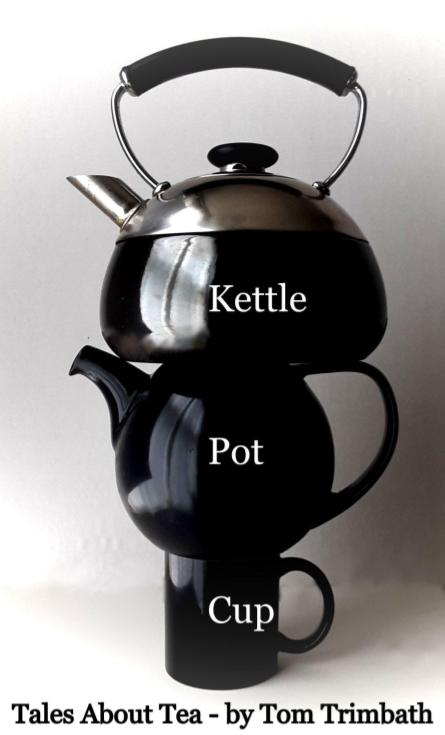
The book is done. The work has begun. On Tuesday was the first book talk for Kettle Pot Cup, a book I published about tea. This is a book about real tea, not with pinky raised or head bowed, but tea as part of our modern informal accidental rituals that are held in everyday locations like coffeeshops, offices, deck chairs, etc. Life’s too serious. Tea’s an opportunity to lighten up. The book is also a way to support tea growers in troubled areas. For the author of the book, however, this is when the serious work begins. But that’s true of most events in our lives.

Writing is an interesting business. Writers are typically introverts. Worlds exist within their heads. Writers filter those worlds into words, edit them, polish them, wrap them in a cover, and produce a book. Congratulations to all who’ve managed to do that. 

Business is the realm for extroverts. Business owners are alert for what customers want. That requires reaching out, sorting through the population to find the niche that wants what the writer, now author, has to sell.

It is rare to find people who are introverted enough to create that world of words, and extroverted enough to introduce it to the right people. Approximately two million books are published in the US every year, most of them self-published. Only a few percent of them make significant money. And yet, writers write and become authors because money isn’t everything. (Gasp!)

Writers also write to get their message out, capture and chronicle their thoughts before their thoughts are lost, supplement a business, support a cause, and a near infinity of other reasons. Some are simply curious whether they can actually do it, can they actually finish a book. 

In communities like Whidbey Island that has hundreds of writers out of a relatively small population the phrase, “I finished my book”, can take on multiple meanings. It is polite to find out if they finished reading someone else’s book or finished writing their own. If they wrote their own, and you’re willing to dive deeper into details, ask whether they’ve finished the first draft, the last draft, the editing, the formatting, or are working through the publishing process of cover art, marketing materials, proof copies, or finally declaring victory because it is finally available for sale.

Then the work begins.

I’ll get to the personal finance part in awhile, but here’s my book’s story (the seventh out of seven of 16 depending on how and what you want to count) so far.

Kettle Pot Cup is done! The first copies arrived about a month ago. Because of caution, the first event was pandemic minimalism. The owner of a tea supplier (really much more than that, an herbal apothecary, Kachi Cassinelli of Dandelion Botanical) held the camera and directed the action while for a few moments I removed my mask and presented the book.

As I said, the book is done, and so is the first book talk. (You are welcome to contact me about scheduling a similar event at your facility.)

Now the work begins. The book proceeds are going to charities that support impoverished tea pickers. Research is required. Distributing books to bookstores can mean lots of driving to possibly deliver a book or three or rarely more. The gas costs can exceed any proceeds, at least until the bookstore is willing to order from the supplier or is willing to accept drop shipments by calling me. Signings happen, though those are less common. Interviews happen, if they fit a niche in a production schedule. Fortunately those were going remote even before Covid. And in the modern world there are many hours devoted to socializing on social media, a resource that must be tended with caution and respect because that can be the greatest leverage available, especially to an independent author.

So, you probably understand why I encourage you to buy Kettle Pot Cup, maybe schedule me for a talk, or even just connect me with your preferred tea charity.

(PS It is available on Amazon, but in the mysterious ways of publishing, at the same list price ordering a copy through Lulu.com generates over $10 towards donations, but ordering through Amazon.com only generates $1. I don’t know where the other money goes.)

Now, back to personal finance.

One last book note: Note that the book proceeds go to charity, not to me. I will gladly accept honorariums from book talks, however. I need to respect my time, and somehow pay for expenses, eh?

There are many events like ‘finishing a book’ because they represent an event, but also the beginning of a new phase of life. Buy a house. Welcome to homeownership and many trips to the hardware store. Get a dog. Welcome to companionship and many walks around the neighborhood and trips to the vet. Buy a stock. Welcome to wondering how it is doing, or being prepared to ignore it and then be surprised because it moved while you weren’t watching.

Most things are easy to buy. Pick them up, pay for them, bring them home, and maybe even use them. Necessities can come with maintenance, resupply needs, proper storage, and maybe not losing the manual – or at least finding a good YouTube channel that tells you how to deal with what you bought.

It is too easy to buy so many labor-saving devices that the labor involved in maintaining them becomes too much labor. Buy a car? A necessity for many, though not all. Buy a second car, maybe as a backup, or for special purposes like hauling stuff, and you’ve doubled your chores. Buy a boat. Buy an RV. Buy a drone. Buy bulky toys like skis, kayaks, fishing rods, and bicycles. It is possible to rationalize them all, but it can be hard to maintain, and maybe not even use, them all.

With help from a friend, Don Scobie, I’ve had fun interviewing various members of the unofficial Whidbey Island writing community. (WritingOnWhidbeyIsland.com) It is obvious that there is no one way to sell books. Some use social media. Some knock on doors. Some hold sales, or give away copies for free until demand no longer demands any extra effort. Some are simply lucky. Writing a book can be like writing a literary lottery ticket. The odds are terrible, but are better than the real lottery. The payout as an author can be much smaller, but at least on Whidbey Island, the most expensive house for sale is frequently the home of an author who did very well. Regardless, there’s no formula for success, except for those who have enough resources to enlist publicists and other team members (who also must be paid.)

There’s more than one way to run a household, a life. Advice columnists, politicians, and ironically personal finance authors, can make it sound as if there’s one true and sure path. Life isn’t that simple. 

We all get to decide what life strategies we’re going to pursue and what projects we’re going to attempt. Time and money are limits that can be overlooked with the appeal of that new thing to buy or that new project to add. We’re human. We have limits. We’re imperfect. We can’t solve every problem. We can do what we can do, and it makes sense to not do too much.

Now, I’ve got some charity research to do, some finishing polishing to apply to my sci-fi novel, some photo essays to advertise and complete, my regular real estate work, and, and, and – and I haven’t mentioned the sequels. Hmm. Maybe I should go back and re-read this post for myself.

(Disclosure: I’m a real estate broker at Dalton Realty, Inc. http://whidbeyrealtor.com/). There’s a blog post and a video about that, too.

Posted in Uncategorized | Tagged , , , , , , , , , , , , , , | Leave a comment

Affordable And Unaffordable Housing

(WA state required disclosure: I’m a broker at Dalton Realty, Inc. http://whidbeyrealtor.com/).

My house’s tax assessment came in today. Yesterday I was part of a group meeting about affordable housing in one of your local tourist towns: Langley. A month ago I gave a presentation about real estate and affordability on Whidbey Island. Just prior to the pandemic I was also part of the discussion about housing on the less-touristy part of the island that is dominated by the Navy base. Throw in a few years of writing about affordable housing in the Seattle area (Seattle.Curbed.com) and eventually I might take the hint that I have some experience with the topic.

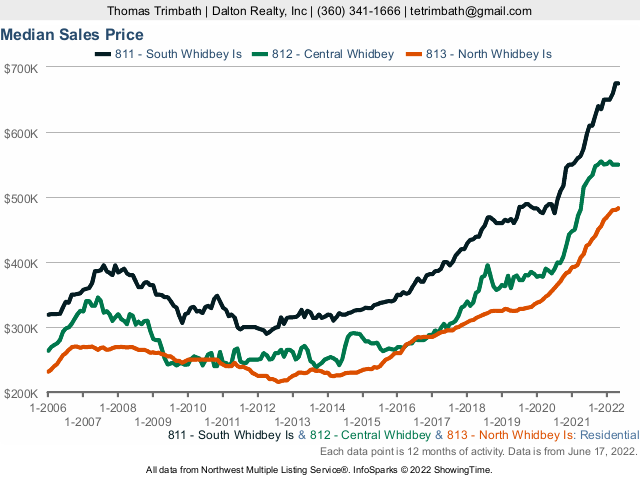
1) Affordable housing is a term that’s easy to mis-interpret. The current median sales price on the south end of Whidbey Island is $675,000. That sounds unaffordable to some, but the multi-million dollar homes sell to people who can probably afford them. We could use a different phrase.

2) Ten years ago the median sales price for the same area was $292,500. It was considered somewhat unaffordable then. ~130% increase in a decade? That’s a reasonable rate of return, if you’re the one with the house. If your income hasn’t risen by more than 130% in that time, then buying a house is less affordable.

My house’s tax assessment went up 22% in one year. 

Pessimist’s view: My property taxes just went up. My clients who want to buy might not be able to afford the house they want.

Optimist’s view: If I have to sell, I should get more than before. If I don’t sell, there’s that much more equity to borrow against in case I need a loan.

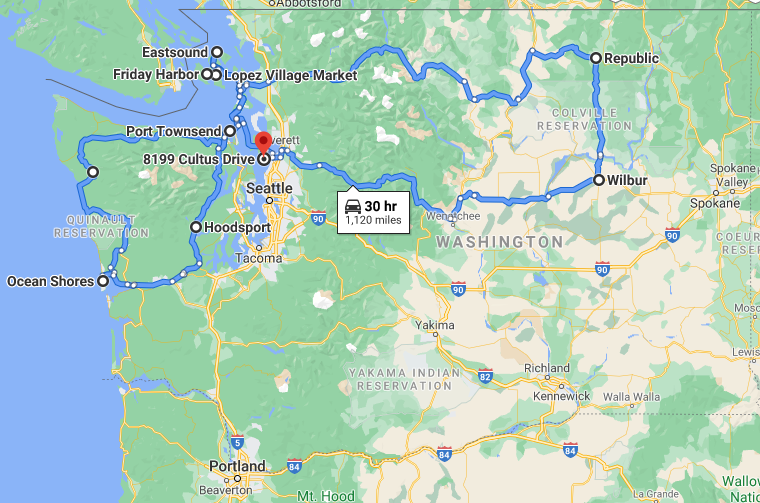
Pessimist’s/Optimist’s view: If I sell, I might not be able to buy – unless I move to zones that are under threat of wildfires or tsunamis. Fire or water; take my pick. (Remote Living – my 1,100 mile long road trip through Washington State’s more remote regions.)

The Langley Housing Plan, as well as the “Issues That Matter – Housing, Where will we all live?“, as well as the all-island meeting “Affordable Living On Whidbey” suggest that someone is paying attention. The continuing need also suggests that the issue hasn’t been resolved.

It isn’t only happening on Whidbey. Housing expenses are rising faster than wages, seemingly everywhere. Rising house prices prove that lots of people can afford to buy, frequently more than one, two, or more houses. Wage growth is nice to see, but it doesn’t seem to be enough. It might be one reason for the #GreatResignation.

Eventually something will change. Change is a constant. But will the change be evolutionary or revolutionary? #NotRhetorical

The move to remote locations has been enabled high-speed internet, decentralized electricity, and mobile phone coverage. Rural areas are the front line. Ironically, rural character can be espoused as something that defines an area; but that new rural character is far from the small, frugal, pragmatic, independent lifestyle of pioneer times. 

One of the more popular requests I get as a real estate broker is for a tiny house on a lot large enough for a productive garden. ‘Tiny’ can mean many things. To someone in a 3,000 square foot house it can seem radical to consider anything less than 1,500 square feet. To someone who has no home, 300 square feet can look luxurious. The irony is listening to people complain that tiny houses will impinge of the rural character of the neighborhood. 

Look at the houses that were built by true pioneers. Houses were as big as necessary, though not as big as they wanted. They couldn’t spare the time or money to build bigger. They needed those resources for wells, roads, clearing, and planting. Eventually septic systems and electricity were upgrades.

And then inflation and interest rates hit. I’m not grabbing for tangential news items. These are topics, current events. Housing becomes less affordable, again. (Housing Affordability Falls as Mortgage Rates Climb in April)

So, lots of talk while the situation worsens. Unaffordable housing is unsustainable. Eventually, something will change.

Considering years, decades of conversations it is possible that the old solutions won’t solve the new problems. Apartment buildings and dense developments are attractive to the housing industry because they use conventional models that create conventional jobs. They’re understandable. 

  • Tiny houses are happening, regardless of regulations – until a regulator notices.
  • RVs are not just for vacations, any more. Van life is trending, both by choice and necessity.
  • Living on a boat gets around the issue of having to find land.
  • Off-grid houses benefit from less oversight, simply because sometimes they are out of sight. Just hope nothing breaks at a bad time.
  • And don’t forget ‘other’ because innovation and necessity are familiar with each other.

And then there are the changes in the real estate industry, just in case enough wasn’t in flux. (Searching For A New Normal In Real Estate And Affordability)

How does that adage go? First they ignore you. Then they laugh at you. Then they fight you. Then you win. Inspirational, but not always what happens. 

These are dynamic times in real estate and housing. #MassiveUnderstatement I’m watching it happen from the inside and can’t see where it’s going and how it’s going to get there, and that includes on a personal level. Will I have to sell? Will stay by taking out another loan? Will my income or assets climb sufficiently for the issue to be more academic instead of dramatic? Dynamic times? Yes. Weird times? Definitely. Good luck predicting any of it.

PS I look forward to your personal perspective in the Comments

Posted in Uncategorized | Tagged , , , , , , , , , , , , , , , | Leave a comment

Population In Perspective

Sorry I didn’t come up with a catchier title, but my brain is having more fun playing with a couple of observations. It all started with the phrase, “You’re one in a million.” I think you’re rarer than that.

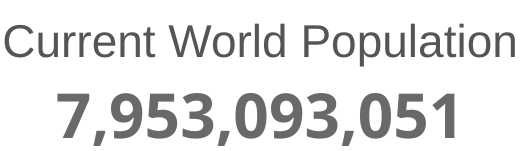
As I type the estimate of the world’s population is just under eight billion; 8,000,000,000. That’s a lot of zeroes. I’m not calling people zeroes, but that’s where we are, or will be after about 50,000,000 more births. Stay tuned. It isn’t far away. 

If a person is ‘one-in-a-million’ that suggests that there are almost 8,000 other people like them. The good news is that you are more likely to be one-in-eight-billion. That’s pretty special. That also means that if you are looking for that special someone who is ‘one-in-a-million’ you really have 7,999 others if one happens to be in a different country temporarily. Another way of looking at it, there are a LOT of fish in the sea.

The necessity of dating sites and the success rate of relationships suggest that the numbers may not be a good guide.

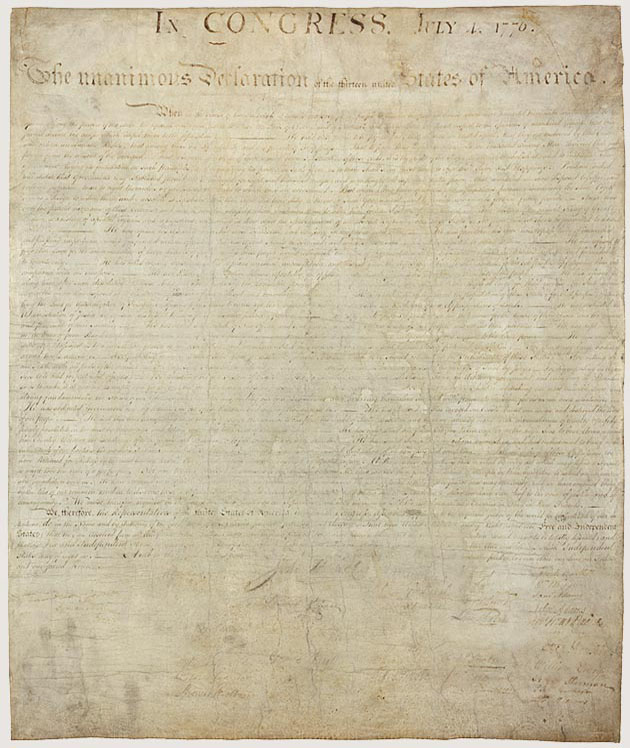
Another perspective I keep in mind goes back the one of my ancestors who signed the Declaration on Independence, Francis Hopkinson. Having such a less-than-celebrated ancestor is educational. The image of the perfect Founding Fathers got a massive reality check when I researched him. A fine guy, but he was very human.

Very human probably defined many of the signers. They all deserve credit for their work; but, it can be hard to remember that the prominent ones have been given that celebrity treatment, both in elevating them as well as chastising them. The rest did what they could, and I can easily imagine some of them treating the whole event as happenstance and dreading yet another committee meeting more than dreading the British.

But think about what the nation was working with. According to the US Census, the population of the colonies was about 2,500,000. One-in-a-million? That would explain two and a half of them. There were 56 signers. By the one-in-a-million metric most of them weren’t. And look at what they did. Imperfect? Duh. But, a successful revolution. (Maybe it’s about time to get out the polishing cloth, or at least the red pen for some editing of words that they knew were imperfect.)

Two-and-a-half million in perspective? That’s fewer than half the population of Greater Seattle. (And you are welcome to debate the Greater part. I am a long-time fan of the Lesser Seattle movement.)

A perspective I’ve shared before is based on my Dad. He was born just as the world population hit two billion (2,000,000,000). From what I could tell, he never quite understood why we had to worry about using up the planet’s resources. From his perspective there was plenty, and there always had been. He was born into a world that was celebrating another revolution, the Industrial Revolution. It was easy to think “This is great!”, or at least would be after he moved out of a coal mining town that was also experiencing the revolution that was the rising power of unions. (He’d also get to see the excesses of some of the unions with gangland style murders, and one episode that included a Teamster pointing a shotgun at his head at point blank range – and he was a member and past shop steward.)

Just out of curiosity, let me check the current world population (estimated).

Gee, there are more of us, now.

Supply and demand have changed. 

‘Go west, young man!’ Sure, look at what Lewis and Clark found. For over a century pioneers found the west, which worked well (but only for some.)

‘Work hard and build your own future!’ Which worked for my Dad, and benefited me and my brothers, too. We all went to college and built professional careers because our parents worked multiple jobs – until they didn’t have to. Then they went on cruises.

It didn’t work as well for my Mom, a woman who would probably be running a portion of the world instead of community projects. They were significant (building an ambulance service from an idea). She did impressive things, but she lived within limits. I wonder what she would’ve done in today’s world.

But now, some of the conventional wisdoms developed in those days no longer work. Anyone is allowed to work, which is liberating and welcome and necessary and just, but also doubles the supply of workers which has disrupted and confused sub-cultures and societies. As supply increases without an increase in demand, prices fall. This is one aspect of the new reality that some have yet to recognize, even though it has been changing since even before Rosie the Riveter had a chance to prove herself.

One-in-a-million. Supply and demand. Doing a lot with a little. Doing too much. One-in-eight-billion. Throw in robots, increased efficiency, a rising expectation of a rising standard of living. The world has changed. We are changing, even if we’re not fully conscious of it.

Did you expect this post to take this turn? I didn’t. But I expect such perspective shifts are going to continue happening, and the pace is going to accelerate. 

Hey, I was able to turn this into a personal finance post (which is appropriate because this is a personal finance blog based on my personal finances as described in my book about personal finance, Dream. Invest. Live. aka personal finance for frugal folk.)

Another reason for me to continue challenging the assumptions behind my financial planning, business planning, and even my job searches.

Some can see this as a shrinking of a human’s contribution. Some can see this as cherishing the increasing rarity of every life. And the romantics can be encouraged that finding that one person in a million is about 8,000 times more likely. (I’ll leave the effect of gender to personal curiosity and preference.)

And one last check…

Posted in Uncategorized | Tagged , | 3 Comments

Companies Stocks Markets Economies

Companies, Stocks, Markets, Economies – that’s a title that encapsulates a lot. Those four terms are distinct, yet they’re frequently treated as synonyms. No, they don’t mean the same thing; which is good news because bad news for one is not necessarily bad news for the rest. That’s handy to keep in mind when the financial world is acting weird. 

For those new to this blog, here’s a reminder that this blog is based on my book about my personal finances, Dream. Invest. Live. (Hmm. Looks like Amazon found a way to force a link and a graphic that I didn’t intend. I guess I’ll leave it rather than break something by trying to remove it.)

I’ll emphasize, this my, my own, my personal finance strategy. It is how I look at things. This is Not advice. I hope the SEC understands the distinction.

Companies are not stocks, but some companies have stocks.

Stocks make up markets, but many stocks have almost no effect on the markets.

Markets influence economies, but markets only represent a part of the economy.

So, a bad economy may mean a bad market which may mean bad news for stocks which may mean bad news for companies.

But, companies are in business. They’re busy, as in busi-ness.

Stocks are priced by people who decide to buy or sell or hold. Investors and stockholders disagree by design. If someone sold a stock, then someone bought that stock – possibly regardless of the company or the market.

Markets are ill-defined, so the news tends to concentrate on a few names, essentially brands; e.g. Dow, S&P, NASDAQ, etc. Even those names can represent many things because each has sub-markets: Industrials, commodities, etc.

An economy supposedly covers all the monetary activity for a country or region; but while my personal finances are part of a global economy it shouldn’t be a surprise that the global economy can have a fine day while my day was – troublesome. And the opposite is possible.

Trying to keep track of all of that can give a person a headache, at least. Pardon me as I pop a few more ibuprofen.

My life is complicated enough that I simplify this part of it by going back to basics, back to the beginning of this maelstrom. I invest in companies by buying stocks. The economy may not know where it’s going. The markets can be confused. The stocks can be driven by irrational pessimism or irrational optimism or apathy. My companies, however, are groups of people showing up for work, trying to meet deadlines, launch products, sell goods or services, and generally keep their jobs. For me, that’s easier to understand and easier to track. Note, I used ‘easier’ not ‘easy’. But understanding the whims of the stockholders, the enormity of the markets, and the swings in economies is much more difficult to understand.

It is June. For the last decade or so I have conducted personal, semi-annual portfolio reviews at the end of June and the end of December. It is time to update it. I’ll do so more meticulously by the end of the month, but while chaos seems to be building I’m keeping in mind that:

  • Geron is making progress on their telomerase treatments for cancer,
  • Lineage Cell Therapeutics is making progress on their spinal cord repair treatment,
  • MicroVision is making progress on their LiDAR system for autonomous vehicles,
  • Electrameccanica is selling their electric vehicle, and
  • Solar Windows is making progress on producing transparent solar cells for windows. 

No mention of the markets or the economies required. They all can influence each other, but meeting unmet needs tends to attract attention, regardless of the market or economic news.

Small companies are affected by stock swings, market swings, and swings in the economy; but their value tends to be in their products. Large companies drive the markets and can be swung by economic topics, but small companies can’t get distracted by those issues. Small companies have simpler goals, simpler resources, and can have clearer ways to measure their progress.

The downside to small companies is that they are inherently more fragile and riskier. They don’t have the buffers and diversity of a Microsoft. Microsoft has had several products fail; yet remains successful. When a small company only has one product, a failure in that product is catastrophic.

The upside to small companies, especially overlooked or besieged small companies is that their successes can be amplified. A $100,000,000 sale for Microsoft may not get much of a mention and may not move the stock, but that same size sale can turn a small company into headline news, and the stock can rise dramatically. (Details of three personal successes and three personal failures are in my book. Dream. Invest. Live.)

I’m not telling people to do what I do. You do you. But I’ve heard so much worry about the world that I decided to share this one simple (and risky) strategy that I follow. Life is complicated enough. Your way to simplify things may be no-load mutual funds, managed funds, commodities, crypto-currencies, bags of gold buried in the backyard, whatever. No strategy avoids every risk. Risk gets balanced by potential rewards, potentially. No strategy guarantees success. Find what works for you financially, but also practically and emotionally.

I titled my book Dream. Invest. Live. because all three matter. Dreaming inspires motivations and goals. Investing is one way to do more than dream. To Live is the ultimate goal, and one that shouldn’t be forgotten by only dreaming or only investing. Why make it complicated? Keep it simple. Good luck. That’s one simple thing we could all use.

Posted in Uncategorized | Tagged , , , , , , , , , , , , , , | Leave a comment

Kettle Pot Cup Launched

Kettle Pot Cup Launched

I hereby declare my book about tea, Kettle Pot Cup, to be launched! Yay! OK, yay. As befits tea, it was quietly launched with the help of friends and their business (Dandelion Botanical) that added to its inspiration. On May 25, 2022 I recorded (and then was more ably recorded when one of them took over the camera work) a short video announcing the arrival of the first official copy and the unveiling of the web site where it can be purchased. Life is different, yet some things remain the same, just with a slightly different flavor.

Kettle Pot Cup is the result of casual comments from a few friends. They half-joked about me writing a book about tea because I drink so much of it. One even came up with a hashtag for Twitter, #TomTea, which I enjoy playing with and which I’m sure they thought was just a one time joke. Surprise! 

While it seems like the perfect pandemic story, a book written during lockdown, the book was originally scheduled to be published by October 2019; which means it was a pre-pandemic project. Several repackagings and replannings and restrategizings later, it is finally done.

This is not a serious book, but it is for a serious cause. Like many of the things we eat and drink, the people who make it happen don’t always make as much as the final retail price may suggest. Fortunately the Free Trade movement is working to make things more equitable, but there’s more than enough work to do. For the last few years my business has been – waiting for a recovery; which meant I didn’t have much to donate, sadly. But wait! I may not have money to give, but I could write a book. Give the appropriate charities the book proceeds and maybe I could contribute in more ways than I expected. Let’s find out.

As for being a serious book, well, as it says in the description of my first book reading;

The old world has its tea rituals. The new book “Kettle Pot Cup,” by Tom Trimbath is about our modern informal accidental rituals that are held in everyday locations like coffeeshops, offices, deck chairs, etc. Come by for less-than-serious essays about the way we really drink tea.

Kettle, Pot, Cup: Tales About Tea
Tuesday, June 21, 2022  6:30 PM – 8:00 PM
Langley Library (part of Sno-Isle Libraries)
https://sno-isle.bibliocommons.com/events/6275b6968382fa28009358e3

Or, as the video’s description describes;

“Kettle Pot Cup is a casual telling of everyday events, wrapped into a book, with book proceeds going to various charities that support the people who make it happen.

Ah, tea. Why read about it? Drink it! But first…

Most tea drinkers include tea as part of their daily lives. There are rituals in Japan and England. Culturally tea has been influential for centuries. In the modern world the rituals look completely different. Enjoy observations on everyday tea, from coffeeshops, offices, deck chairs, and even some cocktails some teatails.

The world may need rituals, but someone who wants a cup of tea can have a ritual that is as simple as taking a bag of dead leaves, dunking it in hot water, waiting for the color to turn brown, and drinking it while they get back to work, or their drive, or while they visit with friends, or sit on the deck alone resting. That’s modern life, no bowing or raised pinkies required.

If it does well enough there could be a sequel. As most writers probably know, writing down one idea can create others. Kettle Pot Cup is thirty-ish short essays about tea in modern life, and as soon as they were declared done several more ideas already arrived. Stay tuned.

While the book was written with philanthropy in mind, it is also meant to be fun, or at least light. Consider it an excuse to read one chapter each day for a month. None are more than a few pages long. The book is hardback with color photos outside and inside. It is purposely produced this way to make it easier to give or even ship as gifts. There may be paperback or ebook editions; but for now, the book is available on Lulu.com. (Not Amazon – yet.)

I’ll be dropping snippets online. Check Twitter, Facebook, and LinkedIn for likely locations for lines I like. (Find me as Tom Trimbath or tetrimbath, usually. There are too many sites to keep track of all my usernames.) And, of course, find previous posts by searching for the hashtag #TomTea.

I’ll be dropping snippets online. Check Twitter, Facebook, and LinkedIn for likely locations for lines I like. (Find me as Tom Trimbath or tetrimbath, usually. There are too many sites to keep track of all my usernames.) And, of course, find previous posts by searching for the hashtag #TomTea.

I hope you enjoy it. I hope it does some good. I know I enjoyed writing it. And I suspect I’ll also enjoy doing readings and interviews. Contact me. Also, I encourage you to nominate tea-related charities. I can find some, but that doesn’t mean I’ll find the best. 

Posted in Uncategorized | Tagged , , , , , , , , , , , , | Leave a comment

Good Enough

Take a deep breath and find a good seat. A lot has happened in the last 48 hours; all of it is good, or at least good enough.

Just for the simple nature of it I’ll start with a personal best. Today was a low low tide, an excellent day to walk a greatly expanded beach. The birds noticed it too. Personal best: 48 great blue herons + several bald eagles + a few osprey + more gulls than I wanted to count. And very few people were out there. Two teenagers walked across the Cultus Bay channel without getting their knees wet. It was a low low tide for sure. Nice.

A walk like that ends with me kicking off my shoes and dumping out my socks because sand from the beach gets carried home. But that was interrupted because I had a surprise in the mailbox. I forgot that my newest book, Kettle Pot Cup, was due today. I couldn’t open it though because I didn’t want to smudge anything. Some clothing maneuvering and hand-drying later and the book was unveiled, revealed and met with my happy approval. It was not good enough before, but it is now. I got myself inside, opened the computer, approved the copy, and the publisher/printer, lulu.com, released it for distribution.

Pour myself a cup of tea, of course. Hmm. Pardon me as I pour another. (A garden blend partly from herbs from Dandelion Botanical, who also inspired the book, and partly from various plants in my neighborhood.)

OK. Cup refilled.

Well, the computer was open so it was easy to see if a video I’d been working on had finally uploaded and synced. Joe Menth over at Feather and Fox polishes my photos for my Twelve Month series on Whidbey Island and had delivered the final photos in the format I needed for the video. According the YouTube the video was ready. I added the description and such, and well, here’s that, too. Much better than using the unpolished photos that were good enough, but not as good as he just made them.

At the same time I continue to get to respond to people asking questions about the talk I gave at Langley Library two evenings ago. It was the first return to public speaking (something I enjoy) about real estate and affordability trends on Whidbey Island. (Disclosure: I’m a broker at Dalton Realty, Inc. http://whidbeyrealtor.com/). Evidently it was good enough, too – especially after I fixed a link to the slides. (Includes a link to the video, too.)

Weird Years For Whidbey Real Estate – May 2022

I’ve also started receiving consultation calls (I help artists, inventors, entrepreneurs, and creatives as I can.) And of course, real estate continues to be busy.

What’s next? Everything. 

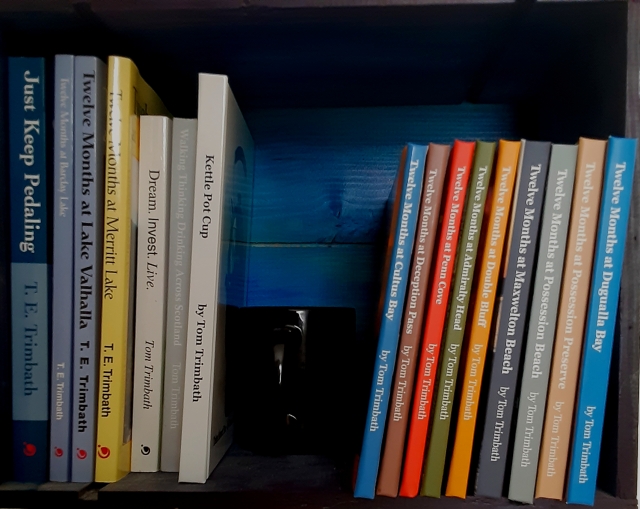
Real estate always catches my attention because, in this market, there’s an urgency and a need to be responsive. My twelve month series continues as I collect the photos for the tenth (and possibly last) book in the Whidbey Island series. (There’s also a three book series of the Cascade Mountains.)

The tea book, Kettle Pot Cup, now enters the busiest phase. The common perception is that writing the book is the hard part. So is telling the world about the book, which will be particularly the case this time because the book proceeds are going to be donated to various charities that support the people who pick the tea. The launch event needs to be scheduled, posters and graphics arranged, and I have to order enough books (using a loan) to have enough to show off and distribute. Then, there’s the first of hopefully many talks at libraries, online events, and wherever else is appropriate and reasonably possible. Besides, if people want signed copies I have to give them opportunities to meet them and their book. 

And just in case I was going to take time off, there’s another of my favorite projects, my first sci-fi novel, which I intend to finish this autumn. That one takes much more effort, and so does its promotion. I might even get engineering-ish and sketch the ship and the colony, but maybe that’s loading too much work onto my To-Do list.

To-Do list? The grass is growing as I type. Life maintenance continues. It is also the time for more fun. It is the season for hiking, dancing, and bicycling (if the bike shop ever finishes fixing it.)

That’s a lot to be doing, and then irony delivered another element. As I started typing this I happened to have YouTube on. The rocket scientist in me had to watch a NASA launch that represented to me my past career. Those were busy times, too. They paid better, but sadly the culture had a price. It made for an intriguing counterpoint to everything that just happened.

I enjoy what I do. My passion is for people and ideas. I like introducing them to each other. Such introductions can inspire creations and solutions in a world that needs them. So far, that work has been good enough for my creativity (and I always have more ideas), but not good enough for my bank account. See, I did turn this post back into commentary on personal finance, the reason for this blog.

At the end of my real estate talk a member of the audience proclaimed what others have proclaimed, that I am a modern renaissance man. (Proof of that was that I didn’t have to look up how to spell ‘renaissance’.) My quick reply was that many creative people in the Renaissance survived because they were compensated for their work. Maybe that will happen for me, too. I look forward to that being more than just good enough. 

Doh! I just remembered. This is about the time to restart work on my game based on Whidbey Island. So many ideas. Same amount of time as anyone. Let’s see what I can get done.

Should I re-read it and check for errors? Nah. It’s probably good enough.

Posted in Uncategorized | Tagged , , , , , , , , , , , , , , , , , , | 1 Comment

Cute Unintended Consequences

What to write about? What to write about? What the…? Well, thank you, world; I’ll write about that. Unintended consequences happen, and one just happened while I was wondering about what today’s topic will be. Evidently, I can take a hint, especially if it is an obvious one. A deer just gave birth by my wood pile. Cuteness happens.

Wooden fences fall down. Wood can survive for centuries or millennia as part of a healthy tree. Wood can survive just as long as part of a well-maintained and protected building. Wood can also have trouble when weather gets to work on it, as some of my house’s trim pieces can prove. Wooden fences in the maritime climate around the Salish Sea have to survive wind, rain, moss, critters, and nature in general. Rot happens. Part of my fence fell down – again.

My fence falling down isn’t too much of a surprise. It is old, and my neighborhood is one of the windier and rainier parts of Whidbey Island. Put the fence adjacent to vacant fields (which are probably about to become house construction sites), and dirt and weeds can pile up against the outside of the fence. Hello, rot.

For years I planned on improving or replacing the fence, but spare time and money have been in short supply. I try to be resourceful and creative, so I was curious about other options. Stone is best, but I’m not trying to build a fortress. That wouldn’t fit a seaside cottage style. Replacing with wood is typical, but 1) I’d like to find something that didn’t require injecting chemicals into the wood making it harder to recycle, and 2) wood prices spiked during the pandemic. That leaves metal. Metal is fine. It will rust, but at least mold and bugs won’t break it down. Besides, I’m from Pittsburgh and I’ve worked in a mill. Steel or aluminum make sense to me because they are recyclable. And of course, there’s always having no fence at all.

I’m guessing that having no fence at all is the preferred solution according to the deer, the bunnies, the raccoons, and a wide variety of other critters. Having at least a small garden is my preference. I guess the critters would like it best if I had a garden and didn’t have a fence. Since my fence fell they’ve proved that by nibbling the lower branches of the fruit trees, or in the case of a struggling apple tree, all of its branches. Sigh.

This spring has been setting records for wet and cold in the area. It probably wasn’t the best season for growing (though the weirdness of the world encourages some home growing, just in case.) So, I haven’t done much about the fence. Besides, finishing three books, arranging for public speaking events, and ramping up real estate has kept me busy.

Finally, I have a design that minimizes the use of expensive lumber, is simplified by using metal posts, avoids concrete, and reuses fencing that didn’t break when it fell (even though it damaged me in the process, but that’s another story.)

Ah, but there was writing to do and nothing was coming to mind. One solution: do some yardwork. So, go into the bedroom to change into my grubbies, peek through the curtains to check the weather, and notice a doe with two fawns. Surprise! Sweet. I actually saw it earlier and nodded at it because it was resting beside the wood pile, out of the way of aggressive dogs that I’ve seen attack other deer. It looked a little chubby, but I don’t judge. But now, two fawns. What a weightloss program!

Because my fence fell down a deer was able to find a safe place to give birth to the next generation. That’s not the consequence I intended or expected; but I’m glad for it.

Unintended consequences are common in my life. The world laughs at plans, and yet things get done. There’s chaos under heaven and the situation is excellent, which is just another way of acknowledging that trying to control reality is a silly endeavour.

I have some friends who are already demonstrating their skills, but it doesn’t seem to be enough for them to pay their bills. I can see some solutions (that’s what consultants and engineers do), but my energies and attempts barely nudge them. I know they think the same thing about me. We talk, but we rarely actually do what the other thinks should be done. That’s human nature because many times there are other reasons those things don’t happen.

At the same time, I’ve been thanked by many people who’ve told me that I inspired them because of something I wrote, a casual comment, or a bit of body language at just the right time in just the right way to lead them to success. Great! How’d I do that? I don’t know; I was just being me (and not charging, which may be worth exploring.) One started a large project that was intimidating. One eventually produced a movie and TV series. One became a multi-millionaire. I didn’t make those things happen directly, but evidently I helped.

Just as I accidentally enabled a deer to give birth to two fawns (who were nursing and nuzzling a few minutes ago.)

This isn’t about me as much as it is about you. It is easy to be demoralized in today’s world. Work can seem pointless. Compliments can exceed compensation. Progress can be challenged by pointless commentaries. 

But you can’t know everything you’ve done that’s made a difference. (Cue up A Wonderful Life, though out of season.) 

This week I found two comments online about me and some of my work that no one told me about. No Notifications, that I noticed. Nothing that was being used for marketing. Just simply nice things. By not notifying me they weren’t intending any consequences for me, but the consequence was that their words felt more sincere, and were more welcome.

The same is probably true for you, too.

My unintended consequences aren’t paying the bills. (Yet.) I can’t deposit them (yet), but I can value them for my own well-being.

Two fawns are cute, and having them outside my bedroom window was not intended, but they are a fine consequence. 

A more personal consequence is that, because they are there, I have a great excuse to skip working in the yard. Hey, that’s valuable!

Posted in Uncategorized | Tagged , , , | 1 Comment

Searching For A New Normal In Real Estate And Affordability

(Disclosure required because I’m writing about real estate: I’m a broker at Dalton Realty, Inc. http://whidbeyrealtor.com/. Not a plug for my services, but evidently you know where to find me.)

One big thing makes me think about bigger things, and I know I can only know a part of the story. Later this month I’ll make my first public presentation since the pandemic began, the update to my somewhat regular talk about real estate and affordability on Whidbey Island. (The Ever-Changing World of Whidbey Real Estate) The local libraries are starting to open up for public events, again. I get to be one of the first. Public speaking returns! Thanks, Langley Library and the Sno-Isle Library system. Thinking about that local story made me think about the larger story, which could be a presentation, too; but can also be a blog post here. Affordable housing and the sustainability of the real estate industry, there’s yet another place where the New Normal is being sketched in.

It is easy to assume that real estate news is only happening where you live. Everywhere must be different, right? Sometimes yes. Sometimes no.

In the previous year, real estate prices where I live (Whidbey Island) have risen about 15% to 19% depending on the part of the island. Those percentages are a worry. The island has been seen as unaffordable for years. Rather than temper that, the pandemic accelerated the trend. With price rises that exceed historical norms of a few percent it is easy to assume it is an isolated incident, maybe a consequence of city folks escaping to a place where there’s more room between people. (Rural Distancing)

It isn’t only here.

Here are some sketches of my opinions. 

Inventory is down. Twenty years ago people were more mobile. Families grew and shrunk. Upward mobility was followed by downsizing. Kids moved out, started families, and started households. Repeat. The Internet Bubble burst and 9/11 didn’t help. Instead of switching addresses every 6 or 7 years, people stayed in one place longer, like 10 years. The Great Recession hit. (The Second Great Depression in my opinion.) The typical length of a stay became more like 12 or 13 years. Double the time in one place, halve the number of house sales. It wouldn’t be a surprise that more felt it was difficult to move. Low inventory means low supply; so, if everything else stays the same prices will rise. Multiple buyers can find themselves competing which is frustrating, and drives the prices higher. The same number of realtors are trying to earn a living from fewer sales.

A common response is to build more houses. That makes sense, doesn’t it? Building more houses makes sense – as long as it is one house per household. There’s nothing illegal about celebrating career success and frugal money management by buying a second house; but the consequence is that buyers lose an opportunity. A first-time home buyer may have saved up for a mortgage, but in a competitive market their offer may lose out to a cash offer from the buyer who wants a vacation house, or two, or three. Nothing illegal about that. Building more houses is popular though because it means jobs for builders, regardless of who those houses are being built for.

Building more houses isn’t simple, either. Not-In-My-Back-Yard, zoning restrictions, resource limitations, and time complicate and delay the process.

One of my more Frequently Asked Questions is roughly; “Where can I find a fixer-upper, or maybe some land where I can park or build a tiny house?” That fixer may not nice enough for a lender, but is fine for a cash buyer. As for tiny, or even small, or maybe manufactured houses – they may be fine for that person, but the municipality, or the homeowners’ association may say no. The person who wants a house and is willing to compromise is blocked by policies that frequently reach back 50 years to a different world. 

Got lumber? It’s expensive, at least for now. Steel stud houses exist, but they aren’t common. Are there enough contractors who know how to build them? Even conventional houses can be delayed because conventional contractors are also in short supply.

Lets go back to that idea of moving. It was easier to “Go west, young man.” But we’ve gone west and are now bouncing around inside settled borders; and ‘young man’ has expanded beyond ‘man’ and ‘young’. West was affordable. Now, west is expensive. People in ‘more affordable regions’ may be able to find opportunities somewhere else, but they may not be able to move there. They are effectively trapped, having to wait for jobs to come to them.

Affordability is an interesting term. Housing is affordable. When every house is selling then someone, or some company, can afford it. A million dollar house is affordable, at least for a while, to whoever bought it. But. Affordability typically refers to the perspective of people who can’t afford a house. The solution is commonly to build more houses that are affordable because, as mentioned before, building is popular (when possible.) To me, solving that affordability has less to do with real estate and more to do with economics. We cheer wages when they increase 5%, but if real estate prices rise 6%, then real estate becomes less affordable for those people. Here comes a copy&paste from earlier. “In the previous year, real estate prices where I live (Whidbey Island) have risen about 15% to 19% depending on the part of the island.” That’s a problem, and it isn’t just a Whidbey Island issue. 

Hmm. If the people who want to move to better opportunities could become the contractors building the homes, but they’d need to be able to move here, but they can’t afford that, and … So the situation sits.

Real estate markets are confused. While prices are rising, inventories are falling. It is a seller’s market. It has happened before, but this time the buyers are changing. Corporations and investors are about 18% of the market. Some are buying to rent, diminishing the number of homeowners and raising the number of renters. That also means more people who don’t get the benefit of building equity, instead paying more out for the expense called rent. A bigger concern can be the number of houses that are treated as assets, commodities. Many stocks don’t return 15% to 19%. A stock can become worthless but land almost always has some value. Renting produces income, but renters are a risk that something might go wrong. Even if it is typical wear and usage, an investor has to manage the property or hire someone to do so. Some let it sit and  wait for a good time to sell. Those houses are no longer available. A house built for ‘affordable housing’ can be pristine and taken out of consideration while a corporation waits for the proper appreciation.

As a stock investor, the author of a book about personal finance (Dream. Invest. Live., the basis for this blog), and a realtor I may look at the real estate industry differently. I’ve only been a broker for a few years, not a few decades as some of my experienced co-workers. Before then I wrote about real estate for Curbed.com. I watched the rise of Zillow, Redfin, Estately, etc.; and it became apparent that they were probably going to do to real estate what Expedia did to travel. Travel was much more of a commodity because there is little variation in airplane seats, so it was possible to mechanize the process of buying tickets. Houses don’t work that way, except for where they do at least somewhat. Condos and developments are easier to see that way. If the approach works well enough there, would it also work in older, less regimented neighborhoods? How about rural spaces? These corporations act more quickly than the industry. They are willing to try ideas and see if they succeed or fail. That is the disruptive nature of capitalism. No judgment, here.

No judgment, but definitely conversations, especially among the other brokers who got their license about the same time as me. I recall one conversation where three of us agreed that the industry would probably radically change within the next 4-5 years; and of course I mention it because that conversation was about 3-4 years ago. There have been changes, and they aren’t done, yet.

Last year I did a quick analysis and found that in my area about 1/3 of the transactions included discount brokerages. To brokers that means reduced commissions and reduced opportunities in existing careers. Within the last month a senior and experienced broker pointed out that 3/4 of the listings were from outside the area. We are close to Seattle which has many more brokers. They are in a similar situation, so if even a few of them extend their range our way our market drastically shifts, especially when inventories are so low.

People hear about how hot and busy the real estate market is. It is easy to understand why it seems like everyone is making money. But, if there are 12 offers on a house that is good news for the seller and their broker, the winning buyer and their broker (assuming the deal closes), and 11 pairs of buyers and brokers who spent a lot of time and money moving on to the next offering. That’s 12 offers here on an island. I talked to one broker in Seattle who has been involved in listings with over 70 offers. That is a sale, but I also see about 70 frustrated sellers and brokers. Imagine the buyers’ frustrations and understand why they’re willing to bid higher next time.

As I frequently add to social media posts (but not to Twitter because this takes too many characters);

Interesting times for #realestate sellers, buyers, and brokers
(Disclosure: I’m a broker at Dalton Realty, Inc. http://whidbeyrealtor.com/).

(By the way, that disclosure is required, but it is also an example of why real estate communications can seem stilted and stiff.)

‘Interesting times’ is a massive understatement.

I am also convinced that these times are not the New Normal, though they are leading to it. Within the world of finance and economics money flows from assets to assets, regardless of their target’s necessity. Money has been flowing into real estate. Money attracts innovation and challengers. Long-established industries can change when innovation succeeds. Eventually, at least some of the speculative money will move on to the next commodity. Real estate will adjust again, but it will be changed; especially in commoditized markets. The old industry Normal may not be sustainable in such a situation; except possibly in custom and niche markets. Vacation rentals, vacant speculative homes, and a backlog of housing demand will be affecting the New Normal. None of those trends and goals, however, are likely to provide sufficient housing for those who can’t afford it until economies change and personal finances improve to where housing becomes affordable for more, many more.

Discount brokerages are not new. Travel agencies acting as brokerages changed, or vanished. Stock brokerages changed, with some becoming more exclusive and some becoming so affordable that commissions are barely noticeable. The change in real estate brokerages has begun, which might bifurcate into housing that can be commoditized more readily (condos, etc.) and more exclusive (custom houses and rural areas.) 

This is happening as inflation rises, a pandemic sweeps through, refugees from disasters struggle to find any kind of place to live. 

I don’t have answers (except in my dreams), but at least I can try to answer questions about my area – which I just realized I can use a plug for my talk at Langley Library on May 17 at 6:30PM. It may not be live-streamed (I don’t know, yet), but I hope to record it and post it to YouTube. 

As I mentioned above, interesting times.

Posted in Uncategorized | Tagged , , , , , , , , , , , , | Leave a comment

Not Good Enough

Don’t worry. I’m not talking about you or me or any other human, not even pets. Yesterday I had a bit of mail I’ve been eagerly waiting for: the proof copy of my book about tea, Kettle Pot Cup. Eager (optimistic) and anxious (pessimistic.) I was cool, waiting until I finished a chore or three before carefully opening the package of what is a first edition. Looks good, er, well not great, but, but, is it good enough? For once my answer was No. Sometimes not good enough really is not good enough, because good is subjective; and sometimes good enough is something to treat with respect.

For those who don’t follow every one of my social media posts it may come as a surprise that I like tea and that I’ve been writing a book about tea. (#TomTea) This is not a book about High Tea, though there are comments about getting high on tea. There are rituals around tea, but I drink tea because I like tea. I guess that the majority of tea is consumed (because saying tea is drunk sounds like tea has an issue that requires intervention), that tea is consumed by people at work, or at home, or in the car. We’ve created informal rituals about those too, but they don’t get as much attention. Tea is simple: dead leaves, hot water, wait a bit, and sip. No ritual required, though some will make a ritual out of how it fits into their life. Do you compost the leaves, reuse them, or dump them and the bag they came in into the trash as soon as the water turns the right shade of brown? It’s personal, and it isn’t formal. That’s what this book is about.

This book is also about the people who pick the leaves. Thanks to Starbucks (really), I became aware of the conditions of coffee growers. They don’t get much money from each multi-dollar cup of mocha whatever. It didn’t take much research to realize the same was true of the people who hand-pick tea leaves in the few hours of the day that are the best for harvesting. I don’t have much money to donate (Ha! #massiveunderstatement), but I realized it was possible to raise funds for them by writing a book about tea, and giving them the book proceeds from a nice, small, hardback book that would be easy to buy and ship as a gift. Hence, Kettle Pot Cup.

With tempered relief I sent off the book ready to print (I hoped). It arrived yesterday. Books might seem like they’re about words, but there’s a lot of work that goes into designing the cover, laying out the pages, finding a publisher or at least a printer, spreading the word (thanks for reading and sharing), and generally finding yet another detail to resolve. 

At a glance it looked and felt like I expected. This isn’t an ebook, so the tactile sensation matters. It was fine. But, there within minutes I found three things that may never be noticed by most, but even I could identify as something to improve.

The battle to find the balance point of good enough is something I’m very familiar with. In engineering there were specific objective criteria. Could a 747 with one engine failed turn by a certain amount in a specified time? (Yes, and that’s another story about good enough, but I don’t want to tread on the FAA’s toes.) The more frequent battle is within the arts. Listen to almost any podcast of WritingOnWhidbeyIsland.com, a podcast Don Scobie(y) and I co-produce and we’ll probably mention that line in the artistic sand. 

Most advice I receive tends towards, “It is probably good enough.” (Just like the punctuation of that sentence.) Advice frequently comes from people who haven’t even seen the product. In general, I usually tend that way, too. Books can’t be perfect. Have you found a typo in a book? Don’t be surprised. A 99% error-free book means 1,000 errors in a 100,000 word book. (Imagine how many typos there are in my millions of words online.) Writers frequently write to an error rate of over 99.9%, better than 100 errors, at a guess. 

The issues I found weren’t errors, but were things that could be easily improved and would remove distractions – and hopefully increase sales, and hence increase donations to the tea pickers’ charities.

And that was the thing that made me say, Not good enough. I’m trying to help someone else, and if a three week delay amplifies the benefit, then that’s probably worth it – as long as I don’t get detoured in the meantime.

Some may know that last week I also produced a book of nature photos of Whidbey Island, Twelve Months at Dugualla Bay. (Ninth in the five book series, which is another story.) The professional who helps me with cleaning and polishing those photos (Joe Menth) has much higher standards than me. We frequently have discussions about a photo which leaves him asking something like; “How can you not see that smudge?” If I have to stare, it is probably good enough for me. Not for him. ‘Good enough’ is subjective and situational dependent. (BTW His work is excellent. Feather And Fox Print Co)

With a bit of his help and maybe another person or two Kettle Pot Cup can be a dramatically better book. The words won’t change, but they’ll look better; and people do judge books by their covers.

I hoped to celebrate and announce the completion of the book in April, but it will now take until late May (which means missing Mother’s Day). It also means doubling up, or tripling up as I return to working on my science fiction novel (due this fall), and a busy real estate schedule (with my first public speaking gig due in a week or two.) Pardon me as I sip a cup of tea as that workload sinks in.

Good enough, or not, has more than one answer. Sometimes yes. Sometimes no. For Twelve Months at Dugualla Bay, yes. For Kettle Pot Cup, not yet. Stay tuned, and maybe enough a cup or a mug of hot water poured over the right dead leaves. Remember, you are good enough.


PS
For those post to be good enough the state requires that I add:
(Disclosure: I’m a broker at Dalton Realty, Inc. http://whidbeyrealtor.com/).

Posted in Uncategorized | Tagged , , , , , , , , , , | 2 Comments