Putting a price on a good neighbor misses the point. Someone who is there and who helps without asking is the way the world should work. I’m talking about a neighbor who is heading to the dump, offers to take my stuff too, and then loads it themselves. My neighbors were nice enough to load up a bunch of fallen fences and leftover wood from various projects and drive it dozens of miles to the dump. I’m in the midst of, as I posted recently;
Clean. Donate. Discard. Repeat. Also equals tired and less cluttered. Also uncovering mysteries hidden for 17 years.
Clean. Donate. Discard. Repeat. Also equals tired and less cluttered. Also uncovering mysteries hidden for 17 years. Stuff. Stuff. Stuff. Whew and wow.#homeownership
Someone proclaimed me Mr. Frugal, an honor. That also means that when part of my fence fell down, I only threw away the broken boards. My neighborhood is windy enough that it doesn’t make much sense to put the fence back up until the winter winds are gone. Oh, but other projects got in the way, so years go by with literal stop-gap solutions while the wood weathers and waits.
I’ve also found that maintaining an emergency preparedness kit alleviates some anxieties. While some aim for the three-days, or three-weeks, or three-months of food goals, I include enough lumber and plastic sheeting to patch up holes in my house, just in case.
For a number of reasons that will become more apparent this year (for events that I can’t predict), much of my time has been spent with the mantra I mentioned above; “Clean. Donate. Discard. Repeat.”
Frugality can amplify creativity and resourcefulness.
Frugality can also lead into the trap of clutter and enter the realm of packrats.
I’m getting new neighbors on the other side of my gap-toothed fence. Any new fence, or even repairs to the old fence probably won’t default to the original style. Out goes the fallen fence material. As I plowed through that pile, it became obvious that supply of fresh wood wasn’t as fresh anymore. Out it goes, too.
Call the local companies who haul stuff to the dump, get quotes of hundreds of dollars, and be glad for neighbors who saw the pile and asked if I wanted it taken to the dump. Sure!
That became part of collecting old, partly-busted plant pots, a never-used handmade shelving system, yard waste from an invasive species, and a bunch of stuff from a bunch of categories that added to yet another load. Look around the yard and be glad it looks so much nicer.
Similar things are happening indoors, too.
Life and living is not static. Breathe in. Breathe out. Repeat. Accumulate. Store. And, after a few seasons or years, use, donate, or discard. I failed to do that until recently.
I found: a few bicycle tires, a three-foot wide mirror with another mirror hiding behind it, rolls of carpet backing in the attic of this hardwood-floored house, cans and bottles with best-by dates that expired a decade ago,… A local thrift store took some. Habitat for Humanity took the big stuff. The recycle and dump stations get almost all of the rest.
Now, the inside looks nicer, too. (This is also an excuse to swap out an old, but functional, fragile lamp for something more efficient, like an LED floor lamp.)
Having too much of a good thing isn’t necessarily a better thing. Duh. Sometimes, that accumulation is a good thing. Having the right materials at hand without having to sprint to the store is a great thing if the project is a surprise, during a wind storm, at night, on a Sunday, when the roads are bad. But preparing for every eventuality can create an infinite burden that is impossible to manage.
An image comes to mind from my martial arts training. There’s a stereotype of the always strong, always flexed, always primed and ready expert. One thing that hour-long sparing sessions teach is tight/no-tight. Walking around all tightened up is slow, tiring, and also looks silly. Be tight when necessary, but necessary may only last a second. Relax so things have a chance to flow, and may succeed with less effort.
Being ready for every emergency is being continually tight, especially in times like these. To get through, relax and breathe. And maybe toss out some old stuff that served its purpose or may never be needed. Watch for nails. And know that, what you think you needed then may need to be replaced with what you need now.
How long do you or I have to wait for the good news to come? That depends on the topic, the issue, the reason to wonder about it. Next week, two of my largest (ha!) stock holdings will announce earnings. Both of them had Forward Looking Statements in 2022 and 2023 that suggested that by about now, good news would arrive. Those bits of quantifiable, signficant, and positive items of good news didn’t arrive then; so, I must consider selling my house now. A week of waiting, but then, I’ve held shares in both of those stocks since 1999. For the next week, I wonder and wait while also cleaning my house, decluttering, and shopping. It will be an interesting week.
The short version, which I’ve already delayed by a paragraph, is Geron and MicroVision, GERN and MVIS. Geron’s mission is simple, but its technology is complex. Their goal is to extend the human lifespan significantly. MicroVision’s technology is inherently simple, but evidently, its commercial applications have had problems. (#MassiveUnderstatement)
Geron started with four innovative technologies, things like stem cells, cloning, controlling telomeres – and it’s been so long that I forgot the fourth. To stay alive, they’ve sold off everything except controlling telomeres. Telomeres are molecules that tell cells when to die or continue living. Control cell death, and hopefully control cancer. Control cell life, and maybe autoimmune diseases become easier to manage. I might be wrong, but that’s this shareholder’s understanding. Their current target is blood disorders. They’re aiming for FDA approval. Approval means they can finally begin treating people, and hopefully become a long-term and viable company, and also extend the treatment to other disorders. It has been a long road.
MicroVision, oh MicroVision, is based on the ingenious idea of oscillating a mirror on a chip. Light bouncing one way becomes a display. Light bouncing the other way becomes a sensor. Bounce light both ways and do things no one else can do. I’ll try to add a spreadsheet of most of the products they’ve tried to commercialize up to 2019. It is an impressive list. My favorite is a projector that fits in a cell phone – which is no longer available. Close behind are augmented reality glasses that they worked on before I ever heard of Google Glass. Now, they’re selling augmented reality headsets commercially and to the military, but they don’t get nearly the press of Apple. They are also trying to sell the sensors that let autonomous vehicles see what’s around them. To stay alive, they’ve diluted their stock so much that my initial investment may be hard to recover. MVIS, too, has been on a long road.
Google FinanceGoogle Finance
Waiting much? Yeah, but look at the books I’ve written and see a pattern of long-term efforts. Of course, if you could see my finances, you could see a pattern of “Well, that should have worked, and so should’ve that, and that, and…” It’s time for the road to finally get somewhere significant, positive, and quantifiable.
My style of investing is called Long Term Buy and Hold, LTBH. Buy stock in a new, small company; ride it through times that are probably risky; sell it after it succeeds and benefit from the proceeds. My style of investing is described in my book, Dream. Invest. Live., which is called that because I invest to live, not to simply win some game.
LTBH worked well enough for most of my investing history that I was able to retire in 1998. Thank you to the stocks that people who laughed at the time, stocks like SBUX (Starbucks), AOL/AMER (America Online), PIXR (Pixar), FFIV (f5 Networks), et al. This ‘should’ work.
It also worked with two other key stocks: DNDN (Dendreon), AMSC (American Superconductor). They kicked in just as the Great Recession hit, which made my life something to look forward to. Then, in two unrelated cases, both companies were targeted by groups that bankrupted one and severely damaged the other. Both groups were found guilty, but the money, my money, was gone. I subsequently lost 98% of my net worth. That story has played out in this blog, and the story continues.
LTBH is risky. I can make a longer list of stocks where it didn’t work. That’s the nature of investing. Some go up. Some go down. But buying Long has a nearly unlimited potential upside. Ideally, a few great ups can counter even more downs because the downs are limited to losing 100%. Some of my ups have gone from ~$1 to ~$40.
Two of my downs also reveal an unexpected consequence, bankrupt companies that become successful. Dendreon went bankrupt, but they’re back in business. Unfortunately, my shares are gone. Iridium was and is a satellite telephone service that went bankrupt, but is still operational. The satellites were up there; someone might as well use them. The ideas succeeded, even if my investments didn’t.
Even the companies that failed can be considered successes for those employed there who made good salaries, bought homes, raised families, sent kids to school, and furthered their careers. Shareholders can complain, but from the perspective of a CEO making hundreds of thousands of dollars a year in various compensation packages, the company represents at least some success.
Some economics historian can say better whether LTBH made more sense in 1999 than it does in 2024. Just because it worked for me through 2010 doesn’t mean it works post-pandemic (though we’re still in it), or amidst computerized trading (now with AI!), or in the general chaos that is our current random world. I don’t know. I just buy and hold. And hold. And hold. And hold.
There’s a cartoon that I wish I could find. It shows two miners. They are both tunneling into a mountain, hoping to find that gold (or whatever.) One quits six inches away from breaking through into a treasure. The other, of course, perseveres that extra bit.
“Insanity is doing the same thing over and over again and expecting different results.” – Albert Einstein (supposedly)
Which is LTBH: perseverance or insanity?
Geron’s and MicroVision’s news will not resolve that quandary. Catchy phrases don’t have to prove statistical significance. I own both stocks because I like their potential. Geron exends human life? Excellent! MicroVision obsoletes big old boxy televisions with something that fits in a smartphone? Imagine the savings in warehouses, transportation fuel and costs, packaging and the inevitable landfills,… Or are either or both of them simply job centers for cloistered technical talent and nicely compensated management?
Next week, they report earnings, not necessarily product announcements. But both can happen, and I think the product announcements are past due. People need cures. Surely, more than one of MicroVision’s products will be a positive, significant, quantifiable success. In the meantime, it is time to clean up the house in case it needs to be sold; and apply for jobs still; and hope for my books and photos to sell, and while I’m at it, check that lottery ticket.
Welcome to another story and another video in my One Company One Story series.
This time, Solid Power (SLDP).
Here comes the amateur legalese.
I began investing in companies and their stocks in the late 70s, but am Not a certified investment professional.
My style and history of investing is described in Dream. Invest. Live., a book I wrote by request – which came out as the Great Recession (the Second Great Depression) began. Don’t underestimate luck. Oops. https://www.amazon.com/-/e/B0035XVXAA
I am Not an investment professional. This is Not financial advice.
Solid Power? Why does that matter? Let’s try that without the capitalization. Solid power? Why does that matter? Current electric vehicles (and have fun with using the word ‘current’ when describing anything electric, tend to use lithium-ion batteries. Lithium-ion batteries are one of the technical enablers for our increasingly-electrified infrastructure. Cars predominate, but Li-ion (and have fun with ‘lion’s, too) is used in many batteries. They are why devices can be recharged more times and last longer than things like early laptops. Great. Now, let’s get back to solid power.
Lithium-ion batteries are not solid-state. Liquids are involved. No big deal as long as they work, right? But, liquids can leak. Internal flaws can lead to fires. And, there’s always something better. One reason I haven’t bought an electric vehicle is because I suspect someone would invent something that would eclipse the early technologies used on current EVs.
Hello, solid power batteries. In Solid Power’s case, they are using sulfide-based electrolytes. They are solid, which is safer. Evidently, they should provide higher energy, and cost less than li-ion. ‘Should’ is the key term because new technologies always have a phase during their initial introduction when theory and ‘should’ meet practicality and reality. Witness some of the stumbles that autonomous vehicles are encountering as they ‘should’ not be causing video-worthy traffic jams, et al.
Solid Power is making product and making money. Sulfide-based technologies are less sensitive to geopolitical tensions over precious metals. As or if they prove their technology, their work should become better known. They are not the only alternative battery technology. (How about graphene batteries, which are based on carbon, which is an element that is also incredibly more available?)
I shall leave the technical spec comparisons to others more versed in the field. Solid Power does provide data on their product’s properties, but does not provide comparisons to Li-ion on their web site. But for me, that is just a bonus. If their claims of safer and lower cost are proved in the real world, that may suffice to create a profitable enough company.
Google Finance
Google Finance
The stock market seems to be debating the value of the company, something the stock market does for every company every second that the market is open. The company is down over 80% in the last few years, despite income being up considerably.
I’d dive deeper before investing because there is always more to know about any company, and because they have competitors that also warrant a look. (I’d also have to have something happen, like winning the lottery.) But, their technical approach and progress are encouraging.
I don’t know what’s going to happen; but, I hope they survive and thrive. I’ll be watching.
Have I really been doing this since 2015? I guess so. Every year, I watch the Super Bowl ads. I don’t watch the game because I haven’t watched a professional or college (which is also professional, in my opinion) game since about 1984. (Long story short, I prefer to participate than to spectate, to go hiking or bicycling or skiing rather than watching a bunch of millionaires play for a bunch of billionaires who then claim that the city must build them a stadium even as they profit from exorbitant ticket sales.) The ads, however, are valuable.
Ads, particularly Super Bowl ads, are snapshots of what industries are actively trying to make money from various markets. Industries change. Technologies change. Even politics and tone change. I watch the ads to see what the more mainstream American is being convinced to care about. (That’s right, my life is unconventional enough that I have to be reminded that people care about thin beer and cheap chips. Hey, I’m a minimalist. I don’t shop much.) Ads help me identify trends that are good to know for my various businesses, and for stock investments. Which companies look to be properly and positively disruptive? I’m old enough to remember watching the 1984 Apple ad for the Macintosh. I bought one, invested in Apple, – and that leads into a longer tale that involves naivete, fandom that fades, and a gig helping run a museum.
That Instagram post made me laugh because it is funny, but also because it is an example of how I see many of the ads. Cars show off how they can break the law, or display conspicuous consumption. Perfumes, cosmetics, and clothes portray fantasy realms that probably exist in someone’s life, maybe everyone’s life, but I still remember one first date that started with, “Oh. You’re tall. Good. You can help me hang these storm windows.” No lingerie, exotic aromas, or strategic lighting involved.
Usually, I write this post after the game. I don’t want to miss ads that everyone else says are ads not to miss. Now, Super Bowl ads are released days in advance. Some even get teaser trailers like movies. That’s not a surprise, considering that some ads cost tens of millions, which is more than most movies cost before the Marvel Universe era.
This year, I’m going to watch for a few subjects, and hope I find surprises.
AI? Duh. Gotta check the advances and the claims.
Politics? Do they avoid it, indulge in it, or make fun of it?
Health care: Not health insurance, and not health scares, but actual health care advances. And no, that does not include Medicare Advantage plans. I may fast forward through most of them to keep my anxieties constrained.
Electric vehicles: Are they claiming performance, novelty, sustainability, etc.? The most compelling argument I’ve seen is that charging at home means delivery versus wire compared to having to drive to a place where a tanker has driven to a place, and having to do that every few days.
As usual, I’ll skip the movie reviews. No spoilers, please. I’ll laugh and cringe at the ridiculous images of super-models (regardless of DNA) in impractical clothes in exotic locations. Cars that advertise the interiors are an example of how far removed people are from what is happening around them. Stop watching the movie and drive the car! Snack ads are processed food, and yet they’ll entice me to grab a bag of chips.
The world has a wealth of problems. Are we going to continue emphasizing an economy that relies on luxuries, or are solar companies going to get some exposure? Are any companies going to launch a product directed at people working from home? How about some AI that is more than glitchy gee-whiz?
OK. Enough philosophizing. I’ve written so far on a sunny Friday morning. Watching hours of ads works best by devoting time to them. Maybe Friday evening. Maybe Saturday evening. Maybe – gasp – on Super Bowl Sunday. Nah. I’ve got better things to do; but I will do this to find investments, some of which may end up on my YouTube channel’s playlist One Company One Video.
Thanks to AdBlitz for compiling the list I’ll draw from.
Booking.com – Be someone else? Have multiple personalities? Ah. Price was no object.
Snapchat – It’s not social media? More? Ah, less. More human. Like. But look less real? Love is good.
Google Pixel – Photos for poor eyesight. Interesting. Ah. AI. But if the person has bad vision, who is the photo for?
State Farm – Arnold. Does State Farm cover all of those disasters? I should check my coverage, but I’m pretty sure my agent said no.
Prime? – Non-stop action – from the service that now pushes even more ads, even for the paid service.
T-Mobile – Stars advertising as if they’d set up their own wi-fi.
Michelob – soccer – I’m guessing he’s a star. But what about the beer?
Netflix – spoilers
ABC – spoilers
Paramount – no spoilers, at least showing more than one show/star
NBC – more unreal reality shows, up to $200M? Unreal. Ah, greed.
Nissan – drive distractions
T-Mobile – stars, treated like a VIP, At least they offered something
Apple Music – stars, but good ad for Vegas
Sleep Number – smart bed
Grand Canyon University – creator, American Dream, virtuous action, buzzword bingo, God
Budweiser – snow, horses as ATV, deliver that beer!, and maybe more *
Burger King – $1M, getting customers to invent new offerings? Why not? But nothing about what they already have.
Crowdstrike – cyber defense in a scifi western town, but why them?
Uber Eats – stars, forget something else, Huh? Learning something new is hard?
Truly Seltzer – What’s he doing on that bull?
BMW – Stars? Christopher Walken! Electric. But what about the car?
Peleton – Not everyone is training for a gold medal, but show off those pects. Run your own race = personal motto.
Flowers.com – love stories – Could’ve partnered with eHarmony. At least they had their product in their ad.
Twisted Tea – Actually talked about their tea. Not interested, but real.
PlutoTV – Couch potatoes – Sad, actually.
ESPN – whatever
Starry – That’s new. Ah. Soda. Weird. At least they mention flavor.
BIC – Stars. Straightforward.
Hellmans – Kinda fun, and I don’t know why. No stars (that I recognize?)
Experian – Cool? Debt.
Skechers – Slip in. An actual feature.
Bud Light – Genie. I like the dog. Don’t care about the beer.
BetMGM – Gambling. Tom Brady? Don’t care.
Opendoor – That’s not houses are legally sold.
NYX Cosmetics – Stars. Weird.
Lindt – Love.
Oreo – Trojan Horse. Nothing about taste.
Pizza Hut – Pizza.
Pringles – Approachable, until focusing on the stars.
Liquid IV – First impression = water. Sugar-free. Electrolytes.
Mountain Dew – America’s sweetheart? I am old. Having a blast?
Doritos – Old lady revenge. Taste?
Squarespace – Flying saucers with recent footage. ?
Paramount – spoilers
E*Trade – Pickleball! Save. Cute.
Dove – Fails.
SToK – Anthony Hopkins. ?
Drumstick – Ice cream? Sweet creamy. More convincing than most.
Reeses – Change. Add more sugar.
Oikos Yogurt – Golfing. Golf cart. Strong.
Silk milk – Hawkeye.
Draft Kings – Gambling, as if there wasn’t enough money in sports.
Kia – Ice skating. Driving on snow (a little fast). Who has a rink like that?
Expedia – Cute scruffy dog. Chat GPT
YouTube – Sports. Appropriate, but not for me.
Paramount – spoilers
Coors – A train?
Pfizer – Instant impression, negative. But Here’s to Science is something I encourage. But I suspect it won’t do much.
and more, too much more.
That may be a first, nothing interesting to invest in. I mean, really; I watched that many ads and found nothing enticing? At least there were fewer fantasy ads. So much of what I see is outside my world. But, I am not mainstream anything, so it is enlightening to see that this is what hundreds of millions (billions?) of dollars were spent on with the hope of generating that much more revenue.
The ads were generally well produced. Nice quality. But the message still skews to stars are more important than non-stars. Who has a new service or product that will improve a customer’s life appreciably? But, that’s not the goal. Economies are driven by luxuries, not necessities.
I am fascinated by the disconnect between what people need and what is advertised. The Super Bowl has become even more removed from a middle-income life. Yes. Many items are at low price points, but they are distractions more than benefits. Diversions reflecting the circus part of a bread-and-circuses way of life.
Oops. Typed ‘lie’ instead of ‘life’, and wonder whether that wasn’t more appropriate.
Previous Super Bowl ad years had their weirdness, too. But at least there were more heart-felt moments. Are we missing those as well for fear of upsetting someone?
Maybe that parody video at the start of this post caught something that pulled advertisers back from the extremes of fantasy. I wonder if an advertiser would stand out by resonating with the other half of that ad. Trucks, real trucks, get dirty, haul stuff that scratches paint, end up with dents, and do real work. Ironically, even Mercedes makes such vehicles.
The stars are fun to watch. They are attractive and advertisers want to attract attention. But every ad that has a star makes me discount the advertiser as soon as I see the celebrity.
Trendy happens in real life. Show me trucks that have been used, and haven’t quit. Show me tiny houses and innovative manufactured homes; because I’ve seen them and know they are far better than old mobile homes. Show me cheap cell phones and better connectivity, but show me settings that aren’t populated by millionaires. Show me food that isn’t dominated by sugar, salt, and fat – or chemicals made to mimic them. Remember these things called grapes, avocados, peanuts, steaks, eggs, tea, coffee?
My rant is nearly done, and if anyone is still reading I am impressed. As I wrote above, I watch these ads for my benefit, and of course, I hope you find my impressions useful or entertaining. Today’s viewing marathon has been valuable by showing me so little. That’s a message, too.
I am sure I missed some ads, and some ads I saw and missed the point. But I know that I will look elsewhere for new investments. Someone out there is building a business which will significantly, positively, and objectively improve our world. We’re due for another ad like for the original Mac. Where are you?
It is the first Friday in February, and I’m celebrating two beginnings while watching an old show. Julia Child is making a Cold Turkey Galantine. I made two new web sites. I think I had the easier job.
Flashbacks may happen. I’m watching the earliest Julia Child episodes, black and white; dining is more than eating; presentation and appears must be maintained, and be prepared for hours of preparation and hours of cleaning up. A maid may be required. She took a turkey, took all the bones out, added a meat filling (because more meat is almost as important as more wine and more butter), cook it, and then start making aspic and carving shapes and… That’s Julia Child, and that’s French cooking in the days before gluten sensitivities et al.
Tonight’s dinner happens to be taking just as long but that’s because I bought a roast out of the discount bin, and it’s been in the for hours. I’m letting it rest, and will have some after I type this. Minimal effort. That’s Tom Trimbath and whatever label you want to put on it.
In some ways, it has taken less time to start a new blog, (TomTheWriter.com), and a new podcast (IntuitiveCreativity.com) than it took for Julia to cook. That’s not a measure of Julia or me. That’s a measure of how far the internet has matured.
Starting web sites when web sites were a new idea took hours. Take classes. Learn a programming language called html. Deal with slow connections. Eventually launch something that will be public, but to a very small audience because so few were online.
Entrepreneurs relied on old-style advertising, waiting to get into the next edition of the Yellow Pages, and handing out lots of business cards, brochures, and postcards. It took a while and cost a lot.
Now, entrepreneurs can start an online presence using templates and some YouTube classes in the time it took Julia to cook a turkey.
Let me dial that back a bit. The brochures make it seem seamless and quick. For me, it takes a little longer than that. Reality intrudes when details about setting up accounts, adding users, etc. become necessary. But it can be as simple as the cooking equivalent of ‘put the beef in the pan, put the pan in the oven, turn on the oven, then eventually turn off the oven.’ Poke it with something to see if it is done. Dine.
Late last year, someone suggested I get the domain name, TomTheWriter. They may have thought it was a joke, or serious. I thought either and both were fine. I already had a WordPress account. No one else had the domain name. I checked a few boxes, picked a template, answered some typical questions, and now have a new blog (as if I needed another one.) The good news is that, aside for posts like this one, my writing adventures can live over there rather than here, which is about personal finance. It also makes sense because, in addition to 8 books and 10 photo books, I have one sequel and one screenplay in work, with an easy half-dozen more projects in line. They deserve a home of their own.
More recently, a friend and reader of this blog who had an excellent blog told me I should add a podcast to this blog. Thanks for the compliment, but feature creep accumulates and I had enough to do. But. I turned it back to him and said something like, “Fine. When do We start?” He’s a fascinating guy. Why should I podcast alone? Spread the work around. I learned a bit, realized setting up a podcast was easier than I thought, and started the process. It took us longer, weeks, to come up with a name. IntriguingCreativity.com After that the site was up within a day, just an hour or so. Welcome to the overlapping thoughts of a high-level international business consultant and an ex-aerospace engineer. We’re both writers and public speakers, and we enjoy talking about the overlap. Tune in. Episode 1 is up.
Both of these sites are live, and are barely past the ‘put the beef in the pan, put the pan in the oven, turn on the oven, then eventually turn off the oven.’ Some spices have been added. Both templates have been lightly modified, just like the recipes I no longer use, and have been served up without much fanfare. No business cards, Yellow Pages, or postcards.
The frugal side of me finds this fascinating. Our society needs more voices. We have more than enough problems and too many of the old ideas aren’t working. I play with ideas in my books. Steve and I play with ideas in our talks. And it doesn’t take much. Ask me that in the middle of untangling some pesky internet kerfuffle and I’ll disagree mightily, but compared with what something similar would’ve required last century this is nothing to complain about. (But why is that audio faded!?!?!?)
Steve and I are adding our voices to the conversation, though we’ve independently done that for decades and now get to do it on a podcast.
I’m partly typing this to promote our podcast and my writing site (and Steve is excellent at coaching about marketing, which means I’m making him wince with my amateurish efforts); but my main goal is to tell folks that, rather than rant and rave on Facebook, or try to decide what Twitter/X is, give your voice the respect it deserves. The world is changing rapidly enough that we can’t wait until later, for whatever reason. What do you know that we don’t, but we should? We won’t know until you tell us, and by ‘us’ I mean all the people on this planet. It may be silly if we all talk at once, but it is better than only letting the gatekeepers talk and having to hear their party-lines echoed without thought.
Yeah. I started two new ventures. Yeah. I could’ve done it more efficiently. Yeah. Many people could make better looking sites. But I made mine. Please make yours, make it truly yours with your thoughts, not just echoes. We’re all in this together, and I certainly don’t know where we’re going. But I’m trying and having fun talking with people like Steve. I hope I, we, can help. And you can too.
Fresh ideas, inventions that I pass along to the world. Maybe they already exist. Maybe they’re useful. Maybe they’re fun. Maybe I don’t have the time, money, and resources to patent them, or develop them, or both. At least by writing about them here I am less likely to forget them.
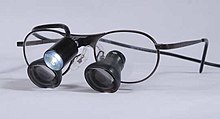
The idea is simple. I’ll use my dentist visit for an example. Traditionally, the patient is given tinted glasses to wear to block some of the light from the large overhead dentist’s light. The idea is to tune the wavelength, or polarization, or both of the light and the glasses so the light can be as bright as necessary, and the patient will be blocked from that frequency but not the ambient light or view.
The inspiration came by noticing my hygienist had switched to a headlamp rather than the overhead. That refreshed my experience of working around technical lasers in a lab setting where protective eyewear is required. The irony was that, the very lasers we were working with became invisible – which was the point. (Keep that eyewear on until after you’ve left the lab! And then make sure you take it off because you might look a bit odd at lunch.)
The eyewear I wore at the dentist was familiar, comfortable, and even fit over my glasses. Why not tune the eyewear to the light source and remove any extra distraction to the patient who is looking up at either the big old light on an arm, or even a headlamp on a dentist or hygienist?
Corollaries include any environment where the light source can be tuned. The hygienist immediately suggested tuned car headlights and tinted windows or eyewear. The headlights would still light the road, but the peak distraction could be dramatically lowered. This works as long as the reflected light, which is the light we see from the illuminated objects, would have sufficiently shifted frequency or polarization to be visible to the interiors of all vehicles.
Whether this Fresh Idea is serious or silly, writing about it is also a little gift to me. I enjoy playing with such ideas. Evidently, so do some readers. Years after I’ve posted some of them, they continue to attract traffic. Two of the more popular ones are: Dockside Tidal Power and Passive Pump. Maybe someone else has the resources to pursue them. Maybe they’ll remember where they got the idea and will be gracious enough to include me. Who knows? But the world has many problems. We need new ideas. It is hard to know which ones will make the biggest difference, but if ideas stay locked inside heads, the ideas may be revealed too late, or never.
Economics of distractions sounds like a PhD dissertation. Maybe I should go back to college and get a doctorate. Maybe I wouldn’t be surprised that someone else has already written about it. In reality, I’m hearing about football tickets, trying to find a quiet restaurant, and noticing how easy it is to fall into computers and smartphones. Distractions. Distractions. Distractions. What would we, or at least I, do without them?
Pardon me as I do a quick search on the price of Super Bowl tickets. Eep! They start, start!, at over $2,000. The max, according to my search, is over $60,000. Even the average is almost $9,000. For four hours of entertainment? Yipes! A week’s wages, a month’s pay, a year’s salary for the time between two meals. They can ask those prices because they can sell those tickets. And then there is food, lodging, travel, possibly betting, possibly mental health counseling if the team loses, probable infrastructure repair. Fascinating.
As a society, we spend billions of dollars on an event held between millionaires playing for billionaires in stadiums paid for by taxpayers in cities that have homeless and hungry people. Oh yeah, and then there are the ads for luxuries that have little to do with normal people.
I live alone, so no one gets to see me shake my head at the absurdity.
But it is only an absurdity to me.
Sports are popular. They are about games, but the majority of people involved are fans, spectators who enjoy the distraction of ranting and raving about things that can sound vital but are really trivial. Ah, but ranting and raving can be therapeutic, so there’s a mental health benefit. Maybe that’s worth it.
Change of topic
I am a fan of socializing, dancing, parties, basically things where people being with people are the main thing. Conversations are key for me. At someone’s home, it is easy to control the volume. Even dancing doesn’t require blasting eardrums. How else can socializing happen at a social dance event? Head-banging parties are visceral, cathartic, and other multi-syllabic words that ironically describe events where words can’t be heard.
As we come out of our protective shells (possibly too early), I’m glad to see that people want to talk with people. Conversations are happening again, or at least trying to. Restaurants have learned that a loud environment encourages extra spending. People resort to eating and drinking even more when they find they are sitting in a space for long enough. Conversations can last a long time, but look at romantic lovers who forget to eat or drink because they are engaging enough. Try to find a place for a romantic meeting, however, and don’t be surprised if the place charges more.
Want to live someplace quiet, without distractions? Pay. Want a quiet car? Pay. Want a quiet vacation? Pay.
Change of topic
Computers and smartphones (which, of course, are computers) command attention. Life and society existed before them, but now we’ve integrated them into every aspect of our existence. We have convinced ourselves that the answers are in the boxes. Even bureaucracies require us to obey computers, which can frequently be distracting as simply saying Yes or No can inspire a chase of files, usernames, passwords, two-step authentications, updates and downloads. It feels more vital because we’ve done so much to get something done. Paper and pen were cheaper and slower, but use a computer long enough and it must be replaced with something that costs hundreds or thousands of dollars, and comes equipped with software and services that add up to that much in subscriptions.
Television wasn’t immune. How many people need the distraction of watching shows that are preferred to being quiet, or at least quieter?
Be with each other, or simply alone. No ads required. Hyperbole by choice rather than delivery.
I am not immune. Music, shows, videos, movies, I ask them to distract me from overthinking things. Their distractions are welcomed to help me do dull chores. Unfortunately, entertainments become necessities, even though they are not. In the meantime, none of them are free. Even if they don’t charge money, their providers get something from our attentions, and we spend time providing it.
I realized this about myself during the lockdown part of Covid. How to fill the time?
I write. I like shows and movies and such, but I soon realized that I liked my stories more than I liked rewatching other stories, or watching stories about characters who weren’t engaging to me. There may be a nobility to writing, but I realized I was writing as a distraction. Carry me away to, in my case, a science fiction story about people escaping a malevolent Artificial Intelligence, or a fun series of essays about tea, or a possible movie about a 14-year-old spoiled brat who has to grow up quickly on board a sailing ship in 1876. Yes, there’s a nobility to writing, supposedly, and yes, I need the money (and still do); but one of the major influences was how to distract me as a single guy who can’t spend much while responsible friends are acting responsibly cautious?
Summary, sort of
We are born with few distractions. They are vital distractions and we can’t articulate them, even though they are few. As we mature, obligations are layered on us, and distractions provide temporary refuges from those obligations. It is easy, however, to redefine those distractions as vital enough to be worth paying for. Thousands of dollars for a few hours of a distraction? That’s an interesting example of needs and wants, values and morals, peer pressure versus self-care.
Human needs are inherently simple. Life requires little for food, shelter, and such – on an individual basis. Civilized society requires those layers we drape across ourselves and then carry around with pride at being able to handle the burden. Of course, our civilization makes it possible to accommodate billions of people instead of however many can be self-sufficient.
But I remind myself that I have layered myself with obligations, and then lay distractions on to counter their weight.
I wonder what life would be like if sports were played more than watched, if any time and place people want to gather, they could do so with what they can say and do, and if we ruled our tools and used them temporarily rather than continually.
How much more could we get done, how much better could we live, or at least how much more could I do and how much better could I live if there was less time and money spent on distractions?
15 years (16? 17?) and done – a ten year photo essay of Whidbey Island’s waterfront nature
“Whidbey Island is more than one place. It is more than one visit. Most tourists carry away a few photos. Few locals get to see the entire island. I hope I’ve made celebrating the island a little easier.”
It has been a long effort and I thank those who followed, encouraged, and even bought art as the project progressed. There can always be more to do (galleries, talks, maybe a compendium) but I declare this something to celebrate, as is Whidbey Island.
The deer are here. Seven deer are grazing their way through my front yard. They just survived days of freezing air, freezing rain, rain, snow, and winds. Eat up. My Roku died. What am I going to do for background music, a show to watch during dinner, a possible movie, and white-noise ambiance to help me sleep? I am glad our roles were not reversed. Disasters, or even just bad weather, can put things into perspective and also highlight what’s truly essential.
The deer, my Roku, a few computer glitches, are not news. Or at least, they’re not news for the news. Listen to your friends in real life. The issues people talk about are people, kids, and pets, houses, maybe their cars if they’re not working right. The news is not going to care about the local weather unless they must or if there is a good video of a bit of disaster. The things I’ve heard most about this week have been frozen pipes, housing friends until houses are fixed, driving, flying, food, doctors, – and sports, but I ignore that.
On a personal level, the world is worrying about climate change, politics, and economics. I’m worrying about my broken Roku, an overworked computer that choked on a massive file and subsequently lost a week’s work, a frozen then busted rain barrel, and my car’s low air pressure sensor that is confused by low pressure caused by low pressure. PV=nRT, as I recall.
This is another duh! comment. There is a disconnect between what’s on the news, what’s in social media, and what’s on the minds of my friends. Some of my friends are very concerned with causes that need support and injustices that must be revealed, but they are also talking about their kid’s painting, their new pet’s antics, and whether the roads are free of ice. The volcanoes emptying a town in Iceland doesn’t get as much attention as the mini-earthquake we had 33 miles (km?) beneath us.
It is the nature of a Digital Singularity that change is a constant, and that rate of change is constantly increasing. Keeping up with the news is impossible because we are presented with an overwhelming wealth of insights into the world that we could easily ignore before the internet arrived. And yet, many try. I do, too.
But Nature delivered a series of storms with such regularity that it was if the world was going to see what it took to slow us all down long enough to look around our neighborhood. Here we are, about a week later, and I can see a patch of blue sky, the mountains on the horizon, and the possibility of a nice sunset.
For a week, we worried about those pipes, and roads, and gutters, and trees, and things that were immediate. I used ‘were’ on purpose because they ‘are’ immediate, but as the comforts of civilization return, we pull back to wander outside our close circles. What show should we watch? Are the sporty teams playing? For the more serious, how’s politics – especially this year because every day counts and we just missed a few.
Eventually, we re-establish normality (ha!) and begin ignoring the essentials and assume they will work. When you’re shoveling a sidewalk or driving on ice, the weather is more important than a poll or a caucus.
I was one of the lucky ones. I was anxious the entire time, but my pipes didn’t freeze. Maybe my anxiety made me drip faucets, run lots of hot water, and double-insulate the lines. Cheaper than busted pipes! I burned a lot of firewood in case the power went out when it was 11F, but the power stayed on until some car hit a pole. At least that was when we got back above freezing.
My Roku broke, probably from being dropped so often that I can’t tell which bounce broke it. I shoved so much work through one computer that it clogged, barfed, and trashed a podcast episode I was editing. Another file that I’ve eagerly awaited for months finally arrived, and promptly overwhelmed the computer, and possibly another of my machines.
We’ve entered 2024. I accelerated the publication of Firewatcher a few years ago because the rate of change in the world was about to out-strip the backstory. As I watch what’s happening, or will when I get my new Roku, I think I am right that the acceleration continues. (Hmm. I hadn’t thought about this until now, but everyone could find their personal limit when they disengage and quit trying to keep up.) Great things are afoot.
Intermediate things are afoot, too, because life requires a response, sometimes to disasters, sometimes to deadlines, sometimes to good news.
Immediate things can out-prioritize them all. If the pipes are frozen, worry about politics later.
Politics is on schedule to change this year, and it isn’t waiting. Climate change is rattling our cage by throwing weird weather at us. I even have doubts that our economic system can remain unchanged for much longer. Go ahead, please, add to the list.
It’s a Friday evening, so I’ll write and write, and without the Roku, maybe watch some YouTube, or write some more. I have more than enough food and fuel. I can ignore them for a while. The deer have come out of hiding, munching their way across my lawn. These ones survived. These ones survived and are a reminder that most life does what it can with what it has. That’s how life has worked, continues to work, and is a good reminder that concentrating on the basics and persisting can accomplish much of what I need.
Sputnik had launched and was cheered by some, scared many, and cheered and scared plenty. There was a call for aerospace engineers. I eventually became one.
World War II was only fifteen years earlier, about as long ago now as the Great Recession.
The Great Depression was only about twenty years earlier.
The Roaring Twenties were only thirty years earlier.
TVs were black and white and novel, and there were fewer than a handful of channels, and they didn’t broadcast 24 hours a day.
Slide rules ruled.
Nuclear annihilation was imminent, and the Cuban Missile Crisis was years away.
Dwight D. Eisenhower was US President and would be followed by John F. Kennedy.
Boeing’s 707 was revolutionizing travel. The 727 was years away.
The US Civil War was less than a hundred years ago.
Most of my grandparents were immigrants, and the ones from Poland were discriminated against.
Pittsburgh was a dirty city.
Encyclopedias were books on bookshelves. I read my family’s even though it was years out of date because I was the youngest.
Telephones were plugged into walls. There was one per house. Party lines were still common.
McCarthyism was over and we had yet to see an assassination, Watergate, trickle-down economics, and politics over pragmatic management.
January 14, 2024
I’m certainly not going to list current events, accomplishments, and concerns. That’s what the internet is for.
I turn 65. Browse through my books, blogs, and social media posts for three million words describing a subset of my life.
January 14, 2089
Ha! Let’s see…
I suspect the Earth will continue to orbit the Sun, and the Moon will orbit the Earth.
Life will continue, despite what we do. That does not guarantee that humans will be involved or like it.
Geology will continue.
Climate and weather will continue.
The solar system and the universe will continue. Universes, in the plural, will also continue, if they exist.
2089? I’m not even sure what will survive to 2044.
Once upon a time, a nationwide radio program interviewed me about my decision to get a 40-year mortgage. I wrote a book about personal finance. Didn’t I understand that math? Sure, I did. I also understood some of the assumptions behind the system. What would the US be like in 40 years? Would there even be a United States of America? Would there even be a dollar? Would democracy or capitalism survive?
Once upon a time, I was chastised by an engineering supervisor for believing that a computer would have more than one chip in it.
Once upon a time, I was chastised by another engineering supervisor because I preferred to type rather than write in longhand (a term becoming an anachronism) or print.
Once upon a time, I was told by another engineering supervisor that I was being repeatedly passed over for positions and promotions because I was “too comfortable with new ideas.” An interesting declaration considering that I was in research and development at an aerospace company.
I have doubts that the organizationally controlled aspects of civilization and society can continue because change is happening faster than they can change. I have no doubts that individuals will make the changes necessary. I don’t know which influence will be stronger. I don’t know if either will be in time to avoid massive disasters.
I suspect we will give artificial intelligence increasing control, and it will make tough choices that we decide to evade. We may not like the results. We may worse at it, but trusting AI anyway.
–
I am now officially old, or at least old enough to qualify for various senior discounts. I feel my age, but these aches seem like the ones my Dad had when he was 45. He lived to 89, and felt it was time to go. My Mom died at 72, and one of the doctors took my Dad aside to tell him it was because of a mis-diagnosis. Her doctor didn’t listen to her, nor review her decades-long health log.
If my Dad was born now, he wouldn’t have spent all, all, of his educational years legally blind. He only learned he needed glasses after he graduated because he tried to get into the Ari Force. He went into the Merchant Marine instead. In almost every job and position, he ended up running things. If my Mom was born now, Wow. Even as is, she started and ran non-profits, including an ambulance service. She should’ve been in politics or diplomacy.
My finances are my biggest worry. I have many worries (a trait I learned from both of my parents, and that story was revealed to me by mental health professionals), and almost all of them trace back to not having enough money to sustain even a frugal lifestyle.
I am also an optimist and know that the work I’ve done, my professional and personal networks, and good luck, good fortune can change that in a moment, an email, a phone call, a social media post, a chance encounter.
I also reflect on a comment I recently heard.
“The only thing sadder than a pessimistic and poor young person is an optimistic and poor old person.”
I don’t agree, but as I wrote, I reflect on a truth within there.
Change is the only constant. Within a Digital Singularity, as I believe we are, change isn’t constant because it is constantly accelerating. It isn’t a straight line of change. It is a curve that curves out of sight. We can’t see where these changes are taking us.
That impossibility of a reliable vision makes planning almost a farce, and yet, we must, I must, plan. I think I filled out everything for Medicare and Social Security, and won’t be surprised if I made a mistake. I am human. My current financial position is uncomfortable, so I must plan to make more money or move or both; and I know that can change as I wrote above.
I envy those who have more comforts. I pity those who have had too many comforts. Too many are comfortable and clueless. I am clueless about many things, too; but, my journey has shown me some of the foundations, crumbling or not, at the base of society – and I feel sorriest for those who fell deeper into that basement.
I have a good idea of what is enough for me. I am glad to see it isn’t far from me. And I hope it gets closer and I regain that level of comfort.
I’m sure by now you know it is my birthday. Actually, I am writing this one day early so I can spend my birthday relaxing untethered from a computer. Be amazed if I don’t log in, anyway.
It is January 2024 in Clinton, Washington on Whidbey Island. The temperature is in the teens. A friend’s pipes froze last night. Others have no heat. This is suburbia, and such things happen in middle-America. We’re due to thaw in two or three days. It is a good time to be thankful for enough food for a month, heat, electricity, health, good plumbing, – and I’ll stop there because, if I start counting my blessings you’ll get bored and I’ll get carpal tunnel. Not everything has to be typed to be respected.
To those who wish me Happy Birthday, thank you. To all of you who have been there to help, thank you. I think I’ll take the Universe’s hint to pause, rest, and relax for a day or so. Then, the future, oy, the future. Let’s see what’s next.