My Jobs Report Month 20

Believe it or not, I lost count. Month 20? Really? Yep. The only way I could tell was by checking for the most recent report. This job search certainly hasn’t gone the way I expected. At the start, I expected it to take a few months, and I planned to report on the job after I found it. A few months in, as friends worried that I wasn’t looking, I decided to pass along these reports. Surely, there’d be one month that brought the reports to a close because of singularly good news. Not yet. Reality is messier, but progress is being made. The race isn’t over.

There is good news. My role as Project Director of the Virtual Museum of HCLE (History of Computing in Learning and Education) has gained traction with HCLE’s attendance at the Museums and the Web conference (#MW2013). Networking, finding solutions, connecting with potential funders and collaborators added to the momentum of the museum and the job. More funding means eventually more paid hours per week too.

There is more good news. I haven’t seen or signed the paperwork yet, but I’ve at least received an email with the subject line “You’re Hired!” How much more encouragement would anyone ask for? After I receive the signed paperwork and first check I’ll add the title Information Manager to my resume and LinkedIn profile. Another part-time job.

And yet, the job search continues because both of those jobs don’t add up to one full-time job, and both of those incomes don’t add up to enough to pay my frugal bills, unless I continue to not pay the mortgage. That’s where the real race is being run, between foreclosure (the paperwork for which is in the house, I think) and recovered finances.

I continue to apply for full time jobs, but few have responded. Entry level jobs turn me down for being over-qualified. Professional level jobs turn me down without saying why. One of the most encouraging full-time positions responded early in April. That job had the great title of COO, Chief Operating Officer. That would’ve been that singular job. On the up side, they provided the nicest rejection letter so far. “You have a fascinating and exciting life/background. I think we are looking for a different skill set but you are someone I would like to meet when we get through this process!” Now, to find someone who wants to hire someone with a fascinating and exciting life, and add their episode to it.

Of course, such a singular job would be welcome, but I am committed to my part-time jobs and my consulting clients. Saying yes would unleash a string of negotiations, most of which are with understanding people. It might happen. I didn’t guess that this job search would go on for twenty months. I’m sure any guess about what comes next could be equally inaccurate.

The most likely scenario is typical of many people recovering from financial upset: replace one full-time job with many part-time jobs. Fortunately, my potential part-time jobs are on flexible schedules. I feel sorry for people funding a lifestyle through three retail jobs, each with fixed and irregular schedules. Every week’s schedule is probably a negotiation. The ones I talk to feel stressed and relieved. How does one person working multiple jobs show up in the unemployment reports? None of the jobs are W-2 jobs. They are all 1099s. I wouldn’t be surprised to find that the unemployment percentages are based on W-2s. 1099s exist for contractors and employees that companies don’t want to directly count on their books. The number of jobs being filled may increase but the number of employed people is a different number.

These are the details I am relieved to address. They are complications in my life, and they aren’t enough to pay the mortgage too; but, the jobs before me alleviate worries about being homeless and hungry. That’s a great improvement over the last few months. I’m not going to worry about whether part-time gigs confuse the economists. I’ll consider those implications as I try to better understand the news, but I won’t worry about it.

Twenty months. That’s a sizable slice out of a 360 month mortgage. Recovering from this financial upset may take just as long, especially at this rate. Fortunately, I have other resources that may speed things up. MicroVision (MVIS) had some good news for my portfolio. My self-publishing, social media, and planning clients are calling back for more. Classes (mine, Madrona‘s, WICEC‘s) are filling my schedule. Book sales are up, and that’s without much more of a marketing effort other than some blogging and tweeting. Today, my voice mail was busy with potential buyers looking at my house (where I think I left the foreclosure paperwork on top, and now that I’m back home I’m embarrassed because something in the sink should’ve been washed down and wasn’t.) The kindling of my various efforts seems to be catching, and if my efforts roar the recovery may be short and sweet and worth celebrating soon.

And here I sit past 9pm on a Saturday night, not finished with my work day, while writing about job searches. Through the course of the day I talked with people who have found part-time jobs, but who haven’t been paid; who are volunteering, but don’t know if the position will lead to a paycheck; and who left behind jobs because they weren’t given a day off in weeks or months, which raised health issues that could only be solved by self-imposed unemployment.

These are strange and fractured times. I feel that a race is on, not just between my finances and my mortgage company, but on a grander scale. There is a race between our financial system, the need for reform, and our ability to adapt. As all politics is local, for people below a financial comfort level, all finance is personal. Sequesters aren’t as important as the voice mail I received because of an application for another part-time job. They’re impressed with my physical accomplishments and want to meet and talk. I hope that’s an interview too. If so, they’re wanting to talk because of my bicycling, mountain climbing, running, hiking, traveling, karate experience, and dancing; not because of my business or technical background. It sounds like they want me for my body, not my brain. Well, if that’s what it takes to win this race, let’s see if I have what it takes.
Surprise Pavement
In any case, it looks like there will be yet another installment in my jobs report. Thanks for tuning in.
Posted in Uncategorized | Tagged , , , , , , , , , , , , , , , , , , , , , , , , , | 1 Comment

Words For Woes And Wows

Take notes. If your life is like most, you aren’t bored, incredible changes are rearranging your life, and you can’t count on your past to predict your future. We live in a time of great stories and, as a non-fiction author, I can assure you that memory isn’t as reliable as words written in the moment. It is one reason I blog. It encourages me to record key moments every few days and, even in such a short period, so much happens that I pause when I try to remember it all. My friends are in a similar state, which makes for conversations filled with exclamations, digressions, and a search for new words for woes and wows. I think that is temporary.

This blog is about personal finance: personal, because a person is a life and a life is time and both are non-renewable and precious; and financial, because we’ve constructed our society around money, even for basic needs. Those two words cover a lot of territory, which means I rarely lack a topic. Some days, like today, there’s a surplus worthy of a book. The irony is that the blog started with a book (Dream. Invest. Live.). The world is circular.

Dream. Invest. Live.

Within the last week, various topics have been part of conversations: serendipity, foreclosure, bankruptcy, opportunity, jobs, sales, passages, insurance, exhibit, dance, dismay, joy – a list that feels like a large portion of the Oxford English Dictionary. Personally, I’ve had to build a logic diagram to understand the consequences of foreclosure, bankruptcy, and good fortune. I’ve also had surprises in sales, books to proofread and help publish, referrals for consultations, possible jobs decisions drift away indefinitely while other unexpected opportunities arise, students arrive, exhibits appear, and talks squeeze into my schedule. The clutch for my mental transmission and the clutch for my emotional transmission are both working hard enough to warrant a cool down session on the deck, but I haven’t scheduled that time – yet.

Soft Rocks - Twelve Months at Cultus Bay

Spiritually, I feel that it will all work out; yet logically, I am forced to balance the influences by adding and subtracting dollars. Spirituality doesn’t work to a schedule. Unfortunately, finances, especially bills and debts, can be merciless managers of time.

My mortgage company, at least I think it is them, sent me a package that may forestall foreclosure, but that brings me closer to bankruptcy. (I can’t be sure the package came from the mortgage company because some of the collection tactics have included paperwork that misrepresented itself as coming from banks that aren’t involved. I know. I called the bank and checked. Is someone committing bank fraud?) The sum of my recent good fortunes is encouraging, but empirically, is not enough to remove foreclosure and bankruptcy from the list of possibilities – yet.

It’s a gorgeous spring day here in Langley on Whidbey. Between that paragraph and this I ate lunch down at Waterfront Park, the place for whale watching without boarding a boat. No whales today, but water flat and peaceful enough that a kayak’s wake would be the most noticeable ripple. A necessary interlude.

I started writing this post amidst the internal turmoil of trying to decide about my foreclosure options while emphasizing the bits of good news that are welcome and sustaining, though not liberating me from debt. That break brought me back to the middle, the present and the now that are more than good enough for the moment. Today’s hectic lives provide little obvious opportunity for such times. Activity layers on action spawning worries about what’s being overlooked. Undoubtedly, something is. As situations improve we’re able to get by with a bit less work, take time to relax, and live better lives. That was the goal of retirement, but that goal appears to be more of an illusion; which means finding ways to balance concerns, time, life, and money becomes a part of life maintenance.

Working from a coffeeshop is a fine window on hurried versus stilled lives. It appears to be relaxed and casual, with the smells and sounds of espresso shots being pulled. Being in a small town means it is easier to see behind the facade. Here are the stylishly unemployed – and notice that they are drinking tea, if anything. Here are the perpetually busy, living along their passions – with some striving for a destiny, others from concerns and fears of loss, and others working towards and through recovery. Thoreau’s lives of quiet desperation aren’t as quiet as they were, but the desperation hasn’t reached boisterous levels either – yet.

Yet is a word commonly used by the optimists. The present has too many woes. Wows are arriving, but have a long way to go to bring lives back to celebration. Yet, the optimists know that the trends are good. Adapting to the change is necessary. And that, with a focus on what’s yet to be, they’ll be able to get through the unpleasant parts of the present.

While writing my books about bicycling across America, year-round travel in Washington’s Cascades, and walking across Scotland, I saw that my memories didn’t match my notes or the photos. Days were grander or more sedate. Pains were forgotten or amplified. Even the weather changed, and remembered sunshine showed up as drizzle in notes and image files. Walking Thinking Drinking Across Scotland Conversations with friends include a search for words of woe or wow that are honest and accurate without triggering defenses against hyperbole. It isn’t easy, and that’s from an educated and artistic collection that has impressive vocabularies. I thank everyone who has shared their words, either written or verbal. Communication and an acceptance that many of us are working through unique yet similar struggles is our best support system and eventually a fine record of how we managed to survive and thrive.

I especially thank those who’ve interrupted our conversations about their struggles with, “Hey, I just realized that you could help with that. What do you charge?” (Thank you HCLE, NRM, and all of my personal clients.) So far, it’s not enough to please my mortgage company, but be assured, it’s pleased me and helped all of us progress.

Posted in Uncategorized | Tagged , , , , , , , , , , , , , , , , , , , , , , , , , | 2 Comments

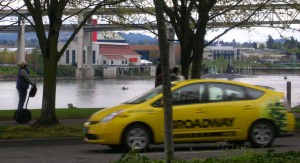
Portland OR AND

Some simple declarative statements. Portland really is nicer than everywhere (wearing rose colored glasses in the City of Roses.) It is possible to enjoy travel by not using a plane (especially when blogging from a train.)  Tiny houses aren’t just cute, they’re comfortable (which I can say with confidence after spending a few nights in one.) The best meals can come from a cart (BBQ ribs = burp.) A lot of those lessons occurred because of a museum conference convening in Portland that brought in people from around the world (including me) representing museums from around the world (including HCLE), and a different culture for me (museum folk don’t dress in bland). And apparently, Portland makes the simple declarative statement that all of the conventional solutions and declarations can be made AND being more inclusive means being more sustainable which means using AND not OR. Maybe they can change their address to Portland AND, or their name to PortlAND.

For the last few days I’ve been on familiar ground, a business trip to a conference. Such trips were common in my engineering career, and it was fun and familiar to register, wear the name tag, and start wandering around trying to figure out the program, the exhibits, and the networking. As the Project Director for HCLE, I attended the Museums and the Web conference. See, they were smart enough to use AND instead of or. Digital technology is changing museums and those who recognize the shift came together to talk together. Those familiar with my work in self-publishing know my refrain, which I’ll now extend. Modern Self-Publishing Digital technology allowed independent movies to revolutionize Hollywood, garage bands to challenge record labels, ebooks to shock publishing houses – and evidently, things like wikipedia to encroach on curated museum exhibits. For some visitors, why read a hundred words on a plaque when a quick search can lead them to a description that is as deep or as shallow as they prefer? (Even though it may be inaccurate.) The museum experience is changing.

I was there for an even more radical change: implementing a Virtual Museum for the History of Computing in Learning and EducationHCLE The majority of our material is documents, images, and software. Go digital and skip the cost of maintaining a building, while also making something accessible worldwide for much less. Many of the exhibitors had great solutions, if we had physical artifacts. Well, yes, we do, but we hope we won’t. We’ll scan, then upload the data and distribute the documents.

Conferences are great opportunities to change perspectives. Before the first session, a gentleman from Qatar unknowingly inspired me to think broader. HCLE is saving what happened to education and learning as computers became part of the classroom, but our focus has been on the US. Every nation and language has had this experience. Some cultures haven’t, the Amish probably aren’t the only ones; but HCLE could add other languages AND other cultures. Other conversations encouraged me to think about not just the 70s and 80s but AND the ongoing efforts. MOOCs happen. (Massively Open Online Classes)

For more about the conference, check out the twitter feed for #MW2013 and @HCLEMuseum and the eventual blog post, because you know I’ll post.

The world in transition needs ANDs. That was evident at the conference, because there were many points of view, but it is also evident in many other aspects of life, and that was evident in Portland.

Portland, the city of great food, beer, hotels, art, et al. AND one of the best meals was from a cart that my host overlooked because there were so many other options. AND I had a host because I decided to stay in a Tiny House instead of a hotel. A tiny house Portland has welcomed tiny houses enough to spawn at least one business (Portland Alternative Dwellings – PAD houses). They may only be about 120 square feet, but they are far more comfortable than a hotel. AND there are art museums and galleries AND there is plenty of public art, both official and unofficial. Portland has styles. Note the plural. AND it was a bit confusing trying to figure out how to get around because there were so many good transit options: bus AND trolley AND something that looked like a train – AND they were busy. If I lived there I’d include walking AND bicycling. I got the impression that Portland knows that solutions are necessary AND knows that they can’t know everything, so they let people add another AND to the list of options.

Writers and wordsmiths may be grinding their teeth because no one is doing all of those things. Many of my sentences should have been used ORs. But, no one can pick every option; some are mutually exclusive. The people get to pick from ORs. Portland, however, is defined by the fact that the city has this AND that AND the other thing AND the what in the world is that? If you don’t like what you see, look around and you’ll find what you want.
OMSI and alternatives
The last evening at the conference was at the Oregon Museum of Science and Industry (OMSI). For two hours they opened the doors and let us play and wander and wonder – with beer, that I didn’t drink. There were too many interesting people AND too many intriguing displays AND too little time. OMSI is evidently inclusive. We (HCLE) perused their newsletter files searching for computer references, which meant also seeing everything else they were involved in for the last few decades. Maybe their diversity has stabilized them and helped them adapt to trends early and in small increments rather than rushing to catch up later.

HCLE is about people who found a trend early and helped the rest of us adapt. OMSI is part of that story, and of course part of many larger stories too. As a society, we are witnessing change. These few days have convinced me that we will do more than sustain, AND can thrive if we are more inclusive with ideas and people.

AND I grin when I realize that I realized that in a place that is tied to OR.

Tiny House Guardian Cat

Posted in Uncategorized | Tagged , , , , , , , , , , , | 5 Comments

Training And Technology

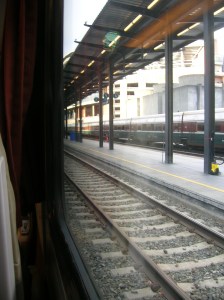
I felt the earth move under my feet. Well, really, it was the car that moved, the rail car. I’m blogging from Amtrak’s Cascades train heading from Seattle to Portland. It is a trip mixing old tech and new tech, luxuries lost and luxuries expected. And, it’s cheap! And distracting.

Amtrak Seattle

Writing is enough of a chore for many that they avoid it unless necessary. As much as we may bemoan social media, I think many unconsciously appreciate it because they can communicate in short bursts with less concern for rules. If you make a mistake, it’s all right. Your friends will understand. Today’s writing exercise is to type up this post while listening to the crowd in coach class: an occasionally boisterous family, a grandmother talking baby talk to her kindergarden grandchild, the requisite conductor’s announcements. Then there are the other distractions: Mt. Rainier, every garden that sweeps past, the train crossings marked by a whistle. Pardon me as I pause to plug in some instrumentals via my earbuds. (Ah, Beethoven.)

Almost every human endeavour has been affected by technology. That’s true of every age. Technology like clothing and knives helped us expand across the continents. The story tellers of those ages probably complained about their working conditions too, even while advancements made communication easier.

Waiting to board the train I read some Mark Twain, “What Is Man?”. He wrote as he traveled, probably pen or pencil on paper, maybe with a typewriter. Thanks to technology I just checked and found that he was the first to submit a typewritten manuscript to a publisher. He was an early adopter. I look for free wi-fi. Did he have to look for ribbons?

This is my first business trip in over a decade. As Project Manager for the History of Computing in Learning and Education Virtual Museum project, I am attending the Museums on the Web conference in Portland, OR – an opportunity to meet and great and learn from those museum officials who’ve pioneered virtual exhibits and artifact databases. Soon, we’ll be giving the presentations, after we’ve succeeded. A virtual museum is a mix of old and new. Originally repositories were probably exclusive, collections curated by nobility or clergy. Museums continue to rely on well-established patrons and organizations, but their primary role is saving history for the public. That role was met by large colonnaded buildings, but has progressively incorporated electronics to add content to displays or to lead visitors through the exhibits. Now, many museums are putting content online, partly as a teaser, partly as a service. Most museums have more artifacts than display space, and online exhibits give them the opportunity to show more of what they’ve got. HCLE is taking it one step further. Because learning and education are based more on software than hardware, and because research exists as documents, we’ll be able to eliminate the need for a building, except for offices and a space for the computers. We may even dispose of the more common artifacts.

There are gains and losses with any change. The cost of setting up and running HCLE will be smaller than most museums, while the value will remain high. But, people won’t be able to visit. Some people prefer to read old documents in the original form. I collect first editions. I know. There’s an appreciation of process and its constraints. Mark Twain probably wrote differently with pen than with his typewriter. Imagine, Wite-Out hadn’t been invented, yet. Cut and paste involved scissors and glue. Were his original manuscripts scraps of paper, gingerly held together, or did he re-type entire books? The changes experienced at the beginning of the Information Age involved mimeographs, mailgrams, xeroxes, and faxes. Yet, the technology became less important than the content. Now, content is so important that few consider if it was produced on a desktop, a laptop, or a cloud computer. HCLE can transfer a museum’s worth of content saving history and money.

This train incorporates significant technology: free mobile wi-fi, moving map displays, comfortable seats, an armrest of controls that I won’t have enough time to decipher. It also has maintains many of the traditions: the conductor’s cap, the dining car, the rolling scenery. Some things are thankfully gone: coal smoke. Some things haven’t changed: a wobbly ride (how did Twain write?, and how did they ever serve hot food?), noisy neighbors (because children will be children), and the inevitable yawn from hours of inactivity.

We live in an era of great change. Most of our changes are caused by technology; though now, technology is offering us new ways to change. We’ve become more aware of the rest of humanity. Our sense of village extends around the planet. A tragedy in Boston is met with compassion in Iran. An arctic species in peril finds advocates in the tropics.

I imagine Twain on this train. He would be exploring every facet, introducing himself to each passenger, possibly from coach if he mimicked most of his career, or from the empty business class section reminiscent of his wealthier days. Considering how much of his work is in the public domain, he might have to work up new material or accumulate money from honoraria. And he’d probably come away impressed, both positively and negatively, and would tell us about it humorously.

Changes aren’t panaceas, except that they do always make the future different from the past. One trick is to acknowledge the positive, and work with it; while, acknowledging the negative and avoiding it.

With that, I’ll quit typing, post this to the blog, share it out to social media, and relax back in my seat for a wobbly nap with glimpses of the eternal and natural view. The headphones stay in though. Noisy neighbors don’t change.

My Tools of My Trade

My Tools of My Trade

Posted in Uncategorized | Tagged , , , , , , , , | Leave a comment

Personal Tax Inequity

I paid lower taxes when I was rich. Yesterday I did my taxes. I knew it would be bad, but didn’t know how bad. It turns out, the less I’ve made the more I’ve paid. That’s not right. Add tax inequity to wealth inequity and income inequity and begin to understand why so many are dismayed. I knew this before, but I feel it now. The two main solutions are to either have a lot of money or find a way to live beside but not in the system. That’s another recipe for a bifurcated society, and that’s not good.

The situation is simple, and explains why living off investments is a cheap way to live. At least for my style of investing, which is to own individual stocks, the

re were usually losses to balance the gains. The match didn’t have to be exact, just enough to dramatically lower the tax. Invest for the long term (LTBH) and the taxes reduce some more. For the really risky, invest in small enough companies, hold them long enough, and there can be additional tax breaks. Taking on risks has its rewards.

Risks are called risks because they don’t always produce rewards. In my case, a string of misfortune struck coincidentally with the economic downturn just after I bought my house. My portfolio began its dramatic slide, but at least for a while, I was paying bills with stocks that played by the old rules. My taxes were so embarrassingly small.

Misfortune continued for too long and I had to rely on selling stock from my IRA. I cut my living expenses in half while trying to get a job and build my business. My non-housing expenses were near or below the poverty line. My taxes went up. There’s a penalty for misfortune. For some, living on so little means not having to file taxes; but, if living on so little means diving into an IRA before its time, then penalties must be paid.

Sucking whirpools happen

For some, those penalties must be paid by selling more stock, which is in an IRA, which incurs an new penalty, which becomes a negatively compounding cycle.  If those stocks weren’t in an IRA there’d be no penalty and there’d be no taxes.

The government had good intentions when they instituted the various IRAs. But they were designed with some of the same assumptions as Social Security: work until you’re 62, er 65, er 67, and then receive an income. Our world isn’t working that way. A recent NBC News report states;
One in four Americans is raiding their meager retirement savings to pay their monthly bills, according to a new study.
and as one of their interviewees said,
We didn’t know what to do. It was either bankruptcy or cash in our IRAs,” Amy Shankland told NBC News.”
Some are selling. Some are borrowing. Neither is a good sign. And, if life doesn’t improve before the IRA is emptied, bankruptcy remains the only option.

I paid my taxes yesterday, by credit card. The frugal part of me fought the notion for hours. Paying in cash would cost too much because I would have to sell IRA stock within days, thereby reducing my dwindled portfolio significantly. Getting an extension can incur penalties and fees, and isn’t supposed to be used for delaying payments. Counter-intuitively, paying by credit card was the most optimistic choice – and that was and is a difficult realization. In my life of sooner or later something marvelous is going to happen, a lot of sooners have passed by and the laters are due. If that good news is going to alleviate my foreclosure woes, then it will come in at a time to alleviate my credit card tax woes too. Stock, job, consulting, art news can arrive in time to cause that celebration. If that sounds uncomfortably risky to you, then congratulate yourself on being perceptive and wise. These are risky times. By the way, if the recovery comes via my stock portfolio, it will be stellar, probably based on MVIS, and inside my IRA which means I’ll pay penalties.

My situation and the other IRA tappers are undoubtedly not the only tax inequity examples. We complain about, yet accept, loopholes because loopholes seem to multiply faster than they can be closed. There must be other stories of dysfunctional systems, but I need to dwell on my recovery first. I’ll let others research the rest.

The troubling part for our system is that the inequities are compounding. Tax, wealth, and income inequities have always existed; yet, the data suggests this combination is historically uncommon. And something that historically uncommon may create an uncommon reaction that can be historic.

Posted in Uncategorized | Tagged , , , , , , , , , , , , , , , , , , , | Leave a comment

Lay Off Dreams

I had a dream last night. Don’t we all? My dream touched on a friend’s reality, my past, and a consideration of my present. It was a lay off dream. That’s a new theme. And it felt like a good dream. That’s a surprise, and then I realized that layoffs can lead to good things. It rarely seems that way at the time, but I guess that’s true of “the heroes’ journey.”

Listening to someone else’s dreams can numb a mind, so I’ll shorten mine. A group of us were milling around an auditorium, expecting news. No one expected celebrations, and they guessed right. Layoff notices appeared in their hands. Notes the size of index cards succinctly confirmed a person’s name and their layoff status. I didn’t get one, maybe because I was moving around so much, but I knew that an era had passed. Food came to mind, and I walked outside. A large, black, conservative sedan pulled up, a Japanese salaryman got out, walked up to me, bowed while handing me my card, and then retreated to the car. My eyes read the card as a layoff notice, but on a second glance I realized it said something different. The card was a ragged scrap of paper from some other form. There was nothing about a layoff. Under my name and on the line that said “status” was written; “Seriously Underpaid.” An accurate statement and seemingly useless, but it made me feel better. The dream ended with me making myself a steak for dinner. I think it was the last one in the freezer.

A real layoff hit a friend a week or two ago. She was working for T-Mobile, finally getting back on her financial feet and bringing some stability to life for her and her kids. Layoffs hit some people hard, but Maryann’s attitude was, “Well, that’s behind us. What’s ahead?”

This is what she looked like after being laid off. Imagine her smile when she has good news.

This is what she looked like after being laid off. Imagine her smile when she has good news.

She started a blog, invited fellow ex-employees over for hugs and shared resources, and attracted the attention of the local NPR station (KUOW). To quote a line from a frivolous 1976 car movie;
“[Franco rips off his rear-view mirror and throws it out of the car] Franco: What’s behind me is not important. ” – Gumball Rally.
Her most recent post announced a series of support meetings and a web page where friends interview friends (#FAFAJ) to help them express their skills, talents, and interests beyond what a resume can provide. Her bad news was bad news, and appropriately mourned, and then replaced with planning for a new future.
(By the way, an online resource for anyone is the Simple Living Forum, hosted by New Road Map Foundation.)

I left Boeing in 1998. There were plenty of reasons, some of which are in my book, Dream. Invest. Live. (which is the basis for this blog); but what crystallized my decision to leave was the announcement that layoffs were probably coming. The grapevine had said so, and finally lower management acknowledged it. My portfolio was doing well enough that I expected to be a millionaire soon. Whether I liked my job or not, I decided to volunteer for layoff to possibly save at least one person from losing a job they needed. Because I wasn’t officially laid off I didn’t receive a severance package and didn’t receive unemployment; but that was okay because I had more than enough. Why take more than I needed? You never know the consequence of such actions. Did I make a difference in another engineer’s life, or did I just improve someone’s budget and bonus? Within my own life, I knew I made a good decision. Within three years my net worth had doubled.

Maybe I left some money on the table. I could use that money now; but, we make decisions in the present and greedily hanging onto every possible penny seemed like a waste of time. A series of decisions that each seemed good at the time has led me to this present: nearly negative net worth depending on the value of the house, trying to sell my house for almost a year, looking for a job for more than a year and a half, and working almost every day unless I’ve work myself to a day off via exhaustion. Between the book and this blog a reader could replay much of the journey, though they wouldn’t find the parts that were played by a divorce.

What’s behind me isn’t as important as what’s in front of me – and what’s behind me is very important. I’ve always lived frugally, even when I didn’t have to. It just makes more sense and lets me have more fun. My experiences are varied. It is possible for a thirty year career to provide one year’s experience repeated thirty times. My resume encompasses so many experiences that more than one interviewer has said they wanted to interview me to meet me, though not to hire me – yet. Those experiences will be worth something. They already are, on a personal level. Now would be a good time for them to be worth a lot in terms and timing amenable to me and the mortgage company. Like Maryann, experience brings perspective; and after bad news is delivered, the time it takes to get back to positive action is much less.

What’s before me is more important, but harder to describe and discuss because we can’t predict the future. I have a creative imagination, and realized the possibility of my current situation back when I had more than enough to pay off the mortgage times two, but I didn’t expect this to happen. The equally unlikely yet positive possibility was that I’d return to having more than enough and be helping out many more as a result, which could only happen if I didn’t pay off the mortgage prematurely. The range of possibilities is as broad as ever, though the return trip to the far side of the financially positive side will be more abrupt, and more welcome. Each day I have to appreciate what I have, use it respectfully, and respect my self too.

I’ve gained a greater appreciation for things I took for granted, even as a frugal person. Many of the things I took for granted are those things that are always there: the comfort of a home, the nature outside, Wind Prayerand the nature inside that I can reach through exercise and meditation. Get a group together and it’s even more fun. Dancing happens. If it wasn’t for the need for money in our society I’d have almost everything I needed.

Ah, but evidently, I am seriously underpaid – and I suspect I am not the only one. Regardless of your net worth, the income disparity in America versus our culture of volunteering and mutual support suggests that many of us are seriously underpaid.

Imagine if none of us were seriously underpaid. Then we could lay off only dreaming and add living back into our lives.

PS
While my dream and some associates agree that I am seriously underpaid, I’m not suddenly raising my consulting fees. Existing clients may breath a sigh of relief. (Of course, tips are still appreciated.)

Posted in Uncategorized | Tagged , , , , , , , , , , , , , , , , , , , , , , , | 2 Comments

Dynamic Times April 2013 Edition

“And here comes the wind . . . ” “. . . blowing in more change.”

My quote . . . finished by a friend. It is windy this morning. Twenty knots or more in places. Others are more sheltered. Papers will be blown about. Power may flicker and fail. It will blow through. Sunday’s Query sparked commentary, one bit of which was courageous enough to be public. (Check the comments.) My recent life is dynamic, as is true for many because we are witnessing systemic shifts. Wealth disparity, global climate change, technological advancements, and undoubtedly other energies are redefining our lives. To some extent that’s always been true, but I think this time is different. This time the dynamics are global. And I must be aware of the local and the personal.

I enjoy trying to understand large systems, even while realizing that they are inherently chaotic. The details can’t be predicted, but general trends can be reasonably well guessed. There’s a large system sweeping through the neighborhood this morning. The path of individual raindrops is impossible to predict, but I can reasonably guess that my newspaper will be damp. I may not know which way the winds will swirl, but I know the clouds will break in waves against the houses across the bay.

Taken from a previous storm; and yes, for those familiar with Whidbey's landslides, I worry about my neighbors. - The view from my house (which is for sale.)

Taken from a previous storm; and yes, for those familiar with Whidbey’s landslides, I worry about my neighbors. – The view from my house (which is for sale.)

Wealth disparity is inevitable, and possibly healthy as in incentive in small doses, but taken to an extreme it can make the economy unsustainable.
Global climate change has probably passed a critical point, at least from my interpretation of the infamous CO2 chart in Inconvenient Truth.
Technology advancements continue to reinforce Ray Kurzweil’s and others’ predictions of a digital singularity. All three seem to be aiming towards dramatic change by 2045, or sooner. If I assume I can make enough money to keep my house, and if I refinanced on a thirty year mortgage, I’d be debt-free in a different world.

But what will that world look like?

The Occupy Movement isn’t cohesive, but they point to a more egalitarian world, possibly simultaneously more decentralized while many become more urban, possibly relying less on currencies, and definitely avoiding the current incarnations of debt.
Many of the responses to climate change are coming from individual actions, or even from independent actions of organizations, many times in a response to costs: commuting without cars, more efficient products, even more efficient factories.
Electronics are entering lives and even bodies more ubiquitously and with greater acceptance of large portions of the population.

I still haven’t painted a cohesive picture in my head that combines all of those trends, and I don’t worry about it much because I know I’ll get the details wrong, and can’t guess at the interactions. I also know that there are counter forces.

Our large institutions have great inertia and resistant change, but the healthiest will redefine themselves.
The climate is changing, but it involves the largest systems in our lives, which also means we don’t know if there are balancing forces, though I suspect that if they exist they will initiate their own uncomfortable dynamics.
As much as technology changes, many things stay the same because people don’t require change. Basic human interaction hasn’t changed – yet.

And of course, within any thirty year span any system can be disrupted.

Organizations too big to fail can fall because of one action by one individual, whether that’s a CEO or a trading clerk or someone who does something very public and inappropriate at a critical time.
Asteroids happen.
Technologies can sprout up or be abandoned because ingenuity and fashion move markets.

Whenever I consider such a list I wonder why I continue to invest and plan for a “normal” life, yet I know I do so because extrapolating from here and now is necessary to get to tomorrow. Even though I know change is coming, I must still live today’s life because here and now are where I exist and can act.

Within a few tomorrows I expect that I’ll have the same government, that I’ve already altered my lifestyle by choice and by the price of gas, and that I can’t afford any of the technological advances and am glad for the ones I’ve been given.

I wonder more about the interim because it involves races.

Will I be required to relinquish my home because of foreclosure, or will I find enough money from my business, a job, book and art sales, or a windfall; or will the financial institution that is my mortgage company implode from too many bad debts?
Will my various investments, both financial and energetic, finally pay for my patience and persistence, or will the systems they live within change, (and maybe change for the better – as the optimist in me speaks up.)
Will my personal maturation find me a new perspective that redefines my world and which niches that I’ll ponder? (For more about that, check out Walking Thinking Drinking Across Scotland, both the book and the blog.)

A friend and surfing and island icon finishes his emails with the following quote. (Some of you know him as the drew in drewslist.) I hope he doesn’t mind being quoted.

Life is a wave. Your attitude is your surfboard.
Stay stoked & aim for the light!
– Drew Kampion

A personal variation:
Defy the wind. Grow.

We can’t know the details, but we can know what will happen – change.

Posted in Uncategorized | Tagged , , , , , , , , , , , , , , , , , , , , , , , , , , , | 2 Comments

Query Growth In Wealth Disparity

Queries – the place where I ask questions and ask for answers.

Go watch this video.

Okay, even I don’t watch a video just because someone told me to. If you’ve noticed, I rarely post links to videos, preferring to send people to data sources, even if it is only wikipedia. But this video about wealth disparity in America by politzane is well produced and made me think about our economy in a new way. Nothing said is new but, as a follower of trends and someone who has studied large, complex systems professionally, this video inspired a thought about what comes next.

Large, complex systems tend to be stable because of inertia, but can be driven to extremes at which point they either self-correct or collapse. They rarely safely stabilize at or near a boundary. Pop stars lose their popularity. Forests recover after volcanoes knock down all the trees. The extreme values of CO2 emissions are one of the worries about global climate change. The way this video presented the wealth distribution in America brought to mind those other extreme scenarios.

Polls show the majority of Americans believe there is wealth inequality in America. A return to a more generally acceptable distribution would take years or decades, but a timely reversal would probably be enough to stabilize public opinion. The data show that the trend is for increasing wealth inequality. There are limits to such increases. According to the video, the 1% of the population with the highest net worth have 40% of the nation’s wealth and have increased their income from 9% of the nation’s income in 1976 to 24% in 2012. Extrapolation is abhorrent, and two data points are a poor set, yet I work with what I’ve got. Even if they didn’t increase their net worth percentage, that would suggest they’d make 39% of the income in 2048.

Of course such a simplistic analysis is ridiculous. Then I realized that simplistic was actually conservative. The likely extrapolated rate is greater than what I assumed, otherwise the top 1% would’ve been making -6% in 1940. The constant net worth assumption is easy to challenge too because it is easy to imagine most of that wealth is invested in something that does about or better than inflation. Otherwise the richest 1% is hiring the wrong money managers.

But, what is unsustainable? The absolute limits are 100%, and that’s really only true on a global scale. At some point before 100% there are too few people living well enough to sustain the system, which is a clinical way of describing a human calamity.

That’s why this post is a query. Has anyone already performed such an analysis? It seems like a logical thing for some economics dissertation, or the product of a think tank, or the result of someone who isn’t just pondering this on a Sunday night (that I was supposed to be taking off – having worked myself to uselessness as I struggle to defend against a pending foreclosure.) Do the other analyses show self-correcting mechanisms? Is there a positive path that leads us through to – what?

If you know of any such studies, either supportive, contrary, or from a different perspective, please post them in the comments so we can take this conversation beyond on video.

Posted in Queries | Tagged , , , , , , , , , | 5 Comments

Consulting Client Success

Smile. A call from a client starts with, “Where are all of these people coming from? What do I do now?” It happens the majority of the time. We build a blog or a site or, to use the current jargon, a social media platform, and they’re finding friends and fans they didn’t know existed. Success happens and they all accomplished the first step in handling it: they recognized it. Recognizing success can be hard after months or years of bad news. Humans engrain habits. We practice behaviours as survival techniques, but when the situation changes we must change. For me, that may involve a self-imposed slap to the forehead, or a prolonged moment with a confused look on my face. It may look silly, but if looking silly is what’s necessary to change to a good habit, then silly may be the key to success. Relaxing may be enough, and easier.

March was a tough month. It was so tough that I actually had to drop my Rule of 7 and take a day or two off. I might even take tomorrow off. Imagine that, me not working on a Sunday. It wasn’t tough because it was all bad news. There was good news in there too. The mix was what made it tough. My emotional clutch wore out as my internal transmission switched from funerals to windfalls, from disappointments to encouragements, from too many highs to too many lows. As one friend put it, I accomplished more in the last few months than most folks she knows. As I suspect my mortgage company would put it, that wasn’t enough. Even now I feel a bit like a warrior who has returned home victorious to find the farmhouse leaning and the livestock walking through the gaps in the fences.

I enjoy consulting. It is one of those things I would do for free if I had the time and didn’t need the money. On a biological level I don’t need the money, but the government, the utilities, and the mortgage company won’t accept any other payment. The majority of the people I work with are folks that actively working to change their lives. They recognize their potential, but may not know how to get from here to their goal. Sometimes that requires help making strategic choices, sometimes it takes a program plan, sometimes it requires building a public presence. That public presence is the most fun to watch. Strategies and plans are powerful, but a blog or a web site can be immediate.

Welcome to my blog. I appreciate it when you also take the time to visit the rest of the site and my online galleries. Traffic continues to build, doubling in less than a year, or so. (The line isn’t smooth, so it is hard to measure the growth exactly.)

July Corsage at Gratitude Gallery

July Corsage – Gratitude Gallery

Grass Mirrors Sky - Fine Art America

Grass Mirrors Sky – Fine Art America

Welcome to the latest client’s blog (Reaching Out). She was recently laid-off, decided to take it as an opportunity instead of a strife, and is building a community with the other folks who were laid off. The blog is less than a week old and her site already has more traffic than mine. “What do I do now?” Step one: celebrate success. Step two: keep doing what you’ve been doing. Step three (especially in social media): don’t try to control it. Social media is less about the media and more about the social. People are dropping by. Have a party. Considering the size of the internet, the online party may be unimaginably large. If so, say thank you to the crowd.

It is too easy to treat good news with suspicion. Analyze intensely enough and ultimately base motivations are revealed. Doesn’t everything reduce to food, shelter, and family? Or was it sex, drugs, and rock and roll? Depth is valuable, but don’t dig so deep that the all the good leaks out. The good is the building material for the future.

By the way, good ideas can also be argued into submission. A while back I sketched a ship that would begin the Herculean task of cleaning plastic from the ocean. I was amazed at the response of those that undermined the concept because it would somehow encourage the continued use of plastic. What? We’re supposed to pick up after ourselves & not litter. How many solutions are dismissed because critics only talked about the costs or imagined implications, not the benefits?

Our world is recovering from the Dismal Decade. Our attitudes were trained to challenge things that were otherwise innocuous: shoes, underwear, little bottles of liquids. Every open public space is a probable stage for security cameras. Every use of an electronic device may be tracked and monitored. No wonder when something different, something non-Dismal, occurs that a first response is cautious and suspicious. Sometimes an offer to help is an offer to help. Ulterior motives can always be imagined, but that’s because we are an imaginative species. What really happened? People visited a blog. Someone offers to help.

I’d like to list my good news, but it is hard to do. Partly it is because much of the news is of potentials. Some recent job possibilities are fascinating, but they aren’t guaranteed, take weeks to come to fruition, and are being kept quiet. Much of my life, and many of my communications involve discretion. Entrepreneurs hold onto plans until the right time to reveal them. Nuances take too many words to describe. In the meantime, I quietly wait. There is good news that is easy to pass along without worry about discretion or guarantees. My most recent book, Walking Thinking Drinking Across Scotland, which is selling well in the US and the UK. Sales are enough to pay a bill or two each month. Some readers are then moving onto my other books. That’s the sort of action that can make an author a living. My photos also have a new and improved home. Fine Balance Imaging, the printer I use for all of my fine art work, just opened a new set of online galleries. They do good work. Visit, shop, and buy!

I also know that I’ve received so much bad news over the last two years that sometimes my good news takes a while to sink in. I don’t think I’ve turned down any legitimate job offers or such (and yes, there were some legally questionable ones), but I do know that some compliments went unacknowledged, and that everyday beauty has been overlooked. So, tomorrow is a training session for myself. A day when I will be consultant and client. My homework will be to reflect and emphasize the good, and to train myself to a return to success, whatever form it takes. Paper and pen will be involved, and maybe some looking in the mirror.

In a rare writing digression, I will deviate from paragraphs and conclude with what might be a poem.

Don’t fear it.
Don’t push it.
But, be there
to steer it.
Success.

Flight - and no, that's not me; but, I like the attitude.

Flight – and no, that’s not me; but, I like the attitude.

PS (And as an example of challenging myself, I dropped back here to edit in a line of very good news. Several people have told me that I am inspirational. It isn’t in my nature, or my habits, to mention that; but, maybe that’s the sort of thing I have to write here, so I hear it in my head, heart, and soul. Humility says say nothing; but maybe recognizing that about myself is worth more. Changing habits is a scary thing to do.)

Posted in Uncategorized | Tagged , , , , , , , , , , , , , , , | 1 Comment

Positive Interest

It’s spring, and I forgot my camera. The photographer in me chided myself as I walked past flowers and early light on the way to the bus. Then I chuckled because, even though I left my SLR and point & shoot at home, I was carrying four cameras: one in my cell phone, one in my laptop, and two in my iPad. Ideas that seemed ridiculous become innocuous. That’s why I am less likely to laugh at ideas that sound unlikely. That’s true in investing, and in life.

Good morning MicroVision. MVIS is up 30% as I type. MicroVision is the storied company behind a story stock, a great example of high risk and potentially high reward. I bought shares of MVIS back in 1999. Can you say “Long Term Buy and Hold”? Their idea is simple, ingenious, or ridiculous. The company is based on the technology behind making a chip that includes an oscillating mirror. Simple. Used one way it can act as a camera. Reverse it and the mirror can act as a projector. ShowWX Ingenious. But, who would want a projector when they already have a screen? Ridiculous. Through over a decade of technological progress, unfortunate finances, and manufacturing delays, the stock is known for high promises with little substance. Today they announced a deal that includes the regular dose of ambiguity, but they included data; “$4.6 million in development fees to MicroVision over the next 13 months“. Let me check. Yep. It’s still up 30%, on over 25 times normal volume, and it’s only 3.5 hours into the trading day.

Why is everyone so interested? $4.6 million is not a lot of money in Corporate America. 2,000,000 shares traded isn’t much either. But the money is coming in like the cavalry, arriving just as the threat of finding funding loomed. And the trading volume is about one-tenth of the total shares available in the company. Ten percent of a company trading ownership is a major sign of interest.

Why would anyone else be interested? MicroVision’s technology isn’t a panacea and they do have competition, but the potential market is so enormous that even a slice of a slice is enough to create massively profitable companies. Count the displays you see in a day. Laptops, cell phones, cash registers, dashboards, bulletin boards, almost any electronic device has a display. Almost all of those displays are made of glass, take a lot of power, and weigh a lot. For some devices, the display is the major cost, weight, and power draw. MicroVision’s pico projectors are only slightly larger than the cameras embedded in phones, and are lighter, cost less, and use less power than conventional displays. The technology can’t handle very bright displays, but they’re always in focus. They may become as ubiquitous as cameras. They are also why things like Google Glasses become feasible. (Ah, but is MVIS inside?) Human creativity means things that are unimaginable will be imagined. Beside, the eco side of me likes the idea of better displays that use fewer resources.

Why am I interested? Have you been following my story? I need money. Granted, the only reason I need money is because our system of exchange for things like food, shelter, and utilities requires money. Fortunately, I own shares of MVIS. Unfortunately, I bought them at much higher prices. MVIS has to increase 25 times to make my money back, and even that won’t be enough to totally get me out of debt. It’s been a rough ride. And I’ve ridden it because MVIS could be worth ten times that. That would pay off the mortgage, the credit card, remodel the house, and undam a lot of plans. As with any investment, no one knows.

My portfolio relies on more than one stock. I continue to be a fan of diversification. Diversification is one of the cheapest defenses against risk, but it doesn’t come with guarantees either. All of my stocks are down over 50%. Four are down by more than 80%. Two are down by more than 90%. It happens. It is rare, but it happens. My portfolio also relies on patience, that Long Term Buy and Hold I mentioned above (aka LTBH). If a company can survive to profitability, then the ups and downs that preceded that date become moot as financial institutions plug income and expense, asset and liability into their spreadsheets, and then adjust for growth.

That’s what’s supposed to happen, yet – well, here I say it again – there are no guarantees. Look at Dendreon. They received FDA approval for a revolutionary and effective cancer treatment (Provenge), and the stock (DNDN) went down 90%. That was the first cornerstone of my diversified portfolio to fail. When I sold the last of those shares I had to quit paying the mortgage. The patience aspect of my portfolio strategy is being severely tested.

The good news that exceeds MicroVision’s good news is that the market is starting to respond to good news. In a rational market, good news makes a stock rise and bad news makes a stock drop. For the last few years, despite steady progress, almost every stock in my portfolio has dropped regardless of their news. The markets were irrational. Now, they appear to be returning to reason and rationality. Look back at the Small Recoveries experienced by AMSC and RSOL. Good news produced a positive response. That’s good in general. Personally, it is good, and part of a race between recovery and foreclosure.

If the markets are returning to rationality many will be surprised. Maybe the rest of my efforts will make sense too. That may sound ridiculous, but in retrospect it may appear to be innocuous.

Ironically, four cameras at hand didn’t produce a photo for today’s post. The laptop camera isn’t very convenient for close-ups of flowers, and the iPad and cell phone don’t readily communicate with my MacBook. Welcome to a snapshot taken with my Point & Shoot.

Early Spring Blush

Posted in Uncategorized | Tagged , , , , , , , , , , , , , , , , , , , , | 1 Comment