News From Words Versus Paper

Tap. Tap. Tap. No, it isn’t dancing. Yes, it could be the sound made as I type. It was, however, the therapy a friend showed me for dealing with stress. Many friends have offered their professional help as I navigate my financial turmoil. Whether it’s the tapping, the herbs, the remote healing, the Asian medicines, the meditation, the breathing, or merely knowing my friends want to help, something is helping me get through this. I intended to write about some larger issue, or maybe some general detail about personal finance; but first, I dutifully opened the mail from the credit card company. Tap. Tap. Tap.

Recent readers of this blog know that good news is happening more often, both for the country and for me. You’ve probably heard about the improving American job, housing, and stock markets. My version is so much work that I look forward to hours off instead of days off, whether through foreclosure forbearance or renewed interest my housing situation is heading towards a positive resolution, and my dwindled portfolio jumped more than 50% (though that has retreated somewhat) with the promise of more. The stress-related aches are diminishing to only being present most of the time instead of all of the time. Hey, it’s progress.

The promise is promising, and yet, the current situation is that I don’t have enough to appease my financial shortcomings. As the representative from Fannie Mae said, “From what you’ve shown me, you don’t have enough.” I agreed. On a purely mathematical assessment of my current accounts, I don’t have enough. The pleasant surprise is that he then listened to my reasons for optimism and agreed that I should get more time. Thank you!

Yet, this morning’s mail surprise is that my credit card company has dropped my credit limit to just barely above my current balance. That cushion went away because of my defaulted mortgage payments. Evidently Fannie Mae doesn’t talk to Chase Credit. Ironically, I’ve been paying more than the required amount despite advice to not pay my credit card bill if I wasn’t paying my mortgage. Somehow I’ve been able to pay all of my bills, except the largest one, the mortgage (oops, and one other I just remembered.) The loss of that credit buffer sent me to tapping.

Before I’d learned about the possible foreclosure forbearance I decided to rent a desk in a co-working space. From what others have told me, a house that is going into foreclosure becomes a focal point for a bizarre parade of visitors, some legitimate and some questionable. My work was already disrupted enough with worries about interruptions. I need my work to make the money to resolve my finances (unless some windfall happens), so I had to spend money to make money. I still live in my house, the only house I’ve ever bought that feels like home, but for hours a day I run away to Langley and work from a sweet spot over a restaurant and overlooking a coffeeshop run by kids for kids.

Langley Second Street Market 060713

Yesterday was Friday, and the street is turned into a market of art, music, local food, and even massage. During a break I wandered through and realized I knew at least half of the people running the booths. I like Whidbey. I told a few of them about my new “office” and one was even interested enough to come up and check it out. She’s an entrepreneur too, so we were commiserating over marketing, billing, and the continual effort required to maintain a business. She struck upon a core common aspect of modern life for those who can’t, or won’t, work for a corporate paycheck. It is easy to hear good things, but it is hard to celebrate until the good news shows up on paper or in the bank. Compliments are welcome. Encouragements are welcome. Prospects and collaborations are welcome. Yet those that deliver them are sometimes surprised that the recipient isn’t as enthused. For those who don’t have a large cushion of cash, frequent unrequited enthusiasm may have diminished emotional reserves. “Thanks for the good words. Do you care to buy what I’m selling?” Celebrations happen when the bills get paid, or at least the promised check gets deposited.

Her insight helped me understand my emotions. Good news is happening more often for me. The foreclosure proceedings may be foreborn for three months. The new office may have opened up some new business opportunities. I’ve been told that I am being considered for at least two attractive positions. The potential for good, or even great, news from MicroVision is so incredible that I have a hard time believing it. My home, which is for sale, has even had more traffic from folks that appear to be legitimate buyers; which makes sense considering the bubble aspects of Seattle’s housing market.

Her other insight was to point out that any unsettled feeling I have may be caused by the fact that I still haven’t been paid for a job or two, the news about the forbearance or jobs or house sales are all just words. Even MicroVision’s improving situation is something deciphered from reading the body language of winks, hints, and shrugs. In the meantime, the factual side of the world is as the Fannie Mae rep said, “…you don’t have enough.”

I know the encouraging catch phrases. Whidbey is wonderfully full of coaches, counselors, and healers. If I hadn’t already learned the words before I moved here, I’d certainly hear it here. Which is why many people are drawn to Whidbey. It is a healing and understanding place.

A few months ago, I didn’t have much more than the healing catch phrases. Evidently this blog is a source of encouragement and inspiration. Glad to be of service. Yet I know that most folks in my situation need more than words. They need good news on paper, whether that is a job offer, a check, or an improved bank balance. I can see several ways through to better days for me, and even to enough and comfort; but, for today I have a reason to drive into Langley (the buses don’t run on Saturday and there’s a dance tonight) and work working with words to make some money. And occasionally take a break to tap, tap, tap.

Posted in Uncategorized | Tagged , , , , , , , , , , , , , , , , , , , , , , | 1 Comment

Corporations Meet Owners MVIS 2013

Home again from yet another annual stockholders meeting, a right that stockholders can exercise that cuts through a lot of the communication fog, except when it doesn’t. Words are communication, or at least I hope so with this blog, but human communication is mostly the nuances of inflection and body language. Whenever I can, I attend stockholders meetings to see and hear what isn’t being emphasized in the official documents. I also attend to notice what isn’t shown or said. Today’s meeting was for MicroVision (MVIS), a story stock that I’ve told many stories about. It looks like there will be more to tell.

A first point that could appear to be a subtlety. The opening slide that sat there waiting for the meeting to begin called the event the Annual Shareholders Meeting. As I reflect on the pronouncements and intentional obfuscations, I wondered if they missed an apostrophe. Was it a meeting of, or for, shareholders; or was it supposed to be an Annual Shareholders’ Meeting, a meeting owned by the shareholders? To some extent it felt like an Annual Shareholder’s Meeting as if one shareholder dominated. And so it can be.

MicroVision is typical of any startup company that relies on many years of raising money because they have to spend before they can earn. If suppliers and major customers are involved, much of the news is kept quiet to preserve mutual competitive advantages. In some cases, such silence is even dictated in the contracts and agreements. Enforced silence frustrates investors because speculations are inspired by such speculative stocks. A lot of hope is subject to informal hype, or is it just optimistic analyses? It is hard to tell.

Some managers and board members seem eager to tell more than they can. Obvious winks and shrugs show up that aren’t visible in SEC filings. Verbal back-pedaling around possible brand-name collaborations reveals a passionate response, without revealing the why of it. A side chuckle in the audience caused by a proud statement made from the podium suggests another story needs to be told.

There are also Federal regulatory requirements that don’t allow new news to be revealed, unless it can be revealed to the entire investing community simultaneously. This was meant to level the playing field by distributing information more freely, so no one has a timely advantage.

Unfortunately, all of those factors inhibit communication. Some officials seem frustrated by the rules. Others seem to wield them to practiced advantage. This can mean that the very people who own the company have a difficult time learning what’s going on inside their company. As I understand it, shareholders (the owners of the company), effectively hire the board members (by voting them in), and the board hires the upper managers (the CEO and such), and the Chief Officers then run the company and every other detail. Of the four groups, the only ones with the privileged information that can lead to insider trading are the board members and the upper managers. They are the ones who know the most, and are most constrained from communicating.

In an ideal world, a company could work to one of two extremes: only communicate during the absolutely necessary quarterly and annual reports, or communicate everything to everyone all the time. The first extreme makes it difficult to maintain a stock price, create enthusiasm for a product, attract good employees, and arrange for financing. The other extreme is ultimate vulnerability, opening the company up to frivolous lawsuits and extraordinary competitive pressures. The real world is a dance in the middle.

Consider MicroVision’s position. They’ve rarely had enough money for comfort. They’re usually dealing with attractive and profitable possibilities with major corporations. If they talked about the possibilities, they might get better financing and have a healthier stock price, but the openness might scare away customers. The lack of openness scares away investors, but customers who create revenue, income, and profit are more important to the long term health of the company. So, here the company sits, possibly on the cusp of great and wonderful news, and can’t even name their customer who has already paid them millions of dollars. We investors wait and wonder and guess and speculate instead of invest.

Corporations aren’t ruled by one person one vote. They are ruled by one share one vote. The concentration of power changes the dynamics of the conversation. There can be the supposition that those with more shares know more. There is an interesting consequence of management compensation that those who are given shares as compensation can accumulate more shares, power, and potentially wealth, than those who buy shares on the open market. Compensation committees built from the board members are supposed to guard against abuses, but what may seem inappropriate from the outside may seem normal from the inside. An imbalance can result.

The thought of this imbalance is what stayed with me after what was a presentation of a company with enormous potential.

For the individual investor there are two key parts of an Annual Shareholder Meeting: the Business Presentation, and the Question and Answer session. The presentation is a monologue, which I value for the nuances in communications described above. The Q&A session is always an example of great potential denied. A great word battle is played, where a few of the individual shareholders bravely try to word questions that will actually produce answers. They may not even be challenging questions. One from today was about when a customer received their first shipment from MicroVision. The Chairman of the Board quickly stepped in to say that they couldn’t say. The Chief Executive Officer tried to answer anyway. Another asked if there might be an announcement every quarter or so about upcoming products. Rather than point out that they’d hope to but couldn’t because there are no guarantees, the Chairman made sure the questioner knew that it was an unrealistic expectation to be able to answer such a question. I asked about resource limits that may come into play if they were too successful and was delivered a long discussion of why they don’t like the way annual reports must be written.

There is frequently a condescension, as if those with the titles know more than those in the audience. Most of the questions came from investors with decades of experience, some with professional financial or business backgrounds, yet their due respect seems to be measured by where they sit and what they wear. We speak of a divide between the corporate culture and the mainstream. We already have too many divides in our society. I can’t imagine a solution that would be acceptable to most of those that are comfortable with one share one vote. Yet, until such a solution is revealed, I must admit that there is less incentive for Americans to invest in American stock. That is not healthy for our country.

One part of the meeting usually draws less attention from the individual stockholders. It is the official vote, the only part of the meeting that is truly required. Most of the people in the audience don’t pay any attention to it because it is rare for management’s recommendations to fail. The final vote is usually driven by those with the most shares, and usually results in majorities of over 90%. As we left I mentioned to some of the other shareholders that when we hear of such percentages in national elections in other countries, we assume that the election wasn’t free and fair, yet within the corporate world it is normal.

I hope to go back next year, assuming I don’t have to sell my stock to pay my bills. Six of us hung out in the hall after the meeting and compared our interpretations of winks, shrugs, possible accidental revelations, and whatever we could read between the lines. It sounds as if, if all goes well, and I can hang on, my patience will be rewarded. But as an owner of MVIS for longer than the COB or the CEO, and as investor since 1977 in many companies, for now, I just have to guess about the future of the company I own.

For my notes about the meeting go to The Motley Fool, Investor Village, or Silicon Investor.

Posted in Uncategorized | Tagged , , , , , , , , , , , , | 1 Comment

MicroVision On My Mind

MicroVision is on my mind. Tomorrow is their Annual Meeting of Shareholders which I’ve attended for about a decade. The meeting is on my mind even though I know they can’t say anything new without violating SEC regulations. I attend because I consider it part of my due diligence in understanding my investments. I attend because I might get to see new products. I’d like to say I attend because it is free, but it costs about four hours and $25 to get there and back. I attend because I know that, even though they can’t say or show anything new, the meeting is my one chance in the year to hear and see at least some of what the company is telling its larger investors, suppliers, partners, and potential customers. It is my right, and the best way to keep it is to use it. Besides, maybe they’ll have something new to say.

For those of you who haven’t heard the MicroVision story, go back to this blog’s most popular post Micro Vision if you want a deeper description. The quicker version is this. Have you noticed how ubiquitous cameras have become? My laptop, iPad, and cell phone account for four. One path for MicroVision’s success will be to supply projectors that are similarly small and seamless, and we need displays more than we need cameras. It is easy to imagine this little company that is worth about $80,000,000 being worth more than $800,000,000 – and that’s basically from one product line. Yes, I am a dreamer and an optimist.

MicroVision's first picoProjector, the size of an iPhone. The newest models are much smaller and brighter.

MicroVision’s first picoProjector, the size of an iPhone. The newest models are much smaller and brighter.

If you read that old post and looked at today’s stock price, it would appear that MVIS has been a good investment. Back then in 2011, the stock was at $0.80. As I type, the stock is at $3.15. That looks like an almost four-fold increase, but there was a one-for-eight reverse split in 2012, which means today’s price is closer to $0.40. Oops. Multiply the old data by 8 and wonder at the highest price of any of my Buys: ~ $35 then, or ~ $260 now. Of course, that was near the peak of the internet bubble, and I only bought 100 shares. But they were going to be profitable soon, right? So, as the price dropped and the technology progressed I bought more, and in bigger lots. Friends joined in because of the compelling story, and the price dropped. Technology advanced, and the price dropped. Any day though, the drops could turn around into pops, which is why so many of us hold our stock. Any day has been delayed for so many days that many others have sold and moved on to other stocks. They can always come back if the right news is announced.

The term “Investing” has many definitions. We invest in stocks, real estate, careers, relationships, and ourselves. The deeper a person gets into any endeavour, the more precise they can become in their definitions. The media talks about buying stocks as “investing”. After I post about MicroVision, I usually receive a few emails or comments that buying stocks like MVIS isn’t investing; it’s speculating. I agree. Just don’t expect the media to agree. I suspect one quick way for a news show to lose financial service advertisers would be for the headlines to use the word “Speculating” rather than “Investing”. Speculating sounds like gambling, and it is. The pesky truth is that everything along the line of finances is a continuum of risks and rewards. The lottery is at one end. Buying and burying gold is at the other. There are bonds which range from “junk” to AAAs that “probably” won’t fail. Real estate which we all knew was reasonably stable, until it wasn’t. Even gold which is a solid and stable investment, until it bubbles, but we don’t call it that on the way up, only after we’ve forgotten to sell. None are without risk. None are guaranteed.

MVIS is on my mind. Last week I reviewed my finances as I tried to find a way to keep my house. I put together a profit/loss report for my business, and was pleased to see that my business has already made more in a few months than it had in some years. At this rate, 2013 revenues will exceed 2012’s record by the end of the summer. And then I realized that my dismal portfolio made more than twice that in one week. Granted it was a good week; and no, I didn’t sell. I need about ten such weeks to grow my portfolio enough to get me back into the good graces of my mortgage payments, and selling too early cuts off that opportunity. As incredible as that sounds, such growth is possible from my speculative holdings. That ten-fold growth wouldn’t happen according to a schedule, but it can happen rapidly. The quickest any of my stocks has moved in a day was about 240%, as I recall. Such movements are possible for small companies, especially, when they are dramatically undervalued.

I am also encouraged by many of you. Yes, I watch you. MicroVision is one of the topics that draws people to this blog. Someone described my open chronicling of my finances as “My Big Work To Do In This World” because so few are willing to speak past our taboos about money. I am honored to provide such a service. Yet for many, my recent drama has been difficult to read. As another reader described my turmoil, it was such a “Perfect Storm Of Misfortune” that it is unbelievable. It’s been nice to see readers return as the good news has begun. The number of people interested in MicroVision, however, is a larger audience. Both audiences are international, but past posts about MVIS have spiked and included relatively heavy traffic from Italy, Taiwan, etc. The posts also drew traffic from such venerable sources as NASDAQ.com. People want to know about this company, or at least this stock.

The audience is important, not because of some commentary on my writing skills, but because stocks are affected by the same forces as any other product: supply and demand. There aren’t many shares of MVIS; yet, there is a strong latent demand for it. It is easy for an investor, or a speculator, to talk themself into thinking something is “The Next Big Thing”. Sometimes they are right. I think that every time I publish a book. But MicroVision is a case where those few of us who’ve held shares for years can feel this pressure behind us of a crowd looking over our shoulders. They hope we’re right. We hope they’re right. But none of us really know until we receive that real and positive news from the company; or see the stock price spike, which somehow magically precedes many corporate announcements.

So, in the meantime, I’ll go to the meeting (assuming the ferry and the buses get me there on time), come back and write up my notes as usual, and hopefully uncover an insight, an encouragement, and maybe even some good news which will suggest that MicroVision is going to succeed, that MVIS will switch from speculation to investment, and that my finances will improve quickly and well enough to let me keep my house and maybe even step back into semi-retirement.

Yes, MVIS is on my mind.

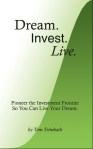
Dream. Invest. Live.

Posted in Uncategorized | Tagged , , , , , , , , , , , , , , , | 1 Comment

Foreclosure Forbearance

Dynamic times. And yet, “Hurry up and wait” is the theme, at least when it comes to my house and possible foreclosure. Thursday was another rush to get paperwork together for a meeting. Friday’s meeting was worth the effort, even if the majority of the papers were never noticed. I learned a new meaning of the word “forbearance”, and it possibly leads to good news – or at least a delay in the bad news. Bureaucracies can be maddening, but accommodating them long enough to get to a real person can produce unexpected results.

June? How did we end up here? It is the sixth month of the year and about six months ago is when I stopped pay my mortgage. That happens when a person starts running out of money. Through a well-practiced process, a Notice of Default was taped to my door a week or so ago. I called the Washington State hotline included on the note and finally talked to a professional (from Parkview Services) who wasn’t the mortgage company or a collection agency. It was a relief. They strongly suggested I attend a Fannie Mae event, which I attended yesterday. If you want the more detailed story, read through my most recent posts.

The unknown is fertile ground for fears. Walking into the meeting was a guess at what papers to bring (despite their well-documented list I knew background data would be handy), a guess at whether Parkview’s representative(s) would be active support or on the sidelines, and a guess at what kind of person would represent Fannie Mae.

Walking into the unknown to discuss personal failings makes it easy to drop back into childhood fears, except this meeting wouldn’t be about detention but about the possibility of eventual eviction. That’s why I got there early. That’s why I planned to find the hotel meeting room and walk by to get a glimpse and some sense of control. That’s why my attempt at balance was interrupted by a pleasant person from Parkview stepping out into the hall and welcoming me in by name. Oh well, if I’m going to give up my plan, it might as well be to a pleasant smile.

For those who never have to consider going through such a meeting, skip ahead a paragraph or two. For others, it would be a disservice if I didn’t tell you what it was like. It was fine – or at least as fine as such a topic can be. The meeting was set up largely between just Parkview Services (from what I could tell) and Fannie Mae. After it was over I could tell that they had a simple process: 1) sign in, 2) meet with a housing counselor or two to make sure all of the paperwork is in place and so the counselor can prepare the homeowner for the meeting, 3) meet with an official representative of Fannie Mae with the counselor there at least part of the time, and 4) an exit survey, which explained the guy sitting at a table to the side who seemed the least stressed person in the room.

The entire meeting, at least for me, was simply about two questions: A) Did I want to keep the house? and if I wanted to keep it B-for-keeps) How much of a mortgage modification was required to make that happen considering my finances? or B-for-sell) Well, I don’t know those questions because I want to keep the house. Very quickly they reached the same conclusion that I had reached months ago, and that the counselors reached last week. I need to make a lot more money.

The logical part of me looks at those numbers and shrugs. Facts are facts and data are data. Evidently we all had the same factual point of view. We’ll come to the same conclusion, right?

The emotional side of me steps in though and looks at probabilities and possibilities, borrowing some statistical skills from my logical side, and says, “Yes, but everything is improving. Stocks, business, part-time jobs, and serendipities are all heading in the right direction. Even the housing market is improving, maybe the house will sell on the market. 8199 Cultus Drive, Clinton WA 98236 Balance the bad luck in the recent past with good luck in the near future and I can return to financial solvency, even comfort.” I expected no one but my friends and me to agree with that logic. Even with Parkview’s assurances, I expected the foreclosure calendar to continue marking off the days. So, of course you can guess that I was surprised by the man from Fannie Mae. He listened. He was human and he listened. At various times all of us said the same thing in different ways. There isn’t enough money now, but the best bet for everyone is to give me more time by delaying the foreclosure process by three months. It is called a forbearance. I’d never heard the term used that way before, and was glad to learn a new definition within my vocabulary. After about two hours of meetings I was tired and relieved; and in a bit of a silly moment went around to everyone I’d talked to that day thanking them for their time, knowledge, and experience.

Getting there early meant they weren’t tired yet. They were going to be in meetings for two days, and dealing with over 100 cases, which means many more than 100 people. My case is simple: Single guy, one house, one mortgage, about six months of non-payments which don’t total to very much considering typical salaries or even the possible appreciation in my portfolio. Others there were families, homes tied to houses tied to businesses or renters, and some as late as two years. I got the impression that I was one of the few to actually act after only six months. Some begin immediately, but evidently some find ways to delay the process for years. Maybe they were happy to start the day on a high note.

There almost seemed to be an odd common feeling. There are four main parties involved, and only three were there, on purpose I think. Fannie Mae, the investor; Green Tree, the servicer; Parkview, the counselor; and me, the homeowner. Despite the three parties in attendance, the servicer holds a lot of power in terms of deciding how to service the loan, how to proceed. Fannie Mae controls the money, but they can only strongly suggest what Green Tree should do.

Here is where “Hurry up and wait” happens again. At each of these stages, reams of papers are rapidly printed and distributed. There’s a flurry of activity, and then a wait as policies, procedures, and processes are followed. Multiply my efforts by 100, and bump it up from there for everyone else’s complexities, and repeat every few weeks or months. Escalate that across the nation. Enormous costs are involved, both financial and in terms of time and emotions.

Within the next few days I’ll be asked to put together another package. DSCN4423 Each package is similar to what it takes to buy a house, so it is like buying a house every few weeks; but with the same subject each time. Oh yes, and it’s a new month, so the packets must be updated for the most recent bills, the most recent profit/loss statement from my business, and hopefully to include whatever good fortune has come my way.


Stay tuned for that news, because writing about good fortune will be fun for me, hopefully you too, and even for those folks who want to see it in numbers. That will be the ultimate foreclosure forbearance.

Posted in mortgage, Uncategorized | Tagged , , , , , , , , , , , , | 3 Comments

Elucubration Inspiration

Work twelve. Book six. Actually, work thirteen hours, book six-ish; but hey, let’s not get picky here. Either way it’s a long day. My life has improved. Last year I was working ten or twelve hour days, working on lots of projects, and making far too little money. This year I am working ten or twelve or thirteen hour days, working on just as many projects, and being paid for about half of my time. I’ve also recently learned that I probably qualify for a massive modification to my mortgage if I can double my income. That can work, as long as it doesn’t require me to double my working hours. Ah, but there must be a solution. Many agree and are searching too.

The inspiration for today’s post comes from too many of my friends who have similar work schedules. We may think we’re running our own businesses, but our businesses are also running us. A lot of socializing has stopped. I no longer hold parties, partly because of money, partly because the house is for sale8199 Cultus Drive, Clinton WA 98236 partly because many of my friends don’t have spare time, even on weekends. My Sunday evening oasis, when I don’t work after 6pm unless absolutely necessary, has had a dearth of dinner guests because I’ve been to busy to invite folks, and the invitations I send out can’t be accepted because they’re too tired. In a way, this is actually good news. I miss my friends, but I know they are making more than last year; and I don’t want to get in the way of that.

The inspiration for today’s title comes from friend and blogger, Erin Waterman.
What the heck does elucubrating mean, you ask?  I’ve been “burning the midnight oil” this week with several contract jobs and studies, and the verb elucubrate meant to work studiously by candle light.  Because this word has become extinct, I decided to bring it back.” Elucubrating and Car Repair – Erin Wateman
Pardon me as I step away to light an oil lamp on this grey and rainy morning.Elucubration

The hardest workers I know are sole-proprietors. It is commonly accepted that the first few years will be tough. Ah, but then they finally start making money. But it isn’t enough, and because the business is under their control, they can work harder in hopes of making more. Usually though, such businesses start out by charging less than the competition, so all of those extra hours may not add up to enough. Raising prices can scare away customers and clients, but it becomes necessary. Imagine the celebration of success though when working extraordinary hours finally makes enough. Great! Of course, there may not be much time for celebration, or even a bit of life. Now, the choice becomes growing the business by working even more, raising prices and risking the business, or hiring someone which drives up costs which means the business must grow that much faster – or giving up and using the experience as a great resume line as a proprietor tries to become someone else’s employee. And finding time to apply for jobs is not easy. I’ve been so busy making half of what I need that I haven’t been able to apply to as many positions as I did three months ago. In some ways, the luckiest business owners can free themselves by selling their businesses, but that can be difficult emotionally.

I know printers, framers, seamstresses, herbalists, bookkeepers, artists, writers, healers, and more who are in such a situation.

As tough as I make it sound, many would only consider taking a job to gain security and benefits, and recent corporate history discourages them from expecting that. One friend managed to get a very nice job at T-Mobile, only to get laid off months later. So much for stability. Her response is to keep applying for jobs, but to also finish her manuscript, build out her micro-farm, and reach out to others to build a community.

Pardon me as I step away to handle a job email.

I’m an advocate of personal financial independence. Getting there through a lottery jackpot is fine, but most folks have to save to get there. I managed to retire (temporarily evidently) at 38 because I spent less than I made and invested the rest. It turns out to be the simplified version of the 9-step program championed by New Road Map Foundation (where I’ve been the Board Secretary and am now the Information Manager) and popularized by the book, Your Money Or Your Life, which includes me as a case study in the new edition. The trick for most folks above the poverty line who haven’t encountered any of life’s misfortunes, is to spend less than they make. Staying out of debt is major as well. The trick for many early entrepreneurs is to make enough, then to grow enough, then to finally begin paying themselves with time for themself, and paying into their future by saving. The same potential exists, but the steps may take more effort.

This is no startling revelation, or deep analysis of the news. This is an acknowledgement of how many hidden steps there are on the entrepreneur’s path to financial security.

There’s a solidity to corporate dealings. For employees: paychecks are usually regular, raises are usually a few percent, benefits vary (or decline) around a norm. For customers: prices are what prices are, complaints can be moved up the line within a faceless bureaucracy, returns are relatively easy.

For small businesses the paychecks are called invoices or receipts and may get paid at the customer’s convenience, raises only make sense when there’s a history of surpluses, benefits are expensive, and customers are more likely to negotiate prices, and may not believe that the person they are complaining too is the entire organizational chart and that a return actually has an impact.

This may be no startling revelation, but as the prospect of a life-long career or of being re-hired into the world of cubicles becomes less common a new segment of our population will follow a path of many steps created by others out of necessity. My friends that are on the cusp of success may find themselves being valued as guides because of their experience. Who else better to turn to than a seamstress who has 12,000 people visiting her site every week; a couple of fine herbalists that are enjoying the business in bitters, and who have that much more to offer; and a print shop that is getting to be nationally known for innovation and quality work? And of course, there’s me and my businesses, including my role as a consultant for which another consultant has suggested that I am charging too little. My hourly rate for individuals is $60. My daily rate for corporations is $1,500. He figures I am worth $3,000/day; but, you see, I have to build the business and I’m not quite making enough yet, and I don’t want to scare away customers, and – that’s why I am an optimist. Because that potential is there, and my best next step is to continue stepping in the same direction. And to go out and make sure I have enough lamp oil. In the meantime, I’m going to get back to elucubration.

photo credit - Sue Averett

photo credit – Sue Averett

PS This post is a fine example of how I must manage time. I refer to my necessarily long acronym:
IIHMTIWHMIS
If I Had More Time I Would Have Made It Shorter

Posted in Uncategorized | Tagged , , , , , , , , , , , , , , , , | 2 Comments

Double Header Jobs And Houses

My Jobs Report Month 21 was supposed to be the title of today’s post, the necessary update to last month’s post, but a critical foreclosure conversation happened at the normal post time of Saturday morning. In other words, a meeting about my house came up. The two topics are entwined, as they are for most people. Both have entered a new phase. The everchanging story is one reason there is no typical foreclosure story. Those of us going through this are all episodes in some phenomenally large book.

Even Wednesday’s story and then Thursday’s story changed moments after they were posted. Tuesday, some official type taped a Notice of Default to my front door. Notice of Default May 21, 2013 Go back for details. I expected a Notice of Foreclosure, but didn’t complain about not getting it. There was a fourth sheet that mentioned foreclosure, but it didn’t seem to be a prime part of the package. So, Wednesday I posted about Tuesday’s shock. The shock was that I thought they’d said they were going to give me much more time. The other shock was because the taper told me they may sell my house in 30 days. The official notice on the door was good inspiration for finally calling the WA State hotline to find out if I had to start packing. (1-877-894-4663, operated by Parkview Services – a non-profit) I wrote about that, posted the post and shared it around. Knock, knock. My friendly mail carrier shyly had to deliver bad news, several registered letters. I decided you were probably already weary of my housing news, so I held off with the report; especially, when I noticed that the letters looked like copies of what was on the front door. The WA State hotline directed me to the Saturday morning meeting where and when I might get introduced to a housing counselor. That was this morning. Here is that tale.

The short version of house story: I need to make more money. Not a surprise, and actually a bit of a confirmation because that was the conclusion I came to months ago. All of that training in investing and frugality helped.

Needing to make more money leads into the jobs story. So, how’s that job search going? The job I had the greatest hopes for didn’t even give me the chance for an interview, and this is for a job that many in community pointed out to me because they saw me as an obvious fit. Oh well. The job search hasn’t produced a job, but ironically, I am so busy that I have less time to search. I continue to search, but my (part-time) job as Project Director for HCLE’s Virtual Museum is getting busier, and my (part-time) job as Information Manager for New Road Map Foundation is taking even more time than HCLE. That plus a new contract to develop a social media platform for the Whidbey Island Open Studio Tour, and a couple other projects means I’m working billable hours. Even better is that some of those jobs may expand significantly. Most involve non-profits, so that means expansion happens after fundraising. Give – not just to the non-profits I know, but give to the ones you like. They may hire people like me. Yeah!

I’m busy, but it is not enough – yet. That much work still is less than full-time and the analysis completed by the housing counseling company says I need to make more if I am going to keep the house.  Yep. I guessed and actually calculated that. It’s almost as if I have some basic understanding of money and personal finance.

Skipping the many acronyms, in terms of major steps, I am at step 2 of a 3 or 4 step process. It doesn’t feel that way. The language used by the servicing company (that I thought had been the mortgage company) is so strong that it sounds dire and final. The Servicer emphasizes the one extreme, but there is a continuum of possibilities. What I’m learning is that, at each of these steps, many different things can happen, each with different ramifications and timings, and that even the professionals within the process are prone to make mistakes. Some mistakes seem to invalidate a lot of work. Other mistakes can reset the process by weeks or months. Very few homeowners are experts or lucky enough to guess right at every action. Ironically, most of the confusion comes from the protections that work in favor of the homeowner.

After the preliminary group presentation this morning, each of us were assigned someone to talk to, not necessarily our eventual counselor, but someone who could listen and then ask the right questions. The conversation went from the general to the specific.

Maybe they were overwhelmed. Maybe I was lucky. Maybe I made a good first impression over the phone. Somehow I was teamed with one of their senior people. Excellent. I provided the three minute synopsis of what you can read as hundreds of thousands of words in these posts. My situation was simple: Single (divorced), with dramatically depleted net worth (starting with the Triple Whammy), unsuccessful at getting a job (but trying), making insufficient (though growing) income from my business, unsuccessful at selling my house (so far), and with only one mortgage and only one credit card, and living fairly frugally. Oh yeah, and I am optimistic and would like to keep the house. DSCN4419 My Hardship Letter, and yes, I’ve dutifully written one and will re-write it, should read fairly well – except for not having enough money right now.

Then came the details. You’re safe. I won’t write them up because almost everyone would understandably skip right over them. But there were two main processes, one’s for time, one’s for money.

The time process is something like:

  • clock started when I stopped paying
  • about 90 days later receive a Notice of Default
  • about 90 days later receive a Notice of Default, which just happened, but it sounds like it should have been a Notice Of Pre-Foreclosure Options
  • about 30 days later receive a Notice of Trust Sale
  • about 120 days later “They” sell the house
  • about 20 days later I must vacate the premises.

But, every date and period can be varied, sometimes shorter, more times longer. So, a 350 day process can easily extend to a year or more. WA Foreclosure Timeline 2012 From I heard, asking for an official meeting with Investor (Fannie Mae for me) with a counselor and or a mediator can put the process on hold, frequently for weeks or months. We might schedule that meeting during another meeting next week.

At any meeting everyone wants to know about the money. Got enough? Nope? Well, then there’s a four step waterfall that I’ll have to check from my notes. Here’s my understanding of it.
1) Recalculate the mortgage based on current income, with the late payments and penalties added to a new loan amount.

If that didn’t work,
2) Drop the interest rate until the payments can work, maybe as low as 2%.

If that didn’t work,
3) Extend the period up to 40 years

If that didn’t work,
4) Forebear some of the Principal, which I think of as Defer some of the Debt, effectively saying some portion of the balance is interest free, but still must be repaid at the end.

If that didn’t work, then a mortgage recalculated for current income, at a 2% rate, for a 40 year loan, that only charges interest on part of the principal, still isn’t enough of a modification.

Without going into the details, I need to make more money from my business and jobs if I plan to keep the house based on income. Basically, a 40 hour a week job, or a bunch of jobs that add up to 40 hours a week, should suffice. That was a lot of work to confirm what I knew, and the confirmation is worth a lot. These details, even in a simple case like mine, are so convoluted that it is easy to overlook possibilities. Others have to consider multiple foreclosures on their home and rental properties, or business mishaps, or estates, or divorces, or combinations.

Sometimes an expert is worth the few seconds it took them to notice the one prime flaw in the paperwork. I spent hours preparing my box of docs. DSCN4423 Two years of taxes, four months of bank statements, enough documentation to qualify for a loan, because it’s basically the same process. And I brought along the note they taped to my door. Tape included. I still haven’t fully understood it, even after study, advice, listening, and asking. A few seconds after looking at it, a glance at the last page, and then the professional stopped. Whoever prepared the document dated the notice before they were supposed to. There’s a process here, and by dating it early it suggests, at least to me, that they’d made up their mind before giving me the chance to respond. That alone may require them to start the process over again, a delay of a few weeks. I never noticed that, and didn’t realize that implication.

I am an individualist. I enjoy working in groups, but most tasks I take on myself. Look at how long it took me to finally ask for help. And as soon as I did, I found help in unexpected ways. The foreclosure process is tortuous, emotionally, and logistically. It makes sense to ask for help. But. It also makes sense to check out the person or agency. Parkview Services seems legit. From what they say, they are paid by state grants. They don’t charge a fee. Washington State is nice that way, evidently; and yet, I am going to do a bit more research. I thank them for the graphic for the timeline above. That’s the best representation of what I call, the “Nominal Process” because everything can change. But, if you are going through this, be careful who you work with because ethics and competency aren’t universal.

Change happens and things are about to change again on July 1st. I must act before that, but then may have to change what I do at that point too. I pity the counselors. They must be in continual training mode.

These few hundred words, the hours I’ll spend preparing packets for negotiation, and the hours I’ll spend considering scenarios are secondary to my main goal: making, or having, or making and having enough money to maintain and sustain a comfortable lifestyle. Live long and prosper.

It is easy to focus on the foreclosure. It is easy to focus on the house. My main focus is to remove the threat of foreclosure and keep my home. And I’ll continue trying to get a job, or add up enough jobs to make enough without hurting myself, or find another source of funds (I’ve got my lottery tickets, and MVIS.) In the meantime, I’ll also keep the house on the market, as sad as I’d be to see it go. And I’ll continue to maintain my optimism. Sometimes something as simple as a date on a form, can open a window through which good fortune can arrive.

Posted in mortgage, Uncategorized | Tagged , , , , , , , , , , , , , , , , , , , , , , | 1 Comment

Notice Of What – An Update

Good news in the foreclosure process, I think. I made a call, took some notes, and decided to record it here for myself and others.

Typing up scribbled notes help me read my own writing later. It is a good opportunity to collect my thoughts, create a summary, and let my mind percolate through the possibilities. Here are the notes from my call to the statewide (WA) foreclosure hotline (1-877-894-4663, operated by Parkview Services – a non-profit).

I’m at Step Two of a three step process. (Astonishing, considering how many steps I feel I’ve already passed through.)
Step One: Notice of Default.
(Received by Certified Mail about three months after I stopped paying in full.)
Understandable, considering that they wouldn’t accept partial payments, so I stopped paying because I couldn’t pay the full amount without going broke.
Step Two: Notice of Default. NOT a Notice of Foreclosure despite what the person who taped the sign to my door said, despite what the mortgage person said on the phone and in the big packet they mailed.
(Received by someone taping four pieces of paper to my front door.) Notice of Default May 21, 2013
Confusing, because I expected a Notice of Foreclosure, but I am not complaining. But the confusing part was that the first three pages are a Notice of Default, with directions for Seeking Assistance (Parkview), the amount I am in arrears (which always sounds weird), and the timing of a sale that they MAY initiate IF I do nothing. Then the last page is a Foreclosure Loss Mitigation Form, which is not a Foreclosure Notice.

Okay, I won’t do nothing. I’ll do something. I decided to call the number on the sheet. And found myself talking to a very nice woman who calmly asked and answered questions, and provided a good education into my situation.

Allow me to interject my own process. Regardless of their process, I continue to work my backup plans which would bring life back to a financial normality, (while also playing the lottery to open the door to positive financial abnormalities.)

Evidently, there are two official corporations involved: The Investor, Fannie Mae: and The Servicer, Green Tree. That was a surprise. I thought Green Tree had the mortgage because I made my checks out to them. Despite all of the contentious and confusing communications from The Servicer (the capitalization makes them sound like players in a movie), the decision maker is really The Investor. Which makes me wonder why I talked to Green Tree at all, which also corroborates the advice a lot of friends passed along.

There are regular events where homeowners can seek assistance in having The Investor intervene in the process, basically delaying the Steps while they review my situation. There’s one coming up this weekend. (Memorial Day weekend? Hope I can get back in time for Mayfest.) Between now and then I have to fill out about 36 pages of documents so they can review my finances and decide whether to renegotiate my mortgage (I think). They may decide to let the process proceed.

If the housing counselor decides to intervene, they’ll apply for a three part face-to-face mediation, which probably delays the Steps by a couple of months at least.

If the housing counselor decides NOT to intervene, I’ll probably receive Step Three, a Notice of Trustee Sale (so where’s the Notice of Foreclosure?) about June 21st, with a forced house sale of about October 21st, after which I have 20 days to move out.

During all of this, up to within 11 days of the sale, I can come up with the funds and pay everything off. Which means, the house can stay on the market and be bought, I can keep trying to make money through a job or my business, and my portfolio and lottery tickets (which sometimes seem indistinguishable) have more time to help.

Note: This is the first time since I stopped paying the mortgage back in late 2012 that the story I hear from various sources is coming into focus. Until now, this was only one of too many possibilities. Thanks to everyone who added their stories and their research that provided a foundation for today’s understanding.

Through this process, in many side messages, quiet sidewalk conversations, and even during a few dances, I’ve heard stories from too many people privately overwhelmed by this process. I’m not surprised. It isn’t easy to talk about, and few would mention any of this in public. It is a painful process, designed to heighten feelings of shame, and a persistent pressure that invades every day and night. Waking up can be a reminder of the temporary nature of where you slept. In some ways, this is cruel and unusual punishment for what, a breach of contract, a crime, or merely an unfortunate financial choice?

As tough as it is, I know it could be much tougher. Missing a payment doesn’t immediately make someone homeless. I’m sure there are places in the world where that happens. This process is convoluted, and part of that is because of the homeowner protections put in place by the government. Consider that, even if they were to sell my house, I still get to stay in it for another 20 days. This entire process takes a year at a minimum. I am very thankful for that. I am not eligible nor receiving social security, a pension, or unemployment; but, I am receiving time and a place to live – and the chance to make it all right again.

Those who’ve read this blog have seen my fears. You’ve seen how I’ve fallen prey to The Servicer’s tactics, how I’ve been emotionally traumatized, and how I’ve worked at resolving the situation in a myriad of ways. You are stout folks to stick with this story. Thank you for being there.

I’ll continue to provide updates. At least I now feel better because there are fewer unknowns. I can plan for specific dates. I can continue to work my backup plans. I can continue to be optimistic that somehow this will all work out.

Stay tuned.

Posted in mortgage, Uncategorized | Tagged , , , , , , , , , , , , , , | 2 Comments

Notice Of Default Or Foreclosure

Maybe I shouldn’t mention good news. After Saturday’s celebration of a marvelous week I was enthusiastic about my financial recovery. That’s remains true. Then, yesterday they posted a Notice of Default on my front door. Notice of Default May 21, 2013 It sounds more like a Notice of Foreclosure and definitely mentions the possibility that they’ll sell my house within 30 to 120 days. That happened a hour or so after I got the call about a family medical emergency. They both happened on a day when my portfolio witnessed other investors’ profit taking. None were a great surprise, but I had good reason to believe that the first two wouldn’t happen for months, and no reason to expect them to happen simultaneously. So, instead of writing about some of my friends’ responses to their situations, I’m going to chronicle mine, again. This period of my life has been so epic that, looking back from a few years from now, selective amnesia would probably wipe most of it from my memory. Selective amnesia is also why I think everyone should have a voice at these times, so that in the future we will remember so we can learn.

Reiterate the good news, Tom; because, looking at the positive is what will get me through. I’m getting into a groove as Project Director for the HCLE Virtual Museum, and as Information Manager for New Road Map. Together they make less than a half-time job, which means there is room for a short-term part-time interesting gig for Whidbey’s art community, which I won’t announce until they do. And there are at least three other opportunities that have yet to commit, or to even pass along their requirements and compensations. I don’t recall any more art sales since Saturday, but one local bookstore sold out of the book that’s the basis of this blogDream. Invest. Live. They asked for more copies and I was happy to deliver them. I expected some pull back in the stocks after their marvelous jump, but Monday surprised me with a continued rise. AMSC, GIG, MVIS, and RSOL have all had recent jumps, and have all pulled back, but are all above their recent lows. My portfolio has regained enough value to eclipse my credit card debt, but not enough to retire the mortgage.

So, logically and strategically, my life is improving. Life, however, is also emotion. Emotionally, the stocks weren’t a cause for celebration, the family news dimmed my spirits a bit, and then the Notice of Default knocked me off balance. Logically, I should call the list of phone numbers on the Notice, and I shall. Emotionally, I know I should take a few breaths, regain some balance, and then make those calls in a more logical frame of mind.

In the meantime, I’ve taken the modern move of mentioning the notice on Facebook. Some argue that social media is narcissistic or self-centered, if there’s even a difference, but for a single person, somewhat geographically isolated, dealing with personal news later than the polite phone call window, posting such news is the best way to find community quickly. At this point, 24 people have offered advice, condolences, and similar stories. A few have reached me more privately with more personal questions and more detailed suggestions. One even was kind enough to do some quick research that suggests I have 140 days before having to move. If so, I have until the beginning of October to find a place to stay.

Logically, 140 days is a lot of opportunity. While that may be the best guess, my emotions are driven by the phrase on the sheet “a notice of sale may be issued as soon as 30 days from the date of this notice of default”.

I am in a race. My business is improving. The social media consulting is doing particularly well. (“I learned as much from you in three hours as I did in two years on my own.”) My portfolio is improving (just not as I type.) The housing market in and around Seattle is improving. I liked the rumored factoid that the majority of house sales in Seattle are the result of multiple bids. (My house is for sale.Home For Sale There’s even been the rumor of the suggestion of a possible full-time job (gasp!). Races are defined by timing, and most of those revenues are due next month at the earliest. The sum of the guaranteed receivables is still less than enough to forestall the foreclosure. The sum of the possible receivables is much more than enough. The mortgage entrant in the race is inexorable, and yet mysterious. The paperwork involves many waffle words, they “may” do this or that. Money is power and until I have sufficient funds, they are in control. I’m racing to get control back, and to finish this race by reaching my goal first.

Last night, one of my dear friends offered to start a collection for me within a particular community. I declined for a few reasons:
1) I’m an optimist and think my various plans will succeed.
2) Finding one person to buy my house is more powerful and final than asking dozens for thousands.
3) My main issue isn’t my house. My main issue is finding sufficient income, like a good job, good sales, enough students, or a large enough portfolio.
4) I know I’m not the only one in that community with this problem. If we solve it for me, we should be ready to solve it for everyone. I’m merely someone who can be public about my situation because I have no partner or dependents whose lives would be dragged into the spotlight, and because I’d like to see us get past a lot of our taboos about talking about money. To be honest about that I have to be willing to be open about it in good times and in bad times. I’m really looking forward to writing about the good times again. Saturday was good practice.

The economy appears to be heading into a fragile and fragmented boom. The stock market indices are doing very well. Housing markets are improving. Unemployment is down. But the fundamentals of the economy are worrisome; e.g. Euro-debt, China’s unsustainable growth, and US Federal Debt. (Imagine the FED having to deal with a foreclosure notice taped to their front door.) Some folks are doing very well. Many are returning to old habits, as if their storm is past. But, many are finding themselves locked out of opportunity. Some employers use applicants’ credit ratings as a hiring criterion. So, if you’ve had credit problems because you couldn’t get a job, you might not be able to get a job because you have credit problems.

Is anyone surprised that millions of people bought tickets for a Powerball lottery that was worth over a half a billion dollars? The daydreams of those in similar situations to mine had an interesting commonality. Win the lottery, pay off the debt, never deal with creditors again, buy a house, go off-the-grid, and retreat from the madness after spreading the wealth to others in need. The dream is no longer to jump in and join the rest by buying luxury homes, cars, and yachts. The dream is to redefine a way of life because they’ve seen the underside of the life most folks are expected to live.

I’m an optimist. Eventually my situation will improve. Eventually our situation will improve. And the best way for situations to improve is to be openly aware of what works and what doesn’t, to understand the logical and the emotional, and to remember enough to learn without being trapped by the past.

Posted in mortgage, Uncategorized | Tagged , , , , , , , , , , , , , , , , , , , , , | 3 Comments

A Good Week In Progress

How about some good news? This week held so much good news that I had to take notes. Enough happened that I had to make some adjustments to me.

So, here we go. To all of you who have graciously listened to my challenges, here are some celebrations. The really good news is that they don’t all fit into one category. To paraphrase myself from facebook, “I just had such a good week that I treated myself to a copy of The Last Supper Catering Company by Michaelene McElroy. Details to follow.” I’m starting with small celebration. Here are some of those details. You decide if they require bigger celebrations.

Within the last seven days:

  • I’ve watched GIG go up 50% (and then fall back a bit),
  • Sold some books,
  • Sold a print, and got paid for another,Rock Garden In Green Water
  • Taught a class about LinkedIn,
  • Learned that students are registering for my classes and workshops at WICEC,
  • Logged my first solid week as Information Manager for New Road Map,
  • Made some nice progress for HCLE’s Virtual Museum,
  • Signed up another large client that needs a lot of work done to a close deadline,
  • Found out that another author wants help with publishing and social media,

and just when I was learning how to integrate so many good things into my previous stream of not-so-good news,

  • Watched my portfolio jump 41% in one day because RSOL was up 129% and MVIS was up 19%.

Oh yeah, and my back improved enough, and I learned some new coping strategies, so I was able to enjoy dancing Tuesday evening. (Thank you, Dr. Craig Weiner, for the professional help. Thank you, fine dancers, for the dancing.)

Wednesday’s post cheered on GigOptix as its stock, GIG, rose rapidly. In a phone call with one friend, and when I met another while shopping, I made a point of thanking them for listening for the couple of years, and that I was making sure they heard the good news, too. I passed along the good news I had at the time. Foul weather friends should be invited to the eventual good news celebrations.

I know that every phone call, every email, every reply to a post can be the news that makes my day, my week, my life; and that there is rarely any warning. Therein lives my optimism, that and the 10,000 Hour Rule. Unfortunately, the last two years have been a list of preponderantly unfortunate events. Despite my optimism, I found myself prepared for the letdown whenever I heard something good. This week’s good news came in so steadily that each item didn’t get a chance to settle before the next one arrived. By Friday afternoon, trying to incorporate and respect each and the total meant I had to quit work early (5pm! instead of 7, 8, or 9!) and sit on the deck with a glass of red wine (from a fine box), and ponder.

The sum of the good news is a marvelous improvement over recent history, but I continued to feel cautious. In my optimism I knew that, aside from windfalls like winning the lottery jackpot, recoveries take time and are not delivered with guarantees. A marvelous week can be the sign of having passed the lowest point, and is the beginning of the rise. That is worth celebrating. It is also worth respecting the necessary next steps. Keep at it, whatever it is. If this good fortune continues, it will probably involve a lot of work; but, that’s okay. The way things are lined up now, I’ll replace working hard at little pay for working hard enough to cover many, if not all, of my bills. Working for a living. I’ve heard of that before. It’s an improvement over just Working.

I felt better. But, something was unresolved as I sat and pondered. What was I missing?

Most of the financial gain required no more work at all. I say “no more” because work was involved, but it was done months and years ago. My years of work at books and photos have created online opportunities so people can buy without any more effort from me. The clients were unsolicited, no cold calling or marketing or advertising involved. Consulting and teaching are things I would do for no pay, though I’ll value them so others will too. The largest financial improvement was the jump in my portfolio. My effort there was time spent in research years ago (an element of Long Term Buy and Hold, aka LTBH), and a deliberate effort over the recent months to maintain at least some investments while paying most of my bills. Recover enough from the investments and debts are more easily paid. All of those items are either partly or completely passive income that frees me to spend time living rather than just working.

Logically, I saw the boundary my emotion didn’t want to cross. As I said on Wednesday, “See, I told you it was hard to believe.” Whether caution is American Puritan values, humility, realism, or a guard against hubris, we discourage ourselves from dreaming big. What would you really do if you won the lottery? MVIS, RSOL, GIG just provided evidence that they may be as grossly undervalued as I logically expect. I can calculate expected values for each. I can daydream about living with such a net worth. But, I did that just a few years ago, followed by the aforementioned unfortunate events; so, my current emotions balked at committing to expecting such levels of comfort and ease. It wants more proof. Don’t spend it until you make it. Besides, if it’s passive income, there’s nothing to do but wait without getting in its way. Relax. Let it happen. And remember to enjoy it. And that’s why I bought a book. My emotions can use a bit of proof, and if we saved up every celebration to the end are only parties would be great wakes.

These recent weeks have felt like a series of small steps in the right direction. This week, and these last couple of days, feel like genuine progress and increasing momentum. Small celebrations will be followed by larger ones. I hope you can, at least vicariously, enjoy the recovery.

It was, and is, a good week. It is Saturday afternoon. The week isn’t over yet. There’s time for more good news.

Posted in Uncategorized | Tagged , , , , , , , , , , , , , , , , , , , , , , , , , , , , , | 4 Comments

Go GigOptix Go

Go GigOptix! Go! In the last few days, GIG stock has gone up over 50%. Come on, tiny GIG. Keep that up and I might stay out of foreclosure. Don’t worry though. You don’t have to do it all on your own. AMSC, MVIS, and RSOL are helping too. Sort of. Well, maybe I shouldn’t mention it. Thinking that my public opinion can jinx a stock suggests more power than I think I have. Yet earlier celebrations stalled after posting the hurrah here. But hey, good news is happening, and maybe these stocks are having stuttering starts,  like the punctuated rumbling of dragsters before they release the brakes. Okay, my race is begun. Go GigOptix! Go!

For those that follow my stock activity, there’s been little to follow for the last year or so. On a macro scale, the markets have surged as big money went into big stocks, which is why the market indices hit new highs. My style of investing in much smaller companies languishes at such times, but eventually should succeed because small companies making progress become big companies which is eventually reflected in their stock prices and market caps – theoretically. Unfortunately, theoretically is working with the later part of eventually rather than the sooner part. That disconnect happening simultaneously across my portfolio at the same time that jobs are tight and houses were hard to sell meant that my semi-retired status radically retreated.

GIG now joins the group of AMSC, MVIS, and RSOL that have abruptly risen. The extrapolation of those successes is a fun exercise, but in each case the abrupt rise significantly slowed. Stocks don’t rise forever. Their prices are driven by investors who, until recently were mostly human. Investors take breaks. They also take profits. They also take time to decide what to do next. They wait for more news. And frequently, they wait to see what the other investors will do. Almost all of those stocks have recovered back to where they were in May 2012, only a year ago. A year ago I was already scrambling to find a life-sustaining income because my stocks had dropped so far. I require a greater recovery.

If you’ve never heard of GigOptix and wonder why I own shares, I have some other posts that describe GIG and all my stocks. The quick story on GIG is simple and dull, unless you’re a nerd, but key to the now everyday experience of streaming videos. GigOptix makes switches. See, I said it was dull. But they make some of the fastest switches in the world that allow for the increase in network bandwidth. The switches have very few moving parts. And GigOptix has very few competitors. As telecoms advertise 2G, 3G, 4G, and more, they are also advertising higher bandwidths which operate at higher frequencies which require faster switches. Sounds great.

I even think there is good data behind much higher valuations for GIG. The stock price is about the same as the revenue per share. A price to sales ratio of one is typical for a construction company, not for an electronics firm, not for a high tech firm, not for a leader in their industry, and not for a company in an expanding market with little competition. I usually use a conservative price to sales ratio of about six for a mature tech firm. Usually such a well-positioned company commands a premium and the price to sales can be as high as, well as high as the expectations of the investment community. Back in the days of bubbles, a price to sales of twenty wouldn’t be a surprise for such an investment. Within the world of my small cap stocks, we’re just coming out of the negative mirror image of the bubble.

About two months ago, my old posts about GIG and its earlier trading symbols of GGOX and LMRA began getting unexpected and international traffic. What community was interested and why? They didn’t leave notes, but I picked up hope.

I like my portfolio, despite its recent performance. AMSC’s superconductors and Tres Amigas projects are what the nation needs for improving power transmission efficiency. GERN may yet prove that at least one of their innovative cancer treatments radically improve and change the health care industry. You’ve heard about GIG. MVIS is always on the cusp of something stellar with their projectors that are so small that we may see them proliferate the same way cameras are part of so many devices. RSOL is in the solar industry, which should be an emerging market. If rational valuations had remained the norm, I believe that Dendreon’s success with Provenge wouldn’t have resulted in a crash in DNDN, the rest of my portfolio would be healthier, and I’d be spending more time volunteering for non-profits. Instead, I’m helping to run them (thank you HCLE as Project Director and NRM as Information Manager) for a fee.

My experience of the last few years is why I contend that my style of investing (Long Term Buy and Hold, LTBH) is only for those who can tolerate risk. I didn’t expect my tolerance to be so painfully tested. Of course, I hoped to demonstrate that tolerating some risk provides the opportunity to experience above average rewards. That style had been successful for thirty years, and then I wrote a book about it (the basis for this blog), and it came out as the financial system radically changed and imploded. Dream. Invest. Live. With timing and seemingly jinxing like that, you might understand why I am reluctant to publicly celebrate investing success.

This blog is becoming known for its openness. That openness is intentional because so much of our lives are defined by the flow of money, and yet that’s where we hold many taboos. Some of the most passionate people, artists, are very aware of the positive emotional value of compliments and good graces, and simultaneously the necessarily unpassionate value of sales. I’m fortunate enough to have some small portfolio remaining. Its contribution to my financial recovery is necessarily part of my story; therefore, I tell it.

If my recovery relied solely on my portfolio, then my portfolio would have to grow twelve-fold to get back to where it was when I started looking for jobs. The greatest reduction has been my sales of DNDN which ran out about six months ago, which is also when I stopped paying my mortgage. (The mortgage and foreclosure news is so confused, good and bad and odd, that I can’t find a way to write about it, yet.) The part that is hard to believe emotionally is that logically my portfolio can be worth much more than a twelve-fold growth based on mathematical analyses of the companies’ potentials. MVIS’s potential valuations are so high that most investors are embarrassed to mention them, especially considering how many times MicroVision has postponed their success. But it isn’t hard to imagine such a pervasive technology becoming a $5,000,000,000 company, which means a hundred-fold increase in the stock. (See, I told you it was hard to believe.)

If my recovery relied solely on my consulting and art business, and on my part-time jobs, then some radical raises in sales and rates are required. It is possible. Walking Thinking Drinking Across Scotland Best-sellers do happen and Walking Thinking Drinking Across Scotland continues to slowly increase its sales. Larger consulting jobs continue to arrive. Unexpected opportunities can work wonders.

Selling my house actually doesn’t have as large of an effect on my recovery because it doesn’t add wealth. The house sale limits the debt I’m accruing. The weaker effect is why selling my house is one of my later backup plans.

I don’t expect GIG to be my sole solution. I don’t expect anything shy of a lottery jackpot to take on such a role. But I will cheer on each positive, hopefully adding energy and enthusiasm into my life emotionally, and financially. So, Go GigOptix! Go!

Posted in Uncategorized | Tagged , , , , , , , , , , , , , , , , , , , , , , , , , , , , , , | 3 Comments