Cycling Wants And Needs

Last night I received two invitations: one was to a meeting about transportation options and budgets, the other was to a free concert. I pick the free concert. Choosing between truck, bicycle, or bus is a seven-day-a-week need that must be answered so I can get to work; but, the nature of the meeting demonstrates why organizations and convention rule political discourse. The meeting is free. The concert is free. But attending the meeting will cost about two extra hours, enough cash to pay for a day or two of food, and put myself at risk getting there and getting back. The concert (actually the pre-concert lawn party) is on my way, and the hour and a half will be spent on entertainment with dear friends. I want, and am going to, the concert.

Back in May an overlooked, under-maintained, and over-worked bridge collapsed on the main West Coast highway leading to Canada. This was not a local issue. Freight from California suddenly was dramatically slowed as traffic had to be routed through a small city’s streets. A temporary bridge is in place, but the issue remains. Too many bridges are in need of repair. Budgets are too tight. Choices have to be made. Evidently, tonight’s transportation meeting is meant to address those choices and may include everything from bridges to bike lanes. The public is invited. I’m sure many will attend. I’m sure industry will be represented, or will make sure their voice is heard before, during, or after the meeting. The freight must flow. Like I said, I won’t be there because the free meeting costs too much.

More than two years ago my finances were hit by a Triple Whammy. I’ve always lived a frugal life, but those choices that were made at leisure with an emphasis on what I wanted were subsequently made based on need. As finances diminished and as I began working seven days a week, my bicycle increasingly replaced my truck for chores.  The truck was reserved for things I didn’t want to risk or couldn’t carry on the bike: my art, my books, my computer, my camera; or, for those times when time was critical. Meetings in scattered locations could be met by bicycle, but time is money. The bus could only work if I wasn’t carrying much and only needed to go to one place. Besides, the closest bus stop is more than 1.5 miles from my house, only runs on weekdays, and has two hour gaps in its schedule.

Our nation and our selves have many unmet needs. We’ve always had unmet wants; that’s the human condition. But so much money has gone to things that aren’t food, shelter, health, or infrastructure that we are overwhelmed with deferred maintenance. At some point, deferred maintenance must be prioritized, or it becomes more expensive repair, or even most expensive replacement. So, our bridges fail, schools aren’t repaired, and we have to make choices within needs instead of prioritizing wants.

Our selves are more on my mind. Individuals are facing similar dilemmas. The Bible says there will always be poor. But it is worse news if the number is growing. Despite the recovery, 1 in 7 Americans are considered poor. One in seven. One-seventh of our population and citizenry. One seventh of We The People. Ironically, these are the people that will have the roughest time attending a meeting about transportation options.

Bicycling is becoming an answer to a need instead of a choice for a want.
Driving is down among younger Americans” – Salon Magazine
They can’t afford it. Student loans, underemployment, the price of gas and gas’ effect on their future environment are all disincentives to driving. I’ve bicycle commuted for over 35 years, but mostly from a want, not a need. Now, I am deeply aware of the fact that every day I use the truck to get to work I’m spending more on gas than I am on food.

Tonight’s meeting is basically the public side of politics, which I applaud; but, its nature exemplifies the growing inequalities in the system. If one in seven are in poverty, and if an entire generation is avoiding vehicles, then holding a meeting that is focused on transportation is focusing on those who can afford to attend it, those who may consider bicycles to be toys instead of the necessary choice to meet basic needs. The more you have the more likely the government will spend money on you. (I’m looking forward to hearing what Robert Reich has to say in his new movie Inequality For All. Tell me how it comes out. I’ll save the money for other bills.) The folks who need it most won’t be at the meeting or the movie.

Incredible to some, this is not political. I know politicos who can dive into that debate with great fervor. For me, it is a awareness of the impact on personal finance. Bicycling is a fact of my life. Fortunately, I enjoy it. Bicycle commuting costs less, improves my health, is nicer to the environment, and is actually fun. Bicycles can allow us to do much more than go to store. I bicycled across AmericaJust Keep Pedaling Whidbey Island, where I live, is positioned nicely to funnel transcontinental cyclists. Two nights ago I met a man bicycling from Alaska to Tierra del Fuego. A couple of months ago I met a woman who was bicycling to – well, I don’t know exactly where, but I’m glad I steered her back on course to the ferry.

Yet some realities are apparent. Cargo bikes are appearing. Trailers carry other things besides kids too. You might be surprised to see what bicycles can carry. Occupy Your Bike Fat tires win out over road slicks because they are more puncture resistant, and are safer when forced off the road. Carry the right gear to guard against the curse of the lack of budget that means blackberry bushes reach out and catch cyclists in the face (and yes, scars have happened), tree roots that create speed bumps (and sometimes necessitate swerving), and potholes that eat tires and cause puncture. Also curse broken glass, nails, screws, staples that are only swept away twice a year. Thank whoever invented the LED lights that run bright and long on cheap batteries.

Some transportation funds do go to aiding bicyclists. Bike paths are better than bike lanes which are better than bike routes; but they all are only useful if they have signs that say where they lead. Too many bike path signs lead on scenic tours instead of helping a cyclist get to a destination. And if you’re lucky a bicycle map exists for your area, and if you’re really lucky it will mark the best streets, the dangerous streets, the hills, and the places you can find support.

Usually though, a bicyclist should be prepared to be an unsupported individual with essentials like tools, spare tubes, a lock, lights, rain gear, luggage rack, and that ultimate safety feature: a cell phone. Yes, it costs money (but a lot less than repeatedly filling a tank of gas). Yes, some of it is even more necessary because of the level of support probably won’t change appreciably. One-seventh of the population trying to minimize their cost of living isn’t as noticeable as our bridges collapsing. What is noticeable and valuable is a local and active bike club. Find yours or make one or prepare to ride unsupported.

I look forward to the day when we don’t have to choose between people and bridges, when there’s enough budget to meet both needs. Until then, I’ll keep my tires pumped, carry lights and reflectors – and make sure I have a blanket and some simple picnic food for this evening’s concert. It is DjangoFest. Good music. Maybe some dancing on the lawn. Ah, there’s something I want.

Posted in Uncategorized | Tagged , , , , , , , , , , , , , , , , , , | Leave a comment

The Minutia Of Frugality

Skip the philosophy. Let’s talk about details. There’s a power to frugality that makes difficult things possible. Frugality is a mind-set, but that can be too abstract. Practical frugality is series of habits based on a simple idea. The abstract and the idea can appear daunting, but the practice can be as easy as necessary – especially when started as soon as possible.

From the outside, frugality looks like a prolonged version of Lent denying yourself the things you want because it is the right and noble thing to do. Some develop a pride in showing off how little they need to live; and the easiest way to do that is to draw the sharpest contrasts with luxurious lifestyles. Most don’t mention it.

From the inside, frugality can be simply asking the question, “Is this the best use of my resources?”, but few folks would use those terms. “Is this how I want to spend my time and money?” Many frugal folk go a step further and ask, “Is this how we should use our time and our money?” Give those thoughts some momentum and the question becomes, “Is this how we should spend time with each other and how we should treat our planet?”

Those simple questions taken to the level of the planet can launch into great public pronouncements produced by pundits. Those familiar with true debates know that very little of what we hear is actual debate. Most of the media is filled with proclamations and opinions supported by narrowly filtered facts. There is no resolution on public topics because there is no interest or incentive for those making the strong declarative statements. Their incentives are actually opposed to resolving issues. If they agreed they’d have less to say, and would get paid less.

The most impressive declarative statements I’ve heard are quieter and exhibit a firmer resolve. The frugal people I know are less likely to make statements at others. They are far more likely to question themselves. Their conversations are largely internal, very deliberate, and highly individualistic. Yet, they seem to be reaching a consensus by many paths and their answers are visible in the way they live.

I’m watching a trend that I call the “Walk Away Movement.” People courageous enough to examine their lives are aiming at sustainable lifestyles, supportive communities, and decentralized power – of both kinds. The movement is not marching on City Hall. The movement is a dispersion into independence or shared interdependence without organization, icon, or theme song. People are walking away from convention.

Questions others and I ask at every opportunity:

  • Why drive when I can bicycle, take the bus, or walk?  The answer varies depending on how far I have to go, what I have to carry, how soon I have to get there, and how safe it will be. My answer is drive, bicycle, bus, walk – but, the more I ask the question the less I drive and the more I line up errands to simplify my day. I spend less, get healthier, reduce stress, and get to dive into decadent comfort food more often. I asked that question enough times that I realized I could bicycle across America and walk across Scotland. Even road trips don’t require a car.
  • Why eat out when I can cook? As a college student and then as a young professional I didn’t have the money to eat out often. I did, of course, find money for beer, but hey, that’s part of being twentysomething. I practiced cooking by necessity and eventually found what I liked. My comfort foods changed from what was in the restaurant ads to basic home cooking. Squashed Pear Pie Why would I want to get in the car, drive, find parking, wait for a table, wait for a waiter, try to decide from a necessarily limited menu, wait for the food, trust the professional chef, and then wait for the bill – all for the price of a few day’s food budget. For far less time and money I can make a meal to my desires, include a very nice bottle of wine, eat in a far quieter setting, and enjoy a private and unrushed conversation with a dear friend. And of course I eat out, but mostly for expedience or because everyone’s dietary requirements are too varied for my cooking skills.


  • Why buy when I can make? And I’m not even very good at making. I made a three legged table that wobbled. Think about it. Making is fun, especially when it is not crucial to safety or legality. Then I’ll call in the professionals. The rest of the time, making something can be entertaining. It is an opportunity to play MacGyver. Do I really need to go into the wonders of duct tape and zip ties? Hardware cloth is amazing. So are blue tarps. Sandwich hardware cloth and blue tarps and some plywood and house the world. I’m still going to have someone else work on the septic system, but most household systems the incentives to living off grid is the joy of finding creative solutions. There’s an outdoor shower design I’ve used and enjoyed that uses nothing more than a black garden hose, a nozzle, and something like a truncated telephone pole. Hollyhock

The list is infinite. Everyone’s solutions are different. Bookshelves can be filled with variations, and that’s because when we step away from “what everyone else is doing” and question ourselves we find an infinity of answers. The answers look alike from the outside, but the details are apparent from the inside. A frugal life becomes a custom-designed life, unique and precious and appreciated; but possibly not applauded and frequently is unsuccessfully explained.

Frugality was a requirement for survival a few centuries ago. Then, frugality became a guard against hard times. Eventually, frugality distinguished one class from another until it became a sign of a lack of success, a suggestion of failure. Frugality fell out of fashion as civilization afforded greater luxuries, at least luxuries that were things. Our society became defined by consumption, which appeared sustainable when we had less than a billion people on the planet and had lower expectations. Now, seven billion people are using up three or four planet’s worth of resources and economies are becoming less stable. Frugality, a questioning of our best use of resources, is becoming its own fashion by necessity.

The Simple Living Forums and their host New Road Map Foundation are two examples and sources of frugal tools, resources, advice, and community. I am fortunate enough to live in a community populated by people who examined their conventional lives, walked away, (took a ferry), and settled on an island where an amazing diversity of solutions are naturally on display in every neighborhood. The minutia of frugality is all around me, ironically juxtaposed with a tourism economy that relies on consumption.

My optimism? Frugality uses resources as efficiently and respectfully as possible. A little goes a long way, and may also come back around again. As recoveries happen, as good fortune arrives, lives that already appreciate sunsets and quiet times will find ease that allow for more sunsets, and maybe more sunrises, and a love of every moment spent living a live inspired by wonderful answers to simple questions.

November Sunset - Twelve Months at Cultus Bay

November Sunset – Twelve Months at Cultus Bay

Posted in Uncategorized | Tagged , , , , , , | 2 Comments

Uninterrupted Momentum

Well, I won’t be mowing a lawn tonight. Life’s too busy. Work’s too busy. Well, work’s busy, not busy enough, but too busy for most of what I call life, including even mowing my own lawn. The rest of life is wedged into what’s left. My schedule is a bit dense, but good things are happening. We’re heading in the right direction. Yet, there are concerns. I have them. We have them. I think we’ll work through them. One handy tool: uninterrupted momentum.

Hmm, concerns along the way sounds like any journey prior to reaching its destination. I’ve been there when I bicycled across America. I’ve been there when I walked across Scotland. I guess I’m there as I make my way through my financial turmoil. Here it is, 5pm as I begin typing, and I’m wondering how far I’ll get in work today, and where my bicycle and I will be at sunset tonight. (Glad I packed a light and a reflective vest.)

We hear the wisdom that, “It isn’t about the destination. It’s about the journey.”; yet, we spend a lot of time planning as if we’ll reach the goal by aiming at it. Chaining ourselves to a target is unnecessarily constraining. Being totally unshackled from any plan or structure isn’t necessarily better because lives can wander into mazes and quagmires. Standing in one place doesn’t work either. Time makes sure that our selves, our place, and our environment change even if we try to lock everything into place.

I named my first book, Just Keep Pedaling, because that was the mantra that got me across America. I didn’t invoke it until I was climbing Cabbage Hill east of Pendleton, OR. Pendleton A two thousand foot climb. I had to look it up just now because I never looked it up back then. I knew I had to climb it, so knowing it was there was the only thing I needed to know. Part way up, when it was apparent that I was going to be in low gear for a long time, the simple realization came to mind that, as long as I kept pedaling eventually I’d reach the top. Truckers and cars gave me thumbs ups and encouraging honks. And, of course, I made it. I got to the top, celebrated by trying to call home, and then got back on the bicycle because I had tens of miles to go to find a place to stay.

Scotland was the same. (Walking Thinking Drinking Across Scotland) I almost used the title, “Just Keep Walking”, but that didn’t add much to the message. Vanishing Horizons Besides, it was fun adding “Drinking” into the title, while also slipping in the more important “Thinking”. Most importantly, I was really “Feeling” my way across Scotland, but feeling has too many connotations. I was exploring my emotions, but others would probably put Drinking and Feeling together into an image of a drunkard’s marathon pub crawl.

Making progress is easy when we are “cruising along”, “rolling down the road”, enjoying “smooth sailing”. It is too easy for troubles to “stop us in our tracks”. The trick is to acknowledge the interruption, decide if it will happen again and if there is any way to avoid it, and to then move on.

Too many people were permanently traumatized by the Great Depression. Most of the personal financial recoveries took years. Many took decades. Not everyone recovered. That’s especially true emotionally. Coping strategies can persist far longer than they are required, and engrain habits that were useful and powerful but eventually anachronistic. I’m guarding myself against that possibility.

My financial turmoil continues, largely because of my mortgage. My business has picked up enough to handle almost all of the bills for a frugal lifestyle that includes significant deferred maintenance, but it has to almost double to handle the mortgage. Even if my home is sold at the price I’ve set, housing will continue to be an unmet cost. Yet, hope and optimism find fertile ground within me.
Home For Sale
My Triple Whammy stopped me in my tracks for a day or so, but fortunately I had already built some momentum from my work as a writer and a photographer, and as a growing presence within speaking, teaching, and consulting. For the last two years I’ve used intuition and opportunity to steer and increase my momentum. Maybe a job will arise that dramatically improves my situation. Maybe my portfolio recovers soon. Maybe unexpected serendipity will arrive. Windfalls happen.

Various potential catalysts have passed as I’ve progressed. MicroVision‘s possibilities have gone from events scattered over years to possibilities every few weeks. Yet, we just passed three of them in the last week without a potential being realized. Jobs appear on the horizon and, at least so far, each has passed on to someone else. I look ahead and see more on the horizon, and wonder about some announcements that may be imminent.

I feel the same thing is happening in society. We’ve been hit with traumas and upsets. Institutions have imploded. And yet, while some unhealthy practices continue, many people are putting energy into seemingly sidelined efforts that somehow manage to maintain and increase momentum.

As you watch this story unfold, neither you nor I know if it will reach an abrupt climax, or if it will continue to improve undramatically, or if – well, nah there’s no benefit to imagining and energizing the downside. That line is true of me and our society. The only way for us to progress is to maintain our momentum. I’m not talking about progress for the sake of progress, which carries the connotation of industrialization and globalization; but progress in more of us enjoying our positive acts of living within our means and finding new ways to sustainably thrive.

It’s not quite 6pm yet. (First draft at about 1,100 words in less than an hour. Talk about momentum.) My momentum for the day is about to shift gears. One way I’ve been living closer to my means is to commute by bicycle, the same bicycle I used to cross America. (A 22 year old Trek mountain bike. It has its own version of momentum.) DSCN4803 As I ride my way home, I keep in mind that maintaining my momentum isn’t just about work or money; it is also about enjoying life. People travel from around the world to tour Whidbey by bicycle. What some consider a sign of financial constraint I consider a fine, positive thing to do. I rode this bicycle as a millionaire. I ride this bicycle as an entrepreneur, artist, and person who is happy to be alive. I won’t interrupt that momentum.

Posted in Uncategorized | Tagged , , , , , , , , , , , , , , , , , , , , , , , , | Leave a comment

The End Of Which World

Be very quiet. I don’t want to jinx the trend, but within the last few months I’ve been able to pay bills as they came in – as long as they didn’t involve the words mortgage or homeowners dues. Life is improving. My changes are happening amidst the changes we are all experiencing. Few expect our old way of life to return. Many expect a change, but there are so many possibilities that there is no consensus. Our institutions and even our philosophies that we thought were an interlocked and self-supporting society are disengaging and rearranging, with some significant renovation and reconstruction going on. What we thought was stable and secure land is showing itself to be a flotilla that is breaking up and reforming into – what we don’t know. But for any of us planning a future, we have to be open to our selves and possibilities.

We’ve had some torrential rains in the area lately. Yes, the Seattle area is known for its rain, but until recently that was usually eternal drizzle, not dynamic deluge. The return envelopes in my bills have come presealed by the humidity, which means I’m using regular envelopes to mail my checks. I’ve been happy to do so. The extra anxiety that comes from knowing unpaid bills are sitting in the inbox waiting for the money to match them is a persistent drain on responsible psyches. Partly from clients asking for more time and partly from a small buffer created by selling some stock, my mail box anxiety has diminished. It hasn’t gone completely away because I continue to receive reminders that I am tens of thousands of dollars in arrears to my mortgage company, but that may be the next thing to pass. The world that supported me several years ago dismantled itself with a Triple Whammy, and now seems to be reintegrating itself in a new form that is a mix of investment, work, and new frugality.

One of my main clients is the New Road Map Foundation, an organization that champions values-based financial literacy. The basis of the work is a Nine Step Program made popular through seminars and books by Joe Dominguez and Vicki Robin (Your Money or Your Life). The program works because each person learns how to manage their money based on their values, not values defined by New Road Map, not values defined by marketers, not values defined by any other authority. Individuals can decide to adhere to someone else’s values, but they are more likely to do so consciously and based on critical judgment instead of rote obedience. From my position as Information Manager I witness what news resonates with such a diverse crowd. The diversity is diverse, yet centered around an emergent theme of self-reliance, living in community, and using the fewest resources possible – all while enjoying life far more than before. Self-reliance is frequently tied to an acknowledgement that relying on institutions is possibly anachronistic; and that supporting to old institutions means supporting things counter to confirmed values. Make food, not war is a common theme.

A few years ago I regularly attended a gathering at the Hollyhock retreat center up on Cortes Island in British Columbia. Hollyhock A few of us had an unofficial morning ritual of tea before breakfast. The folks that got up early were the yoga crowd and the business crowd. Yoga folks greeted the sun by going indoors and exercising. The business folks greeted the stock market opening by sitting on the deck and watching the light and tide flow by. Each of us had a different perspective. I suspect you already are familiar with mine. Steve Smolinsky is a corporate and philanthropic consultant who blogs excellent rants about injustice and inequities while providing actionable insights into business and charity. Mike Brady is a portfolio manager who helps people invest their resources in more than just money by also emphasizing generosity. His videos are definitely timely and worth watching. Steve’s commentary on the state of America; “As it gets worse and worse I find that we are beginning to remind me of some of my favorite places to visit in Africa.” Mike’s commentary on the state of the American economy is basically paraphrased as, “Run For The Hills? No. But I understand why you feel that way.

Trolling the Internet for New Road Map’s news feed exposes me to analyses like the one from James B. Glattfelder: Who controls the world? The summary is that there is no over-arcing conspiracy surreptitiously ruling the world’s economy; that the actions of a few hundred control the world’s economy; that the few hundred are a consequence of our monetary system; and that such a concentration is inherently unstable. Living within an inherently unstable system is a very good reason to establish self-reliance. Helping others establish that independence is one reason I am an advocate, past-board member, and current contractor for New Road Map. Whether our systems fragment or not, self-reliance is empowering.

Within my life and within the news feed, I am witnessing many transitions. Old worlds are dispersing, yet we rely on the financial institutions and established currencies for investment opportunities. New worlds are developing, but we can’t know if they’ll be familiar. The more things change the more they stay the same, but will that be true this time? As a Mission Planner with Sea Launch I was able to see The Ukraine as it went through the transition that was the dissolution of the USSR. People adapted readily, which merely made the struggle more bearable. We watch as other dysfunctional or distressed societies persist beyond logical expectations. North Korea persists. So does Cuba and much of Africa. Western civilization may be dysfunctional and may be unstable; yet, it may persist effectively unchanged for decades. Or it could all change tomorrow.

Dream. Invest. Live.My book that is the basis for this blog, Dream. Invest. Live. is based on the assumption that individuals with a high enough risk tolerance (definitely not everyone) have the opportunity to make money from their money, and that investing well enough enables a lifestyle based on personal needs, wants, and dreams. There are no guarantees, and there are inequities in the system, but there are ways to ameliorate those effects. Diversification and long term investing are cheap and powerful tools. I suspect, but can’t know, that my most of my basic assumptions continue to be valid despite my misfortunes. I demonstrate that belief by continuing to invest in the stock market. I am also conducting most of my life as if current currencies and financial institutions will persist long enough to define how I make and spend money, how I trade value for value.

Amongst the doom and gloom, and predictions of the dissolution of our civilization, I also am witnessing hope, progress, and a resurgence based on a redefinition of the kind of world we want to live in. Look at the headlines in Yes! Magazine. For each problem there is a possible solution. For each cry about the end of the world, they describe a new beginning. Our old worlds are changing and reforming as new worlds, and as long as we continue that trend then the end of the world may simply be the beginning to a new and better world.

My microcosm of a world is obviously in motion. A new stability and convention has yet to define itself. Maybe my world will find a new harbor. Maybe I’ll just have to be open and aware, live according to my values, and dream and plan and live. In the meantime, I will celebrate the fact that the bills are paid (ex. mortgage et al) and that I have a check to deposit. The sun is shining. It is a nice world.

Maybe later today

Maybe later today

Posted in Uncategorized | Tagged , , , , , , , , , , , , , , , , , , , , , | Leave a comment

Abnormal And Extraordinary Surprises

“It’s 5am. Wake up and look at the news.” It wasn’t the first time I’ve had a dream like that. Sure enough, MicroVision had just published a press release at 5am. I wasn’t very surprised. Okay, so maybe I’m a bit tuned into the market. The news was met with a short term spike that didn’t even exceed last week’s high, and then fell back. “How much credit card debt do you have?” That question came from a real person, and surprised me. Instead of being an intrusion, they had an intriguing proposal. They thought I might prefer paying interest to a friend instead of an institution. These are not normal events, which is appropriate, because life is no longer normal or ordinary. What comes next is probably abnormal or extraordinary or both.

Welcome to September 4, 2013, the day when many of us MVIS shareholders were watching for news from Sony and Samsung. Both companies were announcing new products. MicroVision has implied, or we have inferred, that five major companies will be announcing, or at least are working on, major products that will be announced within the next few quarters. We don’t know more, so we have to make up the rest. Not an ideal investment environment, but that’s where we stand. Waking up to such news would be a dream come true. Evidently my dream had a different idea. MicroVision’s press release wasn’t about a marvelous product launch. MicroVision’s press release was about “prototype” and “potential” and “evaluation” and “testing”. Yes, the news is associated with an unnamed “leading global Tier-One automotive supplier”; but, the investing community has seen so many similar MicroVision press releases that any exuberance quickly faded. The news actually is good, but with so many waffle words, pronouns, and ambiguities, there is nothing to evaluate.

The surprise from MicroVision may be the day they have quantifiable news, corroborated with a major customer’s product release, for something the public wants. We haven’t had that yet. Until then, we watch for product rumors and auspicious pronouncements. Did you hear the one about the iPhone 6? The iPhone6 may have “micromirror technology“, and may be released in December 2013. That sounds like MicroVision technology and timing that isn’t as good as the September 10th Apple event for what’s probably the iPhone 5C and 5S, which MVIS enthusiasts have discounted for some reason.

If Apple announces an i-anything with an Image by PicoP in every unit, then my portfolio may recover extraordinarily. Ordinarily, a recovery can be a return to the mean. MicroVision has the potential to take it to extraordinary levels. Then, withdrawing even a small slice will pay off my debts, and maybe even my entire mortgage. (One investor estimates MVIS’ worth as $1,200 – $1,500, and considers it to be conservative. My estimate is more modest, but $600 – $1,000 times a few hundred shares is enough to clear my mortage arrears, my mortgage principal, and even my credit card debt.)

Most of my friends and many people who only know me through this blog have offered innovative solutions to my mortgage and foreclosure situation. I may yet take advantage of one of those, though I don’t know which one yet. One surprise was learning that a buyer can’t rent my house back to me if they buy it as a short sale. A full price sale? Yes. A short sale? No. Someone probably abused the possibility and now thousands are denied that option. It is easy to focus on my mortgage issue because we are emotionally tied to our houses. Solve that issue and, even if there isn’t enough money for upkeep, at least there is undeniable shelter from the storms (one of which is coming in tomorrow.)

Asking about my credit card debt was a sign of insight. My credit card debt is only slightly less than my mortgage arrears, has a much higher interest rate, and is much less likely to be renegotiated or managed under state regulatory protections the way the mortgage is. Taking over the debt is far simpler too. My friend offered to loan me the money to pay off my balance, and then I’d owe them that much. The debt would still exist, but I could pay back at a much lower interest rate. I’d keep paying the debt down, a friend would get the money, they’d also get an interest rate above market, and many tensions would be eased – as long as I didn’t default on the loan.

The first surprise was the offer. Such things are normal. The second surprise was the realization that such things are abnormal. For folks with extra money, finding good interest income is difficult. For folks trying to get out of debt, finding low interest rates is difficult. The dividends offered by financial institutions are below historical norms. The interest rates charged by financial institutions are higher than is healthy. Take the financial institutions out of the story and find there’s a nice place to meet in the middle.

As much as the idea came as a surprise, I know others on the island who are stepping into either side of that role. Whidbey has its own branch of a Local Lending Network (and the only web site pointing to it has so much stuff on it that I can’t get it to load enough to verify the right link.) Look around. You may be surprised that some such network is in your neighborhood.

Be even more surprised, unless you’ve been following the progress of the Rolling Jubilee. Some extraordinary members of Occupy Wall Street noticed how major financial institutions buy up distressed debt at incredible discounts. They decided to do the same, and to do so with the debts of normal people. Evidently, $50 donated to them forgives $1,000 of debt. That’s surprising leverage. Another surprising aspect is that the movement is international. And surprisingly quiet. Maybe they’ve hit a roadblock. Maybe there’s no reason for them to buy advertising time. Maybe individuals will surprise the institutions and institute changes no official expects.

For more than a decade, I’ve been expecting MicroVision and MVIS to surprise me. The abnormally quiet response to their news about substantial (though incredibly vague) progress surprised me, but it or other news should lead to me comfortably paying off my debt, and if MVIS does well enough, then allowing me to help others pay off theirs whether through personal agreements, a local lending network, or a Rolling Jubilee. MicroVision’s success and me being debt-free may be abnormal and extraordinary – and would be a wonderful surprise.

Posted in Uncategorized | Tagged , , , , , , , , , , , , , , , , | 1 Comment

Be Human Make Mistakes

Oops. Mistakes will be made. How many mistakes can a person make in a life? It is undoubtedly greater than zero. Wednesday’s blog had a few. Some would say my recent financial turmoil is evidence that I’ve made my share. We try to avoid making too many mistakes, but trying to make none is the best way to make sure nothing gets done. Being careless about mistakes is one way to create the biggest mistakes. Whether it is personal finance, a project, or life the best way to make progress is to know that mistakes will be made, and that hopefully we’ll find ways to manage the consequences. The way we manage mistakes and misfortune probably does more to define our lives than our successes and completed plans.

My apologies to the mortgage industry. I forgot that the mortgage modification process changed several weeks ago. The massive piles of documentation that I described in Wednesday’s post have been reduced by something called Streamlining. It still looks like a lot of forms to me, but evidently it isn’t the deluge of paper and toner and postage that was required back in May. The fact that the package was delivered on the 26th, opened on the 27th, and was due on the 28th hasn’t changed. And the fact that I don’t have the money, yet, hasn’t changed. But at least the process is simpler. I made the mistake of avoiding the mistake of kicking off an anxiety attack. Opening the mortgage mail has not been a positive experience, and their mail and phone calls have induced emotional hangovers that last hours or days. My apologies for missing the potential good news that I can’t act upon, yet.

By the way, as I understand it, the streamlined process effectively is a low- or no- documentation mortgage; which, ironically, are the same types of mortgages that exacerbated the debt crisis a few years ago. It was even suggested that I could simply claim to have enough money, get my mortgage payments reduced about 30%, possibly forestall the foreclosure process indefinitely, and then hope the money showed up in time. Uh, no. I can’t do that. That would be a mistake, especially if the money didn’t arrive.

Most people want security. It’s how we end up with Patriot Acts, the TSA, and cameras watching every public place. Social Security sounded like a great idea, providing security during that second time of life when we’re less likely to be able to provide it for ourselves. Maybe that will still work out. In the meantime, every one is encouraged to provide for their own personal security through good careers, financial planning, and establishing a stable home life – the home as castle as security.

Jobs, investing, housing, etc. are all embarked upon based on guesses. I guessed that Boeing would design and build a second generation space shuttle or an advanced type of transport in the 80s or 90s, so I steered my career that way. Oops. Even though I got to work on Reusable Launch Vehicles and High Speed Commercial Transports, Boeing’s decision to stick to basics stuck my career plan into a box. I guessed that small cap stocks like MVIS would disconnect themselves from the market swings and command a premium as they launched disruptive technologies. That may prove true, but my current condition suggests it was a mistake. The stocks went down with the rest, didn’t come back up, and are experiencing the antithesis of a premium as they trade at about 20% of what I consider a rational conservative valuation. Home For Sale I bought my house on the guess that after a 15% drop in the asking price, and with 20% down, and with great potential in my remaining stocks, I could feel secure in my small house. Mistake.

I am very fortunate. Most of my mistakes are financial, possibly temporary, and may even not be mistakes after I practice a bit more patience. My career choice gave me a great diversity of experiences: technically, managerially, and culturally. My investments have been dramatic, and have provided me with phenomenal experiences and continue to contain great potential (which I hope is unleashed real soon.) My housing mistake hasn’t been a mistake, except financially, and that’s only if foreclosure happens before my financial recovery. This house has been my favorite home.

The aspect of my business that I enjoy the most is working with people who have ideas that they want to implement. What kind of plan can we put together that gets them where they want to go, and what other possibilities exist in case something doesn’t go the way we guessed it would?

Writers can polish a book for so long that they never publish. Financial plans can be adhered to so religiously that careers are clung to while life slips by. (That’s why my book, Dream. Invest. Live. isn’t just Invest. or Work.) Dream. Invest. Live. Meticulous details can be impressive and self-satisfying, but concentrating on them can distract from noticing the goal got closer on its own.

Books have errs, airors, er, typos. Portfolios will contain great ideas that were actually bad investments, which is why diversity is a good thing. Plans should be written in pencil instead of pen.

I don’t strive to make mistakes. I made that mistake once. Right after graduation I declared that I was going to make all of my mistakes before I was 25. That way I’d get them out of the way. Don’t young people have the cutest ideas? Looking back after another 25 years I could make the case that I didn’t make enough mistakes, even though I tried. Really, applying to Microsoft before 1985 and giving up my aerospace career could have been a really good idea. But, I didn’t want to risk making that particular mistake at the time.

My biggest mistakes haven’t been how I guarded my self against loss. My biggest mistakes have been not putting more energy into marvelous possibilities. I’ve lost tens of thousands of dollars on MVIS, if I sell. That is insignificant against the millions I could have gained if I had bought as much AOL (aka AMER) as I wanted. The same is true of SBUX, FFIV, and several other stocks that impressed me but that ran into my cautions.

Dancing, at least the way I do it, is a celebration of mistakes made into fun. As long as no one gets hurt, a missed step or an extra turn may create something to remember and repeat. Waltzes don’t have to be perfect to be perfect. What started out as one kind of dance, may become something new and better.

As any of us older than 25 know, some of our biggest mistakes may be what we say rather than what we do or mean. I have frequently confirmed that, at least verbally, my size 14 feet can fit in my mouth. Foot In Mouth Foot-in-mouth disease happens, and as we mature we learn to acknowledge and forgive those mistakes. The same leniency in the rest of our lives will release a lot of our stress. Be human. Make mistakes. That’s perfect.

Posted in Uncategorized | Tagged , , , , , , , , , , , , , , , , | 2 Comments

Houses And Jobs Again

Where’s a copier in this town? My poor copier is old and slow. Somewhere within walking distance of my office there should be a copier, but Langley isn’t the sort of town that has a Kinko’s. The foreclosure process requires many copies and heavy mailings; so, a solution must be found. The real solution ignores the bureaucracy. Find enough money and the money problems go away. That’s a better use of my time. Business is picking up, and I have an interview for an appealing job – and it’s lottery day. Hey, I’m doing whatever I can to resolve my solvency issues. They are important, but my solvency isn’t as important as my values – and frugality may provide a solution.

The mortgage company (really the mortgage servicer) did it again. They mailed me a package that arrived on the 26th. I didn’t pick up my mail until the 27th. They expect to receive a response by the 28th, not postmarked, but received. I do believe that approaches impossibility, especially considering that the package is slightly more documentation than is required to apply for a home mortgage. I suspect I won’t meet their deadline – unless they drive over here, bring a copier, and accept a receipt by hand. The last time I completed the package it involved four months of bills, years of taxes, and years of business records.  Copy those. Fill out the forms. Mail off the package, registered of course; then send another copy to the state approved counselor. I suspect the mediator will want a copy too.

A dear friend invited me in for morning tea. I relayed the story with that confused mix of a forehead of stress-strained muscles and a bemused smile at the absurdity of the situation. How can anyone read the body language that is filtered through such a mix? Well, evidently, good friends can see past the surface and touch the reality within. Thanks for the hug and the compassion – and the tea, of course.

I have a litany of optimisms. Every day provides reminders of what I can’t do, or haven’t done, because of lack of funds. Every time I run into that, I also replay a variation on the litany of what’s going well. Each of my Backup Plans provides hope. Stocks can recover, and there are more reasons why my portfolio should increase. Business can improve, and it has, and continues to grow. Massive passive income is possible from books and photos, and sales are up. Soft Rocks - Twelve Months at Cultus Bay My house could sell, which would be bittersweet; and Seattle’s market is booming, so maybe Whidbey can too. Windfalls happen. I could even get a job.

I could even get a job is right. Even though I’ve closed the Monthly Jobs Report, I continue to look. There are more people unemployed than there are jobs to fill, but there are jobs to fill; Some of them are the work that I’d do even if I wasn’t getting paid. I am a fan and a champion of people and ideas. There’s a lot of work to do helping them both flow. This afternoon I have an interview, the first in months. This time it is for the task of Program Director for the Whidbey Island Writers Association (NILA/WIWA), a group I’ve been a member of and advocate for since I moved to the island. That job, or any of the other island jobs I’ve applied for, would greatly ease those strained forehead muscles, let me un-defer much deferred maintenance, and maybe even help me pay all of my bills, not just the barest minimum.

The moot burden from the mail and the optimism for this afternoon’s interview bounce my emotions off two extremes. That’s what it is like to be under-employed in America. Our role in society is increasingly defined by money even as wealth and income inequality increase. The bounce between the two extremes is becoming more extreme. If I get a job that pays enough to qualify for a new mortgage I’ll feel wealthy. I also know that if I got a full-time job that fully exercised my professional background I could quickly rise into the realm at the other extreme, just as I was a bit more than a decade ago.

Money’s influence has become much more pronounced. If I fill out the forms and mail the package on time, but don’t have the money, they get the house. If I get the money there are so many ways to keep the house that the forms obviously aren’t as important. If I get the money and lose the house – well, I’ll have lost that house, my home; and I’m sure I’ll find another. Maybe I have to give up something to get something better.
Home For Sale
Thankfully, there appears to be a move towards redefining a life somewhere between the extremes. The creator of the now classic cartoon, Calvin and Hobbes, did a marvelous thing. He quit while he was ahead. He quit when he had enough. He quit because his values were more important than more money. He even recently created a new singular cartoon about redefining life, career, and goals.  He created and then stepped away from cherished work for something more important: family. He could have been worth millions more, but he found something more valuable.

I talk and write about frugality: respect for the people and resources around us. To make it more personal, I live a life that is evidently frugal because I’ve found personal values that I want to live by. And I do live by them as much as possible. It has been refreshing to realize that I lived by them when I was a millionaire, and live by them even after so much loss. Not as a goal, but as a consequence, my expenses are much lower (except for the mortgage.) Lowering expenses without lowering quality of life sounds logical. We live in an illogical world which is why it is difficult to witness so many people living lives of much higher expenses without much of an improvement in the quality of their lives. I actually need to increase my expenses because I have too many Dammed Plans, but much of that is temporary and readily resolved with just a bit more money.

It is easy to make fun of the folks who proudly state that they haven’t watched television in years, as if they are out-of-touch. Some of them, of course, have merely switched their viewing to YouTube or Netflix. (So writes a fan of The Daily Show and the Colbert Report.) But I have noticed that the less people watch mass media, the less they are influenced by ads, and the more likely they are to encounter the difference between marketing and their values. They begin to live their own lives rather than mimicking models and celebrities. Clothing choices may become overalls or bicycling tights instead of suits and evening wear. Lucky for me, I’m actually paid to pass along and manage such news to such people in my role as Information Manager for New Road Map Foundation. (Also the host for the Simple Living Forums.) I’m also fortunate enough to have moved to Whidbey where entire communities are built around a diverse set of values. Take your pick. I’m a moderate, which means I stand near the intersection of many of those societies. Good parties, stories, and conversations are easy to find. I’m glad I know them both in the real and virtual worlds.

I’m working hard to keep my house. I’m working hard to get a job. I’m working hard at the jobs I’ve already got, including my own business. Much of my day is driven by the money which is driven by jobs and housing, but much of my life is driven by living according to my values – and hopefully finding a way to do so sustainably or even to thrive amongst the community and people and place that I love. That’s a lot of work, but that’s what I really value.

Posted in Uncategorized | Tagged , , , , , , , , , , , , , , , , , , | 3 Comments

My Jobs Report Month 24

Cheers to all who’ve followed my job search. Your monthly vigil is over, not because I got a job but, because applying for jobs through ads and applications seems to be an anachronism – at least for middle-aged guys who semi-retired over a decade ago. The good news: US unemployment is down almost a full point from last year, GDP continues to “rise”, Apple will be releasing a new gadget in September. The bad news: I haven’t found a conventional job, my growing business still only pays half of my bills, and the mortgage calendar marks off a day per day. The reason to stop posting Jobs Reports: while hundreds of thousands are finding conventional employment, I haven’t and that may be a good thing.

The US Jobs report:

  • unemployment = 7.4% (July 2013), down from 8.2% (July 2012)
  • part time employment = steady at 8,245,000
  • discouraged workers = 988,000 (July 2013), up from 852,000 (July 2012)

My Jobs report summary:

  • jobs applied for: hundreds
  • interviews for part-time jobs: less than two dozen
  • interviews for full-time job: one (1) uno
  • jobs resulting from interviews: zero (0) nil none
  • most effective job search technique (which can only be measured by interviews, not offers): personal reference and drewslist
  • most time efficient job search technique (which can only be measured by interviews, not offers): personal reference and drewslist
  • only successful income generator: personal reference and consultation leading to part-time employment

I’m working seven days a week (Rule of 7), making about half of what I need. No job dominates the day, though there have been three or four major contenders. It is diversification, and also opportunity. Some jobs have deadlines. Tomorrow is the last day of managing the Whidbey Open Studio Tour‘s social media campaign. Others may not be permanent, but their targets are years away. Virtual museums are not created by whim. The bigger the job, the more opportunity for the job to grow. Partial support of an hour or two can grow to half-time or full-time if there are sufficient funds. (Anyone want to preserve the era of computers’ entry into the classroom, while also upping my billable hours?)

Some folks have passed along email congratulations that I’ve made it this far and am doing this well. It is easy to become discouraged and disenfranchised when unemployment goes on for months or years. Listen to the pundits blame the poor for being poor and be amazed if the poor don’t just feel like giving up. Full-time pundits usually have incomes that put them multiples above the poverty line. If they were ever poor they may have selective amnesia, or may recall an era that no longer exists. They recall a steamship era while we live in a world of airliners. I appreciate the congratulations, but I feel like a sailor bailing out a gallon of water for every two that pour in. Such boats can’t stay afloat forever unless something changes.

Change is what I focus on. Look at my work list. Task list August 2013 Those tasks are a shifting collection of skills and talents, titles and pay scales. I’m glad I have so much to work with. I’ve been endorsed for so many things on LinkedIn that they’ve asked me to delete a few before any more can be added. My goal now, is to develop some subset that pays me more than enough, that I enjoy more than enough, and that helps the world more than enough. Follow your passions. Well, my passions are for people and ideas. That’s why I so enjoy helping people develop plans, make decisions, and spread their message. I get paid for that, and usually save them money too.

Fortunately, the definition of enough is also changing. Changes in my lifestyle can decrease expenses. Improvements in my portfolio can reduce the reliance on income. (Hey Apple, are you going to make MVIS pop by using a MicroVision component, please?) The best jobs pay well, are engaging, and aren’t expensive to keep.

Those folks sending congratulations know about the change because they know how much worse things were a year ago. I didn’t even have a bucket to bail with back then. I was busy building it.

Opportunities are arising. My work for The Tour is complete on Sunday, but I’ve been asked to help an advocate (the noun) advocate (the verb) starting Monday. Within the last few weeks I’ve been asked to become a core member of two photography endeavours. February Reflects February Imagine my relief when they decided to collaborate and cooperate rather than compete. My first post for WhidbeyFocus’ blog should be published tomorrow. My next class with Whidbey Island Community Education Center starts September 5th. I have to restock my books that are selling so well at a local shop (Wander on Whidbey). And there are always three or four opportunities simply waiting for the return call to schedule that first conversation.

Whether through frustration with convention or simply an entrepreneurial spirit that must be expressed, I know others who are paying less attention to the unemployment numbers and more attention to their business. Biscotti? There’s a business in that. Innovative wallets? There’s a business there, too. How about a tiny house? Buy this one and help someone launch a career in building more. Cabin by Angela If I listed every person I knew who was trying something new I’d probably be better off providing a link to the island’s phone book.

My job search will continue, until it doesn’t have to. I’m certainly not limiting myself to the want ads and yet another edit of a resume that will only be read by robots. My best job has been developing myself, and my best benefit has been helping others with their development. No wonder there are so many consultants and coaches. It is fascinating, fun, mutually beneficial, and far less dependent on increasingly anachronistic convention.

As Wynn Allen says at the end of our Anacortes video; “Who knows where that may lead us?

Posted in Uncategorized | Tagged , , , , , , , , , , , , , , , , , , , , , , , , , , , , , , , , , , | 1 Comment

Buying Back In

I haven’t done this in years. I bought a bit of hope. I bought a bit of stock. It was even MVIS. I hope that’s a good idea. Last week’s Early Harvest of selling some GERN met this week’s business receipts, leaving me with a bit of extra cash (though not enough to assuage the mortgage or the credit card balances.) One of the powers of money is that it can make more money. Rather than have the excess sit, waiting for the next bill, I decided to send it back to work, for at least a short while, by buying some stock. It goes against my normal strategy, but it’s worth a try. Good things can happen.

Most financial plans include an emergency fund. It is the backup in case of bad luck. Accidents happen, and one way to be prepared is to have that rainy-day fund sitting there, just in case. We discuss those funds as if they’ll never get touched. Witness here what happens when so much of the rest is gone that the emergency fund becomes the main fund. It happens. That’s why they exist. My plan had various pockets of emergency funds. My primary funds weren’t up to “enough”, but they were headed that way – until the Triple Whammy I’ve described elsewhere. Those primary funds have almost completely vanished over the last two years. What remains isn’t enough to pay the mortgage. For a while I tapped my IRA for the mortgage payments, but the primary stock (No More Dendreon) finally ran out, and so did my payments. Welcome to the world of approaching foreclosure.

My consulting business is up. Yay! (Need someone to help you make a decision or develop a plan?) But the revenues have to double before I can pay all of my bills solely from that work. The growth is good, and at this rate can hit that target in 2015. In the meantime though, there was a cash flow dip that had to be filled with the early harvest of some GERN stock from my IRA. Regardless of the way I keep my house, I am a tidy guy in many ways. I sold off a nice round number of shares which gave me a bit more money than the gap required.

The money was transferred to my regular brokerage account so I could more readily pay my bills; and as I went to it I paused. What would I do with an extra few hundred dollars? I haven’t had that dilemma in years. It was the proverbial money burning a hole in my pocket, though the money and the pocket were ditigal.
Do not move unless it is to your advantage.” – lesson from karate and The Art of War.
I sat. I pondered. Then I remembered. Two years of financial turmoil, of wondering how I was going to encounter the monthly bill paying challenge, had trained me to concentrate on preservation of capital. It is easy to fall into habits and never step back out of the ruts they create. What did I do when my portfolio was healthier? I’d put the money to use.

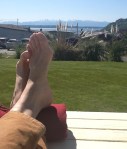
Two hundred dollars aren’t much. I watch people walk by wearing that much on each foot. That’s a couple of fill-ups for my truck. (Its got a 26 gallon tank.) But, remembering back to my investing beginnings, two hundred dollars is about what I used to start many of my original holdings. It doesn’t take much to make it worth the effort. I already have enough for most of my other bills: insurance, utilities, food, gas, and even enough to pay down a bit of the credit card debt that I incurred as I anticipated a portfolio recovery. The difference is, when I started those positions I did so to create my emergency fund from which I have been drawing. Now, I am in the midst of that draw. Instead of investing with a decades mindset, I am investing with a months mindset.

The shorter the investment horizon, the more chance is involved. Any given day, MSFT may go up or down; but buying MSFT in 1986 and selling ten or fifteen years later got beyond noisy fluctuations in the market. Buy small companies and sell them when they are large takes a long time, isn’t a sure thing, but requires little work and can have great rewards. Check Figure L, page 233 in my book Dream. Invest. Live. for my personal performance. Dream. Invest. Live. Long Term Buy and Hold can work well. And did, until my book came out and the market crashed. (No, my book did not make the market crash.) At the other end of the investing spectrum are the day traders who aren’t investing in companies. Day traders buy stocks and rely on the fact that on any given day some stocks will go up 20%, 30%, or more. Buy low. Sell high. and get out of the market at the end of each day.

Between the two extremes exists a continuum. LTBH can experience over 2,000% gains, but it takes years of patience. Day-traders can experience 20% gains within a day, but it takes frenetic work and good luck. Investing over the course of weeks or months decreases the influence of luck and increases the consequences of company performance.

I bought MVIS because I believe they are in a critical phase of their transition. We shareholders do not know the precise timing, the customers, or the products that are to be announced; but, from what we’ve been able to discern there should be significant news within the next few months or quarters. Maybe we’ll even get news within the next few weeks. Products to be sold for Christmas have to be announced soon. Just like with my business, one or two major customers can suddenly create a significant cash cushion.

Within the next month Samsung and Sony are expected to announce new devices before Apple’s announcement of a new device on September 10. Therefore, within the next 20 days those three major OEMs are announcing products which could include pico-projectors like those invented by MicroVision. I didn’t buy a hundred shares of MVIS from certainty, but from a reasonably informed guess with an acceptable risk.

If the stock goes up, the investment was worth it as long as it at least paid for the taxes and the commission. If the stock goes down, those $200 will be reduced but probably not eliminated. If the stock goes nowhere, then I’ve at least opened a door that was otherwise locked.

As I described in the previous post, financial losses are most likely temporary losses of an abstraction, not a true loss (though that doesn’t appease my mortgage company). Of all the things we risk, many fear finances far more than real losses. One freedom I enjoy is the realization that if I buy a stock I can also sell it. The commitment lasts as long as I decide. The market may control the price but I control whether I decide to participate. As of today, I’ve decided to start participating again; maybe not the way I prefer, but at least in a way that reminds me that I am in control. I’m buying back in. (Okay, MVIS, do good things for all of us.)

Posted in Uncategorized | Tagged , , , , , , , , , , , , , , , , , | Leave a comment

Losses And Opportunities

“Get that foot out of your mouth. That’s no way to dance.” Dancing is fun – and an excellent opportunity to put feet in the wrong place. Socializing while dancing provides more targets. Oops. Hopefully, there’s only a bit of embarrassment, and no great loss. Keep dancing and maybe no one will notice, or they’ll think you just made up a new move.

For the last few months, I’ve rented an office over a restaurant and within shouting distance of two coffeeshops. We’ve been in the middle of our summer drought, which means a lot of customers sitting outside enjoying the sunshine. I’m treated to hearing some of their orders and their responses. “But, I wanted the dressing on the side. Take it back and get it right.” A lot of emotion can be tied to some oil and vinegar.

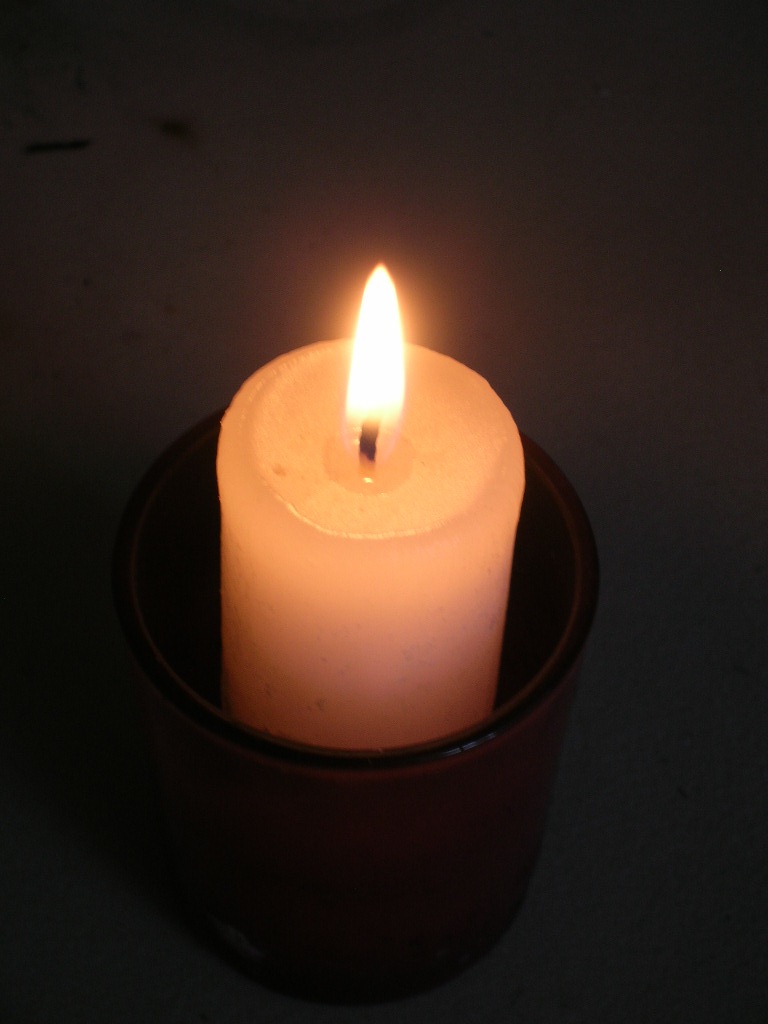
For the last few years, I’ve been entering that phase of life when loss of life becomes sadly more common. Deep loves are lost. There is no chance to take it back and get it right. The healthiest response seems to be celebrate the best of what was, and continue on with proper respect. Within the space of a moment I can think of at least four people who have done that. Some losses were stretched out over months. Some happened in less than a second.
One candle
For the last couple of years, you faithful readers have witnessed my losses. We’ll set aside the relationship ones. Those stories are only told in person to the right people and over the right drink. Almost all of my public losses have been financial. Yes, those losses do provide an opportunity for emotions; and yes, I have had my share of dismay and frustration – but, I keep in mind that those losses are probably temporary. They are more significant than getting the wrong salad. They are far easier to recover from than true loss.

I’m told that I look like I am doing fine. Thanks folks. It might have something to do with optimism, or maybe just habit. I actually feel better than I have in years. I’ve lost hundreds of thousands of dollars – measured by the stock and real estate markets. I’ve traded away lots of stuff to make money to pay bills. (By the way, does anyone want to buy a Folbot that has a tiny leak?) DSCN1190 I’ve delayed repairs and maintenance on me and almost everything I own. I’ve even a lost a bit of faith in our basic institutions.

One reason I am doing fine is because of my optimism. One source of my optimism is my awareness that my losses, while real, may also be temporary. I continue to trust in the value of my house, my portfolio, my skills, my community, my friends, my philosophy, and my self. That is a lot of value and most those losses are based more on misperceptions or misunderstandings, not on anything irrecoverable.

Sometimes you have to give it up to get it back. Giving it up, or even just being aware of the possibility of loss, heightens the awareness of value. As I have given up comforts, most socializing, most of my plans and projects,  I’ve become more aware of which ones matter most, and which ones existed by habit.

My losses are revealing opportunities.

Without this, can I now do that? If my house sells, I can work from anywhere on the planet that has a good internet connection. But, I probably won’t because I keep finding more reasons to stay on the island. Without so much stuff to tend, I have more space and more time. If my kayak lost its parking space, I’d have room for another garden plot. (And another exercise in loss, or another opportunity to find a way to guard against slugs, bunnies, and deer.)

When financial comfort returns, I know that I’ll dance more, hike more, socialize more, read more, enjoy the arts more, enjoy my friends more. I also know the work I’d enjoy even if I wasn’t being paid; and if I got paid, I have a better idea of what I’d use the money for. Philanthropy happens.

Losses are painful. Opportunities are healing. And reality seems to bundle them in packages that we must receive, open, and deal with.

To those with irrecoverable loss, my sympathies. To those who have lost money, my hopes. To those whose salads aren’t exactly what they expected, my pity.

And to dancers whose feet didn’t end up where they expected, maybe that was a small mistake that was actually a good move. Now, with a bit more practice, and the right partner . . .  what an opportunity.

Posted in Uncategorized | Tagged , , , , | Leave a comment