Panama Papers Impact

The Panama Papers join the bookshelf of exposes like the Pentagon Papers. If you haven’t already heard about it, you will. (Here’s a synopsis from my other blog, PretendingNotToPanic.com) This is big, and yet, this financial news may not effect most people’s personal finances. And yet, the Pentagon Papers changed American government. So did the Watergate reporting. Abu Ghraib and Edward Snowden continue to create repercussions. In the short term, the revelations about tax havens is a news story but not a change in lifestyle for most. In the long term, the specifics of the process of hiding wealth may begin a fundamental change in our economic system. I think long term and am fascinated by the implications of technology, so I admit to being interested in the impacts that are only now hitting the news.

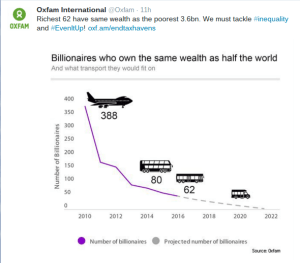
The Panama Papers revealed nothing new, but revealed specifics only imagined, previously. There’s no surprise that tax havens have allowed the wealthy to accumulate wealthScreenshot 2016-01-18 at 08.31.28 in ways only available to them. Whether it is just or not, the wealthy paying for expensive ways to hide wealth is simply assumed by most. The eleven million documents released to journalists take that assumption and change it from an abstraction to reality. Specific people are identified, and their actions can be questioned. Tax havens are legal, but the way they are used can cross the line – and it looks like that line has been crossed several times. About a dozen heads of nations have already been identified. Conflicts of interest are apparent. Scandals can affect the careers of people whose reputations are based on the opposite of their actions. In some cases, those conflicts of interest may do more than ruin careers; they may put people in jail. As the news hit, I’m sure there was a dramatic increase in messages and calls between the tax haven wealthy and their advisors.

Tax havens hide wealth and accumulated income legally, at least from the tax havens’ perspective. The people using them may be under restrictions placed on them by their positions, which means they may have broken the law. While legal from one perspective, and illegal from another, the greater impact may be the loss of tax revenue to the wealthy person’s country. A billion dollars protected from home nation taxation means a billion dollars not available for basic services. At some point, the abstraction of lower tax revenues means less money available for health care which means people have died. Grim, but true. And also why the impact of the news may be more than just a story for people to complain about.

Hidden wealth is nothing new. Waiters can hide tips. Consultants can decide to not disclose gifts. Royalty can move gold to other countries in case they are deposed. Until recently, those actions were physical. Now, especially as transactions have become electronic, those actions are traceable (though they may be encrypted.) Encryption creates the illusion of security the way a locked door protects the contents of a car; but as the recent iPhone incident proved, there’s always a way to get past the protection. Sometimes that is sophisticated. Sometimes it is the equivalent of a rock smashing a window. In the case of almost all of the recent exposes, security was defeated by someone on the inside deciding that some secrets shouldn’t be secret.

This period of tax havens may have been a temporary aberration. Prior to technology, the logistics were difficult. Within a few years, computers may be able to crack any code. The Panama Papers proved that any system is vulnerable to one person who thinks a change must be made.

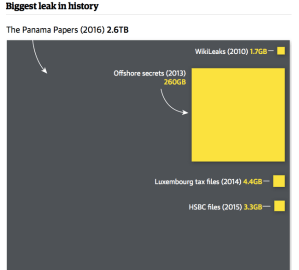
The Panama Papers are the biggest leak. At roughly 2.6TB, they are more than ten times are voluminous as the previous record holder, which was more than ten times the previous record. As large as that is, it also can fit on a device smaller than a phone. This probably won’t be the last leak.
Screen shot 2016-04-04 at 7.29.44 PM
The data came from one company. There are many more. The news from one company has already implicated a dozen world leaders. The other tax haven files undoubtedly include more. I’d be surprised if each firm isn’t reviewing their security measures, each questionable client isn’t reviewing their exposure and options, and in each firm and within the staff of each person someone isn’t considering whether this is the time to leak their information.

The rest of us, however, watch the news, possibly cheer the scandal, and continue with our daily routine of trying to make enough money to support our lifestyles. Our tax havens may be Mason jars buried out back.

I suspect the impact won’t be that abstract. When the elephants (the 1% of the 1%) dance, the mice (the 99.99%) must scurry; but some of the elephants are discovering that the ground contains pits and traps that they may not escape. The mice may get a chance to relax while some of the elephants decide to gingerly exit the dance floor.

With the security being compromised by one individual, the entire process of wealth accumulation and tax avoidance has been revealed. The risk to reward ratio has shifted with one news story. Some will entrench in denial. Some will shift to alternative strategies. Some will see the risk as too great and will live according to the rules as they were supposed to. Most haven’t broken any laws and will continue the practices because they’ve done nothing illegal. But, if there are any doubts, there will naturally be some who start paying higher taxes.

One of the safer alternatives will be to invest within their countries, in their public financial markets, and abandon practices that encouraged corruption. The Panama Papers may have, with one press release, done more to encourage local investing and fight corruption than any governmental initiative.

This first release of data was mostly about people outside the US. That’s a comfort for Americans. It wouldn’t be a surprise that another leak could be the opposite, something that involved more Americans. That could be an interesting revelation, especially in an election year. That would have a dramatic impact.

(Thanks to a free press and The International Consortium of Investigative Journalists for their work uncovering, verifying, and analyzing the information. Their main page for the Panama Papers.)

Posted in Uncategorized | Tagged , , , , , , , , , , , | 1 Comment

Missing MVIS Catalysts

Surely, MicroVision and MVIS would finally get some good news in March. Or not. Provide four opportunities for positive surprises and at least one of them will succeed. Yes? Evidently, no. Oh yeah, and then there was the one big negative. That didn’t help either. Luck happens, both good and bad. I’ve experienced that. MicroVision and its catalysts continue to experience it. Is good luck the only thing that is missing?

Maybe I tweet too much. Within the last month I tweeted about MicroVision’s possible positive prospects for March, but I can’t find the tweet – oh wait, here it is.


Four products had possible launch dates:

  • Sharp’s RoBoHoN,
  • Celluon’s PicoBit,
  • Qualper’s smartphone, and
  • Viewsmart’s projector.

Sounds good. Even if they aren’t expected to be mega-sellers, positive news should produce proportionally positive results. RoBoHoN slid out to June. PicoBit and Viewsmart were quiet. Qualper may have launched! but in a language that was hard and confusing to translate.

In the middle of the lack of news came news – of dilution, a technique for finding funds that many shareholders thought was behind the company. If the company was hunting for funds, that suggested that the backlog and order book weren’t enough to pay the bills. The company raised about $7M. The stockholders saw their percentage ownership fall again. The market dropped the share price over 30%. Welcome to the world of a sub-$2 share price and the prospect of yet another reverse split.

Photo on 2016-03-31 at 14.14

One share of MVIS equals…

And yet,

MicroVision has moved from being an investment to a speculation to a guessing game. So little news comes out that they can’t over-promise, but any unexpected bad news is taken as the company under-delivering.

As a fellow shareholder passed along to me, “And a certain small company is doing a lot better than people give it credit for.” They may be right, but we lack evidence to support the claim.

Since my Triple Whammy, I’ve maintained my optimism about my situation by reflecting on a long list of positive possibilities in my life. My Backup Plans haven’t changed much. My investment portfolio may recover. My consulting and artistic business continues to grow. My job prospects continue to improve, as I hear my name being included in unsolicited opportunities – though I haven’t heard the details about who, where, when, what, but I can guess at why. More about that, later. Seattle housing has become such a seller’s market that the median time on the market is rapidly approaching only a week. I don’t want to sell my house, but I might if it hits my Make Me Move price. Being debt-free has its advantages. And, of course, serendipity happens and good news can come in unannounced.

And yet,

The present value of the sum of my positive efforts is 85% of my frugal expenses – and taxes are due. It if wasn’t for the death of my father, I’d be further in debt. Instead, I’ve at least been able to get the truck fixed and the septic system cleaned. Another check is due, and it may take care of the taxes, though probably won’t arrive until after I’ve paid the IRS via credit card. Aside from that temporary influx of cash, my situation hasn’t changed much.

I feel for MicroVision. Lots of potential requiring lots of patience requiring lots of innovative financing.

Bad luck happens. I’ve started collecting success stories. One common thread is usually a casual comment that includes, “and then, luckily…”. Hard work works, but it usually relies on at least one bit of good luck. Good luck can work alone, which is one reason I buy lottery tickets, but that goes beyond investing, speculating, and guessing and heads straight to wishing.

I suspect MicroVision is doing better than we can know, but not so well that they can ignore the reality of improving their cash position. Eventually, these troubled times may be recalled as temporary discomforts that are eventually readily resolved.

In my situation, I’m already witnessing improvements that contrast with my recent difficulties. I no longer wince at the phone ringing, because I no longer get calls from the mortgage collectors. I no longer wonder if the Sheriff’s drive through the neighborhood is part of posting an eviction notice on my door. I no longer worry as much about the truck failing, but I am hoping to get new tires to replace the ones that have been in use since the last Bush presidency. I can now rest in my rest room because I can flush again.

Most of those improvements in my life aren’t apparent to anyone on the outside looking in. That may be true of MicroVision as well. Unfortunately, the objective news and data available suggest delays, cancellations, and inefficiencies. But, that was March. April will be much better. Right?

MVIS_Catalysts_033116

Posted in Uncategorized | Tagged , , , , , , , , , , , , , , , , | 2 Comments

Flushing Septic Anxieties

Finally, I can tell yet another of the stories that must remain unspoken. Making less than expenses creates chapters of stories that are either too embarrassing or expensive to reveal. Today, I got my septic tanks pumped. That may sound icky or insignificant to you, but it relieves anxieties I’ve held in for years.

If you’re on a sewer system, congratulations. You enjoy one of the most overlooked luxuries of modern life. Flush at will, and almost always without worry. Whatever went in the bowl is soon flowing under the road and out of your thoughts. Which also explains why so much trash ends up in the treatment facilities; but hey, cleaning that stuff up only raises your taxes, so no big deal. Right?

Living outside the city where toilets typically flush to septic tanks and systems, and know that whatever went in the bowl will soon be beneath the yard. Septic tanks and fields can handle organic material, but they have an impossible time with condoms, handkerchiefs, and whatever falls in when a guest uses the commode during a party. Families must have entire Lego collections under the lawn.

I like being dutiful, sometimes to a fault. About the time of my financial upset, my Triple Whammy, was about the time for the septic’s regular inspection and cleaning. The optimist in me suggested waiting until the finances recovered. The company finances were improving, the economy was going to recover, surely I’d soon get either a better job or a resurgent portfolio. Instead, my finances proved the pessimists right; at least temporarily.

Since then my dirty secret (well, one of them) was that I avoided putting solids in my toilet. About that time, a professional checked the system he suggested I should “get it taken care of” within the next year or so. I was told I couldn’t get the tanks pumped until I had the system inspected, and having the system inspected could reveal repairs that might cost over ten thousand dollars. If you know that every flush brings you one inch closer to paying ten thousand dollars, then you begin to wonder how many inches are left? How full were the tanks? Would the system fail? Would I lose my house because a basic necessity was rendered inoperable?

For the last few years I was creative in my bathroom habits. I began to understand people who have been in worse situations for even longer. Shopping trips were directed to stores with public restrooms. A daily walk would be rerouted to include a rest stop, or at least an acceptable porta-potty. One of the unspoken benefits of coworks was at least a nominally functioning lavatory. I became much more aware of signs for “no public restrooms”, and understood why some people frequent the woods.

But, we don’t speak of those things. We have taboos that we must observe, even when they deal with biological necessities that every living human experiences. Feed the hungry – is only the first half of the process.

I am relieved. The roughly two thousand dollar bill was only possible to pay because of small life insurance policy carried by my recently deceased father. That bit of my inheritance went to pumping out a three-tank system, replacing an air pump, and installing a riser. As odd as that may be, spending the money on my septic system is appropriate because my dad was treasurer for his local sewage authority.

The impacts can be easily dismissed. I can flush. So what? What’s the big deal?

I am not officially poor or in poverty, and yet such a simple thing as a fixed or flawed septic system has unexpected implications. The list must be longer for people who are poorer.

  • I now have a better chance to get back into shape. I’ve been working seven days a week, frequently more than ten hours a day. Most of those days I made a choice of using my free time to get in a run or karate workout, or going for a walk or drive to a toilet. Exercise can be postponed. Digestion and the consequences can not. I’ll be able to exercise more. I also won’t have to spend as much on gas or moist towelettes.
  • I can entertain again. It is more than embarrassing to invite someone over and then tell them not to use the bathroom except under certain conditions. That isn’t being a very good host. It would’ve been traumatizing to have the epic backup occur to a guest.
  • I’m one step closer to being able to have a renter or roommate. Many friends have suggested that I rent out one of my bedrooms. I have the room and don’t need the storage, but the most I could make from a renter was a few hundred a month, and that wouldn’t offset a few thousand dollars of repair bills. The benefits weren’t greater than the risk.
  • My emergency preparedness just dramatically improved, within limits. My house’s septic system is fancy, not by choice but by necessity. When the house was built, the restrictions were loose. A few decades later, restrictions required an expanded system, but didn’t provide expanded lands. My house has a Whitewater system, which is a multi-stage arrangement where one of the stages is a tank where air is blown through the effluent to aid aerobic digestion. It blows bubbles to make the bacteria happy. Replacing that pump cost about five hundred. When the power goes out, so does the pump and the bubbles, but at least the other tanks are now emptied and can collect a lot while waiting for the power to flow again.
  • My stress level is being reduced. Stress doesn’t suddenly disappear. Years of worrying aren’t going to immediately be replaced with elation. Besides, we’re talking septic systems here. Elation doesn’t readily apply. But, about once a day, one very vital and undeniable action will change from a source of anxiety (and therefore blood pressure, et al) to an innocuous moment.

My experiences may seem simultaneously icky and insignificant, but being aware of such basics that are common to every human is something that has made me more aware of the range of human experiences. Millions of people are defecating in fields that are beside their water supply. Around Seattle there are dozens of homes for sale, and therefore probably hundreds of occupied (and empty) homes that have five or more bathrooms; homes where flushing is taken for granted. The exact same processes are in place, yet may be one of the most dramatic examples of the range of wealth within our world.

(This is also why I am encouraged by advances in composting toilets, incinerating toilets (really), and the recycling systems developed for space missions.)

The frugal side of me appreciates the value of simple things. Sometimes those things are so simple that we don’t mention them. I will, however, be silly enough to write about something serious and overlooked (while applauding the Gates Foundation’s work). I will also, regardless of conventions and taboos, quietly celebrate a luxury that is a necessity that I can now employ. I won’t go so far as to say enjoy.

No longer a source of fear

No longer a source of fear

I can flush without fear. Ah.

Posted in Uncategorized | Tagged , , , , , | 1 Comment

Coworks Conundrum

Here I sit, halfway through a Wednesday afternoon, temporarily the only person in the coworks for writers hosted by the Whidbey Island Writers Association (WIWA). Coworks are successful enough to warrant magnificently innovative and productive spaces in places like Seattle. In a small town, on an island, there’s more reason to have one, and less resources for establishing one. Rather than leave you with the feeling that the earlier attempts were completely abandoned, I decided to produce this update.

Simply said, we’re not there yet. ‘There’ is the creation of a sustainable coworks for professionals. Others have their definitions. Mine is based on the needs of the nomadic workforce that could use a 24 hour a day, seven day a week access to a work space that provides the basics of the modern work environment: access, high-speed internet, power, desks, tables, chairs, white boards or black boards, storage, and the modern version of a phone booth for video calls. Provide a facility like that in a city like Seattle, and hundreds of people sign up. Try to provide a facility like that in an area that has 17,000 people along 17 miles of rural highway, and reaching critical mass takes more effort, or luck. We’re working on it.

Previous coworks worked on the island, though all have effectively been temporary. The more recent attempt at crowdfundingcoworks logos lightning a space generated some wonderful encouragements, but insufficient funds. In the meantime, the seven hour a week coworks for writers persists. Most of the days that the space is open, enough writers drop by to justify the effort. Members get to use the service for free. Non-members are asked to donate $5. Maybe we should set up a tip jar, at least.

The Gig Economy is maturing and becoming better understood. Supporting a lifestyle by combining several gigs can create freedom, the need to maintain several relationships while establishing the basis for the next set of gigs means members of the Gig Economy are becoming serial entrepreneurs by necessity. Freedom is marvelous, but the constant pressure can negate those benefits. The majority of nomadic workers are working three jobs to create one income.

Working outside of corporations means working outside office politics, conventional commutes, and dress codes. Working outside of corporations also means losing the benefit of facilities like rest rooms, printers, parking, rent-free cubicles, computer support, telecommunications, and the social context that is an office. At its minimum, some workers sit outside closed libraries absorbing wi-fi after hours.

Coworks work to enable the nomadic workforce by providing the business infrastructure. They may seem uncommon now, but as businesses retreat from offering long-term contracts and careers, as businesses encourage employees to work from outside the office, and as technology enables mobility, coworks are likely to become more common.

The early adopters have enabled spaces and organizations like Impact Hub, WeWorks, Tech Spaces, etc. Get a tour of their offices and realize how the office environment can be redefined. The folks at the Seattle Impact Hub gave me a tour that was so impressive that it pointed out how impractically high the standards have been set. On the island, a space that accommodated twelve with nice chairs, desks, storage, access, internet, and phone booths would be luxurious. Seattle’s Impact Hub spans several buildings and floors, have presentation rooms, a theater, kitchens, massage rooms, a nap room, an espresso bar (of course), and a wonderful energy. As coworks become more common, there will be a wider range of implementations; but for now, wow.

The two key coworks benefits can exist at almost any size: a functioning office, and a network of engaged people. Those two features are easily the most valuable.

Urbanization is so trendy that the densification of the human race is assumed. Put enough people together and even a small percentage can empower an amazing array of ventures.

Contrarians head the opposite direction. As people move to the city, others are purposely moving to the country. The consequence for small towns is that the people who move there are much more purposeful; much more aware of their motivations, desires, and needs; and demand acceptance of unconventional lifestyles.

One of today’s visitors to the coworks was Pattie Beaven (aka @Earth_Fit and co-founder at earthconservant.com). Read her blog and experience her passion for her topic and their rationale for moving to Whidbey Island. Talk to almost anyone who has moved to a small town while their friends were urbanizing, and get a similarly passionate story.

Those passions mixed together are one of the vital enablers of the other main product of coworks; unexpected opportunities. I help entrepreneurs, creative people, artists, and innovative individuals with their projects. It is fascinating work. I know the energy and ideas already exist to create incredible coworks and marvelous ventures; but it is like having a pantry full of delicious ingredients, but not having a kitchen to cook them in.

We need a kitchen for blending ideas. I think we’ll get there. In the meantime, though, we’ll continue gathering ingredients and recipes while rummaging around for the resources necessary to create and enable sustainable lifestyles for people working within the continually unsettled Gig Economy.

For now, I’ll finish this post, turn off the lights, bring in the sign, and lock the doors (if the building’s artists and non-profits have already left.) I plan to be back next week, as always, hoping to find that critical element that will allow the local economy and nomadic entrepreneurs to grow.

Posted in Uncategorized | Tagged , , , , , , , , , , , , , , | 3 Comments

Weirdnesses Approaching

As if the world wasn’t weird enough, it’s getting weirder. Sometimes that’s a good thing. Luckily, humans evolved to be adaptable, and that adaptability is being tested. The following is a Friday night random list of shifts, changes, and trends that are redefining normal. Watch as conventional wisdom shudders in the wake of modern change.


Driverless Vehicles – Auto Autos
Driverless cars, trucks, trains, planes, drones, and ships. About twenty years ago, driverless vehicles were either incredibly complex and expensive (airplane autopilots), or were expected to require significant infrastructure like highways lined with sensors. Now, artificial intelligence and sensor technology has progressed enough to enable vehicles to navigate and drive so well that truckers may lose their jobs. Driverless cars have accidents, but at far lower rates than human-driven cars. Even pizza delivery is being researched using sidewalk robots. Why use the road when all you need is something the size of a large pepperoni with cheese? The concept can seem trivial or experimental; but cities may prefer vehicles that can find their own parking spots, owners may prefer vehicles that come when you call them, and that can be loaned or rented while you’re at work. Take a person out of the vehicle and it gets smaller, cheaper, and simpler. For deliveries, there’s no need to design crumple zones, airbags, seat belts, or head and leg room. For commuters, just let the car follow all the other commuters until you get near work. Hacking will get interesting.

Renewable Energy – Solar and Wind and
Within the last five years, solar and wind power systems have matured into reliable systems, and are being built in large enough volumes that the price has become competitive with fossil fuels – even without subsidies. Add back in the subsidies and renewables actually look even better. While renewables have relied on subsidies to get started, so do coal, oil, and gas. Fossil fuel subsidies are actually larger than renewable subsidies, especially when the indirect costs of pollution and health care are included. Devices, households, airports, factories, and warehouses are going off the grid. If they aren’t going off the grid, they’re feeding power back into it. In both cases, the reliability of the electrical system is improving without having to build more plants or power lines. Decentralization means people can be less tied to cities. Add in internet access and the recent trend for urbanization may reverse.

Minimalism – Living With Less
Whether by choice or necessity, people are buying fewer things. IKEA has announced that we may have reached Peak Stuff, the point at which there’s less demand for new things. Because of the Great Recession (or the Second Great Depression), people are less likely to buy on credit. The things that they do buy are more likely to be practical. The trend is small enough that Wal-Mart isn’t threatened – yet. But, the Maker movement is emphasizing 3-D printing and repairing old things rather than buying new from the store.A tiny house Many won’t live in Tiny Houses, like those who find 124 square feet to be more than enough, but they are more likely to hunt for a smaller, rather than a larger, house when they buy; or are more likely to rent an apartment rather than own a house. Cars are large, except for the sudden interest in smartcars, e-vehicles, and a return to bicycles.

Modern Economics – Money Changes
The era of buy low, sell high, invest for the long term, rely on research, has been overtaken by high-frequency trading, artificial intelligence trading, investing for the week rather than the decade. Bonds as a backup are dealing with low single digit interest rates that barely recognize inflation. Outside the US, inflation concerns are being replaced with deflation worries; which is why Switzerland, Japan, and several other countries are loaning money at negative interest rates. Too much money is stagnating, which is stagnating economies, and worrying central bankers. While Bitcoin was considered the currency of choice for illegal activities, the fundamental technology has been recognized as financially efficient, which means the blockchain technology is also altering trading and currency transfers. The drop in oil and other commodity prices have upset countries that rely on those revenues, so places like Saudi Arabia, Russia, and Venezuela are less stable than they were two years ago when oil was over $100/barrel. Power is shifting.

Graphene – Strength and Power
Graphene continues to amaze it researchers and developers. It is a simple material, just a flat matrix of carbon atoms arranged into an arbitrarily large molecule. Such a simple idea is incredibly powerful. Most things we build and break are built and broken by manipulating chemical bonds. Better living through chemistry has been the norm for all of human history until the Atomic Age when we went to the other extreme. Nuclear power plants and weapons demonstrate the breaking and building of atomic bonds. Between the seemingly strong but relatively weak chemical bonds, and the incredibly terrible and terrific atomic bonds are molecular bonds. Graphene is held together by molecular bonds. Take a sheet of graphene as thick as plastic wrap, and even an elephant stepping on a pencil point couldn’t punch through it. Finally, roofing material that won’t leak, that doesn’t weigh much. Apply a current, and use it to filter seawater. Move it through seawater, and pull out a current, or hydrogen for fuel. If we find a cheap way to make it in bulk, lots of building materials become quaint and obsolete. And that’s just the start as it wades into other industries.

Invisibility – More Than Meets the Eye
As one friend noted when the first stealth fighter was revealed, they effectively made something invisible in a very narrow part of the spectrum. It was inevitable that the effect would be expanded. Add in other technologies and that has become the case. There isn’t one technology that’s working for all wavelengths of light, but put them together and we’ve getting much better at cloaking devices. Aside from the military and wizarding applications, other technologies are now taking the insights into wave behaviour and finding ways to hide buildings from earthquakes and coastlines from tsunamis. Tailor a suite of solutions correctly and something can be seen by some, not seen by others, and able to interact within limits. If we can protect against human assailants and natural disasters, we might find new ways to subtly be secure.


Each of these trends and technologies will change our world. The overwhelming aspect is to realize that their interactions are even harder to predict. Imagine an invisible driverless car operating on renewable energy delivering graphene to someone in a tiny house working for cryptocurrencies. Silly. Probably never happen. But what other mix of these trends will become the norm, something that won’t fit with conventional wisdom, but that will require and benefit from adaptation? Interesting times, or at least weirdness, approaching.

Stay tuned.

Posted in Uncategorized | Tagged , , , , , , , , , , , , , , , , , , , , , , , , , , , , , , , , , , , , , , | Leave a comment

Sad MVIS Shareholders

Sad MVIS has continued to fall, and with it, the emotions of MVIS shareholders. Since MicroVision announced 164% increase in revenues, its stock, MVIS, has fallen 26%. Evidently, expectations were high, and the expressed reality is low. While investing is supposedly just about the numbers, individual investors are people and therefore emotional. Since the earnings report under-delivered, the discussion boards have been busy parsing the news, trying to understand the lack of news, and acting as an unofficial support group. The private communication channels are busier, too. To paraphrase one rhetorical question, have we all been proven to be fools?

Aside from some eternal optimists, the general sentiment is disappointment. There is even a thread of perceived betrayal, or at least considerations of insufficient competence. Emotions affect the demand for a stock. Depressed emotions depress stock price. Whether through investors selling or fewer investors buying, the price drops regardless of the value of the company. If it drops enough, the distinction turns from academic to financial. When a stock’s price drops too far, it is difficult for the company to borrow money, convince customers of viability, and remain listed on the stock markets. Today MVIS closed low enough that MicroVision’s market cap was less than $100M.

The financial implications are too familiar. If you want to learn more, browse back through my previous posts because MVIS has been here before, particularly when the company conducted a reverse split.

Sentiment, expectations, and perceived promises can be created by official statements; but with a company as news-shy as MicroVision, random comments from management, quick glimpses of powerpoint slides, and seemingly logical inferences can encourage investors to buy and hold a stock.

One phrase from last year’s stockholder’s meeting echoes this year. Some recall hearing one of the top officials assure the shareholders that (paraphrased) Every quarter the shareholders will have something to be pleased about. I can be convinced that I heard the same thing, but can’t find the quote in my notes, which suggests it was not part of the formal meeting nor part of the business presentation, but may have been a comment made while mingling.

The eternal optimists find something to be pleased about every day. In terms of quantifiable news, however, there’s been very little pleasure. The simplest way to meet that goal would be for increasing revenues, even if the increase was small. Quarterly revenues were down then up then down. Another simple way to meet the goal was to announce eventual product releases every quarter, but those news items have been in the control of the customers. The best source so far has been individual shareholders like Peter Jungmann visiting the company’s booth at events like CES. A simple recital by the company of the company’s booth was in their control, and yet lacking until after others had done so.

A 164% increase in revenue is worth celebrating, but it is treated as dismal news because it didn’t include new customers, new orders, significant increases in backlog, and guidance that was conventionally impressive but too low to dissuade notions of debt or dilution. By the end of the call, and after the shareholder community had analyzed the news, the realization was that this conference call was largely like many before. One investor on Investor Village described it succinctly, and agreed to let me share it here.

This quarterly/annual earnings conference call sounded like all 72 previous ones.  The names of the officers, products, and potential customers have changed, but the dialog is all the same.
“We didn’t achieve our hopes for last year that we previously alluded to, because of external factors we had no control over.”
“We have great hopes and dreams for next year because there are several companies out in the world that might use our technology.”
“Oh by the way we lost money again and diluted your shares again.”
“But things might, may, can be different next year because several unnamed companies might, may, could order something from us.” – hentied on InvestorVillage.com

Investing in stocks can be difficult. While it is easy to point to the numbers and say that it was difficult to lose money on a stock; the real pain can sometimes be an emotional response to a perceived betrayal. If hopes were too high, was it because management suggested the possibility, or because the investor let optimism take over? As another private conversation asked, Were we fools for believing, were we fooled into believing, or would we be foolish for leaving – and then finding that all we required was a bit more painful patience? Unfortunately, there’s no way to know.

I’ve only experienced this level of regret once before, which unfortunately happened at the worst possible time. Even now, I believe that Dendreon‘s cancer vaccine was an impressive success and a milestone in the War Against Cancer; and yet, DNDN went bankrupt (which continues to energize possibly valid conspiracy theories.) Even if eventually the technology, conspiracies, and health improvements prove to be correct, it won’t affect my portfolio. Sadly, being proved right is not the same as being proved profitable.

I feel sorry for and sorrow with MVIS shareholders, even the eternal optimists. We aren’t the ones doing the work. We didn’t start the company. We did, however, trust the system, the company, the management, and each other. As long as the stock is down, it will be easy to feel foolish or fooled. If the stock ever attains the valuations so many of us have calculated, we’ll laugh at how foolish it was to feel this way. If only we knew that we’d get to see that day.

In the meantime, as for feeling happy every quarter, well, I do still appreciate that value of twenty five cents. If you put eight of them plus a dime and a penny together you can buy one share of MVIS.

Photo on 2016-03-15 at 19.05

(Assuming no transaction fees. Brokerage fees may be much more expensive than one share of MVIS.

Posted in Uncategorized | Tagged , , , , , , , | 2 Comments

Service Engine Soon

“Service Engine Soon”
Groan.
Seeing that vague and ambiguous warning light come on is unsettling and a source of anxieties. It wasn’t the big red warning light, just the little yellow warning light. Does that signify something critical or merely inconvenient? Until I could find out, I had no idea if it was going to be thousands of dollars or simply turning off a switch. The recent Fuel Pump Incident didn’t help.

Park, get to work to pay the bills, then drive to the mechanic’s shop on the way home.

Whew. The shop had the right reader and confirmed that it was the same error that preceded the fuel pump problem, a Secondary Air Injector. An issue with Air is better than an issue with combustibles like Fuel or Oil. Secondary sounds less important than Primary. I correctly suspected it was an emission control issue. Pollution is bad, more pollution is worse, but at least in rural Washington counties like mine such issues can be handled with discretion rather than required to pass emission tests. They didn’t know how long it would take to fix, I had a talk to give, and I’d been wanting to tune up the truck anyway. They agreed that the truck could run the few extra miles to get me to and from my talk (Walking Thinking Drinking Across Scotland)Walking Thinking Drinking Across Scotland, that tuning up the truck would probably be a better improvement, and that they could check the emission controls while doing the tuneup.

The talk went better than I expected. Happy to do more about Scotland, Social Media, and Self-Publishing, but that’s another story.

A few days later I drove back to the shop and dropped it off, wondering how big the bill would be.

Today I got the news.

The tuneup was simple. A lot was done when the fuel pump was replaced. Then, they took on the obvious replacements like spark plug wires. Along the way they also cleared out the rat droppings, which I am hoping were there from its days as a ranch truck, blew out a plenum or two, and basically did spring cleaning for the engine.

Drumroll, but what about the yellow warning light? A vacuum hose popped off. That was it. A tiny little hose wasn’t injecting extra air into the exhaust. Instead, there was a little hole that was either sucking in or blowing out a tiny little bit of air. That was enough to trigger the light.

Too many of the warnings and cautions directed at us have valid reasons but heightened priorities. Service Engine Soon. Is that a demand, a legal requirement, a really good idea, or just something to get around to – or maybe even ignored?

One of the ways to understand how things are designed is to understand the incentives and motivations of the people involved.

  • A well-informed driver wants as much information as possible, the knowledge of what it all means, and the discretion to make independent judgments about the actions to take.
  • A designer interested in function might want the same thing, but is limited by the size of the dashboard.
  • A designer interested in form might want to only have enough displayed to please the driver, which for some people would only be a speedometer and a gas gauge.
  • Accountants want it made as cheaply as possible.
  • Lawyers are aware that in America’s litigious environment, someone can readily sue if they can blame an accident on not getting enough information, and there is no way to know which information would be considered critical some time later, so at least give them a warning that something is happening.

Except for the driver, all of them are paid to emphasize something besides the way I want to drive. I am an individual. They have to outguess the needs and wants of millions of individuals. It’s easier to be more concerned with what their boss is going to evaluate them against: regulatory compliance, internal design guides, budget, scheduling, corporate policies, and whether they work well with others. I want something they can’t readily deliver, a dashboard that tells me the information for normal operations, and a proper identification and perspective on anything that is abnormal. If a cylinder is going bad, which one is it, and how long before it goes from optimal to sub-optimal to degraded to repairable to requiring replacement to jump out of the vehicle because the engine is going to blow up. A tiny little yellow light could be hiding anything, and the most immediate action it can induce is anxiety.

Since my finances were hit by a Triple Whammy, warning lights are frequently set aside to join the others in Dammed Plans. Yes, there are things that should be done. Yes, fixing them sooner is better than fixing them later – except for the fact that in the sooner there isn’t enough money, and hopefully the money will arrive before the later.

I’m not alone with delaying things. Too many things like infrastructure, education, health care, and the environment have every shade of yellow and red lights blinking and flashing. We set too many aside because we devote the (frequently borrowed) money to fighting real and perceived enemies. I’m glad my warning light was so readily resolved, and that it happened at a time when a few hundred extra dollars were available. The remaining list costs more than the remaining funds, but I’ll judge priorities as funds arrive. Hopefully, we as a society, will be able to do the same and match resources to needs before problems become critical. If not, well, that’s another source of anxiety (and partly the inspiration for my other blog; PretendingNotToPanic.com, news for people who are eager and anxious about the future.)

Stay tuned.

PretendingNotToPanic.com

Posted in Uncategorized | Tagged , , , , , , , | 1 Comment

Sad MVIS

Being a responsible investor/speculator means doing simple, sad, yet necessary things. MicroVision announced earnings today, typically underwhelmed the investment community, and had its stock (MVIS) drop over 8% – even though revenues were up 160%. Surprise!

Every year, this is going to be the year; but evidently, 2015 wasn’t the year and the suspicion is that 2016 won’t be either. 160% growth is made easy when you start from an uncomfortably small number. MicroVision, a $122M company made it all the way up to $9M in revenues – far below expenses.

The good news:

“MicroVision achieved 164 percent revenue growth in 2015 with more than $9 million in total revenue for the year”

The bad news:

Well, there really wasn’t any ‘bad’ news, but there was a lack of the expected good news: additional customers, product launches, revenue streams, collaborations. Evidently, people expected more.

MicroVision’s pico-projector technology has the potential to disrupt the industry, and may yet. The competitors are making progress. It is hard to keep up with the new products using embedded projectors. Some are impressively innovative, few incorporate MicroVision components – or, at least if they are doing so neither company is mentioning it.

An extra order or two, a reveal of MicroVision Inside some of the announced products, a next generation variant of an existing product, all were reasonable expectations. None arrived. I’m surprised the stock didn’t slide further; especially because it traded at four times normal volume.

The company is succeeding. They had $9M in revenues and a backlog plus cash of $18.9M. I haven’t heard about any layoffs. This is all much better than two years ago.

If the company was providing guidance of another 160% for 2016, that would make news; though at this point, management’s credibility is apparently waning. Outsiders expect obfuscation. Measured from where they were, they’re in much better shape. Measured against the competition and the NASDAQ listing requirements, there are reasons to be concerned.

One measure of any business expense is Return On Investment (ROI). If you spend $10 do you get $11 back? Does the investment at least match the stock market average return? Revenues are up, but have yet to catch expenses, and management is not providing guidance that the company will be profitable soon enough to forestall delisting, reverse splits, or dilution.

One numbers game I haven’t played yet is to take one particular expense, management compensation, apply a nominal 5% or 7% against the career total compensation of each manager, and calculate how much revenues will have to grow to warrant the salaries and benefits of the managers. Sad to say, but that is a business reality that should be considered.

I am discouraged by the earnings report. Aside from the 164% number, there was not much news. There was data, which is appreciated, but little of it was new. If MicroVision is eventually going to be as disruptive as suggested, then eventually one of these earnings reports or press releases will pleasantly surprise investors. Until then, we are speculators, trusting to a dream, hoping for news, looking to outside sources rather than inside officials for positive announcements.

MicroVision announced 164% increase in revenues, but evidently the measure was something else. Maybe that something else would’ve simply been news of the lifting of a disclosure, in which case the revenues wouldn’t change and wouldn’t matter. Maybe that something would’ve been reaching cash flow positive or even profitability because the company’s and the technology’s potential is that great. What I do know is that it didn’t happen today, I’ll continue to happen it is tomorrow, and hope I’m not trapped on that treadmill of tomorrow never comes.

Posted in Uncategorized | Tagged , , , , , , , | Leave a comment

What Will I Talk About

My trip across Scotland was a wonderful, and very un-Hollywood, bit of travel across a country and through self-awareness. The trip is over, but the effects continue to change, and change me.

Tom Trimbath's avatarA Walk Across Scotland

Preparing for a talk. That’s how I am spending my Friday evening; and that’s good. I enjoy public speaking. Telling stories is fun; but learning what other people want to share or hear about is better. Saturday, March 5th, 2016 I’ll give a talk at the Edmonds Library about Walking Thinking Drinking Across ScotlandWalking Thinking Drinking Across Scotland. Travel changes people, and a good trip inspires changes for years. A talk I gave after getting off the airplane has little to do with a talk I’ll give years later. It is now years later. I wonder what I’ll talk about.

When I say “I wonder what I’ll talk about” I’m not being facetious. I honestly don’t know. Tonight I am preparing the talk, getting the photos onto the new-ish computer (a Chromebook), pulling together the various things I carried that are now props for talks, watching the slideshow go by again…

View original post 840 more words

Posted in Uncategorized | Leave a comment

MicroVision And Catalysts

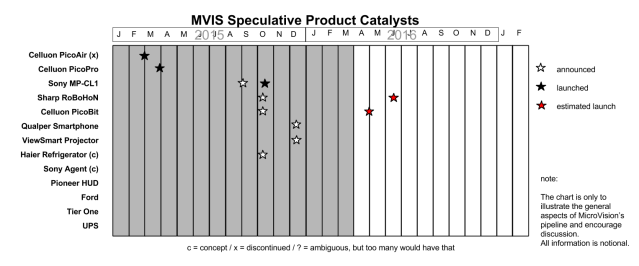
MicroVision could use a catalyst. As a startup company that is now old enough to drive, it has been accumulating a positive potential for over a decade. A year ago, I created a chart to try illustrating the specifics of that potential. It was something I did for myself, just to organize my thoughts and expectations; but it has grown beyond that and has become something I update and share. It is the simple sort of thing that communities can create together. Some people avoid investing in individual stocks because they feel it is too much work. Individual investors don’t have to be individuals, they, we, create communities that produce tools and analyses that the financial institutions and companies decide to not make time for. Just like the companies have catalysts that encourage their growth, we can produce catalysts for each other.

Most people don’t care about stocks. The folks that read my blog break into a few camps, each of which may tune out after they’re read the first line in the first paragraph. The investors don’t necessarily care about small town or island life. Frugal folk frequently prefer to spend their time on practical applications of living simply and on less money. My neighbors are necessarily interested in our neighborhood, whether that neighborhood is the planet, America, The Salish Sea and Puget Sound, Whidbey Island, the postal address that is Clinton, or the collection of houses that is Sandy Hook. I am interested in all of those topics, and I’m not the only person who has lots of overlaps. Quick judgments miss opportunities.

A lot and little has happened since I started tracking MicroVision’s catalysts. The company, MicroVision, has generated substantial revenue, lots of interest, plenty of prototypes and concepts, and has fallen short of expectations. The stock, MVIS, has barely budged relative to my valuation of it. Of my various Backup Plans, my portfolio is looking stronger, but is far from enabling me to live my dream as it has done at least twice. I’m living in the only place that’s felt like home. Unfortunately, even my frugal lifestyle is not sustainable. Fortunately, a small improvement in my fortunes would make it sustainable; and MVIS has to potential to create a large improvement in my fortunes.

IMG_0417If you’ve read this far but don’t know about MicroVision, read the posts tagged with MVIS to learn more. The short version is, MicroVision is enabling projectors that are so small that they can be as ubiquitous as the tiny cameras that have pervaded our electronics – and then do much more. Such small projectors have the capability to disrupt the smartphone market, the way smartphones disrupted the laptop market, the way laptops disrupted the desktop computer, the way desktop computers disrupted mainframes. That’s a nice potential.

A year ago, there were three expected products, all portable projectors that were about the size of smartphones. Celluon and Sony began selling them, and MicroVision benefited. Portable projectors the size of smartphones made for good news stories, but not for runaway sales. There were a few other devices for sale, like Head Up Displays, but they had a smaller effect.

Now, I’ve lost track of the expected products, had to rely on the Investor Village MVIS community for improvements to the chart, and had to leave off many potential products that are fascinating but possibly only experiments. The items on and off the list include:

  • personal robots (Sharp’s RoBoHoN, that is either a large smartphone or a small robot; Sony’s Agent, that is a more engaging competitor to Amazon’s Echo; and even a robot that is big enough and smart enough to notice you practicing yoga and then demonstrate the correct pose),
  • portable projectors that incorporate more onboard processing power and memory so you don’t to carry along a smartphone just to watch a movie,
  • household displays that allow movies or just information to be displayed without having to hang a big chunk of electronics on the wall,
  • a refrigerator (?!) that follows you around while carrying your beers and displaying your movie,
  • and the big one for me are the various eyewear options that advance past Google Glass, and are either competing with or part of things like Microsoft’s Hololens.

MVIS_Catalysts_022916At least four of those products are expected to be announced before the stockholders meeting which usually happens around June. If successful, each of them could positively catalyze the industry, the company, the stock, and my financial situation.

Change happens. Investing has passed from the era when there was some hope of stability, when holding stocks for years was common, when mature companies could be expected to grow at predictable rates with predictable dividends. The world is changing, and the change is accelerating. Being aware of that change, and preparing and investing accordingly, seems to me to be reasonable, rational, and responsible. Unfortunately, I have little, recent, quantifiable proof that my position is correct.

As many know, as a consultant I help entrepreneurs, artists, innovators, and passionate people with their projects. As one impressive consultant (Chris Thorsen) pointed out, I catalyze people’s concepts. I’m amazed and impressed with how many people have marvelous messages and ideas that are temporarily stalled by blind spots, lack of resources, or sometimes simply a need for encouragement. I truly enjoy providing the nudge or the shift in perspective that enables progress – and the world definitely needs progress, sustainable progress.

I look at MicroVision (and MVIS) and see a similar situation, a potentially great innovation that improves people’s experiences while using fewer resources; but that has been stalled by circumstances. Those circumstances may prove to be temporary; or even past, but the news hasn’t reached the public, yet. I don’t know if the product that enables MicroVision’s and MVIS’ success is displayed on my unofficial illustration; but I know that the potential is great enough that most frustrations can fade rapidly with one bit of news, one bit of a catalyst that precipitates out a celebratory success.

Posted in Uncategorized | Tagged , , , , , , , , , , , , , , , , , , , , , , | 1 Comment