
Do you feel that you’re working too much? Does it seem that, at least within your circle of society, there isn’t as much money to go around as before? You’ve heard of starving artists, I’m sure. Have you heard of oligarchs? Hoarding is not a virtue. Oligarchs are oligarchs because they hoard wealth. See the connection?
About a decade ago, I wrote a few posts about wealth inequality. (Wealth Inequality Worsens) It was bad and accelerating. “In 2010, 388 held half the world’s wealth. In 2011, 177. In 2012, 159. In 2013, 92. In 2014, 80. In 2015, 62. At this rate, by 2022 half of the world’s wealth could be concentrated in one person’s net worth.” Okay, so it hasn’t become that bad. The best estimate I can find in 2025 is 8 people owning half the world’s wealth. And we wonder where the money has gone.
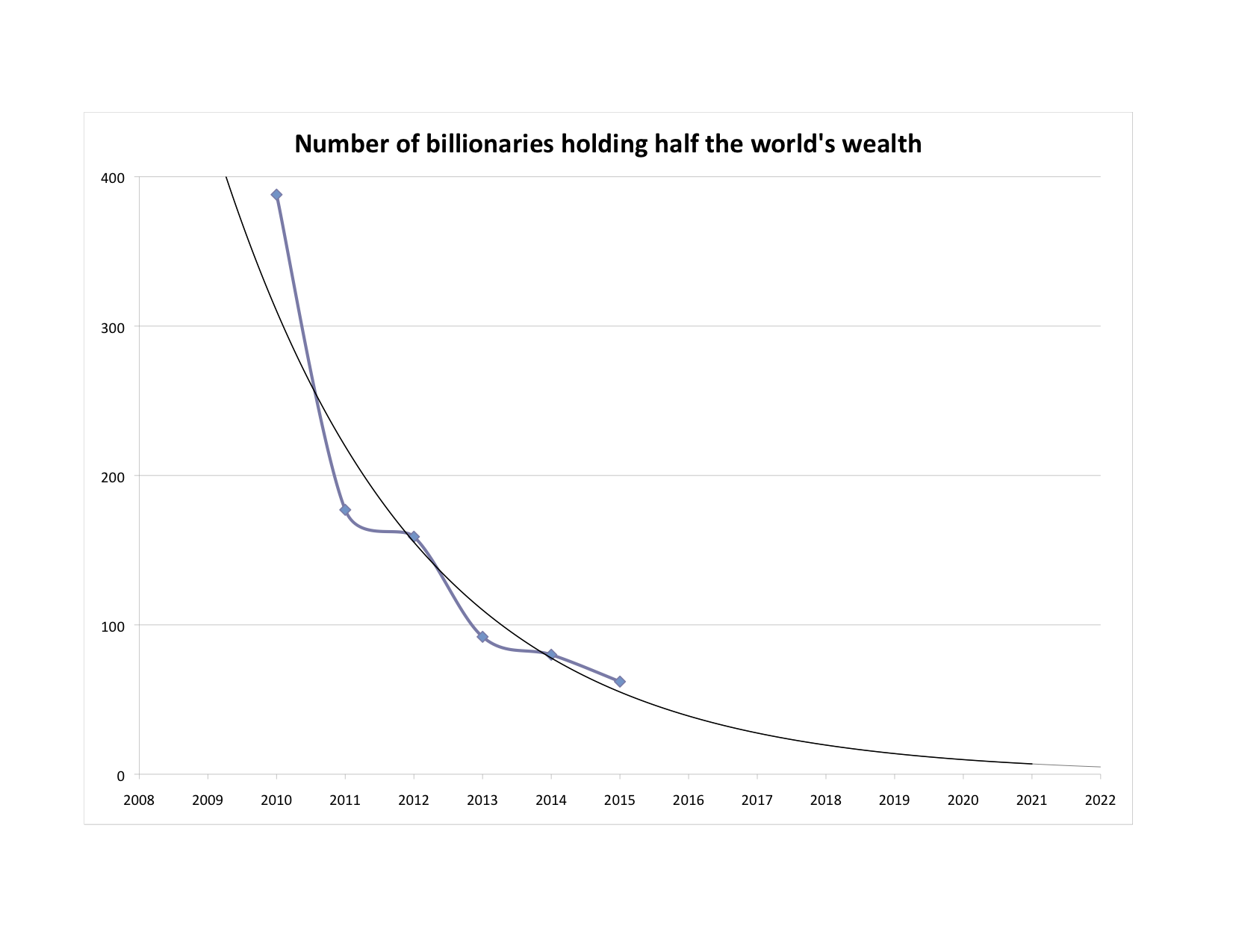
Executive compensation is up, as are corporate profits. Wages are finally budging, but so is inflation. Social support networks are struggling. Non-profits are continually fundraising. Small businesses are lucky if they can find ways to out-compete mega-corporations. Vacant storefronts are not a surprise. Artists and students struggle or starve, or struggle and starve. Enough succeed to encourage the rest.
Any rising tide has lifted yachts, while the boatless can find themselves stuck in the muck.
I think we’re seeing the unsustainable culmination of the exploitation of a flawed system.
Our push for efficiencies: just-in-time manufacturing, globalization, tax avoidance, automation, and blame have created a fragile civilization. We are now seeing the magnitude of upsets. Transportation is so important that one accident can affect ten percent of ocean traffic. Regional conflicts can disrupt critical rare materials that stymie entire industries. An outbreak can lead to an epidemic, can lead to a pandemic, can lead to an endemic. We get to welcome back diseases because misinformation and a lack of education can lead to millions of deaths. Ideologies and ignorance value philosophical positions over people.
Ignorance and accidents are more common than conspiracy and deceit.
But, ‘work smarter not harder’, ‘pull yourself up by your bootstraps’, ‘do more with less’, and ‘strive and sacrifice to succeed’ put the blame for any lack of personal progress on the person instead of the economy. Teachers and other essential workers are compensated by the good feelings they receive from the work they do – except that they are also expected to pay for their own supplies, commute far to find reasonable housing, and put in extra time to plan and document their work.
The public scrutiny of essential workers is more severe than the investigations and enforcements of the rich and powerful.
When all the wealth is hoarded by a few, why is it a surprise that there seems to be little left for the rest of us? And, it is getting worse.
It might be your fault, but probably not as much as it feels like.
The oligarchs are more openly taking control. We’re asked to celebrate their success. They’re not hiding where the money’s going. They’re flaunting it. And only a fraction of their wealth, control, and power is visible.
They don’t notice us, except as inconvenient abstractions.
Would a Tyrannosaurus Rex notice an ant?
…
Weight of a T. Rex ~ 10,000 pounds
Weight of an ant ~ 0.00001 pounds
Weight of a T. Rex divided by weight of an ant ~ 1,000,000,000
(Oligarchies And Ants)
And now the oligarchs and the powerful are eating each other in luxurious cannibalism.
You are welcome to insert mega-corporations and monopolies into the dynamic. I’m keeping this post ‘short’ because otherwise, I’d be writing a book and getting a PhD.
Feeling burned out? Surprised?
Things to bring back into fashion, ideally into government and the economy:
- Help strangers.
- Help your community.
- Help your environment.
- Help yourself.
- Help the future.
Respect those things, too.
As I typed this in a coffeeshop, I heard a random comment that may be frivolous or existential.
“Enjoy what’s left of your life.”
But what does this have to do with personal finance? I return to my frequent reminder that I learned in high school math class: identify and challenge your assumptions. Our economic system was invented, not discovered. As a society, we built a civilization by making so many assumptions that they feel real. Those assumptions may continue to apply, but our systems are being challenged, and so should those assumptions.
My approach is to be aware. I keep somewhat current on the news, but I don’t react to every headline. I maintain a stock portfolio, am glad I am out of debt, look forward to owning rather than renting land for my house, keep more than a year’s living expenses in cash, keep a nice though not extreme pantry, and generally am frugal. I am more likely to check in on my community than the news. I value my friends, even though we’re all so busy struggling that we rarely see each other. I remain an apocalypse-optimist, and an apocaloptimist, a short-term realist and a long-term idealist who wonders how we’ll get through this societal upset while encountering a climate upheaval while AI races past us.
Interesting times, eh?


