When We Can Mourn

Please pardon the delay. Here it is, late Sunday afternoon, and I am just getting around to typing my Saturday morning blog. Nine days ago there was a death in my family. Since then, every day has been full of logistics and details with too little time for respect and reflection. I notice deaths more because of facebook. Until we develop immortality, death is a consequence of life. Friend’s posts make me much more aware of its constant presence within any circle of friends and family. A life should be paid proper respect, and the survivors should be given time to acknowledge, accept and adjust; unfortunately, the traditional mourning period now includes paperwork and procedures. When can we reflect? When can we mourn?

Some readers have asked for details; but, while I live out large portions of my life in public via my writing, I also think that some topics deserve discretion. Just because technology means we can reveal everything doesn’t mean we should. Privacy is essential to being humane in human society.

One candle

The generalities are pervasive enough. I’ve witnessed many people pass through a similar story. With news of the death, there’s a day of transition: dramatically reassessing priorities, shifting schedules, and changing spending accordingly. For some, there’s a day of travel. Helping the closest ones with basic housework is obvious. They are probably emotionally overwhelmed. Ailments may provide warning; but, how do people deal with sudden deaths like accidents? Processing emotions is a big enough task without worrying about cooking and cleaning. Then there’s an event or two or three, depending on any stated desires and the community response. Before and after, there are calls and cards from friends and family. Answering them all can be a full-time job. Eventually, the daily adjustments happen. Shared chores are taken on by one less, and lessened by the needs of one. Old routines are redefined. Eventually, visitors return home, maybe spending yet another travel day. Then, everyone re-engages with their postponed jobs, chores, and plans. It can take a week to recover from a week.

Sometime in our society’s development, we passed from an era when deaths happened without ceremony to an era when rituals helped people deal with the loss. I believe that was a major maturation for our species. Millennia probably passed with little change in the mourning process.

Too often is seems that the ritual and the true mourning have become secondary to laws and regulations, logistics and finances. What has to be reported? When? By whom? What happens if it isn’t? Social information flows quickly thanks to technology, which can initiate impressive support networks; but, much of the official nature of a life must be handled by the closest family member who usually has the least time, sleep, and emotional reserves. Too much time, in my opinion, is spent chasing down financial accounts, passwords, verifying identities, sitting on hold or trying to explain to a computer why the other person on the account can’t provide the necessary information. Automation and well-designed procedures are instituted to save time and money for corporations, and supposedly indirectly us; but, their intentional lack of humanity draws out a painful process to someone who is already experiencing one of the greatest pains in life.

Estate planning is a major aspect of the personal finance industry. I know many financial advisors who are very compassionate; so, I know they didn’t design an intrusive process on purpose. I suspect decades of successive lawsuits from contested estates have nudged the process earlier. Undoubtedly, some people have taken advantage of mourning periods and similar actions need to be guarded against. But, how can anyone in emotional trauma be expected to suddenly react fully rationally? Instant cures don’t happen. Yet distraught people are asked to quickly make decisions that affect the rest of their suddenly changed lives. Even documented and negotiated plans may make no sense. Anticipated departures can only guess at the changes in everyone’s lives. Rationality can be hired. That’s one reason professionals are available. But, the changes can be so significant that, like any other plan, as soon as it is initiated the rest of it is subject to change.

I have no clear answer. Maybe a waiting period would stretch out the process, giving emotional processes and rituals more room and respect. Like any such general rule, for some it wouldn’t be long enough, others wouldn’t want or couldn’t accommodate a delay.

This is the situation we have, and like so much of life, we can wish for a different world, but we have to deal with the one we’re in – and work on changing it.

Personally, I can take some time now to collect my account information, list my passwords in some secure place, identify an executor and a backup, and basically do all of those things that we are always encouraged to do. They seem like such a nuisance. Witnessing them in action emphasizes their usefulness. Reflecting on reality, knowing people who were lost suddenly, convinces me that it must be done. Respecting those who would have to sort through my accounts means making it as easy as possible for them. My approach to personal finance is to be personally responsible. That’s why I invested on my own in my own way and have accepted those consequences (even if I don’t like the current situation). Treating my “estate” with equal respect and responsibility is one thing that I can do to create less work for my survivors and give them more time for their emotions. I can’t do it later. I have to do it now.

And will I dive in and finish it tonight? Of course not. There’s a week’s worth of work to catch up on. Paperwork to fill out and pass along. And I still want to find some more time for respect and reflection in the quiet that is my home. But maybe, one step at a time, I’ll start pulling together a few lists. Tell someone where to find them. Every bit I do, saves someone hours later. Of all the legacies we can leave, time is the most valuable and if it is spent humanely then it is spent well.
Posted in Uncategorized | Tagged , , , , , , , , , , | 1 Comment

Too Soon To Tell

Titles should have useful tags. There should be a key word in there that people, twitter, and the search engines all recognize. Not this time. Life doesn’t follow our rules, or maybe life follows our rules in its own way. Over the last few months it has been apparent that something has to change, and change soon. Possibly on demand, life is changing; but, life is changing at its own pace with the swings that any plan always experiences. The stock market is celebrating a record high. The housing and job markets appear to be recovering. Markets are big accumulated statistics. Some individuals will fare better. Some will fare worse. Most will have a mix shifted by the trend. Personally, it is too soon to tell, but the signs are positive.

Writers are known for liking quiet places to write. Mark Twain had a studio in a separate building on his property. A video of Neil Gaiman suggests something similar. I know others who have done the same. It is one reason I like my house and its quiet neighborhood. Yet, it is good to break out of such habits occasionally and see if diving into the world changes the writing or the message. This is such a week. I type from time stolen from amidst a family event. CNBC is on as background. Dishes are clinking in the kitchen as someone else cleans up after breakfast. Conversations, vital or casual, form and morph as topics and participants change. I type with iPod earphones installed and a shuffle of songs adding enough audio to create a white noise substantial enough to let the fingers work their way across the keyboard. I know I’m missing some things, but I hope I’m also creating something.

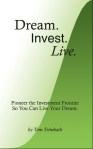
During musical pauses, financial news leaks in. The market is at it’s record high; but where to invest? They say the recovery has been in the big stocks. That makes sense. The “markets” they refer to are really only the indices, and the indices are heavily influenced by the stocks of the largest companies where the big money lives. Small money, like mine from their point of view, in small companies could double, triple, and probably quadruple without an appreciable change in the news. The commentators suggest looking at the small companies, with all the appropriate waffle words and self-protectionary catch phrases included. “See, we told you it would be rewarding.” “See, we told you it was risky.” If you’ve read my bookDream. Invest. Live. or followed this blog for long, you’re aware that I my favorite investing strategy is micro-cap and small-cap Long Term Buy and Hold – and eventually sell to reinvest and live. I like small companies and have more patience and risk tolerance than most. It’s worked before. Logic suggests it will work again.

I don’t know how I managed to get to know so many real estate agents. Many of them are excellent dancers. Lately, during our three and a half minutes of a song, most of them are talking about working longer hours. Some are even making money. I get the impression that’s an adjustment. They remember that’s it’s possible. That’s why they stayed in the business. But, it’s hard to believe its real. One in particular knows my story and passed along the encouraging news that the Seattle market is getting busy, multiple offers are happening – and the important part for me – the real estate recovery appears to be happening quickly, rippling out from downtown Seattle. The guesstimate is that my neighborhood will witness the resurgence within two or three months. That makes for an interesting race with my finances, having my house for sale, and the mortgage company’s imminent foreclosure.

Jobs are happening – at least for some I know. Friends are finding part time work. Some with jobs are getting shifts extended. (Audio interlude: laughter in the background. My family has a sense of humor. Ah. Ha.) More jobs, more hours, means more money flowing, which means more work to do. It is an infectious cycle that can be positive like infectious laughter. Several friends with businesses are finding themselves at the breakpoint. They’ve got enough business to warrant hiring more people, but the profits haven’t risen enough to pay for the extra paychecks. They’ve also reached the personal breakpoint which comes from working past midnight too often. I’m optimistic they’ll break through, in a good way.

My business is improving too. Revenues are up. Time with family requires shifted meetings, and even then the meetings bracket family time. Funding campaigns must be launched. Events must be organized and announced. Marketing books and art create overlapping schedules of invested time that hopefully builds and sustains momentum that results in returns that support the artist and the art. The life of a sole-proprietor and currently underfunded entrepreneur is heavily defined by the lack of opportunities for delegation. But, it’s worth the effort because sufficient reserves are possible – eventually. Sooner is better than later.

The general good news of an improving economy is punctuated with the specific details of individuals from either side of the mean. Some are doing extraordinarily better. Vacations, house projects, new cars happen. Others continue to deal with issues that I’ve recently witnessed. Accumulated debt, decreased wages, long-lingering repercussions of actions that seemed like the right thing to do at the time, won’t always resolve themselves at the pace of the markets.

Life is individual. Life is not the accumulated generalities of national news items. Life is personally episodic. It is the sooner or later timing of those episodes that can mean the difference between luxury, ease, comfort, or variations in struggle. The timing isn’t completely left to chance, so I hope, which is why I see a value to persistence and an acceptance of opportunity. Yet, chance isn’t powerless; and is one reason why I don’t expect complete control. (The power of chance is also why I buy lottery tickets.) Besides, in general things are doing better, and chance can work positive wonders – sooner or later.

Ah, some folks ran off on errands. The tv is off. The sun found a way through the clouds. Good timing.

Posted in Uncategorized | Tagged , , , , , , , , , , , , , | 2 Comments

Incredible Changing Winds

The wind’s been blowing through Whidbey this week. Change is happening so quickly that hours after Wednesday’s news and blog my situation got better and worse, I heard more about others who hadn’t spoken before, offers of help included ideas for making my life into a movie, and that most inevitable change throughout history happened: a death. No life is lived according to a conscious plan, and a review of the various events driven by chance can turn any life into something incredible. I know I never believed my life would work out this way. Guessing how any of our lives will work out from where we are is what we all do to some extent, even if we know we’ll get it wrong. The way we live is incredible.

I won’t play with suspense. My Dad lost his lovely wife yesterday. I won’t go into details as the family is adjusting, naturally. But death, that ultimate transition, puts life into perspective. Unless we discover the secret to immortality, each of our lives, and all of our plans play out how we’re remembered and what we leave behind. Pardon me as I pause. You’re welcome to do so, too.

Spring is Near

Prior to that news I was navigating changes in my logical plans and emotional response to my housing news. Monday the mortgage company used the word Foreclosure. Tuesday I set up a meeting with my real estate agent to see how that would affect the fact that my house is for sale. Wednesday morning I blogged about what I knew so far, and received amazing responses from friends and other readers. While talking with my agent on Wednesday afternoon I stumbled across a bit of mail from December that was lost in the stack of mortgage company letters. It arrived on a cold afternoon when I was doing something in the yard. I signed for it, quickly opened it, and then shoved it back inside my jacket to look at later when I was warm and dry. Not an excuse, but a reason why, when I got back inside I set it aside in the stack to look after I hung up a few layers of clothes. Distractions happen. The mortgage company sends me lots of mail. I forgot. On Wednesday I found it again and saw that it was a Letter of Default. My agent pointed out that my house and I were further along in the foreclosure process than I knew, and that I should talk to a lawyer because one disastrous scenario would have me moving out by the end of March. Thursday, in a thirty minute consultation, the lawyer sorted through many of those volumes that adorn legal offices and could draw no solid conclusion without more information; but, the most likely scenario is that I will receive a Notice of Foreclosure in the middle of the month. That means months of opportunities to resolve the situation, largely the way I’ve been trying to do for months already. But the costs are rising, the penalties are accruing, and legal fees are added to real estate fees. Stack them up enough without finding a job, or enough income from my business, or a dramatic increase in assets, and bankruptcy becomes a possibility. A good job, a sufficiently profitable business, a recovered portfolio, or even a lottery jackpot are all more appealing scenarios.

And the week started off so well. On Monday, my latest book came out in paperback. By Thursday, my Dad had a copy in his hands. I’d even made enough from the first day sales to order more copies. In the midst of his turmoil, I heard him smile. How much is that worth?

Walking Thinking Drinking Across Scotland

As I type, the wind continues to blow. Many pundits and spiritualists see 2013 as a time of transition. Spring always is. It seems that the world is making sure I am aware that nothing is immovable. The house creaks. Various household bits blow by. It’s a common occurrence in this neighborhood. Wait a few days and go pick up your stuff against someone’s fence downwind of the house. My house is saved from debris by an untended vacant lot occupied by six foot tall blackberry bushes, also known as the deer haven. It is possible to resist change the way some resist the wind; but, even my neighbor who built his fence from doubled and buttressed supports came home to find his fence in the neighbor’s yard. Yes, this is a windy neighborhood. It seems like the entire world is in the midst of such a wind.

Late Wednesday night, an idea resurged from many unconnected avenues. As friends commented on my blog, sent emails, or phoned from their commute (hands-free I’m sure) the idea was raised of turning my story into a movie. This isn’t a new idea. A friend with Hollywood connections actually informally pitched the idea about six months ago. One friend who has known me since 1980 made the point that we expect bankruptcy from people who didn’t pay attention to their money, people who felt entitled, the stereotypical people who aren’t willing to work. Stereotypical is a good word, because few folks embody all of those negative characteristics. His point was that from what he could tell, I’ve been frugal for decades, have worked hard throughout, have researched finances, and have generally tried to do the right things. (I guess he’s not the only one, which is why I was Board Secretary for New Road Map Foundation and a case study in the new edition of Your Money Or Your Life – before my recent upset.) That should be more than enough and not a path to bankrupt and homeless. An interesting counterpoint was that;
“It’s not that “how even doing everything “right” isn’t enough in today’s financial system.” It’s that the people who are doing well today are precisely the people NOT following the rules, . . .”
Pick a theme and get to work. One friend listed the requisite movie pitch details that I planned to work on this weekend. Instead I’ll be sorting through my old office clothes trying to find a suit that fits.

I can’t claim to have been exercising “Voluntary Simplicity” before it was term. The idea goes far back (for more recent examples visit the Simple Living forums); but, I can agree that I’ve practiced it before I heard the term. It is one of the bases for the book that inspired this blog: Dream. Invest. Live. Dream. Invest. Live. Living simply, enjoying frugality, using personal values as a guide to making and spending money are ideas that seem obvious to me. Until two or three years ago it worked. I generally spent less than I made, invested the rest, and enjoyed the cushion that resulted. As my portfolio abruptly shrunk and as my business has been slow to grow, spending less than I made has become unlivable – especially with a mortgage. My diminished portfolio was diminished further as it was my only source of funds, now that is nearly gone.

My blog post fed into a common debate about, “What can we do for people in this situation?” There are those that say it is inevitable. We will always have the poor. There are those that say that anyone willing to work should be able to live and contribute. Mutual support is one reason why we form governments. Others say, this is obvious proof that the system doesn’t work anymore and adjustments or radical change is necessary. I know that on a personal level, assuming the system doesn’t suddenly crash (let me check on the sequestration) the only thing that matters is sufficient money to appease those who hold my debt and enough money to maintain my frugal lifestyle. We all know where money comes from: jobs, businesses, investments, windfalls, and sharing.

Yesterday I called a friend who has been unemployed longer than me. I asked her to handle some details while I navigate my turmoil. I can’t pay much but even a little could help both of us a lot. She’s happy to help, and she was happy to announce some other good news. Someone hired her. That makes all the difference in her life. So, while I’m joining my family in remembrance you are welcome, even encouraged, to peruse my resumes, consider me for consultations, buy my books, buy my house, or share a bit of your lottery ticket winnings. I’ll share mine. And if you can, fix this economic system (Occupy?). Having been a millionaire and now looking at bankruptcy et al, I can tell you, this system is incredible and is probably due to change – and not just because of me.

Home For Sale

Posted in Uncategorized | Tagged , , , , , , , , , , , , , , , , , , , , , , , , , , , | 1 Comment

Notice Foreclosure Notice

Yesterday I got the call. The mortgage company called, and in a rare case, I answered. In their usual manner, they delivered the news that they will begin foreclosure on my house on March 17th. I can’t recall their quote verbatim, but I am sure they were very particular with the words written on their script. The news didn’t improve my day. One nice tangible bit was self-provided as my most recent book became available in paperbackWalking Thinking Drinking Across Scotland Maybe that will eventually be more than enough. Buy, read, review, and stay tuned. By the end of the day, telling folks about my news revealed too many other turmoils hidden behind requisite smiles – and a new way to acknowledge what’s essential.

The foreclosure news released a crowd of scenarios that I’ve kept in consideration ever since I put my home on the market about nine months agoHome For Sale That was precipitated from a previous crowd of scenarios by nine months of unsuccessful job searches (which is now past 18 months), which was initiated by a triple hit to my investing strategy. I enjoyed brainstorming as an engineer. I enjoy it as a consultant, artist, and entrepreneur. I use it in my life. Significant news that changes some ifs to whens drops me into another mode where the brainstormed list is reduced to the most likely and most appealing, with the hope that there are plenty of choices that are both likely and appealing.

Unfortunately, the most likely scenarios are based on extrapolations. There is encouraging growth in consultations, speaking events, book sales, housing prices, and even my stock portfolio (though not so far this week); but those extrapolations suggest months or years before anything significant enough to appease the mortgage company. And the mortgage company is apparently working to a closer calendar.

Fortunately, the potential of getting a good job, selling my home, sudden improvements in those currently shallow extrapolations, and windfalls (hello, lotto) continue and may even be more likely due to simple perseverance. As I’ve said many times, every email, every phone call, every hello on the street can be the life-changing event that happens without prelude.

Yesterday was a rare day. I had two social events. At the price of gas, and as hard as I am working, I rarely leave the house unless work is involved. But, one friend had finally recovered from an absence and I wanted to catch up on his news. And last night was a dance practice. (a practice dance by dancers for dancers without the pace of a class or the social expectations of a dance, $5, two hours, Bayview Hall, be there) I even snuck in a phone call to a friend for the sake of talking to a friend. By the end of the day I’d heard about death, major illness, bankruptcy, car accidents, a house accident that involved a car, and two or three stories that were obviously lurking just behind requisite smiles. Within that collection I’m the only one being public about personal turmoil, which is not surprising.

A couple of conversations mentioned the same new perspective. Losing so much changes the way the world is viewed, renders the essentials much less theoretical, heightens the awareness of wealth disparity, and reinforces the desire to give to others. Scenarios for winning lottery jackpots are more likely to include giving the excess away, and most likely, giving it to individuals instead of institutions.

While I was dancing last night I wondered about those other stories that I glimpsed but didn’t hear. I glimpsed them when I asked, “How are you doing?” and saw the struggle between honesty and politeness. It is what one friend calls, “Pretending not to panic.” Despite our pride in openness and compassion, few people want to hear the real story. I’ve had readers tell me so. I understand that. I prefer comedy as well. But someone has to tell these tales with more honesty than politeness. Then I found a new greeting. As a friend dropped into that struggle for a response I got their attention and rephrased the greeting. “It’s good to see you.” That brought a smile. I went to another who’d struggled earlier and playfully re-greeted them. The response: a pause, a smile, and “It’s good to be seen.”

My turmoils are almost exclusively financial. At least that simplifies my scenarios. My friends’ turmoils include that in a longer list. Unfortunately, in this society with this type of economy, finances are necessary for life. That’s a scary situation. I wonder if finances, society, or economies would shift if we relaxed the politeness and exercised more open honesty.

Those grander considerations are put here, and then put aside. Social change, politics, economic upheavals are inconsequential to my immediate concern. The mortgage company delivered a date. Sequestrations, multi-year revenue projections, Occupy movements, even global climate change are subjects of luxury. Do they have massive impacts? Yes. Should we resolve them? Well, it depends on how you define “we”. The struggles of many people I know are all-consuming. Working long hours (with no guarantee of getting paid) then trying to maintain the basics without the ease of money doesn’t leave time or resources to volunteer. For some, that $5 dance was a major luxury. It cost me an extra $6 because of gas. When my portfolio was healthier I spent about 32 hours a week in official and unofficial volunteer work. One of the other conversations I had was with someone in the midst of that world. There was a bit of surprise when I didn’t accept any of the invitations to join, or attend, or in another case, contribute.

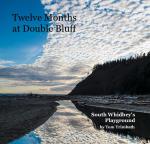
Yesterday I released the good news about my most recent book being publishing in paperback. Self-publishing books is effectively writing my own lottery ticket. Persistence means my personal lottery ticket is potentially multiplied by six because Walking Thinking Drinking Across Scotland is my sixth book. (Multiply by twelve if you include my photo books and my book on Modern Self-Publishing.) Twelve Months At Double Bluff on blurb Success breeds success, and the early reviews of my Scotland book are encouraging. It is possible to sustain a comfortable lifestyle as a writer. I even know a few. Maybe I’ll join their ranks. But that doesn’t change the mortgage company’s calendar unless I get an amazingly lucrative book advance soon. (How about Walking Thinking Drinking Across France, or Ireland, or Italy, or Japan, or all of them?)

My story enters a new phase. I never expected this one. I don’t know what to expect in the next one. I appreciate you keeping me company. It’s good to be seen.

PS As I got ready to post this another message came in that a friend no longer had a working vehicle. Anyone have a car to donate?

Posted in mortgage, Uncategorized | Tagged , , , , , , , , , , , , , , , , , , , , , , , , | 10 Comments

My Jobs Report Month 18

Eighteen months. My job search has gone from regrettable but an opportunity to dive into old passions (before regular job reports), to surprise it was taking so long (at nine months) and putting my home on the marketHome For Sale to temporary hope that was dashed (at twelve months) , to habitual searches with lowered expectations (at fifteen months) and the departure from paying my mortgage, to today’s familiarity with the process and an expectation that the answer lies outside the job ads. It was somewhat reassuring to hear a radio report of confirmation of others in a similar plight. Of my various backup plans, getting a job is Plan C. I’ll continue to pursue it, but more energy is going into the rest of the alphabet. There’s some good news there.

I rarely listen to radio, unless I’m in the car. Unfortunately, that means I don’t have a link to the key piece of data that helps explain my situation. Unemployment is down. Yeah! Unemployment is below average for middle-aged workers. Yeah, again! But the length of time required to find a new job is much higher than average (~55 weeks?) for people fifty and older. I’m 54. Oops. And the likelihood of finding a job drops considerably for people that have been looking for over a year. We might have a problem here. The odds aren’t zero though, so I’ll continue looking and applying.

Many of the job postings and I are acquaintances now. I have a list of forty job sites I regularly visit. Most of the jobs I see and know I can do sit there. I know I can do the job, but can I get the job? My resumes are updated. My applications are in. On rare occasions companies actually send emails telling me I’m not qualified, even when I’ve done the exact job listed. It somewhat limits the search. By the way, regular readers can appreciate the irony considering the other most likely response I get is that I am over-qualified. I’d be more disheartened, but the job packages I deliver for consulting clients continue to generate uplifting testimonials. When I finally get to work, I get compliments – and encouragements to charge more.

I may not have an official job, but at least I have a title: Interim Project Manager for HCLE. HCLE is the History of Computing for Learning and Education Virtual Museum Project. I’m Project Manager thanks to the founder, Liza Loop, who knows me from our mutual work on New Road Map Foundation. The title is Interim because the funding is interim, and possibly about to run out. Expect to see indiegogo and other funding proposals. (Of course, if you want to help preserve that critical time in history when computers entered the classroom, give us a call, send us a donation, or drop by and help scan some of the ten thousand documents in the collection. It’s a big job.)

Thanks to the donor who contributed the interim funding, and to the founder, I’ve had my largest client work package, was paid for it expediently, and have enough money in the bank to pay the next few weeks of bills – except, of course, the mortgage bill.

Of all of the entrepreneurial collaborations I’ve accepted invitations to, HCLE has the most traction and is making the most progress. My role could change from consultant to interim manager to part time manager. That would cover almost all of my bills – except, of course, the mortgage bill. Full time can be good, but other part time positions can be just as good. Most of those collaborations are created by collaborators in situations similar to mine. They are definitely past their twenties and thirties, though their attitudes and acuity haven’t changed; they want or need to embark upon work that benefits them and others; and the conventional avenues are being redefined for “internship”, “recent graduate”, or “entry-level”. Ah, but there are no age requirements, nor do employers discriminate based upon age. (For those that have a hard time recognizing sarcasm, that last sentence is an example of the type I produce.)

The exciting thing is (and yes, even through all of these eighteen months excitement remains) many of the other collaborations are as viable as HCLE but merely lack the funding. If even two, three, or four of the dozens found funds and included me in some paid position, I might be able to pay back the mortgage company, get out of credit card debt, un-dam dammed plans, and begin rebuilding my savings. Those collaborators, like HCLE, have some great ideas. Instead of diving into old passions, we are launching ourselves into new passions. This could be fun!

There is additional good news. It hasn’t resulted in cash yet, but it is heading that way. A few of my investments in small companies are quietly continuing their recoveries. Within the last few weeks I’ve gone from a negative financial net worth to a positive financial net worth. It’s a squeak over the line, but it is the right side of the line. In my opinion, those companies are undervalued. Now that they are attracting at least some attention, their proper valuations may finally be reflected in rising stock prices and I may have regained an emergency buffer and more.

All of those efforts, whether looking for jobs or working with collaborators, require logistical coordination and strategic consensus. They take time, and almost all take money. Much waiting is involved.

While I wait, I work. I am working on things that only require me and my resources. This week’s main task has been producing the paperback version of my most recent book, Walking Thinking Drinking Across ScotlandWalking Thinking Drinking Across Scotland The e-book has been selling well (though the speaking gigs pay better) with encouraging reviews.
It is a story about finding happiness and joy in the new “rut” he was learning to love.” – Patricia Gross
To everyone I’ve helped with self-publishing, No, it never goes flawlessly. But it is getting better each time.

Eighteen months. Eighteen months of people praying for my success, of networking in person and through social media, of diligently perusing ads and applying for jobs. Eighteen months of you literally listening to (i.e. reading) the process. (You’ve done a good job.) As I’ve said before, maybe the universe is giving me a hint and that a regular job is not the answer; and that new solutions may be a bit irregular and take a bit more time. Until we know, I’ll continue reporting and remaining open to new passions. That’s probably the best way to have good and interesting news to report in month 19.

Posted in Uncategorized | Tagged , , , , , , , , , , , , , , , , , , , , , | 1 Comment

PicoP Ala Newton

I like to look ahead. I like to guess at trends and watch them develop. That skill, talent, and habit is why I live on Whidbey Island. It is why I invest in individual stocks. Decades of looking ahead is why I am less likely to laugh at ideas that seem silly now.

(If all you want is the MVIS portion, skip ahead a few paragraphs. I got on a roll that made sense to me, but hey, you may not care.)

From what I remember of Mainstream America, the most common question at a party was, “So, what do you do?” Occupation is important because it defines a person’s potential social scene. America does have a class system, even though abandoning that was one reason for the Revolution. Here on Whidbey, and probably in other small communities too, the most question is, “So, why’d you move here?” Motivation is important because it tells whether a person moved to get away from something, or was drawn to something, or both, or was simply random. Whidbey has enough people who were just driving through and decided to stay. Some didn’t even stop in Seattle. They just saw it as they drove through on the Interstate. I found more reasons before making my move.

Whidbey is close enough to Seattle that I can drive to downtown in less than an hour if the traffic’s right. (Ha!) The city has a lot to offer. You’re probably seen a lot of it in some movie. Yet, it is far enough out that last night’s stars were more obscured by marine moisture than urban lights. Most of the day, the loudest noises are from birds. A car driving by is an odd event. I’ve traveled across and through a bit of the world (bicycling across America, bicycling across Austria, walking across Scotland, hiking New Zealand, etc.) and realized I want to live near the ocean and snow-covered mountains, where life, liberty and the pursuit of happiness have few external constraints, where I could watch sunsets over the water, and where I knew the language. Finale Those criteria eliminate a lot of the planet. So, yeah, I moved to Seattle. But Seattle is growing and hemmed in by geography and resources, so density, noise, and urban troubles arise. Whidbey is inconvenient enough to discourage many. And Whidbey’s water and septic constraints limit growth better than any regulation.

When I moved to Seattle in 1980, it was considered to be so silly that few wanted jobs here. According to Boeing HR, one of the reasons I got the job offer was because I didn’t balk at the weather. Now Seattle is trendy and those days are hard to imagine.

When I moved to Whidbey in 2005, friends didn’t say the move was silly, but they made it apparent that they thought it was odd. I think I’ve found a haven within the Salish Sea that will become much more apparent as Seattle’s growth resurges.

What’s this have to do with Newton, and what’s a PicoP? Trends. As Seattle grew it developed and attracted entrepreneurs. Living amidst them made it easier to watch simple ideas that were laughable to some become incredibly valuable to others. Rewind to 1980. How much money can anyone make on software for small computers, selling books without a store, serving fancied coffee, selling airplane tickets without an agent? I watch for trends, treat them with respect, and pay particular attention to the ideas being laughed at.

I bought a Newton MessagePad in about 1994. It was a personal digital assistant that recognized handwriting and was far easier to carry around than a laptop. Despite being made by Apple, it flopped and people laughed. The handwriting recognition was one of the first introductions to the joke of auto-correct. The synchronization was effectively overnight. It was handheld, but only because I have really big hands. Eventually I returned to paper notebooks. The MessagePad was either too early, poorly designed, or not given enough time to develop. Yet, almost all of its features are part of every cell phone and tablet (though some are transformed: wi-fi instead of IR, Siri instead of handwriting, etc.). Ten years later the iPhone is introduced and becomes a phenomenal success.

In March, 2010 I bought a ShowWX pico-projector made by a company that I own shares of: MicroVision (MVIS). ShowWX The idea was great. An always-in-focus projector the size of an iPhone that lasts long enough to play a move and that can create a display the size of my house. Granted I have a small house and the display is only visible on a dark night, but hey, it does it. I watched DVDs that way for a while. Making a thirty inch display made a much brighter image, but even then it was simpler to use a conventional monitor rather than arrange furniture to hold up the device. The product proved technical feasibility, but was too expensive to make. The company may not be the object of laughter, but it certainly isn’t being heralded as exemplary entrepreneurship.

I think few are laughing because many see the potential. The main guts of MicroVision’s projector (the PicoP part of the ShowWX) have shrunk and can fit inside a cell phone, or a laptop, or almost any electronic device. The costs are down. The manufacturing hurdles are being cleared. Volume production is hinted at. And we investors wait. Some wait to prove themselves to their friends. Some wait as champions of new ideas. Some wait because the stock can’t go down further, right? Some wait because, like me, they may remember a report from years ago that provided a market valuation for MicroVision that would result in roughly a $125 price for MVIS. (I searched, but can’t find the article. Post int the Comments if you find it.) That was years before the 8-for-1 reverse split. Multiply $125 by 8 and get $1,000. Laughable.

The other trend I’m watching now is entrepreneurship. Re-entering corporate life is difficult (Saturday I’ll post my My Jobs Report Month 18) and many are relying on themselves and collaborations. The internet and delivery services enable home businesses, saving the cost of storefronts. A loss of confidence in institutions increased interest in simpler, more personal solutions. Dealing with a person is more appealing than trusting a corporation or government regulation. On average, every ten days someone asks me to participate in a collaboration. They are widely varied, though almost all are based on simple, local ideas. Others laugh. I listen. Eventually, some will succeed. Sign me up!

Posted in Uncategorized | Tagged , , , , , , , , , , , , , , , , , , | 2 Comments

The Day Before

On Thursday, a meteor blew up over Russia. On Wednesday, there was plenty of press preparing people for an asteroid that would pass by on Friday. So, even when millions were ready to watch the skies for one cosmic event, another happened without warning that had a much greater effect. It is prudent to make plans for our futures, and we might even be considering the right topic; but, we have to be ready for surprises. No risk doesn’t exist; and, rewards can show up without warning.

Those of us living in the Pacific Northwest in about 2004 had a similar, though much smaller, experience. Our meteor explosion, called a bolide, happened at night and set off a lot of car alarms. I didn’t hear the alarms. I was tens of miles away snow camping at Lake Valhalla, in wilderness, miles from people and one lonely mountain highway. Winter In Summer From Above I happened to be up in the middle of the night adjusting my sleeping bag. The world turned bright. My tent glowed from every side, but there wasn’t a sound. Either someone was playing a trick with a large flashlight on a solo camper, some catastrophy happened to an airliner flying high over the pass, or the aliens had landed and were coming to take me away. I poked my head out of the tent and watched a trailing string of fire balls drift down the sky. No radio. No cell phone coverage. No one to talk to. As my adrenaline subsided I considered my choices. I could try to ignore it and go back to sleep. I could channel Monty Python and “Run away!” I could attempt to assist, because if it was a plane crash I’d probably be the first new person on the scene; but traveling on snow, alone, towards an unknown destination was risky. I decided to listen for helicopters and walk their way if they flew by. Eventually I accepted the silence and fell asleep. I learned the truth when I got home. (Want more? Buy the book.)

We (the human race) didn’t begin searching for collision course asteroids until recently. When I graduated from college in 1980 the prospect was acknowledged and dismissed as if it was as likely as extraterrestrials visiting. The solar system was assumed to be a reasonably stable place. Finally, someone started to look. Getting funding was difficult, but somehow they found some money; and then they found asteroids. A short time later they announced that a little looking proved their initial guess was wrong. They had to bump up the estimate by a factor of ten. Surprise! The job isn’t over, but there’s confidence that we’ve found most of the potentially lethal ones. We’ve even become confident enough to announce scheduled passages. “Here comes another one. Watch it online!” Then, oops. From a completely different reaction we are hit by something traveling 67,000 miles per hour. It was “small” because it only weighed 10,000 tons, 20,000,000 pounds. Maybe funding will be easier to get now. I suspect the NEO (Near Earth Object) budget is far less than NORAD‘s. The time to shift some funds was a decade or two ago, but now works too. By the way, the advocates for a meteor protection system are having trouble with their funding. HINT. (A curiosity: What did NORAD’s sensors show? They’re looking in a different direction, but what did they make of an air burst 20-30 times more powerful than the bomb we dropped on Hiroshima? Did we scramble a bomber or two? Did we change our DEFCON status? Was the President ushered towards a bunker or Air Force One?)

With foresight and an open mind, turn a negative into a positive. One of the places I’ve applied for a job sees asteroids as opportunities. That 10,000 ton asteroid that became a meteor that became a meteorite that injured people and became a news item may have been mostly metal. Many asteroids are. If not, then it may have had a lot of water. Metal and water are valuable in space and the folks at Planetary Resources plan to mine in space. As I understand it, they saw what happened with the BP spill in the Gulf, saw the extraordinary technologies required for deep-sea resource extraction, and realized mining in space was simpler, cheaper, cleaner, and possibly safer and more profitable. “Mining’s bad!” But come at it from a different and unexpected direction and it may be good. (By the way, when I applied there were 1,500 other applicants. I didn’t get the job, but I’m glad to see there are so many people who want to help.)

It is easy to live in fear. We live with long lists of what can go wrong without a moment’s notice. The list of what can go right without warning tends to be shorter and dismissed as wishful thinking; but, people do win the lottery, and some fall in love at first sight – so I hear.

As my financial situation deteriorated, I reminded myself that good news can happen within a phone call, an email, a letter, or a news item. It has happened to friends. I’ve even had some nice examples. My work on the History of Computing for Education and Learning was prompted by a conversational turn within a phone call. RSOL’s 40% then nearly 80% jumps on Tuesday and Wednesday happened without warning. Especially in the digital age, ideas, posts, photos, videos go viral without asking the owner for permission. Hannah Hart’s indiegogo crowdfunding program requested $50,000 and received over $200,000. She uploaded the videos of her watching the donations come in. It is a lesson in the emotional course of accepting overwhelming generosity.

Consulting, teaching, and simply being sociable with interesting people brings me into contact with a lot of people who are taught caution and management of their expectations despite their impressive ideas and visions. That’s prudent, but can be taken to an extreme. I like to ask, “Who do you want to be interviewed by?”; because, if their idea catches on they’re going to get noticed. Someone is going to end up on Oprah’s show. Someone is going to sit across the desk from Jon Stewart. There are no guarantees because, “No risk doesn’t exist.” yet conversely, “Rewards can show up without warning.”

I’m watching the progress of some friends’ ideas. The most exciting ones realize the pairing of simplicity with quality, are tapping into rising trends because they are champions of ideas instead of mercenaries chasing dollars, and are solutions pervasive enough to reach across the country, and beyond. Cabin by Angela Tiny houses well done: Mighty Micro Built House & paleo diets for health: Primal Island  Primal Island They are like many entrepreneurs, working hard without a schedule or guarantee of a return on investment, who after months or years of work may suddenly find themselves handling very healthy businesses. Welcome back to the 10,000 Hour Rule, where years of effort happen without notice until an event that makes success seem to appear overnight. The day before that critical call was a struggle. The day after will probably be a struggle too, but with much more substantial positive reinforcement (of which money is a fine example.)

I hope the same for myself. That’s how I keep my spirits up while my money was draining away. RSOL gave me a nice emotional boost. If it and the other stocks in my portfolio attain their proper valuations (according to me) my financial life will be greatly improved. Significant positive news for MicroVision could make MVIS climb at historic rates. A regular and frequent corporate client or three could be gratifying to me and my mortgage company. My collaborative self-publishing workshop could go national if we find the right support. Maybe Planetary Resources needs an ex-rocket scientist despite 1,500 other applicants. Various publishers may send me large checks because my books became best sellers, in which case, Hello Jon Stewart. Maybe my lottery ticket(s) will win me the jackpot, or some other windfall will favorably come my way. I watch them all – yet something tells me I am more like the folks at NORAD and NEO, watching here and there, but about to be surprised from a similar and different direction. The day before, I won’t know a thing about it; and then, there’s the day that will come. Stay tuned.

Posted in Uncategorized | Tagged , , , , , , , , , , , , , , , , , , , , , , , , , | 1 Comment

Small Recoveries

Try to remember. Try to remember those days when there was actual enthusiasm when people talked about stocks. The Irrational Exuberance era was appropriately named, but its negative over-reaction hasn’t worn the title it deserves: Irrational Revulsion. For the last few years, it has been impolite to mention stocks in casual conversations. The markets, which are by definition the large companies, are recovering. The stocks I’m more familiar with are from smaller companies that have languished, but that may be changing. That’s good news for my portfolio, but it’s also good news for the country because small companies have been the engine of growth. Witness three companies that may persevere: Dendreon (DNDN), AMSC (previously known as American Superconductor but now just AMSC like its symbol), and Real Goods Solar (RSOL). Sudden news may not be as important as sudden recognition of persistent stories.

Disclosures shouldn’t be put at the bottom. I’ll mention here up front that I’ve owned shares of DNDN (but had to sell), and own shares of AMSC and RSOL. It’s been a bumpy ride.

It would be handy to point back to a stable time in the stock market when theoretical models closely described reality, when stocks were priced based on the value of the company and any variation and deviation in price was part of a free market discussion argued with real money. The last time we had anything like that was back in the era of Pres. Bush, Sr. and Pres. Clinton. Prior to that, the nation was recovering from double digit inflation and interest rates. (Great deals on mortgages as low as 12%! Lock in now!) Then came the Internet Bubble and Irrational Exuberance, which probably would’ve resolved itself in a few years, but 9/11 hit and our fears and anxieties amplified a downturn. The recovery eventually began, until someone went too far, violated assumptions, and nearly imploded the world economy. No wonder few people want to talk about stocks or investing. People in their twenties probably have no experience in “rational” markets.

One sign that markets are irrational is when stock prices are not affected by company news. If the stock is based on a company’s value, and the news affects that value, then the stock should change proportionally. It isn’t straight math because there is plenty to argue about in terms of risks and potentials. Five years ago, DNDN, AMSC, and RSOL were much less mature companies. Dendreon had yet to achieve FDA approval for its revolutionary cancer treatment (Provenge). AMSC was still called American Superconductor because they were developing superconducting power cables, but hadn’t figured out the manufacturing process. Real Goods Solar wasn’t even public yet, but was about to be spun off from Gaiam (GAIA) and launched into the growing solar power industry. Since then, Dendreon’s treatment has worked better than expected. AMSC is producing cable and has expanded into wind power and power integration (Tres Amigas). Real Goods Solar has doubled revenues and continues to grow. Yet, DNDN, AMSC, and RSOL are far below their peak prices or even their prices from back then.

And yet, the stocks are recovering. I think they are worth much more than today’s valuations, and their interim performance suggests that possibility, but the relief is that they are recovering. Since the election, or New Years, or the Inauguration, or the failed Mayan Apocalypse, stocks in the small companies that I follow are rising. DNDN and AMSC are up nearly 50%. RSOL has more than quintupled. (If I type in sextupled will the spam bots mark it as offensive? And if they do, is that because of allusions to procreation or an irrational revulsion towards enthusiasm for stocks?)

Hidden within this discussion is a consequence of arithmetic. Companies are frequently measured by their market caps (the price of the stock multiplied by the number of shares available.) So, if everyone decides to sell a stock and plummet its price, the company can drop from large cap to micro cap merely from the (dis)wisdom of crowds regardless of its value. Some companies are not affected because they have existing product lines, sufficient cash flow, no debt, and competent management. If they persevere they will survive. Other companies are more strongly affected, and what affects them can affect us. Dendreon’s curtailment of a rapid expansion into treating other cancers was arguably required because of an irrational reaction to growth that was lower than expected. In any case, the company may be able to continue adding value that isn’t recognized immediately.

My investing history extends back to the Carter era. Sounds old, doesn’t it? But I was one of those kids who started investing a few hundred dollars before I got my first “real” job. I’m also a fan of history and have learned that every era makes fun of the previous era’s obliviousness. Of course the world isn’t flat. Of course the Earth goes around the Sun. Of course those points of light are other planets, stars, solar systems, galaxies, universes, ad infinitum. Within investing, the lesson I’ve learned is that if an investor and the companies can persevere, stock price eventually reflects company value regardless of the investment community’s interim derision. The market realization of a proper valuation is as abrupt as the depths or heights of the market’s earlier over-reaction. We’ve experienced years of doubt, dismay, and derogatory comments. If our financial system survives (a subject of active debate), then the market re-evaluation of hundreds of overlooked companies may seem extraordinary even though it may only be a return to ordinary.

My perseverance has been tested. As DNDN dropped and Dendreon succeeded, I had to sell to pay my bills. I ran out of DNDN before my other stocks recovered. My mortgage company is not happy about that. I have backup plans layered on backup plans and still can’t pay my bills. Three years ago my portfolio was much more diversified. What remains is a small quiver of small cap stocks representing companies that are making progress, though less than I expected, but with reactions that are greater than anticipated. AMSC announced a relatively large order a few days ago. RSOL announced a collaboration too. Describing the resultant stock price rise to fellow investors was met with disbelief. We’ve become too familiar with small expectations. As I type, RSOL is up about 70% for the day. Unbelievable. And yet, for RSOL to return to it’s IPO price when it was making less money and solar wasn’t in as much demand, RSOL will have to do that two or three more times. (Just checked again as I looked for the IPO price. RSOL is up 78%.)

Even with such recoveries, my losses are so great that it will take weeks of such performance for my portfolio to relax me, and a longer run for complete recovery; but good things can happen, for me, for the companies, for the nation, for us.

Of course, for those who follow such things, maybe something as small and grand as MicroVision reaching its long-anticipated impressive profits will rocket MVIS within a time that pleases me, my portfolio, my mortgage company without testing my perseverance much more. That would be a marvelous recovery.

PS While poking around for links I stumbled across Real Goods’ sweepstakes to win an electric car and enough solar panels to power it. Yes! Sign me up! Offer not available in WA. Wah. Maybe one of you will win.

Posted in Uncategorized | Tagged , , , , , , , , , , , , , , , , , , , , , | Leave a comment

Choose Your Emotion

“Tom, how’s it going?” With a week like these last seven days, the answer changes with the hour.  Luckily, my walk across Scotland was a lesson in picking my emotions. Events trigger emotions as ever, but because of a revelation I am more likely to keep the lows from being as low, am more likely to celebrate the highs, and raise the average. That’s a handy skill in the midst of turmoil, uncertainty, chaos, concerns, and potentials. Every moment contains every emotion. Choose.

The week started with unexpected help with a job search (+), an embarrassing bit of confusion over an event (-), a fun radio interview (+), paying less of a bill than I wanted to (-), various people calling me a Renaissance Man (Renaissance Rebirth) (+), a computer and a car that went from broken to fixed in a time of tight money (+/- +/-), a trio of job setbacks (- – -), a new title of visionary (+), a pronouncement from LinkedIn that I am in the top 1% of people marked as Public Speakers (+), sold a print to an ideal recipient (+), Nebulous Octoberhad a fun dance (+), was embarrassed that I forgot the name of one of the other dancers and had to back out anyway from an offer to dance due to hunger (-), and had a fun time giving a talk about Walking Thinking Drinking Across Scotland at Langley Library (+), and forgetting to tell them they could buy the book (self-inflicted dope slap) (-). How’s it going? Let me check. I just had lunch, a glass of wine, and a nap after getting back from the talk; and didn’t find any bills in the mailbox. Right now it’s going well.

Right now is much better than what I recall from six months ago. There were fewer + signs back then. There aren’t enough yet to pay my mortgage or pay down my credit card bill, but thanks to several clients, the rest of the bills are getting paid. Except for massive positive windfalls, incremental changes are more common. When an airplane pulls out of a dive, as a pendulum swings from high to low to high again, the transition from falling to rising is smooth, not sudden; and at the nadir of the curve, the lateral motion is greater than the downward or upward motion. I certainly have lots of motion, and plenty of hints of progression, but pulling out of this swing is taking a lot of energy.

Cough, cough, sputter, sputter, cough, sputter, varoom is the way an outboard motor can sound as it starts. For me and many of my friends, our finances continue to cough and sputter, but the intervals are shortening, and occasionally the fiscal engines catch for a moment. In some cases, they’re actually getting somewhere with some control of their direction. Amidst the coughing and sputtering though, unexpected expenses like cars, computers, and house repairs can trigger anxieties. The repair costs are far less than the replacement costs, but when your savings are less than new car money, repairs are a noticeable event.

I went on my Scotland trip to relieve some stress, find perspective any rut I was in, and play with the idea of wandering from distillery to distillery. Except for the whisky, that’s what happened. One of the unexpected treasures was the revelation I mentioned about. “I’d learned that every moment held every emotion, and that all I had to do was choose.” Want to know how that happened? Read the book. Hey, maybe even buy it! Walking Thinking Drinking Across Scotland

With a week like I described above, it is easy to get swept up and down. The trio of job setbacks were enough to send some people into depression. Hiding under the covers is an easy and cheap response. It saves on heating bills. Sometimes the bad news sends me into a dark space. I’m not positive all of the time. But the awareness that every emotion is available helps. Even if I don’t know how to tap into a grin or a smile (though I have developed a tool for that – Grin Smile Laugh), knowing that it is possible is a major help.

My string of perverse luck began back in August 2011 (Triple Whammy). I’ve been looking for jobs since then (My Jobs Report Month 17). I’m continuing to try selling my house (Home For Sale Alas) since last May. A year and a half of such events begins to take on the spirit of what will become a farce in retrospect. Well, I’ve waited long enough for so many things that if it’s going to be funny later, I might as well laugh now. I even laughed at the fact that I laughed. And laughing now has had another consequence. My luck has seemed perverse, but I now also realize that if there is perversely bad luck, then it is possible to have perversely good luck, which will be much more welcome and be equally laughable. Laughing my way in, through, and out (with occasional diversions into other healthy emotions) is much more appealing than grinding my way through.

I’m not an expert at choosing my emotions. I only realized the possibility in 2010. The revelation came as a thought and feeling attached to a spider thread that could lead to something more substantial. “I decided to keep a tender mental hold on that emotional thread and slowly reel in that treasure.” I’m still reeling.

Managing personal finances isn’t only managing money. Emotions are tied to money and come with attachments to identity, security, and self-worth. Being able to choose an emotion from a moment begins to disconnect the outside influences on personal finances. What makes me happy doesn’t cost much, though not paying my bills definitely gets me down. Beyond having “enough”, I find very little in advertisements that appeal to me. I like my simple life. Much of it is externally imposed right now, but I know that what I enjoy wouldn’t change much if or when I am a millionaire again. A friend an I were daydreaming, er, planning, about what to do with a lottery jackpot. Both of us preferred to renovate our cars (my Jeep Cherokee Classic that they were silly to stop making, and his old built-to-last-forever-regardless-of-fashion pickup) rather than buy something new. (Though I am intrigued by the electric motorcycles whenever I’m in the ferry line. Motorcycles load first. Electrics don’t have to idle.)

My emotions as I type are a bit reserved. I enjoy public speaking, but it usually takes some time to unwind and get my energy back. I’ll have a cup of tea and sit for a bit after I post and share. Then I’ll dive into the emails and phone calls to follow up from this morning’s talk. Three or four want to talk to me about Scotland, or finance, or a few unnamed topics. In the nature of the small city of Langley, a friend called out as she drove by and as I walked back to my car. She slowed down to invite me to talk at her place. (And caused three cars to line up behind her, which is a major traffic event.) That’s a string of positives (+ + + + +) that makes it easy to pick an emotion.

Posted in Uncategorized | Tagged , , , , , , , , , , , , , , , , , , , , | 1 Comment

Renaissance Rebirth

Something’s up and I don’t know what, but it may be an epochal change in civilization. Such a change makes me question my assumptions, including those behind my book, Dream. Invest. Live., that is the basis for this blog. Dream. Invest. Live. The Renaissance was such a change. It was unscripted, unplanned, and unexpected. People that effected those changes required courage, curiosity, or naivete. It was a creative and messy process of awakening. If it’s happening again, this change will be the same and different. That’s our nature.

Despite a week-long unplanned Computational Hiatus, my main business activity has been as Interim Project Manager for HCLE, the History of Computing in Learning and Education, a virtual museum of how computers changed education. How we learned changed. What we had to learn changed. Prior to computers, education was based on a scheduled performance where a teacher verbally delivered information, knowledge, insight, and wisdom to an audience of accepted students. Now, anyone can be a student, we can receive almost any information we want at whatever time we choose for free. The teachers may be professionals or eager volunteers who deliver their expertise to resources like wikipedia or the Khan Academy. Education is continuing to shift, and it may take another generation before the switch is complete; but imagine the courage required of those pioneers who introduced computers to the system in the era of punch cards, cassette tapes, and write-your-own software. (By the way, that’s why we’re creating the Virtual Museum, to capture those experiences and sociological changes before those memories are lost or those programs can’t be read and run. Care to join in, donate, or cheer us on? hcle.wikispaces.com Donate enough and I’ll only have to write one last Jobs Report.)

Last night I was watching a documentary (yes, I am a geek) about the Medici called; Godfathers of the Renaissance. Episode one taught me that The Renaissance began with a change in thought based on education. People with education, money, and time began exploring monasteries for ancient texts, more as a treasure hunt than a serious pursuit. One aspect of the hunt was to be able to read what you found. Eventually, the act of reading became more of an education than a performance stunt. There was hidden, and sometimes forbidden, knowledge in those texts. It began to sink in that they’d forgotten things that the Romans knew. The one that struck me was that for hundreds of years civilization forgot how to make concrete. The more important insight was that people they’d talked about in abstract terms, The Romans, were eventually seen as real people and if The Romans could do it, why couldn’t someone in 1400? They looked to others for different points of view and actually invented perspective. The world changed.

Now that my computer is repaired and returned (thanks Gail) I naturally visited my Facebook wall to see what was happening in my friends’ lives. A video I’d shared was being shared around. It went viral long before I found it, so it wasn’t a surprise to see that it was popular. It’s a one minute video of third world people reading first world problems. “I hate it when my house is so big that I need two wireless routers.” finds a new perspective coming from a man standing in front of a house smaller than most suburban living rooms. I shared the video because I liked the way it put most complaints into perspective.

Perspective. Learning from people who many treat as abstractions. Thinking about how education and insights are reaching us in new ways. Noticing the unexpected changes wrought through the Renaissance. What changes are we amidst that go beyond quarterly reports, monthly bills, and national elections?

Over the weekend I was honored to be included in a photography project by Sue Averett called The Emanations of Love Project. I would never have nominated myself to be included, but maybe that was one of the criteria for inclusion.

One of Sue's shots I use for a new bio pic.

One of Sue’s shots I use for a new bio pic.

Sue did a wonderful job of describing her project, so I’ll point you to her site for the details. The piece that struck a chord with the evening’s line of thought was a line from her short bio of me; “A good-hearted Renaissance man, is Tom.” Pardon me as I blush, and yes, it is a mini-breakthrough for me to type such a thing about myself (but that’s another story.)  Enough others have called me a Renaissance man that I’ve jokingly considered having new business cards made. Go to my bio page to make your own assessment. But the more important introspection was, regardless of me, are we in the midst of the next Renaissance? If so, how would it be different?

The Medici supported people who went to remote places to acquire knowledge from people distanced by time. We are crowdsourcing ourselves to acquire remote knowledge from people distanced by geography, economics, and culture. Some seek obscure videos to prove they can find viral material before it’s gone viral. Others are taking that material and learning from it. The video I described above was produced by a charity that advocates for as simple a thing as fresh water. It highlights the reality of people who are normally treated as abstractions.

If this Renaissance (there will be more so maybe we should number them) is about getting past us versus them to realizing that we is global, then we’d be effecting a change greater than any seen in history. That’s heady stuff. Considering the pace of change now, this Renaissance may take decades instead of centuries.

Last night there was also a tsunami alert. Well, there was actually a magnitude eight earthquake too, but the news emphasized the tsunami because it might reach “us”. The warning wasn’t necessary. Google News said so. This morning I had to dig to find any news about the quake. Magnitude eight quakes should be major new events. But very few people were affected. They lived on islands in the South Pacific. So, evidently, it didn’t matter. Evidently, “they” didn’t matter.

My book is titled Dream. Invest. Live. because personal finance is not just about Invest. Invest. Invest. Dreaming and Living are global. Though some dream of a second router; others dream of clean water. I dream of health, emotional ease, and financial security, at the very least. (aka Live Long and Prosper) For now, the basis of the Invest part remains valid enough. But the Renaissance was funded by a revolution in finance. Another could happen again. Ask the Occupy crowd.

Economies are definitely changing. The price of energy may begin to limit travel, and travel is one of the best ways to change perspectives from abstract to real. (Check a recently published excerpt from my Scotland book.) Fortunately, the Internet has come along and provided new ways for us to learn about the rest of us. Am I a Renaissance man? Maybe, but I believe that the courageous, the curious, and even the naive who explore the world via any device may be creating a generation of Renaissance people. The show about the Medici started with the origins of the word renaissance. It basically means rebirth, which is a messy, creative, and positive event. We may be our civilization’s midwives.

Posted in Uncategorized | Tagged , , , , , , , , , , , , , , , , , , , , , , , | 2 Comments