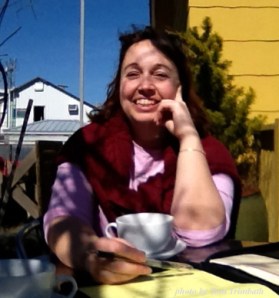
Involuntary Vacation

Self-fulfilling prophecy or coincidence or proof that I know what I am writing about, I’m on a bit of an involuntary vacation. As I wrote in an earlier post,
“Days off are usually imposed by mental, emotional, or physical exhaustion – during which they aren’t making money, which therefore requires them to work harder.”
I was talking about “them”, my friends who are required to be workaholics to avoid becoming homeless and hungry. It also describes me, as I sit here with a tweaked back, a sore throat, and a recovering headache. I have a few work chores to do, and after that, I’ll be relaxing because I have to. My karate lessons remind me of the advice so many of us hear to stop and enjoy the moment. If we don’t, the world will make us stop.

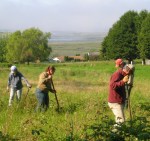
Yesterday, I had a break from my irregular, though packed, work schedule. I’m one of two Site Stewards for a property managed by Whidbey Camano Land Trust: Hammon’s PreserveWCLT - Hammons It is spring and time to whack the weeds. Blackberries, holly, English Ivy, Scotch Broom, and thistles are claiming the land faster than the indigenous plants can reclaim their territory. That’s the way of invasive plants. We try to repel the invasion.

I waded into a thicket of thorns where the wild roses were fighting the blackberries. Thank you Carhartt and denim for keeping the scratches to a minimum. But the thorn pricks weren’t as painful as some innocuous muscle movement that tweaked my back and changed my posture until I was much shorter and a lot less graceful. I tried walking off the pain, which helped a bit, and then went back to work hoping more careful movement would be more therapeutic than doing nothing and letting the muscles lock up.

My back and I have had such negotiations for 25 years. In one month back in 1988 I fell into a crevasse while climbing Mt. Rainier, was dropped on my head in karate, and became severely dehydrated during a marathon that wasn’t able to supply water for those of us in the back half of the pack. Any of those things, and probably some combination of them, could be the cause. One month, I was flexible enough to sit on the floor, legs straight out in front, and touch my head to the floor. The next month, I was dragging around a sciatica-pained leg, hip, and back. The x-rays showed that something in my lower back collapsed. I’ll spare you the years of research and experimentation that resulted in some fairly effective coping strategies. Effective, not but a panacea, evidently.

An excellent video by a friend gave me useful insight into cause and effect; or as I put it, reason versus excuse; or in another way, culprit versus scapegoat. Blame the blackberries? No. Blame the working conditions? No. Take it as a hint that I should’ve stayed home and worked instead of volunteering? No. Skip the blames and the hints and realize that my body feels pain because my emotions were wrapped tight from too much work and not enough relaxation. With decades of knowing myself, it’s easy to see; but, only in retrospect. Most folks know the soreness from eye strain, or the sore neck from poor posture in front of the computer. I’ve managed to carry those tensions down through my shoulders, into my chest, and beyond. Years ago, my chest pains were so intense that doctors required EKGs and treadmill tests, only to prescribe red wine and liquor. (The longer version of the story is in Walking Thinking Drinking Across Scotland because it inspired the trip.) Lighten up, dude. When everything is so tight, nothing moves right. The slightest upset throws things out of balance, and it can take a long time to recover.

In the first few minutes of Dr. Craig Weiner’s video about EFT , he tells a great tale about hurting his back while gardening. He does a good job of following that management analysis tool of asking Why?, Why?, Why?, Why?, Why?; which is remarkably close to the same technique kids use to exasperate their parents. Maybe five-year-olds have things to teach upper level managers. And yes, after this post is published I’ll watch the rest of the video again. His description of EFT is good. Others have suggested it, and I admit it is more effective than I expected.

I wound my emotions up because I had good news. I understand if you think that’s a silly reaction. The good news was that I got a 10 hour per week job as Information Manager of New Road Map Foundation. The emotional turmoil arose when I began understanding what a difference it would make. I have many Dammed Plans that I look forward to releasing, but the money from a quarter-time job, while greatly appreciated, only meant I delay selling my few remaining shares of stock from my dwindled IRA. The plans remained dammed. Enthusiasm thwarted, turned back on itself; which, I turned back into renewed energy for my other projects. (Work on the movie progresses, but the script is being re-written.) But life isn’t that simple. For most folks, until there’s enough, there’s worry.

My emotions were tight. My muscles responded. A slight upset and suddenly I couldn’t do as much as I could before. When I got home I tried to work but the discomfort required me to lay down. The frustration made me give up. And a little while later I realized that my body and my mind had imposed a vacation.

Two events put my workaholic habit into perspective. Another friend who is undergoing a financially required mid-life-redefinition is also working hard at a few jobs while also taking classes (less than a year and a half to go!). Evidently, healthy living wasn’t enough to prevent a heart attack. Last night, there was a house fire in my old neighborhood of downtown Langley. It was the house across the street from my first address on Whidbey. In both cases, everyone survived events that were understandably unexpected. My back’s incentive to relax seems more like an opportunity to sit back (or lay down) and concentrate on and appreciate what I have here and now. As a responsible adult, I have to consider what’s next; but, I think I was just delivered some evidence that I’ve done more than enough of that. I’ve gnawed on that rock long enough.

One of the lessons in karate is, “Tight. No Tight.” Being tight all the time wears a person out. The only way to survive a prolonged struggle is to only be tight when necessary, and to be loose, or “No Tight”, the rest of the time.

I think that’s one reason I no longer watch TV. The media and the ads maintain a tension throughout every moment. There is an urgency to everything, and then the next thing too. We have plenty of work to do, and it must be done, but if that’s all we do we might hurt ourselves in ways that mean we can’t finish. So, I’ve got a few emails accounts to check for timely messages, and a few notices to release, but I’m sitting here with a persistent reminder that today, and maybe tomorrow too, is a time to do a little less now so I can do a lot more later. I declare a vacation.


Posted in Uncategorized | Tagged , , , , , , , , , , , , | 1 Comment

Get A Job Do Less

Good news everybody! I got a job! Add that to the other one and I’m three-quarters of the way to half-time employment. If I keep this up I’ll be able to work a lot less.

Yesterday I signed a contract as a contractor. For about ten hours a week, I’ll be managing the electronic presence of New Road Map Foundation (aka financialintegrity.org and host of the Simple Living Forums.) NRM logo I am now the Information Manager. (Reminder to self: update resumes.) It is a welcome and surprising return to the organization where I’d been the board Secretary. Now, lets see if I can do as good a job as the previous manager who just managed to get a full-time job (that undoubtedly underpays her for her talents, but maybe they’ll catch on and promote her.) Ten hours a week isn’t going to appease my mortgage company, but it does force the fears of “homeless and hungry” into retreat.

Until now, my biggest client and benefactor has been the HCLE Virtual Museum (also History of Computing in Learning and Education on facebook)HCLE Since the beginning of the year, I’ve been the (Interim) Project Director, a job that has been intriguing and a good match. The title and the job are keeping me busy, and are already on the resume, but until we find sufficient funding (hence the “Interim”), it’s a job that takes less time than NRM.

Those two jobs, one as contractor (NRM), and one that started as a client (HCLE), add to everything else I’ve been doing: consulting, teaching, speaking, selling books, selling art, and helping people with their social media platforms and publishing projects. The long second half of that sentence is enough to keep anyone busy. As my financial turmoil increased, I increased my level of effort, striving to find a sustainable and encouraging lifestyle. Some of you readers are long-sufferers as you’ve empathized with my struggle. I’ve worked as hard as I can, actually a bit too hard, as I tried to find which efforts would help pay the bills. There has been lots of encouragement and I’ve generated lots of momentum, but I didn’t generate enough cash. I made enough to convince me to continue (thank you clients, attendees, readers, and patrons), and the growth is good; but, the worries remained.

My reaction to the NRM job has taught me a lot about myself and what I’ve been through. Logically, I assessed the task, my skills, the effort, and the compensation. Emotionally, I am still reserved. My emotional reservation is partly because this ten-hour a week job is not a complete solution. It is very welcome and a fair trade, but the foreclosure concern remains. I dug deeper though. Money matters aside, I realized that months or years of ineffective struggling included dozens of opportunities that never materialized, others that took weeks of effort but became nothing, or collaborations that cost more than they made. At some level I thought the good news was a mirage. I’ve seen a similar reaction in friends who haven’t had a date in so long that they don’t believe the flowers were for them.

NRM’s offer was a surprise. No job ad required, just a serendipitous meeting at the Commons in Langley. HCLE’s job was a surprise to both of us. No job ad required, just a serendipitous phone call about a different topic. It is possible that neither of those opportunities would have arisen if I hadn’t been working so hard on everything else. All of those other tasks were training grounds for what I do now.

Within the last two days I’ve re-assessed my habits. I am human. We humans get into ruts. Sometimes the only way to get out of a rut is by getting into another one for a while. That’s why I bicycled across America and why I walked across Scotland. I traveled for the traveling, but I also traveled to change. I got myself into a rut of work that was largely energized by hope, a very subjective experience. My NRM and HCLE jobs are energizing me with objective compensation. My rut had become working from about 8 or 9 to about 8 or 9, interspersed with time for mowing the lawn, making meals, and maybe exercising. The spread-out hours were necessary to get all the work in, but also to enable coordination with other people’s schedules. Now that money should be coming in on a more regular basis (did you read the doubt I unconsciously put into that first phrase?) I have to change, I get to change.

The unemployed are some of the hardest working and busiest people I know. They spend time and effort to make money any way they can because they must. Taking a break means missing an opportunity. They don’t get vacations. Days off are usually imposed by mental, emotional, or physical exhaustion – during which they aren’t making money, which therefore requires them to work harder. Unemployment can develop a workaholic mentality and an excessively frugal relationship with money that is unfortunately necessary and unhealthy in many ways, especially when passes it from temporary to permanent. Many people who lived through the Great Depression never left the mindset of lack. The title of a friend’s book captures their perspective, Trance of Scarcity. (The text of the book shows a way to change that.)

Monday night another friend called. She’s a sole-proprietor and entrepreneur too. One job sustains her. At least one of her passions may allow her to thrive. She caught me in the middle of my second spiced vodka martini (frugal details elsewhen). I needed something to break down my emotional inhibitions, something that would help me reset my perspective. I knew I couldn’t continue my old mindset, adding job on job. I knew I couldn’t just celebrate and stop work on the rest of my projects. I had to find that middle ground that acknowledged my new good fortune, respected and continued to energize my most promising projects, and that began allowing more time for me. The last part was and is the hardest. Talking to a similar spirit was immensely powerful.

Before my financial turmoil and portfolio collapse I was just beginning to explore what pleased me, what I enjoyed rather than what others had told me I should enjoy. Those important lessons were interrupted. It is time to pick them up again, at least in part; because, that effort is more valuable than many of the less likely projects on my list. Having a ten-hour a week job, with a few hours committed to another long term project, may not be enough to appease the mortgage company, but they do provide enough relief to begin to relax.

I look at myself looking at myself and I wonder what this economy is doing to many who don’t get that opportunity. Employment numbers don’t reflect that people who lost a middle-class job are replacing it with two or three that pay far less. Staying above the financial poverty line may require so much work that they are trapped below an emotional poverty line. I’m glad I have friends who have helped me through, out, and probably beyond my troubles.

Now, I’ll close this post. I have a job, or two or three or four, to do; and I’m going to make sure that by dinner time I also do a bit less.

My view - for sale

My view – for sale

Posted in Uncategorized | Tagged , , , , , , , , , , , , , , , , , , , , , , , , , , , , | 3 Comments

Recognizing Unexpected Positives

What’s that potato doing there? I almost took a day off yesterday. Somehow I ended up deciding to work on my garden instead of only sit on my deck. As I pulled up the grass that had usurped the veggies I found a potato clinging to the roots. Evidently, the potatoes I tried to grow last year had over-wintered and were coming back. I teased the thumb-sized starter from the weeds and quickly replanted last year’s project. A Persistent Potato Why was I clearing that bit of garden? To plant potatoes that had stayed in the kitchen long enough to start growing indoors. My efforts at this year’s projects are unexpectedly bolstered by last year’s work. The good news surprised me. When it’s been gone for a while, good news can be hard to recognize; but, recognizing the return of good news is one of the best ways to find persistent joy again.

Volunteers, charities, and philanthropists share the experience with entrepreneurs. Do lots of good work, and hope it makes a difference. If you don’t need money, then the waiting is easier to sustain. But many passionate, creative, and innovative people devote months, years, and lives to efforts that don’t immediately present a return. Being appreciated for your efforts only after you’re dead is not a good business plan, unless your main goal aims at eternity. Being paid too late can make someone the “Late Mr/s. so-and-so.”

America’s culture is imperfect, but it includes an acceptance of individual expression that is uncommon in the world. If you want to devote your life to foresting the land with fruit trees, take a look at Johnny Appleseed who wandered the east coast planting apple trees. Apple Blossoms (And wearing a pot for a hat. Handy in a hailstorm.) Clara Barton started the American Red Cross over 120 years ago, but first she volunteered to help treat the Civil War wounded – and demanded to be allowed to work the front lines where she was needed, not just where it was safe. At least one of her outfits developed a bullet hole.

America’s laws are crafted to support innovation, and inventors are expected to live with considerable risk. That certainty of risk is balanced by the possibility of reward. We can share in that risk and reward in many ways. Currently, I am experiencing the (hopefully temporary) downside of risk. Historically, I’ve enjoyed the upside rewards. The innovators’ experiences are amplified.

Thank you, Benjamin Franklin, for starting us off with role models for philanthropy and innovation, from the libraries to the wood stove.

Thank you, the un-named crowds, who volunteered and invented without reward; but whose efforts moved all of us forward.

For people who need money but are working without a paycheck, the lack of a guarantee that today’s efforts will be paid tomorrow is a tangible risk. Cruising through my facebook friends, I could probably list hundreds of people who are giving more than they’re getting, whether that is in charity or commerce. The intersection of the two, doing paid work for a non-profit, can leave workers waiting for fund drives or even just waiting for volunteers to find the time to write the checks.

During the dissonance, introspective individuals will ask those questions that responsible people must. “If this isn’t working, have I made an incorrect assumption?” It becomes easy to doubt the compliments. It becomes easy to question the complimenters. It becomes easy to doubt the work and the interpretation of the results. A friend’s title of visionary is earned, yet hard for them to wear when the only food on the menu is ramen. Which is the most appropriate bit of wisdom; “Persistence Pays.”, or “Insanity is repeatedly doing the same thing and expecting different results.”?

And then I found the potato.

I know people who’ve given up from fatigue. There are too many examples of people who’ve backed away from efforts, opportunities, and success, even romance, because they’ve lived so long with very little tangible positive reinforcement. When the offer arrives it is put aside out of habit or as part of an exercised defense. I had to pause and look at the potato to believe it was there. It survived when gardeners told me it wouldn’t, in a place with more than enough slugs, rabbits, and deer. Maybe the work is already done, and the only thing that needs to be done is a bit of weeding and a bit more patience.

In the past week, I’ve:

  • received an email with the subject, “You’re Hired”, for a quarter-time job,
  • re-applied for another part-time job I eagerly applied for last summer, a bit in disbelief that it was available again so soon,
  • mentioned the job possibilities to the mortgage company in a rare phone call, that may have resulted in them delaying foreclosure,
  • interviewed for a small part-time job that may turn into a consulting gig,
  • received a sweet offer from a friend,
  • and found myself wondering if I’ve overlooked anything because I know that each of those bits of news took time to grow from acknowledgement to understanding to appreciation.

I’ve been busy, rarely taking a day off, usually working until after dinner, and wondering if my efforts will be rewarded. I am encouraged because I feel that my efforts are building on each other. Maybe my most important task will be recognizing the financial equivalent of last year’s potatoes unexpectedly rising through this winter’s weeds to grow beside this season’s efforts.

Posted in Uncategorized | Tagged , , , , , , , , | 2 Comments

Have A Little Faith

The housing market around Seattle is turning around. Have a little faith and my house will sell. The unemployment numbers are looking better. Have a little faith and I’ll be gainfully (and hopefully pleasantly) employed. The fundamentals of many small companies continue to improve. Have a little faith and their stocks will eventually reflect that value. My business and my work Wind Prayer are gaining broad appeal (and I welcome the international members of the blog audience.) Have a little faith and the money will flow in as I follow my passion. I certainly hope so. I have a little faith; and right beside it and wrapped around it is a lot more faith. I think that will be more than enough, for me and more.

Sometimes faith exists alone; and left alone, it isn’t a surprise if it remains small. We are impressed when it survives such an environment.

Sometimes faith isn’t necessary. There are few guarantees in the world, but faith isn’t required to create a sunrise every day.

Friends ask me how I am managing to navigate my current environment. Faith is involved, but it is buttressed by math and reason. I have reasons why I think I’ll succeed. Those reasons are based in the fundamentals of our society. Hard work, frugality, sincerity, perseverance, and at least a bit of wisdom should suffice, sooner or later.

Of course, as more than one friend puts it, maybe the fundamentals no longer apply. The wealth and income disparities in the nation are examples of social worth disconnected with financial worth. A CEO of a failing company makes more than a successful teacher. Athletes make more than firefighters. Would we complain if the situation was reversed? Probably not.

I admit that there are systemic dysfunctions. Talk over coffee, tea, or wine (or tequila) and hear stories about the absurdities of dealing with insurance companies, mortgage companies, or politicians. Two friends told me about trying to pay medical bills in cash, and not being able to because the insurance company got in the way. I continue to retell the story of the friend whose mortgage company said they’d arranged a meeting between him and the governor of his state to talk about his mortgage. Congress amazes when they force the military to spend money on weapons the military doesn’t want. Enough farce exists to feed material to Comedy Central for centuries.

If the systemic dysfunctions are chronic and unresolved, then we’ll probably encounter some global turmoil. How soon? It may seem like such a shaky system could fall apart with one news report, which is possible; but, at the other extreme I see North Korea with decades of dysfunction behind it, and possibly ahead of it. It’s amazing they’ve managed it this long. I recognize and am aware of both possibilities, but I don’t plan for either.

My faith in our systems has been challenged. This much frugality, diversification, and persistence should not result in foreclosure and negative net worth. Yet, my faith persists; partly because of math, partly because of people.

Odds are that odds even out. Las Vegas is the greatest proof of that. The city in the desert was built by people playing the odds and leaving enough money behind to build, well, a city in the desert. The odds are small that my investments, both personal effort and financial, would result in less than enough to sustain or succeed. Yet, for now, those odds have worked against me. The pessimist extrapolates and expects the same. The optimist looks at the severity of the drop and mirrors it with an impressive recovery. Even a return to the mean would mean no foreclosure, and a return to a life of more philanthropy and fun. (My apologies to the charities that have been cut off.) If my financial net worth returns to my semi-retirement level, and then rises again as much as it fell, then, well, that’ll be a much happier story to tell. And I’ll have a new appreciation for the need to help people who are homeless or hungry or both.

Our systemic dysfunctions are our own fault. “Society” has allowed them, but we are society. We can fix them. We may not be able to fix them in time to alleviate my situation, but I’ll be amazed if someone doesn’t find the courage to put the common good ahead of their political career. Or, a new organization, whether organized or not, like the Occupy Movement may finally succeed in shifting public action and general lifestyles.A tiny house If enough people decide to live lives without mortgages, in houses that meet their needs instead of meeting advertisers’ illusions, in places where it doesn’t cost too much to have a job, and where their food and friends are near; then, the mortgage industry, the housing industry, the auto industry, the food industry, and the anti-depressant drug industry would have to respond regardless of Congress or pundits.

And here I sit, wondering if today is the day when the mortgage company will initiate foreclosure proceedings. I have great faith that I’ll have a new part-time job to announce soon, but I’ll wait until we sign the paperwork. I might even have another sliver of a part-time job. Add enough of them together with my existing clients’ work (one example: HCLE) and my worries about homeless and hungry go away. I have faith we’ll work out the details.

I have faith the house will sell prior to foreclosure, or that I won’t have to sell it because I am making enough money. I have faith that I’ll find or make that money through my business, my art, jobs, or windfalls. I even have faith in most of the depressed stocks in my portfolio. The businesses continue to progress, even though the stocks languish. The money that took the markets to new heights by buying big cap companies may look for bargains in the under-appreciated small cap companies; especially, if the small companies have big news. (Hey, MicroVision (MVIS). Now would be a great time to announce great and positive news.) Having a bit of faith, or even a lot of faith, is my best choice.

I have the greatest faith that, regardless of institutions and math, people take care of people; that, whether systems are dysfunctional or not, we’ll find a way for us to succeed. Our best choice is to have at least a little faith in each other.

Posted in Uncategorized | Tagged , , , , , , , , , , , , , , , , , , , , , , , , , | 4 Comments

My Jobs Report Month 20

Believe it or not, I lost count. Month 20? Really? Yep. The only way I could tell was by checking for the most recent report. This job search certainly hasn’t gone the way I expected. At the start, I expected it to take a few months, and I planned to report on the job after I found it. A few months in, as friends worried that I wasn’t looking, I decided to pass along these reports. Surely, there’d be one month that brought the reports to a close because of singularly good news. Not yet. Reality is messier, but progress is being made. The race isn’t over.

There is good news. My role as Project Director of the Virtual Museum of HCLE (History of Computing in Learning and Education) has gained traction with HCLE’s attendance at the Museums and the Web conference (#MW2013). Networking, finding solutions, connecting with potential funders and collaborators added to the momentum of the museum and the job. More funding means eventually more paid hours per week too.

There is more good news. I haven’t seen or signed the paperwork yet, but I’ve at least received an email with the subject line “You’re Hired!” How much more encouragement would anyone ask for? After I receive the signed paperwork and first check I’ll add the title Information Manager to my resume and LinkedIn profile. Another part-time job.

And yet, the job search continues because both of those jobs don’t add up to one full-time job, and both of those incomes don’t add up to enough to pay my frugal bills, unless I continue to not pay the mortgage. That’s where the real race is being run, between foreclosure (the paperwork for which is in the house, I think) and recovered finances.

I continue to apply for full time jobs, but few have responded. Entry level jobs turn me down for being over-qualified. Professional level jobs turn me down without saying why. One of the most encouraging full-time positions responded early in April. That job had the great title of COO, Chief Operating Officer. That would’ve been that singular job. On the up side, they provided the nicest rejection letter so far. “You have a fascinating and exciting life/background. I think we are looking for a different skill set but you are someone I would like to meet when we get through this process!” Now, to find someone who wants to hire someone with a fascinating and exciting life, and add their episode to it.

Of course, such a singular job would be welcome, but I am committed to my part-time jobs and my consulting clients. Saying yes would unleash a string of negotiations, most of which are with understanding people. It might happen. I didn’t guess that this job search would go on for twenty months. I’m sure any guess about what comes next could be equally inaccurate.

The most likely scenario is typical of many people recovering from financial upset: replace one full-time job with many part-time jobs. Fortunately, my potential part-time jobs are on flexible schedules. I feel sorry for people funding a lifestyle through three retail jobs, each with fixed and irregular schedules. Every week’s schedule is probably a negotiation. The ones I talk to feel stressed and relieved. How does one person working multiple jobs show up in the unemployment reports? None of the jobs are W-2 jobs. They are all 1099s. I wouldn’t be surprised to find that the unemployment percentages are based on W-2s. 1099s exist for contractors and employees that companies don’t want to directly count on their books. The number of jobs being filled may increase but the number of employed people is a different number.

These are the details I am relieved to address. They are complications in my life, and they aren’t enough to pay the mortgage too; but, the jobs before me alleviate worries about being homeless and hungry. That’s a great improvement over the last few months. I’m not going to worry about whether part-time gigs confuse the economists. I’ll consider those implications as I try to better understand the news, but I won’t worry about it.

Twenty months. That’s a sizable slice out of a 360 month mortgage. Recovering from this financial upset may take just as long, especially at this rate. Fortunately, I have other resources that may speed things up. MicroVision (MVIS) had some good news for my portfolio. My self-publishing, social media, and planning clients are calling back for more. Classes (mine, Madrona‘s, WICEC‘s) are filling my schedule. Book sales are up, and that’s without much more of a marketing effort other than some blogging and tweeting. Today, my voice mail was busy with potential buyers looking at my house (where I think I left the foreclosure paperwork on top, and now that I’m back home I’m embarrassed because something in the sink should’ve been washed down and wasn’t.) The kindling of my various efforts seems to be catching, and if my efforts roar the recovery may be short and sweet and worth celebrating soon.

And here I sit past 9pm on a Saturday night, not finished with my work day, while writing about job searches. Through the course of the day I talked with people who have found part-time jobs, but who haven’t been paid; who are volunteering, but don’t know if the position will lead to a paycheck; and who left behind jobs because they weren’t given a day off in weeks or months, which raised health issues that could only be solved by self-imposed unemployment.

These are strange and fractured times. I feel that a race is on, not just between my finances and my mortgage company, but on a grander scale. There is a race between our financial system, the need for reform, and our ability to adapt. As all politics is local, for people below a financial comfort level, all finance is personal. Sequesters aren’t as important as the voice mail I received because of an application for another part-time job. They’re impressed with my physical accomplishments and want to meet and talk. I hope that’s an interview too. If so, they’re wanting to talk because of my bicycling, mountain climbing, running, hiking, traveling, karate experience, and dancing; not because of my business or technical background. It sounds like they want me for my body, not my brain. Well, if that’s what it takes to win this race, let’s see if I have what it takes.
Surprise Pavement
In any case, it looks like there will be yet another installment in my jobs report. Thanks for tuning in.

Posted in Uncategorized | Tagged , , , , , , , , , , , , , , , , , , , , , , , , , | 1 Comment

Words For Woes And Wows

Take notes. If your life is like most, you aren’t bored, incredible changes are rearranging your life, and you can’t count on your past to predict your future. We live in a time of great stories and, as a non-fiction author, I can assure you that memory isn’t as reliable as words written in the moment. It is one reason I blog. It encourages me to record key moments every few days and, even in such a short period, so much happens that I pause when I try to remember it all. My friends are in a similar state, which makes for conversations filled with exclamations, digressions, and a search for new words for woes and wows. I think that is temporary.

This blog is about personal finance: personal, because a person is a life and a life is time and both are non-renewable and precious; and financial, because we’ve constructed our society around money, even for basic needs. Those two words cover a lot of territory, which means I rarely lack a topic. Some days, like today, there’s a surplus worthy of a book. The irony is that the blog started with a book (Dream. Invest. Live.). The world is circular.

Dream. Invest. Live.

Within the last week, various topics have been part of conversations: serendipity, foreclosure, bankruptcy, opportunity, jobs, sales, passages, insurance, exhibit, dance, dismay, joy – a list that feels like a large portion of the Oxford English Dictionary. Personally, I’ve had to build a logic diagram to understand the consequences of foreclosure, bankruptcy, and good fortune. I’ve also had surprises in sales, books to proofread and help publish, referrals for consultations, possible jobs decisions drift away indefinitely while other unexpected opportunities arise, students arrive, exhibits appear, and talks squeeze into my schedule. The clutch for my mental transmission and the clutch for my emotional transmission are both working hard enough to warrant a cool down session on the deck, but I haven’t scheduled that time – yet.

Soft Rocks - Twelve Months at Cultus Bay

Spiritually, I feel that it will all work out; yet logically, I am forced to balance the influences by adding and subtracting dollars. Spirituality doesn’t work to a schedule. Unfortunately, finances, especially bills and debts, can be merciless managers of time.

My mortgage company, at least I think it is them, sent me a package that may forestall foreclosure, but that brings me closer to bankruptcy. (I can’t be sure the package came from the mortgage company because some of the collection tactics have included paperwork that misrepresented itself as coming from banks that aren’t involved. I know. I called the bank and checked. Is someone committing bank fraud?) The sum of my recent good fortunes is encouraging, but empirically, is not enough to remove foreclosure and bankruptcy from the list of possibilities – yet.

It’s a gorgeous spring day here in Langley on Whidbey. Between that paragraph and this I ate lunch down at Waterfront Park, the place for whale watching without boarding a boat. No whales today, but water flat and peaceful enough that a kayak’s wake would be the most noticeable ripple. A necessary interlude.

I started writing this post amidst the internal turmoil of trying to decide about my foreclosure options while emphasizing the bits of good news that are welcome and sustaining, though not liberating me from debt. That break brought me back to the middle, the present and the now that are more than good enough for the moment. Today’s hectic lives provide little obvious opportunity for such times. Activity layers on action spawning worries about what’s being overlooked. Undoubtedly, something is. As situations improve we’re able to get by with a bit less work, take time to relax, and live better lives. That was the goal of retirement, but that goal appears to be more of an illusion; which means finding ways to balance concerns, time, life, and money becomes a part of life maintenance.

Working from a coffeeshop is a fine window on hurried versus stilled lives. It appears to be relaxed and casual, with the smells and sounds of espresso shots being pulled. Being in a small town means it is easier to see behind the facade. Here are the stylishly unemployed – and notice that they are drinking tea, if anything. Here are the perpetually busy, living along their passions – with some striving for a destiny, others from concerns and fears of loss, and others working towards and through recovery. Thoreau’s lives of quiet desperation aren’t as quiet as they were, but the desperation hasn’t reached boisterous levels either – yet.

Yet is a word commonly used by the optimists. The present has too many woes. Wows are arriving, but have a long way to go to bring lives back to celebration. Yet, the optimists know that the trends are good. Adapting to the change is necessary. And that, with a focus on what’s yet to be, they’ll be able to get through the unpleasant parts of the present.

While writing my books about bicycling across America, year-round travel in Washington’s Cascades, and walking across Scotland, I saw that my memories didn’t match my notes or the photos. Days were grander or more sedate. Pains were forgotten or amplified. Even the weather changed, and remembered sunshine showed up as drizzle in notes and image files. Walking Thinking Drinking Across Scotland Conversations with friends include a search for words of woe or wow that are honest and accurate without triggering defenses against hyperbole. It isn’t easy, and that’s from an educated and artistic collection that has impressive vocabularies. I thank everyone who has shared their words, either written or verbal. Communication and an acceptance that many of us are working through unique yet similar struggles is our best support system and eventually a fine record of how we managed to survive and thrive.

I especially thank those who’ve interrupted our conversations about their struggles with, “Hey, I just realized that you could help with that. What do you charge?” (Thank you HCLE, NRM, and all of my personal clients.) So far, it’s not enough to please my mortgage company, but be assured, it’s pleased me and helped all of us progress.

Posted in Uncategorized | Tagged , , , , , , , , , , , , , , , , , , , , , , , , , | 2 Comments

Portland OR AND

Some simple declarative statements. Portland really is nicer than everywhere (wearing rose colored glasses in the City of Roses.) It is possible to enjoy travel by not using a plane (especially when blogging from a train.)  Tiny houses aren’t just cute, they’re comfortable (which I can say with confidence after spending a few nights in one.) The best meals can come from a cart (BBQ ribs = burp.) A lot of those lessons occurred because of a museum conference convening in Portland that brought in people from around the world (including me) representing museums from around the world (including HCLE), and a different culture for me (museum folk don’t dress in bland). And apparently, Portland makes the simple declarative statement that all of the conventional solutions and declarations can be made AND being more inclusive means being more sustainable which means using AND not OR. Maybe they can change their address to Portland AND, or their name to PortlAND.

For the last few days I’ve been on familiar ground, a business trip to a conference. Such trips were common in my engineering career, and it was fun and familiar to register, wear the name tag, and start wandering around trying to figure out the program, the exhibits, and the networking. As the Project Director for HCLE, I attended the Museums and the Web conference. See, they were smart enough to use AND instead of or. Digital technology is changing museums and those who recognize the shift came together to talk together. Those familiar with my work in self-publishing know my refrain, which I’ll now extend. Modern Self-Publishing Digital technology allowed independent movies to revolutionize Hollywood, garage bands to challenge record labels, ebooks to shock publishing houses – and evidently, things like wikipedia to encroach on curated museum exhibits. For some visitors, why read a hundred words on a plaque when a quick search can lead them to a description that is as deep or as shallow as they prefer? (Even though it may be inaccurate.) The museum experience is changing.

I was there for an even more radical change: implementing a Virtual Museum for the History of Computing in Learning and EducationHCLE The majority of our material is documents, images, and software. Go digital and skip the cost of maintaining a building, while also making something accessible worldwide for much less. Many of the exhibitors had great solutions, if we had physical artifacts. Well, yes, we do, but we hope we won’t. We’ll scan, then upload the data and distribute the documents.

Conferences are great opportunities to change perspectives. Before the first session, a gentleman from Qatar unknowingly inspired me to think broader. HCLE is saving what happened to education and learning as computers became part of the classroom, but our focus has been on the US. Every nation and language has had this experience. Some cultures haven’t, the Amish probably aren’t the only ones; but HCLE could add other languages AND other cultures. Other conversations encouraged me to think about not just the 70s and 80s but AND the ongoing efforts. MOOCs happen. (Massively Open Online Classes)

For more about the conference, check out the twitter feed for #MW2013 and @HCLEMuseum and the eventual blog post, because you know I’ll post.

The world in transition needs ANDs. That was evident at the conference, because there were many points of view, but it is also evident in many other aspects of life, and that was evident in Portland.

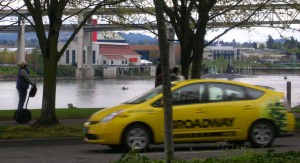
Portland, the city of great food, beer, hotels, art, et al. AND one of the best meals was from a cart that my host overlooked because there were so many other options. AND I had a host because I decided to stay in a Tiny House instead of a hotel. A tiny house Portland has welcomed tiny houses enough to spawn at least one business (Portland Alternative Dwellings – PAD houses). They may only be about 120 square feet, but they are far more comfortable than a hotel. AND there are art museums and galleries AND there is plenty of public art, both official and unofficial. Portland has styles. Note the plural. AND it was a bit confusing trying to figure out how to get around because there were so many good transit options: bus AND trolley AND something that looked like a train – AND they were busy. If I lived there I’d include walking AND bicycling. I got the impression that Portland knows that solutions are necessary AND knows that they can’t know everything, so they let people add another AND to the list of options.

Writers and wordsmiths may be grinding their teeth because no one is doing all of those things. Many of my sentences should have been used ORs. But, no one can pick every option; some are mutually exclusive. The people get to pick from ORs. Portland, however, is defined by the fact that the city has this AND that AND the other thing AND the what in the world is that? If you don’t like what you see, look around and you’ll find what you want.
OMSI and alternatives
The last evening at the conference was at the Oregon Museum of Science and Industry (OMSI). For two hours they opened the doors and let us play and wander and wonder – with beer, that I didn’t drink. There were too many interesting people AND too many intriguing displays AND too little time. OMSI is evidently inclusive. We (HCLE) perused their newsletter files searching for computer references, which meant also seeing everything else they were involved in for the last few decades. Maybe their diversity has stabilized them and helped them adapt to trends early and in small increments rather than rushing to catch up later.

HCLE is about people who found a trend early and helped the rest of us adapt. OMSI is part of that story, and of course part of many larger stories too. As a society, we are witnessing change. These few days have convinced me that we will do more than sustain, AND can thrive if we are more inclusive with ideas and people.

AND I grin when I realize that I realized that in a place that is tied to OR.

Tiny House Guardian Cat

Posted in Uncategorized | Tagged , , , , , , , , , , , | 5 Comments

Training And Technology

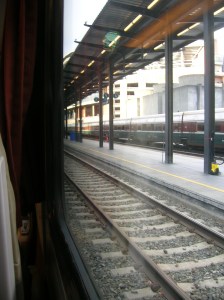
I felt the earth move under my feet. Well, really, it was the car that moved, the rail car. I’m blogging from Amtrak’s Cascades train heading from Seattle to Portland. It is a trip mixing old tech and new tech, luxuries lost and luxuries expected. And, it’s cheap! And distracting.

Amtrak Seattle

Writing is enough of a chore for many that they avoid it unless necessary. As much as we may bemoan social media, I think many unconsciously appreciate it because they can communicate in short bursts with less concern for rules. If you make a mistake, it’s all right. Your friends will understand. Today’s writing exercise is to type up this post while listening to the crowd in coach class: an occasionally boisterous family, a grandmother talking baby talk to her kindergarden grandchild, the requisite conductor’s announcements. Then there are the other distractions: Mt. Rainier, every garden that sweeps past, the train crossings marked by a whistle. Pardon me as I pause to plug in some instrumentals via my earbuds. (Ah, Beethoven.)

Almost every human endeavour has been affected by technology. That’s true of every age. Technology like clothing and knives helped us expand across the continents. The story tellers of those ages probably complained about their working conditions too, even while advancements made communication easier.

Waiting to board the train I read some Mark Twain, “What Is Man?”. He wrote as he traveled, probably pen or pencil on paper, maybe with a typewriter. Thanks to technology I just checked and found that he was the first to submit a typewritten manuscript to a publisher. He was an early adopter. I look for free wi-fi. Did he have to look for ribbons?

This is my first business trip in over a decade. As Project Manager for the History of Computing in Learning and Education Virtual Museum project, I am attending the Museums on the Web conference in Portland, OR – an opportunity to meet and great and learn from those museum officials who’ve pioneered virtual exhibits and artifact databases. Soon, we’ll be giving the presentations, after we’ve succeeded. A virtual museum is a mix of old and new. Originally repositories were probably exclusive, collections curated by nobility or clergy. Museums continue to rely on well-established patrons and organizations, but their primary role is saving history for the public. That role was met by large colonnaded buildings, but has progressively incorporated electronics to add content to displays or to lead visitors through the exhibits. Now, many museums are putting content online, partly as a teaser, partly as a service. Most museums have more artifacts than display space, and online exhibits give them the opportunity to show more of what they’ve got. HCLE is taking it one step further. Because learning and education are based more on software than hardware, and because research exists as documents, we’ll be able to eliminate the need for a building, except for offices and a space for the computers. We may even dispose of the more common artifacts.

There are gains and losses with any change. The cost of setting up and running HCLE will be smaller than most museums, while the value will remain high. But, people won’t be able to visit. Some people prefer to read old documents in the original form. I collect first editions. I know. There’s an appreciation of process and its constraints. Mark Twain probably wrote differently with pen than with his typewriter. Imagine, Wite-Out hadn’t been invented, yet. Cut and paste involved scissors and glue. Were his original manuscripts scraps of paper, gingerly held together, or did he re-type entire books? The changes experienced at the beginning of the Information Age involved mimeographs, mailgrams, xeroxes, and faxes. Yet, the technology became less important than the content. Now, content is so important that few consider if it was produced on a desktop, a laptop, or a cloud computer. HCLE can transfer a museum’s worth of content saving history and money.

This train incorporates significant technology: free mobile wi-fi, moving map displays, comfortable seats, an armrest of controls that I won’t have enough time to decipher. It also has maintains many of the traditions: the conductor’s cap, the dining car, the rolling scenery. Some things are thankfully gone: coal smoke. Some things haven’t changed: a wobbly ride (how did Twain write?, and how did they ever serve hot food?), noisy neighbors (because children will be children), and the inevitable yawn from hours of inactivity.

We live in an era of great change. Most of our changes are caused by technology; though now, technology is offering us new ways to change. We’ve become more aware of the rest of humanity. Our sense of village extends around the planet. A tragedy in Boston is met with compassion in Iran. An arctic species in peril finds advocates in the tropics.

I imagine Twain on this train. He would be exploring every facet, introducing himself to each passenger, possibly from coach if he mimicked most of his career, or from the empty business class section reminiscent of his wealthier days. Considering how much of his work is in the public domain, he might have to work up new material or accumulate money from honoraria. And he’d probably come away impressed, both positively and negatively, and would tell us about it humorously.

Changes aren’t panaceas, except that they do always make the future different from the past. One trick is to acknowledge the positive, and work with it; while, acknowledging the negative and avoiding it.

With that, I’ll quit typing, post this to the blog, share it out to social media, and relax back in my seat for a wobbly nap with glimpses of the eternal and natural view. The headphones stay in though. Noisy neighbors don’t change.

My Tools of My Trade

My Tools of My Trade

Posted in Uncategorized | Tagged , , , , , , , , | Leave a comment

Personal Tax Inequity

I paid lower taxes when I was rich. Yesterday I did my taxes. I knew it would be bad, but didn’t know how bad. It turns out, the less I’ve made the more I’ve paid. That’s not right. Add tax inequity to wealth inequity and income inequity and begin to understand why so many are dismayed. I knew this before, but I feel it now. The two main solutions are to either have a lot of money or find a way to live beside but not in the system. That’s another recipe for a bifurcated society, and that’s not good.

The situation is simple, and explains why living off investments is a cheap way to live. At least for my style of investing, which is to own individual stocks, the

re were usually losses to balance the gains. The match didn’t have to be exact, just enough to dramatically lower the tax. Invest for the long term (LTBH) and the taxes reduce some more. For the really risky, invest in small enough companies, hold them long enough, and there can be additional tax breaks. Taking on risks has its rewards.

Risks are called risks because they don’t always produce rewards. In my case, a string of misfortune struck coincidentally with the economic downturn just after I bought my house. My portfolio began its dramatic slide, but at least for a while, I was paying bills with stocks that played by the old rules. My taxes were so embarrassingly small.

Misfortune continued for too long and I had to rely on selling stock from my IRA. I cut my living expenses in half while trying to get a job and build my business. My non-housing expenses were near or below the poverty line. My taxes went up. There’s a penalty for misfortune. For some, living on so little means not having to file taxes; but, if living on so little means diving into an IRA before its time, then penalties must be paid.

Sucking whirpools happen

For some, those penalties must be paid by selling more stock, which is in an IRA, which incurs an new penalty, which becomes a negatively compounding cycle.  If those stocks weren’t in an IRA there’d be no penalty and there’d be no taxes.

The government had good intentions when they instituted the various IRAs. But they were designed with some of the same assumptions as Social Security: work until you’re 62, er 65, er 67, and then receive an income. Our world isn’t working that way. A recent NBC News report states;
One in four Americans is raiding their meager retirement savings to pay their monthly bills, according to a new study.
and as one of their interviewees said,
We didn’t know what to do. It was either bankruptcy or cash in our IRAs,” Amy Shankland told NBC News.”
Some are selling. Some are borrowing. Neither is a good sign. And, if life doesn’t improve before the IRA is emptied, bankruptcy remains the only option.

I paid my taxes yesterday, by credit card. The frugal part of me fought the notion for hours. Paying in cash would cost too much because I would have to sell IRA stock within days, thereby reducing my dwindled portfolio significantly. Getting an extension can incur penalties and fees, and isn’t supposed to be used for delaying payments. Counter-intuitively, paying by credit card was the most optimistic choice – and that was and is a difficult realization. In my life of sooner or later something marvelous is going to happen, a lot of sooners have passed by and the laters are due. If that good news is going to alleviate my foreclosure woes, then it will come in at a time to alleviate my credit card tax woes too. Stock, job, consulting, art news can arrive in time to cause that celebration. If that sounds uncomfortably risky to you, then congratulate yourself on being perceptive and wise. These are risky times. By the way, if the recovery comes via my stock portfolio, it will be stellar, probably based on MVIS, and inside my IRA which means I’ll pay penalties.

My situation and the other IRA tappers are undoubtedly not the only tax inequity examples. We complain about, yet accept, loopholes because loopholes seem to multiply faster than they can be closed. There must be other stories of dysfunctional systems, but I need to dwell on my recovery first. I’ll let others research the rest.

The troubling part for our system is that the inequities are compounding. Tax, wealth, and income inequities have always existed; yet, the data suggests this combination is historically uncommon. And something that historically uncommon may create an uncommon reaction that can be historic.

Posted in Uncategorized | Tagged , , , , , , , , , , , , , , , , , , , | Leave a comment

Lay Off Dreams

I had a dream last night. Don’t we all? My dream touched on a friend’s reality, my past, and a consideration of my present. It was a lay off dream. That’s a new theme. And it felt like a good dream. That’s a surprise, and then I realized that layoffs can lead to good things. It rarely seems that way at the time, but I guess that’s true of “the heroes’ journey.”

Listening to someone else’s dreams can numb a mind, so I’ll shorten mine. A group of us were milling around an auditorium, expecting news. No one expected celebrations, and they guessed right. Layoff notices appeared in their hands. Notes the size of index cards succinctly confirmed a person’s name and their layoff status. I didn’t get one, maybe because I was moving around so much, but I knew that an era had passed. Food came to mind, and I walked outside. A large, black, conservative sedan pulled up, a Japanese salaryman got out, walked up to me, bowed while handing me my card, and then retreated to the car. My eyes read the card as a layoff notice, but on a second glance I realized it said something different. The card was a ragged scrap of paper from some other form. There was nothing about a layoff. Under my name and on the line that said “status” was written; “Seriously Underpaid.” An accurate statement and seemingly useless, but it made me feel better. The dream ended with me making myself a steak for dinner. I think it was the last one in the freezer.

A real layoff hit a friend a week or two ago. She was working for T-Mobile, finally getting back on her financial feet and bringing some stability to life for her and her kids. Layoffs hit some people hard, but Maryann’s attitude was, “Well, that’s behind us. What’s ahead?”

This is what she looked like after being laid off. Imagine her smile when she has good news.

This is what she looked like after being laid off. Imagine her smile when she has good news.

She started a blog, invited fellow ex-employees over for hugs and shared resources, and attracted the attention of the local NPR station (KUOW). To quote a line from a frivolous 1976 car movie;
“[Franco rips off his rear-view mirror and throws it out of the car] Franco: What’s behind me is not important. ” – Gumball Rally.
Her most recent post announced a series of support meetings and a web page where friends interview friends (#FAFAJ) to help them express their skills, talents, and interests beyond what a resume can provide. Her bad news was bad news, and appropriately mourned, and then replaced with planning for a new future.
(By the way, an online resource for anyone is the Simple Living Forum, hosted by New Road Map Foundation.)

I left Boeing in 1998. There were plenty of reasons, some of which are in my book, Dream. Invest. Live. (which is the basis for this blog); but what crystallized my decision to leave was the announcement that layoffs were probably coming. The grapevine had said so, and finally lower management acknowledged it. My portfolio was doing well enough that I expected to be a millionaire soon. Whether I liked my job or not, I decided to volunteer for layoff to possibly save at least one person from losing a job they needed. Because I wasn’t officially laid off I didn’t receive a severance package and didn’t receive unemployment; but that was okay because I had more than enough. Why take more than I needed? You never know the consequence of such actions. Did I make a difference in another engineer’s life, or did I just improve someone’s budget and bonus? Within my own life, I knew I made a good decision. Within three years my net worth had doubled.

Maybe I left some money on the table. I could use that money now; but, we make decisions in the present and greedily hanging onto every possible penny seemed like a waste of time. A series of decisions that each seemed good at the time has led me to this present: nearly negative net worth depending on the value of the house, trying to sell my house for almost a year, looking for a job for more than a year and a half, and working almost every day unless I’ve work myself to a day off via exhaustion. Between the book and this blog a reader could replay much of the journey, though they wouldn’t find the parts that were played by a divorce.

What’s behind me isn’t as important as what’s in front of me – and what’s behind me is very important. I’ve always lived frugally, even when I didn’t have to. It just makes more sense and lets me have more fun. My experiences are varied. It is possible for a thirty year career to provide one year’s experience repeated thirty times. My resume encompasses so many experiences that more than one interviewer has said they wanted to interview me to meet me, though not to hire me – yet. Those experiences will be worth something. They already are, on a personal level. Now would be a good time for them to be worth a lot in terms and timing amenable to me and the mortgage company. Like Maryann, experience brings perspective; and after bad news is delivered, the time it takes to get back to positive action is much less.

What’s before me is more important, but harder to describe and discuss because we can’t predict the future. I have a creative imagination, and realized the possibility of my current situation back when I had more than enough to pay off the mortgage times two, but I didn’t expect this to happen. The equally unlikely yet positive possibility was that I’d return to having more than enough and be helping out many more as a result, which could only happen if I didn’t pay off the mortgage prematurely. The range of possibilities is as broad as ever, though the return trip to the far side of the financially positive side will be more abrupt, and more welcome. Each day I have to appreciate what I have, use it respectfully, and respect my self too.

I’ve gained a greater appreciation for things I took for granted, even as a frugal person. Many of the things I took for granted are those things that are always there: the comfort of a home, the nature outside, Wind Prayerand the nature inside that I can reach through exercise and meditation. Get a group together and it’s even more fun. Dancing happens. If it wasn’t for the need for money in our society I’d have almost everything I needed.

Ah, but evidently, I am seriously underpaid – and I suspect I am not the only one. Regardless of your net worth, the income disparity in America versus our culture of volunteering and mutual support suggests that many of us are seriously underpaid.

Imagine if none of us were seriously underpaid. Then we could lay off only dreaming and add living back into our lives.

PS
While my dream and some associates agree that I am seriously underpaid, I’m not suddenly raising my consulting fees. Existing clients may breath a sigh of relief. (Of course, tips are still appreciated.)

Posted in Uncategorized | Tagged , , , , , , , , , , , , , , , , , , , , , , , | 2 Comments