A Good Disclosure

Whew. Finally, papers and pens and people met at the same time and the same place to reach an agreement about a fun and new project. Add writing for TV to my list of skills, talents, and experiences. As of this afternoon I get to work (part-time and temporary) on a documentary series for the island’s local TV studio, WhidbeyTV. To those who’ve listened to my story through such tough times, I’m glad I get to share yet another piece of good news. All things remaining equal, I’ll finally go from making enough to pay my bills except for my taxes, to being about to pay my taxes and make quicker progress on reducing my debt. Artistically, this is fun. Financially, this is a great relief. And, getting to learn a lot more about my neighborhood, my community, its history, and the people is marvelous. Good news comes from unexpected directions, and this isn’t the only opportunity. (There were more than one possibilities alluded to in that previous post.)

Unexpected opportunities for one friend created an unexpected opportunity for me. I’m not the first writer for this project. A friend had that honor, but had to bow out because another lucrative project demanded more time. One of the consequences of the Gig Economy is that each gig is dynamic, growing or shrinking, speeding up or slowing down as demand and resources shift. When you hear about someone creating a career from a web of gigs, be impressed by their management skills. Handle six projects within a corporation, and get a headache and a good performance review, and maybe a raise. But it is simpler because the pay’s the same, the benefits are the same, and conflicts are negotiated within a relatively common culture. Handle six projects as an entrepreneur, and the juggling shifts from handling six knives to handling a knife, a chain saw, a fish, a pumpkin, a torch, and whatever flies by. Pay, benefits, time, location, dress code, and urgency vary throughout the day. No wonder liquor sales are rising and marijuana is becoming legal.

I’d like to tell you more about the project, but as any artist will tell you, things change. That’s true within corporate America, but especially true when trying to compile a compelling story based on the inputs and constraints of several people and disciplines. It would be great to interview someone who was forty years old in 1890, but few people live to be 126 years old. Some audio or video or story may be compelling, but if it doesn’t fit in with the rest of the episodes it gets cut. Develop an idea, outline a narrative, create a draft, add or subtract based on available media and people, and repeat and repeat. So, I can’t tell you what exactly we’re going to produce, but I can tell you that it is nice to work in a talented group on a common goal (but also with limits on time and money, of course.)

While I can finally talk a bit about my new creative assignment, I’ll continue to remain more private about shifts that are happening within the writing community (as it sorts out its new direction), the coworks community (as various coworkers and possible hosts decide upon their needs and wants), and more than one other project that is considering me as a manager or major contributor (hence more NDAs whether implicit or explicit.)

Put everything together and after a thirteen hour day yesterday, what will effectively be a twelve hour day today, and two more schedule intense days for the rest of the workweek, I’ll be tired and ready to work shorter days on the weekend.

As grueling and unbelievable as that may sound to some, the shift is significant. When you aren’t making enough money to pay all your bills, any free time can be spent on worry. There’s more than enough unsolicited advice, peer pressure, societal shame, and financial necessity to fill free time with worry. Time is valuable. Is there something I’m overlooking that may be the key to paying my bills? Now, my free time is more likely to be spent juggling a variety of projects, some as contributor, some as manager, some as entrepreneur (which means simultaneously originator, contributor, manager, and evaluator.)

I am one of the fortunate ones. By many measures, despite having to pay my income taxes with a credit card, statistically I am middle class, barely. My clients have interesting work. There’s more than enough diversity in shifting from a museum about computing in the classroom, to writing light and hopefully entertaining articles about Seattle’s currently bizarre real estate market, to diving into and documenting Whidbey Island’s culture, community, and history. That kind of juggling means no day is dull. And, the other opportunities can be equally diverse. My resume and LinkedIn page are expanding – and I like it.

WhidbeyTV is a local initiative, a unmet demand that was recognized by the people who run the local telephone company. Living on an island means living within a culture that can be significantly different from mainland communities three miles away. The waters around any island create a cultural moat that may not mesh with the mainland’s media offerings. There may be a smaller audience, but it is a more dedicated audience. People who live in isolated places, are more likely to do so consciously. They know why they live where they live. They pick where they want to live, and then decide how to live there; rather than finding a job and then settling on housing based on commuting. Each choice is a story, and I get to help tell those stories. So, yeah, am I happier? Yeah. Am I glad I could disclose that much? Yeah. Do I know what’s going to happen next? Not exactly, but it will certainly be a story. Thanks for staying tuned. There’s more to come.

Langley Second Street Market 060713

Posted in Uncategorized | Tagged , , , , , , , | 4 Comments

Non Disclosure Agreement

I’d like reo tell you, but I can’t. With some formal and informal, commercial and non-profit, but almost all local to Whidbey projects, I have plenty of potential news. If you’ve read this blog for more than a few months, you’ve heard similar before. But, two of the projects have me shifting my mind-set and making it clear how tough it is to not have enough to pay the bills, and how much of a relief a little bit extra can create. To those who think I smile alot now, you might see a lot more of that soon – assuming things work out.

Unfortunately, I have to leave you in suspense. My novel writing friends strive for such tension; but I look forward to telling you the news. About the only bounds I’ll describe are that the commercial initiative is not, repeat not, a full time job with benefits. That seems as elusive as a jackpot winning lottery ticket. But it is very good. The other initiatives mean more work, possibly less time – and yet are very relaxing. Yes, I do lead an odd life.

“Anything for a weird life!” – Hitchhiker’s Guide to the Galaxy

Be careful what you wish for. I didn’t even wish for it, but I remember saying that phrase with feeling about thirty years ago. Let’s take a look at my Bio page, “Consultant, Writer, Speaker, Teacher, Photographer, Engineer, Entrepreneur, etc.”. I’m starting to think there’s a heavy emphasis on the ‘etc.’ I’ve bicycled across America, walked across Scotland, got a black belt in karate, wrote a series of books about hiking year-round in Washington State’s Cascades mountains, have a patent and a string of inventions (aka Fresh Ideas), retired at 38 and was unretired in 2010, and I think that’s enough for now.

Like most people, my ups and downs can be made to sound epic. I continue to enjoy the fact that a friend in the industry pitched the story of my life to a Hollywood VP. I think they’re waiting to see how it comes out before they do anything.

Life most people, it is possible and likely to carry stress, habits, and perspectives through episodes even after situations change. I know too many people reacting to possible futures based on terrible pasts that are unlikely considering their present. I don’t want the same to happen to me.

As good news is filtering in, though not committing, I’ve watched my reactions. I smile more; but not too much more. I pay my bills as before, and am eager to pay earlier and pay down debt sooner; but hold back because I can’t spend what isn’t in the bank account. I fear less; because having a few hundred too little every month means any upset can be disastrous, while have a few hundred extra every month means it is possible to repair things before they break and to replace things that broke and were abandoned. I might even buy a bed instead of relying on one piece of furniture that is primarily a couch.

My shoulders are more likely to shudder as I realize they don’t always have to carry tension. Sometimes, they shake when I remind myself to relax. They don’t have to carry tension, but an awareness of the frailty of things, people, and life is amplified when there’s less you can do about it. When I was a millionaire, a torn pair of pants was an excuse to go shopping. When I couldn’t pay my mortgage, I wore overalls because they were less likely to rip or tear. It wasn’t until this year that I finally bought a pair of jeans, my first since before my Triple Whammy.

As more than one friend and financial professional commented, I was hit by a perfect storm of bad luck. It is inevitable, I’m not alone, but it did happen to me. I understand why the suicide rate is so high, why some voters are angry, and why the American Dream has measurably shifted from getting ahead to not falling behind.

The US economy is improving, though haltingly and unevenly. Millions of people have experienced unexpected trauma. Just like the Great Depression, we possibly have retrained a generation or two to act more cautiously and for them to expect less security.

Whether my good news arrives or not, I’m experiencing yet another lesson in my self and our money based economy. Money is an abstraction, but when it is the determinant of housing, healing, eating, and the basics of survival, it is easy for a body to physically react. We evolved to be sensitive to threats, so it is no surprise that our bodies react. Several of my friends teach stress reduction methodologies that are known by their acronyms: TRE, EFT, ICE. Others teach older versions of meditation, massage, and spirituality. For some, prayer suffices.

For me, I rely on and feel I should return to the tight/no-tight training within my karate practice. Karate embodies a pragmatism. There are times to be tight; but the best way to conserve energy and to flow is to spend more time as no-tight. I’ve certainly been tight enough long enough that now is the time to return to no-tight, a place from which work, life and particularly play flow.

I’m devoting more time to my garden this year. So far I’m tending apples, figs, raspberries, potatoes, onions, garlic, ginger, tomatoes, peppers, spinach, and mushrooms. The most colorful harvest so far, however, has been the untended and very vigorous rose bush. Beauty delivered for no effort. That makes me smile.

DSC_6441

Stay tuned. News to follow.

Posted in Uncategorized | Tagged , , , , , , , , , , , , , , , | 3 Comments

Transitions For Writers And Beyond

It shouldn’t come as a surprise that a writer has a nice way with words; yet, it is a pleasure to hear a difficult situation described succinctly and finish positively. Transitions are inevitable. Last week’s meeting about our local writers group transition is a reminder that twenty years of success can be upset by a few bits of bad luck. It’s true of artists organizations, corporations, governments, and people. The trick is taking on the right attitude.

“Our organization is now penniless, homeless, and leaderless. The only way we can go is up.” – Dorothy Read, leader and facilitator of today’s meeting

“Life is a wave. Your attitude is your surfboard.
Stay stoked & aim for the light!” – Drew Kampion, surfer and hard-working, casual community organizer

One meeting is not enough for a transition, unless royalty is involved. Communicating the bad news throughout a community, helping them grieve, and then listening well enough and long enough to find a new direction takes a lot of time. Time is the most valuable resource, and transitions are defined by how it is spent.

Last week’s meeting was the closest thing to an official announcement the writers have received. It was held and managed by the authority figures from the previous organization.

Today’s meeting was the first public opportunity for those interested in defining what comes next. There have been enough private conversations about the possibilities, some of which will probably inspire private or commercial initiatives, but there will always be a core that sees the value in public, non-profit, and collaborative organizations. The most powerful resource a writer has is another writer. Well, a reliable source of income is important, too.

The list of ideas, notes, and comments are available for members of the group through a variety of avenues. I posted my collected notes to the Facebook group, Whidbey Authors. My live tweets from the meeting can be found under #afterWIWA, or scroll through my Twitter feed under @tetrimbath. I’d like to include the list here because it is impressive what passionate people can produce in under an hour; but those specifics are best kept to the group.

In general, though, people want to work with people. What’s more fundamental than that? The rest are details. Events like classes, conference, workshops, writers groups, socials based around caffeine or alcohol and definitely around laughter, all are up for consideration. The resources of Whidbey’s writing community are extensive enough that people have moved here specifically for the writing community. That’s not a box on a real estate listing, but artists will find artists. My writing improved considerably after moving here thanks to a Whidbey Island Writers Association writers group. A lot of practice helps; but supportive critiques are always helpful. There is no end to improving an art. That’s why art can easily be a lifetime pursuit. It’s a pity it doesn’t pay better; but then, educators and healers aren’t paid well enough either. Money and value aren’t well connected.

Amongst the entertaining talk of possibilities and potential, there was an undercurrent of the necessary. Will there be a new organization(s)? How will it or they be structured? Who will lead? How much will it cost? Where will the money come from? When and where will it happen? What will be prioritized? Not surprisingly, those were the questions least likely to be asked and even less likely to be answered.

Leadership matters. So does listening to as many people as possible. Whidbey’s writers are dancing with that balancing act. Pick a direction and lead too soon, and possibly leave too many people behind. Take enough time to listen to everyone, and then to everyone’s responses to everyone else, and less patient people will launch initiatives.

By the end of the meeting I could readily envision 1, 2, 3, at least 4 individuals, make that 5, who could take one aspect and pursue it regardless of, or in service to, the community. I know I’ve already sketched out a possible way to rebuild a writers conference, which would invariably be counter to someone’s desires and expectations. (I think there’s a demand for a writers conference that concentrates on writing instead of publishing. I digress, but it does serve as an example.)

The transition I describe is happening with a writers organization, but we’re experiencing many transitions. Industries are shifting as fossil fuels are usurped by renewable energy. Politics continues to amaze within the US, the EU, and China. Climate and culture are replacing old norms with unknowns. The three-fold balancing act between ideas, resources, and leadership are happening in greater profusion and confusion than our species has ever witnessed.

I use the local situation to highlight similarities with the larger situation. Outside this blog, I’ll probably spend more time talking about the local situation because I have more connections, resources, ideas, and opportunities to act. With this blog and with my other blog, PretendingNotToPanic.com, I’ll focus more on the global because the audiences are global; and the blogs are resources where I can take simple actions to relay ideas and connections. One source of my optimism is that each of the more than seven billion people on this planet can do something similar. As the now old phrase reminds us, Think Globally, Act Locally. And, remember to listen.

“The only way we can go is up.” – Dorothy Read

“Stay stoked & aim for the light!” – Drew Kampion

DSC_5323

Posted in Uncategorized | Tagged , , , , , , , , , , , , , | 1 Comment

Tedious MicroVision Catalysts

Tedious and studious are not the words that usually come to mind with potentially disruptive technologies and possibly profitable speculations. And yet, I return to report on MVIS. If I only hit the highlights, the great or terrible news, I’d be delivering an incomplete view of the world of individual investing. I’m also not going to chronicle every nuance in every stock because that would go beyond tedious to dive into dull. MicroVision’s technology is finally entering the marketplace, but it hasn’t hit that fabled key application that makes everyone aware that the world is changing. The catalysts have yet to catalyze.

As I said to a friend and fellow shareholder, the short version is that we are both still working. The long version is full of intriguing details, but the only folks I know who’ve profited enough from MVIS to dial back their jobs are traders and short sellers. Those of us who are Long Term Buy and Hold folks feel the weight of the Long Term, and are getting tired of holding for so long. But, that’s about to change. Right?

The good news: The company is making enough money and has a large enough backlog that I no longer worry about them going bankrupt – at least not any more than any other company that can run into bad luck.
The other good news: According to the conference call, orders are coming in, and several products are expected to be released by the end of the year. Have fun parsing the exact wording. Products can be announced, but not for sale. They can be launched, for short terms in test markets. And, they can become instant sensations that make headlines.

MVIS_Catalysts_042916
I’ve updated the catalysts chart that I’ve taken to maintaining. If I’d known I’d be using it so much I would’ve designed it differently. Maybe some other day. It’s getting busy. (And could use some updates. Does anyone have the real dates on some of these launches? Particularly the Pioneer HUD?) Celluon teased that there’d be news by the end of April, but so far it looks like the news is the announcement that there will be news about PicoBit and a surprise.

//platform.twitter.com/widgets.jsSony’s competitor to Amazon’s Echo possibly has MVIS inside, but no launch date that I can find. The Qualper smartphone has been announced, but depending on who I listen to it is either already for sale in China or yet to be officially for sale. The ViewSmart projector was like the others, mentioned at CES; but not hitting headlines since then. The only product with a relatively firm date is RoBoHoN, the robotic smartphone that follows you around (slowly); but few expect many sales because it is expensive, gimmicky, and not practical.

That specific list of unspecific events expands dramatically with the announcement from the CEO that there will be several new products introduced/announced/released/whatever by several OEMs by the end of the year. We’re told to expect the unexpected. That sounds like hype, but the technology is disruptive and will inspire creativity and innovation. Maybe it will inspire profits, too. A few years ago the CEO postulated that profitability would occur about 6-9 months after the release of a smartphone with an embedded MicroVision projector. That would make a difference in MVIS. (Forward looking statement disclaimer in full force, I’m sure.)

Overnight successes usually take more than one night to succeed. To long term shareholders, any success will come with great patience. To the general public, it may seem sudden. At this point, though, there is no guarantee of success; just an improved chance of not going out of business suddenly.

Investing can be tedious. The studious aspects involve arithmetic, which discourages a large portion of the population. Timing when a stock is going to rise is gambling. Speculative stocks are close enough that some seem no difference; but buying early and being patient reduces the risk of missing the big positive event, while also exposing the shareholder to many negative events. So far with MVIS, I’ve witnessed lots of negative events. In my thirty years of investing before The Great Recession (or as I think of it, the Second Great Depression), I frequently bought small companies and held the stock through doldrums and then fast rises. Buy into Pixar when people are laughing at the idea of using computers to make movies. Buy into Starbucks when people are laughing at buying expensive coffee. Buy into America Online when few saw a need for communicating by computer. I also held some that never succeed. A few case studies are in my book that is the basis of this blog, Dream. Invest. Live. Dream Invest Live cover

Ideas come and go and can come back again. The idea that there will be innovative applications is not new. Shareholders have been brainstorming for years about possible applications; especially, when inspired by demos from meetings or crowdfunding campaigns. Interactive 3-D, sure. Saw that at an ASM a few years ago. Machine vision? Sounds like the UPS application. One device that scans and projects? I thought of that about a decade ago. Imagine eyewear that is easier to use than Google Glass, not as obvious, that also does an iris or retinal scan for privacy or security verification. Spy agencies and defense contractors would love it. For Your Eyes Only finally lives up to its name.

The CEO closed the call with the invitation that we’ll all meet again in three months. Evidently he forgot to mention the stockholders meeting at the beginning of June. Every year I think that the next year’s meeting will be a major celebration. Since last year’s meeting, MVIS is down over 30%. The company is doing better. Management’s been paid hundreds of thousands of dollars again. And, MVIS shareholders who expected to be retired have gone off to find work. I hope to be retired again, but by my

Posted in Uncategorized | Tagged , , , , , , , , , , , , | 2 Comments

Transition For Writers On Whidbey

The Whidbey Island Writers Association is probably going to close. The ‘probably’ is in there because miracles happen, but saving the name and the organization will take tens of thousands of dollars soon. I checked my Powerball ticket. I’m not WIWA’s financial saviour. There are plenty of ironies around a writers association closing partly from miscommunications. The story is deep, rich, and filled with passions; but, I’ll leave that material for others to delve into and cover elsewhere. I’m more interested in the future than the past, and am drawn to the parallels that must apply to other small towns as they go through transitions. I have my black tea martini beside me; let’s see how the story unfolds.

I give credit to the Whidbey Island Writers Association (hereafter called WIWA because why use 34 characters more than once when 4 will do – especially for retweets). Thanks to WIWA my writing improved from the simple action of attending a well-run writers group every other week for a few years. Writers groups span the range from unfailingly supportive (Congratulations! You wrote something, anything!) to rigorously exacting (how else can prize winners improve other than to have every mistake highlighted?). I was glad to drop into a group that sat in the middle. My favorite bit of feedback was; “That was so beautiful we missed the point.” Positive and constructive in one line; which was an impressive bit of extemporaneous verbal wordsmithing. Now I write so much, and get paid for much of it, that I don’t have time to attend the writers group. (Check Amazon Walking Thinking Drinking Across Scotlandand Curbed Seattle for some of my books and articles.)

WIWA and other writers associations are known for writers groups, conference, classes, seminars, workshops, publications, and general support. Each community requires a unique mix. Whidbey Island’s writing community is so strong that people move here because of it. It was strong enough that it actually inspired and created the first Master of Fine Arts program for literary arts that was accredited without being associated with another college or university. An impressive feat. (I put a sentence fragment in here to make sure my editing friends had something to chew on, as if my writing style isn’t already a rich vein to tap.) Saying you’re a writer to someone else on Whidbey is as welcoming as saying you’re well-paid professional at a party in Seattle – welcoming, but without the expectation of wealth.

Small towns have long memories. Missteps that are quickly put in the past in the dynamic world of urban America tend to linger because the people persist and remember in small towns. Artists are passionate people. The emotions persist as well. The closure of the MFA program (called the Northwest Institute of Literary Arts, aka NILA) and the subsequent closure of WIWA generated understandably strong emotions. For some, the news wasn’t new. They knew or suspected for months. It’s hard to hide for long in a small town. For others, the news of the meeting was the first sign of anything amiss, when it is effectively too late. It’s easy to concentrate on nothing else than your writing when you’re a writer. What? Donald Trump gave up his TV show and is running for President? And is winning? Fiction writers rarely are brave enough to write such narratives. Reality doesn’t have that constraint. But I digress.

Tuesday, April 26th (yesterday as I write this) included a meeting held at 3:30PM so WIWA members could learn about the transition. Understandably, not everyone could attend in the middle of a work day. Writers tend to have day jobs that have nothing to do with writing, and fit the writing in as they can. I was lucky and interested enough that I finished my gigs for the day and settled into the lowest and comfiest seat in the far back corner and hoped to listen instead of talk. I learn more when my mouth is closed. There was that one comment that slipped, but that simply proved that I was human. The people impressed me. There was obvious contention and friction, but people acted as adults by revealing their emotions but not letting them interfere with the meeting.

The overly-simplistic version is that a writers association can be recreated, but it has to start as an idea. Nothing except inspiration can be brought forward. No money. No name. No contacts lists. No assets. No offices.

One moment that made me sit up was when the topic of the new name of the writers association was mentioned. Whatever follows legally can’t use the old name unless it pays for the old debts (evidently), so it was suggested that we use the name I came up with for a Facebook group that was created on a whim one afternoon a few years ago: Whidbey Authors. I never considered that possibility. Okay. Writers questioned the distinctions between Author versus Writer. I didn’t engage because I was recovering from someone suggesting that something I did could help. Happy to help. Surprise!

For a number of reasons, I’ve found myself fielding several threads of messages since the meeting. While I take it as an honor that I’m included, I also suspect that messages are directed to me because I’ve been a WIWA member for a long time, have written extensively in a variety of forms, have never been on the board of WIWA or NILA and therefore have little history there, enjoy communicating, and was able to attend the meeting. Who was it that really said most of life is showing up?

If I followed all of the advice and direction I’ve received within the last 24 hours I’d have to give up all of my other jobs and devote my life to whatever WIWA becomes. My bills suggest otherwise. I’m willing to act as a communications conduit – to a point.

So far, the news is good. People who were dedicated to WIWA are dedicated to creating something new. There’s interest in reviving the conference, publishing anthologies of local works, sustaining writers groups, and providing lists of resources for finding editors and such. There’s also interest in launching initiatives that may be old, revived, or new – many of which involve being more public, more social, more digital, and emphasizing local. Coworks WIWAcoworksand drinking with your tribe come to mind. One crowd understands listserves, and has never heard of meetups. And, of course, the other crowd expects meetups and hasn’t heard of listserves. I sit in the middle, knowing of both, using neither but just because I have other options.

As much fun as it is to dream of what else the writing community can do, the trickier part is the procedural, financial, and legal part. An official non-profit with 501(c)(3) status can be generated readily, as long as there’s a name, board, and bylaws agreed to be enough people. Non-profits don’t have to become tax-deductible entities, which is simpler, but it makes it harder to raise funds. Some groups on the island don’t even have official structure, but are completely ad hoc creating events by almost accidental group consent and also rarely collecting money.

Money makes things complicated and is the root of when NILA and WIWA are going through this transition. (See, this blog is about finance, after all.)

As I write this, I know of a few threads of energy aimed at recreating a writers association on Whidbey. Some are in stealth mode. Others are more public. For those who seek a somewhat public forum, I’ve opened up the Whidbey Authors Facebook group as an online venue. We could probably do something similar on LinkedIn or Google+, but that may take too much training to be inclusive.

Amidst the chaos of energy, my inclination is to listen. I write this post as more of a prompt than as a detailed plan. Pattie Beaven has already posted about what she wants. I look forward to others doing the same. If they don’t already have a blog (come on, writers are the best people for blogging, get busy) I’m willing to host some guest posts, and maybe spin off a separate blog if necessary.

To anyone who is not on Whidbey who has read this far, thanks. There’s a message and a lesson that isn’t tied to the island. Small towns are necessarily aware and mutually charitable; otherwise, they don’t survive. I’ve been watching the transitions throughout South Whidbey and wonder how the various non-profits will shift or survive. Good ideas tend to persist. It isn’t guaranteed (how did we build the pyramids?) but watching the energy flow has been encouraging. It may not be controllable, but it is inevitable – and I trust it. That’s true for WIWA, and also for greater issues like our society, government, economy, and civilization.

To the rest of us interested in building a new organization, formal or not, I look forward to hearing the full breadth of the ideas, new approaches, and then narrowing down to what we can afford, accomplish, and sustain.

A couple of disclosures that I would normally break out separately, but don’t want to de-emphasize: 1) I teach classes and workshops for WIWA, the last of which is a workshop about Social Media for Writers on April 27th; and 2) once or twice upon a time I was interviewed for various management positions within WIWA which never resulted in a paid position. I admit to wondering if things would’ve been different for NILA, WIWA, and myself if things had worked out otherwise. That, however, is the classic retrospective trap, and also not the path to the future, whatever that may be.

Thanks to everyone for their efforts. Now, what comes next?

One more disclosure: to anyone who is proficient enough with Twitter, I live tweeted the meeting. Follow the hashtags #WIWAmeet &#WIWAnews for my notes. If that concept doesn’t make sense, well, hey; do you know I teach classes in that?

Posted in Uncategorized | Tagged , , , , , , , , , , | 3 Comments

Digging On Earth Day

I swung a pulaski today. Not familiar with the tool? Take a mattock, which is like a very heavy hoe, add an axe head and you get a very heavy hunk of steel that’s great for digging out roots. Professionals know them for firefighting where I suspect the ax is more important. Today, on Earth Day, I was part of a work crew that tore into blackberry bushes on land trust property. The berries may be great, but the plant is invasive and we were there to help the native species. Why volunteer when I could be home making money? There are more ways to be paid than with cash.

Don’t worry. I’m not going to get too altruistic here. I continue to work seven days a week with a day off every couple of months. My finances are improving – as long as I either ignore health insurance or income tax. Despite that, I decided that I’ll try to find at least some time for volunteering. I don’t do as much as I did when I was retired; but then, I went a bit overboard back then because I ended up volunteering about 32 hours a week for a while. If you can’t tell, I like helping – which is why I swung a pulaski for the morning.

Cue the inspirational music. Chant the slogans. Conduct the rituals. It is Earth Day, 2016. I’m old enough to remember the first one, and was young enough that I wasn’t allowed out of school to help. It would be possible to write this post as if today’s efforts were some grand plan and celebration, but it was simpler than that.

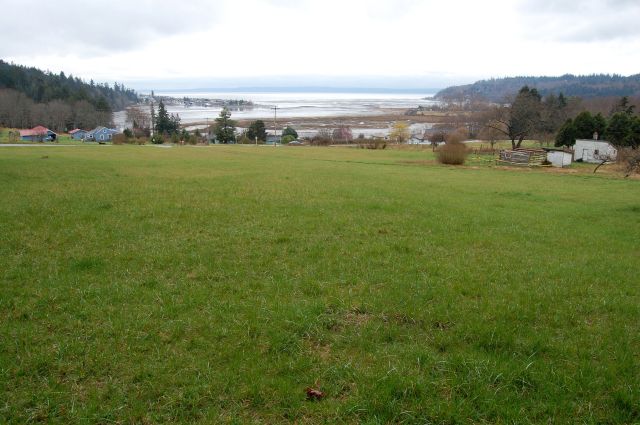
I’m one of two Site Stewards for Hammons Preserve, one of Whidbey Camano Land Trust’s properties. Hammons was donated to the Land Trust by Al Hammons, a farmer who owned a singular piece of land on South Whidbey about a mile and a half from my house. His goal was to provide a place where people could, “rest their souls awhile.” Gifting a few acres is never a good enough description. What had been a remote farm eventually became one of the few remaining properties that included acreage and an incredible view of Cultus Bay, Puget Sound, and the Olympics. Left to developers it would’ve been either one very large mansion, or a neighborhood of luxury homes. Left to developers it also would’ve meant that the natural environment that is Cultus Bay would only be visible to private landowners or people driving by. The bay has no easy access to the shore. The only way to touch the water is to own waterfront, or be in a neighborhood like mine that borders it. Thanks to Al, instead of celebrities the land has raptors, instead of pavement it has meadows, instead of being closed it is open (from dawn to dusk). Thank you, Mr. Alvin Hammons.
Cultus Bay from Hammon's Preserve
The creation of something valuable is worth celebrating. The maintenance of it can be far messier. Old farmland is fertile. Lots of things want to grow there. Originally, it was all tall forest. We could let it revert to trees, which would bring the land full circle; but there’s an awareness of the rarity and value of public or protected lands. Without the daily tending of a farmer, blackberries, scotch broom, english ivy, holly, and thistles march in and set roots. We’re taking two approaches to the battle. Uphill and away from the view and the wetlands, we’ve planted hundreds of trees – many of which are now twelve feet tall. Forests become relatively low maintenance. The meadow, the stream, and the wetlands are nicely situated for providing the view; but they are also the combat zone where we pull out the invaders. Hence, the pulaski, loppers, shovels, weed wrenches, rakes, and the occasional pick.

Be careful what you wish for; you may get it. As Site Steward, I assign myself some solitary work parties. After days of staring at computer screens and trying to decipher the internet, it is nice to tackle something tangible. When in doubt, pull out blackberries. So far I’ve been surprised to find other plants growing under the thorny canopy: lilacs, crocus, lilies, crocosmia, tulips, and even a walnut tree. The tree was far taller than the bushes, but the blackberries were so thick it was hard to look up and see what was growing there. After a couple of hours of whacking weeds with big tools, I took a break. Naturally, my thoughts drifted to my finances. If I had more money, I’d have fewer worries, or at least different ones. I know I’m not alone with the train of thought. About twenty years ago I realized that what I wanted was a small house on a big lot with a nice view. For a few seconds I wondered if I’d ever get that, which conjured images of winning the lottery jackpot; and then I realized I had it, just not in a way I expected. The land wasn’t mine, but I was partly responsible for it. The farmhouse was gone, but the remaining tool shed is larger than the tiny houses I find so appealing. The view is down a long slope, uninterrupted, and could never be blocked. I asked for one thing, and the universe provided it – somewhat.

One way to preserve such a place is to spend a lot of money and tend it myself, or hire someone else to tend it. That is temporary. Eventually, any individual will have to relinquish control through age or a shift in interest. Al understood that. Placing the land in trust is more sustainable. Complain about corporations if you want, but non-profits are frequently corporations for a good reason: sustainability. There’s a continuity to an organization that can survive generations. It isn’t guaranteed, but the structure provides the possibility that something valuable will last more than a generation. Two things are required: someone to get the idea going, and many others who maintain and sustain it. I’m glad to be part of its longevity.

There is a lot to do in the world. Simplistically, money cures all ills; but realistically, people do all the work. We progress in stages: ignorance, awareness, advocacy, action. There are so many things to do in the world that no one can be aware of every issue; ignorance is inevitable. Each person becomes aware of something, whether by choice or necessity. A news item from today reported that after people spent some time unemployed they were much more likely to help others. They passed from awareness to action, and I suspect a fair number of them spent some time saying and advocating, ‘Hey, someone should do something.’ And they did.

Spending a morning killing blackberries postponed hours of work, which I managed to catch up by working a little later on a Friday. What I gained, however, was something I couldn’t afford otherwise. Frugal folk will appreciate the value. I’m glad so many others volunteer in so many similar ways. To those who volunteered on Earth Day (and really any day); thank you, all. You’ve helped preserve our small home in this enormous universe. I think it has a marvelous view.

November Sunset

PS For more views of Cultus Bay, check out my twelve month photo essay of the area. There’s a lot more color than a glance would suggest.

Posted in Uncategorized | Tagged , , , , , , , , , , , | Leave a comment

Bizarro Reaction To GigPeak News

If this keeps up I’m going to think I’m in Bizarro World, where everything is backwards. Just like with MicroVision’s announcement of a 140% increase in revenues leading to a 40% drop in the stock (MVIS); GigOptix, now renamed GigPeak for some reason, announced a 25% rise in revenues, and then GIG dropped 7%. This is after it recovered from the previous bit of good news when the revenues were up 23% and the stock went down 25%. Maybe if they lost money the stock would go up? Welcome to the bizarre world of investing in small companies.

GIG is an odd stock. The company’s name continues to change. Even the trading symbol was changed several years ago. It is a paradox of a quietly dynamic, little conglomerate. They’re quiet because their technology is so esoteric that the only people who care are the hardware geeks that make sure the internet runs. They’re dynamic because they have some of the most advanced technology is the industry. They’re little because their market cap is only about $125M. They’re a conglomerate because they continue to grow as much through mergers and acquisitions as from sales. Welcome to a name change that coincides with another acquisition, the increase in revenues, increased profit margins, and increased free cash flow. So, what’s the problem?

I don’t know what the problem is; but, I suspect complexity doesn’t help.

Investing is difficult enough for the big financial firms. Take two companies of similar complexity. Each is a conglomerate. One is worth $100M. One is worth $100B. If you’re a major investor trying to find places to put significant amounts of cash, you’re going to do your due diligence  and your homework. While a small company can bring a big percentage return, the amount you can invest is necessarily smaller – unless you want to buy most of the company and deal with the SEC and FTC. A large company has a tougher time growing much larger, but you can invest a million dollars and hardly anyone will notice.

Investing is difficult enough for individual investors. One reason I buy stock in small companies is because they are inherently simpler. My portfolio can be described in overly-simplified terms. AMSC is selling wind turbine technology and superconducting products. Asterias is trying to regrow severed nerves. GERN is trying to conquer cancers and auto-immune ailments by managing the body’s telomerase. MVIS is enabling pico-projectors that can be as ubiquitous as phone cameras. Real Goods Solar is trying (and struggling) to make money in the solar energy field. And. GIG is my investment in high-speed internet services, a service that billions are becoming to depend upon.

And then, GigOptix, oops, GigPeak goes out and buys another company.

Evidently, GIG’s strategy (my apology as I use the stock symbol instead of the company name, but maybe the stock symbol will last longer than the name) – as I was saying, GIG’s strategy seems to be working. They’re making more money. Their advanced technologies make it more difficult to understand their competitive advantage – unless you’re an internet hardware geek. Their finances make it more difficult to understand their true financial situation. Are they dynamic in the midst of controlled chaos, or are they creating a regulatory smoke screen?

I typically wouldn’t buy such a confusing company; but, I found myself owning shares from a spinoff, an IPO, and optimism. For a dozen years I’ve watched their strategy, product line, and finances grow; and yet, it would take a quadrupling of the stock to get me back to profitability. Which I believe is possible. In the last two years they’ve grown revenues 40%. Evidently, that is accelerating. Take away the costs of mergers and acquisitions, and they are becoming a profitable company with a competitive advantage in a growing and vital market. That sounds like a good investment. It quite possibly is.

I continue to believe in the central tenet of my book, Dream Invest Live coverDream. Invest. Live. In today’s America, one of the best ways to live a life of your dreams is to invest if you can. Spend less than you make, which is increasingly more difficult for many. Invest the rest, which involves picking from fewer investment options than before. Low interest rates discourage using savings accounts, cds, and bonds. Real estate is coming back, famously in some places like Seattle, but I suspect few see it as liquid as they did before. Commodities and currencies are as difficult and fickle as ever. Investing in stocks is one of the few options remaining, and there it becomes an issue of trying to avoid competing with the major finance houses and their resources. That leads me back to investing in small companies and buying lottery tickets. Arguments can be made for entrepreneurship, which I am a fan of, but the failure rate is uncomfortably high. (But being an entrepreneur is also amazingly rewarding if you manage to not fall prey to the risks. Check Alan Beckley’s guest posts and his blog.)

GIG announced earnings after the market closed Monday. I didn’t pay attention until Tuesday morning because I have given up trying to predict the short term bizzaro response within the market. The news was good, at least for me. The response was bad, at least for my portfolio. The long term looks encouraging, and maybe after GIG settles down while continuing to significantly grow, then maybe the bizarro nature of the market will flip the other way. Nothing will probably change that until the next quarterly report, so I’ll concentrate on the real world reality of living the life I have. It’s time to hit the deck and enjoy the view.

DSC_6439

Posted in Uncategorized | Tagged , , , , , , , , , , , , , | 2 Comments

A Day Off

Even within my Rule of 7, there comes a time for a day off. Here it is. I’ll be back soon.

Posted in Uncategorized | 1 Comment

Tricky Taxes Trips And Traps

Thanks, Elizabeth. It was time to file my taxes, and some fluky results in TurboTax were nicely resolved by Elizabeth from their help desk. Thanks to all my friends I called while fighting off anxiety attacks as I struggled through the process. Thanks as well for the offers of loans and such. My apologies to everyone else whose work was postponed, and my apologies to not making it to dance practice. As much as I enjoy dancing, taxes, even with impressive support, drain me emotionally and financially. I suspect I’m not the only one.

My tax history has been playing out in this blog for the last few years. It heightens the experience I’ve had going from Middle Class to Millionaire to Muddling By. Once a year I am reminded of how much less I paid in taxes were when I was rich, and how I have fewer options as I have less money to spend. The more I had, the more ways I could offset shifts in assets to income. Holding stocks for years has its benefits. I’ve lived frugally for years, by choice; and now I live even more frugally by necessity. The less I spend, the fewer deductions I have available, and the taxes don’t budge. Income and wealth inequality are built into our tax code.

General statements about taxes and their impact on people’s lives are so common and so important that they are part of the political debate. I’m fascinated by this election episode of the dismal comedy that is the 2016 US Presidential race, but the grand philosophies aren’t being resolved there, so I’ll skip them here. Instead, I decided to write about specifics, to chronicle the process of filling out my taxes, to chronicle the logical hurdles, and the emotional and physical costs. If this isn’t helpful to anyone else, I understand. Sometimes, though, it is nice to know that there’s someone else who’s gone through the same emotional and financial swings. Maybe TurboTax can use this as a test of their software. Whatever. It helps me remember what it’s like to dive into the anxieties and fears inherent in the mystery of calculating that final number.

My first step was to wait for the last bill from the IRS from last year’s payment schedule. I didn’t have enough to pay them then, so I took them up on their option to spread the payments out over a year. Paying that last bill was a nice closure to that episode, and a reminder that I hoped this year would be better and easier because of what I’ve learned and done.

If you want to skip the details, scroll to the bottom for a conclusion. I understand.


Chronology
Friday morning, April 8th, make the last payment to the IRS for the 2014 that I couldn’t pay on time in 2015.

Friday day, get back to work on work, the source of the income, and the cause of the taxes.

Friday evening, find the folder with lots of 1099s in it. Call that enough, because it is Friday night.

Saturday, April 9th, work like always because since my Triple Whammy I’ve been following my Rule of 7, and working seven days a week (with a day off every two months or so.)

Saturday evening, listen to responsible voices and decide to at least begin working on taxes – with a large glass of red wine.

20:00
Rummage through the crowd of TurboTax emails to find the latest offer, and see if I can find my old account info. Ah, remember to check last year’s notes.
Oh wait, TurboTax teases with an email that may do that, assuming I remember my password.
Success on the second try.
Whew. Logistical hurdles cleared. Emotions relieved.
Pick a software package.
Trying the Self-Employed Bundle that they recommend for the same price.

20:05
Start filling out Personal info, which is copied from last year, so that helps.

20:09
Business Income
TurboTax starts with income, which ratchets up the scary part of the tax story. Over in the corner is an estimate of taxes which climbs while income is entered, and retreats when deductions are entered.
Decide to grab tax info from Schwab online, even though they gave me paper copies at my request, and I’m only dealing with Business, not Personal stuff. Just trying to get everything arranged.

20:17
Welcome to the Gig Economy, where W-2s are rumors and myths, and the world is defined by 1099s and unreported income.
Watch the taxes due as the income is entered, breathe, remember to breathe.
Oh, Amazon, you pesky mega-corporation, changing tax IDs and such.
Hey, that doesn’t look too bad.
Oops. Missing the biggest 1099.
So, there’s a bit of anxiety. I hope I can get the data in time, and I hope it doesn’t increase my taxes too much.

20:41
Begin the mind-numbing task of reconciling my Business bookkeeping to what is reported in state taxes to the terms used by the IRS.
Cue Star Trek – Next Generation to provide a ready distraction that can be ignored most of the time. I’ve seen them all. Some people put on background music, I put on old TV shows. Ah, the Federation, where there were no taxes.

21:02
Done with the Business section, except for the biggest 1099.
Come back to it later, I hope. If not, do I file for an extension, or go with an estimate? Decide later.

21:23
Start and finish the Personal Income section relatively effortlessly. It is good to have good software; keeping mind that the software only has to be easier that filling out the taxes with paper and pencil and ink and calculators. It’s a low bar TurboTax easily clears.

21:25
Decide to Save & Sign Out because it is almost nine-thirty on a Saturday night.

Sunday, April 10th
Another day, another day of work.

20:07
Once more unto the breach – while waiting for a 1099.
Filling out Personal deductions means a long list of things that don’t apply in the life of a single person. So, make it easier by filling it out while talking with a friend on the phone.
The conversation was so good that TurboTax logged me out while waiting for me to get back to work.
Finish the call.
Log back in.
The software found federal itemized deductions of about an extra $200. Okay, I’ll accept that, even if I don’t completely understand it. If I tried to totally understand every bit of my income taxes I’d hurt my brain, take months, and marvel at tax accountants that somehow keep up. Or, use the software and trust the programmers.
The deductions don’t add up to much because I don’t, and can’t, spend much.

21:12
Drumroll. Fill out the heatlhcare portion that deals with ACA, Obamacare, insurance provided through an exchange, whatever you want to call it. I call it my monthly bill for which I receive no benefit.
Wow! Instead of paying a few thousand, the interim estimate is that I’ll get a $2,677 refund. That was unexpected. Finally, some good news – again, even if I don’t understand it.
Apparently, entering the data sent by the state, and coupling it to my self-employment makes an enormous difference.
Ah, but waiting for that extra 1099. That may swing it back towards zero.
It’s good to end on an optimistic note, and is an encouragement to looking forward to finishing and filing.

Monday, April 11th
Evidently, just before midnight the right number came through.
The good news for my income was that it was a big number. The unsurprising news is that it would probably dramatically reduce my refund, and maybe I’ll have to pay a few hundred. That’s doable.
But, get to work. It’s Monday.

9:42
I got ahead on work, and found a fifteen minute slot where I might be able to update the filing with the new 1099 number and resolve the uncertainty and possibly alleviate the anxiety. Take a break, log in, jump into the process again.
Rats, I can’t figure out how to update a 1099. The program keeps sending me back into a loop that doesn’t let me edit the incomes.
Ah, I’ll try retreating and walking through lots of steps. Success. The data is in.
What? Now I owe over $5000?
Anxieties spike. I begin to shake. Quickly call an old friend who has helped me through a divorce and a possible foreclosure (averted, thankfully). Tell him to just listen. Don’t try to fix. I just needed to vent.
Hit Review and be ready to call TurboTax – after I find a break in my work schedule.
Dive right into a 10:00 meeting with an apology for my mood.

12:31 PM
Postpone or cancel everything else on the schedule for the rest of the day.
Start over. Maybe inserting that 1099 after I filled everything else out caused a software error. Hey, I’ve written programs. Errors happen.
Clear my return so far and start again.
Self-employed bundle, again.
Filling out Personal Info, again.
Swallowing away anxieties.

12:34 PM
Filling out Business, again; and wondering what I did right or wrong.
After all of the 1099s and income is reported, I owe, whoa, almost $6,000. Logically, I know that figure will decrease as I enter deductions. Emotionally, anxieties spike. Physically, I am simultaneously tightening up and trembling. This can’t be healthy. What are the costs of filing out taxes? Does one induced heart attack counter the country’s gain from that (and probably several more) individual(s)?
It is the Self-Employment Tax that causes the problem. As I understand it, businesses like consulting and writing, jobs like those in the Gig Economy, effectively pay taxes based on revenue, not income, because of the high profit margins. If I make $1,000 and it didn’t cost me much to operate from my laptop and kitchen table, then I pay $150. Taxes must be paid. But, ouch.
Done with Business – and hoping that magical health insurance and mortgage interest create enough deductions.

12:56 PM
Now getting Personal, again.
Add in the pension. That swings things higher by another 10%. Evidently, they haven’t been taking out as much as I expected.
Considering the Panama Papers, all of these mentions of foreign banks emphasize a lifestyle and financial options that enable another world.
Call another friend to abate anxiety. Talking helps. Listening helps, too.

13:15
Begin Deductions, again.
An estimated payment from last year brings it down a bit over a grand to over $5,000.
Evidently, I qualify for itemized deductions. I don’t think I spent enough in the previous year to qualify.
Now, we get into the confusing details of being self-employed and having health insurance from a marketplace. Last night, this swung the numbers from paying to a refund. Today…
only down to about $4,000.
What did I miss? How did it go from a several thousand dollar refund last night to an even greater tax bill today?
Sit back. Sigh. $4,000. That’s more than my bank account. Maybe I can scrounge enough to pay it, but then there won’t be enough for things like the mortgage and my healthcare premium.
Out comes the credit card, which I recognized was an option. (Cue the groans, lamentations, critiques, and offers of help from many friends. I hear you. Read more below.)
Fill out the credit card information.
Pay for the service.
Prepare to file – and get an error message. Something isn’t right with the form, and I can’t decipher their message. Help!
Hello, help. My problem is so specific that none of the FAQs, forums, or Help Me files are going to help.

13:49
Click on their offer to talk to someone. Find out that the wait time for help is 65 minutes. Don’t expect a call until 14:54, but don’t go anywhere either because they could call at any time.
Went to the bathroom. TurboTax signs me out.

14:44
Ten minutes early, they call back. Good.
For the next twenty minutes, Elizabeth does a marvelous job of unraveling the issue (through some very nice screen-share tech). The cause wasn’t obvious. The fix was something I never would’ve found on my own. Thank you, Elizabeth.
For the next twenty minutes, Elizabeth dives into my health insurance issue, trying to find the mysterious several thousand dollar swing – and finds nothing to fix. Except…
For the last ten minutes, Elizabeth points out business deductions that I haven’t taken, partly because I run a very frugal business, partly because some of the deductions are more trouble than they are worth. The benefits of the deductions are quantifiable, but they have costs, too.
She moves on to the next person to help. I return to finishing the filing.

15:34
As I pay with my credit card, I scribble notes about various ways I can pay it off. I’ll worry those essential details, later.
One surprise, somehow I am now paying $4.99/month to Quickbooks? How’d that happen? I’ll check into that, later.
TurboTax mentions checking my situation for benefit programs. I sign up, and hope it isn’t just an opportunity to collect spam.
Traumatized by the process. Postponing the rest of the day’s activities – except, maybe, for writing
16:32
Go for a walk.


Conclusion

As I said, taxes must be paid. Otherwise, we don’t have a country. The great debate about the most equitable tax system continues even as the Legislature continues to worry more about an indefinite number of tax breaks. The increasing complexity may eventually implode, but dysfunctional bureaucracies can have great longevity. Think North Korea. I don’t expect any great change in the system, though I hear someone wants a political revolution. I don’t expect to affect any great change, myself; though writers never know where their writings will go. Maybe this post will help make a difference.

I finish the process feeling held hostage to Quickbooks, the IRS, and my credit card; even as I know taxes are a necessity.

Just as with my truck, and with the septic system, money has about when it is needed. It is sweet and touching how many friends have offered me loans. For many of them it is because they don’t want the credit card companies to benefit from my situation. I’ve declined all of their offers for two reasons: 1) if for some reason I couldn’t afford to pay off the debt, I’d rather have the credit card company deal with the risk, and 2) one of the consequences of my father’s death is the prospect of an inheritance that I understand to be about the size of my tax bill. Within the next few months, a check should arrive that pays off the tax part of the credit card bill.

And, of course, I am an optimist – despite, as one friend put it today; “Oh no! You can’t get a break lately!” But I have. I have friends, and hope, and trust that my efforts will eventually (hopefully soon) be compensated.

In the meantime, I have a house, a truck, a full pantry, health, and community. I am bummed that I missed the Monday dance practice, though. Oh well, maybe tomorrow.

PS Did you really read this far? Congratulations, that’s over 2,400 words. I’m impressed. Thanks for being there. – T

Posted in Uncategorized | Tagged , , , , , , , , , , , , , , , , , , , , , , , , , , , | 1 Comment

Surprising Coworks Support

Sometimes the most substantial support for a community project comes from outside the community. A philanthropist, who declines the term, has been tracking our efforts to create a coworks on Whidbey. Our Kickstarter campaign generated great emotional support and attracted several enthusiastic donors, but we didn’t manage to hit the required goal, which meant no funds were transferred (except for yet a different donor who gifted me money as a personal emergency arose.) Enough of those details. The idea is valuable enough that we now have a $3,000 challenge grant from someone who would never directly benefit from the space, but who thinks it is worth it. The challenge is real. Can this seed sprout enough committed interest to make a coworks happen?

The chain of posts that lead to this post are probably best started with the most recent one, Coworks Conundrum. Work your way back through as much as you want. It may ruin the suspense, but it will probably save you time.

Since the Kickstarter campaign finished, we’ve been brainstorming other ways to create a coworks. I was lucky enough to get a tour of one of the massive and massively impressive coworks in Seattle, Impact Hub. They can accommodate hundreds, which makes for a nice revenue base. We might work up to a few dozen, and will probably have to start with less than that. I’ve also contacted some of the other large organizations like WeWork. On the island, our stand in, at least for writers, has been the Wednesday Coworks for Writers, hosted by the Whidbey Island Writers Association. It has also been a weekly forum on what to do next. There has also been interest from community-minded local entrepreneurs who provided advice. We’ve also talked about different revenue models, service offerings, and locations. The original location was Langley, WA, an internationally known tourist destination. The coworks could benefit from the higher profit margin day and week visitors, but internationally known tourist destinations also have high rents and utilities. Can a location closer to the ferry make it easy enough for mainlanders and clients to use the space? Hello, Clinton, WA. Can a location that is less touristy but well-situated for locals and local businesses work better? Hello, Freeland. Hello, Bayview. Coupeville and Oak Harbor, go for it, but I need a space I can drive to in less than a half hour. Options, plenty of options.

Building businesses in small towns is different than building businesses in cities. Cities have the benefit of numbers. Seattle has about 620,000 people within the city limits. The region has over 4,200,000. The south half of Whidbey Island has fewer than 20,000 in the winter and maybe over 40,000 in the tourist season. Here, relationships and individual needs are heightened. Here, the benefits are amplified. Improve the financial lives of a few hundred people in Seattle and maybe it will make a quick news sidebar. Improve the financial lives of two dozen people in a small town and the local economy can feel the impact and it will be headline news (on either Wednesday or Saturday, the two days the paper is printed.)

As one advocate pointed out, the issue may be as simple as my honesty. I’ve been a millionaire, have a resume that some couldn’t believe until they met me, but evidently some judge me on my recent perfect storm of bad luck. Regardless of the progressive attitudes of Washington State and Whidbey Island in particular, people are measured by their wealth; especially, when money is part of the conversation. I’m not the only person involved, but evidently I am the one most comfortable speaking in public, listening to a wide range of advice, and conducting at least a moderate amount of research. One consequence: I have a broader understanding of the commercial rental property market of most people who aren’t real estate agents. It’s been suggested that maybe I should try yet another career switch. As Seattle’s hot market spills past its borders, that may be a good idea. Tom Trimbath, Real Estate Agent – smile! (Probably have to get a haircut and wear long pants all the time.)

I would like to present a detailed plan for a revised coworks model. We’re not there, yet. I didn’t want to let the conversation fade to quiet, either; especially considering the surprising and impressive support that continues despite any public display of progress.

A $3,000 challenge grant is effectively $6,000 in startup funds. An optimist would say go for it. That’s enough for a month or two of operations (assuming there aren’t any costs like furniture); and if we build it they will come. A pessimist looks at the low success rate of any new business or venture, and says get as much as a year’s operating funds before signing any lease or making any commitment. My estimate is that about six months of operating expenses would work out to about $18,000 ($3,000 per month for six months, no salaries). Those are Langley numbers. Clinton, Bayview, and Freeland are probably lower, but not as low as $6,000.

As a pragmatist, I keep in mind the reality that this may not be the time, I may not be the person, or our models may not be the right ones; in which case the prudent thing to do is to thank generous people, but not take any funds. That is an option.

During one of the larger power outages, the local telephone company (Whidbey Telecom), opened their high-tech conference room and filled it with about six dozen people who would normally work from home. Give people the right environment, facilities, and reason, and they’ll use the service. The other advantage of coworks that is more powerful than great bandwidth is the community that develops. People working beside other people invariably find work to spread around, fertile ground for new ideas, support on bad days, and someone to celebrate with on good days. That amplification is missing. Uni-working is working and can pay the bills, but coworking benefits greatly because of the co-. In small towns, co- is vital because small towns are defined by community.

Of course you can tell that I’m a fan. I’ve witnessed the benefits, and then watched them fade when a previous coworks closed. I also don’t care if I am the one to implement it, but I want to be able to participate. If someone else can make it happen, great! That’s less work for me. If someone else wants to add it as a service to their business, cool. (I’ll just hope it meets my needs, too.) And of course, if the community wants to build something that helps the community, that’s the best way for it to happen. At least one person thinks the idea is worth at least $3,000. How much more valuable is it to people who actually live here?

Posted in Uncategorized | Tagged , , , , , , , , , , , | 1 Comment