Surrendering To Medicare

(Gotta chronicle this now because there are so many details that my memory won’t hold them for long. It may not even want to. If I Had More Time I Could Have Made It Shorter. #IIHMTICHMIS)

Aargh!!! Sign up for Medicare! It’s easy. I’m worried. It sounds like a lot of folks get very confused. OK. I’ll try. Hey, look. It looks easy. Whew. I have some questions first. – Initial questions get reasonable answers; but the questions after those, and after those return contradictions and complexities. Help!

I got help.

It seemed simple. Sign up for Medicare. Transition out of Washington State’s Healthplan Finder system. Turn 65. Done.

But Social Security gets involved. OK. Keep that in mind.

Washington State’s system has deadlines. So does Medicare. None coincide with my birthday, but that’s not a surprise, merely a complexity.

It’s also the time for the normal signup period for my normal healthcare benefits.

Who is in charge?

As if there weren’t enough variables, there’s also the possibility that I’ll be selling my house and moving to another county. (Move From Whidbey Over 1700)

Which comes first?

Throughout, emails and mail packages arrive, many of which are from other insurance companies trying to wedge in here. What’s with that? I’m on Whidbey Island, where the choice is one line long, Kaiser Permanente. (Subsequently proved wrong, but hey, I’m human.)

After tossing out almost all of the solicitations, I am left with over an inch of brochures and information packets. There are more words here than I put in a book. It’s so easy, they claim. Then why so many words? The most ironic to my perspective is “Medicare & You, The official U.S. government Medicare handbook.” A handbook. It’s 8.5 inches wide by 11 inches tall, which is an impressively large hand, and 130 pages long which is thicker than many books. Handbook? Did it start life as small, simple, and convenient, or was it always overwhelmingly large? As a writer, I read a lot. The volume of volumes delivered are more likely to befuddle and confuse than to educate and illustrate.

In the midst of all of that, Kaiser sent me Plan Information, which I ignored for later – and found that it didn’t contain Plan Information, but did include a bill – which became late. A much larger and more innocuous package wasn’t labeled, but it was Plan Information. Oy!

Even now, I’m starting to lose track of who I called first, then next, and when.

I decided to go straight to the ultimate source: my local hospital. I found a person. Yay! I asked them what would happen if for some reason I didn’t sign up right, as in late or filling out the wrong firm, but was admitted in an emergency. Would I be treated? Yes. And most likely, 80% of my expenses would be covered. So, all of this consternation is over who pays the other 20%.

Kaiser said the opposite. If I didn’t sign up for Plan C or D, I wouldn’t have any coverage. Washington Healthplan Finder said yes or no, as I recall, and as I asked more than once.

I feel sorry for anyone in the midst of a medical situation who also has to navigate this, too.

I am also glad that I was directed to a broker who has helped as my befuddled mind capitulates.


Now, pardon me as I approach a deadline and am about to embark on a call with my guide. Let’s see if the solution I am guessing at will succeed.


12 minutes later


Pardon me as I bow to Naomi at J. Johnson Insurance for putting up with the convoluted, messy bit of overthink that had become my brain. We found a solution. Also, pardon me as I open a beer.

OK. Guinness deployed.

Note that I wrote that we found a solution. A solution. A, one, any solution clears the hurdles of getting signed up for something, anything. Naomi has the skills to find an optimum solution, but I added in the extra constraint of relieving my anxiety about the whole mess. Maybe next year I’ll switch from ‘a solution’ to ‘the solution’, or at least something more optimal.

All of this to basically sign up for the Medicare version of what I already have, or at least use.

I make a clear distinction between health care and health insurance. Doctors, nurses, specialists, and other professionals provide care, or at least try to. (I can be quirky in which advice I enact.) Insurance companies are corporations. Ideally, they manage health care costs and payments, but Kaiser has misplaced premium payments and mislabeled bills to the point that I’ve lost confidence in their money management skills. Naomi could find other solutions, but my mental resources have been drained in this endeavour. My brain glazed over as she pointed out some options. She picked up on that. Very astute.

Throughout, the one thing everyone agreed on was that all of this can be changed. It may take a year at most, but it can all be changed.

All of this effort and confusion over who pays for the last 20% for the next twelve months or so. How much waste is created by the millions of people who tackle this mess?

As I understand it, and I won’t be surprised to get at least part of this wrong, Medicare is broken (tempted to leave that line there, but I don’t know it is broken, just signing up is messy) into Part A, Part B, Part C, and Part D. I’ll have Part A and Part B, almost as a default. I’m also signing up for Kaiser Permanente Medicare Advantage Key (HMO), which is a name which must mean something, but tells me nothing. For some reason, the rep at Kaiser left me with the impression that without it, I wouldn’t be covered (by them?) for Parts A and B. Whatever they call it, I think this covers me with Medicare, Kaiser, and concludes my coverage through Washington Healthplan Finder. I think.

Whew.

Everything above this sentence is health insurance, which ideally is connected to health care.

I give credit to my naturopath, who I’ve relied on for health care for several years. (Waters Edge Wellness Center)

For a monthly fee of ~$150, I get more frequent visits, visits that last much longer than 10 minutes, someone who listens and hears from me often enough to know some of the deeper levels beneath some of my issues, and an environment that is relaxed and professional.

The last time I went to a conventional clinic, I fell into an anxiety attack which largely went ignored for an agonizing length of time, and met with a stranger who replaced the one doctor I was familiar with. I never returned. The state’s monthly subsidy to that conventional system is over $1,000 each month.

Imagine the healthcare I’d access if I spent $1,000 per month. Preventative care, for sure. Counseling, naturally. Massage, which my body could benefit from as typing is tightening too many muscles. Maybe even saving up against emergencies.

It is a weird system. I suspect politics, good intentions, inefficiencies in complexities, and more have detoured an ideally very good system into a health system that is expensive relative to the rest of the world. I hold hope that we may learn to learn by others’ examples. Until then, I’m glad I have Naomi and my naturopath on my side. Now, to the rest of that beer – and maybe some stretching.

Posted in Uncategorized | Tagged , , , , , , , , , , , , | Leave a comment

Community By Dancers

For those who know me well, the surprise isn’t that I am writing about dancing; the surprise is that I don’t write about it more. And then a series of coincidences convinced me to write about it now. A community of dancers is accidentally showing me how resilience, and resilience is something valuable when the world seems so fragile and frail. My local dance community is changing, again, again.

Let’s start this by clearing up any imagery you may have in your mind about my dancing. I like social dancing. The basic rule of social dancing is, if you are smiling and you did it wrong you still got it right, if you did it right but you are not smiling you missed the point. Some pieces in the picture: waltz, swing, latin, blues, maybe some country; leads, who traditionally were the men, and follows were traditionally the women, and which is pleasantly, if sometimes confusingly, changing; no dress code, usually; and on occasion an undercurrent of relationships, maybe romance, maybe soap operas.

We are near the end of the year. My favorite dance instructor, Janice Eklund, is taking a well-deserved break. Besides, she has commuted to our classes by taking one of the smallest ferries from Port Townsend to Whidbey Island across some of the worst local currents and rushing back to not miss the last boat of the night. Various members of the community wonder what we are going to do. It can seem like an end.

To me, it is possibly the end of a chapter, but not the end of the book, and maybe the chapter gets edited.

Whidbey Island is new. Well… significant European settlement of the island is effectively from the mid-1880s. The original tribes go back thousands of years, of course. I wish I knew more about their dance traditions. As for the Europeans, the first folks on the island were men, more likely barely not boys. They were here for fishing, timber, and farming. They entertained themselves with drinking and fighting – for a while. As they grew up, some invited girlfriends and wives. The women demanded something more social. The island didn’t have power or roads. Life was along the shore. They were frugal folk by necessity. OK, boys, you get to build dance halls. Bands didn’t need electricity. The halls didn’t need much more than a roof, walls, and a floor. The dancers only needed each other. Done.

Wander around Whidbey Island and see old halls in various stages of maintenance and renovation. Realize that some halls are gone. Some are hidden and redefined as they were turned into houses. Sometimes the owners don’t know that history and wonder why the floor is different. Electricity and roads reached around and through, but the consequence is that the island has a lot of halls for relatively few people.

The dance community didn’t jump from 1880 to 2023, nor did it smoothly maintain an official presence. It has, however, persisted.

My dance history reaches back to 1978-ish. I’ve taken classes off and on since then. Having typed that sentence, my back brain will now dive into the rabbit hole while I steer me back to the island’s story. But there was this time in college…

I moved to Whidbey in 2005. I didn’t know anyone, so I started by chatting up the folks who run the businesses in Langley, where I first had an address. They were a captive audience but friendly to a newbie arriving in winter. Small-town businesses frequently do more than one thing to stay in business. So, while talking to one distracted store manager, I asked about the list she was updating. It was a list of people who wanted to take a dance class. One had just finished, and she was organizing the next. She asked if I danced. “Ah, yes, I mean, I like to.” “You do?! What’s your name? We have more women than men. Please sign up.” “OK.”

The story of this particular, unofficial, social dance community is far from linear. Pardon me as I skim past the details, partly for clarity, partly to avoid soap opera and dance politic moments. The instructor who had just instructed had to stop for a while. Family emergencies happen. Someone else stepped in, and backed out before class. Amidst the conversations, I mentioned an instructor I was familiar with from a series of classes he taught with his wife in the early 90s. I was told that wasn’t necessary because some other instructors had been suggested. It turned out that three of us had suggested the lead, though he was no longer married.

Personal connections happen, sometimes separated by decades, and he remembered me. Suddenly, I was one of a few helping him learn about the island, the halls, and general logistics. Oh yeah, and unofficially consulting on his revitalized business. Many of the helpers faded away, but he found a follow who was also learning how to teach. Things got busy.

But, there were no regular dances for our kind of social dancing. OK. So, with no experience, I joined the board of one of the original halls, and started organizing dances as fundraisers for the hall. That worked, and then it didn’t. My fault. I am a minimalist, and not someone who knows how to decorate with ornaments and attract a crowd.

Another instructor was inspired. I went to some of his classes and met some folks who never danced before. The community grows.

A pair of experienced dancers start teaching, too. They were more on the western side, which was a niche that needed filling.

As things go, the instructor I knew for so long faded as he toured Europe and more.

Ah, but Janice, the instructor I mentioned above, had enough experience to start teaching. For a while there was even an instructor helping her who had trained at Julliard. Nice.

Instructors came and went. Dancers came and went. Some set it aside as a hobby they tried for a while. Some dove deeper and went off-island for more classes and more dances.

Now, one of Janice’s dancers has become an instructor, as did someone I met at her first class years ago.

In rough parallel, various dancers organized practice sessions so we weren’t constrained to classtime, and could get better without the performance anxiety of trying something new at a real dance. I started a weekly session on my back deck, which moved to a commune that had a proper dance floor, to a variety of venues like the local gun club, and then to actually renting a hall by asking dancers for donations.

This should seem like a lot of detail, because it is. And this is the short version. And it isn’t over. And that’s part of the point.

Look at LinkedIn and see businesses, organizations, and the subject of TED Talks about community building. There are seminars to learn how.

Or, look around at what people are doing naturally, without a plan, with the barest of agendas, without headlines, without spotlights and accolades.

It is easy to wonder if there will be something to step in as this chapter closes, whether temporarily or permanently. As I said, one of Janice’s instructors is already teaching (and if he gave me a link I’d include it – hint.) Lately, I’ve been hearing about a new set of classes in a new venue. There’s talk about more dances, and that’s in a community with a great history of street dances.

I’m sure there will be dancing. There may be a slight hiatus, but it is good to step back and catch your breath. Dancing every dance is something young people do – and they’re starting to show up again, too.

Being me, my mind takes that realization and expands it. Society seems to be fracturing. I hope it is more of a re-shuffling of the pieces rather than sweeping them off the board and onto the floor. Our wider situation might get much better as long as everyone listens, and everyone is allowed to speak, and everyone is allowed to make up their own mind.

Our dance community has gone through the same things every community has gone through: the various aspects of the human condition, a Great Recession, boom times and bust times; but as people maintain what they want to maintain, we progress.

As usual, I didn’t know this post would end up with that conclusion. Maybe that’s because I write somewhat the way I dance. Something convinces me to move, I try to find the rhythm, and I see where it takes me. (Ask anyone who has danced with me. I rarely know where I’m going, but I try to have fun getting there.)

OK. I’ll play with that line. Find something that convinces you to move, find the rhyme, and see where it takes you. Maybe you’ll be one of the ones who sustain the community. It’s all just a dance. Laugh at it and smile – but apologize if you step on someone’s toes.

Posted in Uncategorized | Tagged , , , | Leave a comment

Local Author Book Fair November 2023

Can I use a more boring title? I don’t know. I’m too tired to think of one. I’m also too wired to not write; so, I write. Don’t be surprised. How else do you think a writer can unwind, especially after such an energetic event. For those who weren’t following the social media news (a niche) for Whidbey Island (a niche within a niche) for local authors (a niche within a niche within a niche) Sno-Isle Library System held a book fair at the Clinton Community Hall today. Thank you, Sno-Isle! (Including all of the individuals showed up to help make it happen.

Here’s a non-literary somewhat random romp through my perception of the event.

One measure of how good it was: I didn’t get to visit many of the other 35-ish authors because I was so busy at my table. I think I moved about six feet at most – except for a hug or two from friends who dropped by.

Oh yeah. It was a two-hour event. It could’ve been longer for me. But here’s a peek behind the curtain. It seems like it could just be grab some books, show up, spread them out on a table, have a seat, pack up, go home. Grab some books? Go back several weeks to order more. Prepare signs. Spread the word through social media. Get there two hours early so we can all cycle through the parking lot, then vacate it to save space for the visitors. Set up. Try to make it look nice. Realize something will be left behind. Shrug. Have fun talking to folks for two hours. Walk to where the car was parked. Drive back. Pack up. Get home. Change clothes. Simmer dinner. Reorganize things that got dumped into boxes. Slurp dinner. Put books in boxes back into storage. Procrastinate the bookkeeping. And three hours after the event is over, start writing this post as a way to unwind. The drink I told myself I’d make is another procrastination. Ah, business life as an author.

By the way, book events were easier when I had one book and less experience. I know have 18 different books to sell. That’s acreage in tablecloth, nicely loaned by the library folks. Eighteen books also feel like tonnage. Groan. I might have to buy one of those collapsible hand trucks.

Prepare for embarrassment, like selling a book about personal finance (Dream. Invest. Live.) and forgetting to have cash and change for sales.

Also, prepare for blushing because sometimes compliments look like this (for Firewatcher):

But I had a good pen! A must for signatures.

Breath. Even now, breath, which proves to me how energized these events make me.

Quickly remember lots of smiling faces, waves across the room, hand shakes, a few of those hugs, and a lot of straining to hear a question over the hubbub of the crowd.

Literally beside the hubbub was also some sweet music played by Andre Feriante, who was quiet about being a writer. Andre, thanks for the book!

Bring a stool. I have a folding stool so it is easier to get up if someone wants to talk. Not everyone asks questions. Books inspire thoughts and memories and I try not to get in the way of that. Side note: I think I left the stool outside the hall while I got the car, but I don’t remember putting it back into the car. Cost of doing business, eh?

They had mocktails! And I had a thermos of tea. But then, I wrote a book about tea, so that was a conversation starter. As well as my MargaritaVille shirt that is a souvenir from my bike ride across America (Just Keep Pedaling), my PretendingNotToPanic.com mug, and the slideshow of my photos (which I think kept going to black behind my back.

That’s more than enough, or maybe not. I’m starting to unwind. A yawn just told me so. Good. But, to me, the big thing was the community on Whidbey Island. The visitors and shoppers buying local books and art make it possible for Whidbey to be a creative place. The library system that hosts an event brought us together in ways that haven’t been happening while someday a writers association will rise again. Writers and authors there talked about writing groups, classes, and events. The Island Arts Council has a place for literary arts. There are a few writing groups on Facebook, but I’ll just pass along the one I know about most: Whidbey Authors. And there’s the podcast that I helped start but which is now under new management: writingonwhidbeyisland.com. Thinking of the variety of people there this evening makes me think the writing and reading community are reaching critical mass again. Yes!

And I think that’s the last of my energy for typing this note. Pardon typos. It’s late and there are still photos and links to add. But truly, to writers and readers and anyone who contributes to community – Thank you.

Now, where’s that drink? Or will I fall asleep before I get to it?

Curiosity: Started the car 2PM. About to publish this 10:30PM. It’s almost as if this takes work. Oh yeah, and I haven’t done the bookkeeping. Busy. Busy. G’night. And it was.


PS One comment that I am still mentally processing; “Hey! There’s that dude.” Evidently I’m a dude. I don’t think I’ll put that on my resume, but thanks.

Posted in Uncategorized | Tagged , , , , , , , , | 1 Comment

RKLB – One Company One Story

Welcome to another story and another video in my One Company One Story series.

This time, Rocket Lab (RKLB).

Here comes the amateur legalese.

I began investing in companies and their stocks in the late 70s, but am Not a certified investment professional.

My style and history of investing is described in Dream. Invest. Live., a book I wrote by request – which came out as the Great Recession (the Second Great Depression) began. Don’t underestimate luck. Oops.

My personal finance blog (a blog about my finances) is: https://trimbathcreative.net/

I am Not an investment professional. This is Not financial advice.


It’s throwback time, so pardon an excursion from writing about companies worth less than a billion-dollar market cap. Rocket Lab has about a two-billion-dollar market cap (as I type on November 17, 2023). It also has a strong resonance with my professional career. Once upon a time, I was an aerospace engineer at Boeing Commercial Space working on reusable launch vehicles. Researching Rocket Labs has been a familiar walk through concepts the Big B threw away, that I am now glad to see RL building. Pardon the digression. Now, less about me and more about Rocket Lab.

Rather than save it to the end, I’ll recommend now that YouTuber Scott Manley has a more extensive, technical, and understandable deep dive into the company’s history, technology, finances, and implications.

https://www.youtube.com/@scottmanley/search?query=rocket%20lab

My video here is intended to be more of an overview for folks who aren’t familiar with the company or the industry.

Rocket Lab is an innovative rocket manufacturer. Space X has inspired many competitors. Rocket Lab is one. Many such companies get started with small rockets, naturally. Rocket Lab did that with their existing rockets, like the Electron. For several years, they’ve been launching their Electron rocket. Don’t be confused. It is not an electric rocket. Apparently, Rocket Lab is naming their rockets after atomic particles. I’ll get to Neutron soon; and then I have questions about whether they’ll have a Proton, which was also the name of a Soviet rocket.

Commercial rockets are becoming common, but each supplier can distinguish itself from the others in a variety of ways. Rocket Lab seems to be focussing on reusability and, subsequently low cost. Innocuous things that are important are the simplicity of their support structure. Look at almost any NASA rocket from the old days, and there will be a massive structure wrapped around it to supply the necessary systems. Look at a Rocket Lab launch and actually see the rocket much more alone. Look at the girth of the Neutron rocket and see something that is fatter. Fatter means better interior volume, which means shorter, which means less need for complicated structures to hold it up. Fatter means cooler on re-entry. Remember the Space Shuttle with its complicated tiles? Flying back into the atmosphere can melt almost anything, so wrap the Shuttle in tiles, but be very careful with them. The Shuttle (actually Shuttles) were rounded, but some of those edges were sharp in comparison to Neutron’s chubby girth. The air gets hit by something more gradual, and doesn’t heat up as much. Not as hot means simpler materials, faster turn-around, and longer life for the structure. 

I’ll pause here because the intent is to make this short, and my history with reusable launch vehicles like the second-generation space shuttle (never built) and DCX means I can go on for years. At least it can feel that way.

Suffice it to say Rocket Lab is attempting to grow into a competitor to Space X, even into the very large payload market. Space X has first-mover advantage in the reusable market (first users in the non-reusable market were NASA and the Soviets). That may be sufficient to claim and gain an effective monopoly. Rocket Lab could be a valid contender either as the dominant provider or as the other member of a duopoly akin to Boeing and Airbus’s positions in the commercial airplane market.

Or Rocket Lab could blow up. Rockets blow up. I was glad to work in the field for a few years (and impressed with those who worked in it for decades), but the launch I was most associated disintegrated over the Pacific. So it goes. 

Rocket Lab’s CEO is not the wealthiest person on the planet. That can be a positive and a negative. But, a CEO does not have to be a celebrity to do good enough work. 

Google Finance

As for the stock, RKLB has only been on the market for a few years. Two billion dollars is a lot, and that’s roughly its market cap, but that’s the price of a few Really Big satellites. The small satellite end of the market is more affordable, but Rocket Lab is poised to take that big risk big reward gamble. It would be rare if they don’t have a rocket blow up on occasion. That’s the nature of the physics of rockets launched by burning fuel. The stock will probably fluctuate. But I am impressed with what they’re doing, how they’re doing it, and where they can go with it.

I don’t know what’s going to happen; but, I hope they survive and thrive. I’ll be watching.

The video:

Posted in Uncategorized | Tagged , , , , , , | Leave a comment

Move From Whidbey Over 1700

$1,700 per month. Recently, I wrote a post about affordable housing (Permitting Affordable Housing). I’ve been thinking about real estate for a long enough time that I’ve written about real estate and was actually a realtor for a few years. (No more!) I’ve even considered moving because of the costs associated with living in a fashionable place (Whidbey Island). Sure. Fine. We’ve all got issues. But then, a good article popped up from a place I’ve considered moving to (Rainshadow Northwest, Port Townsend), and my local paper (South Whidbey Record) did a good analysis of the costs of living on the island. By coincidence, I’d just completed an analysis for selling my house on Whidbey and moving to the Olympic Peninsula, home of Port Townsend. OK. OK. I can take a hint; write about it again. Selling my house on Whidbey Island and moving to the Olympic Peninsula would save me about $1,700 per month.

$1,700 is enough money that even rich people can notice it. Or can they? $1,700 in a wallet makes a fat wallet. It can be easy to ignore in an electronic checking account statement, and even easier to miss in an investment portfolio. Some actively managed accounts can go through that much every month in agent fees. 

$1,700 per month is enough to require me to get a full-time job if I want to stay where I’ve lived for 18 years. But, there’s enough equity in my house that, if I can buy a house with the proceeds, I can truly retire. But, can I buy a house for that? Working until I die may be someone’s noble ideal. They are welcome to it. There’s beauty in the world, and I want to get back to visiting it.

Whidbey Island has become desirable enough that the housing prices have risen; hence, my house’s equity rose enough for me to get a home equity loan. (A Home Loan To Retire Anxieties) Many articles report on people being priced out of markets. If someone can’t afford to buy or rent there, they can’t move there. Articles also mention that some people are priced out of markets that they are already in. Typically, those are retired folks or people who couldn’t afford to move. The focus is usually on property taxes because there’s a connection from property valuations to property tax bills. I find myself being priced out of my house for other, less newsworthy reasons.

Sure. My property taxes are up, but I don’t notice because they’re in my mortgage check. 

The South Whidbey Record article mentions utility expenses, but I’m fairly frugal. I consider it an indulgence when I set the daytime heat to 68F. Layers work. That reminds me. Time to put the comforter in the dryer and set it on high. Cozy.

The expenses I’m seeing increase are systemic.

Port Townsend is a ferry ride from Whidbey. (As island readers interject: Yeah, if the ferry is running and it has enough crew and the tides and currents aren’t a problem.) The Olympic Peninsula and Whidbey Island both get to deal with year-round residents sharing the space with weekenders, vacationers, and short-term rentals. As general wealth increases, it is easier for folks to treat themselves to second, third, fourth, even sixth homes. Sorry, houses not homes. Part-time residents are legal and welcome, but resort towns around the world are finding housing being bought up as fancy hotel rooms rather than year-round housing. The residents who made the place, keep it operating, and provide an anchor for its character find fewer places to live, and if they have a place but lose it, they may have to move away. The place becomes less sustainable. Property taxes may go up, which is good for those tax revenues, but the fewer people living in a place means fewer sales of essential goods, which makes it harder to run a business, which affects other tax revenues.

I’m seeing another consequence that doesn’t readily show up in articles. My friends who run businesses are running businesses, not charities. It might be that the only way they can make their business survive is to support the luxury market. Luxuries aren’t necessities, but they have higher profit margins. Go for it. But, dining out becomes more expensive. Dining out also becomes less available. Sorry. Closed for a private party. Special events. Staffing catered occasions. Dress, or at least costume, codes. Ironically, charities run more fundraisers, but to restricted crowds. Businesses have always shut down between tourist seasons, but what remains may not be enough to sustain the community.

Contractors can charge more, and may even establish minimum price thresholds. Why drop by a long-term resident’s house to fix a window when you can install dozens of high-end windows in a high-end new construction? Besides, that’s more housing, and we need more housing, right? Trying to hire them away from new construction can mean paying a premium. It becomes harder to live. 

My plan is to turn this blog into a sequel to the book that spawned it, Dream. Invest. Live. The working title is ‘From Middle-Class to Millionaire to Muddling By,‘ aka ‘My Roller-coaster Ride Through America’s Wealth Classes.’ I’ve seen this from both sides, and know folks who are much more familiar with the very high end, and the sadly much lower end. No one has to be doing anything illegal for this situation to continue. It is a natural consequence of our economic system.

But. (Because there had to be a but.) Even good things can be taken too far. I think we’re seeing that now. 

Vacation homes are a treat, or at least can be. A few houses here and there don’t have much impact. Typically, about 9% of houses in the US are vacant. Gaps between selling one and buying the next. Temporary job relocations or deployments. People in care facilities. Major remodels that make a house unliveable during the process. Less than 10%. Normal.

Of course, 100% is ridiculous. 

In Port Townsend’s county, the vacancy rate is 14%, and residents are noticing their emptier neighborhoods. On my part of Whidbey Island, the rate was ~25%, but is now over 30%, and climbing. As I understand it, resort and retreat towns are frequently over 50%. 

As I type this, I’ll quickly count the percentage for my street. (In a neighborhood with a marina, pool, and a rich debate over what’s a ‘view’ and who gets to intrude on whose view.) Depending on how I count the corners, ~ 16 houses, 6-8 full-time homes, the rest that I call hotel rooms. At best 50%. 

By the way, my neighborhood of slightly over 200 houses is responsible for its various amenities, which includes a pump for the well (>$24,000 as I recall), a seawall (which we had to replace), the marina (of course), and a swimming pool (that is only open when the kids are out of school, not for use by the rest of us the rest of the year). Those costs are distributed across all of the owners whether we use the services or not. I am still amazed at one estimate for dredging the channel to the marina for $1.5M. It may not be a surprise that the non-yachties don’t care but get charged anyway. (By the way, I had a kayak that I wasn’t allowed to store by the real boats because it wasn’t worth enough. I was only allowed to launch from the beach – which holed the hulls of both of my kayaks.) My homeowners’ dues are now more than one month’s mortgage.

sea wall in a storm

$1,700 per month is also more than my mortgage payment. My story about my personal finances doesn’t mimic the stories in the articles because personal finances are personal. Statistics are for economists, and are important. But why I might feel priced out will be different from someone else who might feel priced. Off-island medical requirements. Commute costs to better-paying jobs. Inflation. And yes, some are impacted by property taxes catching up to their fixed income.

My two biggest expenses are insurance and debt payments. My HELOC loan was manageable until the interest rates spiked. Insurance is usually broken up into its various components, but look through your own bills insurance for a car, a house, health, business, etc. Without subsidies, I wouldn’t have health insurance, and I can’t afford to use it because the insurer may not insure that particular health care.

That’s my story. Everyone in such a financial situation has their personal finance history and situation. The realities in the details don’t make the news unless they can be generalized, or left so individualistic as to be discounted.

There are political solutions. I vote. But, as an independent, I feel that this blog is about as close to politics as I want or fear. I look forward to a government of the people by the people and for the people. Neither party seems to be working towards that, but if you’re an incumbent, well, congratulations.

I vote, but I am also responsible for myself. I can’t wait for politicians and the government.

$1,700 per month. $1,700 per month seems like a reasonable target from a job worth showing up for. $1,700 per month also seems like a reasonable revenue from 18 books (and counting), or teaching classes, or giving talks, or helping people, or some combination of them. I’ve seen my stock portfolio swing through $100,000 in a day. I don’t expect that now, but I know that $1,700 is a tenth of what I’ve seen happen when a company finally announces significant, positive, quantifiable news. And then, of course, there’s the lottery.

I don’t have to sell my house, but I might decide to if stocks stay down, jobs remain illusionary or elusive, book and photo sales languish, and classes and talks are in standby mode awaiting commitments.

And I read articles that point out that I am not alone. I am not alone, and feel sorry for so many who are in worse situations. I thank Rainshadow Northwest and the South Whidbey Record for their reporting. Just don’t be surprised if I have to cancel one subscription and get to start a new one. Let’s see, Port Townsend and the Olympic Peninsula: hiking in Olympic National Park, bicycling Discovery Trail, researching my screenplay at the Maritime Center, – and still getting to dance and write and enjoy life by the Salish Sea. Stay tuned. I have no idea where this story will go next.

Posted in Uncategorized | Tagged , , , , , , , , , , , , , , , , , , , , | 2 Comments

Practicing Consistency

My bad. Consistency! A few days ago, I was talking with a client about the value of consistency. Be predictable. Be reliable. Build trust. And then I broke that very pattern because I found a rare opportunity for a specific research-y road trip. Life happens. Roll with it. My light embarrassment inspired heavier internal reflection. Welcome to it. Let’s see where this goes.

Recently, Dan Pedersen died. He knew it was coming. Some ailments are like that. Dan was a mystery writer who reliably wrote books about fictitious murder mysteries on Whidbey Island. He wrote well, and reliably. Writing On Whidbey Island – Dan Pedersen
He may have been better known among islanders for his blog. Saturday morning meant time to check in on each week’s commentary on life, nature, philosophy, and serious issues handled more lightly and light issues revealed for their more serious foundation. There’s a lot to learn from the wildlife that visits a rural garden. He was reliable, and good. He is missed.

I gave a talk or two with Dan. We both wrote books. We both had blogs. Our styles differed, though. I wasn’t sure what I was going to write about as I sat down to write this blog post. They tend to be open, unstructured, rambling – and where was I? Dan would start writing his similarly-sized post early in the week, then edit it over a few days, then schedule its publication for Saturday morning. His reliability was one of his strengths. My style is better suited for being ready to respond to life’s random timing. Both are valid, I hope.

Prepare to shift mental gears. Engage clutch. Change speed appropriately. Shift. Resume. (BTW That’s familiar to those who know how to drive a stick shift and an education to those who don’t. Use your knowledge wisely. Don’t grind those gears!)

I spend enough time on social media (as tetrimbath) to teach classes in it (or did before Covid.) To some, the idea of devoting an hour a day to browsing Facebook, Twitter, LinkedIn, and Instagram is abhorrent. It can seem that there’s nothing but trash there. To some, a mountain is a pile of rocks that gets in the way. To a miner, sifting the right mountain the right way is one way to find gold, or something similarly precious.

During one of my social media mining expeditions, I came across this tweet.

This sparked a recollection of a conversation with John Shelton, a Ph.D Psychologist using Nudge Psychology for Profitable Investing. (Go to his LinkedIn page to buy his books.) We talked about many things the last time we met, which led him to suggest we talk about cognitive bias the next time we meet.

Bias, reinforced beliefs, people wanting to feel comfortable regardless of reality – yeah, that definitely describes personal finance and investing.

We humans are silly things. An automaton could reassess all assumptions, verify the latest developments, access the most recent data, and then make a decision. I’m guessing that most humans aren’t aware of their assumptions. They only track developments that make their preferred news channels. Data scares some. Decisions are made from out-moded attitudes, perspectives, antiquated world models, and possibly reduced to habits and gut-feelings. When viewed from the outside, we are silly, even when we are serious.

I try to be methodical about my investing. (Details in my book, Dream. Invest. Live.) By convenience, I check my stocks when I check my social media. Even when I had significantly greater funds and a much larger portfolio, I only bought or sold a few times a year. Stock prices can change every second or so when the markets are open. Rumors pop up almost daily. Data is released quarterly. Real news, however, can take months, years, or decades to develop. Of course, when it does develop, then rumors and stock prices accelerate. (My favorite episode was watching an investor live-stream a stock’s trading activity. Eventually, they had to go to the bathroom, which meant leaving the screen to only show the stock price. As soon as he was gone, news/rumors hit, and the price jumped 20%. Twenty percent in the time it took to take a short break. It happens.)

Followers may know about my more public process. I review my portfolio every six months in my Semi-Annual Portfolio Review. Every six months, I review each of my stocks. That ensures that none are neglected. I try to do it reliably, which tends to be June 30 and December 31, which also means distracting myself during two holiday seasons. Silly human.

Being reliable does not equate to being profitable. The success of a company is not tied to my attentions. Being reliable does not equate to being liked. Most people want their beliefs to be reinforced, not challenged.

But being reliable and being consistent – and taking notes and data – means I can review whether I’ve been consistent in my actions. Things are always changing, but I can tell when my finances have changed because of things inside or outside of my control. That internal consistency eases my considerations of how I got here and where I might be going. One weird consequence is having to frequently convince others that, yes, I thought it through; no, there was no way to see that coming; yes, you’re right, it would never happen to you.

From John,
Our brains are wired to be overconfident. This is because our brains are constantly trying to make sense of the world around us, and we often do this by filling in the gaps with our assumptions and biases.

Prepare for the last major shift in this post. (See instructions above.)


Life is crazier and stranger than before. AI is redefining work. Politics are shifting to the point that the Russians we’ve designed to defend against are now invading one country while some of us support the victims and others are becoming enablers. The world’s changes are finally so significant that we can’t rely on old ideas of seasons and where to find food. All we need to whack this whole chart is to find that the UFOs are about aliens that are from Earth.

Maybe that’s why we liked Dan’s work. He was reliable. He was caring. He had a good sense of humor and compassion. And he provided an easy structure that highlighted the transition to a weekend.

Dan’s gone. You may not have known Dan, but you probably know your own version. I’m an innovator, inventor, creative, and explorer of ideas; yet, I rely on a structure of repetition. I can create my personal structure of reliable practices to provide some stability within this wild world. Here, I show it through descriptions of personal finance, and somewhat through writing. I add to it personally through dancing (not regularly enough), exercise (also not regularly enough), and all those chores, tasks, and responsibilities that are layered on a life. I admit to being overwhelmed by decades of accumulated practices; so, pardon me if some day’s my writing is a bit off schedule, or responding to emails is a bit late, or various internal apologies that my body and mind remind me of. (Take that nap, dude. And get that walk in. And think of something fun to do tonight. And, And, And…)

Where have I rambled to? Oh yeah. Right. That road trip was an opportunity to consider another life. Moving to a new area highlights old habits. New trails. News dancers and dance floors. Reconnecting with karate because of a new-found dojo. New views. Being closer to old friends. Maybe it’s time. Let me check my portfolio, first.

Posted in Uncategorized | Tagged , , , , , , , | Leave a comment

Emotional Barriers Hurdles Gateways

Ugh. I’m going to have to do it again. Ugh. There are many things I have to do repeatedly: mow the lawn, wash the dishes, pay the bills. This one, however, involves an emotional hurdle that also involves money. If my finances don’t improve, I’m going to have to draw from my home equity loan (HELOC) to pay those bills, have food to put on those dishes, and keep this house which includes continuing to mow the lawn – and trim tend the landscaping, and the fence, and the…, and the…

It is hard enough having to recover from a financial upset for over ten years. Emotionally a daily drag through some of the worst dramas I’ve known. The good news is that I’ve been able to keep my house through some previous upsets. Ah, thanks. Despite the turmoil that was part of avoiding foreclosure, that episode resulted in a low interest (~4.5%) mortgage interest rate, though stretched out over 40 years. But, a few years ago, I thought I’d have to sell because I wasn’t making enough as a realtor (down), but then learned that I could borrow against my house (up.) Get to stay in my house. Get to stay on Whidbey Island. Surely, my financial doldrums would be temporary.

Nope. Nothing sustainable has arrived either through W-2s, 1099s, my business attempts, or the lottery. I found a job that paid more than enough, but it was mentally unsustainable. I found a job that was emotionally more fulfilling, but it turned out to be more temporary than I expected.

Yada. Yada. You’ve heard it all, or at least hints or versions of it.

I am not in a dire situation. I didn’t make enough as a realtor, but my house’s market value has grown more than enough. My truck broke down, but thanks to that HELOC I was able to buy a used Jeep. My septic system generated a big repair bill, HELOC, again. Credit card debt, retired, then unretired, now about to be re-retired.

But, but, but…emotions kick in.

Personal finance is personal, and personal things can energize emotions.

HELOCs have limits. One of those episodes meant having to dip into it and crossing that 50% line. I’d tapped it for more than half its value. That other half I wanted to keep safe as a guard against emergencies. There’s sufficient margin left in that HELOC’s loan limit for over a year’s living expenses, maybe two. But I am not going to get that close to the edge. Emotional resistance spikes. I don’t wanna. I don’t wanna. I … guess I’ll have to. Maybe this is the emergency, albeit a slow one.

You probably know I wrote a book about personal finance. (Dream. Invest. Live.) Having done that and continuing to write about personal finance through ups and downs heightens my emotions. It was initially embarrassing to make myself that vulnerable. I fielded comments from both sides as various voices from various wealth classes contacted me. The responses have been illustrative enough to encourage a sequel, but I digress. (But I do take the opportunity to mention the sci-fi book series I am writing, Firewatcher, et al, and the screenplay based on a true story in my family during the Age of Sail that I am writing. That sequel won’t be soon, unless someone makes me a good enough offer.)

The HELOC comes with a double whammy, lately. Have you noticed increased interest rates? Yeah. The HELOC’s interest rate payments are become one of my largest monthly bills. If I borrow more from the HELOC, the HELOC is going to increase my expenses. Maybe two years of living expenses? Maybe one.

By the numbers, I don’t have to immediately worry, but personal finance is personal, hence emotional, hence I worry. Money and love can change in a day, but in the meantime, it is too easy to concentrate too much on the negative emotion.

As one friend paraphrased, “Celebrate your emotions, both the good and the bad ones. They prove you are human and alive.”

And, as a friend posted on Instagram (TarotTeaYogini heavily paraphrased), “Recognize the emotions. Respect them. Then, let them pass. Make decisions based on something grounded. You are in control of your life.”

Someone can diagram this as stages of how we respond to trauma, or something like that. Go for it.

I skipped the diagramming and substituted chuckling. There’s enough there; quit worrying about it. Remember that love and money and luck can change in a day. Go ahead, buy that lottery ticket. Pleasant dreams aid positive mental health. But don’t be stupid or silly about it. Besides, I could win; and even if I don’t, I’m contributing to someone else’s Really Good Luck.

I rarely use the word ‘hate,’ but debt gets me close to it. I also realize, however, that debt enables this house, my car, home repairs, some living expenses – and may be temporary.

Sure, I could win the lottery. But, even if my finances don’t improve soon, selling my house will clear all of my debts. I’d lose my house. I’d have to move off the island. I’d have to start over with making friends. But, for one place I’m considering (Port Angeles, WA), my monthly expenses would drop ~$1,600. No debt And saving over a grand a month? That’s appealing, downright attractive. That’s the flip side of this emotional ride.

Nothing is for certain. Inflation is up, but it and interest rates can come down. Gentrification is driving costs up on Whidbey, but I’m fairly frugal (which some would say is a #MassiveUnderstatement.) My ten-year photo essay of Whidbey Island is done; now I ‘just’ have to sell it. My other eight books continue to generate interest, though not enough yet, and yet they could. Classes, photos, consulting all could grow into living income. My stocks can recover – significantly. And to repeat myself, everything can change in a day. Which day? I don’t know.

blurb.com

It is easy and somewhat justifiable to see finances as a barrier. It is hard to pull yourself up by your bootstraps when you don’t have boots. Sometimes that barrier is not a barrier but it is a hurdle. Leap tall buildings and get to where you’re going. Stop and consider, however, and that barrier that was actually a hurdle was actually a gateway – a gateway that, when approached after emotions subside, becomes a transformative path. But, just because you’re on a path, there may be a better one. There are no guarantees, regardless of how positively a philosophy is portrayed.

I didn’t expect this post to go in this direction. (What? You thought I plan these posts? Ha!) But it reminds me that, however things look now, change is inevitable because change is the only constant.

Maybe living off debt for a little while longer is the cost of doing business. Instead of opening a storefront with inventory and advertising and insurance costs, maybe this is my opportunity to finish a book or three, a screenplay, and something(s) else.

Posted in Uncategorized | Leave a comment

A Rant A Review Some Valkyries

It’s Friday afternoon. Nice weather. It may be the first day of the layered bicycling season. No more short-sleeved shirt and fingerless gloves. It is time for long-sleeved polypro and full-length gloves. – But – I want to write, first. But what to write about? A glance at my Facebook Notifications later and something I posted earlier pulled in a lot of traffic. What and why? Oh. I guess I’ll write about that. Maybe there’ll be time for a ride after that.

My post:

Customer Experience:

(Rant deleted. Lesson learned. 

But – treat me poorly and lose me as a customer. Yet, somehow, that doesn’t affect their business. Manners and values are not in style.)

A friend has moments that he calls; “Ride of the Valkyrie” moments. As his feelings build he imagines the Viking Valkyries riding down from the clouds to witness an epic battle. His keyboard cringes from the strength he throws into his thoughts that he throws at the offending party. “Let me tell you…!” (Paraphrased, of course.)

I had such a moment. 

It has been years since I canceled all of my magazine subscriptions out of financial necessity. Back then, I read at lunch. Out of minimalism I only had three: Scientific American, Wired, The Week. Scientific American was an indulgence after I retired because I finally had enough time to read it. Science fascinates me, and it was a good way to see science before it became a product. Handy for an investor. Wired was also watching the early trends and catching the ideas that purposely avoided the pace of academia. It was a good place to watch startups. The Week is, naturally, weekly. It excelled at being broader in focus, more topical, and more likely to mention multiple points of view.


Here comes the rave turned to rant. – The Abridged Edition for those who’d like to skip ahead

Finally, a year ago, I saw a deal that was too good to believe. A subscription to Wired was down to a few dollars a year. Great!

Also besides, or maybe not besides at all, with subscription processes like these, I am even less likely to sign up for any subscription associated with the company.


Here comes the rave turned to rant. – The Unabridged Edition for those who want the full story

Finally, a year ago, I saw a deal that was too good to believe. A subscription to Wired was down to a few dollars a year. Great! Sure, they’d ramp it up eventually, but maybe my finances could absorb that after a year of me absorbing their content. Nope. Time to cancel. Supposedly, no problem. Go to their website, log in, cancel. Did that. Or not? OK. Got an email informing me that the full rate was about to begin. Time to cancel. Click on this link – and get a page that has text about cancelling but no instructions or links or buttons; but it does have text and instructions and a button to confirm that I will upgrade my subscription. I didn’t click on that. Get another email encouraging me to complete my transaction, which led back to what was a circular process. Oh well, maybe their email glitched. They did give a phone number. Call. Listen to the voicemail options, which do not include unsubscribing. Click the equivalent of Other. Another menu and still no appropriate option. Somehow get put on Hold. Wait. Get bored. While on Hold, uncover an email address. Type that up and as I am about to hit Send it clicks through to a human. Yay! Yes, sir. We’ll make sure who you are, sir. Thank you sir. Yada, yada, sir. I make a point that I do not hold the person I am talking to responsible. They’re just doing their job. No reason to make their day worse. Eventually, get unsubscribed. Whew. But before I hang up, he asks me if I’d like a credit against the New Yorker, or something that doesn’t sound like anything I’d like. Besides, I live on a West Coast island, not an East Coast one. Also besides, or maybe not besides at all, with subscription processes like these, I am even less likely to sign up for any subscription associated with the company. Hmm. Send that email, just in case.


Ironically, the newest edition was delivered to my mailbox after lunch.

I had my Ride of the Valkyrie moment. Cue the music! Apologize to the keyboard. Open Facebook. Type. Type. Type.

Pause. Remember a piece of advice from years ago; “Praise in public. Criticize in private.”

Delete. Delete. Delete. Rant deleted.

There is enough drama in the world. Saying I was ranting was rant enough. Close the computer. Run some errands. And come home to more comments than I’ve seen in a while.

I hit a thread, and writers shouldn’t ignore such hints. Many someones wanted someone to vent their rant, possibly vicariously.

A single magazine subscription is low on the list of injustices in the world. Hmm. I just realized that the time it took me to rectify this situation cost more in lost hours than the price of the subscription. That deal that was so cheap that it was too good to be true cost more than the supposed savings. I’m now doubly sure to not sign up for more.

I remember a story from the early days of Apple. Steve Jobs was criticizing their own product because it took too long to start. Evidently, the employee said something like ‘What’s the difference of a few seconds?’ (massively paraphrased) Steve pointed out that a few seconds multiplied by millions of users equals (insert irony because my computer is taking minutes to open a calculator) easily equates to an entire work year saved. That’s per day and per million users. There have been many more days, and millions of more users. Don’t ignore the small stuff.

I wonder if the cumulative effect on millions of customers is a criteria, anymore.

How many mini-injustices do you experience? How massive are the truly massive ones? Someone at the publishing house could be thinking that they’re discouraging cancellations, but they’re really discouraging a multiple of new subscriptions because my experience with one cancellation affects my perception of all of their products, probably for years, possibly for the rest of my life. Whoever made that decision about a mild inconvenience has a larger multiplier effect than they realize. They may feel unable to affect a major injustice like war or disease, but they’re missing an opportunity to improve the immediate situation for their company’s customers, their company, and ultimately their job.

A lot has changed since I last regularly had magazine subscriptions. Wired was a way to be aware of a rapidly changing industry. They had ads, but whether they were intrusive or not wasn’t memorable. The content remains geeky, but a few extra pieces and many of the ads present an atmosphere of rich-and-geeky rather than poor-ingenious-and-geeky. Privilege overshadows pragmatism. (BTW Someone complimented me the other day by saying I write well enough that I should be writing for Wired. Aw, shucks, and probably no way after this posts.) It is a world of fancy cars (for sluggish traffic and work from home?), fancy watches (have you looked at your phone or any screen in your vicinity?), and hints of fear or fear-of-missing-out (fear sells), and hints of sex (sex sells.) There’s an irony worthy of a Wired article. Geeks were stereotypically unattractive. As a friend said, “Money is the ultimate aphrodisiac.” (Not paraphrased because a woman I was attracted to told me that as I was losing most of my net worth. I Remember that one.) I’m not in Wired’s world anymore.

Aerospace engineer, inventor, investor, but too poor to see myself there. It was nice to visit that old hometown, but it has gentrified.

It doesn’t have to be that way. While I’ve been typing this, I remembered a call or two that I got from someone who worked at The Week. They wanted me back, of course, but they actually listened and sympathized with why I couldn’t yet. That was years ago. I restarted that subscription a month or two ago, full-price, and eagerly welcomed. They are especially good at showing more than one side of an issue. That is vital in the age of misinformation.

Type this much, and the Valkyries have enough time to get bored and ride away.

This blog is about my personal finances based on my book, Dream. Invest. Live. Put the philosophizing aside. I bought into an idea that was too good to be true. I saved myself some money by not throwing more money after a failed idea. The savings should be dozens of dollars, about what some folks will spend on dinner. And multiply those savings by the years that follow. And multiply those savings by how many magazines I won’t subscribe to. That may sound too good to be true, but it has much better odds of working in my favor. 

Pardon me as I look up from the keyboard and screen. Still a nice day. A bit breezy. Bike. Walk. Live. Enough for now.

Posted in Uncategorized | Tagged , , | 1 Comment

LLAP – One Company One Story

Welcome to another story and another video in my One Company One Story series.

This time, Terran Orbital (LLAP).

Here comes the amateur legalese.

I began investing in companies and their stocks in the late 70s, but am Not a certified investment professional.

My style and history of investing is described in Dream. Invest. Live., a book I wrote by request – which came out as the Great Recession (the Second Great Depression) began. Don’t underestimate luck. Oops. https://www.amazon.com/-/e/B0035XVXAA

My personal finance blog (a blog about my finances) is: https://trimbathcreative.net/

I am Not an investment professional. This is Not financial advice. 

Evidently, I’ve been tracking Terran Orbital‘s progress without knowing it. Terran Orbital is one of the pioneers of the new type of small satellites, including cubesats. What’s that got to do with me? For a few years, I worked alongside people who worked for decades on big satellites, which progressively were designed to be bigger, more sensitive, and more powerful. An additional perspective: the main launch I was involved in blew up. Rockets do that. Terran works on the smaller, more affordable satellites. They don’t design rockets, but they make sure their satellites fit the rocket.  

Small satellites are popular. Large organizations have needs for large satellites. Go ask NASA about the value of the James Webb Space Telescope. JWST’s sunshield is the size of a tennis court. Some of Terran’s satellites could fit in a car seat. Small may not be grand, but small tends to be cheaper, easier to fit onto a rocket, and doesn’t require monumental infrastructure. Plus, if the rocket goes boom or the satellite has a problem, replacing it is less of a hassle.

Evidently, Terran was there near, if not at, the start of the cubesat business. Or, at least, their key personnel were. The first cubesat was launched in 2003. The company was founded in 2013. Happy ten-year anniversary. 

Space continues to break into three main areas: military, civil, and commerce. All three are benefiting from more responsive solutions, and those satellites are benefiting from improved and shrinking technology. 

The industry has grown with the downscaling of the technology and the drop in launch prices as renewable rockets have proved feasible.

A new industry. They’re in early. What’s the worry? 

From my quick research, the company seems to be dealing with small company and startup company problems. It is easy to imagine financing and cash being difficult with such an irregular revenue stream. Throw in rapidly evolving technology. Small satellites can have a lower bar to entry, which also means greater competition. Getting the technology right is hard enough. Maintaining proper cash flow can be just as difficult as rocket science.

Google Finance

The inevitable look at the stock chart shows a fall from ~$10 in Spring 2022, to under $1 at the start of Autumn 2023. Disgruntled co-founders and investors are asking for a management reorganization, at least. They claim an estimated $3 per share intrinsic value. Simply getting back up to that level would be a four-fold increase in share price.

Google Finance

I’ll skip the rocket and space-related puns. I have a bias towards commercial space. I got a Masters in Aerospace and Ocean Engineering, and worked in Boeing’s Commercial Space group in the late 90s. It is a fascinating field with unique problems, but also with many familiar and mundane ones. Engineers can make the transition to managerial roles, but not all can. I’d need to do more research to assess whether that is one of the issues.

Issues can be temporary. As long as we don’t clutter the orbits too much, this can finally be the time for the industry to grow beyond a few massive organizational customers and bring in more customers who were underserved for a long time.

I don’t know what’s going to happen; but, I hope they survive and thrive. I’ll be watching.

The video:

Posted in Uncategorized | Tagged , , , , , , , | Leave a comment

News from LCTX SOLO MVIS AST

So much for plans. I was going to write about looking forward to graphene batteries, next-generation electric vehicles, and affordable rebates. Reality happened. Instead, I’m going to write about – let me check my scribbled notes from this week’s investment news – treatments for dry-eye, a reversal of an electric vehicle company’s fortune, augmented reality headset advances, and an unexpected delivery of cash. Apologies for any lack of literary content, but in personal finance, substance rules over style.

Pardon me as I sip some wine while pondering and typing.


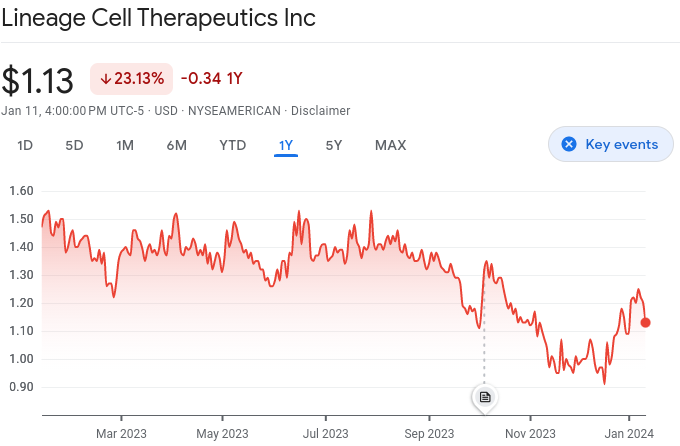
Lineage Cell Therapeutics (LCTX)

“Results of imaging analyses demonstrating evidence of rapid improvement in outer retinal structure from a Phase 1/2a clinical study of RG6501 (OpRegen) were presented at the 23rd EURETINA Congress.”

Or,
Their treatment for dry-eye related macular degeneration did well. That long name of an ailment describes why it is hard for some people to see. That’s good news, especially because, as I understand it, there aren’t many good treatments. The caveat is that the data is from a Phase 1/2a study. They still have to get through Phase 3. After that is applying for FDA approval. Each of those steps can be measured in months to years.


Electrameccanica (SOLO)

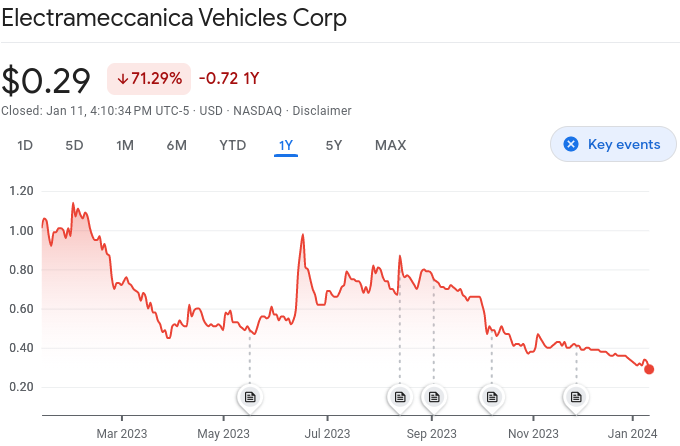
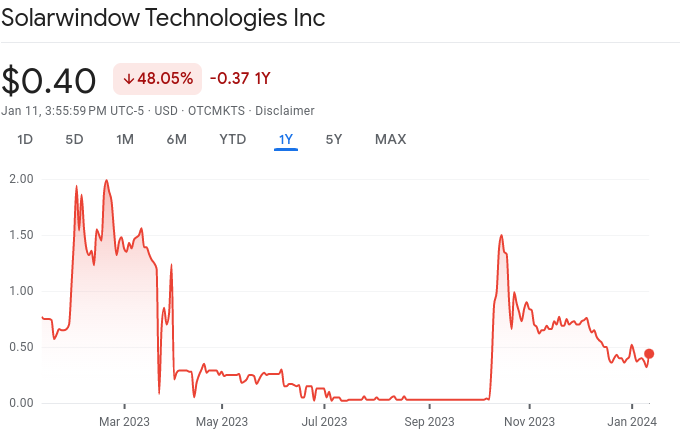
First, they actually launched and sold a three-wheeled electric vehicle, which failed, the CEO left, a new CEO came in, reconfigured the company, announced a merger with a UK manufacturer of electric commercial vehicles – and just announced that the merger failed. Sigh. Investing in innovative companies can involve exercising coping strategies, especially when the stock is worth so little that selling isn’t worth the effort. Some day, they may revive and return. I hope.


MicroVision (MVIS)

Yes, here we are again, MVIS. They still haven’t announced their $10M-$14M 2023 deal. Check the calendar, dudes. We’re within three months of the end of the year. But, the augmented reality headsets they designed and delivered to the US Army over a year ago have been updated. There’s hope yet! And MVIS has survived on hope. I hope they’ll be able to rely on a significant, quantifiable, and positive reality. Been waiting decades for this one.


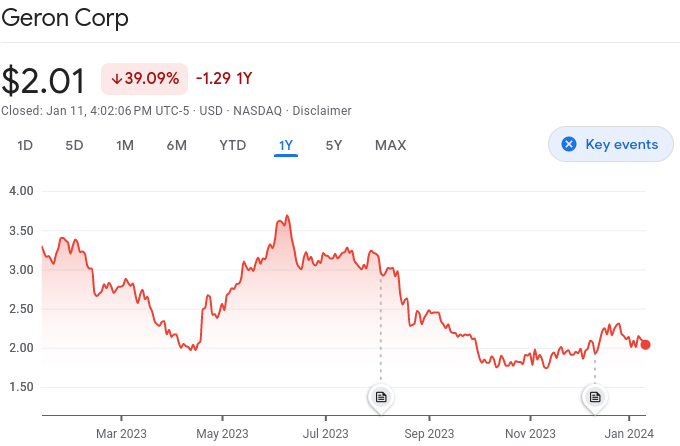
Look at their three charts and see bumps and weirdness for the previous twelve months. The companies continue, ideally, to that significant, quantifiable, and positive reality – but not yet.

But that is also the basis of long-term investing. Besides watching their news and voting, they are my attempt at giving my money the opportunity to make money from my money.

So, here’s the irony. 

I received two letters from my brokerage. Years ago, I liked one stock well enough that I held shares in my regular account and in my IRA: Asterias. I will quote from one of my posts. (Sigh And Bye Asterias)

Rats. It happened again. A corporation agreed with me. A company with great potential and an undervalued stock can be a great investment. In the case of Asterias, that meant BioTime is buying the entire company. Yet again, one of my tiny stocks gets absorbed before it succeeds.

Gone and forgotten. The news, however, was that some court case that I wasn’t aware of was settled in favor of some of the shareholders. A few hundred dollars were added to my portfolios. Not a big deal because the sums involved were thousands and the lost appreciation could’ve been in the tens of thousands, but a plus sign is a plus sign. And I had to do so little that I didn’t know anything had been done. Fine by me.

But, so what? Some tourist on vacation at a local fine restaurant will probably spend more on dinner tonight. Our monies have lives. Stocks have lives. Their companies have lives. Their employees have lives. I understand the advice to young people that they should invest early, often, and pay little (but not no) attention to it. But for me, it is worth remembering that investments are that opportunity to work over here and get paid from over there. Good news can come unbidden, and that’s worth remembering about many things, not just money.

Posted in Uncategorized | Tagged , , , , , , , , , , , , , | Leave a comment