
I want a new car. There isn’t much wrong with my existing car, but it burns fossil fuel. I want an electric vehicle. But, you knew there’d be a ‘but’, I can’t find a car I want and like and can afford, and because I suspect something better is only a few years away. Patience, lad.
Years? I’m not even sure various countries are going to continue to exist that long. Artificial Intelligence may be mind-boggling stellar by then. And I’ll be older. Why not now?
‘Now’ is when the next generation of batteries is a promise in prototypes, but not production. Healthy technologies advance. In an over-simplification, before there was lithium-ion (which powers many EVs today), there was lead-acid for vehicles (but not much range). Thinking smaller, lithium-ion was preceded by alkalines, which was preceded – I don’t even know their name, but I remember when alkalines were seen as the next big thing. Electric cars are now common because of battery advances. Batteries continue to advance.
One next advance is solid-state batteries. Lithium-ion batteries are not solid-state. They include a fluid, which is one reason they are susceptible to damage. Fluids leak. Solids don’t.
Solid-state batteries are also being used as an opportunity to use materials that are easier to find and use. Current batteries use rare Earth minerals (which aren’t rare, but they aren’t concentrated like coal). Lithium is also heavily reliant on places like China, which means production runs into politics. The materials being used in solid-state batteries are easier to access.
Check the news and notice that EV batteries are also responsible for fires that are tough to extinguish, which, on some car carrier cargo ships, means losing hundreds of cars, possibly lives, and possibly ships.
Despite those problems, EVs are succeeding at steering us away from oil and gas for powering our cars.
Isn’t it amazing how gas works? It’s simple, right? Create mini-explosions thousands of times a minute, get the gas to move some pistons, mechanically convert and transmit that to a transmission and tires, expel the exhaust, keep the whole thing cool, hope it doesn’t leak, and listen to the vroom. Carry enough fuel to move the car a few hundred miles. To refuel, visit a gas station, which is visited by a tanker truck, which is moved by a gas-powered engine, which loaded up at a depot, which had fuel delivered to it via another fuel-powered vehicle, which filled up a refinery (assuming no pipelines were involved), which may have had fuel delivered to it via an ocean-going tanker which ran on fuel, which was loaded from eventually (and to keep this paragraph from being more of a stunt that it already is) from a well that was drilled into the Earth, which was a spot located because someone traveled anywhere hoping to find a place to poke into the ground. Enough of that. Simple. Right?
Generating electricity from renewable sources can be complicated too, but they tend to be less complicated, less messy, and are more efficient. Instead of visiting a gas station every several days, I could recharge an EV at home, especially if I get someone to install the right equipment. A lot less driving around simply so I can drive around.
So, I should already have an EV, right? Nope.
I currently own a 2016 Jeep Renegade. I bought it during the pandemic when my Chevy truck died. I got the truck as a family gift at a death, so I had to give up my 2000 Jeep Cherokee, one of my two best cars so far. The other was a 1987 Jeep Cherokee. Jeeps took me places that let me live. (See lots of my books for examples and proofs.) (My Renegade is obviously not a Jeep Jeep, but its capabilities exceed mine. It’s fine.)
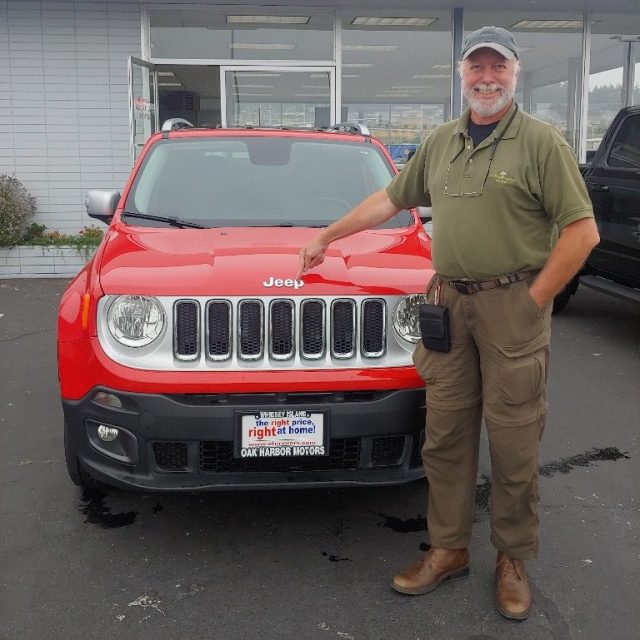
At the start of that, EVs didn’t exist. By the time EVs became practical, I’d become poor. (See my book Muddling By for details.) Now, except for this season’s stock market, I can finally consider buying a new car.
Unfortunately, I take long drives. The long drives are fortunate because I get to see a lot of the world that way; but on my coast-to-coast trip in August, I was regularly driving 500-600 miles each day. I don’t know of any EVs that can do that.
But technology advances. I’m enough of a fan and an optimist that I am invested in two solid-battery companies: SLDP, GMGMF. They are promising, literally and figuratively. I’ve described them more in my semi-annual portfolio exercise. (Semi-Annual Exercise – EOY 2025) Currently, the promises are reaching my desires. My needs can be met by a bicycle and patience. (Just Keep Pedaling) Imagine covering 600 miles, then resting overnight as the car recharges, then driving again, all without having to stop at gas stations.
Oh, and I like the idea of regenerative braking, especially when compared to most brakes that turn motion into waste heat, and degrade with every pulse of the pedal.
In December, GMGMF announced;
“GMG Unveils Graphene Aluminium-Ion Battery that Fully Charges in 6 minutes“
Six minutes? Forget overnight. That’s not even enough time to brew a cup of tea properly. (8 minutes to boil, 4 minutes to steep, several minutes for it to cool enough to sip) (Oh yeah, and there’s my fundraiser book, Kettle Pot Cup; and accidentally, this post is becoming a long list of book plugs. Just going with the flow.)
Let’s back off from some of that optimism. An hour would be fine.
Mileage is determined by energy storage, just like a car’s range is determined by the size of its gas tank. And yet, solid-state batteries have the potential to be smaller, lighter, and safer.
It is easy for me to be enthusiastic about such a possibility. But. Promises and production lines are years before fruition. Car companies are slower than labs and component manufacturers.
Maybe in a year or two, the possibility will look more real. Maybe a year or two after that, someone will make an EV I can afford and buy. Maybe in that time, the stock market will grow my portfolio. Maybe in that time, the world will be a saner and safer place. Maybe my wishes go too far.
In the meantime, as much as I see fossil fuels’ downside, they meet my current reality. I could buy an EV, but I prefer to avoid encouraging the mining, processing, and safety risks of lithium. I can wait.
Because I can wait, I updated my car by spending a thousand dollars or so on a new set of tires, thereby using up another somewhat limited resource with a long list of issues.
Do I need a new car? No. Do I want a new car? Yes. But I’ll wait. Something better may be coming, soon-ish.

 Trimbathcreative's Blog (Tom Trimbath)
Why not get one now and trade it in when something better comes along? I love my 2017 Leaf!! I can drive quietly without polluting the air.☺️ I’m actually looking into getting a new battery put into it this summer that will basically double the miles. Much cheaper than buying a new car and I happen to love everything about the car I have, so am going to keep it but upgrade the battery. Anyway hope the right thing comes up for you soon.😺
Yahoo Mail: Search, Organize, Conquer
Yep. But the range is still limited. The new batteries should result in >600 mile range.