
I thought I was going on a bike ride organized by some local authorities to tour affordable housing issues and possibilities. Well, yes; but, no. It was a ride of the historical features of the area that must be kept in mind while creating housing solutions. I was confused, but it was a bike ride, so I didn’t care. Two hours of riding around my new neighborhoods? Sure. Whatever they wanted me to get out of it, the theme that stayed with me is impermanence. Things don’t stay the same.
I moved to Port Townsend about two months ago. But, I didn’t move to Port Townsend proper. I moved to the outskirts that simply use Port Townsend as a mailing address. Port Hadlock-Irondale holds about 4,000 people. Port Townsend has about 10,000, making it The Big City. I live between them. They’re planning on making Irondale bigger. Bigger happens. The surprise came when I learned that about a hundred years ago, Irondale’s plans were to grow to 20,000. They had Plans!
Something happened.
The history of the Quimper Peninsula (I think I got that right) is an interesting story about a region that was poised for dramatic growth suddenly was looked over as steamships sailed to Seattle instead of harboring in the tall ship friendly port of Port Townsend. The region had iron ore and coal, which was a combination that made Pittsburgh famous, but the railroads decided to stop on the other side of the Sound. Plans abandoned and stranded.
We rode to the site of the old mill. Now, it is used as a beach. It is easy to overlook the ruins of the kilns and docks, bricks and concrete either washed by the surf or used as canvas for graffiti. Where did the slag go? Where did the coal come from?
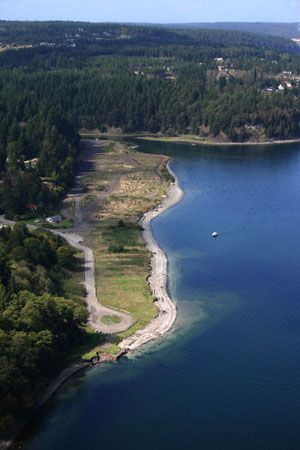
Now, the area is growing again thanks to being near Seattle. The people gotta go somewhere.
But my mind went back to when I lived in a Seattle suburb which has massively grown, Bellevue. (Sold a house for ~$340K circa 2001. Last time I checked, it was priced at ~$1.2M.) Ah, but Bellevue was suburban enough to be near trails in hills and forests with wildlife. The place was called Cougar Mountain. In some places in the world, it would be a mountain, but in Western Washington it is really only a large hill when compared to the local snowy peaks and occasional volcano. The cougar part is appropriate. Residents should mind their pets.
Before Seattle was big, before Bellevue was big, Red Town was big. Whatever their relative sizes, Red Town’s future was encouraging because they found coal. Coal on the West Coast? Excellent! Find some iron ore and the area could be the other Pittsburgh.
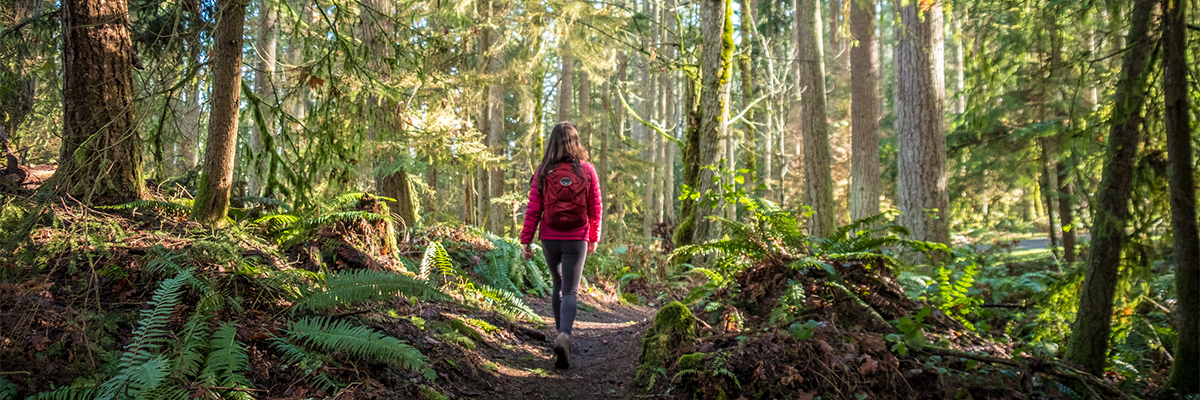
Now, it is even easier to overlook the ruins as the edges of a temperate rainforest cover the town’s remains. For me, the largest evidence of the past was the gated, fenced, and blocked entrance to the abandoned coal mile.
For years, the area has been growing again thanks to being near Seattle. The people gotta go somewhere.
I caught myself before I asked too many self-referential questions, but my family home was just outside Pittsburgh, near a few mills and an abandoned mine. I was bicycling past echoes of my past.
I was raised in West Mifflin. Never heard of it? Why would you? It is a suburb of Pittsburgh. Contrary to popular perception, Pittsburgh didn’t have the most mills. The messy, nasty, smelly, and amazingly productive mills were outside The Big City. Our house was within a short bike ride (even for a teenage me) of a few mills. Beneath much of it was an abandoned coal mine. As kids, we played in the remnants of mine subsidences. Friends toured the flooded shafts on air mattresses.
We rode around a slag dump, a slag dump that was supposedly the largest man-made mountain. Steel mills make steel, but between iron ore and pure steel there’s a lot of byproducts. Slag is like molten lava. The mills had a railroad that carried it to the dump, then dumped the ore down the self-made mountain in a splash of lava and a shower of sparks. Evidently, my parents would have date nights when they went there to watch the cheap light show.
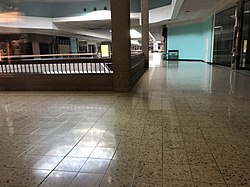
About the time I was in high school, developers decided to use the defunct part of the slag dump as a site for a massive shopping mall and more. Being kids, we rode around the construction site when we could. Mostly, I rode around the raw slag. To break it up, the construction crews had to use a bulldozer pulling a grader sometimes being pushed by another bulldozer. Not dirt. Lava. Solidified lava. The tale of Century III Mall actually warrants some YouTube videos and a wikipedia page. According to wikipedia, it was the world’s third-largest mall for a while. Pittsburgh was growing. People were moving to the suburbs and shopping. Soon, that wikipedia page and those videos may be all that is left. They’re tearing down the mall.
Impermanence
OMG. Things are changing! Should I simply write the word: Duh?
Massive buildings can vanish within a lifetime. I’m guessing that grand plans usually don’t succeed. Some do, but even they aren’t likely to be permanent.
Currently there are dramatic changes in climate, politics, technology, and society. That’s the norm. Preparing for a change to a New Normal may not be as important as preparing for change followed by change, ad infinitum. Conventional wisdom may have been wise, but conventions are changing. I’m more interested in plans that are built around adaptation rather that some new convention.
It is romantic and nostalgic to remember simpler times. Spam would have a tough time if we only used rotary phones. But, if I dial 9-1-1, they have a better chance of knowing where I am and can contact me at the scene of wherever. How many lives has that saved?
As usual, I bring this back to personal finance (and I’ll spare you my thoughts on shopping malls and such – for now).
I continue to hear conventional wisdom based on the boom times after World War II. These times aren’t those times. Work hard, yes. Spend less than you make, yes. Invest the rest, yes. But work has changed; so much for life-time employment and benefits. Spending has changed; as minimum wage isn’t survivable, and affordable has less to do with prices than with employment (IMO). Investing is no longer expensive commissions, but its internal competition is already people versus algorithm. And the changes are accelerating.
One of the reasons I sold my house was because I wanted to be better prepared for change, even without knowing what that change will be. My most immediate worry was any possibility that my Social Security would effectively or totally vanish. I got out of debt in case inflation gets truly out of control. I moved off a beautiful island because basic infrastructure, like ferries, isn’t being managed responsibly. I continue to stay in a place that is temperate and with local resources like water. (I might even get solar on my house, pending management’s proposed sale of my leased property. Another topic.)
I live alone, but in terms of lifestyle, I am not alone. Several friends are becoming increasingly nomadic. Sell the house. Buy a van, or a boat, or a lot of airline tickets, or tour the world through epic house-sitting adventures.) Why only live in one place? I could even imagine moving, and I only got here two months ago.
The only constant is change. Even the pyramids will crumble. If the conventional wisdom isn’t changing, maybe you’re the one to challenge and change the convention.
Ah, the weather has changed. I mowed the yard in a light mist that turned into a dull overcast, which has now become clear blue sky. It is about time for me to change into clothes to dance in. There’s a dance late this afternoon. It’s down on the waterfront, by the old pier. You can even see the abandoned dock that is stuck in the mud but not connected to anything else.


 Trimbathcreative's Blog (Tom Trimbath)