For those who know me well, the surprise isn’t that I am writing about dancing; the surprise is that I don’t write about it more. And then a series of coincidences convinced me to write about it now. A community of dancers is accidentally showing me how resilience, and resilience is something valuable when the world seems so fragile and frail. My local dance community is changing, again, again.
Let’s start this by clearing up any imagery you may have in your mind about my dancing. I like social dancing. The basic rule of social dancing is, if you are smiling and you did it wrong you still got it right, if you did it right but you are not smiling you missed the point. Some pieces in the picture: waltz, swing, latin, blues, maybe some country; leads, who traditionally were the men, and follows were traditionally the women, and which is pleasantly, if sometimes confusingly, changing; no dress code, usually; and on occasion an undercurrent of relationships, maybe romance, maybe soap operas.
We are near the end of the year. My favorite dance instructor, Janice Eklund, is taking a well-deserved break. Besides, she has commuted to our classes by taking one of the smallest ferries from Port Townsend to Whidbey Island across some of the worst local currents and rushing back to not miss the last boat of the night. Various members of the community wonder what we are going to do. It can seem like an end.
To me, it is possibly the end of a chapter, but not the end of the book, and maybe the chapter gets edited.
Whidbey Island is new. Well… significant European settlement of the island is effectively from the mid-1880s. The original tribes go back thousands of years, of course. I wish I knew more about their dance traditions. As for the Europeans, the first folks on the island were men, more likely barely not boys. They were here for fishing, timber, and farming. They entertained themselves with drinking and fighting – for a while. As they grew up, some invited girlfriends and wives. The women demanded something more social. The island didn’t have power or roads. Life was along the shore. They were frugal folk by necessity. OK, boys, you get to build dance halls. Bands didn’t need electricity. The halls didn’t need much more than a roof, walls, and a floor. The dancers only needed each other. Done.

Wander around Whidbey Island and see old halls in various stages of maintenance and renovation. Realize that some halls are gone. Some are hidden and redefined as they were turned into houses. Sometimes the owners don’t know that history and wonder why the floor is different. Electricity and roads reached around and through, but the consequence is that the island has a lot of halls for relatively few people.
The dance community didn’t jump from 1880 to 2023, nor did it smoothly maintain an official presence. It has, however, persisted.
My dance history reaches back to 1978-ish. I’ve taken classes off and on since then. Having typed that sentence, my back brain will now dive into the rabbit hole while I steer me back to the island’s story. But there was this time in college…
I moved to Whidbey in 2005. I didn’t know anyone, so I started by chatting up the folks who run the businesses in Langley, where I first had an address. They were a captive audience but friendly to a newbie arriving in winter. Small-town businesses frequently do more than one thing to stay in business. So, while talking to one distracted store manager, I asked about the list she was updating. It was a list of people who wanted to take a dance class. One had just finished, and she was organizing the next. She asked if I danced. “Ah, yes, I mean, I like to.” “You do?! What’s your name? We have more women than men. Please sign up.” “OK.”
The story of this particular, unofficial, social dance community is far from linear. Pardon me as I skim past the details, partly for clarity, partly to avoid soap opera and dance politic moments. The instructor who had just instructed had to stop for a while. Family emergencies happen. Someone else stepped in, and backed out before class. Amidst the conversations, I mentioned an instructor I was familiar with from a series of classes he taught with his wife in the early 90s. I was told that wasn’t necessary because some other instructors had been suggested. It turned out that three of us had suggested the lead, though he was no longer married.
Personal connections happen, sometimes separated by decades, and he remembered me. Suddenly, I was one of a few helping him learn about the island, the halls, and general logistics. Oh yeah, and unofficially consulting on his revitalized business. Many of the helpers faded away, but he found a follow who was also learning how to teach. Things got busy.
But, there were no regular dances for our kind of social dancing. OK. So, with no experience, I joined the board of one of the original halls, and started organizing dances as fundraisers for the hall. That worked, and then it didn’t. My fault. I am a minimalist, and not someone who knows how to decorate with ornaments and attract a crowd.
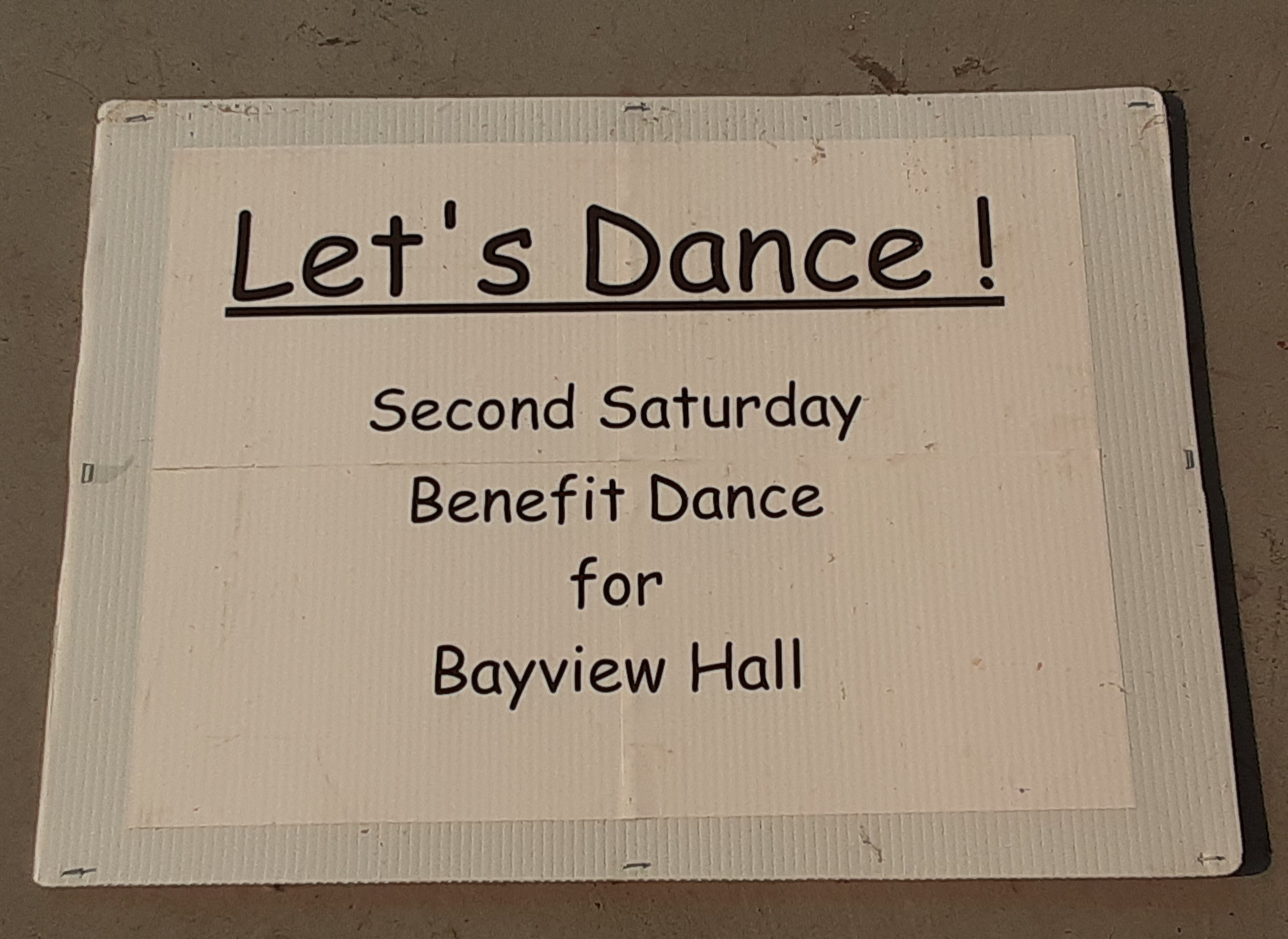
Another instructor was inspired. I went to some of his classes and met some folks who never danced before. The community grows.
A pair of experienced dancers start teaching, too. They were more on the western side, which was a niche that needed filling.
As things go, the instructor I knew for so long faded as he toured Europe and more.
Ah, but Janice, the instructor I mentioned above, had enough experience to start teaching. For a while there was even an instructor helping her who had trained at Julliard. Nice.
Instructors came and went. Dancers came and went. Some set it aside as a hobby they tried for a while. Some dove deeper and went off-island for more classes and more dances.
Now, one of Janice’s dancers has become an instructor, as did someone I met at her first class years ago.
In rough parallel, various dancers organized practice sessions so we weren’t constrained to classtime, and could get better without the performance anxiety of trying something new at a real dance. I started a weekly session on my back deck, which moved to a commune that had a proper dance floor, to a variety of venues like the local gun club, and then to actually renting a hall by asking dancers for donations.
This should seem like a lot of detail, because it is. And this is the short version. And it isn’t over. And that’s part of the point.
Look at LinkedIn and see businesses, organizations, and the subject of TED Talks about community building. There are seminars to learn how.
Or, look around at what people are doing naturally, without a plan, with the barest of agendas, without headlines, without spotlights and accolades.
It is easy to wonder if there will be something to step in as this chapter closes, whether temporarily or permanently. As I said, one of Janice’s instructors is already teaching (and if he gave me a link I’d include it – hint.) Lately, I’ve been hearing about a new set of classes in a new venue. There’s talk about more dances, and that’s in a community with a great history of street dances.

I’m sure there will be dancing. There may be a slight hiatus, but it is good to step back and catch your breath. Dancing every dance is something young people do – and they’re starting to show up again, too.
Being me, my mind takes that realization and expands it. Society seems to be fracturing. I hope it is more of a re-shuffling of the pieces rather than sweeping them off the board and onto the floor. Our wider situation might get much better as long as everyone listens, and everyone is allowed to speak, and everyone is allowed to make up their own mind.
Our dance community has gone through the same things every community has gone through: the various aspects of the human condition, a Great Recession, boom times and bust times; but as people maintain what they want to maintain, we progress.
As usual, I didn’t know this post would end up with that conclusion. Maybe that’s because I write somewhat the way I dance. Something convinces me to move, I try to find the rhythm, and I see where it takes me. (Ask anyone who has danced with me. I rarely know where I’m going, but I try to have fun getting there.)
OK. I’ll play with that line. Find something that convinces you to move, find the rhyme, and see where it takes you. Maybe you’ll be one of the ones who sustain the community. It’s all just a dance. Laugh at it and smile – but apologize if you step on someone’s toes.

 Trimbathcreative's Blog (Tom Trimbath)